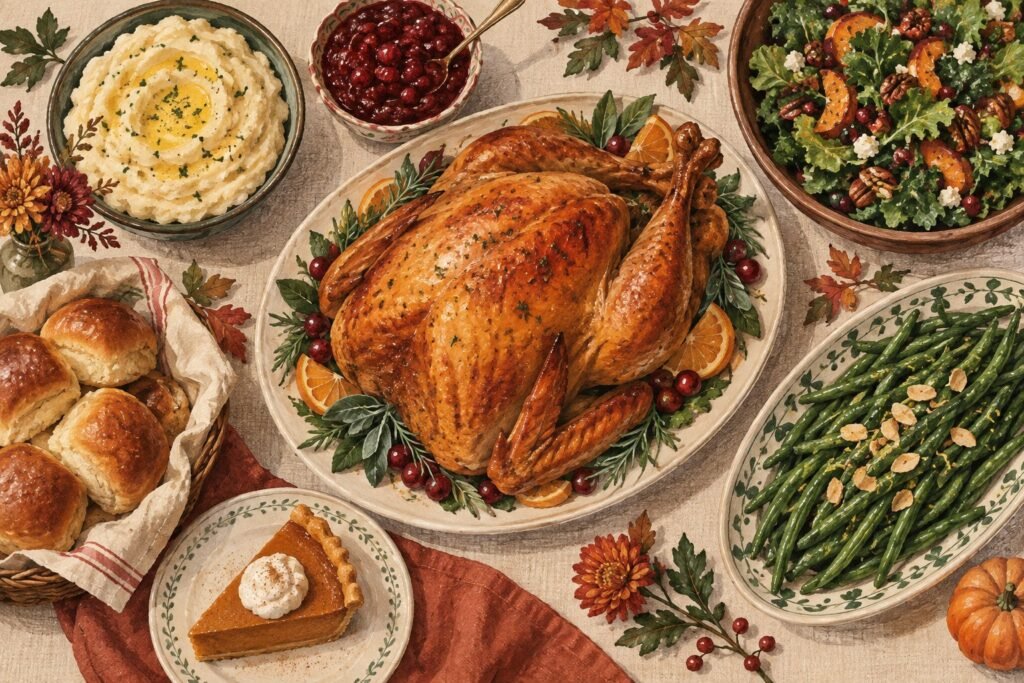
This apple cider turkey brine recipe takes the classic wet brine and gives it an autumn soul: fresh apple cider replaces part of the water, layering gentle sweetness and orchard fragrance into the juiciest turkey your oven has ever produced. The cider’s natural sugars promote deep golden browning, its mild acidity helps tenderize the surface, and the finished bird carries a subtle apple note that pairs beautifully with every traditional side on the table. It is the brine for cooks who want their Thanksgiving turkey to taste like the season itself.
In this guide you will get the complete brine formula with exact ratios, the food science of why cider works (and where its limits are), step-by-step brining instructions with food-safety guardrails, how to adapt it for roasting, smoking, or spatchcocking, troubleshooting for common brine problems, and what to do with the bird after its bath. If you are still deciding between methods, our dry brine vs wet brine comparison lays out the trade-offs — but if you have already chosen team wet-brine, this is the recipe to beat.
Why Apple Cider Belongs in a Brine
A standard wet brine is salt, sugar, and water — effective but one-dimensional. Apple cider contributes three things a plain brine cannot:
Gentle Acidity for Tenderness
Fresh apple cider sits around pH 3.5 — mildly acidic, similar to orange juice. Over a 12- to 18-hour soak, that acidity gently loosens surface proteins, giving you a slightly more tender exterior without the mushiness that stronger acids (like vinegar) cause. It is a subtle effect, not a transformation, but on lean breast meat, subtle is exactly right.
Natural Sugars for Browning and Flavor
Cider contains fructose and glucose, which participate in the Maillard reaction and caramelization during roasting. The practical result: deeper, more even browning and a faint caramel-apple background note in the meat and pan drippings. Those drippings, in turn, make a gravy with remarkable depth — save every drop for our turkey gravy from drippings method.
Aromatic Complexity
Unfiltered cider carries the volatile aromatics of the apples it was pressed from — esters and aldehydes that read as “orchard” to our noses. Combined with traditional brine aromatics (bay, peppercorn, allspice, thyme), the brine perfumes the turkey with a distinctly autumnal character that plain saltwater cannot match. Use fresh, unfiltered cider rather than clear apple juice: the cloudiness is flavor.
Choosing Your Cider
Not all apple cider is equal for brining. Fresh, unfiltered, unpasteurized-style cider (the cloudy kind from the refrigerated section or a local orchard) has the most flavor and the right acidity. Pasteurized cloudy cider works nearly as well and is easier to find. Avoid “apple juice” — the filtered, shelf-stable kind — which is sweeter, less acidic, and far less aromatic; it will still work, but you lose most of what makes this brine special. Hard cider (alcoholic) is a different ingredient: the alcohol adds flavor but the brine math changes, so stick with sweet cider for this recipe. And never use cider that has started fermenting on its own — off-flavors in, off-flavors out.
One caution: because cider contains sugar, the brine browns the turkey faster in the oven. That is a feature (gorgeous color), but it means tenting the breast with foil earlier than you might be used to — usually around the halfway mark. Watch color, not just the clock.
Apple Cider Turkey Brine Recipe
This formula suits a 12- to 16-pound turkey. Scale proportionally for larger birds, keeping the salt-to-liquid ratio constant — that ratio is the part that matters.
Ingredients
- 1 gallon (16 cups) fresh apple cider, divided
- 1 gallon cold water
- 1½ cups kosher salt (Diamond Crystal; use 1 cup + 2 tablespoons if Morton’s)
- ¾ cup brown sugar, packed
- ¼ cup maple syrup (optional, for deeper flavor)
- 2 tablespoons black peppercorns
- 1 tablespoon allspice berries
- 6 bay leaves
- 4 sprigs fresh thyme
- 2 sprigs fresh rosemary
- 1 tablespoon mustard seeds (optional)
- 2 quarts ice (about 4 lbs), for cooling
Instructions
- Build the flavor base: In a large stockpot, combine 1 quart of the cider with the salt, brown sugar, maple syrup (if using), peppercorns, allspice, bay leaves, thyme, rosemary, and mustard seeds. Bring to a simmer over medium-high heat, stirring until the salt and sugar dissolve completely, about 5 minutes. Simmer 2 more minutes to bloom the spices.
- Cool it down: Remove from heat. Add the remaining 3 quarts of cider, the gallon of cold water, and the ice. Stir until the ice melts. The brine must be below 40°F (4°C) before the turkey enters — verify with a thermometer. Warm brine on raw poultry is a food-safety failure; if it is not cold, add more ice and wait.
- Prep the turkey: Remove giblets and neck (save for stock). Remove any plastic leg truss. Rinse the bird briefly and drain.
- Submerge: Place the turkey in a brining bag set inside a roasting pan, or in a food-safe 5-gallon bucket or cooler. Pour the cold brine over the bird, ensuring complete submersion — the breast should be fully underwater. Press out air and seal the bag, or weight the bird with a plate in a bucket.
- Brine 12 to 18 hours, refrigerated: About 1 hour per pound, not exceeding 24 hours. Keep the entire setup at or below 40°F — in the fridge if it fits, or in a cooler with replenished ice, checking temperature periodically. Set a timer; over-brining in a sugary brine risks both mushy texture and excessive sweetness.
- Rinse, dry, and rest: Lift the turkey out, rinse briefly under cold water, and pat thoroughly dry inside and out. For the best skin, refrigerate uncovered on a rack for 8 to 12 hours (or at minimum 4) before roasting — this drying step is critical with a sugary brine, since wet sugary skin steams instead of crisping.
- Roast: Season the exterior with salt-free aromatics — the bird is already well seasoned. A light coating of oil or butter helps browning. Roast using your preferred method; our classic roast turkey guide gives times and temperatures. Tent the breast with foil once it reaches rich golden-brown (earlier than usual — the cider sugars brown fast). Pull at 160°F (71°C) breast temperature and rest 20 to 30 minutes to coast to the safe 165°F (74°C).
Brine Science: What Is Actually Happening in the Bucket
Understanding the mechanism helps you adapt the recipe confidently instead of following it fearfully. Three processes run simultaneously during the soak:
Osmosis and Diffusion
Salt concentration is higher in the brine than in the meat, so salt diffuses inward while water moves both ways across cell membranes. Over 12+ hours, salt penetrates deep into the breast — roughly 1/4 inch per day in dense muscle, faster along the grain and through the thinner areas. The sugar follows more slowly (larger molecules), which is why sweetness stays mostly near the surface while saltiness reaches the center. This is ideal: seasoned throughout, sweetly aromatic on the exterior where browning happens.
Protein Denaturation
Salt unwinds some muscle proteins (particularly myosin), which then form a gel-like matrix that traps water during cooking. The mild acidity of the cider assists at the surface. Net effect: the meat holds onto its juices under heat instead of squeezing them out. This is why brined turkey stays juicy even when slightly overcooked — the proteins have been chemically convinced to behave.
Why the Sugar Ratio Matters
Sugar in brine does three jobs: it balances salt’s harshness, feeds browning reactions, and — at these concentrations — slightly firms the meat’s surface through its own osmotic pull. But more sugar is not better. Push past about 1 cup per gallon and the turkey tastes candied, the skin burns before the interior finishes, and the drippings turn bitter-sweet. This recipe’s 3/4 cup brown sugar plus optional maple per 2 gallons of liquid sits in the balanced zone: noticeable but not dessert-like.
Adapting the Brine to Your Cooking Method
For Classic Oven Roasting
The default pairing. Follow the recipe as written, dry the bird well, roast at 325°F (163°C), and tent early. The cider sugars give you the most beautiful mahogany bird of the neighborhood — photograph it before carving, using our carving guide to keep the presentation pristine.
For Smoking
Excellent combination — apple cider brine plus applewood smoke is a natural flavor rhyme. Reduce the brining time to 12 hours (smoke adds its own intensity; longer brining plus long smoke can oversalt the exterior). Our smoked turkey breast guide covers the smoker setup; a whole cider-brined bird smokes beautifully at 275°F.
For Spatchcocking
Brine first, then spatchcock after rinsing and drying — cutting a wet-brined bird is slippery business, so pat it very dry before the shears come out. The flattened bird then gets its uncovered drying rest. Follow our spatchcock turkey recipe for the roast itself, dropping the temperature to 450°F for the fast crisp.
For Deep Frying: Do Not Use This Brine
A wet-brined bird carries too much surface moisture for the fryer, even after drying — and the sugars scorch in 350°F oil. For frying, use a dry brine or injection instead; see our deep-fry safety guide and injection marinades.
Troubleshooting
The Skin Burned Before the Bird Was Done
The cider sugars accelerate browning — this is the number one issue with sweet brines. Tent the breast with foil as soon as it hits deep golden (often 60–90 minutes into roasting), and verify your oven temperature with an oven thermometer; many ovens run 25°F hot, which compounds the problem. Next time, you can also reduce the maple syrup or skip it.
The Turkey Tastes Hammy
Over-brined — too long, too much salt, or a pre-enhanced bird. Stick to 12–18 hours, check labels for pre-injected salt solution (never brine an “enhanced” turkey), and measure salt by the recipe, not by eye. Unfortunately, an over-brined bird cannot be un-brined; serve with plenty of unsalted sides like mashed potatoes to balance.
The Meat Is Mushy
Brined past 24 hours, or brined warm. Protein over-denatures with excess time, turning texture spongy. Set a timer, keep everything below 40°F, and when in doubt, pull the bird at 14 hours rather than pushing to 20.
Brine Would Not Fit in the Fridge
The eternal struggle. Options: brine in a cooler with ice (monitor temperature — it must stay below 40°F), use a brining bag inside a crisper drawer or a small fridge, or halve the recipe and brine a bone-in turkey breast instead of a whole bird — it fits anywhere and brines in 8–12 hours.
The Gravy Tastes Too Sweet
Cider-brine drippings run sweeter than plain drippings. Balance the gravy with extra black pepper, a splash of apple cider vinegar or lemon juice, and fresh thyme. Taste before adding any sugar-containing stock — you likely need none.
Storage and Food Safety Notes
Brining is raw-poultry handling at scale, so the rules are strict: brine below 40°F (4°C) at all times; never reuse brine (it has been in contact with raw poultry — discard it); sanitize every surface, container, and utensil the raw bird and brine touched; and refrigerate the rinsed bird promptly if not roasting immediately. After roasting, the standard rules apply — carve and refrigerate within two hours, keep 3 to 4 days, reheat to 165°F. For thawing timelines before brining day, see our turkey thawing guide — the bird must be fully thawed before it enters the brine, since salt cannot penetrate ice.
Apple Cider Brine Variations
Once you understand the base formula, the brine becomes a template. Keep the salt-to-liquid ratio fixed and play with the aromatics:
Bourbon and Brown Sugar
Replace 2 cups of the cider with bourbon and increase the brown sugar to 1 cup. The bourbon’s vanilla-oak notes deepen the brine’s warmth; the alcohol itself mostly cooks off, leaving flavor behind. This version browns even faster — tent early and watch closely. Best for roasting, not smoking (the extra sugars plus long smoke can turn bitter).
Spiced Orange and Clove
Add the peel of 2 oranges (in wide strips, avoiding the bitter white pith), 1 tablespoon of whole cloves, and 2 cinnamon sticks to the simmering base; reduce the allspice by half. Bright, festive, and particularly good if your menu includes citrusy sides. The orange oils perfume the skin beautifully.
Honey-Mustard and Thyme
Swap the maple syrup for 1/2 cup of honey and add 1/4 cup of whole-grain Dijon mustard plus double the thyme. The mustard’s gentle heat and the honey’s floral sweetness create a more savory-leaning brine — excellent under a simple herb-butter exterior. Whisk well when building the base so the mustard fully dissolves.
Savory Herb and Garlic (Lower Sugar)
Cut the brown sugar to 1/4 cup and skip the maple entirely; add a full head of smashed garlic, double the thyme and rosemary, and 2 extra teaspoons of black peppercorns. The result behaves almost like a classic saltwater brine — less browning acceleration, less sweetness — while keeping the cider’s acidity and orchard aroma. Choose this version if you found the base recipe too sweet, or if your gravy plans demand neutral drippings.
Brining in a Cooler: The Small-Fridge Solution
No room for a bucket in the fridge? A cooler works — with discipline. Line a clean 5-gallon cooler with a brining bag, add the turkey and the fully cooled brine, and seal the bag, pressing out air. Surround the bag with ice — packed around the sides, not just on top — using roughly a 2:1 ratio of ice to brine by volume. Close the cooler and keep it in the coolest spot available (a garage or shaded porch in November is ideal in most climates). Check the internal temperature every few hours with a probe thermometer: it must stay at or below 40°F (4°C). Replenish ice as it melts — in a decent cooler, once in the morning and once at night suffices. After brining, lift the bag out, discard the brine, and proceed with rinsing and drying. Sanitize the cooler afterward with hot soapy water. This method has brined countless turkeys safely; the thermometer checks are what make it safe rather than hopeful.
Serving Suggestions: Building the Cider-Brined Plate
A cider-brined bird carries a subtle sweetness that invites complementary sides. Lean into the orchard theme: roasted apples and onions alongside the turkey, a homemade cranberry sauce sharpened with orange zest, creamy mashed potatoes to catch the sweet-savory gravy, and something bitter and green — an arugula or endive salad with sharp vinaigrette — to cut the richness. For drinks, a dry hard cider alongside the meal is the thematic pairing; an oaked Chardonnay works for wine drinkers. Finish with our Thanksgiving desserts — apple pie next to cider-brined turkey is autumn doubled, in the best way.
And plan for leftovers deliberately: cider-brined turkey makes exceptional next-day sandwiches (the gentle sweetness loves sharp cheddar and arugula), and the carcass simmers into a stock with remarkable depth — the brine’s aromatics echo in the broth. Freeze the stock in portions and you will taste November again in January.
Cider Brine for Other Poultry (and Pork)
The formula scales beautifully beyond turkey. Whole chickens (4–5 lbs): halve the recipe and brine 8–12 hours — roast chicken with cider-brine juiciness is a weeknight revelation. Duck (5–6 lbs): use the base recipe for 12 hours; the cider’s acidity is a natural partner for rich duck meat, and the skin renders beautifully after the uncovered drying rest. Bone-in pork loin or pork chops: halve the recipe, brine 6–12 hours depending on thickness — pork’s mildness welcomes the apple notes even more than poultry does. Keep the salt ratio identical in every adaptation; only the brining time changes with the meat’s size and density. And the same safety rules apply across the board: below 40°F (4°C), discard used brine, cook to safe temperature (165°F/74°C for poultry, 145°F/63°C plus rest for pork).
In Pictures: Apple Cider Turkey Brine
Apple cider brings gentle acidity, natural sugars, and orchard aromatics to a wet brine — a fall upgrade over plain salt water. The brine, ready for the bird.

A large pot of apple cider brine with orange slices, herbs, and spices, ready to submerge a turkey.
Watch: Apple Cider Turkey Brine
The BBQ Pit Boys demonstrate their famous apple cider turkey — a cider, citrus, and spice brine followed by a long, slow grill roast.
At a Glance: Apple Cider Turkey Brine
Why cider belongs in a brine, from the guide.
| Element | What it does |
|---|---|
| Gentle acidity | Cider’s mild acid helps tenderize the surface of the meat without making it mushy |
| Natural sugars | Fruit sugars promote deep, even browning and add subtle caramel flavor to the skin |
| Aromatic complexity | Cider carries apple, spice, and orchard notes a plain salt brine cannot |
| Choosing cider | Use fresh, unfiltered apple cider — not vinegar, and not hard cider |
| Brine time | Typically 18 to 24 hours for a whole bird, kept cold throughout |
| Rinse and dry | Rinse off the brine and pat the bird dry so the skin can crisp in the oven |
Frequently Asked Questions
Can I use apple juice instead of apple cider?
In a pinch, yes — but use cloudy, unfiltered juice if possible. Clear filtered apple juice is sweeter, less acidic, and far less aromatic than cider, so the brine loses much of its character. Fresh unfiltered cider from the refrigerated section is worth seeking out.
How long should I brine a turkey in apple cider brine?
Twelve to 18 hours for a 12- to 16-pound turkey — roughly 1 hour per pound, never exceeding 24 hours. Smaller breasts need only 8 to 12 hours. Longer is not better; over-brining causes mushy texture and hammy flavor.
Do I need to rinse the turkey after brining?
Yes — a brief rinse under cold water removes excess surface salt and sugar, which is especially important with a sweet brine to prevent burning. Pat completely dry afterward, then air-dry uncovered in the fridge for the best skin.
Can I brine a kosher or pre-basted turkey?
No. Kosher turkeys are already salted, and “enhanced,” “basted,” or “marinated” supermarket birds contain up to 8 percent salt solution. Brining any of these produces inedibly salty meat. This recipe assumes a natural, minimally processed turkey — check the label.
Can I make the brine ahead of time?
Yes — prepare the brine (through the cooling step) up to 3 days ahead and refrigerate. Do not add the turkey until brining day, and re-verify the brine is below 40°F before the bird goes in.
What do I do with the leftover brine?
Discard it. Brine that has held raw poultry is contaminated and cannot be reused or repurposed. Pour it out, then sanitize the container thoroughly.
Conclusion
Apple cider turkey brine is the wet brine for people who want their turkey to taste like November: salt for juiciness, cider for gentle sweetness and orchard aroma, warm spices for depth, and a roasting method that turns those sugars into mahogany skin. Keep it cold, keep it under 18 hours, dry the bird well, and tent early — and you will carve the most flavorful, golden, conversation-starting turkey on the block. Pair it with classic Thanksgiving sides and a proper gravy, and the brine will have done its quiet work in every single bite.