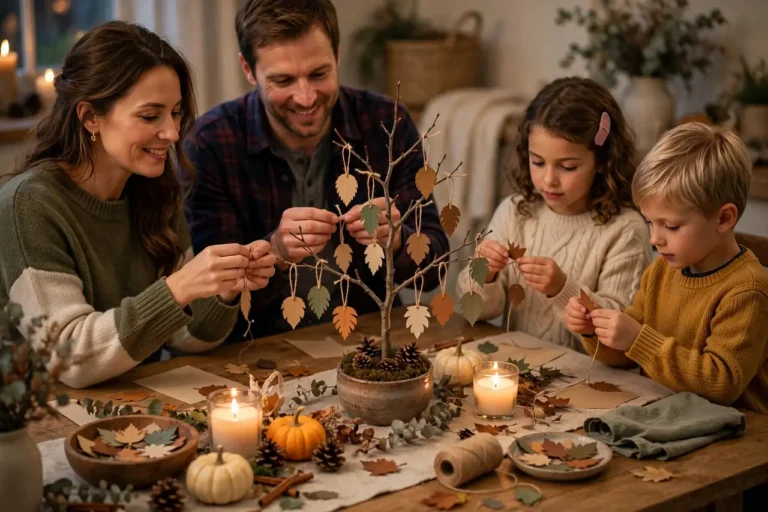
Updated October 2, 2026: Expanded and rewritten with 100 distinct activities, practical instructions and accessibility options.
These 100 Thanksgiving activities for 2026 give families concrete things to make, play, notice and share. You do not need all of them. Choose one quiet option, one group game and one flexible outdoor or movement activity, then let guests join or pass.
Thanksgiving is Thursday, November 26, 2026. The suggested ages and durations below are starting points, not developmental requirements. Adults should adapt materials, supervise children and keep small parts away from anyone who may put them in their mouth. Use washable art supplies and age-appropriate scissors; avoid raw-flour dough crafts, as FDA guidance explains.
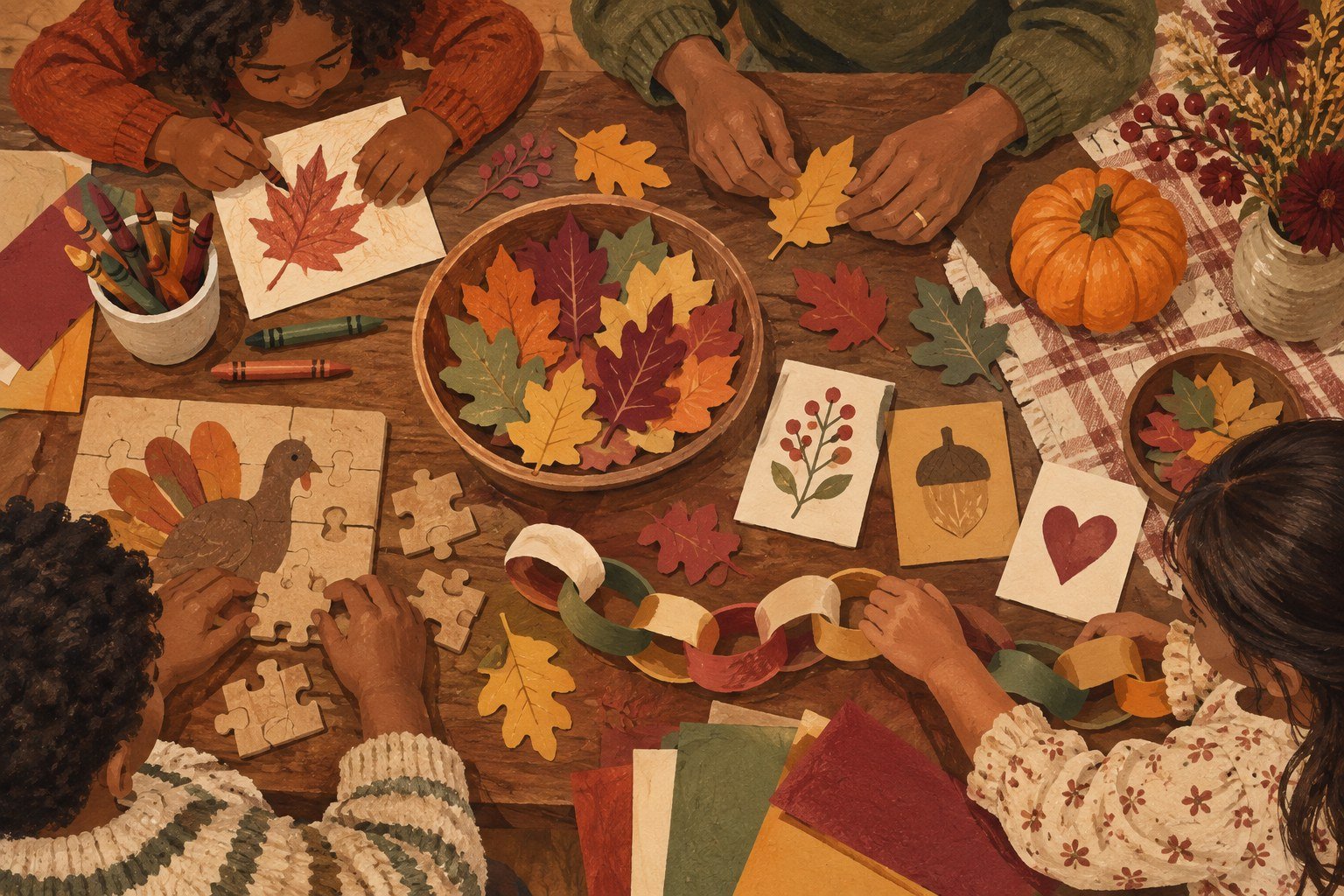
Pick an activity that fits the moment
| Situation | Start here | Why it works |
|---|---|---|
| Ten minutes before dinner | Leaf matching, table-setting puzzle, word chain | Easy to stop without losing a long project |
| Mixed ages after dinner | Cooperative story, picture charades, family quiz | Adults and children can share roles |
| Quiet corner | Bookmark art, nature sketch, audio postcard | Participation does not require a crowd |
| Good weather | Neighborhood noticing walk, cloud journal, target toss | Adjust distance and effort to the group |
| Relatives far away | Shared drawing, remote show-and-tell, recipe interview | A short scheduled call can include more people |
Materials and directions are included in each item. Keep food preparation separate from crafts, and let gratitude activities be optional. The Smithsonian's Native Knowledge 360° resource offers accurate historical learning; avoid invented Indigenous costumes or generic “Native” crafts.
Quiet crafts and things to make
1. Autumn leaf rubbing gallery
Ages 4+; 15 minutes. Place clean fallen leaves beneath paper and rub sideways with crayons. Compare veins and shapes, then label a small gallery with observations. Use paper leaf templates if collecting outdoors is impractical.
2. Paper gratitude chain
Ages 5+; 15–20 minutes. Give each person paper strips for a note or drawing about something they appreciate. Staple or tape the strips into loops and connect them. Allow blank decorative links for anyone who prefers privacy.
3. Reusable name cards
Ages 6+; 20 minutes. Fold sturdy paper into tents, write guests' preferred names and decorate the borders. Ask people how they want their names written. Save the cards in an envelope for another gathering instead of discarding them.
4. Collage harvest landscape
Ages 4+; 20 minutes. Tear colored paper into fields, trees and sky, then glue a landscape onto cardboard. Make the scene imaginary or based on a local view. Tearing lets younger children participate without needing scissors.
5. Family bookmark studio
Ages 6+; 20 minutes. Cut cardstock into bookmarks and illustrate a favorite shared memory. Add a book recommendation on the back. Exchange only with willing participants; a child can keep their work rather than being required to give it away.
6. Paper lantern silhouettes
Ages 7+; 25 minutes. Decorate a paper sleeve with cutout leaf shapes and place it around a battery-operated light with safe clearance. Adults handle difficult cuts. Use no flame, and follow the light's instructions rather than improvising around heat.
7. Folded menu art
Ages 6+; 15 minutes. Give children the actual dinner list and invite them to draw one food beside each course. Display the finished menu near the table. This is useful writing practice without asking children to invent ingredients or allergy labels.
8. Thank-you postcard printing
Ages 5+; 20 minutes. Use washable stamps or sponge shapes to decorate blank postcards. Write one specific thank-you on the reverse. Ask before mailing and let the writer choose the recipient; adults can help with addresses later.
9. Cardboard tabletop forest
Ages 6+; 25 minutes. Cut two simple tree shapes per model, slit one from the top and the other from the bottom, then slot together. Decorate and arrange as a miniature landscape. Keep it away from hot dishes and candles.
10. Painted paper table runner
Ages 4+; 25 minutes. Roll out kraft paper and give each person a section for a drawing. Connect the sections with a border. Let it dry fully before use; keep paint and craft materials away from food-contact surfaces.
11. Woven paper placemats
Ages 7+; 25 minutes. Cut slits in a folded sheet and weave contrasting strips through them. Tape ends underneath. Discuss the over-under pattern while working. Treat the result as decoration and place washable food-safe mats over it if needed.
12. Photo-frame corner decorations
Ages 6+; 20 minutes. Make four small paper corner pieces and decorate them with leaves or geometric patterns. Attach to a cardboard frame around a copy of a family photo. Use a duplicate image so the original is not damaged.
13. Autumn color mixing cards
Ages 5+; 20 minutes. With washable paint, mix small amounts of red, yellow, blue and white to create autumn shades. Paint swatches and name them. This is a color experiment, not a competition for the most realistic picture.
14. Paper envelope workshop
Ages 8+; 20 minutes. Fold a sheet around a card, crease the flaps and secure the sides with tape. Test whether the card slides in easily. Decorate the outside and use it for a private note or a future invitation.
15. Window-safe leaf display
Ages 4+; 20 minutes. Decorate paper leaves and attach them with removable tape to an approved window area. Arrange by color or shape. Check with the homeowner first and leave visibility, locks and emergency access unobstructed.
Table games with simple rules
16. Thanksgiving picture charades
Ages 5+; 15 minutes. Draw cards showing simple actions such as stirring soup, setting a table or walking a dog. Players act without speaking while teammates guess. Allow paired acting and pass cards that feel uncomfortable or confusing.
17. Cooperative story circle
Ages 6+; 15 minutes. Begin a fictional story about a misplaced pie plate. Each person adds one sentence, then passes. Agree that nobody changes another person's contribution. End after two rounds so the story has a satisfying finish.
18. Memory tray
Ages 5+; 10 minutes. Show six to ten safe household objects on a tray for 30 seconds, cover it and ask players to recall them. Work as one group rather than eliminating people. Adjust the number of objects for the participants.
19. Missing object detective
Ages 5+; 10 minutes. Arrange five large objects, let everyone look and have one person close their eyes while another removes an item. Guess what disappeared. Unlike the memory tray, the goal is spotting one change, not recalling an entire list.
20. Dinner word chain
Ages 7+; 10 minutes. Say a food word, then have the next person begin with its final letter. Keep a written list to avoid repeats. Allow a helper or a new starting word when the chain gets stuck.
21. Draw-and-pass surprise
Ages 6+; 15 minutes. Each person draws a simple scene, passes the paper and lets the next person add one element. Continue for three rounds, then reveal the results. No one scores the art; the surprise is the point.
22. Family facts quiz
Ages 8+; 20 minutes. Ask volunteers for harmless facts beforehand, such as a favorite hobby or childhood pet. Read questions and let teams guess. Exclude private, embarrassing or disputed stories and let anyone withdraw a fact.
23. Cooperative alphabet challenge
Ages 7+; 15 minutes. Write A–Z on paper and work together to name something connected with autumn for each letter. Accept creative explanations and leave difficult letters blank. The shared puzzle matters more than forcing dubious answers.
24. Sound effects story
Ages 5+; 15 minutes. One person reads a short original story while others provide assigned sounds with their voices or gentle claps. Use a quiet-volume rule. Offer a visual cue role to anyone who prefers not to make sounds.
25. Object-description challenge
Ages 6+; 15 minutes. Put familiar objects in view. A player describes one without naming it, and the group guesses. Use shape, purpose and texture clues. Keep objects visible so the game does not require blindfolding or surprise touching.
26. Paper cup skyline
Ages 5+; 15 minutes. Give each team the same number of empty paper cups and ask them to build a stable skyline. Test by leaving it standing for ten seconds. Work on a low table and avoid climbing to add height.
27. Card sorting race against the clock
Ages 6+; 10 minutes. Shuffle a deck and sort it cooperatively by suit before a gentle timer ends. Try again with a different sorting rule. Players can choose roles, and there is no need for a prize or elimination.
28. Two truths and an invented hobby
Ages 9+; 15 minutes. Each person names two hobbies they have tried and one invented choice; others guess the fictional one. Keep disclosures light. Players may use an imaginary character instead of sharing facts about themselves.
29. Group estimation jar
Ages 7+; 10 minutes. Fill a clear container with large paper squares and ask everyone to estimate the count. Count together afterward and discuss the strategies used. Paper pieces avoid using edible treats as prizes or small hard foods around young children.
30. Homemade picture dominoes
Ages 6+; 25 minutes. Draw two symbols on each of twenty paper rectangles, repeating symbols across cards. Match ends to build a chain. Adjust the cards together if a symbol has no partner; designing a playable set is part of the activity.
Movement and outdoor options
31. Neighborhood noticing walk
All ages with support; 15–30 minutes. Choose a familiar accessible route and look for three colors, two sounds and one seasonal change. Nobody needs to collect objects. Set the distance around the least mobile participant and turn back when needed.
32. Soft target toss
Ages 4+; 15 minutes. Put three large empty boxes on the floor and toss rolled socks toward them. Move the throwing line closer or farther for each player. Keep the area clear of dishes, people and breakable objects.
33. Sidewalk pattern trail
Ages 5+; 20 minutes. On an approved safe surface, draw chalk shapes that invite stepping, rolling or pointing along a route. Offer several ways to participate rather than requiring hopping. Keep away from roads and remove trip hazards.
34. Leaf shape hunt
Ages 5+; 20 minutes. Bring drawings of several leaf shapes and look for matches on a walk. Photograph or sketch instead of removing plants. Discuss near-matches too; the aim is close observation, not winning by collecting the most.
35. Gentle group stretch story
Ages 6+; 10 minutes. Tell a story about reaching for apples, looking at clouds and walking through leaves while participants choose comfortable movements. Include seated versions and no forced stretching. Stop any motion that hurts or feels unsuitable.
36. Follow-the-leader rhythm walk
Ages 5+; 10 minutes. In a clear space, a leader chooses slow steps and simple claps, then passes the role. Keep the pace gentle and allow seated clapping. Avoid backward running or crowded paths near the kitchen.
37. Park bench sketch stop
Ages 7+; 20 minutes. Bring pencils and paper to a suitable outdoor seating area. Each person sketches one detail from the same view, then compares what they noticed. Choose shelter or move indoors if conditions are uncomfortable.
38. Cloud observation journal
Ages 5+; 15 minutes. From a safe stationary spot, sketch clouds and write what they resemble. Record the date and how the sky changes over ten minutes. Do not look directly at the sun; use a window view if preferred.
39. Family distance challenge
Ages 8+; 20 minutes. Estimate the distance between two safe landmarks, then measure by counting steps or using an appropriate measuring tool. Compare estimates without ranking bodies or speed. Different stride lengths become part of the discussion.
40. Scarf movement dance
Ages 4+; 10 minutes. Play a short song and move lightweight scarves through high, low and circular patterns. Seated participation works well. Keep scarves away from faces and necks, and let adults choose music volume suited to the group.
41. Cooperative path building
Ages 5+; 20 minutes. Lay large paper markers on the floor to create a route between two points. The group decides how to make it reachable for everyone. Walk beside markers rather than standing on slippery paper; the design challenge is the activity.
42. Backyard sound map
Ages 7+; 15 minutes. Sit quietly and mark sounds on a sheet with yourself in the center. Compare where each person heard birds, traffic or leaves. No one needs to identify a sound perfectly, and a window-based version is equally useful.
43. Slow-motion sports commentary
Ages 8+; 15 minutes. One person performs a gentle pretend sport in slow motion while another provides humorous commentary. Use no hard equipment or contact. Rotate narrator and performer roles, and allow a tabletop toy version.
44. Nature texture photography
Ages 8+; 20 minutes. Photograph bark, stone, fallen leaves and other textures without disturbing them. Later, ask others to guess the subject from a close view. Respect private property and avoid photographing people without permission.
45. Outdoor kindness cleanup
Ages 8+ with adults; 20 minutes. Choose a small approved area and collect ordinary litter with suitable gloves and tools. Adults handle decisions about unfamiliar or sharp items; children should leave them alone. Follow local disposal rules and wash hands afterward.
Learning, puzzles and small experiments
46. Thanksgiving calendar detective
Ages 7+; 15 minutes. Use a November 2026 calendar to circle Thursdays and identify the fourth one. Then compare a year with five Thursdays. Connect the puzzle to the holiday date guide rather than guessing from a remembered date.
47. Family recipe interview
Ages 8+; 20 minutes. Ask a willing relative how a dish became part of the family meal. Record ingredients, memories and what has changed. Ask permission before recording audio or sharing the story, and label recollections as memories rather than universal history.
48. Source comparison discussion
Ages 10+; 20 minutes. Compare a museum explanation of Thanksgiving with a familiar simplified story. Ask whose voices appear and what evidence is provided. Use the Smithsonian resource linked above and avoid turning the discussion into a performance by one child.
49. Local harvest map
Ages 8+; 25 minutes. Choose three foods on the menu and research where they are grown using reliable agricultural sources. Mark broad locations on a paper map. Distinguish the crop's growing regions from the actual origin of your purchased package.
50. Kitchen measurement puzzle
Ages 7+; 15 minutes. With empty measuring cups and dry paper tokens, work out how halves and quarters make a whole. Keep the exercise away from food preparation. Older children can calculate a doubled recipe without changing any real dish.
51. Paper bridge challenge
Ages 7+; 20 minutes. Span two books with a sheet of paper and experiment with folds to support a small toy. Use the same gap for every design. Discuss why folds change stiffness; stop before stacks become unstable.
52. Shadow tracing comparison
Ages 6+; 20 minutes. Trace the shadow of a toy under a lamp, then move the lamp and trace again. Use a cool, stable light and keep paper away from heat. Compare size and direction without staring into the light.
53. Float-or-sink predictions
Ages 5+ with supervision; 20 minutes. Choose a few washable, safe objects and predict their behavior in a shallow bowl of water. Test one at a time and dry afterward. Keep water away from electronics and supervise continuously around young children.
54. Paper helicopter test
Ages 8+; 20 minutes. Fold simple paper helicopters and drop them from shoulder height in a clear area. Change one fold and compare descent. Do not climb furniture or use elevated balconies; the experiment works at a modest safe height.
55. Leaf symmetry study
Ages 6+; 15 minutes. Draw a line down a leaf's center and compare both sides. Trace one half and try completing the other. Real leaves need not be perfectly symmetrical, which makes differences worth noticing rather than correcting.
56. Menu budgeting game
Ages 10+; 25 minutes. Give teams a fictional budget and a list of current store prices gathered by an adult. Build a meal for a stated guest count. Compare tradeoffs without claiming one household's real spending is right or wrong.
57. Homemade word-search design
Ages 8+; 25 minutes. Hide ten chosen words in a letter grid, then fill blank squares. Exchange puzzles and provide an answer key. Creating the grid is different from simply completing a printed one and gives the maker a useful design challenge.
58. Place-setting logic puzzle
Ages 7+; 15 minutes. Arrange paper plates and name cards using clues such as “Sam sits beside Jo” or “Lee needs an end seat.” Use fictional preferences and a small table diagram. Solve together rather than assigning actual guests without asking.
59. Sequence the cooking story
Ages 6+; 15 minutes. Draw cards showing a simple safe process such as washing an apple, slicing by an adult and serving. Shuffle and reorder them. Explain why preparation order matters without letting children handle knives as part of the game.
60. Museum resource exploration
Ages 9+; 20 minutes. Choose one online museum resource about a named Native nation and read or view it together. Write down one new fact and one question. Keep present-day Native communities visible rather than ending the story in the colonial period.
Gratitude, memories and connection
61. Specific thank-you notes
Ages 6+; 15 minutes. Write a note naming one action someone took and why it mattered. Offer drawing or dictation. Deliver privately, and avoid requiring public reading; gratitude can be meaningful without becoming a table performance.
62. Family photo captions
Ages 7+; 20 minutes. Choose copies of three photos and ask willing participants to add names, places and approximate dates. Mark uncertain details instead of guessing. Save the captions with the images so the information remains useful later.
63. A year-in-small-moments timeline
Ages 8+; 20 minutes. Draw a line through the year and add ordinary moments people want to remember. Include a learned skill or funny mishap, not only major achievements. Let anyone leave parts private or use an imaginary example.
64. Recipe memory card exchange
Ages 8+; 20 minutes. Each participant writes one cooking tip or memory on a card, then shares a copy with someone interested. Keep actual recipe instructions separate from anecdotes. No one needs to reveal a cherished recipe they prefer to keep private.
65. Compliment mailboxes
Ages 7+; 20 minutes. Give each willing person an envelope labeled with their name. Others can add respectful notes about a helpful action or quality. Set a no-teasing rule and let people open their envelopes privately.
66. Future gathering wish list
Ages 8+; 15 minutes. Ask everyone for one activity they might enjoy at a future get-together. Sort ideas by effort and accessibility, then choose one to discuss. This is brainstorming, not a promise that the host will fund every suggestion.
67. Shared playlist planning
Ages 10+; 20 minutes. Invite each person to suggest one song and explain why they like it. Build a short playlist with agreed volume and content limits. Let someone pass or suggest instrumental music; avoid turning taste differences into ridicule.
68. Memory object show-and-tell
Ages 7+; 20 minutes. Bring one safe object or photograph connected with a happy memory. Give each speaker two minutes and allow questions only with permission. Valuable or fragile objects can remain at home and be represented by a picture.
69. A letter to next Thanksgiving
Ages 8+; 20 minutes. Write what you hope to remember or learn before next year's gathering. Seal and date the envelope. Participants keep their own letters; avoid asking children to disclose private worries or make promises to the group.
70. Family skills swap
Ages 8+; 25 minutes. Pair willing people to teach a small skill such as a card shuffle, simple drawing or sewing a large-button practice card. Keep tools age-appropriate and set a short limit. The learner chooses whether to try.
71. Appreciation photo walk
Ages 8+; 20 minutes. Photograph three ordinary things you value, such as a favorite chair or garden corner. Share only the images you want to explain. Ask permission before including people, private rooms or identifying details.
72. Guest question bowl
Ages 8+; 15 minutes. Write gentle prompts about favorite books, places or hobbies. Draw one at a time, with an explicit pass option. Exclude money, relationships, bodies and other topics likely to put a guest on the spot.
73. Shared reading pause
All ages; 15 minutes. Read an age-appropriate book or short public-domain passage chosen for the group. Stop to notice an illustration or unfamiliar word. Offer a quiet listening space without requiring every listener to answer questions.
74. Hand-drawn family map
Ages 8+; 25 minutes. Draw a map of places willing family members have lived, using broad locations rather than private addresses. Add a memory to each. Let participants define family in their own way and omit information they do not want shared.
75. Record an audio postcard
Ages 8+; 15 minutes. With consent, record a one-minute greeting for an absent relative. Include one small update and a warm wish. Review it before sending, and ask the recipient's preference rather than posting the recording publicly.
Remote-friendly activities
76. Two-screen drawing lesson
Ages 7+; 15 minutes. One caller describes a simple drawing step by step while others follow on paper. Reveal the different results at the end. Keep directions slow and allow the camera to stay off for anyone who prefers it.
77. Remote room-color hunt
Ages 5+; 10 minutes. Name a color and ask participants to point to a safe object nearby. No running or leaving the supervised area. Let someone describe an object instead of carrying it to the camera.
78. Video-call story ending
Ages 8+; 15 minutes. Read the beginning of an original story and let each household invent a different ending. Give two minutes to plan before sharing. Keep the call short enough that younger participants can leave comfortably afterward.
79. Shared photo guessing
Ages 8+; 20 minutes. With permission, show cropped details from familiar family photos and guess the occasion. Use copies, avoid embarrassing images and reveal the full picture after each round. Do not share screens containing unrelated private information.
80. Long-distance recipe comparison
Ages 10+; 20 minutes. Two households describe how they make the same broad dish and compare ingredients or equipment. Write down differences without declaring one version authentic for everyone. Cooking simultaneously is optional; the conversation itself is the activity.
81. Remote talent minute
All ages with support; 15 minutes. Volunteers share a short song, drawing, joke or learned skill. Set a one-minute limit and allow showing an object instead of performing. Applause is welcome; scores and rankings are unnecessary.
82. Collaborative holiday comic
Ages 8+; 25 minutes. Each household draws one panel of a simple agreed story, then shows it on the call. Put photos of the panels together afterward only with permission. Give each artist control over their own contribution.
83. Online board-game explanation
Ages 10+; 20 minutes. One person teaches a simple game using physical pieces visible on camera. Begin with a practice round and let remote players direct moves verbally. Choose a game that does not depend on hidden pieces they cannot see.
84. Across-the-miles toast
Adults and older children; 10 minutes. Schedule a short call for an optional toast using any drink. Each person may name one hope for the coming weeks. Keep it separate from a long compulsory call during meal preparation.
85. Shared sunset check-in
All ages; 10 minutes per household. At each location's evening, take a photo of the sky from a safe place and share it privately. Note the local time. This works asynchronously when time zones make a live call awkward.
Helpful projects and family responsibilities
86. Serving-spoon matching
Ages 6+; 10 minutes. Match clean serving utensils to empty labeled dishes before cooking is complete. An adult checks suitability. Children contribute to dinner without carrying hot pans or working around active burners.
87. Leftover label station
Ages 8+; 15 minutes. Prepare labels with dish names, cooking date and relevant ingredients for containers adults will fill. Use the dinner planner for storage logistics. Keep the labeling task separate from handling hot food.
88. Pantry donation planning
Ages 9+; 20 minutes. Read a local food organization's current wish list and compare it with suitable unopened items at home. Check dates and condition with an adult. Contact the organization before dropping off; do not assume every item is accepted.
89. Neighbor help menu
Ages 10+; 20 minutes. Make a short list of realistic offers such as carrying groceries or watering plants. Ask a known neighbor what would help, with adult involvement for children. Respect a refusal and avoid promising tasks you cannot safely do.
90. Guest comfort basket
Ages 7+; 15 minutes. Assemble approved items such as tissues, spare phone chargers and a blanket in a visible place. Ask the host where it belongs. Do not include medication or scented products without knowing guests' needs.
91. Reusable-container inventory
Ages 8+; 15 minutes. Match food containers with lids and identify clean sets suitable for leftovers. Sort cracked or unsuitable pieces for an adult to assess. This practical puzzle helps the kitchen without requiring children to judge food safety.
92. Thank a community helper
Ages 7+; 20 minutes. Write a brief card to a known teacher, librarian or other helper, naming something specific. Follow the organization's delivery rules. Do not include a child's private contact details or expect a reply during the holiday.
93. Family cleanup team plan
Ages 8+; 10 minutes. Divide safe tasks such as collecting napkins, stacking lightweight items or wiping a cleared table. Adults handle knives, hot dishes and cleaning chemicals. Make responsibilities clear instead of turning cleanup into a speed race.
94. Repair a favorite game
Ages 9+; 25 minutes. Inventory a board game's pieces, make paper replacements for missing markers and write clear storage labels. Do not alter valuable items without permission. Finish by playing a short round to check that the repair works.
95. Organize a family reading basket
Ages 7+; 20 minutes. Choose books for different interests and reading levels, add bookmarks and place them in a quiet corner. Include contemporary Native-authored books where available. Let readers browse without assigning a mandatory holiday lesson.
Creative endings to the day
96. One-minute documentary
Ages 10+; 30 minutes. Film a short sequence about an object or cooking tool, with permission and away from hot work areas. Include a beginning, detail and ending. Review privately before sharing and leave unwilling people out of the frame.
97. Invent a board game
Ages 8+; 30 minutes. Draw a path on paper, choose a simple movement rule and create three kinds of spaces. Playtest for ten minutes, then fix a confusing rule. The design-and-revision process makes this more than decorating an existing board.
98. Holiday newspaper page
Ages 9+; 30 minutes. Create a one-page family newspaper with an original drawing, a harmless interview and a fictional weather report clearly labeled as pretend. Ask approval for personal details. Keep real event information separate from the imaginative section.
99. Tabletop puppet scene
Ages 6+; 25 minutes. Make simple paper animal puppets and perform a two-minute story about sharing a space. Avoid stereotypes or imitating real guests. Use a low tabletop stage, and let someone narrate instead of operating a puppet.
100. End-of-day exhibition
All ages; 15 minutes. Invite participants to display one creation, photo or observation from the day. They choose whether to explain it. Thank the makers, take photos only with permission and decide together what to save rather than treating everything as disposable.
How to make activities work for the actual group
Choose materials before guests arrive and put each activity in a separate tray or envelope. A project requiring fifteen minutes of searching for tape is not really a five-minute activity. Keep a visible stopping point so dinner can begin without abruptly dismantling a child's work.
Offer different roles: reader, artist, timer, observer or organizer. A person can contribute without standing, speaking publicly or competing. Use larger print, picture prompts and quieter spaces where useful. Ask what would help instead of assuming everyone's needs from age or appearance.
Avoid food-eating races, blindfolded movement, sharp projectiles and games built around embarrassment. Keep craft pieces away from toddlers and food. For outdoor plans, check conditions, stay on approved routes and choose an alternative if weather or access makes the outing unsuitable.
Frequently asked questions
What are the easiest activities with no purchases?
Try a story circle, word chain, memory tray, family interview or photo-caption session using materials you already have. Keep the group small enough that everyone who wants a turn gets one.
How many activities should I plan?
Two or three choices are usually enough for a gathering: one quiet, one social and one flexible movement option. The full list is a menu of possibilities, not a schedule to complete.
What can children do while adults cook?
Choose an activity in a separate supervised area, such as leaf rubbings, name cards or a puzzle. Do not assume the person handling hot pans can also supervise scissors, water experiments or outdoor play.
How do we include someone who does not celebrate Thanksgiving?
Offer ordinary games, art, reading or conversation without requiring gratitude statements or holiday participation. Let the guest choose how to join and avoid asking them to explain their beliefs to the room.
Where can I find a message for someone who cannot attend?
Use the original Thanksgiving wishes and add a true detail about your relationship. The Thanksgiving 2026 guide connects dinner, travel and other planning resources.