Some Thanksgivings are just dinner. Others feel like magic — the kind of day people talk about for years, the one that becomes family legend. The difference is rarely money or culinary skill. It is intention: a hundred small touches, each saying “you matter, this matters, today is not ordinary.” The good news is that special is a craft, not a gift — it can be learned, planned, and executed by anyone willing to think about the day from their guests’ perspective.
This guide gives you 35 concrete ways to make Thanksgiving feel special, organized by moment: the arrival, the table, the food, the atmosphere, the traditions, the personal touches, the kids, and the evening wind-down. You will also get an effort-versus-impact matrix so you can pick the touches worth your limited time, a full-day timeline, and advice for every budget — because the most special Thanksgivings are often the simplest ones, done with love. Let us make this year truly unforgettable — one thoughtful touch at a time.
What “Special” Actually Means
Psychologists who study memorable experiences have found that specialness comes from three ingredients: novelty (something different from everyday life), intention (visible evidence that someone planned and cared), and connection (moments of genuine togetherness). A Thanksgiving feels special when guests can see the effort, experience something out of the ordinary, and feel deeply connected to the people around them.
Notice what is not on the list: expense, perfection, or impressiveness. A $200 centerpiece nobody notices adds less specialness than a handwritten note at each plate. A flawless turkey impresses for a minute; a surprising tradition delights for years. The touches below are ranked by their power to deliver novelty, intention, and connection — not by their cost. Most are free. All of them work.
35 Touches That Make Thanksgiving Feel Special
The Arrival (1–5): First Impressions Set the Day
- Scent the entryway. Simmer a pot of water with orange slices, cinnamon sticks, cloves, and rosemary on the stove an hour before guests arrive. The smell hits them at the door — the single most powerful first impression, and it costs almost nothing.
- Greet everyone at the door. Not a shout from the kitchen — walk to the door, hug them, take their coat, hand them a drink. Thirty seconds of undivided welcome tells each guest they were expected, not just admitted.
- A welcome drink in hand within 60 seconds. Mulled cider, a mimosa, sparkling water with cranberries — the specific drink matters less than the immediacy. A guest holding a drink is a guest who relaxes.
- Music already playing. Silence in a house feels awkward; music feels like a party already started. A warm acoustic or jazz playlist at low volume, started before the first arrival, does the work.
- Coats handled, not piled. Clear a closet or designate a bedroom, with hangers ready. The coat pile on the bed is fine — but a handled coat says “we prepared for you.”
The Table (6–12): Where the Magic Lives
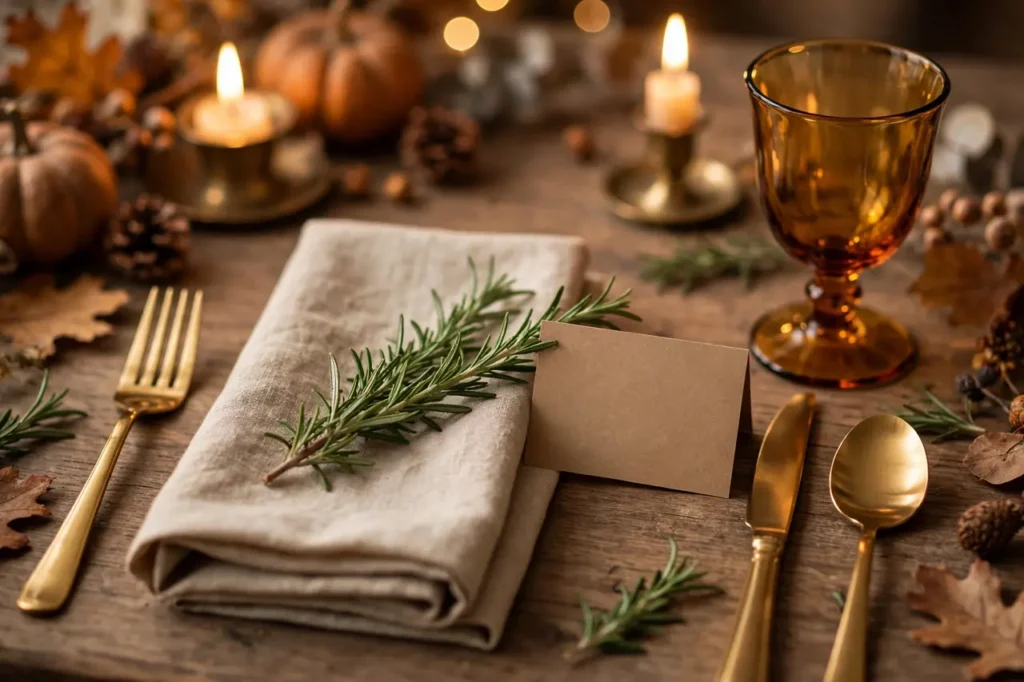
- Handwritten place cards. Even simple kraft tags with names in your best handwriting transform a table from “seating” to “we thought about where you should sit.” Our DIY place card guide has 18 ideas.
- A note at each plate. One sentence per guest, specific to them: “Thanks for the 2 a.m. phone calls this year.” Guests keep these. Some frame them. This is the highest-impact touch on this entire list.
- Cloth napkins, tied with something. Twine, a sprig of rosemary, a cinnamon stick — the tie is a tiny gift and a photo detail. Cloth beats paper because the day deserves it.
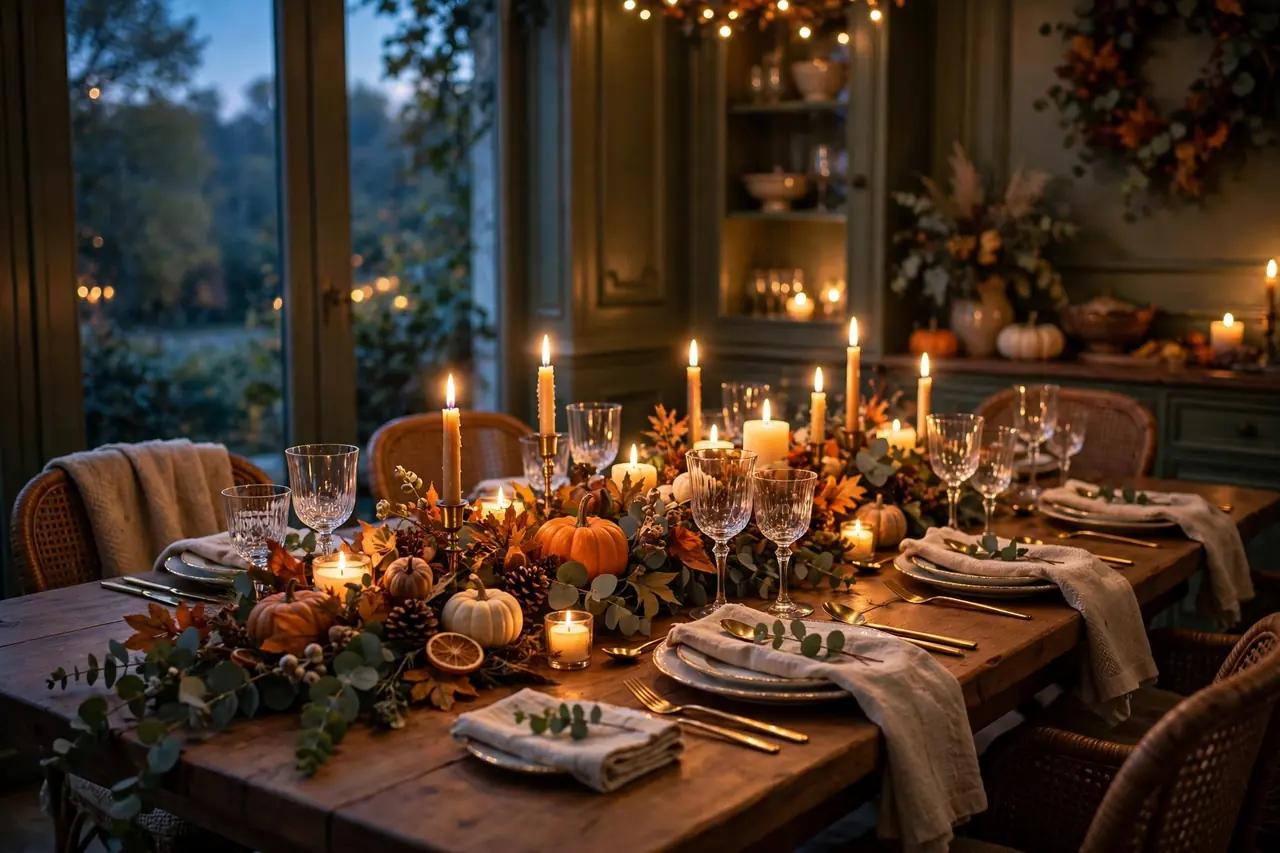
- Candles at three heights. Pillars, tapers, tea lights — varied heights create the layered glow that overhead lighting can never match. Unscented only near food.
- One abundant centerpiece, not five small things. A single lush runner of eucalyptus, pumpkins, and candles down the table’s center reads as generous; scattered knickknacks read as cluttered. Our 25 DIY centerpiece ideas start under $10.
- The good dishes. Use them. The china, the crystal, the silver — they were made for today, and “saving” them for a day that never comes is the saddest tradition of all.
- Water glasses filled before seating. A set table with filled glasses looks complete in a way an unset one never does — and it is one less thing to do when everyone sits down hungry.
The Food (13–18): Beyond Just Dinner
- One signature dish that is yours. The thing people ask for by name — your rolls, your pie, your gravy. A signature dish gives the meal identity and gives you pride of craft.
- Serve the first course. A small soup or salad, plated and served, elevates the meal from “dinner” to “occasion” instantly. It also buys the turkey its resting time gracefully.
- Present the turkey. Bring the whole bird to the table for thirty seconds before carving — the oohs are worth it. Then carve in the kitchen like a professional.
- Label everything. Small tent cards naming each dish (and flagging allergens) look professional, help guests navigate, and honor the cooks — especially potluck contributors.
- Dessert as an event. Do not just put pies on the counter — announce dessert, light the candles again, brew fresh coffee. A second act makes the evening feel twice as long and twice as special.
- The midnight snack station. For guests staying late: leftover pie, good cheese, and the coffee pot still on. The after-party is often the best party.
The Atmosphere (19–24)
- Dim the overheads. The single fastest atmosphere upgrade: turn off the big lights, rely on lamps and candles. Every room looks better, and every face does too.
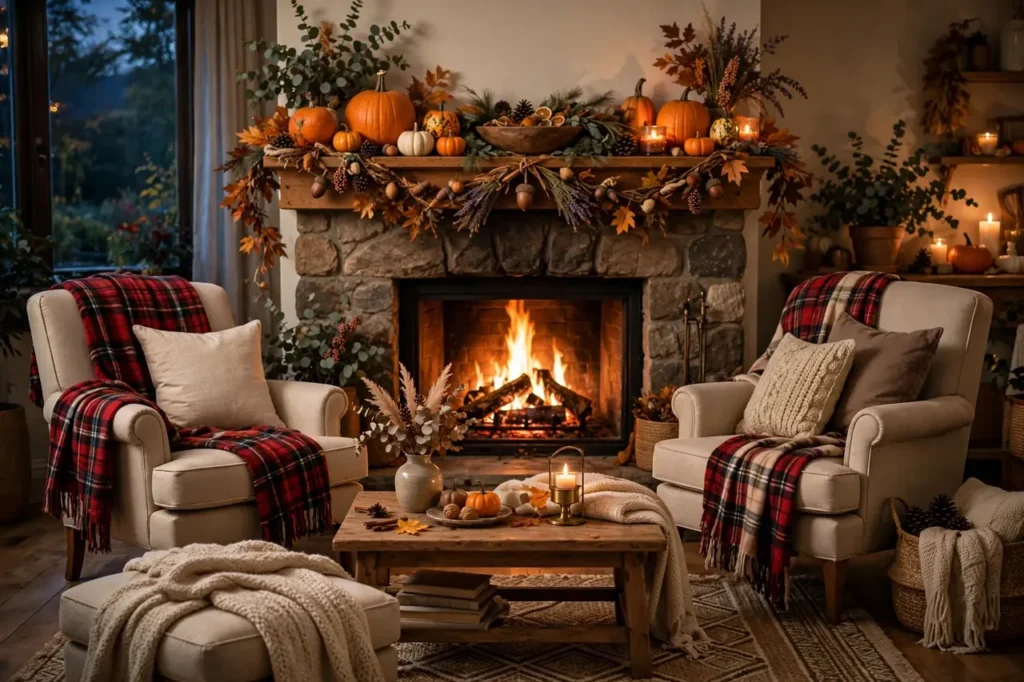
- A fireplace, real or faked. Light it if you have it; if not, the fireplace video on the TV is a beloved cliché for a reason. Fire means home to the human brain.
- Blankets within reach. A basket of throws in the living room invites lingering — guests who are cozy stay, and guests who stay make the evening.
- The gratitude jar, visible all day. Slips and pens on the sideboard from the moment guests arrive; read them after dessert. A month of gratitude in one sitting, if you start early.
- Photos of Thanksgivings past, displayed. A few framed old photos on the mantel — last year, five years ago, the grandparents’ era. Continuity is deeply moving.
- Scent layering. The simmer pot by day, a vanilla candle by evening, fresh coffee with dessert — scent marks the day’s chapters the way music marks a film’s.
Traditions, Old and New (25–29)
- Keep one old tradition sacred. Whatever your family’s thing is — the wishbone, the toast, the walk — protect it. Traditions are the skeleton of specialness; they tell everyone “this is really happening.”
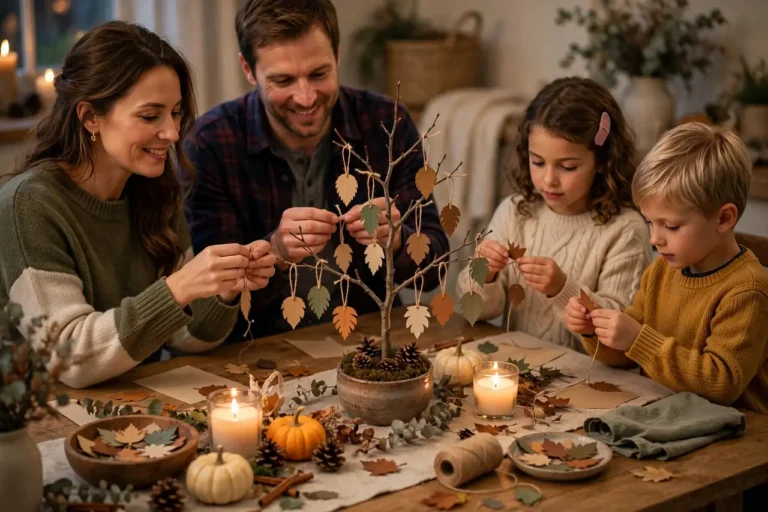
- Start one new tradition. The thankful tree, the pie vote, the group photo in the same spot yearly — new traditions are how families stay alive rather than just repeating.
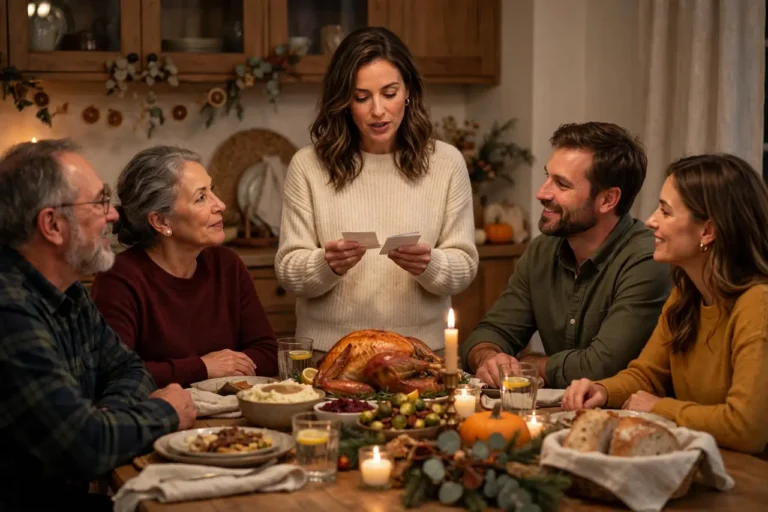
- The round-table gratitude. Each person names one specific thing. Not optional, not rushed — the host goes first and sets the depth. This is the holiday’s heart; do not skip it.
- A toast to the absent. Name those who cannot be here, and those who are gone. Acknowledging absence makes presence sweeter.
- The closing ritual. End the night deliberately — a final toast, a group photo, a song, a prayer. Endings shape memories; a planned goodbye beats a slow dissolve.
Personal Touches (30–32)
- Remember something specific about each guest. Their kid’s recital, their job interview, their marathon — asking about it proves you listen, and being known is the deepest form of feeling special.
- A small take-home gift. A jar of your apple butter, a bag of the simmer-pot spices with the recipe, a printed photo from the day. The party extends past the goodbye.
- The host’s speech. Two minutes, from the heart, thanking people specifically. It costs nothing and means everything — see our Thanksgiving speech examples if you need a script.
For the Kids (33–34)
- A kids’ table that is actually fun. Kraft paper tablecloth with crayons, a craft (thankful tree, placemat decorating), and food they recognize. Kids who are happy make every adult happier.
- Give every child a job. Official greeter, photographer, pie server — a titled role transforms a bored kid into a proud contributor.
The Evening (35)
- Do not rush the ending. The worst Thanksgiving sin is signaling the party is over while guests are still savoring it. Keep coffee coming, keep candles lit, and let the night dissolve naturally. The lingering — pie, conversation, the last glass — is where the day becomes a memory.
Effort vs. Impact: Where to Spend Your Energy
You cannot do all 35. Choose five to seven from the matrix below — the high-impact, low-effort quadrant is where special lives.
| Low effort | High effort | |
|---|---|---|
| High impact | Notes at each plate; dim the overheads; greet at the door; simmer pot; round-table gratitude | Handwritten place cards; signature dish perfected; take-home gifts; host’s speech |
| Lower impact | Filled water glasses; music playing; labeled dishes | Elaborate centerpieces; matching everything; five desserts |
The pattern: the touches guests feel most are personal and sensory, not decorative and expensive. A note that names something true about them outperforms a $100 floral arrangement every time. Spend your energy on people, not things — on the welcome, the words, and the warmth.
The Special-Day Timeline
| Time | Touch | Why it matters |
|---|---|---|
| Morning | Simmer pot on; table fully set; notes at plates | The house is ready before you are — calm host, calm day |
| 1 hour before | Music on; candles ready; welcome drinks staged; you shower and dress | You greet guests as a host, not a cook |
| Guests arrive | Door greeting; drink in hand; coats handled | First impressions set the emotional temperature |
| Pre-dinner | Appetizers out; gratitude jar visible; old photos noticed | Guests settle in and start connecting |
| Dinner | Turkey presented; grace/toast; round-table gratitude | The ceremonial peak — do not rush it |
| After dinner | Candles relit; dessert announced; coffee brewing | The second act doubles the evening’s specialness |
| Evening | Gratitude jar read; closing ritual; take-home gifts | Deliberate ending seals the memory |
| Night | Midnight snack station; blankets out; no rushing | The lingering is the legend |
Special on a Budget: The $25 Thanksgiving Upgrade
Special is not expensive. Here is the entire upgrade for under $25: a bag of mini pumpkins ($5), a bunch of eucalyptus ($8), a dozen tea lights ($4), kraft tags and twine for place cards and notes ($5), and oranges, cinnamon, and cloves for the simmer pot ($3). That is it. The notes are free. The dimmed lights are free. The greeting at the door is free. The gratitude round is free. Our budget Thanksgiving decorations guide has 30 more ideas at this price point — special has never been about spending.
The Night Before: Setting Special Up in Advance
Specialness is 90 percent preparation. The calm, present host who greets you at the door with a drink did not get that way by accident — they front-loaded every possible task to the night before. Here is the Wednesday evening checklist that buys you a magical Thursday:
- Table completely set: Every plate, glass, napkin, place card, and note in position. Cover it with a clean sheet if you have cats. Waking up to a finished table changes the whole morning’s energy.
- Notes written: The one-sentence notes at each plate, done tonight when you are reflective, not tomorrow when you are frantic. This is the highest-impact task — protect it.
- Simmer pot prepped: Orange slices, cinnamon, cloves, and rosemary in the pot with water, in the fridge — tomorrow it goes straight on the stove.
- Welcome station staged: Drinks, glasses, ice bucket, and snacks laid out (covered) where guests will land. Tomorrow you just uncover and pour.
- Outfit chosen: Yours, and the kids’. Decision fatigue is real; do not spend Thursday morning on it.
- Phone charged, camera ready: Clear storage space tonight. Tomorrow’s photos should not be interrupted by a “storage full” warning during the toast.
- One quiet moment: Stand in the dining room, look at the set table, and remember why you are doing this. The anticipation is part of the joy — let yourself feel it.
Special for Every Kind of Household
Special looks different depending on who is at the table. Tailor the touches to your reality:
Flying solo this year: A solo Thanksgiving can be deeply special, not sad — if you claim it. Cook your three favorite dishes (not the whole canon), set a beautiful table for one, watch the parade, call the people you love, and do exactly what you want all day. Or volunteer — serving Thanksgiving dinner at a shelter is profoundly meaningful and surrounds you with gratitude. Or host an “orphan Thanksgiving” for other solos; some of the best Thanksgivings are tables of strays.
New parents: Lower the bar gloriously. Paper plates, one signature dish, everyone else brings the rest, and the baby’s first Thanksgiving bib as the centerpiece. The specialness this year is the baby, not the production — photograph everything, nap when the baby naps, and let the grandparents do dishes. They want to.
Empty nesters: The quiet house is an opportunity, not a loss. Invite the friends you never had time for, cook the ambitious menu you always wanted to try, or travel — Thanksgiving in a cabin, a city, or a country you have never seen. Or start the tradition of hosting the “kids’ friends” Friendsgiving; your house becomes the gathering place, and the noise returns on your terms.
Blended and big: With complex families, special means everyone feels equally included. Neutral traditions (new ones you build together beat inherited ones that favor one side), explicit welcomes for new partners and stepkids, and seating that mixes rather than divides. The note at each plate matters doubly here — it tells every person, individually, that they belong.
Long-distance: If the family is scattered, make the video call ceremonial, not incidental: everyone cooks the same signature dish, eats “together” on camera, and does the gratitude round across screens. Mail the notes ahead so everyone opens them simultaneously. Distance is just logistics; the ritual is what makes it Thanksgiving.
Capturing the Day: Memory-Keeping That Matters
Special days deserve better than a camera roll of 400 unedited photos. Designate one person as the day’s documentarian — not the host — with a simple shot list: the set table before guests, the group photo, three candids per hour, the dessert spread, and the goodbye hugs. Ten deliberate photos beat four hundred random ones.
Beyond photos, capture the ephemera: save one place card, one note, the menu you planned, the gratitude jar slips. Put them in an envelope marked with the year and store it with the holiday decorations — next November, opening last year’s envelope becomes its own tradition. And within a week, print the five best photos. Physical prints get looked at; digital files get buried. The printed group photo, framed and gifted to grandparents, is the period at the end of the special day’s sentence.
When Things Go Wrong: The Specialness Safety Net
Something will go wrong. The turkey will be late, the pie will crack, a guest will cancel, the gravy will lump. Here is the truth experienced hosts know: mishaps do not ruin specialness — how you handle them creates it. The cracked pie served with a laugh and extra whipped cream becomes the year’s funniest story. The late turkey becomes an extended appetizer hour where the best conversations happen. The burned rolls become a beloved family joke retold for decades.
Keep three safety nets ready: a backup dessert in the freezer (a quality store-bought pie, unboxed onto your own plate — no one will know), a backup activity for delays (the gratitude jar, a card game, the old photo albums), and a backup attitude — the decision, made in advance, that you will laugh instead of cry. Specialness is not the absence of problems; it is the presence of grace when problems arrive. The host who laughs at the lumpy gravy gives everyone permission to relax — and relaxed guests are what make the day magical.
Watch: A Budget Tablescape That Looks Designer
Proof that special does not require spending: this video builds a designer-looking fall tablescape for under $50, with techniques you can copy this week.
How to Make Thanksgiving Feel Special: Frequently Asked Questions
How can I make Thanksgiving special without spending a lot?
Focus on the free touches: handwritten notes at each plate, greeting guests at the door, dimming the overhead lights, a simmer pot for scent, and a round-table gratitude moment. These five cost almost nothing and deliver more specialness than hundreds of dollars of decor. Specialness comes from intention made visible, not from spending — guests feel cared for, not impressed.
What makes Thanksgiving feel special for kids?
Kids feel special when they are included, not managed: a fun kids’ table with crafts, an official job title, food they recognize served early, and being part of the gratitude round. The thankful tree craft — writing blessings on paper leaves — is the classic for a reason. And let them stay up a little late; the evening magic is worth one tired Friday.
How do I make Thanksgiving special for guests who are far from home?
Adopt them completely: a place card with their name (not “guest”), a note telling them you are glad they are here, inclusion in every tradition, and a take-home container of leftovers. The goal is that they never feel like outsiders observing your family ritual — they feel like family. A small thoughtful touch, like their favorite dessert included in the spread, says “we thought of you” louder than any speech.
What is the one thing that makes the biggest difference?
The handwritten note at each plate. It is personal, unexpected, specific, and permanent — guests keep these for years. One true sentence per person, written the night before, outperforms every other touch on this list combined. If you do nothing else from this guide, do this.
How do I make a small Thanksgiving feel special?
Small is an advantage, not a limitation: use the good dishes for four as easily as for fourteen, cook the dishes you love instead of crowd-pleasers, linger longer, and make the rituals more intimate — deeper gratitude sharing, longer toasts, real conversation. Our Thanksgiving table settings guide scales beautifully to intimate tables. Small Thanksgivings are often the most special ones because every touch lands personally.
How can I make Thanksgiving special when I’m grieving?
Let the grief sit at the table honestly — light a candle for who is missing, share one happy memory, cook their dish. Special does not mean happy; it means meaningful, and honoring absence is deeply meaningful. Keep traditions that comfort, release the ones that hurt too much, and let the day be quieter if it needs to be. The people who love you will hold the space with you.
What traditions make Thanksgiving feel special?
The best traditions are specific to your family: the wishbone competition, the annual photo in the same spot, the pie ranking vote, the post-dinner walk, the gratitude jar. Keep one inherited tradition sacred and start one new one this year — traditions are how ordinary days become legends. Write them down; the written record is what turns “something we do” into “our tradition.”
How do I handle Thanksgiving when family dynamics are tense?
Structure is your friend: assigned seating (place cards are diplomacy), scheduled activities that give people shared focus, and the host as gentle MC. Keep the gratitude round sincere but brief, avoid alcohol excess early, and have an exit-friendly evening plan — a walk, a movie, games — so togetherness has natural breaks. Special can coexist with complicated; it just needs a thoughtful host.
Should I try to make everything perfect?
No — perfection is the enemy of special. Guests do not remember flawless; they remember warm. A lopsided pie served with love beats a perfect pie served with stress. The host’s mood is contagious: if you are relaxed and joyful, the day feels special regardless of mishaps. Aim for thoughtful, not perfect — and when something goes wrong, laugh. The stories of what went wrong become the legends.
How do I make Thanksgiving feel special as a guest, not the host?
Bring something meaningful (not just wine — the host’s favorite dessert, flowers for the table, a framed photo from last year), arrive on time, help without being asked, write the host a thank-you note, and be fully present — phone away, engaged, grateful out loud. The best guests make the host feel special, and a host who feels appreciated creates a better day for everyone. Special is a team sport.
Special is not a budget or a skill level — it is a decision, made in a hundred small moments, to treat the day as sacred. The note at the plate. The greeting at the door. The candle relit for dessert. The gratitude spoken aloud. Pick five touches from this guide, do them with love, and watch an ordinary Thursday become the Thanksgiving people talk about for years. For the table itself, our candle centerpiece ideas and DIY centerpieces will set the scene — but remember: the most special thing at the table will always be the people around it.