
A good Thanksgiving dinner menu for 2026 starts with the people, the kitchen and the serving time. Choose a main, a manageable set of sides, a bright accompaniment and dessert. Then give every dish an appliance, a serving vessel and a place in the schedule.
Thanksgiving is Thursday, November 26, 2026. The menus below are planning examples, not fixed nutritional portions or price promises. Quantities allow for a mixed meal; adjust for appetites, children, dietary needs and the leftovers you actually want. The aim is a complete dinner that can reach the table together, not another long recipe roundup.
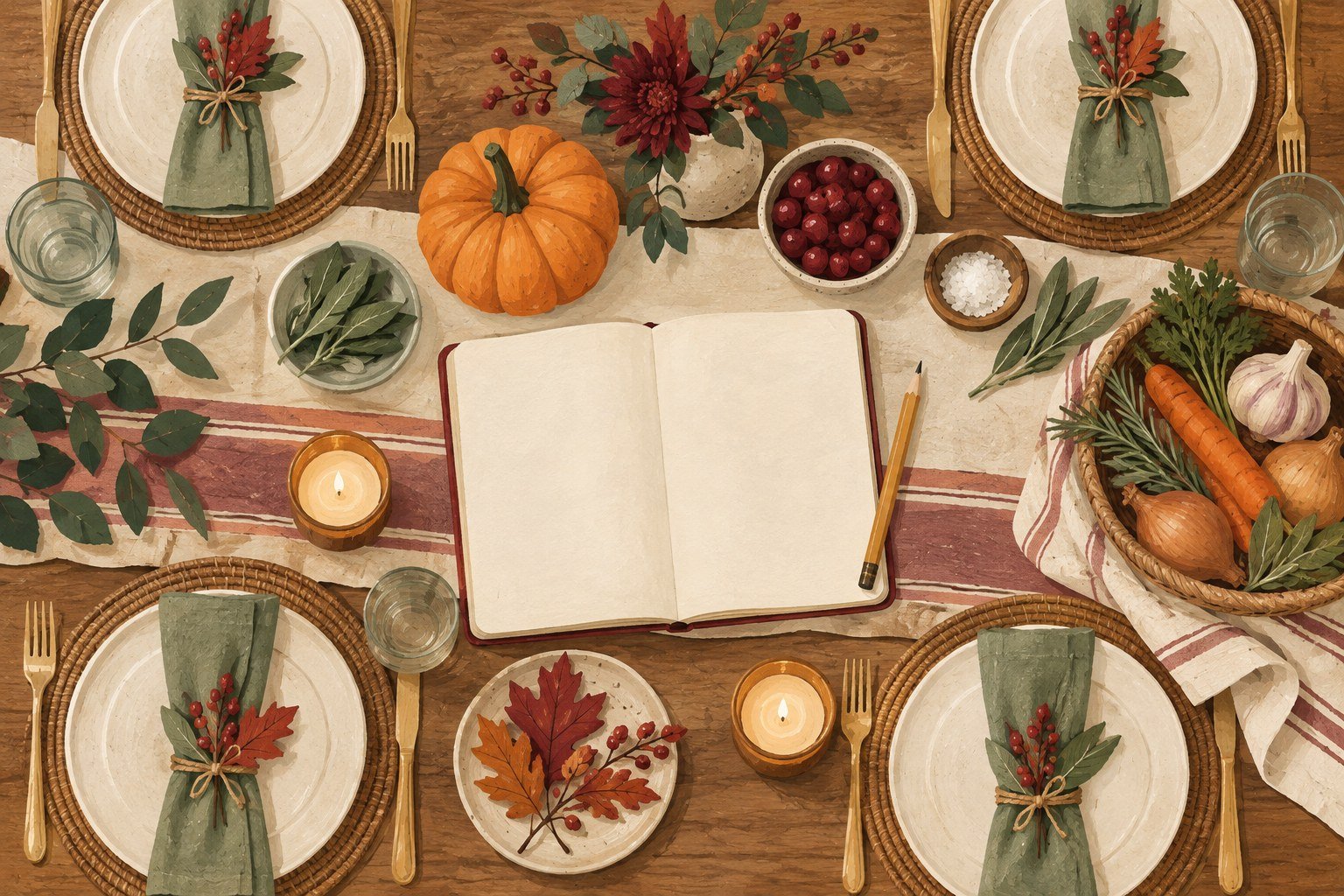
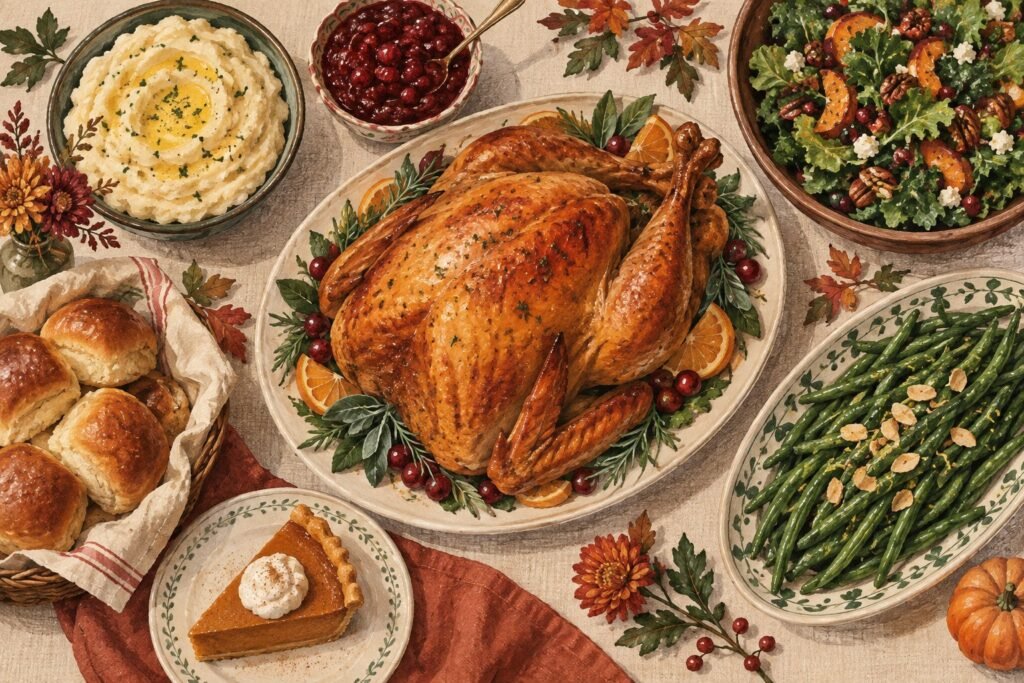
A complete traditional menu
- Herb-roasted turkey with gravy
- Mashed potatoes
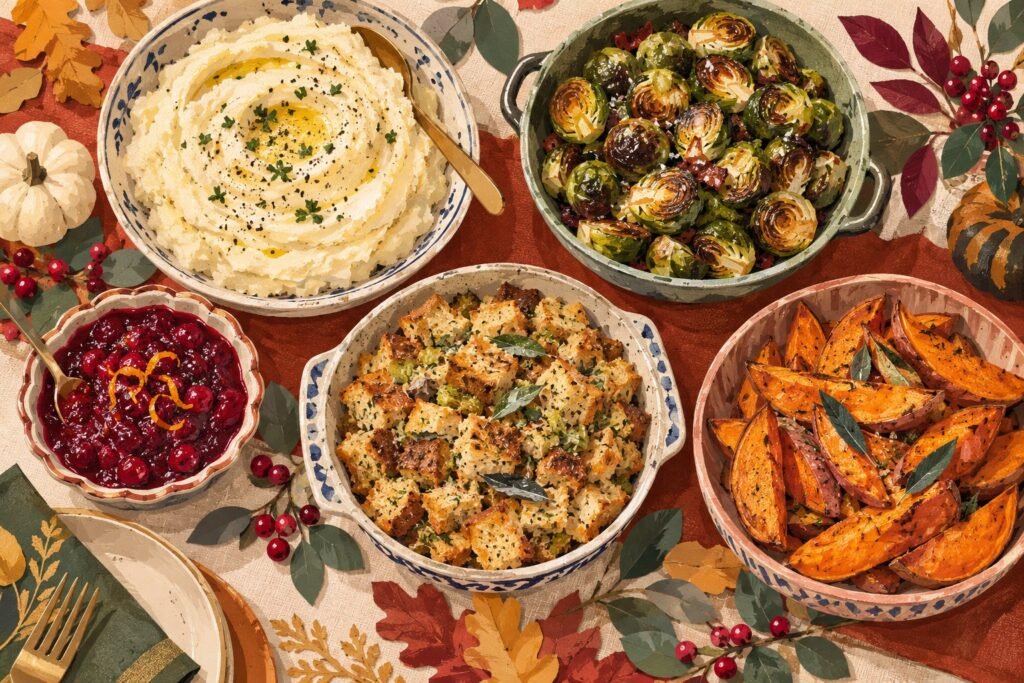
- Sage bread dressing baked separately
- Green beans with lemon or a mushroom casserole
- Cranberry sauce
- Dinner rolls
- Pumpkin pie and apple crumble
- Water, sparkling water, coffee or tea; other drinks optional
That menu has a rich main and starches, a green vegetable and a tart condiment. You can remove a dish without making the meal incomplete. If your family loves macaroni and cheese, use it instead of another starch rather than automatically adding it to an already crowded cooking plan.
The recipe collection supplies compact methods across courses. Use the turkey guide for the bird, side dishes for accompaniments and desserts for baking details.
First decide what dinner needs to accomplish
Ask guests about food requirements before choosing the menu. “Vegetarian” does not tell you whether someone eats dairy, and “no nuts” requires more care than removing a visible garnish. Keep labels and packaging available and clarify how shared utensils will be handled.
Choose a realistic serving time and tell guests whether it means arrival or the moment food is served. A 3 p.m. invitation can mean either, and the difference matters for a turkey that needs to rest. Give helpers specific arrival times too; several people appearing during carving may create more work than help.
Write down three constraints: available oven space, refrigerator space and the amount of hands-on cooking you want to do. If you have one oven and four burners, a cold salad and stovetop vegetable are valuable choices. If refrigerator space is tight, do not select multiple large chilled desserts simply because they can be made ahead.
Thanksgiving menu for four
Choose a small turkey breast, mashed potatoes, green beans, cranberry sauce, rolls and one dessert. Skip a separate appetizer unless guests arrive much earlier than dinner; a small bowl of olives or vegetables is enough to bridge a short wait.
| Component | Starting shopping quantity | Planning note |
|---|---|---|
| Bone-in turkey breast | About 4–6 pounds | Check label and desired leftovers; cooked yield is lower than raw weight |
| Potatoes | About 1½ pounds | Mash with butter and milk to suit the recipe |
| Green beans | About 1 pound | One vegetable is enough alongside a substantial main |
| Cranberries | One 12-ounce bag | Usually makes extra sauce; refrigerate remaining portions |
| Rolls | 4–8 | Allow one or two per person |
| Dessert | One 8- or 9-inch pie, or one small crumble | Serve modest portions; leftovers are likely |
Use a small saucepan for gravy and one pot for potatoes. Cook beans while the breast rests. A purchased pie or rolls can remove a task without changing the warmth of the meal. If you buy a prepared turkey product, follow its specific reheating instructions rather than the raw-breast roasting schedule.
For a very small kitchen, replace mashed potatoes with a grain salad made earlier and chilled safely. That frees a burner and a last-minute mashing step. Choose the variation because it solves a real constraint, not because every menu needs an unusual twist.
Thanksgiving menu for eight
A 10–12-pound whole turkey is a practical starting point when there are several sides; choose a larger allowance if generous leftovers are important. Serve mashed potatoes, dressing, a green vegetable, cranberry sauce, rolls and two desserts.
| Component | Starting quantity | Appliance or storage need |
|---|---|---|
| Whole turkey | About 10–12 pounds | Roasting pan and thermometer; several days for thawing if frozen |
| Potatoes | About 3 pounds | Large stovetop pot |
| Dry bread cubes for dressing | About 8 cups | One shallow 9-by-13-inch dish |
| Green vegetable | About 2 pounds | Stovetop steamer or wide skillet |
| Cranberry sauce | About 2 cups | Small covered refrigerator container |
| Rolls | 8–16 | Brief warming only if desired |
| Desserts | Two standard pies or a pie and crumble | Check refrigeration needs, especially custard pies |
This is a workable one-oven menu when the dressing is cooked ahead and reheated safely, or when it has a scheduled slot after the turkey. Do not assume a large cold casserole will reheat during a 20-minute turkey rest. Give it enough time, use a thermometer and plan controlled holding if necessary.
Ask one guest to bring a finished dessert and another to handle drinks and ice. Tell the dessert guest whether refrigerator space is available. A dish arriving frozen or needing an hour in the oven is a different contribution from a ready-to-serve pie.
Thanksgiving menu for twelve or more
For twelve, begin by considering roughly 15–18 pounds of raw whole turkey, or an equivalent plan using birds and pieces that fit your equipment. This is a shopping estimate, not an exact yield. With a larger group, white- and dark-meat preferences can matter as much as total weight.
Plan 4–5 pounds potatoes, 12–16 cups bread cubes for dressing, 3 pounds green vegetables, about 3 cups cranberry sauce, 18–24 rolls and three standard desserts. Those are starting quantities for a varied meal, not requirements to finish every serving bowl.
Use two shallow dressing dishes rather than one very deep pan. Prepare a second substantial main if needed for dietary requirements. A lentil-filled squash or bean-and-grain dish should be portioned for the people who will rely on it, with a little extra for others who want a taste.
A buffet can reduce crowding at the dining table. Put plates first, then mains and sides, and place drinks on another surface. Keep hot food hot with appropriate equipment and cold dishes chilled; a decorative buffet table alone does not maintain safe temperatures.
Assign a person to replenish small serving dishes from safely held food instead of putting every portion out at once. Assign another to label and refrigerate leftovers. For a large gathering, that food-storage job is as important as carving.
The easiest menu for a first-time host
Use roast turkey breast, stovetop potatoes, lemon green beans, cranberry sauce made the day before, purchased rolls and an apple crumble. The meal has a clear centerpiece without requiring a whole-bird presentation or several simultaneous baked sides.
Keep seasonings simple. A new brining technique, unfamiliar bread dough and a complicated pastry project all introduce uncertainty. Try one new recipe and rely on familiar methods for the rest. Read every recipe from beginning to end before buying ingredients.
Prepare a written fallback: purchased dessert if baking fails, a simple vegetable if the casserole cannot fit, and a later dinner time if the turkey is not yet at a safe temperature. Flexibility should change the menu or schedule, never the food-safety standard.
A vegetarian Thanksgiving menu
- Lentil-stuffed acorn squash or mushroom polenta as the main
- Roasted potatoes or quinoa with herbs
- Green beans and a crisp apple-cabbage slaw
- Cranberry sauce
- Bread with a suitable spread
- Apple crumble or another dessert matched to guests' needs
Use vegetable broth in grains, gravy and dressing. Check cheese ingredients for guests who avoid animal rennet, and remember that a vegetarian recipe can still contain milk, eggs, wheat, sesame or nuts. Offer a complete sauce for the main rather than leaving someone to eat dry grains beside meat gravy.
If the gathering includes both turkey and vegetarian diners, separate serving utensils and label the gravies. Prepare enough of the vegetarian main that other guests can try it without leaving its intended diners short. A potluck coordinator should tell contributors which ingredients need checking.
A budget-conscious menu
Start with the total meal budget, including drinks, disposable supplies if used and food that may go uneaten. Compare unit prices and package sizes; a large discounted product is not a saving if half is wasted or cannot be stored safely.
A practical lower-complexity menu is turkey portions or a suitably priced whole bird, mashed potatoes, braised cabbage, corn, cranberry sauce and one dessert. Beans can provide a substantial vegetarian option. Frozen plain vegetables are useful when fresh alternatives are expensive or preparation time is limited.
Avoid giving every dish a separate expensive garnish. Use one bundle of parsley across potatoes, gravy and vegetables. Choose either pecans or another costly topping when it matters to a recipe, rather than scattering nuts on every course. Do not promise a fixed per-person cost without checking local prices and package quantities.
Plan leftovers before shopping. If nobody wants repeated turkey sandwiches, buy a smaller bird or freeze portions promptly for another week. The most economical menu is not necessarily the one with the cheapest ingredients; it is the one whose quantities, equipment and time fit the household.
A make-ahead menu that still tastes fresh
Make cranberry sauce and a cooked braise the day before. Bake a dessert whose storage requirements you can meet. Prepare gravy separately from drippings, then use the turkey juices only as an optional finishing ingredient after tasting.
Keep one freshly cooked vegetable for contrast. Roast potatoes and crisp toppings lose some texture when held for a long time, so schedule them close to dinner if they are important to you. A salad can be washed ahead but should usually be dressed just before serving.
“Make ahead” means safely cooked, cooled, refrigerated and reheated when needed. It does not mean leaving partly prepared food warm on the counter. Check the original preparation date when deciding how long leftovers can remain refrigerated.
A Thanksgiving cooking timeline
One week before: Thursday, November 19
Confirm the guest count, dietary needs and serving time. Select recipes, read their full methods and list every pan. Check the food thermometer and refrigerator temperature. Shop for shelf-stable ingredients and order any specialty items or prepared dishes.
Buy frozen turkey early enough for the required refrigerator thaw. A 20–24-pound bird can need 5–6 days; a generic “start three days before” instruction would be too late. Use the turkey thawing table for the actual weight.
Three days before: Monday, November 23
Check thawing progress rather than assuming the bird is ready. Confirm who brings each dish and whether it needs heating. Clear refrigerator space and collect shallow containers for leftovers. Check store pickup times and any changes to the guest list.
Prepare nonfood items: count plates, locate serving spoons, set aside a carving board and plan the drinks area. Put a note in each empty serving dish identifying its food. This prevents last-minute searches while hot pans are being carried.
Two days before: Tuesday, November 24
Shop for fresh ingredients on a schedule consistent with their safe storage. Check the turkey label and its thawed storage window. If brining, fit it inside that window; do not add extra days simply because the bird is in salt water.
Wash durable produce and organize ingredients by recipe. Measure dry baking ingredients if useful. Keep raw poultry on a tray away from foods that will be eaten without cooking. Check that any guest-provided dish has a clear transport plan.
The day before: Wednesday, November 25
Make cranberry sauce, gravy or a braise; refrigerate promptly. Bake a dessert if its recipe supports it and store it correctly. Prepare salad components separately. Set the table and write the next day's appliance schedule on paper.
Do not stuff a raw bird and hold it overnight. This planner assumes dressing cooks separately. Do not partially roast the turkey as a shortcut. Either cook it completely and cool it safely for later reheating, or leave the full cook for Thanksgiving.
Thanksgiving morning
Check the bird, oven arrangement and thermometer before guests arrive. Set the oven to the recipe's specified temperature, no lower than 325°F for ordinary turkey roasting. Begin with enough time for the estimated cook, temperature checks and resting.
Put cold drinks in their designated place and keep the kitchen work area clear. Ask helpers to follow assigned tasks rather than opening the oven repeatedly to check progress. Use a separate timer or written list for every active dish.
Two hours before dinner
Assess the turkey's progress with a thermometer as appropriate, then decide which sides can begin. Start reheating cooked casseroles with enough time to reach 165°F at the center. Set out clean carving utensils and serving bowls, while keeping perishable cold food refrigerated.
If the schedule slips, communicate a new meal time. Serve a small appetizer if useful. Avoid trying to recover time by raising several appliance settings without understanding how it changes the recipes.
Just before serving
Confirm the turkey's required temperatures, then rest and carve. Finish quick vegetables, dress salad and warm bread if desired. Taste gravy and sauces after reheating. Give each dish its own serving utensil and tell guests about relevant ingredients.
Record when perishable food leaves temperature control. Put leftovers away within two hours, or one hour above 90°F. Do not let cleanup wait until a long game, walk or movie ends.
Sample one-oven schedule for a 3 p.m. meal
This example assumes a fully thawed 10–12-pound unstuffed turkey, separately prepared sides and a conventional oven. It is a planning illustration, not a guaranteed cooking timeline.
| Approximate time | Task | Dependency |
|---|---|---|
| 10:15 a.m. | Prepare oven, pan and turkey | Thawing already complete |
| 10:45 a.m. | Begin roasting at 325°F | Bird size and recipe may require a different start |
| 12:30 p.m. | Set up potatoes, gravy and serving area | Keep cold food refrigerated |
| 1:15 p.m. onward | Check progress; start planned side reheating | Use temperatures, not the clock, for decisions |
| When turkey is safe | Remove and rest about 20 minutes | Breast, thigh and wing each at least 165°F |
| Final 20–30 minutes | Finish beans, salad and carving | Casseroles already safely reheated |
| 3 p.m. target | Serve if all food is ready | Delay if the turkey or sides need more cooking |
If the oven cannot accommodate side reheating safely while the turkey roasts, use a stovetop or microwave-suitable side, a second appliance used according to its instructions, or a revised menu. Do not assume every casserole can share a turkey pan's space.
Grocery checklist by department
- Produce: potatoes, vegetables, onions, celery, herbs, lemons, cranberries and dessert fruit
- Main course: turkey or alternative, checked against the guest count and equipment
- Refrigerated ingredients: butter, milk or suitable substitutes, eggs, cheese and any chilled prepared dishes
- Pantry: broth, flour, sugar, oil, seasonings, bread cubes and required baking ingredients
- Bakery: rolls, bread or a purchased dessert if part of the plan
- Drinks: water options, coffee, tea, juice and ice; account for guests who do not drink alcohol
- Supplies: food thermometer, shallow containers, foil or covers, dish labels and enough serving utensils
Check cupboards before buying. Combine quantities across recipes so you do not miss a shared ingredient or buy three containers unnecessarily. Keep the list tied to the actual chosen menu rather than every possible Thanksgiving food.
Food-safety and leftover plan
FoodSafety.gov advises prompt refrigeration, shallow containers and reheating to 165°F. Keep cold food at 40°F or below; refrigerate perishables within two hours, or one hour above 90°F. The storage chart lists 3–4 refrigerated days for many cooked leftovers and for pumpkin or pecan pies.
Choose freezer portions before dinner begins. Label with the cooking date and contents, and explain allergens to anyone taking food home. Sending a full warm casserole on a long drive without cooling arrangements is not a complete leftover plan.
Frequently asked questions
What can guests bring that really helps?
Assign a finished dish, drinks plus ice, or a specific cleanup task. Ask contributors to bring a serving utensil and an ingredient list. Clarify whether reheating space is available.
Can I make dinner with one oven?
Yes. Choose a menu with stovetop and cold elements, bake dessert ahead and schedule reheating explicitly. The number of dishes matters less than whether they compete for the same space at the same time.
Do I need both stuffing and potatoes?
No. They are familiar together, but one starch may be enough for a small meal. Add the second because guests want it and you can prepare it comfortably.
How do I avoid too many leftovers?
Reduce the number of dishes, use smaller batches and ask which foods guests actually enjoy. Plan storage before increasing the turkey size. A large spread can create waste even when each individual recipe seems reasonably portioned.
What else should I organize for the holiday?
Use the Thanksgiving 2026 guide for dates, travel, parade information, activities and messages. Keep dinner planning focused on the meal so those other decisions do not all land in the final hour.

Pingback: 40 Thanksgiving Side Dishes 2026: Recipes & Tips
Pingback: Thanksgiving Desserts 2026: Pies, Cake & Easy Recipes