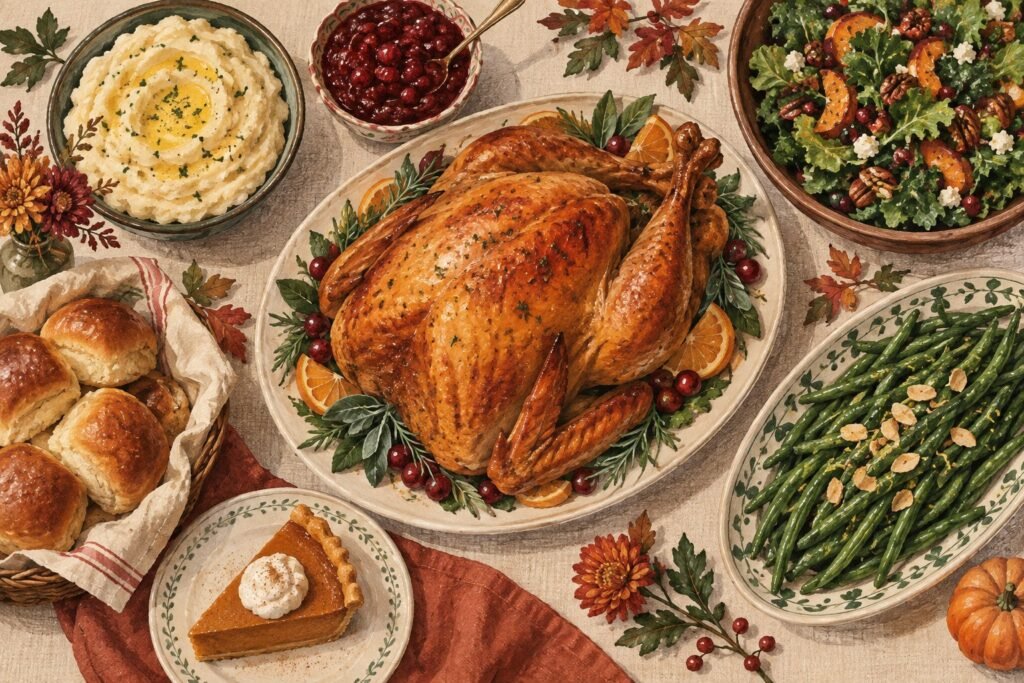
The best Thanksgiving side dishes for 2026 are the ones that balance your main course and fit your kitchen. This collection gives 40 distinct recipes: creamy potatoes, savory dressing, bright vegetables, grains, salads, breads and sauces. Choose three or four for a smaller meal, then add dishes for a larger group only when you have room to cook and store them.
These compact recipes are original editorial formulations, not claims of kitchen testing. Try a new dish before the holiday if it will be central to your meal. Measurements use US cups and spoons, conventional oven temperatures and unsalted butter. Times are estimates; cut size, pan depth and equipment change the result. Salt is adjusted to taste unless a measured quantity is essential.
For all make-ahead cooked dishes below, refrigerate promptly in shallow containers and reheat to 165°F. Keep the refrigerator at 40°F or below. Specific texture tips are separate from food-safety limits; a salad can lose its crunch before its ingredients reach their storage limit.
Choose a balanced set of sides
| Your main | Choose a starch | Add a vegetable | Finish with contrast |
|---|---|---|---|
| Roast turkey | Buttermilk potatoes | Lemon-braised green beans | Cranberry-pear sauce |
| Smoked turkey | Baked macaroni | Apple-cabbage slaw | Cucumber-dill salad |
| Lentil or mushroom main | Roasted potatoes | Garlic broccoli | Orange beet salad |
| Small turkey breast | Root-vegetable mash | Skillet peas | A small basket of rolls |
The dinner menu guide turns those choices into complete meals. The broader recipe collection includes appetizers and mains; this page stays focused on accompaniments.
Potatoes and other comforting starches
1. Buttermilk mashed potatoes
Serves 6. Prep 15 minutes; cook 20 minutes. Peel and cube 2 pounds of potatoes, cover with cold water and simmer until easily pierced. Drain thoroughly. Mash with 4 tablespoons butter, then fold in ½ cup room-temperature buttermilk and black pepper. Add a little warm milk if needed. Avoid boiling the buttermilk, which can separate. Make earlier the same day; reheat with a splash of milk, stirring gently, to 165°F.
2. Rosemary potato wedges
Serves 6. Prep 15 minutes; roast 35–45 minutes. Cut 2 pounds of potatoes into similar wedges and dry their surfaces. Toss with 2 tablespoons olive oil, 1 teaspoon finely chopped rosemary and ½ teaspoon salt. Roast on a roomy sheet at 425°F, turning after 25 minutes, until tender inside and crisp outside. Serve promptly. Cut and prepare the seasoning ahead, but roast close to dinner for the best crust.
3. Potato and leek gratin
Serves 8. Prep 25 minutes; bake 60–75 minutes. Wash and thinly slice 2 leeks, then soften in 2 tablespoons butter. Layer with 2 pounds thinly sliced potatoes in a greased shallow 9-by-13-inch dish. Add 1½ cups milk, ½ cup cream and ½ teaspoon salt; top with ½ cup grated Gruyère. Bake covered at 375°F for 45 minutes, then uncover until potatoes are tender and the center reaches 165°F. Rest 10 minutes before serving.
4. Root-vegetable mash
Serves 6. Prep 20 minutes; cook 25 minutes. Combine 1 pound potatoes, ½ pound parsnips and ½ pound carrots, all peeled and cut into similar pieces. Simmer in water until soft, drain and mash with 3 tablespoons butter and ½ cup warm milk. The texture can remain pleasantly rustic. Season with pepper and a little salt. Refrigerate one day ahead if needed; reheat gently to 165°F, adding milk gradually rather than thinning all at once.
5. Sweet-potato and black-bean bake
Serves 6. Prep 20 minutes; bake 35–45 minutes. Toss 1½ pounds peeled, small-diced sweet potatoes with 1 tablespoon oil and roast at 400°F for 20 minutes. Fold in one drained 15-ounce can black beans, ½ cup salsa and ½ teaspoon cumin. Transfer to a shallow dish, top with ½ cup shredded cheddar and bake until potatoes are tender and the center is 165°F. Keep spicy salsa optional for mixed-age groups.
6. Brown-butter sweet-potato coins
Serves 6. Prep 15 minutes; roast 30 minutes. Slice 2 pounds scrubbed sweet potatoes into ½-inch rounds, toss with 1 tablespoon oil and roast at 400°F, turning once, until tender. Melt 3 tablespoons butter in a small light-colored pan and swirl until the milk solids turn golden and smell nutty. Remove immediately; burnt butter tastes bitter. Spoon over the potatoes and finish with parsley. Make the brown butter just before serving.
7. Savory pumpkin polenta
Serves 6. Prep 5 minutes; cook about 30 minutes, depending on the polenta. Whisk 1 cup polenta into 4 cups simmering vegetable broth. Cook according to its package, stirring frequently, then fold in ¾ cup plain pumpkin purée and 2 tablespoons butter. Add warm water if too thick and season after tasting the broth's salt. Serve soft in a warmed bowl. This is best freshly made; refrigerated polenta firms and needs extra liquid when reheated.
8. Baked cheddar macaroni
Serves 8. Prep 20 minutes; bake 20–25 minutes. Cook 12 ounces elbow macaroni just short of the package's full time. Make a sauce by cooking 3 tablespoons flour in 3 tablespoons butter for 2 minutes, then gradually whisking in 3 cups milk. Simmer until thick, remove from heat and melt in 2 cups shredded cheddar. Combine with pasta, spread in a shallow dish and bake at 375°F until bubbling and 165°F in the middle. Add crumbs only if desired.
Dressing, rice and grains
9. Celery-sage bread dressing
Serves 8. Prep 20 minutes; bake 35–45 minutes. Soften 1 diced onion and 3 chopped celery stalks in 4 tablespoons butter. Toss with 8 cups dry bread cubes, 1 teaspoon dried sage and about 2 cups low-sodium broth, stopping when evenly moist but not soggy. Bake in a greased 9-by-13-inch dish at 350°F, covered for 25 minutes and then uncovered until crisp and 165°F in the center. Keep it outside the bird.
10. Cornbread and poblano dressing
Serves 8. Prep 25 minutes; bake 35–45 minutes. Sauté 1 diced onion and 1 seeded, diced poblano in 3 tablespoons butter until soft. Mix with 6 cups dry cornbread cubes, 2 cups dry plain bread cubes, ½ teaspoon cumin and enough broth, roughly 2 cups, to moisten. Bake in a shallow greased dish at 350°F until the center reaches 165°F. Poblano heat varies; use a sweet bell pepper for a milder version.
11. Mushroom-barley pilaf
Serves 6. Prep 15 minutes; cook 35–45 minutes. Brown 8 ounces sliced mushrooms and 1 small diced onion in 2 tablespoons olive oil. Add 1 cup pearl barley and the broth amount specified on its package, usually about 3 cups. Simmer until tender, draining excess liquid if needed. Finish with 2 tablespoons parsley and lemon zest. Barley contains gluten; do not describe this as a gluten-free rice substitute. Reheat with a little broth to 165°F.
12. Brown rice with roasted squash
Serves 6. Prep 15 minutes; cook 40–50 minutes. Cook 1 cup brown rice using its package ratio. Meanwhile roast 3 cups small-diced butternut squash with 1 tablespoon oil at 400°F for 25–30 minutes. Fold together with ¼ cup sliced scallions, 2 tablespoons olive oil and 1 tablespoon lemon juice. Keep optional dried fruit separate if the rest of the menu is already sweet. Cool cooked rice promptly when preparing ahead.
13. Quinoa with peas and herbs
Serves 6. Prep 10 minutes; cook 20 minutes. Rinse 1 cup quinoa and cook with 2 cups water, or the package's specified amount, until liquid is absorbed. Cook 1 cup frozen peas according to their package and fold in with ¼ cup chopped parsley, 2 tablespoons olive oil and lemon juice to taste. Fluff gently instead of compressing into a dense mound. This can be served warm or chilled after prompt refrigeration.
14. Warm couscous with roasted peppers
Serves 6. Prep 10 minutes; cook 10 minutes. Prepare 1½ cups ordinary couscous according to its package; pearl couscous requires a different method. Fold in 1 cup drained, chopped roasted peppers, ¼ cup parsley and 2 tablespoons olive oil. Add lemon juice and pepper to taste. Fluff with a fork and serve in a shallow bowl. Check that guests can eat wheat, and refrigerate leftovers promptly rather than leaving the bowl beside the stove.
Green beans and other green vegetables
15. Lemon-braised green beans
Serves 6. Prep 15 minutes; cook 15 minutes. Put 1½ pounds trimmed green beans in a wide pan with ½ cup broth and 1 tablespoon butter. Cover and simmer until tender, checking after 8 minutes; uncover to evaporate excess liquid. Add 1 tablespoon lemon juice and 1 teaspoon zest. This softer preparation suits people who do not enjoy very crisp beans. Trim ahead, then cook while the turkey rests.
16. Green beans with shallot crumbs
Serves 6. Prep 15 minutes; cook 15 minutes. Steam 1½ pounds green beans until tender-crisp. In another pan, cook 1 minced shallot in 2 tablespoons olive oil, add ½ cup breadcrumbs and stir until golden. Season the beans lightly and scatter crumbs on just before serving. Store the cooled crumb topping separately from refrigerated beans so it stays crisp. For reheating, heat the beans thoroughly before adding fresh crumbs.
17. Green bean mushroom casserole
Serves 8. Prep 25 minutes; bake 25–30 minutes. Steam 1½ pounds green beans until barely tender. Brown 8 ounces mushrooms in 3 tablespoons butter, stir in 3 tablespoons flour, then gradually add 2 cups milk. Simmer until thick. Combine with beans, place in a shallow baking dish and top with ½ cup crispy onions. Bake at 375°F until bubbling and 165°F in the center. Check packaged onions for allergens.
18. Garlic roasted broccoli
Serves 6. Prep 15 minutes; roast 20–25 minutes. Cut 1½ pounds broccoli into florets with some stem attached. Toss with 2 tablespoons olive oil and roast at 425°F for 15 minutes. Add 2 thinly sliced garlic cloves, toss and roast until the edges brown and stems are tender. Adding garlic later helps prevent bitterness from burning. Finish with lemon. Use two pans if the florets would otherwise pile up.
19. Creamed spinach with nutmeg
Serves 6. Prep 15 minutes; cook 15 minutes. Thaw and squeeze dry two 10-ounce packages chopped spinach. Cook 1 minced shallot in 2 tablespoons butter, stir in 2 tablespoons flour and cook 2 minutes. Whisk in 1¼ cups milk and simmer until thickened. Add spinach, a small pinch of nutmeg and pepper; heat to 165°F. Too much nutmeg overwhelms the dish, so begin with less than ⅛ teaspoon and taste.
20. Skillet peas and pearl onions
Serves 6. Prep 5 minutes; cook 15 minutes. Combine 2 cups frozen peeled pearl onions with ½ cup water and 1 tablespoon butter; cover and simmer until nearly tender. Add 3 cups frozen peas and cook according to the package, adding water if needed. Uncover briefly, then stir in chopped mint or parsley. This side is useful when chopping time and oven space are limited. Serve with a slotted spoon if liquid remains.
21. Brussels sprouts with apples
Serves 6. Prep 20 minutes; roast 30 minutes. Halve 1½ pounds Brussels sprouts and toss with 2 tablespoons oil. Roast at 425°F for 15 minutes, then add 1 firm apple cut into large chunks. Continue roasting until sprouts are tender and browned. Finish with 1 tablespoon cider vinegar. Keep apple pieces large enough to retain texture rather than dissolving into the vegetables. Serve straight from a warmed platter.
22. Braised collards with tomatoes
Serves 6. Prep 20 minutes; cook 35–50 minutes. Remove tough stems from 1½ pounds collards and slice the leaves. Soften 1 diced onion in 2 tablespoons oil, add one 14-ounce can diced tomatoes and 1 cup vegetable broth, then the greens. Simmer covered until tender, stirring occasionally. Add a splash of vinegar to finish. Vegetable broth keeps this version meat-free; a separate hot sauce lets guests choose the heat.
Colorful roasted and stovetop vegetables
23. Cumin-roasted carrots
Serves 6. Prep 15 minutes; roast 30 minutes. Cut 1½ pounds carrots into even diagonal pieces. Toss with 2 tablespoons oil, ½ teaspoon ground cumin and a pinch of salt. Roast at 400°F until tender, turning halfway. Stir ½ cup plain yogurt with lemon juice for an optional sauce served separately. A cool, tangy topping gives contrast, but add it at the table so the vegetables do not become wet during holding.
24. Maple acorn squash crescents
Serves 6. Prep 20 minutes; roast 30–40 minutes. Seed two acorn squash and cut into ¾-inch crescents using a stable board and sharp knife. Toss with 1½ tablespoons oil and roast at 400°F for 25 minutes. Brush with 1 tablespoon maple syrup and return until tender. Tell guests that the firm outer skin can be left on the plate. If cutting hard squash feels unsafe, buy prepared squash pieces instead.
25. Cauliflower with caper dressing
Serves 6. Prep 15 minutes; roast 25–35 minutes. Break one large cauliflower into florets, toss with 2 tablespoons oil and roast at 425°F until tender with browned tips. Mix 1 tablespoon chopped capers, 1 tablespoon lemon juice and 1 tablespoon olive oil, then toss through the warm vegetables. Taste before salting because capers are already salty. Roast shortly before serving; the dressing can be mixed earlier and kept refrigerated.
26. Balsamic red onions
Serves 6. Prep 10 minutes; roast 35–45 minutes. Cut four medium red onions into wedges, leaving a little root attached to hold them together. Toss with 2 tablespoons olive oil and roast at 400°F for 25 minutes. Drizzle with 1 tablespoon balsamic vinegar and roast until soft and lightly caramelized. Serve beside a rich main in modest portions. Use a spatula when turning so the wedges do not all break apart.
27. Skillet corn and red pepper
Serves 6. Prep 10 minutes; cook 15 minutes. Sauté 1 diced red pepper in 2 tablespoons butter until softened. Add 4 cups corn kernels and ¼ cup water, cover and cook until hot and tender, following frozen corn package instructions if applicable. Uncover to remove excess moisture and add scallions. This uncomplicated side adds color without cream or an oven dish. Keep butter substitutions separate from any claim that a dish is allergen-free.
28. Ginger-glazed parsnips
Serves 6. Prep 15 minutes; cook 20–25 minutes. Peel 1½ pounds parsnips and cut into sticks, removing woody cores from large ones. Simmer in a skillet with ½ cup water, 2 tablespoons butter and 1 teaspoon grated ginger until almost tender. Uncover, add 1 tablespoon honey and turn gently until lightly glazed. Watch closely as the liquid reduces. Use maple syrup instead of honey when serving a child under one year.
29. Tomato-braised white beans
Serves 6. Prep 10 minutes; cook 20 minutes. Soften 1 diced onion in 1 tablespoon oil, add 2 minced garlic cloves, one 14-ounce can crushed tomatoes and two drained 15-ounce cans white beans. Simmer gently for 15 minutes, loosening with water if necessary. Finish with parsley and pepper. This substantial side can support a vegetarian plate. Make one day ahead, refrigerate promptly and reheat to 165°F before serving.
30. Cider-braised red cabbage
Serves 8. Prep 20 minutes; cook 35–45 minutes. Thinly slice one small red cabbage and one onion. Cook the onion in 2 tablespoons oil, then add cabbage, ½ cup pasteurized apple cider, 2 tablespoons cider vinegar and 1 tablespoon brown sugar. Cover and simmer until tender, stirring and adding water if dry. Uncover to reduce excess liquid. The flavor holds well overnight; reheat thoroughly and taste for acidity before serving.
Salads, cranberries and cool contrasts
31. Apple-cabbage slaw
Serves 8. Prep 20 minutes; no cooking. Shred ½ small green cabbage and 2 carrots; add 1 thinly sliced apple. Whisk 3 tablespoons olive oil with 2 tablespoons cider vinegar and 1 teaspoon Dijon mustard. Toss and refrigerate until serving. This vinegar-based slaw provides crunch beside soft potatoes and dressing. Make the vegetables a few hours ahead but add the apple and dressing nearer the meal for the freshest texture.
32. Orange and beet salad
Serves 6. Prep 20 minutes; use already cooked beets. Slice 4 cooked, chilled beets and segment 2 oranges. Arrange over 3 ounces arugula and drizzle with 2 tablespoons olive oil mixed with 1 tablespoon orange juice and 1 teaspoon vinegar. Keep the components separate until assembly so beet juice does not color everything. If roasting raw beets yourself, allow additional cooking and cooling time rather than counting this as a 20-minute start-to-finish recipe.
33. Cucumber-dill salad
Serves 6. Prep 15 minutes; chill 15 minutes. Slice two large cucumbers thinly. Toss with 2 tablespoons rice vinegar, 1 tablespoon olive oil, 1 tablespoon chopped dill and a pinch of salt. Chill briefly, then drain excess liquid if needed before serving. This light accompaniment is intentionally simple. Do not make it several days ahead expecting the same crunch; cut cucumbers release water as they sit.
34. Cranberry-pear sauce
Makes about 2½ cups. Prep 10 minutes; cook 15–20 minutes. Combine 12 ounces cranberries, 1 peeled diced pear, ¾ cup sugar and ¾ cup water. Simmer until berries burst and pear softens, stirring frequently. Mash some fruit for a thicker texture while leaving a few pieces intact. Refrigerate in a shallow container and serve chilled. This is a fresh refrigerated sauce, not a tested preservation or canning formula.
35. Roasted grape and greens salad
Serves 6. Prep 15 minutes; roast 15 minutes. Toss 2 cups seedless grapes with 1 teaspoon oil and roast at 400°F until some skins split. Cool, then arrange with 5 ounces salad greens and ¼ cup toasted sunflower seeds. Dress with 2 tablespoons olive oil and 1 tablespoon balsamic vinegar. Cut grapes appropriately for young children rather than serving them whole. Add dressing immediately before bringing the salad to the table.
36. Celery, apple and parsley salad
Serves 6. Prep 20 minutes; no cooking. Thinly slice 6 celery stalks and 2 firm apples. Toss with ½ cup chopped parsley, 2 tablespoons lemon juice and 2 tablespoons olive oil. Season lightly and chill until dinner. Use tender celery leaves too if fresh. The crisp texture works especially well with braised or smoked mains. Keep optional walnuts separate, and do not assume removing a garnish eliminates allergy cross-contact.
Bread and gravy to finish the table
37. Cheddar-chive biscuits
Makes 12. Prep 20 minutes; bake 15–18 minutes. Mix 2 cups flour, 1 tablespoon baking powder and ½ teaspoon salt. Rub in 6 tablespoons cold butter, then add ¾ cup shredded cheddar and 2 tablespoons chives. Stir in about ¾ cup milk until a soft dough forms. Pat gently, cut into 12 squares and bake at 425°F until risen and golden. Avoid overworking or tasting raw dough. Best baked close to dinner.
38. Rosemary focaccia toasts
Serves 8. Prep 10 minutes; bake 8–12 minutes. Cut one purchased focaccia, about 12 ounces, into 16 fingers. Brush lightly with 1 tablespoon olive oil and sprinkle with 1 teaspoon finely chopped rosemary. Bake at 375°F until edges are crisp but centers remain soft. This is a quick finishing recipe using prepared bread, not a from-scratch yeast formula. Set a timer; thin pieces brown sooner than thick wedges.
39. Onion gravy
Makes about 3 cups. Prep 15 minutes; cook 30 minutes. Slowly soften two thinly sliced onions in 3 tablespoons butter until golden. Sprinkle with 3 tablespoons flour and stir for 2 minutes. Gradually add 3 cups vegetable broth, then simmer until thickened. Add pepper and a small splash of cider vinegar if the flavor needs brightness. Keep the gravy vegetarian by checking the broth; prepare ahead and reheat to 165°F with stirring.
40. Thyme mushroom sauce
Makes about 2 cups. Prep 10 minutes; cook 20 minutes. Brown 12 ounces sliced mushrooms in 2 tablespoons olive oil. Add ½ teaspoon thyme and 1½ cups vegetable broth; simmer 5 minutes. Mix 2 teaspoons cornstarch with 2 tablespoons cold water, stir into the simmering sauce and cook until glossy. Add ¼ cup cream only if desired. Serve over turkey, grains or a vegetarian main, keeping dietary needs in mind.
A workable make-ahead order
Two days before dinner, choose dishes and check ingredient labels, pans and storage space. One day before, make the cranberry sauce and gravy, prepare a cooked braise if using one, and wash vegetables. Refrigerate cooked food promptly rather than letting a crowded counter become a holding area.
On Thanksgiving morning, set out serving dishes and label which food belongs in each. Cook grain dishes or casseroles with enough time for safe cooling if they will be reheated later. Do not partially cook a dish and leave it lukewarm for the afternoon. In the final hour, prioritize fresh roasting, crisp toppings and salad assembly.
If turkey occupies the only oven, choose at least two stovetop or cold sides. Avoid planning three recipes at three oven temperatures in the same 30-minute window. A microwave can reheat a cooked side, but stir, cover, allow standing time and check several spots for 165°F.
Scaling for a crowd without losing texture
A recipe serving six does not become a recipe serving twelve merely by piling twice as much into the same pan. Two sheet pans allow vegetables to roast; one crowded pan steams them. Two shallow casseroles heat more predictably than a single deep vessel.
Buy ingredients by the number of side portions you need, then consider the whole menu. When there are six sides, guests usually take smaller helpings of each than when there are two. Account for children, appetites and planned leftovers without claiming a universal portion rule.
Write down which dish uses each burner. Assign one person to hot food, another to cold assembly and another to putting food away. Clear responsibilities matter more than adding another recipe at the last minute.
Storage and dietary checks
FoodSafety.gov advises refrigerating perishables within two hours, or one hour above 90°F, and reheating leftovers to 165°F. Use the cold storage chart for specific foods; many cooked leftovers keep 3–4 days refrigerated. Freeze portions you will not use within that window.
Wheat can appear in crumbs, gravy and couscous; barley contains gluten; dairy appears in many creamy dishes; sesame or nuts may appear in purchased ingredients. Read labels and ask guests what they need. A recipe variation is not a medical guarantee, and shared utensils can defeat an otherwise careful ingredient substitution. The FDA advises against tasting raw flour or batter.
Frequently asked questions
How many sides should I make?
For a small gathering, start with one starch, one vegetable and one bright accompaniment. Larger groups can add variety, but the kitchen's capacity and guests' preferences should determine the final number.
Which sides are best made the day before?
Cranberry sauce, braised cabbage and gravy are good candidates. Crisp roast vegetables, dressed leafy salads and biscuits are better finished near serving. Refrigeration and reheating instructions still apply to every cooked make-ahead dish.
What can I serve without using the oven?
Try mashed potatoes, peas, lemon-braised beans, white beans, slaw and cranberry sauce. Choose a combination that uses different pans and preparation times instead of moving the entire bottleneck from oven to stovetop.
Are stuffing and dressing different?
Names vary by household and region. Here, dressing means the bread mixture baked in a separate dish. Keeping it separate makes temperature checking and meal timing simpler; the center should reach 165°F.
Where are the turkey and dessert recipes?
Use the turkey guide for the main and the dessert collection for pies, cakes and simpler sweets. Thanksgiving 2026 falls on Thursday, November 26.