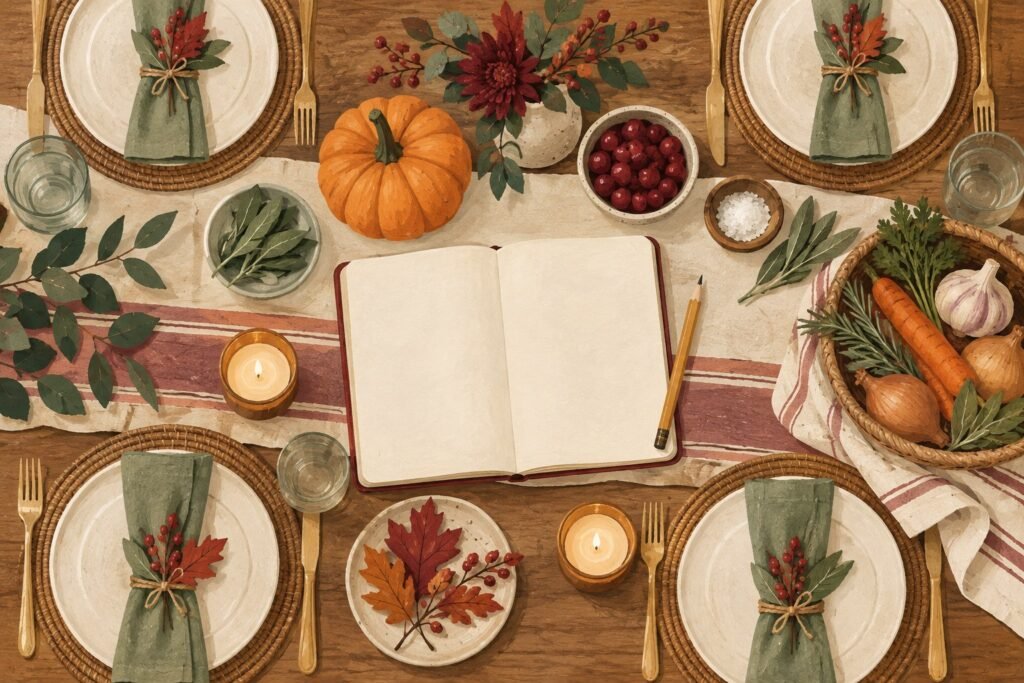
This roast turkey breast bone in recipe is built for the way many of us actually celebrate now: a smaller table, a shorter day, and no interest in wrestling a 20-pound bird. A bone-in turkey breast — typically 5 to 8 pounds — roasts in under two hours, delivers the white meat everyone wants with the flavor and moisture that only the bone provides, and leaves your oven free for everything else. It is the smartest Thanksgiving centerpiece for gatherings of two to eight people, and honestly, it is easier to get right than a whole turkey.
Below you will find how to choose the right breast (including what “bone-in” really means at the butcher counter), a dry-brine plus herb-butter method that guarantees juicy meat, exact temperatures and timing, side-dish pairings scaled for small gatherings, and all the troubleshooting answers for first-timers. If you are cooking for a crowd, our whole roast turkey guide has you covered — but if the guest list fits around one table, keep reading. This might be the most relaxed Thanksgiving turkey you have ever made.
Why Bone-In Beats Boneless (and Whole Bird, for Small Groups)
A turkey breast roast comes in three common forms: boneless roast (often netted), bone-in half breast, and whole bone-in breast (both halves joined at the keel bone). For flavor and forgiveness, bone-in wins clearly. The bone insulates the meat, slowing heat penetration so the exterior does not overcook before the center finishes; the connective tissue around the bone bastes the meat as it renders; and the ribcage gives the roast structure so it cooks evenly instead of slumping. Boneless breasts cook faster but dry out faster too, with less margin for error — and they cost more per pound for the privilege.
Against a whole turkey, the bone-in breast wins on every practical axis for small gatherings. A 6-pound breast feeds 6 to 8 generously and roasts in about 90 minutes; a whole bird feeds 12+ and takes half the day. There is no dark meat to manage (a feature, not a bug, when your table prefers white meat), no cavity to deal with, carving is trivially easy, and the price is a fraction of a whole premium bird. The only thing you give up is the Norman Rockwell presentation — and the leftovers math still works beautifully, as we will see.
Choosing and Sizing Your Turkey Breast
Bone-In Half Breast vs. Whole Bone-In Breast
Most supermarkets sell bone-in breasts as a “half breast” — one side, 2.5 to 4 pounds, with ribs and partial backbone attached. These are perfect for 2 to 4 people. The “whole” bone-in breast (both lobes, 5 to 8 pounds) suits 6 to 8. If your store only carries halves and you need more, buy two halves rather than hunting for a whole — they roast identically and give you more crispy skin surface. Ask the butcher to confirm the breast is truly bone-in; some “breast roasts” are boneless meat netted into a roast shape, which cooks differently.
How Much to Buy
Plan on 3/4 to 1 pound of bone-in breast per person. The bone accounts for meaningful weight, so a 6-pound breast yields roughly 4 to 4.5 pounds of meat — about 6 to 8 servings with modest leftovers. Want serious leftovers for sandwiches? Buy a pound per person. For two people, a 3-pound half breast gives dinner plus a day of leftovers; for eight, a 7- to 8-pound whole breast does the job.
Fresh vs. Frozen, Natural vs. Enhanced
Fresh is convenient if your store stocks it the week of Thanksgiving; frozen works identically once thawed — allow roughly 24 hours of refrigerator thawing per 4 pounds (a 6-pound breast needs about a day and a half). Check the label for enhancement: many supermarket breasts are injected with up to 8 percent salt solution. Enhanced breasts are harder to overcook but taste noticeably salty and ham-like; for this recipe, choose a natural, minimally processed breast so your seasoning stays in your control. Our guide to buying Thanksgiving turkey online covers heritage and premium options if you want to upgrade.
The Method: Dry-Brine + Herb Butter Roast
Turkey breast is the leanest part of the bird, which is exactly why it dries out in so many recipes. This method attacks dryness three ways: a dry brine that seasons the meat deeply and helps it retain moisture, butter under the skin that bastes from within, and a two-stage roast that crisps the skin without overshooting the interior. The result slices juicy even at the thin end.
Ingredients
- 1 bone-in turkey breast, 5–8 lbs (or 2 half breasts), thawed, patted dry
- 1 tablespoon kosher salt per 4 lbs of breast (e.g., 1½ tablespoons for 6 lbs)
- 6 tablespoons (85 g) unsalted butter, softened
- 3 cloves garlic, minced
- 1 tablespoon fresh thyme leaves
- 2 teaspoons fresh rosemary, finely chopped
- 2 teaspoons fresh sage, finely chopped
- 1 teaspoon black pepper
- 1 teaspoon lemon zest
- 1 tablespoon olive oil
- 1 onion (quartered), 2 carrots (chunked), 2 celery stalks (chunked) for the pan
- 1 cup turkey or chicken stock, for the pan
Instructions
- Dry-brine 12–24 hours ahead (highly recommended): Pat the breast completely dry. Rub the kosher salt over every surface, including under the skin where you can reach and into the rib cavity. Set on a rack over a rimmed sheet pan and refrigerate uncovered. The salt first draws moisture out, then the salty liquid reabsorbs, seasoning the meat throughout; the uncovered rest dries the skin for better browning. (If same-day: salt 1 hour ahead at room temperature and continue.)
- Temper before roasting: Remove the breast from the fridge 45 to 60 minutes before roasting. A room-temperature roast cooks more evenly — a fridge-cold breast roasts unevenly, with the exterior racing ahead of the center.
- Heat the oven to 425°F (218°C) with a rack in the middle position.
- Apply the herb butter: Mash the softened butter with garlic, herbs, pepper, and lemon zest. Gently loosen the breast skin with your fingers and spread two-thirds of the butter directly on the meat under the skin; rub the remainder over the skin with the olive oil. (If you dry-brined, the salt is already on the bird — do not add more.)
- Set up the pan: Scatter the onion, carrots, and celery in a roasting pan or large oven-safe skillet, pour in the stock, and set the breast on top, bone-side down, skin up. The vegetables elevate the meat slightly and the stock keeps the drippings from scorching — those drippings become gravy.
- Roast hot, then reduce: Roast at 425°F for 20 minutes to set and brown the skin, then reduce to 350°F (177°C) without opening the door (just turn the dial) and continue roasting. Total time runs about 13 to 15 minutes per pound at the reduced temperature — roughly 1 hour 20 minutes to 1 hour 40 minutes for a 6-pound breast after the initial blast.
- Thermometer check: Begin checking 15 minutes before the estimated finish. Insert the probe into the thickest part of the breast without touching bone. Pull the roast at 160°F (71°C) — carryover heat will bring it to the safe 165°F (74°C) during rest. Never roast by time alone.
- Rest 20 minutes: Tent loosely with foil and rest a full 20 minutes. Skipping the rest floods the cutting board with juices that belong in the meat. Use the rest time to make gravy from the pan drippings (see below).
Small-Batch Gravy From the Drippings
A breast roast produces less drippings than a whole bird, but the concentrated, buttery pan juices are intensely flavored. While the breast rests, strain the pan contents into a fat separator or measuring cup, let the fat rise, and pour off 3 tablespoons of fat into a saucepan. Whisk in 3 tablespoons of flour and cook 2 minutes until golden, then whisk in the defatted drippings plus enough stock to make 2 cups total. Simmer until thickened, season with salt, pepper, and a squeeze of lemon. Two cups is the right quantity for a small table — no one needs a quart of gravy for six people. For larger-batch technique, our turkey gravy from drippings guide covers every variation.
Side Dishes Scaled for a Small Thanksgiving
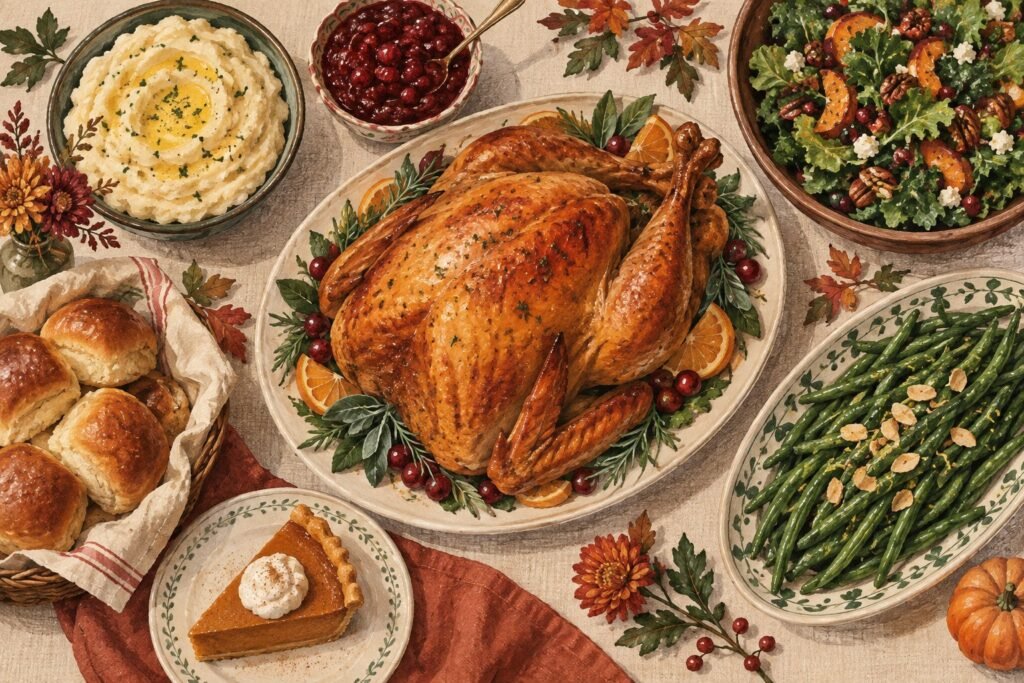
Cooking a breast instead of a whole bird frees the oven — use that freedom. The classic sides scale down easily: halve your creamy mashed potato recipe, bake a small dish of classic bread stuffing (dressing baked separately is safer and crispier anyway), and make a half-batch of homemade cranberry sauce, which keeps for weeks and improves with age. Because the turkey finishes in 90 minutes, you can roast vegetables at the same temperature alongside it during the last 30 minutes — Brussels sprouts, butternut squash, and carrots all thrive at 350–425°F. Plan your Thanksgiving dinner menu around one oven timeline instead of two, and the day feels calm instead of frantic. For dessert, our Thanksgiving desserts collection scales — bake one pie, not three.
Variations
Maple-Dijon Glazed Breast
Skip the herb butter; instead whisk 1/3 cup pure maple syrup with 3 tablespoons Dijon mustard, 2 tablespoons melted butter, and a teaspoon of chopped thyme. Brush over the breast for the final 25 minutes of roasting, reapplying once. The glaze caramelizes into a burnished, sweet-savory crust. Watch it closely — maple browns fast.
Smoked Paprika and Brown Butter
Brown the butter first (cook until nutty and amber), then mix with 2 teaspoons smoked paprika, 1 teaspoon garlic powder, and the herbs. The brown butter adds toasty depth and the paprika gives the skin a gorgeous mahogany color. Excellent if your sides lean smoky or barbecue-inspired.
Citrus and Fennel
Replace the lemon zest with orange zest, add 1 teaspoon fennel seeds (crushed) to the butter, and lay sliced oranges in the pan under the breast. Bright, fragrant, and particularly good with a Mediterranean-leaning menu. The orange slices caramelize in the drippings and make a beautiful pan sauce with a splash of white wine.
Slow-Roasted for Ultimate Tenderness
For the most forgiving version, roast at a steady 325°F (163°C) for about 20 minutes per pound after searing the skin in a hot skillet first. It takes longer (a 6-pound breast needs about 2 hours), but the gentle heat gives you an enormous margin of error — ideal if your oven runs hot or you are juggling many dishes.
Troubleshooting
The Breast Came Out Dry
The usual culprits: no brine, oven too hot throughout, or roasting past 160°F pull temperature. Breast meat dries rapidly above 165°F internal — even 10 degrees overshoots matter. Next time, dry-brine overnight, use the two-stage temperature, and trust the thermometer over the clock. For this year’s bird, slice it thin and serve with extra-warm gravy; thin slices with gravy read as juicy even when the roast overshot slightly.
The Skin Is Pale and Rubbery
The initial 425°F blast exists precisely to prevent this — if your oven was not fully preheated, the skin steams instead of searing. Also check that the breast was patted dry and the skin was not sitting in liquid; the rack and the stock (kept to 1 cup) keep it elevated. For a rescue, run the rested breast under the broiler for 2 to 3 minutes, watching constantly — it crisps fast.
One End Is Much Thinner and Overcooked
Half breasts taper, and the thin tail end always cooks faster. Tuck the thin end under itself and tie with twine to create a more uniform thickness before roasting. Alternatively, shield the thin end with a small piece of foil for the first half of roasting.
The Pan Drippings Scorched
The cup of stock in the pan prevents this — if your pan ran dry, your oven may run hot or the pan may be too large for the breast. Next time add stock to 1/2 inch depth and check halfway, topping up with a splash of water if needed. Scorched drippings make bitter gravy; if they burned, make gravy from stock plus butter instead and do not use the pan residue.
Carving a Bone-In Breast
Rest the breast 20 minutes, then steady it with a carving fork and slice across the grain in even 1/4- to 1/2-inch slices, starting at the thick end. When you reach the ribcage, run your knife along the bone to release the remaining meat, then slice it. Because the bone gives you a stable base, carving is far easier than a whole bird — but if you want the full technique, our guide on how to carve a turkey covers knife angles and presentation. Arrange slices overlapping on a warm platter and spoon over a little warm gravy or the pan juices just before serving.
Storage, Reheating, and Leftover Ideas
Refrigerate carved meat within two hours in shallow containers; it keeps 3 to 4 days. The bone is worth saving — simmer it into stock within a day or two for soup that tastes like Thanksgiving encore. Reheat slices in a 325°F oven, covered, with a spoonful of stock or gravy; microwaving works in a pinch but go in short bursts to avoid rubberiness. Freeze leftovers up to 3 months. Because breast meat is lean, the best leftover applications keep it moist: hot turkey sandwiches with gravy, turkey pot pie, tetrazzini, or a white-bean turkey chili. Thin-sliced cold breast also makes genuinely excellent next-day sandwiches — arguably the real reason to buy the bigger breast.
Bone-In Turkey Breast Roasting Chart
Times below use the two-stage method (20 minutes at 425°F/218°C, then 350°F/177°C), for thawed breasts pulled at 160°F (71°C) internal:
- 3 lbs (half breast): 55–70 minutes total
- 4 lbs: 1 hour 5 minutes–1 hour 20 minutes
- 5 lbs: 1 hour 15 minutes–1 hour 35 minutes
- 6 lbs: 1 hour 25 minutes–1 hour 50 minutes
- 7 lbs: 1 hour 40 minutes–2 hours 5 minutes
- 8 lbs: 1 hour 55 minutes–2 hours 20 minutes
Two half breasts roast on the same timeline as one whole breast of equal total weight — just give them space on the pan so hot air circulates. If roasting from a dry brine, expect the lower end of each range. And remember the thermometer overrides the chart every time: home ovens vary by 25°F or more, and only internal temperature tells the truth.
Drink Pairings for a Small Thanksgiving
A smaller table deserves thoughtful pours, not an afterthought bottle. Turkey breast’s mild, buttery profile is famously wine-friendly: an oaked Chardonnay mirrors the herb butter, a dry Riesling cuts richness with acidity, and a Pinot Noir — light-bodied and earthy — is the classic red pairing that never overwhelms white meat. For beer lovers, a malty amber ale or a Belgian dubbel complements without competing. Non-alcoholic options matter too: sparkling apple cider echoes the season, and a cranberry-ginger spritzer (cranberry juice, ginger beer, lime) gives non-drinkers something festive in hand. Whatever you pour, chill it properly — even reds benefit from 15 minutes in the fridge, since warm drinks flatten the flavors of a rich meal.
In Pictures: Bone-In Turkey Breast
For a smaller gathering, a bone-in breast gives you roast-turkey ceremony without the leftover avalanche. Here is the herb-buttered breast ready to roast.
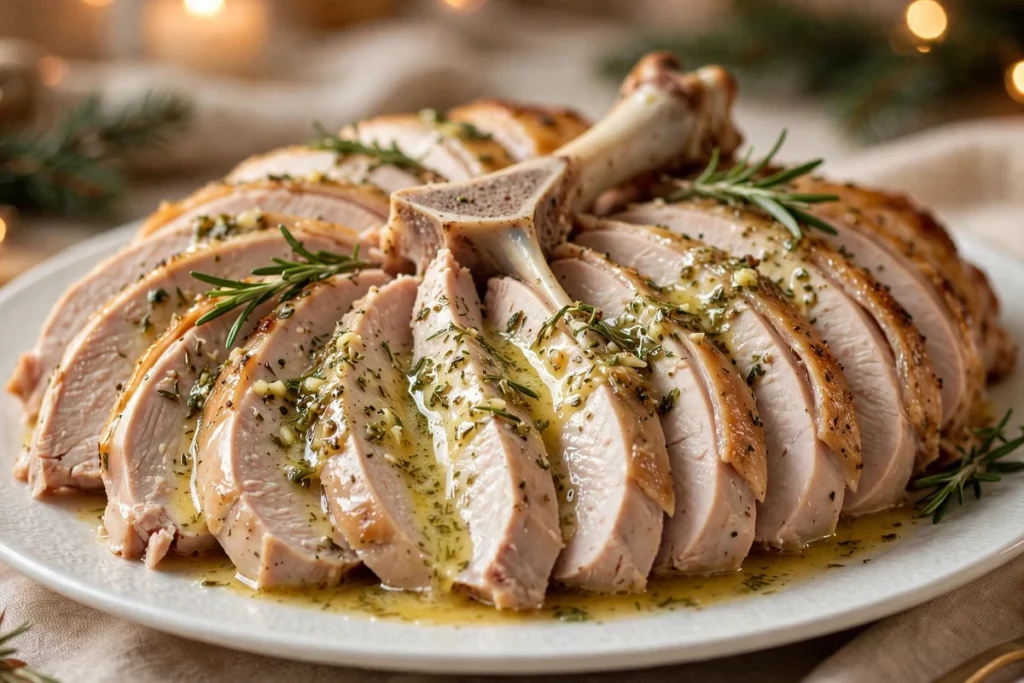
A bone-in turkey breast coated in herb butter and ready for the oven, with rosemary and thyme on the side.
Watch: Bone-In Turkey Breast
Ina Garten’s take on the turkey breast is a Thanksgiving classic — she rubs an herb paste under the skin and roasts it with white wine in the pan. Watch her method for a foolproof small-group bird.
At a Glance: Bone-In Turkey Breast
Sizing, timing, and method notes for the bone-in breast.
| Detail | Guidance |
|---|---|
| Why bone-in wins | The bone insulates and bastes the meat, keeping the breast juicier than boneless for a small crowd |
| How much to buy | Roughly 1 to 1½ pounds per person, with a little extra if leftovers are the goal |
| Method | Dry-brine, then roast with herb butter worked under the skin |
| Timing | About 13 to 15 minutes per pound in the oven |
| Done when | An instant-read thermometer reads 165°F in the thickest part of the breast |
| Rest | Rest the breast before slicing so the juices stay in the meat |
Frequently Asked Questions
How long do I roast a bone-in turkey breast?
At 425°F (218°C) for 20 minutes followed by 350°F (177°C), budget about 13 to 15 minutes per pound after the initial blast — roughly 1 hour 20 minutes to 1 hour 40 minutes total for a 6-pound breast. Always pull at 160°F (71°C) internal and let carryover bring it to 165°F (74°C).
Should I cook it breast-side up or down?
Breast-side up, bone-side down, for the entire roast. The bone protects the underside, the skin crisps on top, and the two-stage heat keeps the meat juicy. Unlike whole-bird debates, there is no advantage to flipping a breast roast — the bone does the insulating work.
Do I need to brine a turkey breast?
It is the highest-impact step you can take. An overnight dry brine (salt + uncovered refrigeration) seasons the meat deeply and helps it hold moisture, transforming the texture of lean breast meat. If you truly have no time, even a 1-hour salted rest helps — but overnight is the version worth planning for.
Can I roast a turkey breast from frozen?
Technically yes — the USDA says frozen poultry can go straight into the oven — but it takes about 50 percent longer, the skin will not crisp well, and you cannot get butter under the skin. For a holiday centerpiece, thawing first (about 24 hours per 4 pounds in the fridge) gives a far better result. See our turkey thawing guide for timing.
What temperature is turkey breast done at?
Pull at 160°F (71°C) in the thickest part, away from bone; carryover cooking brings it to the USDA-safe 165°F (74°C) during the 20-minute rest. Verify with an instant-read thermometer — never judge by color or juices alone.
How many people does a bone-in turkey breast serve?
Plan 3/4 to 1 pound per person. A 3-pound half breast serves 2 to 4; a 6-pound whole breast serves 6 to 8 with leftovers. Buy two half breasts if you need more than 8 servings rather than hunting for an oversized whole breast.
Conclusion
The bone-in turkey breast is the weeknight-easy answer to the Thanksgiving centerpiece: 90 minutes, one pan, juicy slices, and an oven left free for the sides that make the meal. Dry-brine it overnight, butter it under the skin, roast it hot-then-gentle, and pull it at 160°F — that is the whole formula. Whether it is your first Thanksgiving hosting or your twentieth, this roast turkey breast bone in recipe proves that smaller can be better: less stress, less waste, and turkey so good no one misses the 20-pounder.