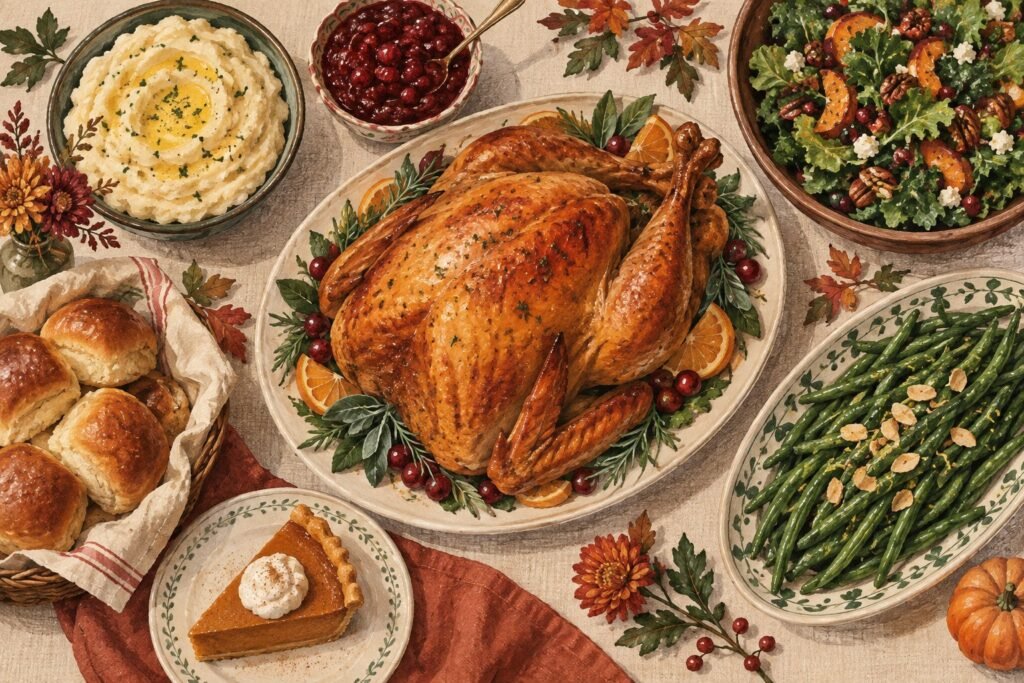
There is a thirty-minute window on Thanksgiving day that separates good cooks from great ones: the turkey is resting, the oven is free, and the roasting pan is sitting there full of liquid gold. Turkey gravy from drippings — made from the caramelized juices and rendered fat in that pan, thickened with flour and enriched with stock — is the single most flavorful gravy you will ever make, and it exists only in that window. No box, no jar, no mix can touch it, because no packaged product has your turkey’s drippings.
This is a technique guide, not just a recipe. You will learn what drippings actually are (and why the browned bits stuck to the pan matter more than the liquid), how to separate fat from juices cleanly, the roux ratio that guarantees the right thickness every time, how to deglaze the pan without fear, and how to fix lumps, greasiness, and blandness on the fly — because gravy problems always happen with guests in the next room. There are variations, a troubleshooting clinic, and storage guidance. Master this once, and you will never buy gravy again.
What Drippings Are (and Why They Are Irreplaceable)
“Drippings” is the collective name for everything that accumulates in the roasting pan beneath the turkey: rendered fat, concentrated meat juices, and — most importantly — the fond, the browned, caramelized bits stuck to the bottom of the pan. The fond is where the deepest flavor lives. Those browned bits are the product of the Maillard reaction, the same browning that makes roast meat taste roasted, and they dissolve into the gravy when you deglaze the pan, giving it a savory depth that stock alone cannot provide.
The fat matters too. Turkey fat carries flavor compounds that water-based liquids cannot, and it is the foundation of the roux that thickens the gravy. A well-roasted turkey yields a generous amount of both — typically 1/4 to 1/2 cup of fat and 1 to 2 cups of concentrated juices, though it varies with the bird’s size and how it was roasted. If your turkey was brined, the drippings may be saltier; taste before seasoning the gravy. Everything in this guide starts from the premise that you roasted your turkey well — if you need a refresher on the bird itself, see our guide to how to cook a Thanksgiving turkey.
The Anatomy of Great Gravy
All flour-thickened gravy is built from three components in a specific relationship: fat, flour, and liquid. The fat and flour cook together into a roux; the liquid — drippings plus stock — is whisked in and simmered until the starch thickens it. Get the ratio right and the method barely matters; get it wrong and no amount of whisking saves you.
The ratio
For a medium-bodied gravy that coats a spoon and flows gracefully over creamy mashed potatoes, use 2 tablespoons of fat and 2 tablespoons of flour per 1 cup of liquid. Scale from there: for thin gravy, use 1 1/2 tablespoons each per cup; for thick, spoon-standing gravy, use 2 1/2 tablespoons each per cup. Memorize the 2-2-1 formula and you can make gravy from any drippings, in any quantity, for the rest of your life.
What counts as liquid
The defatted drippings (the juices, not the fat) count first — they are the most flavorful liquid you have. Supplement with warm turkey or chicken stock to reach your total volume. For a 12- to 14-pound turkey, plan on about 4 cups of total gravy, which generously serves 10 to 12 people. Warm the stock before adding it; cold liquid hitting a hot roux is a primary cause of lumps.
Separating Fat from Juices: The Clean Method
Good gravy needs the right amount of fat — not all of it. Too much fat makes greasy gravy that separates; too little and the roux cannot form properly. Here is how to separate cleanly.
Using a fat separator
Pour the pan contents through a strainer into a glass fat separator (the kind with the spout at the bottom). Let it sit 5 minutes: the fat rises to the top, the juices settle below. Pour the juices out through the bottom spout into a measuring cup, stopping before the fat layer reaches the spout. Measure the fat separately. This is the easiest method and worth the small investment if you roast meat regularly.
Without a separator
Pour the strained pan juices into a tall, clear measuring cup or jar and refrigerate 15 to 20 minutes — the fat rises and begins to firm up on top, and you can lift it off with a spoon. On Thanksgiving day, when refrigerator space is precious and time is short, you can also let the cup sit at room temperature for 5 to 10 minutes and spoon off the liquid fat, accepting that the separation will be less perfect. Reserve 4 tablespoons of the fat for the roux (for 4 cups of gravy) and save the rest — turkey fat makes extraordinary roast potatoes.
Ingredients You’ll Need
Quantities here make about 4 cups of gravy. Scale the 2-2-1 ratio for more or less.
- All drippings from 1 roasted turkey (fat and juices, strained)
- 4 tablespoons turkey fat (from the drippings; supplement with butter if short)
- 4 tablespoons all-purpose flour
- 4 cups total liquid: defatted drippings plus warm turkey or chicken stock
- 1/2 cup dry white wine, dry vermouth, or additional stock (for deglazing)
- 1 teaspoon fresh thyme leaves or 1/2 teaspoon dried (optional)
- Kosher salt and freshly ground black pepper, to taste
- 1 teaspoon soy sauce or Worcestershire sauce (optional, for depth)
Ingredient notes
Butter as backup: If your turkey yielded less than 4 tablespoons of fat (lean birds, or heavy basting that washed fat away), make up the difference with unsalted butter. The roux needs its full measure of fat to cook the flour properly — shortchanging it is a common cause of pasty, floury-tasting gravy.
The wine: Wine or vermouth is for deglazing — its acidity lifts the fond beautifully. It cooks down to nothing but flavor. If you prefer to skip alcohol, stock deglazes nearly as well; add a teaspoon of vinegar or lemon juice at the end for the brightness the wine would have provided.
Step-by-Step Instructions
- Strain the drippings. While the turkey rests, pour everything from the roasting pan through a fine-mesh strainer into your separator or measuring cup. Press on the solids to extract every drop. Separate the fat from the juices as described above. Measure: you need 4 tablespoons of fat and enough juices-plus-stock to total 4 cups of liquid.
- Deglaze the roasting pan. Set the roasting pan across two burners over medium-high heat (most roasting pans span two burners; if yours does not, scrape the fond into a skillet). Pour in the wine or 1/2 cup of stock and scrape vigorously with a wooden spoon or flat whisk, dissolving every browned bit. Let it bubble 1 to 2 minutes until slightly reduced. This fond-laden liquid goes into your gravy — it is pure flavor.
- Make the roux. In a heavy saucepan or deep skillet over medium heat, warm the 4 tablespoons of turkey fat. Whisk in the flour and cook, whisking constantly, 2 to 3 minutes until the roux is smooth, bubbly, and smells faintly nutty — a pale blond color. Do not brown it deeply; a blond roux has the most thickening power and the cleanest flavor.
- Add the liquid gradually. Pour in about 1 cup of the warm drippings-stock mixture, whisking constantly and vigorously. It will seize and thicken dramatically at first — keep whisking and it smooths out. Once smooth, add the remaining liquid in a steady stream, whisking all the while. Pour in the deglazed fond liquid too.
- Simmer to thicken. Bring to a gentle simmer and cook 5 to 8 minutes, stirring frequently, until the gravy thickly coats the back of a spoon and a finger drawn through it leaves a clean line. The gravy will look slightly thinner than the final target — it thickens a touch as it cools.
- Season and finish. Stir in the thyme, then taste carefully. Add salt in small increments — drippings vary wildly in saltiness, especially from brined birds. Add black pepper generously, and the soy sauce or Worcestershire if the flavor needs more savory depth. A tiny splash of vinegar or lemon juice at the very end brightens everything.
- Strain (optional) and serve. For the silkiest texture, strain through a fine-mesh sieve into a warmed gravy boat or serving pitcher. Serve immediately, while hot. Gravy waits for no one — time it to be the last thing you finish before the meal.
The Roux: Your Control Dial
The roux is not just a thickener — its color is a flavor and thickness dial you can turn deliberately.
Blond roux (2–3 minutes)
Pale, nutty-smelling, maximum thickening power. This is the standard for turkey gravy: it thickens efficiently while letting the drippings’ flavor dominate. This is what the recipe above makes.
Brown roux (5–8 minutes)
Cooked to a peanut-butter color, with a toasted, nutty flavor and somewhat less thickening power. A brown roux gives darker, more complex gravy — excellent if your drippings are pale (from a lightly roasted bird) and you want more color and depth. Compensate for the reduced thickening by adding an extra teaspoon of flour per cup of liquid.
What never to do
Never add flour directly to hot liquid without cooking it in fat first — that is how you get raw, pasty lumps that no whisking fixes. And never walk away from a roux: flour goes from blond to burnt in moments, and burnt roux is bitter and unsalvageable. If it burns, throw it out and start over; it takes three minutes.
Thickness Guide: From Thin to Spoon-Standing
Different tables like different gravies. Here is how to hit each target for 4 cups of liquid, keeping the fat and flour equal:
- Thin, pourable: 6 tablespoons (1/4 cup plus 2 tablespoons) each of fat and flour. Flows like heavy cream; good for those who like gravy as a light bath.
- Medium, classic: 8 tablespoons (1/2 cup) each. Coats a spoon, flows slowly off it. The all-purpose choice — what this recipe makes.
- Thick, hearty: 10 tablespoons each. Mounds softly on a spoon. For the “gravy as a side dish” crowd.
Remember that gravy thickens as it cools and thins when reheated — aim for slightly thinner than your target when hot from the pot.
Variations to Try
Giblet gravy
The traditionalist’s gravy: simmer the turkey’s neck, heart, and gizzard in salted water while the bird roasts until tender (about 1 hour), chop the meat finely, and stir it into the finished gravy. Use the simmering liquid as part of your stock. It adds a profound, old-fashioned turkey depth — and it means no part of the bird goes to waste.
Mushroom gravy
Brown 8 ounces of sliced cremini mushrooms in the turkey fat before making the roux; build the roux right over them. The mushrooms add an earthy savoriness that is magnificent over classic bread stuffing. A splash of soy sauce deepens it further.
Herb gravy
Add a generous handful of chopped fresh herbs — sage, thyme, rosemary, parsley — at the very end, off the heat. The fresh herbs perfume the gravy without the stewed flavor of long simmering. This is the brightest, most aromatic version.
Cider gravy
Replace 1 cup of the stock with fresh apple cider. The cider’s sweetness and acidity give the gravy a subtle orchard character that is wonderful with turkey — a nod to the apple-and-sausage stuffing tradition. Reduce the added salt slightly, as cider concentrates as it simmers.
The make-ahead hybrid
Short on drippings, or want gravy done before the turkey even rests? Make our make-ahead turkey gravy without drippings in advance, then whisk in your fresh drippings and deglazed fond on Thanksgiving day. You get the convenience of advance prep with the irreplaceable flavor of the real thing — the best of both methods.
Troubleshooting: The Gravy Clinic
Lumps
The classic gravy emergency, with three cures in escalating order. First, whisk vigorously — many lumps are just poorly incorporated roux that yields to effort. Second, strain the gravy through a fine-mesh sieve, pressing the lumps through with a spatula. Third, for stubborn lumps, blend briefly with an immersion blender. Prevention: warm liquid, gradual addition, constant whisking. Lumps happen when cold liquid hits hot roux or when liquid is added too fast.
Too thin
Simmer longer — evaporation is the simplest thickener, and 5 extra minutes of gentle bubbling makes a real difference. For a faster fix, make a slurry: whisk 1 tablespoon of cornstarch into 2 tablespoons of cold water until smooth, whisk it into the simmering gravy, and cook 2 minutes until thickened and clear. (Cornstarch gives a glossier, slightly different texture than flour — fine in small amounts.) Alternatively, mash a tablespoon of soft butter with a tablespoon of flour into a paste (a beurre manié) and whisk in knobs, simmering until thickened.
Too thick
Whisk in warm stock a few tablespoons at a time until it flows the way you like. This is the easiest problem to fix — which is why experienced gravy makers deliberately aim slightly thick, knowing they can thin to perfection at the end.
Greasy or separated
Too much fat made it into the gravy, or the fat was not fully incorporated. Skim the surface with a spoon or drag a paper towel across it. For a separated gravy, whisk in a splash of hot stock — the emulsion often comes back together. Next time, measure your fat rather than eyeballing it, and make sure the roux fully absorbs the flour before any liquid goes in.
Bland
Bland gravy is under-seasoned or under-reduced. First, reduce it — simmer 5 to 10 minutes to concentrate flavor. Then salt assertively, add black pepper, and consider the depth-boosters: a teaspoon of soy sauce, a splash of Worcestershire, or a squeeze of lemon. Blandness also comes from pale drippings (a lightly roasted bird); the brown-roux variation and thorough deglazing compensate for this.
Tastes floury or pasty
The roux was undercooked. The flour needs a full 2 to 3 minutes in the hot fat to lose its raw taste. If the gravy is already made, simmer it gently for 10 minutes — prolonged simmering cooks out much of the raw flavor. Next time, do not rush the roux; wait for the nutty smell.
Make-Ahead, Storage, and Reheating
Can it be made ahead?
True drippings gravy cannot be fully made ahead — the drippings do not exist until the turkey roasts. But you can prep everything else: measure the flour, warm the stock, have the separator and whisk ready. Better yet, make the make-ahead version days in advance and enrich it with fresh drippings on the day. If you must make drippings gravy early in the day, it holds fine for a few hours — see reheating.
Storing leftovers
Refrigerate in a covered container for up to 4 days. The gravy will gel firmly when cold — that is the starch and gelatin, and it is normal. Freeze for up to 3 months; thaw overnight in the refrigerator. Flour-thickened gravy freezes better than cornstarch-thickened, which can turn spongy.
Reheating
Warm gently in a saucepan over medium-low heat, whisking frequently, adding splashes of stock as needed to restore the consistency. Do not boil hard — vigorous boiling can thin a flour-thickened gravy over time. The microwave works for small amounts; whisk halfway through.
In Pictures: Turkey Gravy from Drippings
Drippings are liquid gold — the concentrated essence of the roast. Turned into gravy, they are the best thing on the plate. The gravy, silky in its pitcher.
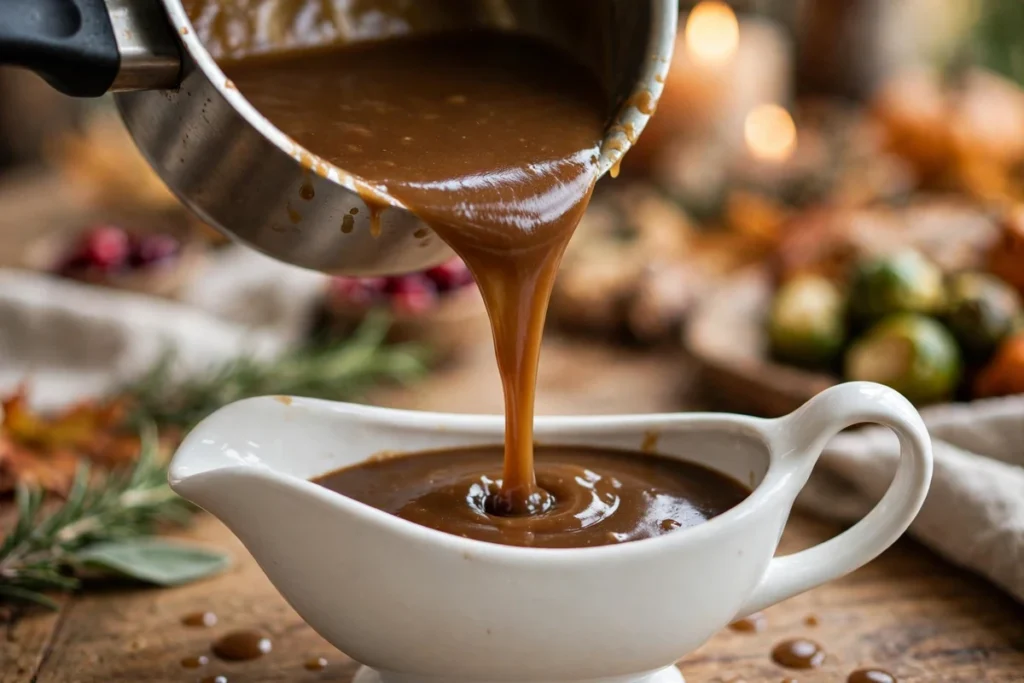
Silky turkey gravy made from pan drippings, served in a gravy pitcher over sliced turkey.
Watch: Turkey Gravy from Drippings
Christine Cushing shows her no-fuss method: rest the turkey so it practically deglazes itself, separate the fat, and whisk a cornstarch slurry into the drippings for a light, glossy gravy.
At a Glance: Turkey Gravy from Drippings
The anatomy of great gravy, from the guide.
| Element | Notes |
|---|---|
| What drippings are | The rendered juices and browned bits left in the roasting pan — irreplaceable flavor |
| Separating fat | Use a fat separator, or chill the drippings and lift off the solidified fat |
| The ratio | About 1½ cups drippings thickened with 2 tablespoons of cornstarch or flour |
| The slurry | Shake cornstarch with wine or cold broth in a jar, then whisk into simmering drippings |
| Stretch it | Add turkey or chicken broth if the bird did not render enough drippings |
| Serve hot | Gravy waits for no one — pour it over sliced turkey immediately |
Frequently Asked Questions
How much gravy do I need per person?
Plan on about 1/3 cup per person — so 4 cups for 12 guests. Gravy is one of those things people use more of than you expect, especially with mashed potatoes and stuffing on the table. When in doubt, make more; leftover gravy is a treasure, not a burden.
What if my turkey did not produce enough drippings?
Supplement with butter for the fat and stock for the liquid, following the 2-2-1 ratio. The gravy will be milder but still good — and thorough deglazing of the fond extracts every bit of flavor the pan holds. For a guaranteed full batch regardless of the bird’s generosity, the make-ahead method is the safety net.
Can I make gravy without a roux?
Yes — cornstarch slurry is the main alternative (1 tablespoon cornstarch per cup of liquid, mixed with cold water and whisked into simmering drippings). It makes a glossier, more translucent gravy. But roux-based gravy has a richer flavor and reheats better, which is why it remains the classic method for Thanksgiving.
Why is my gravy pale?
Pale drippings from a lightly browned bird, or a very blond roux. Fix the current batch with a teaspoon of soy sauce or Worcestershire (which darkens without much flavor impact), or a drop of browning sauce. Next time, roast the turkey to a deep golden brown and consider taking the roux a shade darker.
Should I strain my gravy?
For the silkiest result, yes — a quick pass through a fine-mesh sieve catches any lumps, herb stems, or bits of fond that did not dissolve. Rustic-style gravy with visible thyme leaves and texture is also legitimate; it is a style choice, not a quality marker. When serving a crowd with varied preferences, strained is the safer bet.
Can I keep gravy warm during the meal?
Yes — hold it in a pre-warmed gravy boat or a small slow cooker on the warm setting for up to 2 hours. Stir occasionally and add a splash of hot stock if it thickens. Do not hold it longer than that, and never reheat gravy more than once.
Conclusion
Turkey gravy from drippings is the distillation of your entire Thanksgiving effort — every hour the turkey spent roasting, every browned bit in the pan, concentrated into a silky, savory sauce that ties the whole plate together. The method is simple once the ratio is in your head: separate the fat, deglaze the fond, build the roux, whisk in warm liquid, simmer, season. Make it in the quiet window while the turkey rests, serve it in a warmed pitcher, and watch it disappear. No jar will ever compete with what is already in your roasting pan.