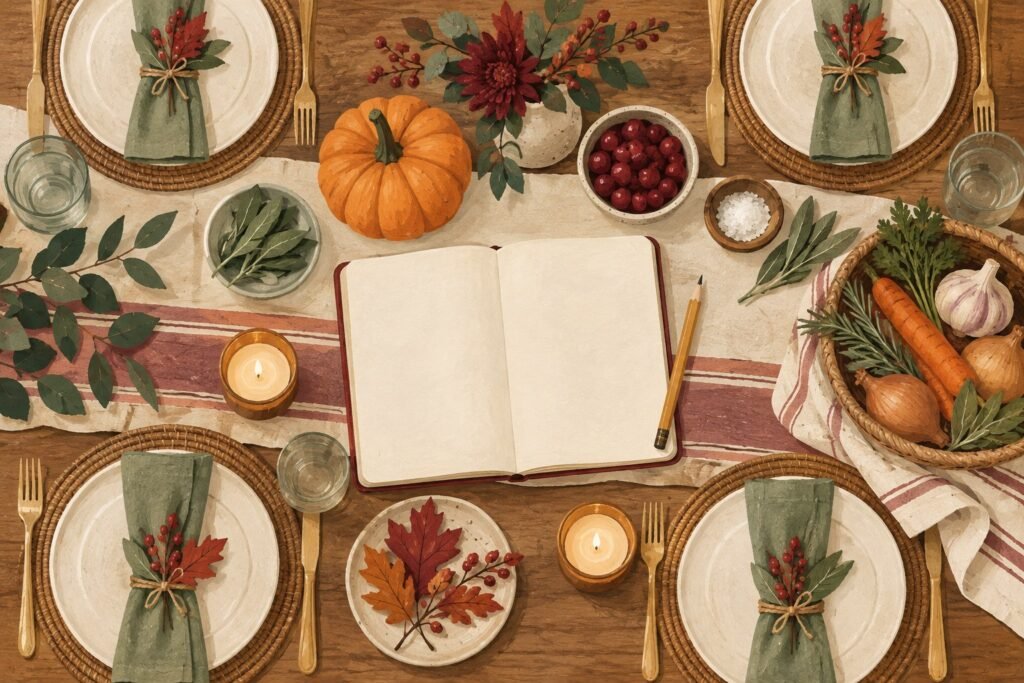
Close your eyes and think of October: the crunch of leaves, a flannel shirt, a paper bag warm from the orchard fryer, and the cinnamon-sugar perfume of apple cider donuts. These cake donuts — tender, spice-flecked, rolled in cinnamon sugar while still warm — are the defining treat of apple season, and they belong on your Thanksgiving table every bit as much as pie. Whether you bake them, fry them, or turn the batter into muffins, this guide gives you a tested master recipe, both cooking methods in full detail, every variation worth making, and a troubleshooting clinic built from real kitchen failures.
Apple cider donuts are also one of the smartest Thanksgiving desserts you can choose: the batter comes together in one bowl, they bake in 12 minutes or fry in 3, they are spectacular served warm, and they double as next-morning breakfast with coffee. Thanksgiving 2026 falls on November 26 — right at the tail of apple season, when cider is at its best. If you are planning the full dessert spread, our best Thanksgiving desserts of 2026 shows how these fit alongside pies and tortes, and the mini desserts guide includes a baked donut-hole version sized for a dessert table.
What Makes an Apple Cider Donut an Apple Cider Donut
Not every cinnamon-sugar donut qualifies. A true apple cider donut has three signatures. First, reduced apple cider in the batter — not apple juice, not apple flavoring, but real cider boiled down to a concentrate so the apple flavor survives baking. Second, a cake-donut crumb: dense, tender, and moist, with a tight texture that holds the cinnamon-sugar coating. Third, the warm cinnamon-sugar roll immediately after cooking, when the surface is tacky enough to grab every crystal.
The Cider Reduction: The Step You Cannot Skip
Fresh apple cider is mostly water — add it straight to batter and you get hydration without flavor. Simmering 1 1/2 cups of cider down to 1/2 cup concentrates the sugars, acids, and aromatics roughly threefold, producing a syrupy reduction with real apple intensity. It takes about 15–20 minutes and fills the kitchen with the smell of an orchard in autumn. This reduction is the entire difference between “vaguely apple-ish donut” and the real thing. Make it first; everything else waits on it.
Master Recipe: Baked Apple Cider Donuts
Baked is the weeknight-friendly method: no hot oil, no thermometer anxiety, and a texture that is cakey and light. You need a donut pan (about $12 and worth every penny), but a muffin tin works for donut muffins — see variations.
Ingredients
- 1 1/2 cups (360ml) fresh apple cider, reduced to 1/2 cup (see below)
- 2 cups (250g) all-purpose flour
- 1 1/2 teaspoons baking powder
- 1/2 teaspoon baking soda
- 2 teaspoons ground cinnamon, divided
- 1/2 teaspoon ground nutmeg
- 1/4 teaspoon ground cloves or allspice
- 1/2 teaspoon fine salt
- 1/2 cup (115g) unsalted butter, melted and slightly cooled
- 2/3 cup (135g) packed brown sugar
- 1/2 cup (100g) granulated sugar, plus 3/4 cup more for coating
- 2 large eggs, room temperature
- 1/2 cup (120ml) buttermilk or plain yogurt, room temperature
- 1 teaspoon vanilla extract
For the Cinnamon-Sugar Coating
- 3/4 cup (150g) granulated sugar
- 2 teaspoons ground cinnamon
- 1/4 cup (60g) unsalted butter, melted (for brushing)
Method
- Reduce the cider: Pour 1 1/2 cups cider into a small saucepan and simmer over medium heat, stirring occasionally, until reduced to 1/2 cup — about 15–20 minutes. It should coat a spoon lightly. Cool to lukewarm.
- Heat the oven: Preheat to 350°F (175°C). Grease a 6-cavity donut pan thoroughly (even nonstick pans need it).
- Mix dry ingredients: Whisk the flour, baking powder, baking soda, 1 teaspoon of the cinnamon, nutmeg, cloves, and salt.
- Mix wet ingredients: In a large bowl, whisk the melted butter, brown sugar, and 1/2 cup granulated sugar until smooth. Whisk in the eggs, then the reduced cider, buttermilk, and vanilla.
- Combine: Add the dry ingredients to the wet and fold just until no flour streaks remain. The batter will be thick — like a muffin batter. Do not over-mix; lumps are fine.
- Fill the pan: Transfer batter to a piping bag or zip-top bag with the corner snipped, and pipe into the donut cavities, filling each about 3/4 full. Piping (rather than spooning) gives even rings without air pockets.
- Bake: Bake 10–12 minutes until the tops spring back when lightly touched and a toothpick comes out clean. Cool in the pan 5 minutes, then turn out onto a wire rack.
- Coat: While the donuts are still warm, brush all over with melted butter and toss generously in the cinnamon-sugar mixture. Coat twice for a proper crust — the first layer melts slightly into the warm donut, the second stays crisp.
Makes 12 donuts. Serve warm, within 2 hours of baking, for the full orchard-stand experience.
The Fried Method: For the Purists
Fried apple cider donuts are what you buy at the orchard: crisp, caramelized exterior, impossibly tender interior, and a chew that baked donuts cannot quite replicate. The batter needs one adjustment — it must be firm enough to roll and cut.
Adjustments for Frying
Make the master batter with two changes: reduce the buttermilk to 1/3 cup and add an extra 1/4 cup flour. Chill the dough 1 hour until firm. Roll to 1/2-inch thickness on a floured surface, cut with a 3-inch donut cutter (or a 3-inch round cutter plus a 1-inch center cutter), and re-roll scraps once.
Frying, Step by Step
- Pour 2–3 inches of neutral oil (canola, vegetable, or peanut) into a heavy pot or Dutch oven. Heat to 350°F (175°C) — use a thermometer; guessing is how donuts go wrong.
- Fry 2–3 donuts at a time (crowding drops the oil temperature) for 60–90 seconds per side, until deep golden brown. The donut holes fry in about 45 seconds per side.
- Lift with a slotted spoon or spider, drain 30 seconds on a wire rack over paper towels, then toss immediately in cinnamon sugar — no butter brushing needed; the hot oil surface grabs the sugar directly.
- Let the oil return to 350°F between batches. If the donuts brown in under 45 seconds, the oil is too hot; if they take over 2 minutes per side, it is too cool.
Baked vs. Fried: Honest Comparison
Flavor: Fried wins on depth — the hot oil caramelizes the exterior sugars. Texture: Fried is crisp-chewy; baked is soft-cakey. Ease: Baked wins by a mile — no hot oil, no thermometer, no lingering fry smell. Health: Baked has roughly half the fat. Verdict: For Thanksgiving, when the kitchen is already chaotic, bake. For a dedicated autumn baking project or an orchard-party theme, fry. Both are legitimately excellent.
Variations Worth Making
Apple Cider Donut Holes (Baked)
Pipe or scoop the master batter into a greased mini muffin tin, filling 3/4 full. Bake at 350°F for 10–12 minutes. Brush with butter and roll in cinnamon sugar. One batch makes 24 holes — the ideal format for a mini dessert table, and kids prefer them 10-to-1 over rings.
Apple Cider Donut Muffins
No donut pan? Bake the batter in a muffin tin (350°F, 18–20 minutes), brush the warm tops with butter, and dip in cinnamon sugar. They are technically muffins, spiritually donuts. Add a dollop of apple butter in the center before baking for a filled-muffin surprise.
Maple-Glazed Apple Cider Donuts
Skip the cinnamon sugar. Whisk 1 cup powdered sugar with 3 tablespoons pure maple syrup and 1–2 tablespoons milk until pourable; dip the warm donut tops and let set 10 minutes. The maple glaze hardens into a crackly shell that echoes the cider’s apple notes. A sprinkle of flaky salt on the wet glaze is optional and excellent.
Caramel-Dipped Donuts
Dip cooled donuts halfway into warm caramel sauce (or dulce de leche thinned with a spoonful of cream), then sprinkle with toasted chopped pecans. Rich, sticky, and completely over the top — in the best way. Serve within a few hours; the caramel softens the crumb over time.
Spiced Chai Donuts
Replace the cinnamon-nutmeg-clove trio with 2 teaspoons chai spice blend (cinnamon, cardamom, ginger, cloves, black pepper) in both batter and coating. The cardamom-pepper warmth is sophisticated and unexpected — the donut for the guest who has had apple cider donuts a hundred times.
Gluten-Free Apple Cider Donuts
Swap the flour 1:1 for a gluten-free baking blend containing xanthan gum (same weight: 250g). The batter is wetter, so add 2 tablespoons extra blend and rest the batter 20 minutes before piping — the starches hydrate and the texture evens out. Bake 1–2 minutes longer. Our gluten-free Thanksgiving desserts guide has the full flour science if you are baking for celiac guests.
Vegan Apple Cider Donuts
Replace the butter with melted coconut oil or vegan butter sticks, the eggs with 1/2 cup unsweetened applesauce plus 1 teaspoon baking powder, and the buttermilk with oat milk soured with 1 teaspoon vinegar. The crumb is slightly denser but the cider flavor shines. Brush with melted vegan butter before sugaring.
Troubleshooting Clinic
“My donuts taste bland / not apple-y enough”
You did not reduce the cider far enough, or you used apple juice instead of cider. The reduction must reach 1/2 cup from 1 1/2 cups — measure it. Also check your spices’ age; ground cinnamon over a year old is sawdust with nostalgia. And salt: the 1/2 teaspoon in the batter is doing quiet work amplifying every other flavor.
“Dense, heavy, tough donuts”
Over-mixed batter developed the gluten. Fold just until the flour disappears — 10–12 strokes. Also check leavener freshness: baking powder older than 6 months loses power (test it in hot water; it should fizz vigorously). For the fried version, over-rolled scraps get tough — re-roll only once.
“The cinnamon sugar won’t stick”
The donuts cooled too much before coating. Sugar adheres to warmth and tackiness — coat baked donuts within 5 minutes of leaving the pan (brush with butter first), and toss fried donuts straight from the rack. If they have cooled completely, brush with butter and warm 5 minutes in a 300°F oven, then coat.
“Fried donuts are greasy / raw inside”
Oil temperature. Too cool (below 325°F) and the donut absorbs oil instead of crisping; too hot (above 375°F) and the outside burns before the inside cooks. A thermometer is not optional for frying — it is the recipe. Also, do not crowd the pot: each donut drops the oil temperature 10–15°F.
“Baked donuts stuck to the pan”
Under-greased pan, or you waited too long to unmold. Grease every cavity thoroughly — including the center tube — with butter or baking spray, and turn the donuts out after exactly 5 minutes of cooling. Any longer and the sugars glue themselves to the metal.
“Flat donuts with no rise”
Dead leaveners, overfilled or underfilled cavities (3/4 full is the mark), or an oven that runs cool — verify with an oven thermometer. For the fried version, dough that was not chilled spreads instead of puffing.
Make-Ahead, Storage & Freezing
Thanksgiving Timeline
Apple cider donuts are best the day they are made — the cinnamon-sugar crust softens with time. But the components prep beautifully ahead: up to 1 week ahead, reduce the cider and refrigerate it; mix the cinnamon sugar and store airtight. 1 day ahead, mix the dry ingredients in one bag and the wet (minus eggs) in a jar; refrigerate. Thanksgiving morning, whisk it all together and bake — 25 minutes from bowl to warm donuts, timed to come out of the oven as guests arrive. Few things make a house smell like the holidays faster.
Storing Leftovers
Room temperature in an airtight container: 2 days (the coating softens but the flavor holds). Refresh in a 300°F oven for 5–8 minutes to re-crisp the sugar. Refrigerating is not recommended — it stales the crumb faster. For next-day breakfast, split leftover donuts and toast them cut-side down in a buttered skillet; the caramelized faces are arguably better than the original.
Freezing
Freeze uncoated baked donuts: cool completely, wrap individually, freeze up to 2 months. Thaw at room temperature, warm 8 minutes at 300°F, then butter-brush and sugar-coat fresh. Frozen-then-coated donuts taste nearly identical to fresh — the coating is the perishable part, not the crumb.
Serving Ideas for Thanksgiving
The Warm Welcome Basket
Time a batch to finish as guests arrive and set a linen-lined basket of warm donuts near the door with a small pitcher of mulled apple cider. It is the edible equivalent of a hug, and it buys you 30 unhurried minutes to finish the turkey while everyone is happily occupied. Our Thanksgiving appetizers guide has more arrival-friendly bites if you want a fuller spread.
The Dessert Table Anchor
Stack donuts on a tiered stand as the casual, grabbable element among fancier desserts — they balance a table of tarts and tortes the way jeans balance a blazer. Pair with our pumpkin roll cake for the full spice-cake spectrum, or contrast with the deep chocolate of chocolate pecan pie.
Next-Morning Breakfast
Thanksgiving Friday breakfast is an underrated meal: the house is quiet, the coffee is strong, and leftover donuts toasted in butter with scrambled eggs on the side is pure comfort. Our Thanksgiving breakfast ideas and overnight French toast casserole round out the morning after.
Gifting Donuts
Apple cider donuts make exceptional edible gifts — better than cookies, because they feel special and seasonal. Pack 4–6 cooled donuts in a kraft bakery box lined with parchment, tie with twine, and tuck in a cinnamon stick. Include a small card with the reheat instructions (8 minutes at 300°F) so the recipient enjoys them warm. For neighbors, teachers, and hosts, a donut box beats a bottle of wine on originality, and it costs a fraction of the price. Bake a double batch the weekend before Thanksgiving specifically for gifting; the uncoated donuts freeze perfectly, so you can coat and box them the morning you deliver.
Donut Sundaes (for the Bold)
Split a warm donut, add a scoop of vanilla or cinnamon ice cream, drizzle with warm caramel and a pinch of flaky salt. It is a state-fair fever dream on a plate, and children will remember it forever. Adults, too, if we are honest.
Apple Cider Donuts Beyond Thanksgiving
While this guide is timed for Thanksgiving 2026, apple cider donuts are an all-autumn treat. They are the classic orchard and farm-stand donut from September through November, a staple of Halloween parties and Friendsgiving gatherings, and a beloved bake-sale item. The recipe scales easily — double it for a party of 20 — and the variations above (chai, maple-glazed, caramel-dipped) let you match the donut to the occasion. If you find yourself making them monthly through fall, buy the donut pan; it pays for itself by October.
Choosing Your Cider
Not all cider is equal for donut-making. Unfiltered, unpasteurized orchard cider has the most complex flavor, but any fresh-pressed cider labeled “apple cider” (not “apple juice”) works. Avoid shelf-stable “cider” that is essentially juice with spice flavoring — it reduces to sweet water. If you can taste the difference between your cider options, the better-tasting one makes the better donut; the reduction concentrates whatever character is there, good or bad.
In Pictures: Apple Cider Donuts
Nothing says orchard season like a tray of cinnamon-sugar cider donuts. Here is the farm-stand look this recipe channels.
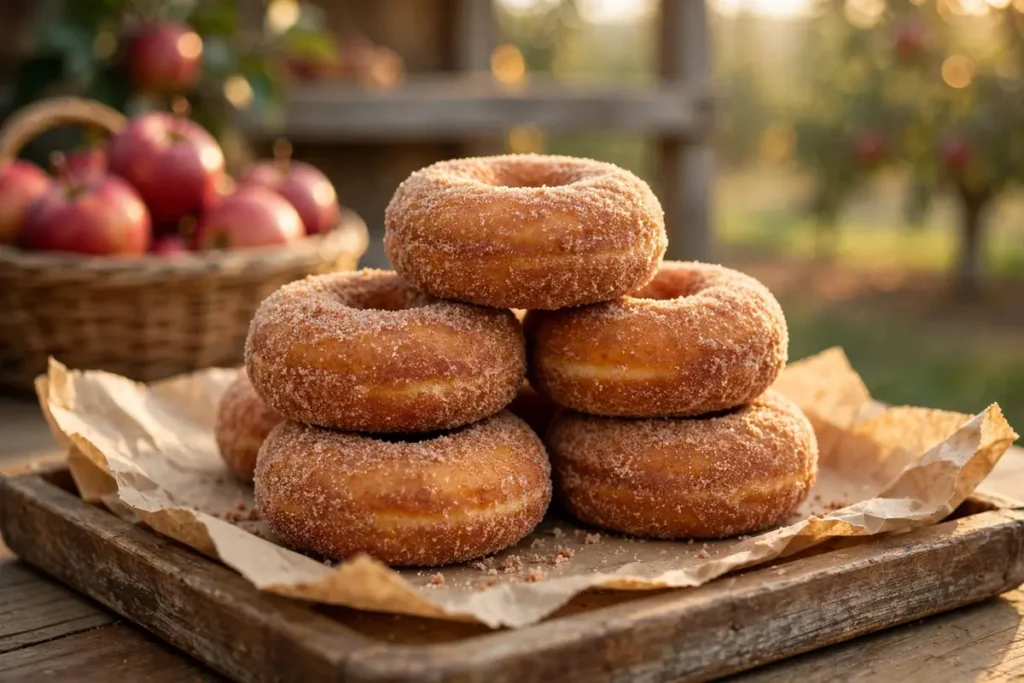
Warm cinnamon-sugar apple cider donuts stacked on a wooden tray at an apple orchard farm stand.
Watch: Apple Cider Donuts
Anna Olson bakes along with her apple cider donut recipe — a great companion for getting the texture just right.
At a Glance: Apple Cider Donuts
What makes an apple cider donut taste like the orchard, and how to keep them at their best.
| Detail | What to know |
|---|---|
| Cider reduction | Simmering the cider down first concentrates the apple flavor |
| Coating | Toss in cinnamon sugar while the donuts are still warm |
| Baked vs. fried | Baked versions are lighter; fried ones turn out crisper |
| Freshness | Best the day they are made |
| Yield | A typical batch makes about a dozen |
| Storage | Keep airtight 1–2 days; refresh briefly in a warm oven |
Frequently Asked Questions
Can I make apple cider donuts without a donut pan?
Yes — bake the batter as muffins (18–20 minutes at 350°F) or donut holes in a mini muffin tin (10–12 minutes), then butter and sugar-coat as usual. For the fried version, hand-cut rings need no special pan at all. The donut pan gives the classic shape, but the flavor is identical in any format.
What is the difference between apple cider and apple juice for donuts?
Cider is raw, unfiltered pressed apple juice with pulp and sediment — cloudy, tannic, and complex. Clear apple juice is filtered and usually made from concentrate — sweet but one-dimensional. In donuts, cider’s complexity survives the reduction and baking; juice reduces to plain sweetness. Always use cider labeled as cider, preferably fresh-pressed.
Why do I need to reduce the cider?
Fresh cider is about 88% water. Adding it straight would make the batter too wet and the apple flavor too dilute to taste after baking. Reducing 1 1/2 cups to 1/2 cup concentrates the flavor threefold while keeping the liquid ratio correct. It is the single most important step in the recipe — do not skip it.
How long do apple cider donuts stay fresh?
Best within 8 hours of baking; good for 2 days airtight at room temperature. The cinnamon-sugar coating softens over time but the flavor holds. Refresh day-old donuts 5–8 minutes in a 300°F oven, or split and griddle them in butter for a caramelized second life. Freeze uncoated up to 2 months.
Can I make the batter the night before?
You can prep the components (reduced cider, mixed dry ingredients, combined wet ingredients) a day ahead and refrigerate separately, then fold together in the morning — the leaveners stay potent because they only activate once wet. Do not mix the complete batter the night before; the baking powder begins reacting immediately and the donuts will be flat by morning.
Are apple cider donuts the same as cake donuts?
Apple cider donuts are a type of cake donut — leavened with baking powder rather than yeast, with a dense, tender crumb. What distinguishes them is the reduced cider in the batter and the cinnamon-sugar coating. A plain cake donut without cider is a different (though also delicious) thing.
Conclusion
Apple cider donuts are proof that the best holiday baking is not always the fanciest. One bowl, one reduction, twelve minutes in the oven — and you have something that smells like an orchard, tastes like October, and disappears faster than any pie on the table. Make the cider reduction the weekend before, bake them Thanksgiving morning, and serve them warm.
Then pour yourself a coffee — our Thanksgiving coffee drinks are the proper companion — and enjoy the moment before the turkey timer goes off. For everything else the day demands, the Thanksgiving Day cooking schedule and turkey guide have the savory side covered. Happy Thanksgiving 2026 — may your donuts be warm and your cider be fresh.