Thanksgiving morning arrives with a familiar mix of excitement and low-grade panic: the turkey is thawed (hopefully), the guests are coming at a fixed hour, and the entire day’s success hinges on one thing — a thanksgiving day cooking schedule that keeps every dish hot, golden, and landing on the table at the same time. Without one, Thanksgiving cooking becomes a chaotic sprint of oven conflicts, lukewarm sides, and a turkey that rests too long while the gravy goes cold. With one, the day unfolds like a well-rehearsed performance: the bird goes in on time, the sides rotate through the oven like clockwork, and you actually sit down and enjoy dinner instead of sprinting between the kitchen and the table. This guide gives you exactly that — a complete hour-by-hour cooking schedule for Thanksgiving Day 2026 (November 26), built backward from a classic 4:00 PM dinner, with variations for 2:00 PM and 6:00 PM seatings, plus oven-management strategy, make-ahead anchors, and food-safety timing you can’t afford to get wrong. Whether you’re roasting a whole turkey for twelve or running a smaller gathering, this schedule turns Thanksgiving Day from a juggling act into a calm, sequenced plan.
How This Cooking Schedule Works
Every great Thanksgiving cooking plan works backward from one fixed point: the moment dinner is served. Chefs call this “reverse planning,” and it is the only reliable way to coordinate a meal with a dozen moving parts. Pick your dinner time, then walk each dish backward through its cook time, rest time, and prep time to find out when work on it must start. This schedule does that math for you.
The three anchor times
Your entire day pivots on three anchors. First, turkey-in-the-oven time, determined by the bird’s weight and roast temperature (roughly 13 minutes per pound at 325°F for an unstuffed turkey). Second, turkey-out rest time — the bird needs 30 to 45 minutes of resting before carving, and that window is when your sides get their final oven blast. Third, dinner time itself. Everything else — appetizers set out, drinks chilled, table reset — hangs off those anchors. For the recipes in this plan, our sample bird is a 14-pound turkey, a common centerpiece that serves 10 to 12 guests with leftovers.
The golden rule of oven math
A single standard oven is the Thanksgiving bottleneck. The schedule below treats the oven like airport runway space: the turkey occupies it from morning through early afternoon, pies go in the night before or during the bird’s rest, and every side dish is assigned a slot that never double-books the oven. Dishes that reheat well are finished in the afternoon and held at temperature; dishes that must be served fresh — mashed potatoes, gravy, roasted vegetables — are sequenced into the final hour. If you have a second oven, a toaster oven, or a slow cooker, the schedule gets easier, but it is designed to work with one oven alone.
What this schedule assumes
This plan assumes the pies were baked on Wednesday evening, the turkey was brined or dry-rubbed overnight, vegetables were chopped the day before, and the stock for gravy was simmered ahead of time. That make-ahead foundation is what makes the day-of schedule achievable. For the full week-before countdown, our Thanksgiving dinner timeline covers every prep day; and if you want to front-load even more, the make-ahead Thanksgiving recipes guide identifies which dishes improve with a day or two of rest.
The Master Schedule: 4:00 PM Dinner
Here is the complete hour-by-hour plan for a 4:00 PM seating with a 14-pound turkey roasted at 325°F (about 3 to 3.5 hours of cook time). Read the whole table once, then follow it top to bottom on the day. Times are start times for each task — most take 10 to 20 minutes of hands-on work.
| Time | Task | Details |
|---|---|---|
| 7:00 AM | Turkey goes on the counter; oven preheats | Remove the turkey from the fridge so it loses its deep chill (30–45 minutes at room temperature is fine). Preheat the oven to 325°F. Make coffee — this is a marathon. |
| 7:30 AM | Prep the turkey | Pat dry, oil or butter the skin, season. Tuck aromatics (onion, lemon, herbs) in the cavity. Get the roasting pan, rack, and thermometer ready. |
| 8:00 AM | Turkey goes in the oven | Legs-first into the oven, thermometer probe in the thickest part of the thigh. Baste every 45 minutes. This is your longest hands-off block — use it for breakfast. |
| 9:00 AM | Thanksgiving breakfast + set the table | Serve something simple (our Thanksgiving breakfast ideas keep you fueled without touching the main oven). Set the full table now while the kitchen is calm. |
| 10:00 AM | Assemble casseroles | Build the green bean casserole, sweet potato casserole, and stuffing (if baked separately) in their dishes, cover, and refrigerate. Peel potatoes and keep them in cold water. |
| 11:00 AM | Baste, then prep cold dishes | Baste the turkey. Make the cranberry sauce if not already done, assemble the salad, set out appetizers’ serving pieces. Put wine and drinks on chill. |
| 12:00 PM | Baste + start the stock pot rolling | Baste the turkey. If making gravy from drippings, keep the plan; if using make-ahead gravy, it reheats at 3:30. Put appetizers out for early arrivals if applicable. |
| 1:00 PM | Turkey temperature check | Check the thigh — you’re aiming for 165°F. A 14-pound bird at 325°F typically finishes between 11:30 AM and 12:30 PM… plan the check now. If it’s done, tent with foil and rest; oven is now free. |
| 1:30 PM | Turkey rests; sides go in | Rest the bird 30–45 minutes (it stays hot, and the juices redistribute). Stuffing/dressing casserole goes in at 350°F. Potatoes go on the stove to boil. |
| 2:00 PM | Rotate sides | Stuffing comes out (tent with foil). Green bean casserole and sweet potato casserole go in. Start mashing the potatoes; keep them warm in a slow cooker or covered pot. |
| 2:30 PM | Roasted vegetables + rolls | Casseroles out, tented. Roasted vegetables (Brussels sprouts, carrots) go in at 425°F for 20–25 minutes. Warm the dinner rolls in the last 10 minutes alongside. |
| 3:00 PM | Carve + gravy + final assembly | Carve the turkey and arrange on a warmed platter. Make gravy from the drippings (5–10 minutes). Warm the cranberry sauce. Everything hot lands in serving dishes now. |
| 3:30 PM | Table final check | Butter, salt, pepper, water glasses filled, wine opened to breathe, candles lit. Transfer mashed potatoes to a serving bowl. Do a headcount of serving spoons. |
| 4:00 PM | Dinner is served | Call everyone to the table. You’re done cooking — enjoy it. |
| 5:30 PM | Dessert prep window | Clear the table, start coffee, warm pies if desired. Refrigerate leftovers within 2 hours of serving. |
Notice the rhythm: one major task per half hour, the oven never double-booked, and the only genuinely frantic window is 3:00 to 3:30 PM — which is fine, because adrenaline is free and the finish line is in sight.
Adjusting the Schedule for 2:00 PM or 6:00 PM Dinners
Not every household eats at 4:00. The good news: the sequence doesn’t change, only the start time. Subtract two hours from every line for a 2:00 PM dinner (turkey in at 6:00 AM), or add two hours for a 6:00 PM dinner (turkey in at 10:00 AM). The relative spacing — rest window, side rotations, carve-and-gravy sprint — stays identical.
Early dinner (2:00 PM) adjustments
A 2:00 PM dinner means a 6:00 AM turkey start, which is brutal but doable. Move the pies and all chopping to Wednesday without exception, set the table Wednesday night, and consider a dry brine (applied Tuesday or Wednesday) so there’s zero morning prep on the bird beyond oiling it. The payoff of an early dinner: leftovers are portioned and refrigerated by 4:00 PM, and you get your evening back. One caution — guests arriving at 1:00 PM need appetizers, so have a Thanksgiving charcuterie board or similar no-cook spread ready by 12:30.
Late dinner (6:00 PM) adjustments
A 6:00 PM dinner is the most relaxed schedule: turkey goes in at 10:00 AM, and you have a genuine midday lull for a walk, a nap, or football. The risk with a late dinner is grazing — hungry guests will demolish your appetite for the main event, so plan substantial Thanksgiving appetizers for the 3:00 to 5:00 PM window. Also note that a late dinner pushes dessert toward 8:00 PM, so coffee service matters more; our Thanksgiving coffee drinks roundup keeps the after-dinner hour special.
Scaling for a bigger or smaller bird
Turkey timing scales with weight. At 325°F, budget roughly 13 minutes per pound unstuffed (15 if stuffed — though cooking stuffing separately is safer and frees oven space). A 20-pound bird needs about 4.5 hours; move the “turkey in” time earlier by the difference and keep everything else fixed. A turkey breast (5–7 pounds) needs only about 2 hours — a much easier day, and our Thanksgiving dinner for two guide covers small-scale timing in detail. Always cook to temperature (165°F in the thigh), never to the clock.
Oven Management: The Real Skill of Thanksgiving Day
The schedule above works because it treats the oven as a single-track resource. Here is the underlying strategy, so you can adapt it to your own menu.
Block 1: The turkey’s reign (morning to early afternoon)
While the bird roasts, the oven is unavailable — full stop. Don’t try to “sneak in” a casserole beside the turkey; opening the door drops the temperature, extends the bird’s cook time, and risks uneven browning on both. Everything that happens during this block must be stovetop, slow cooker, microwave, or no-cook. This is why the morning tasks are assembly, boiling, and cold prep. If you own a second oven or a large toaster oven, pies can bake here — otherwise they were baked Wednesday night.
Block 2: The rest window (turkey out, 30–45 minutes)
The moment the turkey leaves the oven, you gain a precious high-heat window while the bird rests. This is when the stuffing or dressing casserole goes in, because it wants 30–40 minutes at 350°F and it holds heat beautifully under foil. Sequence the remaining casseroles after it. Roasted vegetables want the hottest blast (425°F) and only need 20–25 minutes, so they go last, with the rolls warming alongside in the final 10 minutes. Nothing in this block needs your constant attention — the timer does the work while you carve and make gravy.
Block 3: Holding and serving (the last 30 minutes)
Not everything needs to be oven-fresh. Mashed potatoes hold perfectly in a slow cooker on warm for up to 2 hours. Gravy reheats in minutes. Casseroles tented in foil stay hot for 30 minutes on the counter. The dishes that genuinely need the oven at the end are the ones with crisp or browned tops — roasted vegetables, rolls, and anything with a cheese or breadcrumb crust. Plan your Block 2 order around that principle and everything arrives hot.
Stovetop, Slow Cooker, and No-Cook Tasks by Hour
Thanksgiving isn’t an oven-only operation. Distributing work across every heat source is how one cook feeds twelve people without a breakdown.
Stovetop assignments
The stovetop handles mashed potatoes (boil 2:00 PM, mash and hold), gravy (3:00 PM, made from pan drippings in about 10 minutes), and reheating make-ahead sides. Keep one burner free all afternoon for the gravy — it’s the last thing made and the first thing people notice. If your mashed potato pot is huge, start the water heating at 1:45 PM so the boil is rolling by 2:00.
Slow cooker and countertop allies
A slow cooker is the Thanksgiving cook’s best friend: mashed potatoes hold on warm, mulled cider stays hot for arrivals, and even stuffing can be cooked start-to-finish in one. An electric roaster oven, if you have one, can take the entire turkey and free your main oven for sides all day — it’s the single biggest schedule upgrade available. A toaster oven handles rolls and small reheats. None of these are required, but each one you deploy removes a conflict from the master schedule.
No-cook tasks that fill the gaps
Between oven blocks, there’s real work that needs no heat: setting the table (do it by 9:00 AM), chilling drinks, arranging the Thanksgiving dessert table, slicing bread, setting out butter to soften, and laying out serving dishes with sticky notes naming which dish goes where. That last trick — labeling serving dishes in advance — eliminates the 3:15 PM panic of hunting for the right platter with gravy on your hands.
Food-Safety Timing You Must Respect
A cooking schedule isn’t just about flavor — it’s about safety. Thanksgiving’s danger zone mistakes (food sitting too long, turkey thawed on the counter all day) cause real foodborne illness every year.
The 2-hour rule
Perishable food must not sit at room temperature for more than 2 hours total. That clock starts when the turkey comes out of the oven and when hot sides hit the table. Plan your leftover operation in advance: have containers and foil ready, and start portioning within an hour of dessert. Our Thanksgiving food safety tips cover the full protocol, including how long leftovers keep (3–4 days refrigerated) and the right way to cool a big pot of stock.
Turkey temperature truths
The turkey is done when the thickest part of the thigh reads 165°F on an instant-read thermometer — not when the pop-up timer pops, not when the juices “look clear.” Check in two spots. If you stuffed the bird, the stuffing center must also hit 165°F, which is one more reason to bake stuffing separately. And never partially cook the turkey the night before and finish it in the morning; that extended warm window is exactly how bacteria thrive.
Thawing math, done right
A frozen turkey needs about 24 hours of refrigerator thawing per 4–5 pounds — a 14-pound bird needs roughly 3 full days, so it should have moved from freezer to fridge on Sunday, November 22. If you’re reading this on Wednesday with a still-frozen bird, the cold-water method (30 minutes per pound, water changed every 30 minutes) can save you. Never thaw a turkey on the counter overnight.
Sample Menus Matched to This Schedule
The schedule flexes to fit your menu. Here are three configurations that all follow the same timing skeleton.
The classic (schedule as written)
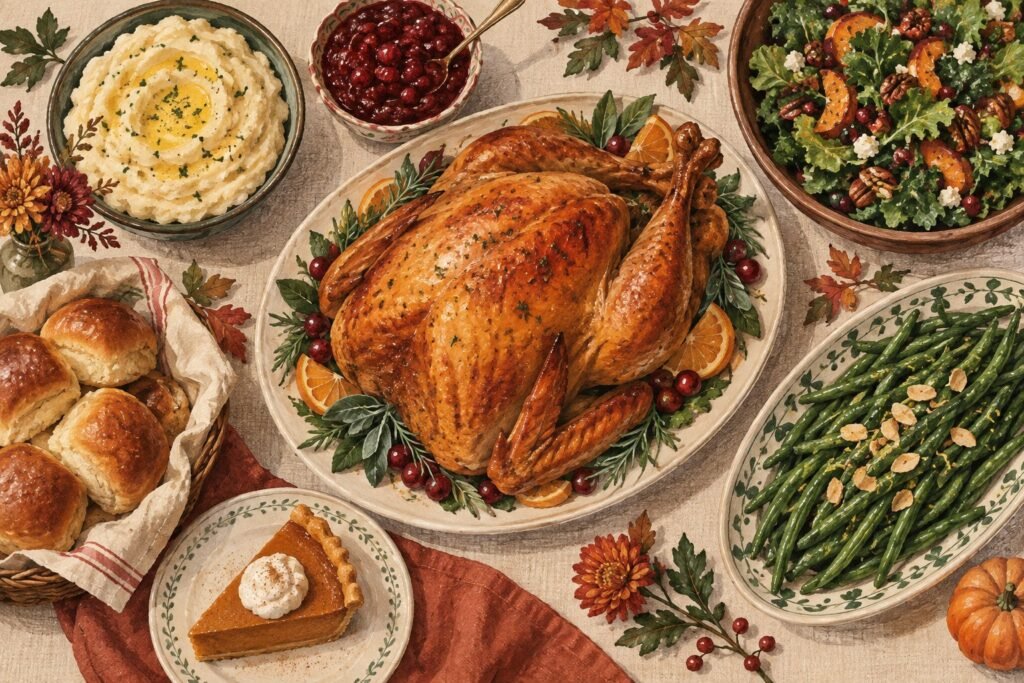
Roast turkey, bread stuffing, mashed potatoes, gravy, green bean casserole, sweet potato casserole, roasted Brussels sprouts and carrots, cranberry sauce, dinner rolls, pumpkin pie. This is the menu the master table was built around — follow it line by line.
The streamlined (fewer dishes, same timing)
Drop the sweet potato casserole and the roasted carrots; keep turkey, stuffing, mashed potatoes, gravy, green beans, cranberry sauce, rolls, one pie. The schedule actually gets easier — Block 2 has one fewer rotation. This is the right call if it’s your first time hosting or your oven runs small. See how to cook a Thanksgiving turkey for the centerpiece technique, and our best Thanksgiving dinner menu for 2026 if you’re still finalizing dishes.
The expanded (potluck contributions arriving)
If guests are bringing dishes, your oven schedule must account for their reheating needs. Ask contributors to bring dishes in oven-safe containers, and assign them Block 2 slots in advance — or better, ask for dishes that are served at room temperature (salads, charcuterie, desserts). Our Thanksgiving potluck organization guide includes a sign-up template that prevents five desserts and zero sides.
In Pictures: Thanksgiving Day Cooking Schedule
Oven Tetris, simmering pots and a bird on a deadline — the big day runs on a schedule.
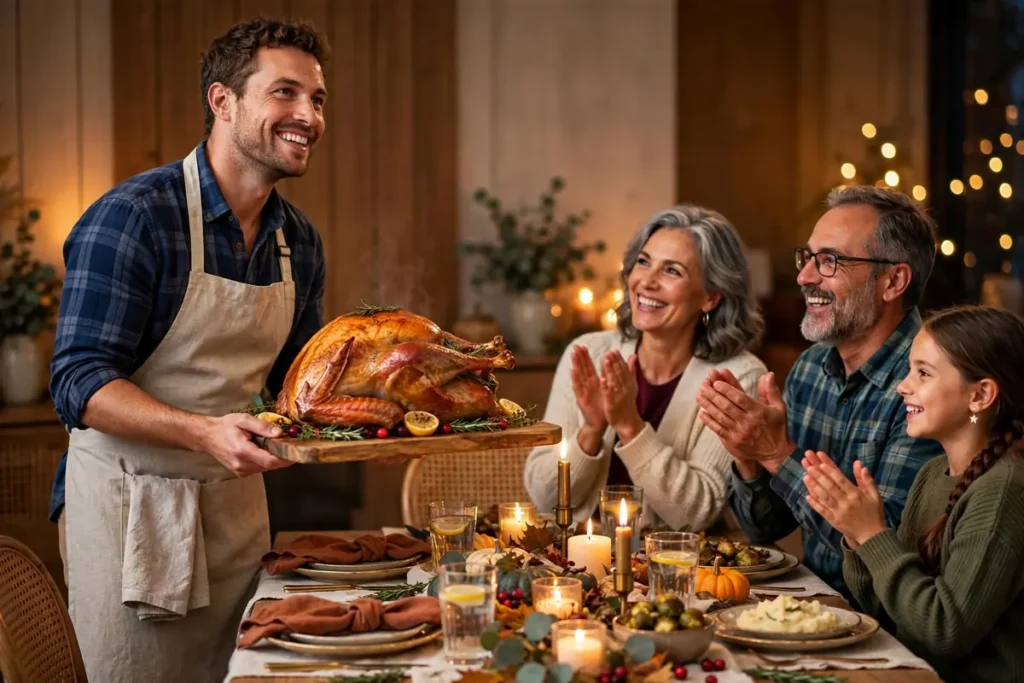
A busy Thanksgiving morning kitchen with dishes at every stage and a turkey roasting in the oven.
Watch: Thanksgiving Day Cooking Schedule
From the Roots Up cooks a complete classic Thanksgiving meal with a full timetable to follow.
At a Glance: Thanksgiving Day Cooking Schedule
A sample day-of schedule built around a mid-afternoon serving time.
| Time | Task |
|---|---|
| Early morning | Take the turkey out to temper; prep vegetables and mise en place |
| Mid-morning | Turkey goes into the oven; assemble casseroles |
| Late morning | Bake pies if not done; prep the table |
| Early afternoon | Casseroles and sides go in as oven space frees up |
| 1 hour before | Rest the turkey; reheat sides; make the gravy |
| Serving time | Carve the turkey just before guests sit down |
Frequently Asked Questions
What time should I put the turkey in the oven for a 4 PM dinner?
For a 14-pound unstuffed turkey roasted at 325°F, put it in at 8:00 AM for a 4:00 PM dinner. The general formula: cook time is roughly 13 minutes per pound, plus a 30–45 minute rest, plus 30 minutes of carving and gravy before serving. Work backward from your dinner time using those three blocks, and always verify doneness with a meat thermometer (165°F in the thigh) rather than the clock.
Can I cook the turkey and the sides at the same time?
Not in the same oven — opening the door to rotate sides drops the oven temperature and extends the turkey’s cook time. The proven strategy is sequential: turkey roasts undisturbed in the morning, rests while sides bake in the early afternoon. Use the stovetop, slow cooker, and microwave for parallel work while the bird occupies the oven.
How do I keep everything warm until dinner is served?
Tent casseroles and the turkey in foil (the bird holds heat for 45 minutes easily), hold mashed potatoes in a slow cooker on warm, and keep gravy on the stove’s lowest setting, whisking occasionally. Serve on warmed plates if you want restaurant-level heat retention — run them through a 170°F oven for 10 minutes before serving.
What should I do if the turkey finishes early?
Don’t panic — this is the best-case problem. Tent the turkey loosely in foil; it will stay hot for up to an hour and the extra rest only improves juiciness. Use the freed oven time to get ahead on sides. If it finishes more than an hour early, tent it and hold it in a 170°F oven, but avoid holding longer than 90 minutes or the skin softens.
What if the turkey is still undercooked when guests arrive?
Serve appetizers and buy time — nobody minds a 30-minute delay when there’s a good spread out. Crank the oven to 350°F to finish the bird faster (the skin may darken; tent with foil if needed). Meanwhile, carve nothing early: cutting into an undercooked turkey doesn’t speed anything up. This is why the thermometer check is scheduled a full hour before carving time.
How far in advance can I make the side dishes?
Cranberry sauce keeps a week refrigerated. Pies bake fine on Wednesday. Casseroles (green bean, sweet potato) can be fully assembled Tuesday or Wednesday and baked Thursday. Mashed potatoes are best made day-of but can be made Wednesday and reheated with extra butter and milk. Stuffing components (dried bread, cooked sausage, sautéed vegetables) can be prepped days ahead and combined Thursday morning.
Conclusion
A thanksgiving day cooking schedule is the difference between hosting Thanksgiving and surviving it. Work backward from dinner, give the turkey the oven all morning, sequence your sides through the rest window, and respect the food-safety clock — and you’ll sit down at 4:00 PM with everything hot, everything ready, and energy left to enjoy it. Print the master table, tape it to the fridge, set your timers, and trust the plan. Thanksgiving 2026 is on November 26. You’ve got this — and now you’ve got the schedule to prove it.