If Thanksgiving morning had an official breakfast, it would be overnight French toast casserole. It captures everything people love about classic French toast — custardy centers, crisp golden edges, warm cinnamon — and removes everything stressful about making it: no standing over a griddle flipping slice after slice, no first batch going cold while the last cooks, no oven conflicts with the turkey. You assemble it the night before in one baking dish, refrigerate it while you sleep, and bake it in the morning while the coffee brews. Forty-five minutes later, you are serving a crowd-pleasing breakfast that tastes like you worked far harder than you did.
This guide is the complete playbook: the foolproof base recipe with exact ratios, how to choose the right bread, make-ahead timing down to the hour, six tested variations (from apple-cinnamon to savory), troubleshooting for soggy or dry results, scaling for crowds, and answers to every question about this make-ahead classic. It is written for Thanksgiving morning specifically — but once you have the method, you will use it for Christmas, Easter, and every brunch gathering in between.
Why Overnight French Toast Casserole Wins Thanksgiving Morning
The case for this dish on Thanksgiving rests on four advantages no other breakfast matches simultaneously. First, it is 100 percent make-ahead: every bit of active work happens the night before, when the kitchen is calm and the turkey is still safely in the refrigerator. Thanksgiving morning you do exactly three things — preheat the oven, uncover the dish, and bake. That is it.
Second, it uses the oven on your terms. The casserole bakes at 350°F (175°C) for 45 to 55 minutes, which fits neatly into the early-morning window before the turkey claims the oven. A 7:00 AM bake means breakfast at 8:00 and a free oven by 8:15. Compare that to pancakes, which need an hour of active griddle work, or cinnamon rolls, which need two rises and precise timing.
Third, it feeds a crowd from one dish. A single 9×13-inch pan serves 10 to 12 people generously. There is no batch cooking, no holding things warm, no short-order station. Everyone eats at the same time, hot, together — which on Thanksgiving morning feels like a small miracle.
Fourth, it is universally loved and endlessly adaptable. Kids devour it. Adults who “do not eat breakfast” find themselves going back for seconds. It accommodates dietary tweaks gracefully, and it pairs with everything from bacon to fresh fruit. If you are planning the broader morning, our Thanksgiving breakfast ideas roundup shows how this casserole anchors a complete spread.
The Science of a Perfect Custard Soak
Understanding why the recipe works helps you adapt it confidently. French toast casserole is essentially a bread pudding, and its texture depends on the balance between bread structure and custard.
The Bread-to-Custard Ratio
The golden ratio: for every 1 pound (about 450 g) of bread, use 8 large eggs and 2 cups (480 ml) of dairy. This produces a casserole that is custardy and rich but still sliceable — it holds its shape when served but melts in the mouth. More dairy makes it creamier but risks sogginess; more egg makes it firmer and more quiche-like. If you are scaling the recipe, keep this ratio locked and everything else follows.
Why Stale Bread Works Better
Day-old or lightly dried bread absorbs custard like a sponge without disintegrating. Fresh, soft bread can turn mushy because its structure is too delicate to survive an overnight soak. If your bread is fresh, cube it and dry the cubes in a 300°F (150°C) oven for 10 to 12 minutes, or simply leave them spread on a baking sheet on the counter for a few hours. This single step is the difference between a casserole with distinct, custardy cubes and one that eats like porridge.
Why the Overnight Rest Matters
The overnight soak is not just convenience — it is structural. Eight to twelve hours in the refrigerator lets the custard fully penetrate every cube, so the casserole bakes evenly with no dry pockets and no raw-egg surprises in the center. A rushed 30-minute soak gives you French toast with a soggy bottom and dry top. Time is an ingredient here; respect it.
Choosing the Best Bread
Bread choice shapes the final dish more than any other decision. Here is how the common options compare:
- Brioche: The gold standard. Rich, buttery, and sturdy enough to hold its shape. Its slight sweetness complements the custard beautifully. Worth seeking out for a holiday.
- Challah: Nearly as good as brioche, with a slightly chewier crumb. Widely available and often less expensive. An excellent default.
- French bread / baguette: Leaner and chewier, producing a casserole with more distinct texture and a pleasantly rustic character. Needs the full overnight soak since it is denser.
- Croissants: Luxurious and buttery, but they break down more during the soak — expect a softer, more pudding-like result. Wonderful for a decadent Christmas-morning version.
- Cinnamon-raisin bread: A shortcut to flavor — the swirls of cinnamon do your spicing for you. Reduce the added cinnamon in the custard by half.
Avoid standard sandwich bread: it is too soft and too thin-sliced, and it dissolves into mush. Whatever you choose, cut it into 1-inch cubes — large enough to maintain structure, small enough to soak through.
Classic Overnight French Toast Casserole Recipe
Serves 10 to 12. Active time: 15 minutes the night before, 5 minutes in the morning. Bake time: 45 to 55 minutes.
Ingredients
- 1 pound (450 g) brioche or challah, cut into 1-inch cubes (about 10 to 12 cups)
- 8 large eggs
- 2 cups (480 ml) whole milk
- 1/2 cup (120 ml) heavy cream
- 1/2 cup (100 g) granulated sugar
- 1/4 cup (55 g) packed light brown sugar
- 2 teaspoons pure vanilla extract
- 1 1/2 teaspoons ground cinnamon
- 1/4 teaspoon ground nutmeg
- 1/2 teaspoon kosher salt
For the streusel topping (optional but recommended):
- 1/2 cup (65 g) all-purpose flour
- 1/2 cup (55 g) packed light brown sugar
- 1 teaspoon ground cinnamon
- 1/4 teaspoon kosher salt
- 6 tablespoons (85 g) cold unsalted butter, cubed
- 1/2 cup (60 g) chopped pecans (optional)
Night-Before Assembly
Butter a 9×13-inch baking dish generously. Spread the bread cubes in an even layer. In a large bowl, whisk the eggs until uniform, then whisk in the milk, cream, both sugars, vanilla, cinnamon, nutmeg, and salt until the sugars dissolve. Pour the custard evenly over the bread, pressing gently with a spatula so every cube gets moistened. Cover tightly with plastic wrap or foil and refrigerate for at least 8 hours and up to 24.
If using the streusel: combine the flour, brown sugar, cinnamon, and salt in a bowl, cut in the cold butter with a pastry blender or your fingers until crumbly, stir in the pecans, and refrigerate in a separate covered container.
Morning-Of Baking
Remove the casserole from the refrigerator 20 to 30 minutes before baking so it is not ice-cold going into the oven (this promotes even baking). Preheat the oven to 350°F (175°C). Uncover the dish; if using streusel, crumble it evenly over the top. Bake for 45 to 55 minutes, until the top is deep golden brown, the edges are puffed and set, and the center jiggles only slightly when nudged. If the top browns too fast, tent loosely with foil for the last 15 minutes.
Let the casserole rest for 10 minutes before serving — it firms up as it cools slightly, making clean squares possible. Serve warm with maple syrup, a dusting of powdered sugar, fresh berries, or whipped cream.
Six Tested Variations
Once the base method is in your hands, the casserole becomes a template. Each variation below keeps the same custard ratio and timing; only the mix-ins and toppings change.
Apple-Cinnamon French Toast Casserole
Toss 2 diced Honeycrisp or Granny Smith apples with a tablespoon of lemon juice and fold them into the bread cubes before adding the custard. The apples soften into jammy pockets during baking. Add the streusel topping and serve with warm maple syrup. This is the most Thanksgiving-appropriate variation — it tastes like apple pie met French toast.
Banana–Walnut French Toast Casserole
Layer 2 sliced bananas between the bread cubes and add 3/4 cup of chopped toasted walnuts. The bananas caramelize at the edges and turn creamy in the center. A drizzle of dulce de leche or caramel sauce at serving time makes it dessert-worthy. Note: bananas brown overnight, but the lemon-free browning is purely cosmetic once baked — do not worry about it.
Berry Cheesecake French Toast Casserole
Dot 6 ounces of cubed cream cheese among the bread cubes and scatter 2 cups of mixed berries (fresh or frozen, unthawed) over the top before pouring the custard. The cream cheese melts into tangy pockets that contrast beautifully with the sweet berries. Reduce the granulated sugar to 1/3 cup since the berries add sweetness. Serve with a berry compote or simply powdered sugar.
Pumpkin Spice French Toast Casserole
Whisk 1 cup of pumpkin purée and 2 teaspoons of pumpkin pie spice into the custard. The pumpkin adds gorgeous color, autumnal flavor, and extra moisture — reduce the milk by 1/4 cup to compensate. Top with the pecan streusel and serve with maple syrup. For more pumpkin breakfast inspiration, see our pumpkin pancakes recipe.
Savory Ham and Cheese Breakfast Casserole
Skip the sugar, vanilla, and cinnamon. Use 8 eggs, 2 cups milk, 1 teaspoon salt, 1/2 teaspoon black pepper, and 1 teaspoon Dijon mustard as the custard; fold in 2 cups of diced ham, 1 1/2 cups of shredded Gruyère or cheddar, and 3 sliced scallions. Bake as directed. This is the answer when half the household wants savory — make one sweet and one savory casserole and everyone is happy. It reheats better than the sweet version, making it ideal for next-day leftovers.
Eggnog French Toast Casserole (Holiday Edition)
Replace the milk and cream with 2 1/2 cups of eggnog and reduce the sugar to 1/4 cup (eggnog is already sweet). Add 1/2 teaspoon of nutmeg and a tablespoon of rum or bourbon if you like. This Christmas-morning classic also works beautifully on Thanksgiving for households that start the holiday season early. The eggnog’s thickness produces an exceptionally rich, custardy result.
Scaling for Any Crowd Size
The recipe scales linearly — the ratio does the work. For a small household (4 to 6), halve everything and bake in an 8×8-inch dish for 35 to 45 minutes. For a large gathering (18 to 24), make two 9×13 pans rather than one enormous vessel; a deeper casserole bakes unevenly, with a scorched top and underdone center. Two pans also let you offer two variations — one sweet, one savory — which is the move for diverse crowds. When doubling, you can bake both pans simultaneously if your oven fits them; rotate the pans halfway through for even browning.
Thanksgiving Morning Timeline with the Casserole
Here is the casserole slotted into a realistic Thanksgiving morning, assuming dinner at 4:00 PM:
- Night before, 9:00 PM: Assemble the casserole and streusel; refrigerate. Set out the coffee maker. Go to sleep knowing breakfast is handled.
- 7:00 AM: Take the casserole out of the refrigerator. Preheat the oven to 350°F. Start coffee.
- 7:30 AM: Casserole goes in. Set a timer for 45 minutes. Use this window to shower, dress, or start turkey prep mise en place.
- 8:15 AM: Casserole comes out; tent with foil. Rest 10 minutes. Set out syrup, berries, plates.
- 8:30 AM: Breakfast is served. The oven is free by 8:30 — a full hour before most turkey timelines need it.
- 9:15 AM: Breakfast cleared, dishwasher loaded. Turkey prep begins in a clean kitchen.
Notice what is missing: stress. For the rest of the day’s choreography, our Thanksgiving dinner timeline and day-of cooking schedule take over from here.
Make-Ahead Limits, Storage, and Reheating
How Far Ahead Can You Assemble?
The sweet spot is 8 to 16 hours of refrigeration. Up to 24 hours is fine with sturdy breads like brioche, challah, or French bread. Beyond 24 hours, even sturdy bread starts to break down and the texture suffers. If you need more lead time, cube and dry the bread up to 3 days ahead (stored airtight at room temperature), mix the dry streusel ingredients ahead, and do the custard assembly the night before — the active work is still only 15 minutes.
Storing Leftovers
Refrigerate leftovers in an airtight container for up to 4 days. The casserole firms up when cold; that is normal.
Reheating
The oven is best: cover individual portions or the whole dish with foil and warm at 325°F (165°C) for 15 to 20 minutes until heated through. The microwave works for single servings (1 to 2 minutes), though the streusel loses its crunch. A toaster oven revives individual squares beautifully — crisp top, creamy center. Cold leftover casserole, eaten standing in front of the refrigerator at midnight, is also a legitimate choice that requires no instructions.
Freezing
Baked casserole freezes well for up to 2 months: cool completely, wrap portions tightly in plastic wrap and foil, and freeze. Thaw overnight in the refrigerator and reheat as above. Do not freeze the unbaked assembled casserole — the custard’s texture degrades and the bread over-softens during the freeze-thaw cycle.
Troubleshooting Common Problems
Soggy Bottom, Dry Top
The classic failure, and it has two usual causes: insufficient soak time (the custard never reached the bottom cubes evenly) or too much dairy for the bread. Fix it next time with the full overnight rest and the correct ratio. For the current casserole, serving it with the crispy top pieces distributed and extra syrup helps, but prevention is the real cure.
Dry, Bready Texture Throughout
Under-soaked or overbaked. If the bread cubes were very dry and the soak was short, the custard never penetrated. If the bake went long, the custard over-set. Use a thermometer if you are unsure: the center should reach 160°F (71°C). Pull the casserole when the center still has the slightest jiggle — carryover heat finishes it during the rest.
Burnt Top, Raw Center
Your oven runs hot, or the dish was too deep. Tent with foil once the top is golden (usually around the 30-minute mark), verify with an oven thermometer, and do not bake in a dish deeper than a standard 9×13. If the center is truly raw after the full bake time, lower the oven to 325°F (165°C), cover with foil, and give it 15 more minutes.
Eggy or Sulfur Smell
Overbaked eggs release sulfur compounds — the same smell as overcooked hard-boiled eggs. It means the casserole went too long or too hot. The dish is still safe to eat; the smell dissipates as it rests. Next time, pull it earlier and trust the jiggle test.
Serving Suggestions and Toppings Bar
The casserole is a canvas — the toppings make it a feast. Set out a toppings bar and let guests customize:
- Warm pure maple syrup (warm it — cold syrup on hot casserole is a crime against breakfast)
- Fresh berries: strawberries, blueberries, raspberries
- Whipped cream or crème fraîche
- Powdered sugar in a shaker
- Toasted pecans or walnuts
- Crispy bacon or breakfast sausage on the side for the savory-inclined
- A bowl of Greek yogurt for a protein boost and tangy contrast
For drinks, coffee is non-negotiable; mulled apple cider from the slow cooker keeps the holiday mood going all morning. If brunch cocktails are your family’s tradition, a mimosa or apple cider mimosa pairs perfectly with the casserole’s sweetness.
In Pictures: Overnight French Toast Casserole
Custardy, golden and waiting in the fridge — the overnight soak is what makes this casserole foolproof.
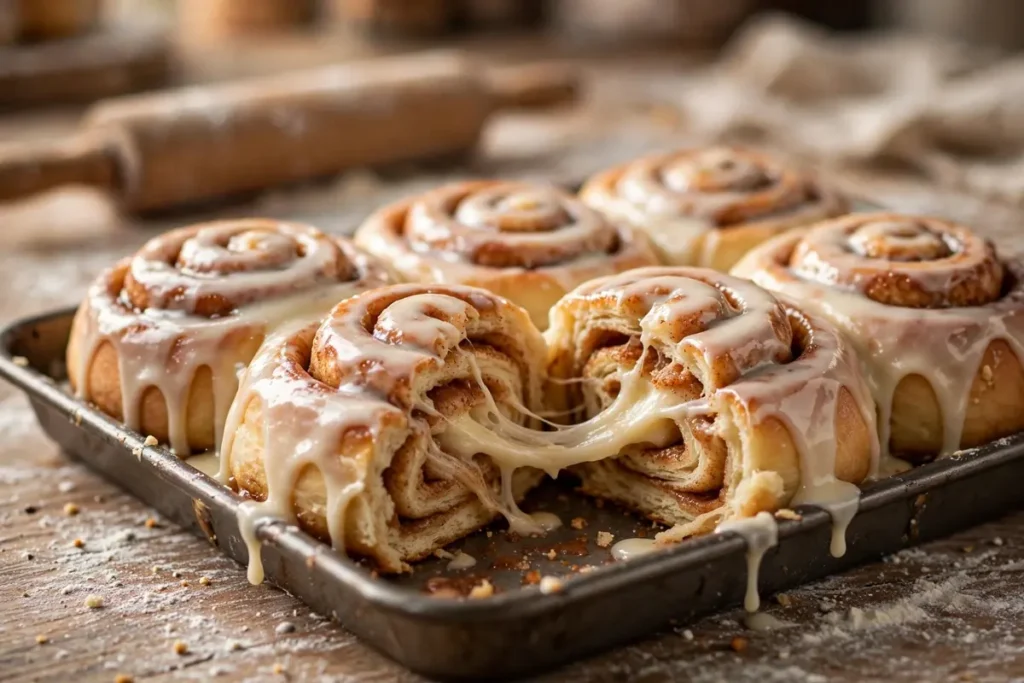
A golden overnight French toast casserole with pecan streusel being drizzled with maple syrup.
Watch: Overnight French Toast Casserole
Sugar Spun Run demonstrates French toast casserole with the overnight method.
At a Glance: Overnight French Toast Casserole
Bread choice, soak time and bake notes for a custardy center and crisp top.
| Detail | What to know |
|---|---|
| Bread | Brioche or challah, slightly stale, soaks up custard best |
| Soak time | At least 8 hours or overnight in the refrigerator |
| Bake | Around 45–50 minutes at 350°F until puffed and golden |
| Toppings | Maple syrup, berries and a pecan streusel are classic |
| Servings | One 9×13 dish typically serves 8–10 |
| Make-ahead | Assemble the night before; bake in the morning |
Frequently Asked Questions
Can I assemble overnight French toast casserole two nights before?
It is not recommended. Beyond 24 hours of soaking, the bread breaks down and the texture turns mushy. If you need more lead time, prep the components separately: cube and dry the bread up to 3 days ahead, mix the streusel ahead, and combine everything with the custard the night before serving.
Do I have to use brioche or challah?
No, but rich, sturdy breads give the best results. French bread works well; croissants make a softer, more pudding-like casserole. Avoid standard sandwich bread, which dissolves during the overnight soak. Whatever you use, day-old or oven-dried cubes are essential.
Can I make this dairy-free?
Yes. Use a rich dairy-free milk (oat milk or full-fat coconut milk work best), coconut cream in place of heavy cream, and vegan butter for greasing and the streusel. Choose a dairy-free bread (many baguettes and some challahs qualify — check labels). The result is slightly less rich but still delicious. For a full plant-based holiday, see our vegan Thanksgiving dinner menu.
Why is my French toast casserole soggy in the middle?
The three usual suspects: too much dairy for the amount of bread, too short a soak, or underbaking. Stick to the 8-eggs-plus-2-cups-dairy per pound of bread ratio, soak a full 8 hours minimum, and bake until the center reaches 160°F (71°C) with only a slight jiggle. Tenting with foil prevents the top from over-browning while the center catches up.
Can I bake it without the overnight rest?
You can, but it will not be the same dish. A minimum 2-hour soak produces an acceptable casserole in a pinch, but the texture will be less even — drier on top, wetter on the bottom. The overnight rest is what makes this recipe special; if you cannot do it, consider same-day pumpkin pancakes instead.
How do I keep it warm if guests are late?
Hold the baked casserole in a 200°F (95°C) oven, tented with foil, for up to 45 minutes. Beyond that, the texture starts to dry out. A better strategy for unpredictable arrivals: bake it when the first guests are 45 minutes out, and let latecomers enjoy reheated squares — the toaster-oven method revives them beautifully.
Conclusion
Overnight French toast casserole is the rare recipe that is greater than the sum of its conveniences. Yes, it saves your Thanksgiving morning — but it also happens to be genuinely delicious: custardy, golden, fragrant with cinnamon and vanilla, and endlessly adaptable to your family’s tastes. Master the ratio, respect the overnight soak, choose good bread, and you have a holiday breakfast tradition that will outlast the parade broadcast. For more ways to start the day right, explore our Thanksgiving breakfast ideas, and when the morning gives way to the main event, our best Thanksgiving recipes of 2026 and complete Thanksgiving dinner menu have the rest of the day covered.