There is a specific kind of cold that mulled apple cider was invented for: the damp, gray, early-dark cold of late November, when the windows fog from the oven’s heat and everyone in the house migrates toward the kitchen without quite knowing why. They know why. It is the smell — cinnamon and clove and orange riding on steam, the scent of a pot that has been murmuring on the back burner all afternoon. Mulled apple cider is the simplest luxury of the Thanksgiving season: fresh cider warmed with whole spices until the whole house smells like the holiday itself. No alcohol required, no special equipment, no technique beyond patience. This guide covers everything — the classic stovetop recipe, a hands-off slow-cooker method, the spice science of why these flavors belong together, variations from around the world, make-ahead and storage rules, troubleshooting, and serving ideas that turn a pot of cider into a Thanksgiving tradition.
What makes mulled cider different from simply “hot apple cider” is intention. Heating cider makes it warm; mulling it transforms it. The word “mull” comes from an old term meaning to heat, sweeten, and spice — and the spicing is where the magic lives. Whole cinnamon, cloves, allspice, and star anise do not just flavor the cider; their volatile aromatic compounds bloom in the heat, filling the air as much as the cup. A pot of mulled cider is doing double duty as a beverage and as the world’s best-smelling air freshener, and on Thanksgiving — when first impressions are made at the front door — that matters more than most hosts realize. Guests should smell your house before they see your table.
This is also the most inclusive drink in the Thanksgiving canon. Kids love it, grandparents love it, non-drinkers love it, and drinkers love it just as much — especially with the optional spirited additions at the end of this guide. It costs pennies per serving, scales from two mugs to twenty without breaking a sweat, and holds happily for hours, which means it fits the chaotic rhythm of Thanksgiving day better than almost any other beverage. Whether you are hosting the whole extended family or just want your own kitchen to smell like November, here is the complete guide to doing it right.
What Is Mulled Apple Cider, Exactly?
Mulling: A Very Old Idea
Humans have been heating and spicing drinks for millennia. The Romans warmed their wine with spices; medieval England had “wassail,” a hot spiced ale or cider shared from a communal bowl while singing door to door — the origin of the Christmas carol lyric “here we come a-wassailing.” Mulled cider is the American heir of that tradition, built on the country’s own orchard heritage. By the 1700s, cider was the everyday drink of colonial America — safer than water, made from the apples every farm grew — and warming it with the expensive imported spices of the season was a natural celebration drink. The practice never really died; it just waited for autumn to come around each year.
Cider vs. Apple Juice: Why It Matters
In the United States, “apple cider” means fresh, unfiltered, unpasteurized (or lightly pasteurized) pressed apple juice — cloudy, perishable, and alive with flavor. “Apple juice” is the filtered, shelf-stable, clarified version. For mulling, always choose fresh cider. The unfiltered solids carry the apple flavor that stands up to strong spices; clear apple juice makes a thin, one-dimensional drink that tastes mostly of cinnamon and sugar. Buy it from the refrigerated section, check the date, and smell it before using — fresh cider ferments quickly, and while a slightly fizzy cider is not dangerous, it will taste off in a mulled batch. Outside North America, where “cider” means the alcoholic kind, use fresh-pressed cloudy apple juice — same thing, different name.
The Classic Mulled Apple Cider Recipe
This is the foundation: one gallon of cider, a handful of whole spices, gentle heat, and half an hour. It serves 12–16 mugs and the recipe scales linearly in either direction.
Ingredients
- 1 gallon (128 oz) fresh apple cider — unfiltered, refrigerated-section cider
- 3 cinnamon sticks (3-inch) — Ceylon (“true”) cinnamon if you can find it; milder and more complex
- 1 tablespoon whole cloves — about 15–20 cloves
- 1 teaspoon whole allspice berries
- 2 star anise pods
- 1 orange — sliced into wheels, plus 3 wide strips of peel
- ½ cup brown sugar or pure maple syrup — optional; taste first, many ciders need none
- 1 teaspoon vanilla extract — optional; stir in off the heat
- Garnish per mug: cinnamon stick, orange wheel or twist, star anise pod, thin apple slice
Method (Stovetop)
- Combine: Pour the cider into a large stockpot or Dutch oven. Add the cinnamon sticks, cloves, allspice, star anise, orange slices, and orange peel.
- Heat gently: Bring to the barest simmer over medium-low heat — you want lazy bubbles around the edges and active steam, roughly 180°F (82°C). Never boil. Boiling cooks off the delicate aromatics and can make the spices bitter.
- Steep: Reduce heat to low and steep 30 minutes to 1 hour. Thirty minutes gives a gentle spice background; a full hour gives a deep, assertive mull. Taste at 30 minutes and decide.
- Sweeten (maybe): Taste before adding anything. Good fresh cider is often sweet enough; add brown sugar or maple syrup a tablespoon at a time only if the batch needs it.
- Strain and serve: Strain through a fine-mesh sieve into a warmed serving vessel (or ladle directly, fishing out whole spices). Stir in vanilla off the heat if using. Serve in heatproof mugs with garnish.
Total active time: 5 minutes. Total time: 40–70 minutes, almost all of it unattended. Difficulty: if you can boil water without supervision, you can mull cider.
The Slow-Cooker Method (Set and Forget)
The slow cooker is the Thanksgiving host’s best friend for mulled cider, because it holds the batch at serving temperature for hours with zero attention:
- Combine all ingredients in a 6-quart (or larger) slow cooker.
- Cook on LOW for 3–4 hours or HIGH for 1½–2 hours.
- Switch to WARM and hold for up to 4 hours for serving. Strain out the whole spices after 4 hours total to prevent bitterness — or tie spices in cheesecloth for easy removal.
- Ladle directly from the cooker; set out a mug station with garnishes beside it.
One caution: slow cookers vary, and some run hot even on LOW. If your cooker simmers aggressively, prop the lid ajar with a wooden spoon to vent. And never leave it on WARM for more than 4–5 hours — the spices will eventually turn the batch bitter and muddy.
The Spice Science: Why These Flavors Belong Together
What Each Spice Contributes
- Cinnamon: warmth and sweetness without sugar. Its main aromatic compound, cinnamaldehyde, is perceived as both sweet and warm — which is why cinnamon makes the cider taste sweeter than it is. Ceylon cinnamon is more delicate and citrusy; cassia (the common supermarket kind) is bolder and more aggressive. Either works; use what you have.
- Cloves: intense, almost numbing warmth from eugenol — the same compound that gives cloves their dental-office aroma. A little goes an enormous way; the tablespoon in this recipe is the upper limit. Too many cloves will dominate everything.
- Allspice: despite the name, a single berry — dried from the pimento tree — that genuinely tastes like a blend of cinnamon, clove, and nutmeg. It is the background singer that makes the whole spice chorus sound fuller.
- Star anise: sweet licorice notes from anethole. Two pods perfume a whole gallon; more than three and the batch starts tasting like licorice candy.
- Orange: the peel’s oils (limonene) add bright top notes that lift the heavy base spices; the juice adds gentle acidity that keeps the drink from tasting flat.
Whole vs. Ground Spices
Always use whole spices for mulling. Ground spices make the cider cloudy and gritty, and they over-extract quickly, turning bitter. Whole spices release flavor slowly and strain out cleanly. If whole spices are all you change about your mulled cider, you have still upgraded it enormously. Buy whole spices fresh each fall — a jar of cloves from three years ago has lost most of its volatile oils. The sniff test never lies: if you cannot smell the spice strongly, it will not flavor your cider strongly either.
The Sweetness Question
Fresh cider varies enormously in sweetness depending on the apple blend. A cider pressed from Honeycrisp and Fuji will need no added sweetener; one from tart heritage apples might want the full half cup. Always taste before sweetening. When you do sweeten, brown sugar adds molasses depth, maple syrup adds woodsy complexity, and honey adds floral notes — all three are defensible, and the choice is a matter of the flavor direction you want. Add sweetener during the last 15 minutes of steeping so it fully dissolves.
Variations From Around the World (and Around the Orchard)
1. Classic Wassail (English Tradition)
The historical English wassail bowl combined hot ale or cider with roasted apples, sugar, and spices — and the “lambswool” version floated roasted crab apples that burst into fluffy pulp resembling lamb’s wool. Modern wassail: follow the classic recipe, add ½ cup brown sugar and 2 beaten eggs tempered into the hot cider (whisk constantly to avoid scrambling), and float 3–4 small baked apples in the bowl. Rich, historical, and unforgettable.
2. Cranberry-Orange Mulled Cider
Add 2 cups of fresh cranberries and an extra orange to the classic recipe. The cranberries burst during steeping, tinting the cider a gorgeous ruby and adding tart brightness that cuts the sweetness. This is the prettiest variation — made for the Thanksgiving table — and it pairs naturally with our Thanksgiving cocktails spread for guests who want something warm.
3. Ginger-Pear Mulled Cider
Add a 3-inch piece of fresh ginger (sliced) and replace one quart of apple cider with pear nectar. The ginger adds a clean heat that is entirely different from clove warmth — brighter, more refreshing — and pear rounds everything with honeyed softness. This is the variation for people who find classic mull “too Christmas-spice.”
4. Chai-Spiced Mulled Cider
Add 4 crushed cardamom pods, a 1-inch piece of fresh ginger, ½ teaspoon black peppercorns, and 2 black tea bags (removed after 10 minutes) to the classic recipe. The result sits halfway between masala chai and mulled cider — familiar enough for traditionalists, interesting enough for the adventurous. The tea’s tannins add a backbone that makes the drink feel more “adult.”
5. Maple-Bourbon Mulled Cider (Adults Only)
Mull the classic recipe with maple syrup as the sweetener, then stir in 1½ oz of bourbon per mug at serving time — never during cooking, which would boil off the alcohol and flatten the whiskey’s character. The bourbon’s vanilla and caramel notes are a natural fit for apple and maple. As with all alcoholic additions, serve only to adults of legal drinking age and enjoy responsibly. For more spirited fall options, see our apple cider sangria.
6. Pomegranate Mulled Cider
Replace 2 cups of apple cider with pure pomegranate juice. The pomegranate adds tart depth and turns the cider a dramatic garnet color. Add the pomegranate juice in the last 15 minutes of steeping to preserve its fresh flavor. Garnish with pomegranate arils — they sink, swirl, and look like jewels.
7. Kid-Friendly “Magic” Cider Bar
Set up a self-serve station: the slow cooker of classic mulled cider, plus bowls of garnishes — cinnamon sticks (stirring sticks!), orange wheels, apple slices, star anise, and a dish of mini marshmallows. Kids construct their own mugs, which keeps them happily occupied during the pre-dinner stretch. Add a small card with the drink’s “magic name” for extra delight. This is also a lovely activity to pair with our Thanksgiving mocktails for the younger crowd.
Make-Ahead, Storage, and Reheating
Can You Make Mulled Cider Ahead?
Yes — and it reheats beautifully, which makes it ideal Thanksgiving strategy. Mull the full batch up to 3 days ahead, strain out all whole spices (this is important: leaving them in during storage over-extracts and turns the cider bitter), cool, and refrigerate in sealed jugs. The flavor actually deepens overnight as the dissolved spice compounds marry. Reheat gently on the stove or in the slow cooker — never microwave a whole batch, which heats unevenly and can scorch the sugars. Add fresh garnishes at serving time.
Storage Rules
- Refrigerated: 4–5 days in a sealed container. The strained, spiced cider keeps as well as plain cider.
- Frozen: up to 3 months. Freeze in portion-sized containers, leaving headspace for expansion. Thaw overnight in the fridge.
- After adding alcohol: if you stirred bourbon or rum into the batch (rather than per-mug), the alcohol acts as a preservative — it will keep a day or two longer refrigerated, but the spirit’s flavor dulls, so per-mug addition is still better.
- Food safety: like any perishable, do not leave mulled cider at room temperature for more than 2 hours (1 hour if the room is warm). The slow-cooker WARM setting (above 140°F/60°C) counts as safe holding, not room temperature.
Serving Ideas: From Mug to Centerpiece
The Mug Station
For a crowd, do not pre-garnish twenty mugs — set up a station and let guests build. You need: the slow cooker or a large thermos/carafe of hot cider, a stack of heatproof mugs, and small bowls of garnishes (cinnamon sticks, orange wheels, star anise, apple slices, and optionally bourbon or rum in a labeled bottle for adults). Add a framed card with the cider’s name — “Orchard Mull” or “Harvest Spice Cider” — and the station becomes decor. Our Thanksgiving dinner timeline shows exactly when to start the slow cooker so the house smells incredible as guests arrive.
Glassware and Presentation
Clear glass mugs show off the cider’s amber glow and floating garnishes — worth the investment if you host often. Thick-walled ceramic mugs keep it hotter longer. For an elegant Thanksgiving table, serve in stemmed Irish-coffee glasses with a cinnamon-stick stirrer; for a rustic Friendsgiving, mason jars with twine-tied cinnamon sticks. Keep a trivet or folded towel under any serving vessel — a gallon of hot cider will mark a wood table.
Pairing With the Thanksgiving Menu
Mulled cider is a pre-dinner and post-dinner drink, not a with-dinner drink — its sweetness and strong spice compete with the savory main course rather than complementing it. Serve it as guests arrive (it buys you forty minutes of goodwill while you finish cooking), then again after pie, when its warmth suits the fireside stretch of the evening. During dinner itself, pivot to wine or sparkling options — our wine pairing guide covers that territory. With appetizers, mulled cider loves salty, savory bites: aged cheddar, roasted nuts, and sausage-stuffed mushrooms are all excellent foils. Browse Thanksgiving appetizers for the full spread.
Troubleshooting: Fixing Common Mull Problems
“My cider tastes bitter”
Over-extraction — the spices steeped too long or the batch boiled. Cloves and star anise turn bitter fastest. Fix: strain immediately, dilute with a quart of fresh unspiced cider, and add a tablespoon of brown sugar. Prevention: never boil, and strain out whole spices after 4 hours maximum (2 hours for clove-heavy batches).
“My cider tastes weak / barely spiced”
Old spices are the usual culprit — whole cloves lose potency within a year. Or you under-steeped: 30 minutes is the minimum for real flavor. Fix: add fresh spices and steep another 30 minutes, or cheat with ¼ teaspoon of ground cinnamon whisked in (it will cloud the cider slightly, but in a serving emergency, flavor beats clarity).
“My cider is too sweet”
Some commercial ciders are very sweet, and added sugar compounds the problem. Fix with acid: a squeeze of fresh lemon juice per mug, or an extra orange’s worth of juice in the batch. A strip of lemon peel in the pot also helps. Next time, taste before sweetening — the recipe’s sugar is optional for a reason.
“My cider fermented / tastes fizzy”
Fresh cider ferments fast — within a week even refrigerated. A slight fizz means wild yeasts got going. It is generally harmless but tastes off for mulling. Prevention: buy cider close to serving day, keep it at a steady 35–38°F (2–3°C), and freeze what you will not use within 5 days. If it smells strongly yeasty or alcoholic, discard it and buy fresh.
“The spices are floating everywhere”
Tie whole spices in a square of cheesecloth or use a large tea infuser ball — removal becomes a one-second operation, and no guest fishes a clove out of their mug. This is especially worth doing for the slow-cooker method, where fishing spices out of a deep crock is genuinely annoying.
Buying and Sourcing Guide
Choosing Cider
The best mulled cider starts at the orchard, not the spice rack. Look for cider pressed from a blend of apples — single-variety cider can be one-dimensionally sweet or tart. Ask at farmers’ markets what went into the press; blends with some tannic heritage apples (Northern Spy, Winesap, Arkansas Black) make the most complex mull. Unpasteurized cider has the brightest flavor but the shortest life (use within a week); UV-treated or flash-pasteurized keeps 2–3 weeks unopened. Either works for mulling since you are heating it anyway.
Spice Shopping
Buy whole spices from stores with high turnover — bulk bins at natural grocers, or dedicated spice merchants. Supermarket jars are fine if the date is recent. For cinnamon, seek out Ceylon (“true cinnamon”) for a more delicate, citrusy mull; cassia is bolder and cheaper and perfectly good. Star anise and whole allspice are worth buying whole even if you rarely use them — they keep for years in airtight jars and transform holiday cooking beyond cider.
Budget Math
A gallon of good fresh cider runs roughly $6–$10 in season; the spices for a batch cost about $2–$3 if your rack is stocked, more if you are buying everything new (but those jars make dozens of batches). Per 5-ounce serving, you are looking at roughly 50–75 cents — the cheapest impressive thing you will serve all Thanksgiving. Compare that to any bottled alternative and the homemade pot wins on price, flavor, and aroma simultaneously.
In Pictures: Mulled Apple Cider
Steam, spice and citrus — mulled cider is autumn in a mug, and it makes the whole house smell incredible.
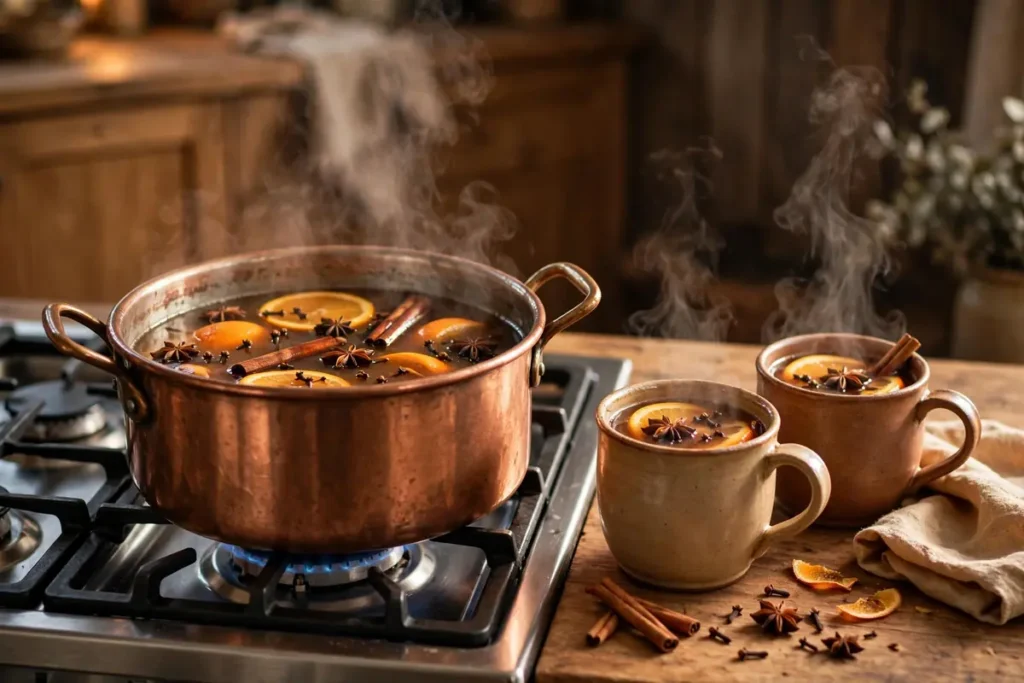
A copper pot of steaming mulled apple cider with cinnamon, star anise and orange slices, two mugs beside it.
Watch: Mulled Apple Cider
Danielle Walker simmers a cozy mulled apple cider — a slow, fragrant method worth copying.
At a Glance: Mulled Apple Cider
Spices, simmering and serving notes for mulled cider with real depth.
| Detail | What to know |
|---|---|
| Core spices | Cinnamon, cloves, star anise and allspice are the classic quartet |
| Simmer time | About 30–60 minutes on low extracts flavor without bitterness |
| Sweetener | Start unsweetened; add brown sugar or maple syrup to taste |
| Citrus | Orange slices brighten the pot; add them in the last stretch |
| Serving | Keep warm in a slow cooker for easy self-serve |
| Leftovers | Refrigerate up to about 4 days; reheat gently |
Frequently Asked Questions
What is the difference between mulled apple cider and hot apple cider?
Hot apple cider is simply heated cider. Mulled apple cider is heated cider that has been steeped with whole spices (cinnamon, cloves, allspice, star anise) and often citrus — the “mulling” process infuses it with warm spice flavor and fills your kitchen with aroma. All mulled cider is hot cider, but not all hot cider is mulled. The spice infusion is what makes it a holiday drink rather than just a warm beverage.
Can I make mulled apple cider in a slow cooker?
Yes — it is arguably the best method for Thanksgiving. Combine everything in a 6-quart slow cooker, cook on LOW 3–4 hours (or HIGH 1½–2 hours), then hold on WARM for serving up to 4 hours. Tie spices in cheesecloth for easy removal. Start it in the late morning and it will be ready — and holding perfectly — when guests arrive mid-afternoon.
How long does mulled apple cider last?
Strained and refrigerated, 4–5 days; frozen, up to 3 months. Always strain out the whole spices before storing — leaving them in causes bitter over-extraction. Reheat gently on the stove or in the slow cooker; add fresh garnishes when serving. Do not leave it at room temperature more than 2 hours (the slow cooker’s WARM setting is safe holding, not room temperature).
Can kids drink mulled apple cider?
Absolutely — the classic recipe is naturally alcohol-free and a beloved kid drink. Just make sure it has cooled to a safe sipping temperature before serving to small children (ladle it into mugs and let it sit 5 minutes, or add a splash of cold cider to each kid’s mug). The “magic cider bar” garnish station in the variations section is specifically designed to delight younger guests.
Why did my mulled cider turn bitter?
Almost always over-extraction: the batch boiled, or the spices steeped too long (especially cloves and star anise, which turn bitter fastest). Fix a bitter batch by straining immediately, diluting with fresh unspiced cider, and adding a little brown sugar. Prevent it by keeping the heat at a bare simmer, never a boil, and removing whole spices after 4 hours maximum.
Can I add alcohol to mulled apple cider?
Yes — bourbon, dark rum, and apple brandy are the classic additions, at about 1–1½ oz per mug, stirred in at serving time (not during cooking, which boils off alcohol and dulls the spirit). Serve spiked cider only to adults of legal drinking age, label it clearly if both versions are out, and enjoy responsibly. For a fully designed spirited cider drink, try our apple cider sangria instead.
Conclusion
Mulled apple cider asks almost nothing of you — a gallon of good cider, a handful of whole spices, half an hour of gentle heat — and repays you with the defining sensory experience of the Thanksgiving season: a kitchen that smells like celebration, a drink every generation reaches for, and one fewer thing to worry about on a day with plenty to worry about. Make it the night before, hold it in the slow cooker, set out the garnish station, and let the pot do the hosting for you.
Start a tradition with it. The same pot, the same spices, every Thanksgiving — and in a few years, your family will associate that cinnamon-clove steam with home itself, the way wassail singers once associated it with the orchard door. That is what holiday drinks are really for: not the flavor in the mug, though the flavor is excellent, but the memory it builds around the table. For the complete holiday playbook — from the Thanksgiving dinner menu to Friendsgiving ideas — DayZora has you covered. Happy Thanksgiving.