Few drinks capture a Thanksgiving gathering like apple cider sangria: a big, glistening pitcher of wine, fresh apple cider, and autumn fruit that serves a crowd, costs little per glass, and practically garnishes itself. If you are hosting Thanksgiving 2026 on November 26, this is the single highest-leverage drink you can make — one pitcher covers twelve guests, it improves as it sits, and it looks like you tried far harder than you did. This guide gives you the definitive base recipe with U.S. measurements, five tested variations (white, red, rosé, sparkling, and non-alcoholic), a fruit-and-spice masterclass, make-ahead timelines, troubleshooting for every common sangria failure, and serving advice that keeps the pitcher flowing all evening.
Sangria is Spanish in origin — traditionally red wine, chopped fruit, and a sweetener, served cold — but the apple cider version is a thoroughly autumnal American evolution. The cider brings tannin, orchard fruit, and gentle sweetness; the wine brings structure and acidity; the fruit brings color and flavor; and warm spices tie it to the season. Get the ratios right and it is dangerously drinkable. Get them wrong and it is fruit salad in flat wine. This guide makes sure you land in the first camp.
The Anatomy of a Perfect Apple Cider Sangria
Every great sangria balances five elements. Understand them and you can improvise with confidence:
1. The wine (the structure). Choose a wine you would drink on its own — “cooking-grade” wine makes cooking-grade sangria. For white sangria: a crisp, unoaked white like Pinot Grigio, Sauvignon Blanc, or Albariño. For red: a fruity, low-tannin red like Garnacha, Tempranillo, or Merlot. Avoid heavily oaked or tannic wines (big Cabernets, oaky Chardonnays) — tannin plus fruit plus time turns bitter. Budget $10–15 per bottle; sangria is the ideal use for good, honest, inexpensive wine.
2. The cider (the soul). Fresh, unfiltered apple cider — cloudy, tannic, complex — is non-negotiable for the best result. Clear apple juice works in a pinch but tastes one-dimensional; if you must use it, cut added sweeteners by a third and add lemon juice for the acidity cider provides. Use about half as much cider as wine: the cider should flavor and soften the wine, not replace it.
3. The spirit (the backbone). A splash of brandy, apple brandy (applejack), or bourbon — typically 1/2 to 1 cup per pitcher — adds depth and warmth. Apple brandy is the thematic bullseye; bourbon adds caramel-vanilla richness; plain brandy is the classic. This is also what makes sangria stronger than it tastes — a fact worth respecting and communicating to guests.
4. The fruit (the flavor and the show). Apples and pears are the core; oranges add brightness; cranberries and pomegranate arils add jewel color and tartness. Cut fruit into thin slices or small chunks — more surface area means more flavor exchange. Freeze some fruit (grapes, cranberries) to double as ice that does not dilute.
5. The spice and sweetener (the season). Cinnamon sticks, star anise, whole cloves, and fresh ginger say autumn. Sweeten lightly — 2 to 4 tablespoons of maple syrup, honey, or brown sugar per pitcher — and taste before adding more. The fruit and cider contribute significant sweetness already; oversweetened sangria is the most common homemade failure.
6. The fizz (optional, at serving). A float of ginger beer, sparkling water, or prosecco added just before serving lifts the whole pitcher. Never add carbonation in advance — it goes flat and the recipe suffers.
The Definitive Classic Apple Cider Sangria Recipe
This is the master recipe — the one to memorize. It serves 10–12 and scales linearly. All measurements are U.S.
Ingredients: 1 bottle (750 ml / about 3 1/4 cups) crisp white wine, chilled — Pinot Grigio or Sauvignon Blanc; 2 cups fresh unfiltered apple cider, chilled; 3/4 cup apple brandy or bourbon; 1/4 cup pure maple syrup (plus more to taste); 2 cinnamon sticks; 3 whole cloves; 1 star anise; 2 medium apples (Honeycrisp or Gala), cored and thinly sliced; 1 pear, thinly sliced; 1 orange, thinly sliced (half for the pitcher, half for garnish); 1/2 cup fresh cranberries; 1 tablespoon fresh lemon juice; 2 cups chilled ginger beer or sparkling water (added at serving); ice.
Instructions:
- In a large pitcher (at least 2-quart capacity), combine the wine, cider, brandy, and maple syrup. Stir until the syrup dissolves.
- Add the cinnamon sticks, cloves, star anise, sliced apples, pear, half the orange slices, cranberries, and lemon juice. The lemon juice keeps the apples from browning and brightens the mix.
- Refrigerate at least 4 hours and up to 24 hours. The 8–12 hour window is the sweet spot: fruit flavor fully infuses, spices bloom, and everything marries. Taste after 4 hours; add maple syrup a tablespoon at a time if you want it sweeter.
- Just before serving, remove the cloves and star anise if you like (they have done their work; leaving them is fine but they can dominate over very long steeps). Add ice to the pitcher, pour in the ginger beer, and stir once gently.
- Serve over fresh ice in wine glasses or mason jars, making sure each glass gets fruit. Garnish with the reserved orange slices and a cinnamon stick per glass if you are feeling fancy.
Why this ratio works: wine leads (structure, acidity), cider supports (fruit, body, sweetness), brandy deepens (warmth, complexity), maple sweetens lightly, spice perfumes, fruit infuses, fizz lifts. Every element has a job. Change the ratios and you change the drink’s character — which is exactly what the variations below do on purpose.
Make-ahead timeline: Two days out — slice nothing, but buy everything (cider keeps; wine keeps; fruit keeps). One day out — mix the full pitcher minus fizz and refrigerate overnight (this is the ideal prep). Thanksgiving morning — taste, adjust sweetness, add ice and fizz when guests arrive. The sangria actually needs the overnight rest, so this is one recipe where procrastination is impossible and planning is rewarded.
Five Tested Variations
Red Wine Apple Cider Sangria
Deeper, moodier, more “holiday dinner” than the white version. Use a fruity low-tannin red: Garnacha, Tempranillo, Merlot, or a Spanish Rioja Crianza ($10–15). Keep everything else the same, but swap the ginger beer for sparkling water or club soda (ginger can fight red wine’s tannins) and add 1/2 cup pomegranate arils for color. The red version pairs beautifully with the savory end of the table — dark meat, sausage stuffing, mushroom sides. Note: red sangria stains; use a dark napkin and warn guests with white shirts. Serve at 55–60°F — cool, not ice-cold.
Rosé Apple Cider Sangria
The prettiest pitcher on the table: dry rosé (Provençal-style, $12–18) plus cider plus pear plus cranberries. Lighter than the red, more festive than the white. Reduce the maple syrup to 2 tablespoons — rosé’s fruit plus cider is already generous — and garnish heavily with cranberries and rosemary sprigs for the red-green holiday contrast. This is the sangria to serve during the arrival window with Thanksgiving appetizers; it is bright enough to wake up palates and light enough to leave room for dinner.
Sparkling Apple Cider Sangria
For toasts and celebrations: build the base (wine, cider, brandy, fruit, spice) and refrigerate overnight, then top each glass with chilled Prosecco or Cava instead of mixing fizz into the pitcher. Per glass: 2/3 sangria base over ice and fruit, 1/3 sparkling wine. The bubbles stay lively because they are added per serving, and the presentation — a fizzy, fruit-filled flute — is unbeatable for the Thanksgiving toast. Budget one bottle of sparkling wine per 6–8 glasses.
Bourbon-Forward Harvest Sangria
For the whiskey lovers: increase the bourbon to 1 1/4 cups, use a bolder white (oaked Chardonnay actually works here — the bourbon can handle it) or a soft red, and add a split vanilla bean to the pitcher. The vanilla-bourbon-cider combination tastes like liquid pie crust. Serve over one large ice cube in a rocks glass rather than a wine glass — it drinks like a cocktail that happens to serve a crowd. This variation is stronger than the classic; label it clearly and pour modestly.
Non-Alcoholic Apple Cider Sangria
Everyone deserves the pitcher. Replace the wine with 3 1/4 cups sparkling white grape juice plus 1 cup strong-brewed black tea (cooled) — the tea provides the tannic backbone wine would have contributed. Replace the brandy with 1/4 cup apple cider vinegar (trust the process — it adds the acidic complexity, not a vinegar taste) plus 1 teaspoon vanilla extract. Keep the fruit, spice, maple, and fizz exactly the same. The result is genuinely complex, not just sweet juice — and kids love it. For more zero-proof options, our Thanksgiving mocktails guide has nine more complete recipes.
The Fruit and Spice Masterclass
Apples: Use firm, flavorful varieties that hold their shape — Honeycrisp, Gala, Fuji, Braeburn, or Pink Lady. Avoid Red Delicious (mealy) and Granny Smith as the primary apple (too tart alone, though a few slices add nice contrast). Slice thin (1/8 inch) for maximum infusion; toss in lemon juice immediately to prevent browning.
Pears: Bosc or Anjou, firm-ripe. Pears infuse faster than apples and turn soft after 24 hours — if making sangria two days ahead, add pears on day two. Their floral sweetness is the secret ingredient guests cannot identify but always love.
Citrus: Oranges for sweetness and color, lemons for brightness and anti-browning, grapefruit for a bitter edge in the red version. Always slice (not wedge) for pitcher aesthetics, and include some peel — citrus oils are a major flavor contributor.
Berries: Fresh cranberries (tart, gorgeous, seasonal), pomegranate arils (jewel-like, tannic), blackberries (in the red version). Frozen berries work and double as ice — add them frozen at serving time.
Spices: Cinnamon sticks (whole, not ground — ground cinnamon makes sangria cloudy and gritty), star anise (one or two; it dominates in quantity), whole cloves (three or four; remove after 12 hours or they take over), fresh ginger slices (warming without sweetness), and a vanilla bean (split, in the bourbon variation). Never use ground spices in sangria — they cloud the pitcher and settle into sludge.
Herbs: Rosemary sprigs (gorgeous, piney — a little goes a long way), thyme (subtle, savory), mint (only in lighter white versions). Add herbs in the last 4 hours; overnight herb steeps turn medicinal.
Scaling for a Crowd: The Math
Sangria scales linearly, which makes it the most predictable crowd drink in existence. The master recipe serves 10–12 generously (about 5-oz servings with fruit and ice). For 20 guests, double it — you will need a drink dispenser or two large pitchers. For 30, triple it and use a 3-gallon dispenser. Practical notes for large batches: mix in the dispenser body or a stockpot, then transfer; fruit quantities scale directly, but spices do not need to triple — 2.5x spice for a triple batch prevents over-extraction. Always keep a backup bottle of wine and extra cider chilled; the first pitcher goes faster than you expect, and a quick second batch (even with a shorter 2-hour rest) saves the evening. If you want a second large-format option, our Thanksgiving punch for a crowd guide offers non-sangria alternatives.
Cost per glass: one master batch costs roughly $20–28 (wine $12, cider $5, brandy from an existing bottle ~$4, fruit ~$5, pantry spices) and yields 12 servings — under $2.50 per glass. Sangria is among the most economical impressive drinks you can serve, which is part of why it dominates holiday hosting.
Serving Sangria Like a Pro
The vessel: a clear glass pitcher or drink dispenser shows off the fruit — this matters, because sangria is visual. If using a dispenser with a spigot, keep fruit pieces large enough not to clog it, or strain the sangria and add fresh fruit for display. A large mason-jar dispenser is the classic Thanksgiving look.
The ice question: ice in the pitcher dilutes over hours. Better: chill the sangria thoroughly, serve over fresh ice in individual glasses, and keep the pitcher itself refrigerated or nested in ice between pours. Frozen fruit (grapes, cranberries) in the pitcher chills without diluting — the professional move.
The glassware: wine glasses, mason jars, or stemless tumblers all work. Whatever you choose, make sure each serving includes fruit — use a slotted spoon or tongs when pouring from a pitcher, or pre-load glasses with fruit and pour over. An edible garnish (apple slice, cinnamon stick, rosemary sprig) per glass elevates the presentation enormously for near-zero effort.
Labeling: a small card — “Apple Cider Sangria (contains wine & brandy)” — prevents confusion, especially if you are also serving the non-alcoholic version. Put the two pitchers at opposite ends of the drinks table with clear labels. This is basic hosting diligence.
Timing: put the sangria out when guests arrive and keep it flowing through appetizers. When dinner is served, many hosts transition to wine — our wine pairing guide picks up where the sangria leaves off. Bring the sangria back for the late evening; it is excellent with Thanksgiving desserts, especially apple and pear-based ones.
Troubleshooting: Fixing Common Sangria Problems
Too sweet: the most common issue. Add more wine (dry), a squeeze of lemon, or sparkling water to dilute; a pinch of salt (seriously — a tiny pinch) suppresses perceived sweetness. Next time, reduce the maple syrup and taste the cider first — some ciders are much sweeter than others.
Too tart or acidic: add maple syrup a tablespoon at a time, or a splash more cider. A vanilla bean or extra cinnamon also rounds sharp edges.
Tastes flat / one-dimensional: it needs acid or tannin. Lemon juice first; if that does not fix it, the wine was probably too soft — a splash of brandy or a cup of strong black tea (cooled) adds backbone. Also check: did it rest long enough? Under-rested sangria (under 4 hours) always tastes disjointed.
Bitter: usually over-steeped spices (cloves and star anise past 24 hours), pithy citrus (too much white pith in the slices), or a tannic wine. Remove the spices, fish out the citrus, and dilute with more wine and cider. Next time, use thin-skinned citrus and pull whole spices at 12 hours.
Cloudy: ground spices, over-muddled fruit, or unfiltered cider (which is naturally cloudy — that is fine and even desirable). If clarity matters for presentation, strain through fine mesh and add fresh fruit for display. Cloudiness never affects flavor.
Fruit turned mushy: the sangria rested too long (past 36 hours) or the fruit was overripe. Strain out the tired fruit, add fresh slices, and serve. The liquid is still excellent — fruit is replaceable, the infusion is not.
Too strong / too weak: sangria should taste like wine, not hide it — but it should not taste like a cocktail either. If too strong, add cider and sparkling water. If too weak (tastes like spiced juice), the wine was drowned — add more wine, not more brandy. The classic ratio (roughly 3:2:0.5 wine:cider:brandy by volume) is the target.
Pairing Sangria With the Thanksgiving Meal
White apple cider sangria is a natural appetizer and arrival drink — its acidity and fruit wake up palates, and its moderate sweetness bridges to the meal. With the main course, sangria plays best as a background option rather than the primary pairing; the dedicated wine pairing guide covers the turkey course in depth. That said, the red wine variation genuinely works with the savory end of the table, and the bourbon variation is a fine after-dinner sipper alongside pie. The non-alcoholic version can run all day for kids, designated drivers, and non-drinkers — coordinate with our mocktails guide for a complete zero-proof menu.
One caution: sangria is stronger than it tastes. The fruit, cider, and sweetness mask the alcohol (wine plus brandy), and guests pour generously from pitchers. Mention the contents on your label card, keep water visible, serve food early, and watch the pace — especially in the long pre-dinner window. Please drink responsibly, and make sure everyone has a safe ride home.
In Pictures: Apple Cider Sangria
Crisp apples, tart cranberries and warm spice — sangria goes full autumn in this pitcher-friendly recipe.
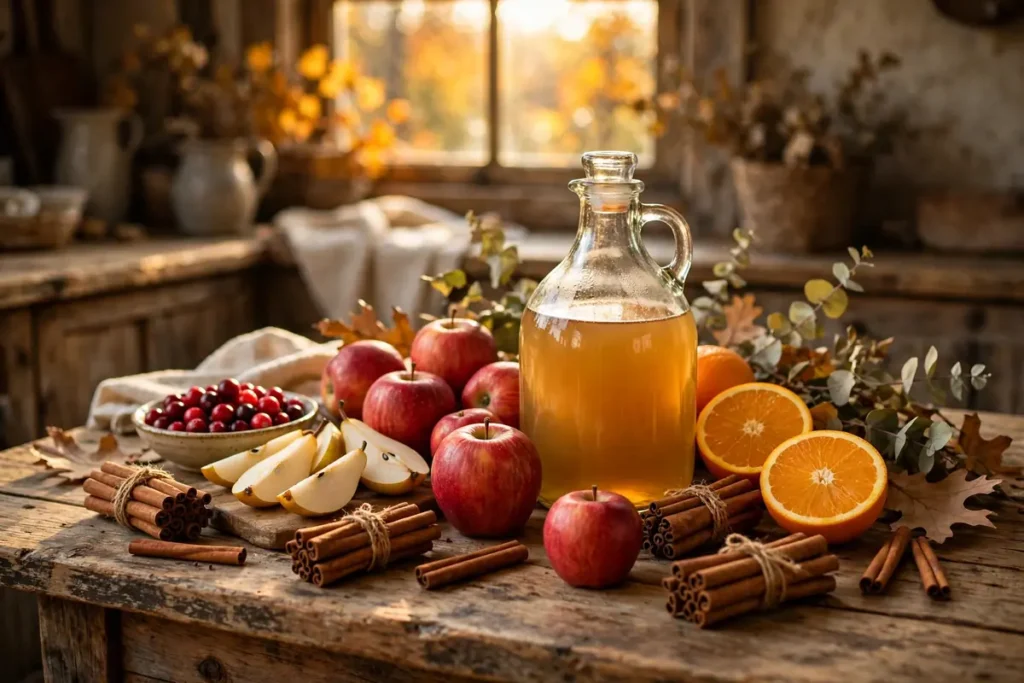
Autumn harvest still life: fresh apples, pears, cranberries and cinnamon arranged around a jug of apple cider.
Watch: Apple Cider Sangria
Delish makes a cran-apple sangria — a bright, make-ahead pitcher drink for the holiday table.
At a Glance: Apple Cider Sangria
The building blocks of a fall sangria and the chilling time that blends the flavors.
| Detail | What to know |
|---|---|
| Wine base | A crisp white like Pinot Grigio keeps it light |
| Fruit | Apples, pears and cranberries hold up without going mushy |
| Sweetener | Apple cider adds sweetness; adjust with honey if needed |
| Chill time | At least 4 hours, or overnight, lets flavors meld |
| Spice | Cinnamon sticks infuse gently; remove before they overpower |
| Serving | Serve over ice with a splash of club soda for lift |
Frequently Asked Questions
How far in advance can I make apple cider sangria?
The sweet spot is 8–24 hours: mix everything except carbonation and refrigerate overnight. Four hours is the minimum for the flavors to marry; past 36 hours the fruit breaks down and spices can over-extract. If you need to prep further ahead, mix the liquids (wine, cider, brandy, sweetener, whole spices) up to 3 days ahead, and add the fresh fruit 12–24 hours before serving. Add ice and any fizz at the last moment, always.
What is the best wine for apple cider sangria?
A crisp, unoaked, inexpensive white you would drink on its own — Pinot Grigio, Sauvignon Blanc, Albariño, or Vinho Verde ($10–15). For red sangria, a fruity low-tannin red: Garnacha, Tempranillo, or Merlot. Avoid oaky Chardonnay, tannic Cabernet, and anything expensive — sangria’s fruit and spice overwhelm subtle wine character, so save the good bottles for the glass. The wine’s job is structure and acidity, not prestige.
Can I make sangria without brandy?
Yes. The brandy adds depth and warmth, but the sangria works without it — increase the cider slightly and add a teaspoon of vanilla extract plus an extra cinnamon stick to compensate for the lost complexity. Bourbon, applejack, or even dark rum substitute well. For a fully non-alcoholic version, see the dedicated variation above (sparkling white grape juice + black tea + a splash of cider vinegar).
Why is my sangria bitter?
The three usual culprits: whole spices steeped too long (pull cloves and star anise after 12 hours), too much citrus pith (use thin slices, not thick wedges, and avoid the white pith), or a tannic/oaky wine. Fix an already-bitter batch by removing spices and citrus, then diluting with more wine and cider plus a tablespoon of maple syrup. Prevention beats cure: set a timer for spice removal when you mix the pitcher.
How do I keep sangria cold for hours without diluting it?
Chill every component before mixing, refrigerate the pitcher until serving, and serve over fresh ice in individual glasses rather than icing the pitcher. Frozen fruit (grapes, cranberries, apple slices) in the pitcher chills without diluting. For outdoor or all-day service, nest the pitcher in a larger bowl of ice, or use a decorative ice ring made from cider and fruit — as it melts, it melts into more sangria flavor, not water.
Is sangria stronger than wine?
Yes — modestly. The classic recipe combines wine (~12% alcohol) with brandy (~40%), yielding a pitcher around 13–15% alcohol before dilution from cider, fruit, and ice. It tastes softer and fruitier than straight wine, which is exactly why guests underestimate it. Label your pitcher, pour standard servings, keep water and food flowing, and do not let the pitcher be anyone’s only drink all afternoon. Please drink responsibly.
Conclusion
Apple cider sangria earns its place as the ultimate Thanksgiving crowd drink: one pitcher, twelve happy guests, under $2.50 a glass, better the longer it sits (within reason), and beautiful enough to be the table’s centerpiece. Memorize the master recipe, pick one variation that suits your crowd, prep it the night before, and add fizz when the doorbell rings.
Thanksgiving 2026 falls on November 26 — buy your cider early (the good unfiltered stuff sells out), slice your apples the night before, and let the pitcher do the hosting for you. For the complete celebration, pair your sangria with our crowd punch guide, our mulled apple cider for the evening wind-down, and our Thanksgiving party ideas. Please drink responsibly — and enjoy every glass.