The pumpkin spice old fashioned should not work. The old fashioned is the most serious, most traditional, most self-consciously classic cocktail in the American canon — a drink with a documented history stretching back to 1806, a drink that cocktail nerds defend with religious fervor against any “improvement.” And pumpkin spice is the flavor of seasonal marketing, the butt of a thousand jokes, the thing your most pretentious friend claims to hate. Put them together and you should get a gimmick. Instead, you get one of the great fall cocktails: bourbon’s vanilla and caramel folding into real pumpkin and warm baking spices, bitters adding depth, orange oils lifting the whole thing into something genuinely sophisticated. This guide tells the full story — the 200-year history of the old fashioned, the technique that separates a great one from a muddled mess, a from-scratch pumpkin spice syrup recipe, the definitive build, variations, and Thanksgiving pairing advice.
Here is the case for taking this drink seriously. An old fashioned is, at its core, a template: spirit, sugar, bitters, water (via dilution), citrus oils. That template has absorbed two centuries of variations — different spirits, different sweeteners, different bitters — because it is a framework, not a fossil. Maple old fashioneds, demerara old fashioneds, smoked old fashioneds: all respected, all delicious. Pumpkin spice syrup is simply another sweetener in that lineage, and a particularly intelligent one, because its components (cinnamon, nutmeg, clove, ginger) are the same warm spices that already live in a well-made old fashioned’s aromatic profile. You are not corrupting the template. You are completing it.
What follows is equal parts history lesson, technique masterclass, and recipe. You will learn how the old fashioned got its name (it involves a 19th-century cocktail pendulum swing you will recognize from today), why the mid-century version with muddled fruit is considered a corruption by purists — and why you might make it anyway — how to build the drink with proper dilution and temperature control, how to make pumpkin spice syrup from real pumpkin in fifteen minutes, five variations worth your time, and how to serve this at Thanksgiving without looking like you tried too hard. Let us start at the beginning, in 1806.
A Brief History of the Old Fashioned (It Is Older Than You Think)
1806: The First Definition of “Cocktail”
The old fashioned’s story starts with the word “cock-tail” itself. On May 13, 1806, a New York newspaper called The Balance and Columbian Repository printed the first known definition of the cocktail: “a stimulating liquor, composed of spirits of any kind, sugar, water, and bitters.” That is the entire old fashioned formula, in one sentence, more than two centuries ago. For decades, that definition was the cocktail — no one said “old fashioned” because there was nothing newer to distinguish it from.
The 1860s–1880s: The Fancy Era and the Backlash
By the 1860s, bartenders — led by the legendary Jerry Thomas, whose 1862 Bar-Tender’s Guide was America’s first cocktail book — were elaborating the simple cocktail with absinthe, curaçao, maraschino, and other “fancy” additions. A backlash formed among drinkers who wanted their whiskey the old way: spirits, sugar, water, bitters, nothing else. They began ordering their cocktails “old fashioned” — and the name stuck. The first printed recipe under that name appeared in 1895 in George Kappeler’s Modern American Drinks, calling for whiskey, sugar, bitters, ice, and a lemon peel. The drink was already a self-conscious classic: a deliberate rejection of innovation, which is deliciously ironic given that every generation since has innovated on it anyway.
Prohibition and the Muddled-Fruit Era
Prohibition (1920–1933) nearly killed the old fashioned’s integrity. With only harsh bootleg whiskey available, bartenders masked the rough spirit by muddling fruit — orange slices, cherries, sometimes the kitchen sink — with sugar into a sweet pulp. The technique survived Prohibition and became the American mainstream version: the muddled-fruit old fashioned your grandfather ordered at the supper club. Cocktail historians tend to view this as a corruption born of necessity. But here is the honest truth: a well-made muddled old fashioned, with restraint, is delicious — it is just a different drink from the 19th-century original.
Mad Men and the Craft Revival
The old fashioned’s modern prestige comes from two waves: Don Draper ordering them on Mad Men (2007–2015), which made the drink culturally iconic again, and the craft cocktail revival that insisted on doing it “properly” — quality bourbon or rye, demerara or simple syrup instead of a muddled sugar cube fruit salad, aromatic bitters, one large ice cube, expressed citrus oils. Today the old fashioned is routinely voted the world’s best-selling classic cocktail in industry surveys. It is the drink bartenders order to judge other bartenders. And that is exactly why a pumpkin spice version is interesting: it takes the most judged drink in the world and dresses it for autumn.
The Anatomy of a Proper Old Fashioned
The Four Pillars (Plus Dilution)
Strip away two centuries of argument and the old fashioned is four ingredients plus technique:
- Spirit (2 oz): traditionally bourbon or rye whiskey. Bourbon is rounder and sweeter (vanilla, caramel, oak); rye is spicier and drier (pepper, baking spice). For a pumpkin spice version, bourbon’s sweetness is the natural partner — but a high-rye bourbon or straight rye adds a spicy counterpoint that keeps the drink from becoming dessert.
- Sweetener (¼–½ oz): simple syrup, demerara syrup, or — in our case — pumpkin spice syrup. Syrup beats a sugar cube for consistency: it dissolves instantly and measures precisely.
- Bitters (2–3 dashes): Angostura aromatic bitters are the default; they add clove, cinnamon, and gentian-root depth. Bitters are the seasoning — the salt and pepper of the cocktail.
- Water (via dilution): stirring with ice melts roughly ¾–1 oz of water into the drink, softening the whiskey’s heat and opening its flavors. Dilution is not a flaw; it is an ingredient.
- Citrus oils: an expressed orange peel (twisted over the glass so the oils spray across the surface) adds aromatic brightness without juice. This is non-negotiable in a proper build.
Stirred, Never Shaken
An old fashioned is built or stirred — never shaken. Shaking aerates and over-dilutes; it produces a cloudy, frothy drink with bruised texture. Stirring with ice for 20–30 seconds chills and dilutes with precision while keeping the drink silky and clear. If you are building directly in the glass (the home method), add all ingredients over one large ice cube and stir 20 seconds. If you want maximum control, stir in a mixing glass with ice, then strain over fresh ice — the bar method, and worth learning.
The Large Ice Cube: Why Size Matters
One large cube (2-inch) or sphere melts far slower than a glass of small cubes, which means the drink stays cold with less dilution over time — the ideal old fashioned trajectory is cold and strong, evolving slowly as you sip. Small cubes over-dilute within fifteen minutes and leave you with whiskey water. Silicone molds for large cubes cost a few dollars and are the single cheapest upgrade to your home bar. For Thanksgiving, freeze a tray of them two days ahead; they also work beautifully in our cranberry moscow mule pitcher service.
Pumpkin Spice Syrup From Scratch (15 Minutes)
Commercial pumpkin spice syrups are engineered for coffee chains: they are intensely sweet, artificially flavored, and contain no actual pumpkin. Homemade takes fifteen minutes, uses real pumpkin, and gives you complete control over sweetness and spice. Make it the weekend before Thanksgiving — it keeps two weeks refrigerated.
Ingredients
- 1 cup water
- ¾ cup granulated sugar (or ½ cup sugar + ¼ cup brown sugar for deeper flavor)
- ½ cup pure pumpkin purée — canned is perfect; make sure it is plain pumpkin, NOT pumpkin pie filling (which contains sugar and spices already)
- 2 teaspoons pumpkin pie spice — or make your own: 1 tsp cinnamon, ¼ tsp nutmeg, ¼ tsp ginger, ⅛ tsp cloves, ⅛ tsp allspice
- 1 teaspoon vanilla extract
- Pinch of salt
Method
- Combine water and sugar(s) in a small saucepan over medium heat, stirring until the sugar fully dissolves.
- Whisk in the pumpkin purée and pumpkin pie spice until smooth.
- Bring to a gentle simmer (not a boil) and cook 8–10 minutes, stirring occasionally, until slightly thickened and the raw pumpkin taste has cooked out.
- Remove from heat. Stir in vanilla and salt.
- Strain through a fine-mesh sieve for a silky syrup (press gently with a spoon). This step is worth it — unstrained syrup leaves sediment in the glass.
- Cool completely, then bottle. Refrigerate up to 2 weeks. The syrup thickens when cold; measure it cold for accuracy.
Yield: about 1½ cups — enough for roughly 12 old fashioneds. The syrup is also superb in coffee, drizzled over vanilla ice cream, or whisked into whipped cream for Thanksgiving pie. For more pumpkin inspiration across the holiday table, our Thanksgiving recipes collection has the full spread.
The Definitive Pumpkin Spice Old Fashioned Recipe
Ingredients (1 cocktail)
- 2 oz bourbon — see the whiskey guide below
- ½ oz pumpkin spice syrup (homemade, above)
- 2 dashes Angostura bitters
- 1 dash black walnut bitters — optional but transformative; adds dark, nutty depth
- 1 large ice cube (2-inch)
- Orange peel — one wide strip, for expressing
- Garnish: expressed orange peel, plus optional cinnamon stick or a light dusting of freshly grated nutmeg
Method
- Chill the glass (optional but professional): fill a rocks glass with ice water while you gather ingredients; dump before building.
- Build: Add the pumpkin spice syrup, both bitters, and bourbon directly to the glass.
- Ice: Add one large ice cube.
- Stir: Stir gently but thoroughly for 20–30 seconds. You are chilling, diluting, and marrying — watch the drink go from sharp to silky.
- Express: Hold the orange peel skin-side down over the glass, twist sharply to spray the oils across the surface, then rub the peel around the rim and drop it in.
- Garnish and serve: Add the cinnamon stick if using, or grate fresh nutmeg over the top (two or three passes on a microplane — pre-ground nutmeg is sawdust by comparison).
Tasting Notes
The first sip should be bourbon-forward — vanilla, caramel, oak — with the pumpkin spice arriving as a warm mid-palate wave rather than a shout. The bitters keep the finish dry and complex; the orange oils lift the top. If all you taste is “pumpkin spice latte,” you used too much syrup — dial back to ¼ oz and let the whiskey lead. This is an old fashioned that happens to contain pumpkin, not a pumpkin drink that happens to contain whiskey. That distinction is the entire philosophy.
Choosing Your Whiskey
Bourbon: The Natural Partner
Bourbon is the default for a reason: its corn-based sweetness (vanilla, caramel, butterscotch from new charred oak) harmonizes with pumpkin and baking spices instead of fighting them. You do not need an expensive bottle — a solid mid-range bourbon in the $20–$35 range is ideal. Look for higher-proof options (90–100 proof) if you can find them; the extra backbone stands up to the syrup’s sweetness. Wheated bourbons (softer, rounder) make a gentler, more dessert-like drink; high-rye bourbons (spicier) make a more structured, “serious” one. Both are correct — it is a mood choice.
Rye: The Contrarian Choice
Rye whiskey’s peppery, dry spice profile creates tension with the sweet pumpkin syrup — and tension is interesting. A rye-based pumpkin spice old fashioned tastes less like dessert and more like a proper cocktail that happens to be seasonal. If you find the bourbon version too sweet or too soft, switch to rye before you change anything else. The classic old fashioned was as often made with rye as bourbon in the 19th century, so you are on solid historical ground.
What About Other Spirits?
- Apple brandy ( bonded): a superb autumnal substitute — apple and pumpkin are orchard siblings. Use the same spec.
- Mezcal or reposado tequila: smoky-sweet agave spirits make a fascinating smoky pumpkin old fashioned; reduce syrup to ¼ oz and add an extra dash of bitters.
- Scotch: generally avoid — peat smoke and pumpkin spice fight rather than dance. An unpeated Speyside can work in a pinch, but whiskey purists will raise eyebrows.
Five Variations Worth Your Time
1. The Smoked Pumpkin Old Fashioned
Capture applewood or oak smoke under a cloche or in the glass (a handheld smoking gun is the tool; a smoldering cinnamon stick under an inverted glass is the hack). Smoke clings to the cold glass and perfumes every sip. This is pure theater — break it out when you want the Thanksgiving toast to feel like an event.
2. Maple-Pumpkin Old Fashioned
Replace half the pumpkin spice syrup with pure maple syrup (¼ oz each). The maple adds woodsy depth that plain sugar cannot, and the combination tastes like the best bite of pumpkin pie with whipped cream. Particularly good with wheated bourbon.
3. The Harvest Old Fashioned (Apple Cider Reduction)
Reduce 2 cups of fresh apple cider to ¼ cup of thick syrup (simmer 30–40 minutes) and use it in place of half the pumpkin spice syrup. The concentrated apple adds orchard brightness and acidity that cuts the richness — the most “Thanksgiving” of the variations. For a full apple-forward cocktail experience, see our apple cider sangria.
4. Zero-Proof Pumpkin “Old Fashioned”
Stir ½ oz pumpkin spice syrup with 2 dashes of aromatic bitters (most bitters contain trace alcohol — use glycerin-based “bitters” or a few drops of vanilla extract for truly zero-proof), 4 oz of strong-brewed black tea (cooled), and an expressed orange peel over a large ice cube. It will not fool a whiskey drinker, but as a sophisticated non-alcoholic option it is miles ahead of soda. Our Thanksgiving mocktails guide has more alcohol-free builds.
5. The Batch Build (Serves 8)
Combine 16 oz bourbon, 4 oz pumpkin spice syrup, 16 dashes Angostura bitters, and 8 dashes black walnut bitters in a pitcher; add 6 oz of water (this pre-accounts for the dilution stirring would provide) and refrigerate up to 24 hours. To serve, pour 3½ oz per rocks glass over a large ice cube, express orange peel per glass, garnish. Do not batch the citrus — expressed oils fade within the hour, so that step stays per-drink.
Technique Masterclass: The Details That Matter
Expressing Citrus: The Most Skipped Step
More home old fashioneds are ruined by skipping the orange expression than by any other single omission. The peel of an orange contains aromatic oils that are entirely different from its juice — floral, bright, volatile. When you twist the peel over the glass, you are adding an aromatic top note that hits the nose before the sip, fundamentally changing perception of the drink. Use a wide strip with minimal pith (pith is bitter), hold it skin-down about two inches above the glass, and twist sharply — you should see a fine mist and smell orange immediately. Then rub the peel’s skin around the rim so every sip passes through that aroma. This takes five seconds and matters enormously.
Dilution Control
The old fashioned is a strong drink served long — its evolution over 20 minutes is part of the design. With one large cube and a 25-second stir, you start at roughly 25–30% dilution, cold and silky. Small ice or over-stirring pushes past 40% dilution and the drink tastes thin. Under-stirring (under 15 seconds) leaves it hot and harsh. Count your stirs if you are learning: 25–30 gentle revolutions is the target. Taste at 15, 25, and 35 seconds across three practice drinks and you will calibrate your palate permanently.
Glassware
The rocks glass (old fashioned glass) is named for the drink, not the other way around — a heavy-bottomed 8–10 oz tumbler that feels substantial in the hand. Chill it if you are feeling professional. Double old fashioned glasses (12–14 oz) work for the large-cube build with room to spare. Avoid stemware (wrong ergonomics for a stirred whiskey drink) and avoid anything too large (excess airspace accelerates dilution and dulls aroma).
Troubleshooting: Fixing Common Old Fashioned Mistakes
“It tastes too sweet”
Reduce the syrup to ¼ oz, add a third dash of bitters, or switch to rye whiskey. Also check your syrup: homemade syrup measured warm is thinner than cold — always measure cold syrup, since it thickens considerably in the fridge and a “half ounce” of cold syrup contains more sugar than the same volume warm.
“It tastes harsh / too boozy”
Under-dilution. Stir longer (30–35 seconds), make sure your ice is actually frozen solid (ice from a frost-free freezer’s dispenser is often partially tempered), or add ¼ oz of water directly. A lower-proof bourbon (80–86 proof) is also more forgiving than a barrel-proof monster in this template.
“The pumpkin flavor is barely there”
Your syrup may be under-spiced or over-strained. Commercial pumpkin pie spice varies wildly in potency — taste your syrup straight; it should be assertively spiced, since dilution in the drink mutes it significantly. Alternatively, your bourbon may be overpowering a delicate syrup — try a softer wheated bourbon, or bump the syrup to ¾ oz.
“It tastes muddy / cloudy”
Unstrained syrup sediment, or a muddled orange slice sneaking in from habit. Strain the syrup through fine mesh, skip any muddling, and stir — don’t shake. A proper pumpkin spice old fashioned should be clear amber, not opaque.
“The spices taste raw or gritty”
The syrup did not simmer long enough (the raw pumpkin/spice taste needs 8–10 minutes of gentle heat to cook out), or ground spices were added directly to the drink. The syrup step exists precisely to cook and integrate — do not shortcut it.
Serving at Thanksgiving: Timing and Pairing
When to Serve It
The pumpkin spice old fashioned is an after-dinner drink — the Thanksgiving digestif slot, alongside or instead of dessert wine or coffee. Its richness and strength would bulldoze the main course; after pie, it is perfect: the whiskey’s warmth suits the fireside stretch, the pumpkin echoes dessert without repeating it, and the ritual of stirring one properly gives the host a graceful way to transition the evening from “dinner” to “lingering.” It also makes a superb welcome cocktail in a smaller 1-oz-whiskey format for guests arriving to appetizers — scaled down, it reads as an aperitif rather than a nightcap. Plan your evening’s full arc with our Thanksgiving dinner timeline.
Food Pairings
- Pumpkin pie: the obvious and correct pairing — the drink is essentially pie’s cocktail cousin. Serve the pie slightly warm with the drink alongside.
- Pecan pie: bourbon and pecan are a classic Southern pairing; the old fashioned’s oak notes love the pie’s caramelized sugars.
- Aged cheddar and nuts: for the pre-dinner scaled-down version — the salt and fat frame the whiskey beautifully. See our Thanksgiving appetizers for the full grazing spread.
- Dark chocolate: post-dessert, a square of 70%+ dark chocolate with the last sips is a combination worth slowing down for.
- Avoid: serving alongside the main turkey course — the drink’s sweetness and weight clash with savory gravy and herbs. Keep it parked until dessert.
The Toast Moment
If your family does a Thanksgiving toast, the pumpkin spice old fashioned is a strong candidate for the toast glass — more distinctive than wine, more ceremonial than beer. Batch-build the base ahead (see the batch variation), then finish each glass with fresh ice and expressed orange at toast time. Ten seconds per glass, and everyone holds something that looks and smells like the holiday.
In Pictures: Pumpkin Spice Old Fashioned
Fall's favorite latte flavor meets the most classic cocktail format — and it works better than it should.
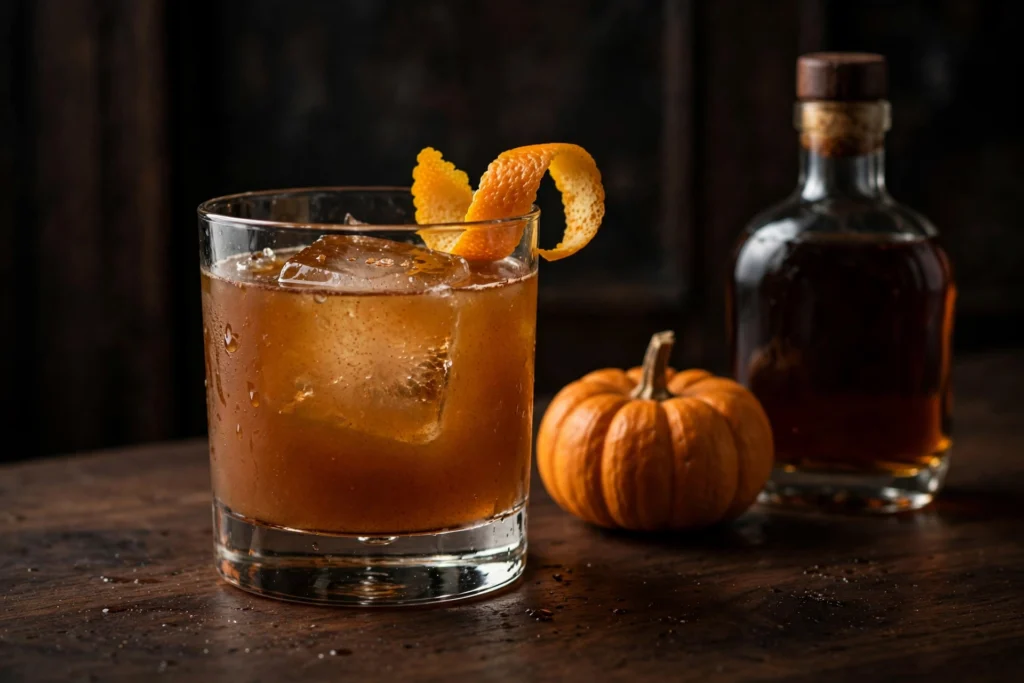
A pumpkin spice old fashioned in a rocks glass with a large ice cube and orange twist on a dark walnut bar.
Watch: Pumpkin Spice Old Fashioned
Cocktail Chemistry crafts pumpkin spice cocktails with serious technique — a masterclass in fall flavor.
At a Glance: Pumpkin Spice Old Fashioned
The components of a pumpkin spice old fashioned and how to keep it balanced, not dessert-sweet.
| Detail | What to know |
|---|---|
| Bourbon | A higher-proof bourbon, around 90–100 proof, holds its own against spice |
| Pumpkin spice syrup | Homemade syrup beats the coffee-shop bottle for cocktail use |
| Bitters | Aromatic bitters plus a dash of black walnut is a great pairing |
| Ice | One large cube chills without over-diluting |
| Garnish | An expressed orange twist adds brightness |
| Balance | Start with less syrup — you can always add more |
Frequently Asked Questions
Can I use canned pumpkin purée for the syrup?
Yes — canned plain pumpkin purée is actually ideal: consistent, smooth, and available year-round. Just be certain the can says “100% pumpkin” and not “pumpkin pie filling,” which contains added sugar, spices, and sometimes thickeners that will throw off the syrup’s balance. Libby’s and similar major brands are all plain pumpkin unless labeled otherwise.
What is the best bourbon for a pumpkin spice old fashioned?
A mid-range, 90–100 proof bourbon with good vanilla-caramel character — you want backbone, not subtlety. Wheated bourbons make a softer, dessert-like drink; high-rye bourbons make a spicier, more structured one. Avoid anything ultra-premium (the syrup will mask its nuance) and anything harsh (nothing in the drink hides rough edges except dilution). Rye whiskey is an excellent alternative if you prefer a drier, spicier profile.
How far ahead can I make pumpkin spice syrup?
Two weeks refrigerated in a sealed bottle or jar — make it the weekend before Thanksgiving with zero stress. It thickens when cold (measure it cold for accuracy) and may separate slightly; shake before using. For longer storage, freeze it in ice cube trays (about 1 oz per cube — convenient pre-measured portions) for up to 3 months.
Is a pumpkin spice old fashioned too sweet for whiskey purists?
Made properly — ½ oz of balanced homemade syrup, proper bitters, rye or high-proof bourbon, correct dilution — it is no sweeter than a classic old fashioned made with demerara syrup, which purists accept without blinking. The “too sweet” reputation comes from coffee-shop syrups and heavy-handed pours. Build it with restraint and it earns its place in the canon.
Can I make a non-alcoholic version?
Yes — see variation #4 above: pumpkin spice syrup, strong black tea, aromatic bitters (or vanilla for fully zero-proof), and expressed orange peel over a large cube. It captures the ritual and much of the flavor architecture. For more alcohol-free holiday options, browse our Thanksgiving mocktails collection.
Why is my old fashioned cloudy?
Cloudiness comes from unstrained syrup sediment, muddled fruit, shaking instead of stirring, or low-quality ice with trapped air and minerals. A proper stirred old fashioned with strained syrup and a large clear cube should be transparent amber. If clarity matters to you (it should — we drink with our eyes first), strain the syrup through fine mesh and consider directional-freezing your large cubes.
Conclusion
The pumpkin spice old fashioned is a reminder that tradition and playfulness are not opposites — the old fashioned survived two centuries precisely because each generation found a new way to make the template their own, from Jerry Thomas’s fancy era through Prohibition’s muddled fruit to today’s craft revival. Your contribution to that lineage is a homemade pumpkin spice syrup, a good bourbon, and the five seconds it takes to express an orange peel properly. That is all it takes to turn a much-mocked seasonal flavor into a genuinely serious cocktail.
Make the syrup this weekend. Stir one for yourself first — calibrate the sweetness, practice the expression, taste the evolution as the large cube slowly works. Then, when Thanksgiving night winds down and the pie plates are empty, stir a round for whoever is still at the table. The best seat in the house on Thanksgiving is the one where someone hands you a proper old fashioned. This year, that someone can be you. For the full holiday drinks arsenal — from crowd-pleasing punch to wine pairings — DayZora’s Thanksgiving collection has every pour covered.
Please enjoy responsibly: this recipe contains alcohol. Serve to adults of legal drinking age only, and make sure every guest has a safe way home.