

Famous landmarks in the USA include living forests, historic rooms, engineering works, memorials and objects that changed how people understand the country. These 50 selections focus on why a place matters and what to look for when you visit. The sequence groups related landmarks; it is an editorial collection, not a measured ranking of national fame.

At a glance: choose your kind of visit
Selected examples from the full list below. Read each entry for booking requirements and exceptions.
| Attraction / experience | Location | Time estimate | Admission |
|---|---|---|---|
| Grand Canyon | Grand Canyon Village, Arizona | A full day | Park fee |
| Craters of the Moon | Near Arco, Idaho | Half a day | Paid during normal Loop Road vehicle access |
| Cumberland Gap | Kentucky–Tennessee–Virginia border | Half a day | Free general access; optional extras may cost more |
| Cadillac Mountain | Mount Desert Island and nearby areas, Maine | 2–3 hours | Park fee; Cadillac vehicle reservation extra |
| Gateway Arch | St. Louis, Missouri | 2–3 hours | Museum free; tram and film paid |
| Liberty Bell | Philadelphia, Pennsylvania | 45–90 minutes | Free general access; optional extras may cost more |
| The Breakers | Newport, Rhode Island | 2–3 hours | Paid; parking included |
| Vicksburg National Military Park | Vicksburg, Mississippi | Half a day | Paid |
| Korean War Veterans Memorial | Washington, DC | 30–60 minutes | Free general access; optional extras may cost more |
| Milwaukee Art Museum | Milwaukee, Wisconsin | 3–4 hours | Paid general admission |
Natural landmarks
1. Grand Canyon
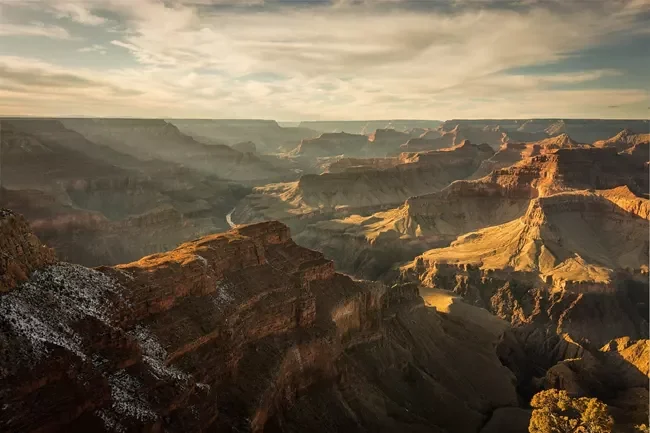
The Colorado River and the canyon's exposed rock layers make this a landscape for understanding deep time as well as scale. South Rim overlooks provide a practical first encounter without requiring a descent. Compare several perspectives before deciding that one photograph captures it. Allow a full day for a considered visit, and use current shuttle and weather information. The North Rim has different services and should be planned separately.
2. Yosemite Valley
Granite walls, waterfalls and meadows create the distinctive landscape at the heart of many first Yosemite visits. Its significance is visible in the relationship between the valley floor and the rock rising around it. Choose a few viewpoints and a suitable walk rather than treating the valley as a fast scenic drive. No entry reservation is required in 2026, but lodging, campsites and other permits remain separate matters.
3. Old Faithful
Old Faithful is famous for an eruption that can be predicted with useful accuracy, not for operating like a fixed clock. Check the current prediction before settling into a viewing area. Yellowstone's thermal features helped inspire protection of the park in 1872. Stay on designated boardwalks and follow posted guidance. A visit should include time to observe the surrounding basin, rather than only arriving for the anticipated eruption.
4. Crater Lake
The deepest lake in the United States occupies a caldera formed by a volcanic collapse roughly 7,700 years ago. That origin explains why the rim matters as much as the water in the view. Plan around open roads and seasonal access. The Cleetwood Cove and marina rehabilitation affects lake-level activities, so use a current itinerary centered on available viewpoints rather than assuming a descent or boat trip is possible.
5. Kīlauea
Kīlauea offers a landscape that continues to change, making it a different kind of landmark from a preserved building. The summit area helps visitors understand volcanic processes even when no visible eruption is occurring. Check official alerts for gas, closures and current viewing areas. Never promise a lava sighting as part of an ordinary visit. Choose the day's route from open areas and interpretive information rather than an old photograph.
6. Craters of the Moon
This protected lava landscape gives Idaho a markedly different visual identity from a conventional mountain or forest stop. Use the official route information to choose currently open viewpoints and walks, allowing time to understand the volcanic setting. The Loop Road's operating status affects both access and the fee arrangement. A visit in a different season may be a different experience, so confirm conditions before relying on a summer driving itinerary.
7. Scotts Bluff
Rising above the North Platte River landscape, Scotts Bluff became a recognizable feature along major overland migration routes. The monument also preserves geological and paleontological significance beyond that travel story. Combine interpretation at the base with the Summit Road when open. General admission is free. Seeing both levels helps explain why a natural formation could serve as a navigational landmark for people crossing an enormous region.

8. Badlands formations
The formations and mixed-grass prairie belong to one landscape, while fossil evidence reveals very different ancient environments and animals. That contrast gives the Badlands more meaning than their striking silhouettes alone. Use official overlooks and interpretation to read what you see. Plan for the day's heat, wind and footing rather than assuming every short walk is effortless. Park admission is paid, and current conditions should shape your route.
9. Congaree's old-growth forest
Congaree protects an old-growth bottomland hardwood forest, a natural landmark defined by living trees and the floodplain around them. The appeal is immersion and observation rather than a distant skyline photograph. General admission is free, but flooding and other conditions can change the available route. Choose a currently open walk and give yourself time to notice the forest structure. Nearby Columbia provides a practical base for a day visit.
10. Redwood forests
The redwood landscape combines towering trees with coastal and prairie environments, so its significance extends beyond searching for a single enormous specimen. Select an official open route rather than following an unverified tree location. Main scenic-road access is free, while some developed areas charge fees and certain destinations require permits or reservations. The exact place you intend to visit determines the rules; one general park description cannot replace that check.
11. Cumberland Gap
The gap is a natural passage through the Appalachian landscape and a landmark in the history of movement through the region. Its importance lies in geography as well as the stories of people who used it. Begin with park interpretation before choosing viewpoints or walks. General entrance is free, but guided cave and settlement tours can cost extra. Check the route and program you want rather than assuming every experience is included.
12. Mammoth Cave
Mammoth Cave makes an underground landscape accessible through structured tours, with route choice central to the experience. Select a tour by the features, walking and stair requirements described by the park. Entering the park is free, but cave tours are paid and should be booked ahead. The landmark is not experienced simply by reaching the visitor center. Leave time for the fixed tour and follow the park's current cave rules.
13. Carlsbad Caverns' Big Room
The Big Room gives a large underground chamber a visitor route, but the approach changes the effort involved. An elevator option differs substantially from the steep Natural Entrance descent. Timed entry reservations and the admission requirement are separate, and even children needing no admission payment still need the relevant reservation. Review accessibility details for the exact route. Follow cave-gear restrictions and save your confirmation before traveling to the entrance.
14. Wheeler Peak and the Great Basin landscape
Wheeler Peak rises above a park also associated with bristlecone pines and dark skies. The range of environments makes the setting significant beyond one summit photograph. General park entry is free; Lehman Caves tours are a separate paid, reserved activity. Choose a surface visit that matches seasonal access and your group's ability. A mountain outing should be planned from current conditions rather than assumed from a clear-weather promotional image.
15. New River Gorge
The river, surrounding canyon and human history make this a landscape with more than one story. Start with park interpretation and an appropriate overlook before deciding whether to add a walk or a commercial water-based activity. General park entrance is free, while services such as guided rafting have separate charges and requirements. A gorge-viewing visit is a complete option of its own; it does not require an adventure booking.
16. Cadillac Mountain
Cadillac Mountain provides an elevated perspective on Acadia's coastal setting. The summit road is a planned attraction, with vehicle reservations required from May 20 through October 25 in 2026 in addition to the park pass. Clear views are weather-dependent. Allow time to look around rather than arriving solely for a photograph at one advertised moment. Confirm the applicable rules again if your visit falls in a later year.
17. Trail Ridge Road's alpine landscape
Trail Ridge Road connects Estes Park and Grand Lake, crossing above treeline for part of its route and reaching 12,183 feet. The transition from forest to tundra is the reason to linger. Give the drive at least half a day and check seasonal openings, weather and timed-entry rules. Wind and cold at elevation can differ sharply from the valleys. Choose stops according to conditions and your group's needs.
18. Going-to-the-Sun Road
This road is a central way to experience Glacier's mountain scenery, but its seasonal availability determines what a visitor can actually see. Check the current opening status before treating a through-drive as guaranteed. In 2026 there is no vehicle-entry reservation requirement, while shuttle tickets and the three-hour Logan Pass parking limit still affect planning. Allow a full day for a deliberate outing and keep alternatives for unavailable stops.
19. Hoh Rain Forest
Mosses, ferns and layered trees make the Hoh a distinctive part of Olympic's diverse ecosystems. Its identity comes from the forest environment rather than a single isolated tree. Reach it from the park's west side and choose an open walk from current visitor information. Road conditions and rain can affect the day. Avoid treating it as a quick addition to every Olympic itinerary, because the park's major areas are separated.
Bridges and monumental structures
20. Statue of Liberty
France's gift to the United States was dedicated on October 28, 1886, with sculptural work by Frédéric Auguste Bartholdi and structural engineering associated with Gustave Eiffel. Its meanings include liberty, immigration and the tension between ideals and lived experience. Visit the island's museum for context. The authorized landing ferry is paid, and pedestal or crown access requires the correct ticket arrangements rather than an ordinary harbor sightseeing cruise.
21. Gateway Arch
The 630-foot arch is both a recognizable St. Louis silhouette and an entrance to a more complex historical museum visit. The museum is free; the tram ride and film cost extra. Choose whether you want the interior ride before booking, and read its accessibility restrictions separately from those of the museum. A ground-level visit remains worthwhile for architecture and interpretation, especially when the tram does not suit your group.
22. Golden Gate Bridge
The bridge's span and setting make it a defining San Francisco landmark, and a walk offers a different understanding from a distant photograph. Pedestrians use the east sidewalk, subject to the bridge district's hours and temporary restrictions. Check those details before departure and allow for wind or fog. Decide whether you want a short out-and-back or a full crossing, with the return journey planned before you begin.
23. Brooklyn Bridge
Opened in 1883, the bridge connects Lower Manhattan and Brooklyn with stone towers and a web of suspension cables. The pedestrian crossing turns its engineering into something you can experience at walking speed. Use the designated walkway and keep clear space for people passing. A partial crossing can work if time or weather is limited. Allow room in your schedule to explore an end of the bridge instead of immediately retracing your steps.
24. Hoover Dam
Built during the Great Depression in Black Canyon, Hoover Dam represents a monumental effort to control the Colorado River. Its engineering significance makes a visit different from a simple scenic overlook. Tours, security procedures and parking arrangements require advance attention; paid parking and some free parking areas have different locations. Decide whether your priority is an exterior view or a booked interior experience, then follow the Bureau of Reclamation's current visitor guidance.
Historic places and cultural landmarks
25. Independence Hall
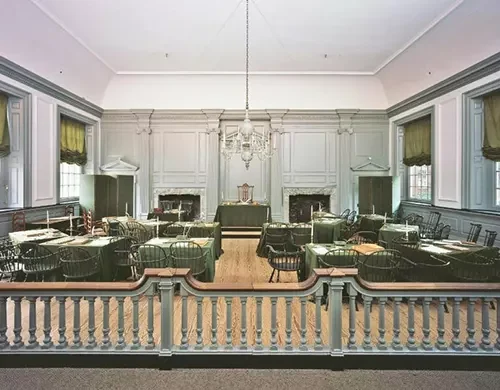
The Declaration of Independence and the United States Constitution were debated in the Assembly Room of this brick building. The room's importance rests in those decisions, not in lavish decoration. Take a guided tour for context and reserve before arrival; although admission is free, the booking carries a fee. The nearby Liberty Bell is a separate visit. Leave time to consider both the founding principles and the people those principles initially excluded.
26. Liberty Bell
The bell's familiar crack is only part of its significance. Its later association with abolition and civil rights shows how a national symbol can acquire new meanings over time. Read the exhibits before reaching the bell rather than treating the visit solely as a photograph. General entry is free and no ticket is required, though security applies. Pair it with Independence Hall while keeping the two sites' reservation rules distinct.

27. Fort McHenry
The defense of Baltimore on September 13–14, 1814 inspired Francis Scott Key's words that became the national anthem. That connection makes the fort a landmark in both military and cultural history. Use a ranger program when available to connect the site with the event. The Star Fort requires paid admission. Check the day's program rather than assuming a particular flag activity is always offered at the same time.
28. USS Constitution
Launched in Boston in 1797, USS Constitution became known as Old Ironsides during the War of 1812 and remains a Navy vessel. Seeing the ship helps translate naval history into physical scale. Boarding is free, with identification requirements for adults 18 and older and limitations on access. Verify current visiting arrangements. The nearby museum is separate, so do not assume its admission guidance is identical to that of the ship.
29. Freedom Trail
Boston's 2.5-mile route links 16 sites into a walk through Revolutionary-era history. The route itself is a public-street experience, while individual interiors and guided tours can charge admission. Choose the sites you most want to enter before setting the day's pace. Its value is the connection between places, not completing a fixed number of stops. Weather and walking stamina should determine how much of the trail you attempt.
30. Winterthur
Winterthur connects an American decorative-arts collection with a former du Pont home and naturalistic garden. It is a cultural landmark for visitors interested in how objects, interiors and landscape express taste. Choose a tour that matches that interest rather than assuming all visit options are interchangeable. Admission is paid. Allow time outside when conditions suit, and check seasonal garden information if a particular planting display is your main reason for coming.
31. The Breakers
Completed in 1895 for the Vanderbilt family and designed by Richard Morris Hunt, The Breakers makes wealth and architectural ambition tangible through its rooms. The visit is paid, with parking included under the current visitor arrangements. The terrace is closed through the stated November 2026 restoration period, while lawns and gardens remain available. Check for updates before arrival. A house visit and an outdoor look offer different experiences of the estate.
32. Henry Ford Museum of American Innovation
The museum places technology alongside the social changes it helped shape, with the Rosa Parks bus providing a particularly important link to civil-rights history. Give objects time to tell their stories rather than viewing the collection only as a parade of machines. Admission is paid. Greenfield Village and the Rouge factory tour have separate arrangements, so decide which experience you want instead of assuming the whole institution is covered by one ticket.
33. Wright Brothers National Memorial
The successful flights of December 17, 1903 followed years of experiment, and the memorial's setting helps make that process understandable. Use the visitor interpretation and outdoor landscape together rather than seeing only the monument. Admission is paid for visitors 16 and older. Weather will affect the outdoor portion, so leave flexibility in the order of your visit. This is a landmark about learning through trial as much as a single famous day.
34. Fort Raleigh
The site interprets Roanoke Island's layered history, including Algonquian people, early English colonization and a later Freedmen's Colony. That broader story is more useful than reducing the place to one unresolved mystery. National park entrance is free, while partner attractions have separate charges. Start with official interpretation and choose any additional experience deliberately. A compact visit works well when it includes time to read rather than simply walking through the grounds.
35. Abraham Lincoln Birthplace
The memorial preserves the setting associated with Lincoln's early life, but the cabin inside is symbolic rather than the original birthplace cabin. That distinction matters when explaining the visit to children or interpreting photographs. General entrance is free. The Knob Creek boyhood-home area is a separate location, so use official directions if you plan both. The significance lies in the early-life story and its commemoration, not an unsupported claim of original fabric.
36. Vicksburg National Military Park
Vicksburg's preserved battlefield offers a place-based approach to Civil War history, with the landscape and interpretation giving context beyond a brief textbook reference. The visit requires paid park admission. Check the current route before arriving because restoration work can change access. Choose a manageable sequence of stops and take time to read the interpretation; a drive without that context can miss much of what makes the place important.
37. San Antonio Missions
These mission communities developed in the early 1700s, changing regional life through new technologies and imposed cultural systems. Their significance includes the experience of Indigenous people as well as surviving architecture. Start at Mission San José for orientation and use official maps to select additional sites. Park entry is free. The four park missions and the Alamo together form the broader World Heritage property, but they are not one single visitor stop.
National memorials
38. Lincoln Memorial
The memorial to the 16th president is also a setting associated with the continuing public debate over American ideals. Spend time with the chamber and its interpretation instead of using the steps only as a photo platform. General access is free. Its position near other National Mall memorials makes a walking visit logical, but weather and distance still matter. Choose a small cluster rather than attempting every Washington landmark in one outing.
39. Martin Luther King, Jr. Memorial
The Stone of Hope and engraved words make this memorial a place to consider King's ideas as well as his image. Read several quotations in context and allow quiet time rather than treating the sculpture as a quick stop between larger buildings. General access is free. Combine it with nearby memorials if your walking plans allow, and check current National Mall alerts before organizing a route around particular paths or services.
40. Vietnam Veterans Memorial
The arrangement of names gives the memorial an individual and chronological character, encouraging a different pace from an ordinary sightseeing stop. Look at the official visitor information if you want to locate a particular name. The wider memorial area includes additional elements, including the Vietnam Women's Memorial. General access is free. Approach it as a place of remembrance, with enough time and space for visitors who have a personal connection.
41. Korean War Veterans Memorial
The figures and Wall of Remembrance give visitors complementary ways to consider military service and loss during the Korean War. Its location near the Lincoln Memorial allows a combined walk without making the two experiences identical. Access is free. Allow time to study the individual elements rather than merely passing through on a National Mall circuit. Weather and the needs of your group should determine the length of the wider route.
42. World War II Memorial
The memorial recognizes military service and the home front, using stone and bronze to give national scale to that remembrance. Read the interpretation to connect its visual elements with the people and efforts they represent. General access is free. It can be part of a broader National Mall walk, but a meaningful visit does not require seeing every nearby memorial on the same day. Build pauses into the route.
43. Franklin Delano Roosevelt Memorial
This memorial considers Roosevelt's presidency through the Great Depression and World War II, with quotations and red South Dakota granite shaping the experience. It rewards a slower sequence of looking and reading rather than one frontal photograph. General access is free. Its West Potomac Park setting can be combined with other nearby memorials, but plan the walking distance and weather exposure before deciding how many stops belong in one visit.
Architecture, art and city icons
44. Getty Center
The Getty Center brings art, architecture and gardens into one Los Angeles visit. Its significance as a cultural landmark is clearer when you allow time outside the galleries as well as within them. General admission is free, but a timed reservation is required and parking costs extra. Choose the Center rather than the separate Getty Villa when booking. A few carefully selected galleries leave room to appreciate the setting instead of rushing through everything.
45. Griffith Observatory
The observatory connects astronomy with a widely recognizable Los Angeles setting. Indoor exhibits give the visit substance even when weather limits the city view. General access to the building and grounds is free, while parking and planetarium shows are separate considerations. Decide whether the show is part of your plan before setting the schedule. Leave time for both science and landscape rather than assuming the exterior photograph is the entire attraction.
46. Milwaukee Art Museum
The museum's movable wings make the building part of the attraction, but the art collection deserves its own time. Wing movement depends on conditions, so do not build the whole visit around an assumed opening moment. General admission is paid, with children 12 and younger admitted free under current guidance. Choose a few collection areas, then appreciate the building and lakefront setting as part of a balanced visit.
47. Central Park
Central Park is a New York landmark experienced through paths, landscapes and everyday public use rather than one entrance or monument. Choose a manageable area for walking or birdwatching instead of attempting the whole park between appointments. General access is free, but the zoo, rentals and other activities can cost money. Its value in a city itinerary is also practical: it can provide an unhurried outdoor interval between ticketed indoor attractions.
48. Crystal Bridges Museum of American Art
Crystal Bridges connects American art with architecture, trails and a Bentonville landscape. General admission to the permanent collection is free, while certain special exhibitions carry a charge. Give the indoor and outdoor portions separate time rather than using the grounds only as a route to the galleries. Check the museum's operating day before traveling. The combination works particularly well for visitors who want a cultural outing with room to change pace.
49. Charles W. Morgan at Mystic Seaport Museum
Built in 1841, the Charles W. Morgan is the surviving ship of the American whaling fleet and a central object at Mystic Seaport Museum. Its material presence gives maritime history a scale that photographs cannot. Museum admission is paid, and access or demonstrations depend on current operations. Combine the vessel with the working shipyard and interpretation, allowing the story of labor and maritime industries to matter as much as the ship's appearance.
50. Space Shuttle Atlantis at Kennedy Space Center
Atlantis is a major reason to choose Kennedy Space Center Visitor Complex for a space-history visit. See it as part of a wider story that also includes Apollo-era interpretation, rather than expecting every spaceflight era to fit into a short stop. Admission is paid, and transport, exhibit access and optional experiences should be checked before arrival. A launch is not guaranteed with general admission and should never be promised as part of the landmark visit.
Explore the locations
This map directory uses city or park-area searches, not surveyed entrance pins. Select a place below to open its area in the map, then use the official directions in the entry for the correct entrance, parking or tour departure.
Choose one of the 50 locations
- Grand Canyon — Grand Canyon Village, Arizona
- Yosemite Valley — Sierra Nevada, California
- Old Faithful — Northwestern Wyoming, extending into Montana and Idaho
- Crater Lake — Southern Oregon
- Kīlauea — Hawaiʻi Island, Hawaii
- Craters of the Moon — Near Arco, Idaho
- Scotts Bluff — Gering, Nebraska
- Badlands formations — Southwestern South Dakota
- Congaree's old-growth forest — Hopkins, near Columbia, South Carolina
- Redwood forests — Northern California coast
- Cumberland Gap — Kentucky–Tennessee–Virginia border
- Mammoth Cave — Near Cave City, Kentucky
- Carlsbad Caverns' Big Room — Near Carlsbad, New Mexico
- Wheeler Peak and the Great Basin landscape — Near Baker, Nevada
- New River Gorge — Fayetteville and surrounding areas, West Virginia
- Cadillac Mountain — Mount Desert Island and nearby areas, Maine
- Trail Ridge Road's alpine landscape — Estes Park and Grand Lake gateways, Colorado
- Going-to-the-Sun Road — Northwestern Montana
- Hoh Rain Forest — Olympic Peninsula, Washington
- Statue of Liberty — Liberty Island, New York Harbor
- Gateway Arch — St. Louis, Missouri
- Golden Gate Bridge — San Francisco–Marin County, California
- Brooklyn Bridge — New York, New York
- Hoover Dam — Nevada–Arizona border, near Boulder City
- Independence Hall — Philadelphia, Pennsylvania
- Liberty Bell — Philadelphia, Pennsylvania
- Fort McHenry — Baltimore, Maryland
- USS Constitution — Charlestown, Boston, Massachusetts
- Freedom Trail — Boston, Massachusetts
- Winterthur — Winterthur, Delaware
- The Breakers — Newport, Rhode Island
- Henry Ford Museum of American Innovation — Dearborn, Michigan
- Wright Brothers National Memorial — Kill Devil Hills, North Carolina
- Fort Raleigh — Roanoke Island, North Carolina
- Abraham Lincoln Birthplace — Hodgenville area, Kentucky
- Vicksburg National Military Park — Vicksburg, Mississippi
- San Antonio Missions — San Antonio, Texas
- Lincoln Memorial — Washington, DC
- Martin Luther King, Jr. Memorial — Washington, DC
- Vietnam Veterans Memorial — Washington, DC
- Korean War Veterans Memorial — Washington, DC
- World War II Memorial — Washington, DC
- Franklin Delano Roosevelt Memorial — Washington, DC
- Getty Center — Los Angeles, California
- Griffith Observatory — Los Angeles, California
- Milwaukee Art Museum — Milwaukee, Wisconsin
- Central Park — Manhattan, New York
- Crystal Bridges Museum of American Art — Bentonville, Arkansas
- Charles W. Morgan at Mystic Seaport Museum — Mystic, Connecticut
- Space Shuttle Atlantis at Kennedy Space Center — Merritt Island, Florida
How to choose meaningful landmark visits
Pick the kind of significance that interests you, then give it enough time. A memorial rewards reading and reflection; a natural landmark may require weather flexibility; a historic interior may depend on a timed tour. Some selections are nationally familiar icons and others are regional cultural or natural landmarks. The word “famous” is not a quantitative claim. Official interpretation provides a starting point, while the practical advice helps you decide whether a visit suits this trip.
Build a nearby pairing
Use combinations that share a real destination: the Liberty Bell and Independence Hall in Philadelphia; Griffith Observatory and the Getty Center as separate Los Angeles outings; or the Tennessee State Museum and Farmers’ Market in Nashville. Check each venue’s hours and transport before calling them a single-day plan. For large parks, pick stops within the area you can actually reach rather than following the order of this national list.
For regional planning, see USA destinations, national parks, Route 66 and the Las Vegas guide for a Nevada base. Our weekend getaways help turn a single landmark into a shorter trip.
Find the guide that matches your trip
- Tourist attractions — one attraction in every state.
- Things to do — activities and experiences to build a day around.
- Family attractions — age guidance and practical planning with kids.
- Free attractions — free general access with extra costs explained.
Frequently asked questions
Are all famous landmarks paid attractions?
No. Many memorials, public walks and park areas are free, while museums, tours and island transportation may charge. The free-attractions guide separates general access from extra costs.
Should I visit the interior or just the exterior?
Choose according to the story you want to understand. A bridge walk emphasizes engineering and setting; a guided historic room or museum often supplies context an exterior photograph cannot.
Is this an objective ranking?
No. The numbering organizes a geographically varied editorial selection by landmark type. It does not imply visitor-count, survey or popularity data that was not collected.


