
The best places to visit in the USA depend on the kind of vacation you can actually take. A three-night city break, a week beside the ocean and a mountain-park trip need different seasons, budgets and transport. This guide selects 30 destinations across the Northeast, South, Midwest, Southwest, Mountain West, Pacific coast, Alaska and Hawaii, with a mix of major landmarks and places that reward a slower stay.
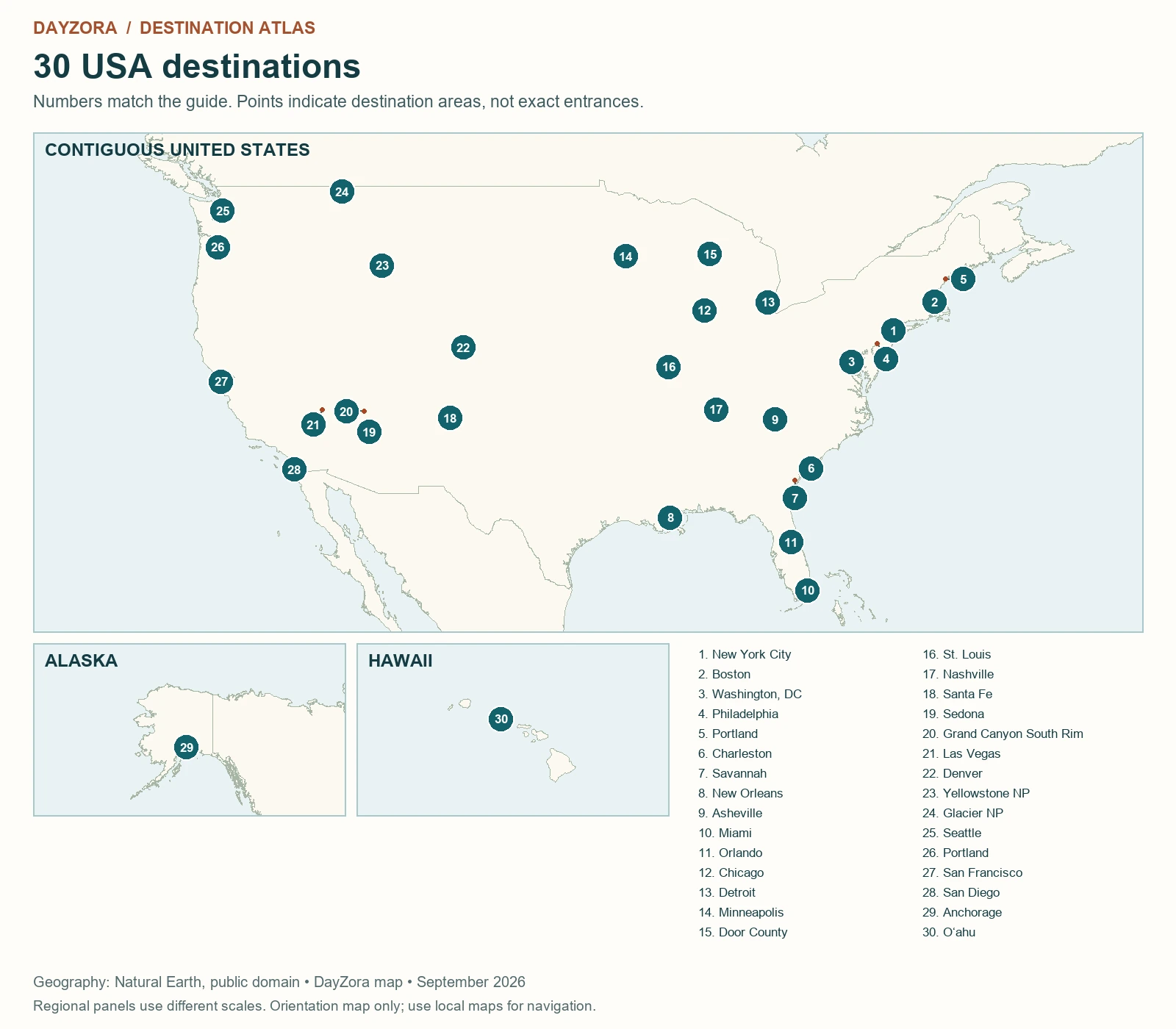
Use the decision guide to narrow your options, then compare ideal stays, seasons and costs in the table. Each destination includes specific experiences, sensible hotel areas, airport access and a planning detail that can change the trip. The numbered map shows where the selections sit; it is not a suggested route through all 30. These are DayZora’s editorial choices for variety, accessibility and distinctive experiences, rather than an objective ranking or a claim that the first place is better than the last.
Featured image: Brooklyn Bridge and Manhattan skyline at sunrise. Chris Davies · Wikimedia Commons source · CC BY 3.0. Cropped/resized; WebP conversion.
Planning review: September 26, 2026. Confirm live access, tickets and transport before booking.
Which Destination Is Right for You?
- First US city trip: New York City for dense landmarks and transit; Washington, DC for museums and national history.
- Beaches: Oahu for an urban beach base; San Diego for a mainland coast-and-city stay; Miami for beach life and art.
- Families: Orlando for a park-centered trip, Chicago for museums and lakefront time, or San Diego for a varied outdoor visit.
- Couples: Savannah for an unhurried historic stay or Santa Fe for art, food and a compact center.
- National parks: Yellowstone for geothermal landscapes, Glacier for mountain scenery, or the Grand Canyon South Rim for accessible viewpoints.
- Food and culture: New Orleans, Charleston and Philadelphia offer different regional food traditions alongside walkable neighborhoods.
- Road-trip extensions: San Francisco, Las Vegas and Portland, Maine work as gateways, but each needs a route selected for the season.
- More room in the budget: Compare Detroit, St. Louis and Minneapolis outside major event dates; hotel location still matters.
Quick Comparison: Destinations, Seasons and Stays
Stays are suggested nights at the destination. Seasonal windows are general planning guidance, not weather guarantees. Budget symbols compare typical on-the-ground costs for an independent leisure trip: $ lower-cost, $$ moderate, $$$ expensive, $$$$ very expensive. They exclude your long-haul airfare and are not quoted prices; dates, rooms, transfers and activity choices can change the result.
On a small screen, swipe the table sideways. Select a destination name to jump to its details.
| Destination | Region / country | Best for | Ideal stay | Best time | Budget |
|---|---|---|---|---|---|
| 1. New York City | New York · Northeast | Museums, theater and a first US city trip | 5–7 nights | April–June; September–October | $$$$ |
| 2. Boston | Massachusetts · Northeast | Walkable history and harbor days | 3–4 nights | May–June; September–October | $$$ |
| 3. Washington, DC | District of Columbia · Mid-Atlantic | Museums and civic history | 4–5 nights | April–May; September–October | $$$ |
| 4. Philadelphia | Pennsylvania · Northeast | Founding history, food and art | 3 nights | April–June; September–October | $$ |
| 5. Portland | Maine · Northeast | Seafood, harbor life and a compact coastal break | 3 nights | June–September | $$$ |
| 6. Charleston | South Carolina · Southeast | Lowcountry food and layered history | 3–4 nights | March–May; October–November | $$$ |
| 7. Savannah | Georgia · Southeast | Squares, architecture and a slower couples’ break | 3 nights | March–May; October–November | $$$ |
| 8. New Orleans | Louisiana · South | Live music and Creole food culture | 4 nights | February–April; November | $$$ |
| 9. Asheville | North Carolina · Southeast mountains | Mountain-town food, art and short outings | 3–4 nights | April–May; September–October | $$$ |
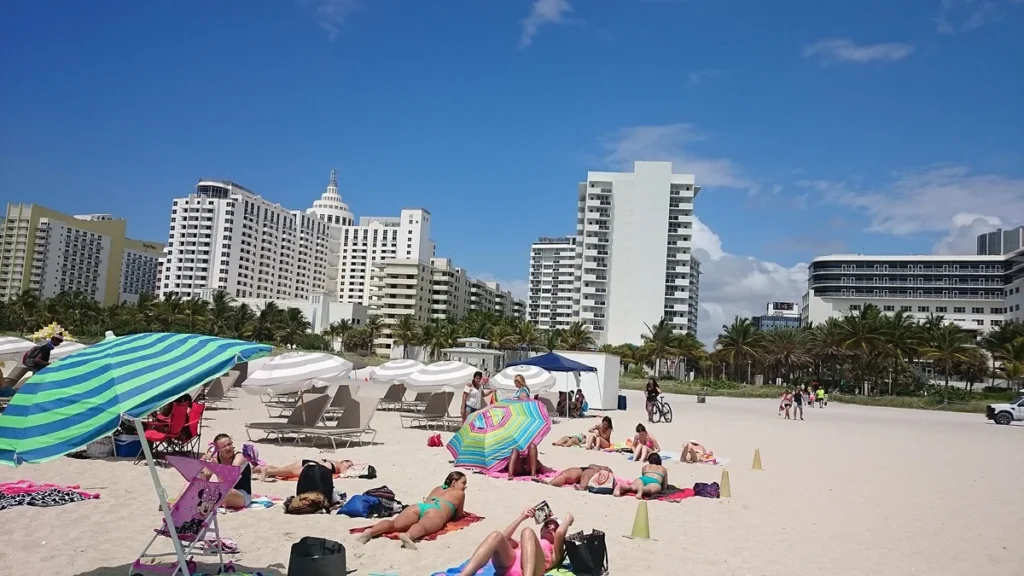
| 10. Miami | Florida · Southeast | Beach days with art and Latin American culture | 4 nights | December–April | $$$ |
| 11. Orlando | Florida · Central Florida | Families and a focused theme-park vacation | 5–7 nights | January–February; selected autumn weekdays | $$$ |
| 12. Chicago | Illinois · Midwest | Architecture, museums and a summer lakefront | 4 nights | May–June; September | $$$ |
| 13. Detroit | Michigan · Midwest | Music history, design and industrial heritage | 3 nights | May–October | $$ |
| 14. Minneapolis | Minnesota · Midwest | Urban lakes, cycling and public art | 3 nights | June–September | $$ |
| 15. Door County | Wisconsin · Midwest | Lakeside villages and an unhurried family trip | 4 nights | June–September; October for autumn color | $$$ |
| 16. St. Louis | Missouri · Midwest | Museums, families and a lower-cost city break | 3 nights | April–May; September–October | $$ |
| 17. Nashville | Tennessee · South | Live music and songwriting history | 3–4 nights | April–May; September–October | $$$ |
| 18. Santa Fe | New Mexico · Southwest | Art, Pueblo history and regional food | 3–4 nights | May–June; September–October | $$$ |
| 19. Sedona | Arizona · Southwest | Red-rock scenery and short hikes | 3 nights | March–April; October–November | $$$ |
| 20. Grand Canyon South Rim | Arizona · Southwest | Major landscapes and accessible rim viewpoints | 2 nights nearby | April–May; September–October | $$$ |
| 21. Las Vegas | Nevada · Southwest | Shows, dining and a flexible desert-city break | 3–4 nights | March–April; October–November | $$$ |
| 22. Denver | Colorado · Mountain West | Art, neighborhoods and a city-first mountain gateway | 3 nights | May–June; September–October | $$$ |
| 23. Yellowstone National Park | Wyoming, Montana and Idaho · Mountain West | Geysers, wildlife and a longer park trip | 4–5 nights | June–September | $$$ |
| 24. Glacier National Park | Montana · Northern Rockies | Alpine scenery and hiking-focused travel | 4 nights | July–early September | $$$ |
| 25. Seattle | Washington · Pacific Northwest | Waterfront culture and a car-free city break | 4 nights | June–September | $$$ |
| 26. Portland | Oregon · Pacific Northwest | Gardens, food carts and neighborhood wandering | 3–4 nights | June–September | $$ |
| 27. San Francisco | California · West Coast | Neighborhoods, bay views and a first California city | 4 nights | April–May; September–October | $$$$ |
| 28. San Diego | California · Southern California | Families, parks and a city-and-beach vacation | 4–5 nights | May–June; September–October | $$$ |
| 29. Anchorage | Alaska · Southcentral Alaska | Alaska culture and an accessible outdoor base | 4–5 nights | June–August | $$$ |
| 30. Oʻahu | Hawaiʻi · Pacific | Beach time with urban culture and island history | 6–7 nights | April–May; September–October | $$$$ |
Map of the Featured Destinations
30 Destinations to Consider
1. New York City
New York earns a longer stay because its neighborhoods change the experience as much as its headline sights. A week lets you combine major museums with waterfront walks, immigrant food traditions and an evening performance without turning every day into a queue.
Region: New York · Northeast · Best for: Museums, theater and a first US city trip
Suggested stay: 5–7 nights · Season: April–June; September–October · Budget: $$$$
Airport access: JFK, LaGuardia or Newark Liberty · Car / transport: No
What to do: Pair the Metropolitan Museum of Art with Central Park; walk the Brooklyn Bridge into Brooklyn Heights; explore Lower Manhattan; and choose a Broadway performance that interests you. Book the official Statue City Cruises ferry separately if visiting Liberty or Ellis Island is a priority.
When to go and how long: Spring and autumn suit long walks, although rain and temperature swings remain possible. Summer brings humidity; winter gives you a strong indoor-culture trip, with shorter daylight and expensive holiday dates. Five to seven nights allow time beyond Midtown.
Where to stay and get around: Midtown works for theater and first visits; the Upper West Side suits park-and-museum days, while Lower Manhattan works for the harbor. Use the subway and walking, keeping each day geographically compact. A rental car adds parking costs and little value.
Planning tip: The Met normally closes on Wednesdays: put museum opening days into your plan before reserving the rest. Use our seven-day NYC itinerary to turn a shortlist into manageable days.
For a deeper neighborhood and sightseeing plan, use the New York City travel guide.
Official planning sources: metmuseum.org — plan your visit · nyctourism.com — transportation
2. Boston
Boston combines a compact historic center with a working harbor and strong museum culture. It suits travelers who want a substantial American history trip without renting a car, particularly when several generations need different ways to spend an afternoon.
Region: Massachusetts · Northeast · Best for: Walkable history and harbor days
Suggested stay: 3–4 nights · Season: May–June; September–October · Budget: $$$
Airport access: Boston Logan · Car / transport: No
What to do: Follow a chosen section of the Freedom Trail, wander the Public Garden, explore the harborfront and give the Museum of Fine Arts a proper half-day. The North End adds Italian-American food and another layer of neighborhood history.
When to go and how long: Late spring and early autumn generally make walking more comfortable than midsummer. Winter can be rewarding for museums but requires cold-weather flexibility. Three nights cover a first visit; add a fourth for Cambridge or a less hurried museum day.
Where to stay and get around: Back Bay offers useful rail connections and dining; the Waterfront or North End puts harbor walks nearby. The MBTA and walking cover the central trip. Logan connects through public transportation, including terminal buses and the Blue Line airport shuttle.
Planning tip: The Freedom Trail is a 2.5-mile route connecting 16 sites, not one attraction with uniform hours. Choose the interiors you care about and check their separate admission arrangements.
Official planning sources: nps.gov — basicinfo · meetboston.com — logan airport
3. Washington, DC
Washington is unusually good for a trip built around learning rather than paid entertainment. Monuments, national collections and distinct residential neighborhoods let you balance major institutions with restaurants and walks away from the Mall.
Region: District of Columbia · Mid-Atlantic · Best for: Museums and civic history
Suggested stay: 4–5 nights · Season: April–May; September–October · Budget: $$$
Airport access: Reagan National or Washington Dulles · Car / transport: No
What to do: Walk between selected National Mall memorials, visit the National Museum of Natural History, explore the National Gallery of Art and leave time for Georgetown’s streets and waterfront. Choosing fewer museums makes the experience richer than racing through several in a day.
When to go and how long: Spring and autumn are good walking seasons, but cherry-blossom timing varies and peak dates bring crowds. Summer is hot and humid; winter can lower the pressure on outdoor landmarks. Four or five nights supports a sensible pace.
Where to stay and get around: Downtown is convenient for the Mall; Dupont Circle adds neighborhood dining, and Capitol Hill suits travelers interested in the eastern side of the center. Metro serves both Reagan National and Dulles. Use it with walking and buses rather than paying for a parked car.
Planning tip: Free admission does not always mean walk-in access. Check the exact institution’s timed-entry rules before building the day around it, and allow for security screening.
Official planning sources: washington.org — how do i get around washington dc · si.edu · nga.gov
4. Philadelphia
Philadelphia makes an effective shorter city break because its historic district, food markets and major art institutions deliver different experiences within one compact urban trip. It also pairs naturally with the Northeast rail corridor.
Region: Pennsylvania · Northeast · Best for: Founding history, food and art
Suggested stay: 3 nights · Season: April–June; September–October · Budget: $$
Airport access: Philadelphia International · Car / transport: No
What to do: Visit Independence Hall, read the Liberty Bell exhibits, eat at Reading Terminal Market and spend an afternoon at the Philadelphia Museum of Art. Add time around Old City’s streets rather than treating the historic buildings as quick photograph stops.
When to go and how long: Three nights is a useful first visit: one day for history, one for art and neighborhoods, and room for arrival or departure. Spring and autumn favor walking; summer can be sticky, while winter works better for a museum-centered plan.
Where to stay and get around: Old City is convenient for historic sites; Center City balances restaurants, shopping and transit. The airport has a rail connection to Center City. Walk within neighborhoods and use SEPTA for longer trips; a car is unnecessary for this version of the visit.
Planning tip: Check Independence Hall’s official ticket arrangements before arrival. The Liberty Bell and individual historic buildings have different access procedures, so one reservation does not organize the entire district.
Official planning sources: visitphilly.com — independence hall · visitphilly.com — philadelphia international airport · nps.gov — independencehall
5. Portland
Portland gives you an Atlantic coastal vacation with a real city at its center. The draw is the combination of a working waterfront, independent restaurants and easy access to Casco Bay, rather than an uninterrupted sandy-beach resort strip.
Region: Maine · Northeast · Best for: Seafood, harbor life and a compact coastal break
Suggested stay: 3 nights · Season: June–September · Budget: $$$
Airport access: Portland International Jetport · Car / transport: Helpful
What to do: Explore the Old Port, walk the Eastern Promenade, take a scheduled Casco Bay ferry trip and visit Fort Williams Park in nearby Cape Elizabeth for Portland Head Light. Leave one meal open for a seafood choice that fits the day’s catch and your budget.
When to go and how long: Summer offers the broadest range of boat departures and longer evenings, with correspondingly busy lodging. Early autumn can suit a quieter food-focused visit, but marine weather can alter plans. Three nights leaves a full day for the islands or surrounding coast.
Where to stay and get around: The Old Port is convenient if you want to walk to dinners and the waterfront. A car helps for Cape Elizabeth and coastal excursions; it is less useful for an entirely downtown stay. Fly into Portland International Jetport and arrange the arrival transfer separately.
Planning tip: Portland Head Light’s park grounds, museum and tower are different experiences. The tower is normally closed to the public; do not book a trip expecting to climb it on an ordinary visit.
Official planning sources: visitportland.com · portlandheadlight.com — contact · portlandjetport.org
6. Charleston
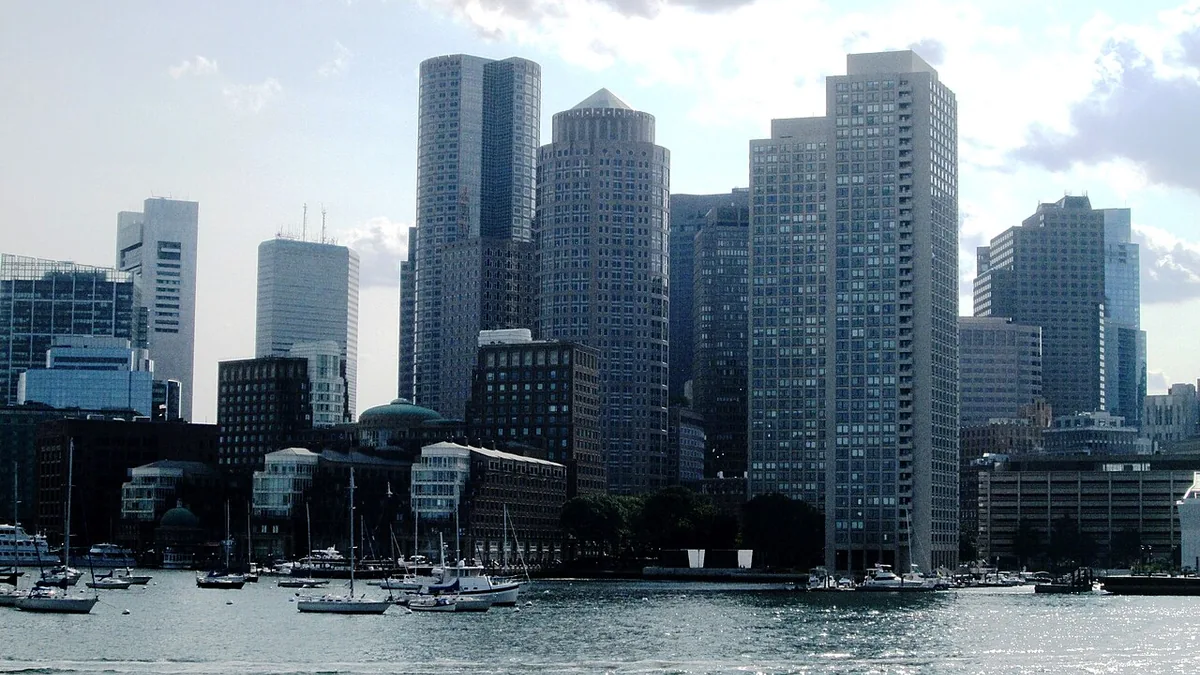
Charleston works best when architecture and dining are paired with serious attention to the city’s African American and Gullah Geechee history. Its compact peninsula is an engaging walking destination; nearby beaches expand the trip but add transportation time.
Region: South Carolina · Southeast · Best for: Lowcountry food and layered history
Suggested stay: 3–4 nights · Season: March–May; October–November · Budget: $$$
Airport access: Charleston International · Car / transport: Helpful
What to do: Visit the International African American Museum, walk the waterfront and historic streets, explore the Gibbes Museum of Art and reserve a harbor outing if the weather cooperates. These choices offer more context than a schedule composed entirely of mansion façades.
When to go and how long: Spring and autumn usually make outdoor exploration more comfortable than the humid summer. Hurricane-season forecasts matter for coastal dates, without predicting a storm on any individual trip. Three nights suits the peninsula; add a night for a beach day.
Where to stay and get around: The historic district is the easiest base for a short stay, though convenience usually costs more. Mount Pleasant can work with a car and a willingness to cross the harbor. Walking and occasional rides are enough for a peninsula-only visit; beaches make a car helpful.
Planning tip: Reserve a museum visit that interprets slavery and its continuing legacy alongside any historic-house tour. Attractive buildings tell only part of Charleston’s story.
Official planning sources: charlestoncvb.com — first timers guide · charlestoncvb.com — international african american museum~32866 · iflychs.com
7. Savannah
Savannah’s network of shaded squares creates a different rhythm from a beach resort or a museum-heavy city. The pleasure comes from walking between small green spaces, historic houses and cafés, with enough time to notice how the planned streets fit together.
Region: Georgia · Southeast · Best for: Squares, architecture and a slower couples’ break
Suggested stay: 3 nights · Season: March–May; October–November · Budget: $$$
Airport access: Savannah/Hilton Head International · Car / transport: Helpful
What to do: Walk from the historic squares to Forsyth Park, explore the riverfront, visit a Telfair Museums site and spend time at Bonaventure Cemetery. The cemetery is outside the central walking loop, so treat it as a separate outing rather than a quick detour.
When to go and how long: Three nights is enough for the historic center and one excursion. Spring and autumn generally offer more comfortable walking conditions; summer heat and humidity call for an indoor midday break. Major festival weekends can change both prices and street access.
Where to stay and get around: Stay within the Historic District for the simplest car-light trip, choosing a quieter square if nightlife noise bothers you. Walking covers the core; a car or arranged ride helps for Bonaventure and Tybee Island. The airport is outside town, so budget for the transfer.
Planning tip: Choose house-museum interpretation that includes the lives of enslaved people, and check which Telfair site your ticket or tour actually covers. The museums are separate buildings, not one stop.
Official planning sources: visitsavannah.com — getting here · telfair.org · savannahga.gov — Bonaventure Cemetery
8. New Orleans
New Orleans rewards a trip organized around music, food and neighborhoods. Its cultural traditions are specific to the city: leave time to hear a complete set, understand the cuisine and walk beyond the busiest blocks of the French Quarter.
Region: Louisiana · South · Best for: Live music and Creole food culture
Suggested stay: 4 nights · Season: February–April; November · Budget: $$$
Airport access: Louis Armstrong New Orleans International · Car / transport: No
What to do: Explore the French Quarter’s streets, ride a streetcar toward the Garden District, spend time in City Park and choose a live-music venue on or near Frenchmen Street. A guided neighborhood history walk can add context that a nightlife-only visit misses.
When to go and how long: Four nights allows a less hurried balance of daytime culture and late evenings. Late winter and spring often suit outdoor plans, but Mardi Gras and major festivals create their own booking conditions. Summer is hot, humid and within Atlantic hurricane season.
Where to stay and get around: The French Quarter is convenient but varies sharply by block and noise level. The Warehouse District gives a different hotel-and-restaurant base. Use walking, streetcars and occasional rides; renting a car solely for the central city is usually unnecessary.
Planning tip: Build the evening around a venue’s actual performance schedule and minimum-age policy. A famous street name does not guarantee the music you want on the night you visit.
Official planning sources: neworleans.com — new orleans for first time visitors · flymsy.com
9. Asheville
Asheville is a useful choice for travelers who want mountain scenery without spending the entire vacation hiking. The city offers restaurants, galleries and the Biltmore estate, with nearby mountain outings that need careful attention to current access.
Region: North Carolina · Southeast mountains · Best for: Mountain-town food, art and short outings
Suggested stay: 3–4 nights · Season: April–May; September–October · Budget: $$$
Airport access: Asheville Regional · Car / transport: Yes
What to do: Tour Biltmore House and gardens, explore downtown’s architecture and food scene, visit operating studios in the River Arts District and choose an open Blue Ridge Parkway viewpoint or trail. The mix allows a worthwhile trip even when weather changes outdoor plans.
When to go and how long: Three or four nights suits a city-and-mountains break. Spring brings changing mountain weather; autumn attracts heavy demand for foliage dates, which vary by elevation. Summer is greener and warmer, while winter can interrupt higher roads.
Where to stay and get around: Downtown works for evening meals on foot; the Biltmore area is practical for an estate-focused stay. A car is useful for the estate and mountain access. Asheville Regional is the local airport gateway, with travel time depending on the lodging area.
Planning tip: Recovery and construction can affect individual businesses and Parkway segments. Check the specific studio, trail and road section you intend to use; a general statement that Asheville is open does not confirm every outing.
Official planning sources: biltmore.com — hours of operation · exploreasheville.com — getting around · nps.gov — roadclosures · flyavl.com
10. Miami
Miami combines a major international city with beaches, architecture and strong Latin American and Caribbean influences. Choose it when you want a beach vacation that also includes urban culture, rather than a resort stay with little reason to leave the property.
Region: Florida · Southeast · Best for: Beach days with art and Latin American culture
Suggested stay: 4 nights · Season: December–April · Budget: $$$
Airport access: Miami International · Car / transport: Helpful
What to do: Explore South Beach’s Art Deco streets, visit the Pérez Art Museum Miami, spend time in Little Havana and choose a beach session around lifeguard advice and conditions. Miami Beach and mainland Miami are connected but should not be treated as one walkable neighborhood.
When to go and how long: Four nights gives room for both sides of the bay. Winter and early spring are popular for comparatively drier, milder conditions; prices often reflect that demand. Summer brings humidity, frequent showers and hurricane-season considerations.
Where to stay and get around: South Beach suits a beach-first trip, while Downtown or Brickell is a practical city base. Walking and transit work within selected areas; rides or a car help with a dispersed plan, though parking can be costly. Miami International is the main airport gateway.
Planning tip: Pick the side of the bay that matches most of your activities before choosing a hotel. For more regional alternatives, use our Florida destination guide.
For a deeper neighborhood and sightseeing plan, use the Miami travel guide.
Official planning sources: miamiandbeaches.com · pamm.org · miami-airport.com
11. Orlando
Orlando is strongest when chosen deliberately for its theme parks. The resorts occupy large areas outside downtown, so the best trip depends on which park system matters most, the ages of your group and how much recovery time everyone needs.
Region: Florida · Central Florida · Best for: Families and a focused theme-park vacation
Suggested stay: 5–7 nights · Season: January–February; selected autumn weekdays · Budget: $$$
Airport access: Orlando International · Car / transport: Helpful
What to do: Choose park days at Walt Disney World or Universal Orlando, make time for Disney Springs or Universal CityWalk and add a quieter walk around Lake Eola in downtown Orlando. You do not need tickets to every major park to justify the trip.
When to go and how long: Five to seven nights allows several park days with a rest day. Winter can be more comfortable for long outdoor queues, though holidays remain busy. Summer brings heat, thunderstorms and the possibility of weather-related attraction interruptions.
Where to stay and get around: Stay within or near your main resort complex if convenient transport is a priority. International Drive offers a broad hotel range but requires checking the exact shuttle service. Orlando International is the principal airport; a car is helpful for mixed destinations, less essential on a single-resort trip.
Planning tip: Compare the total cost of tickets, hotel transport, parking and any optional queue products before booking. Buying more park days is not automatically good value if the schedule leaves everyone exhausted.
Official planning sources: visitorlando.com · disneyworld.disney.go.com · universalorlando.com · flymco.com
12. Chicago
Chicago combines the scale of a major cultural city with a lakefront that changes the feel of the vacation. It is an excellent alternative to New York when architecture, a large art museum and outdoor waterfront time are your priorities.
Region: Illinois · Midwest · Best for: Architecture, museums and a summer lakefront
Suggested stay: 4 nights · Season: May–June; September · Budget: $$$
Airport access: Chicago O’Hare or Midway · Car / transport: No
What to do: Take an architecture river cruise, visit the Art Institute of Chicago, walk through Millennium Park and spend time along the Lakefront Trail. Add a neighborhood meal or live performance rather than filling every remaining hour with observation decks.
When to go and how long: Four nights gives you three full days for different parts of the city. Late spring through early autumn suits cruises and lakefront walks, although wind and sudden weather changes are possible. Winter supports a rewarding museum-and-theater trip if you prepare for the cold.
Where to stay and get around: The Loop is useful for major sights and transit; River North puts many hotels and restaurants nearby. O’Hare and Midway have CTA rail connections. Walking and public transportation cover a first visit well, so skip the rental car unless continuing elsewhere.
Planning tip: Reserve the architecture cruise you actually want and note its departure dock. Different operators and riverfront embarkation points are easy to confuse when arriving close to departure time.
Official planning sources: choosechicago.com — first time visitors guide to chicago · transitchicago.com — airports
13. Detroit
Detroit is a strong choice for travelers interested in how music, manufacturing and art shape a city. Its major cultural stops are spread across several neighborhoods, making a deliberate plan more useful than expecting a compact tourist district.
Region: Michigan · Midwest · Best for: Music history, design and industrial heritage
Suggested stay: 3 nights · Season: May–October · Budget: $$
Airport access: Detroit Metropolitan · Car / transport: Helpful
What to do: Visit the Detroit Institute of Arts for the Detroit Industry murals, book a Motown Museum visit, walk the Detroit International RiverWalk and explore Eastern Market when its relevant market or business hours suit your dates.
When to go and how long: Three nights supports a substantial first visit without adding a long list of suburban excursions. Late spring through autumn gives the riverfront a bigger role; winter shifts the balance toward museums, music and restaurants. Event weekends can raise central hotel demand.
Where to stay and get around: Downtown is convenient for the riverfront and evening activity; Midtown puts major museums closer. Detroit Metropolitan Airport is well outside the central visitor areas. A car is helpful for a dispersed trip, though rides and local transit can support a focused central stay.
Planning tip: Book the Motown tour before arranging the rest of that day. If adding The Henry Ford in Dearborn, give it substantial separate time rather than squeezing it between downtown stops.
Official planning sources: visitdetroit.com — detroit popular attractions · motownmuseum.org · visitdetroit.com — midtown
14. Minneapolis
Minneapolis is appealing when outdoor recreation should be part of the city break itself. Lakes, parkways and river landscapes sit alongside art institutions and neighborhood dining, so you can alternate indoor culture with active time without a long drive.
Region: Minnesota · Midwest · Best for: Urban lakes, cycling and public art
Suggested stay: 3 nights · Season: June–September · Budget: $$
Airport access: Minneapolis–Saint Paul International · Car / transport: No for a focused city stay
What to do: Explore the Minneapolis Sculpture Garden, walk or cycle a section of the Chain of Lakes, visit Minnehaha Regional Park and spend time around the Mississippi riverfront. Select a manageable portion of the trail network instead of treating it as a mileage challenge.
When to go and how long: Three nights makes a good warm-season introduction. Summer brings long evenings, although heat and thunderstorms still occur. Winter is a different trip centered on cold-weather activities and indoor culture; it should not be sold as the same easy cycling vacation.
Where to stay and get around: Downtown or the North Loop works for dining and central access. MSP connects to the city by the Blue Line; transit, walking and selected bike trips can remove the need for a car. Check trail conditions and use a route appropriate to your cycling confidence.
Planning tip: Minnehaha Falls changes with water levels and season. Choose the park for its broader river-and-trail setting, rather than expecting a particular waterfall appearance from a photograph.
Official planning sources: minneapolis.org — hiawatha howe · minneapolis.org — bde maka ska isles · minneapolisparks.org — minneapolis sculpture garden
15. Door County
Door County offers a slower Great Lakes vacation built around small waterfront communities, state parks and local food. It is better suited to a few days in one base than a hurried drive to the tip of the peninsula and back.
Region: Wisconsin · Midwest · Best for: Lakeside villages and an unhurried family trip
Suggested stay: 4 nights · Season: June–September; October for autumn color · Budget: $$$
Airport access: Green Bay Austin Straubel; onward drive · Car / transport: Yes
What to do: Explore Peninsula State Park, visit a waterfront village such as Ephraim, plan a seasonal Cana Island lighthouse visit and try a locally operated fish boil. Kayaking can be a worthwhile addition with a qualified operator and suitable lake conditions.
When to go and how long: Four nights gives weather-dependent activities some flexibility. Summer supports the broadest choice of seasonal services; autumn offers quieter weekdays and foliage interest. Winter has its own outdoor appeal but reduced business hours and a very different shoreline experience.
Where to stay and get around: Fish Creek and Ephraim work for central peninsula access; Sturgeon Bay is a practical southern base. Fly into Green Bay Austin Straubel and continue by road. A car is the useful default because villages, parks and lodging are dispersed.
Planning tip: A calm-looking bay is not a promise of easy open-water paddling. Choose a guided outing matched to conditions and check the current seasonal arrangements for lighthouse visits before driving there.
Official planning sources: doorcounty.com — international travel · doorcounty.com — peninsula state park · doorcounty.com — islands
16. St. Louis
St. Louis is useful when you want a major-city cultural trip with room in the budget for occasional paid highlights. The riverfront and Forest Park create two distinct centers of activity; choosing a base between your priorities matters more than chasing the cheapest outer-suburb room.
Region: Missouri · Midwest · Best for: Museums, families and a lower-cost city break
Suggested stay: 3 nights · Season: April–May; September–October · Budget: $$
Airport access: St. Louis Lambert International · Car / transport: Helpful
What to do: Explore the museum beneath the Gateway Arch, reserve a tram ride if its enclosed capsules suit your group, visit the Saint Louis Art Museum in Forest Park and give the City Museum time for its unconventional climbing and discovery spaces.
When to go and how long: Three nights is enough to balance the riverfront, Forest Park and an additional attraction. Spring and autumn usually make outdoor time more comfortable; summer can be very hot and humid. An indoor alternative helps on stormy days.
Where to stay and get around: Downtown suits an Arch-centered visit, while the Central West End is convenient for Forest Park. Lambert has MetroLink service, but a car or occasional rides helps connect a wider set of attractions. Check hotel parking charges when comparing the total stay.
Planning tip: The Arch’s museum and tram are separate experiences. Review the tram’s accessibility and physical requirements before purchasing: it involves stairs and small enclosed cars rather than a standard elevator.
Official planning sources: explorestlouis.com — visitors guide · gatewayarch.com — faqs · metrostlouis.org — lambert airport terminal 1 station
17. Nashville
Nashville is most rewarding when the trip goes beyond a single nightlife strip. Music history, working performance venues and neighborhood restaurants give you several ways to engage with the city, whether or not late-night bar hopping is the main attraction.
Region: Tennessee · South · Best for: Live music and songwriting history
Suggested stay: 3–4 nights · Season: April–May; September–October · Budget: $$$
Airport access: Nashville International · Car / transport: Helpful
What to do: Visit the Country Music Hall of Fame and Museum, take a Ryman Auditorium tour or attend a performance, explore Centennial Park and book an evening that emphasizes the kind of music you enjoy. Lower Broadway can be one stop rather than the entire vacation.
When to go and how long: Three or four nights supports daytime culture and a couple of carefully chosen shows. Spring and autumn can be comfortable, but major events push rates up. Summer is hot; winter still has music, with fewer reasons to build the whole visit around outdoor activity.
Where to stay and get around: Downtown is convenient for the central music institutions, while Midtown offers another hotel-and-dining base. Nashville International requires a ground transfer. Walking works within neighborhoods; rides or a car help connect them, especially if visiting the Opry area.
Planning tip: The Ryman and the Grand Ole Opry House are different venues in different parts of the city. Check the address on the ticket before selecting a hotel or estimating your evening transfer.
Official planning sources: visitmusiccity.com · countrymusichalloffame.org — plan your visit · flynashville.com
18. Santa Fe
Santa Fe has a distinct sense of place rooted in Pueblo, Hispanic and other regional histories, contemporary art and a high-desert setting. It works particularly well for travelers who enjoy galleries and food but also want a slower pace than a large city.
Region: New Mexico · Southwest · Best for: Art, Pueblo history and regional food
Suggested stay: 3–4 nights · Season: May–June; September–October · Budget: $$$
Airport access: Santa Fe Regional; Albuquerque alternative · Car / transport: Helpful
What to do: Walk the Plaza area, browse Canyon Road’s galleries, visit the Georgia O’Keeffe Museum and explore the New Mexico History Museum. Give at least one meal to northern New Mexican cooking, allowing time to understand the difference between regional dishes and generic Southwestern menus.
When to go and how long: Three or four nights is a useful cultural stay. Late spring and early autumn suit walking; summer afternoons can bring storms, and winter can bring snow. The elevation is significant, so keep the arrival day easier than your normal sea-level schedule.
Where to stay and get around: The Plaza area is convenient for a largely walkable visit. The Railyard gives another dining-and-gallery base. Santa Fe Regional is the local airport; Albuquerque offers another gateway with a longer transfer. A car helps for outings beyond the center.
Planning tip: If you extend the trip to a Pueblo community, check its own visitor rules and opening status. Photography, feast days and access are governed by the community, not by a general Santa Fe sightseeing pass.
Official planning sources: santafe.org — canyon road · santafe.org · okeeffemuseum.org · nmhistorymuseum.org
19. Sedona
Sedona offers dramatic red-rock scenery around an established town, making it a good fit for travelers who want hikes with comfortable lodging and restaurants afterward. The strongest plan chooses trails by ability and parking arrangements, rather than collecting every social-media viewpoint.
Region: Arizona · Southwest · Best for: Red-rock scenery and short hikes
Suggested stay: 3 nights · Season: March–April; October–November · Budget: $$$
Airport access: Flagstaff Pulliam; Phoenix Sky Harbor major gateway · Car / transport: Yes
What to do: Walk an appropriate section of the Bell Rock area, visit the Chapel of the Holy Cross, browse Tlaquepaque’s courtyards and choose a scenic viewpoint for changing afternoon light. Reserve a guided outdoor outing if you want more context or lack confidence with local terrain.
When to go and how long: Three nights allows two full days and flexibility for a weather change. Spring and autumn are popular for moderate hiking conditions. Summer heat demands early starts and shorter ambitions, while winter can bring ice and snow at higher or shaded locations.
Where to stay and get around: Uptown is convenient for shops and restaurants; West Sedona is practical for services, while the Village of Oak Creek places you near southern red-rock scenery. A car is useful, with trailhead shuttles replacing driving at selected access points and times.
Planning tip: Sedona’s hilltop airport is not the usual scheduled-airline gateway. Compare Flagstaff with Phoenix, then check the city’s current trailhead shuttle instructions before deciding where to park.
Official planning sources: visitsedona.com — meetings overview · sedonashuttle.com · visitsedona.com
20. Grand Canyon South Rim
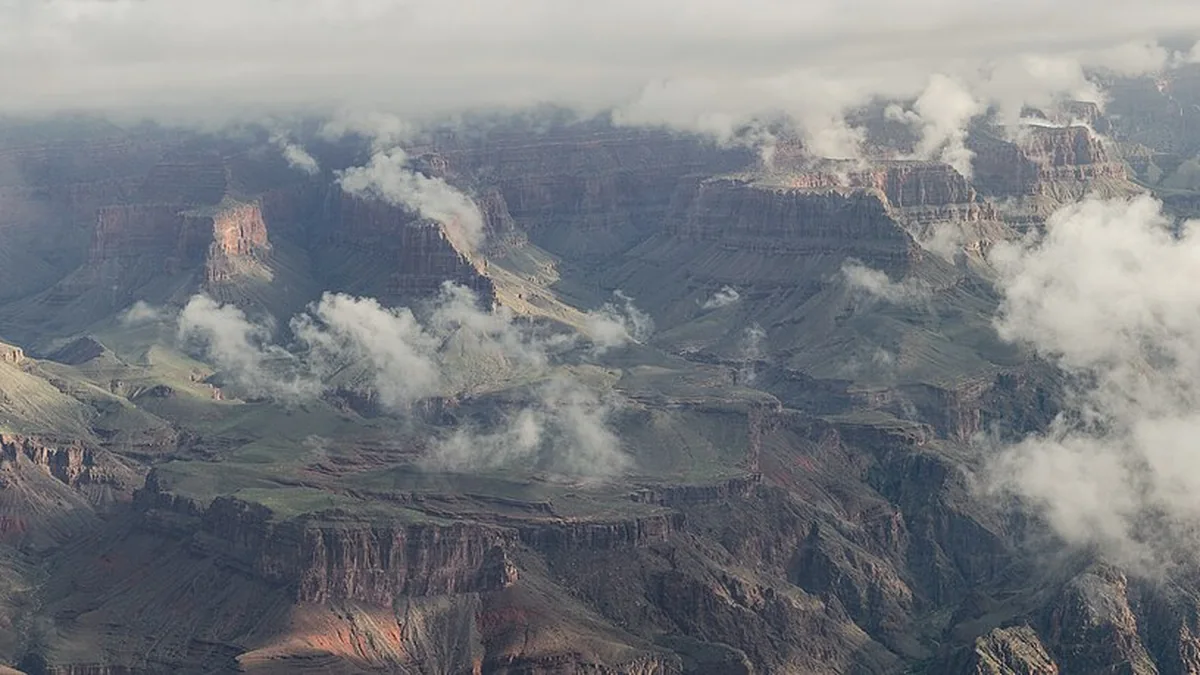
The South Rim gives a first-time visitor the most straightforward introduction to the Grand Canyon’s scale. Its main advantage is the choice between rim viewpoints and more demanding hiking: you do not need to descend deeply into the canyon to have a worthwhile visit.
Region: Arizona · Southwest · Best for: Major landscapes and accessible rim viewpoints
Suggested stay: 2 nights nearby · Season: April–May; September–October · Budget: $$$
Airport access: Flagstaff Pulliam; Phoenix or Las Vegas for broader flight choice · Car / transport: Yes
What to do: Spend time at Mather Point, walk a suitable portion of the Rim Trail, use operating shuttles for additional viewpoints and consider Desert View when the road and facilities allow. Stay for changing light rather than treating the canyon as a single midday photo stop.
When to go and how long: Two nearby nights lets you see an evening and morning without a same-day long-distance drive. Spring and autumn are useful compromises, but the high rim can still be cold. Summer heat becomes more severe below the rim; winter can affect roads and footing.
Where to stay and get around: For the current water disruption, use Tusayan or another confirmed outside-park base. A car is useful for reaching the area; inside the park, shuttle operations and vehicle restrictions vary by route and season.
Planning tip: September 26, 2026 check: in-park South Rim overnight lodging remains affected by the water-system closure; Tusayan lodging is outside that closure. Do not rely on a projected restoration date. Check NPS lodging, trail, water and fee updates before booking.
Official planning sources: nps.gov — lodging · nps.gov — shuttle buses · nps.gov — directions
21. Las Vegas
Las Vegas works for travelers who want entertainment concentrated in a few days, with a wide range of dining and lodging styles. It also has worthwhile museums that explain the city beyond its current spectacle. The desert outside town is a separate planning choice.
Region: Nevada · Southwest · Best for: Shows, dining and a flexible desert-city break
Suggested stay: 3–4 nights · Season: March–April; October–November · Budget: $$$
Airport access: Harry Reid International · Car / transport: No for Strip and downtown; helpful for desert outings
What to do: Choose a live show, see the Bellagio fountains and Conservatory, visit the Neon Museum and explore the downtown Arts District or Mob Museum. These experiences make a varied trip without requiring gambling or a packed nightclub schedule.
When to go and how long: Three or four nights is enough for several evenings and a slower daytime pace. Spring and autumn are better starting points for an outdoor component. Summer heat is intense; walking between large resorts can be more demanding than the map suggests.
Where to stay and get around: A central Strip hotel reduces transfers for resort-based entertainment, while downtown suits a different nightlife and museum focus. Harry Reid International is close to the resort corridor, but transfer times vary. Use walking selectively, transit and rides; rent a car only for days that justify it.
Planning tip: Compare the final hotel total, including mandatory fees and parking where applicable. For a canyon extension, distinguish the national park’s South Rim from Grand Canyon West; they are not interchangeable destinations.
For a deeper neighborhood and sightseeing plan, use the Las Vegas travel guide.
Official planning sources: visitlasvegas.com — top 5 things to do in las vegas · harryreidairport.com · dayzora.com — las vegas grand canyon itinerary
22. Denver
Denver is a useful destination in its own right, not simply the place to collect a rental car. Its museums, historic rail hub and neighborhood dining make a good short city trip, while the mountains require additional time and a separate transport plan.
Region: Colorado · Mountain West · Best for: Art, neighborhoods and a city-first mountain gateway
Suggested stay: 3 nights · Season: May–June; September–October · Budget: $$$
Airport access: Denver International · Car / transport: No for central Denver; yes for independent mountain trips
What to do: Explore Union Station and Lower Downtown, visit the Denver Art Museum, walk the Denver Botanic Gardens and seek out street art and food in the River North area. These stops give the city a clear identity without pretending the national parks are just outside downtown.
When to go and how long: Three nights suits the urban visit. Spring and autumn can be pleasant but Colorado weather changes quickly; summer afternoons can bring thunderstorms. Winter combines indoor attractions with snow possibilities, and mountain ski weekends add a different set of traffic pressures.
Where to stay and get around: Union Station and Lower Downtown provide convenient transport and restaurant access. The airport’s A Line connects to Union Station, making a central stay possible without a car. Add a rental only if your next destination needs one.
Planning tip: Take the elevation seriously on the first day and avoid coupling arrival with an ambitious high-altitude hike. A Denver city break and a Rocky Mountain National Park trip need different reservations and travel allowances.
Official planning sources: flydenver.com — airport transit center · denver.org — must see denver · denverartmuseum.org · botanicgardens.org
23. Yellowstone National Park
Yellowstone offers a rare combination of active geothermal landscapes and large wildlife habitat. Its size is the central planning fact: a satisfying visit requires several days, with overnight locations chosen around the areas you actually want to explore.
Region: Wyoming, Montana and Idaho · Mountain West · Best for: Geysers, wildlife and a longer park trip
Suggested stay: 4–5 nights · Season: June–September · Budget: $$$
Airport access: Bozeman Yellowstone for north/west access · Car / transport: Yes
What to do: See Old Faithful and nearby boardwalks, explore the Grand Canyon of the Yellowstone, visit Mammoth Hot Springs and spend patient time watching wildlife from legal pullouts. Keep well back from animals and remain on designated geothermal routes.
When to go and how long: Four or five nights allows the major regions without an exhausting single-day circuit. Summer provides the broadest road access, but traffic and lodging demand are substantial. September can be attractive with colder nights; most roads close to regular vehicles for winter.
Where to stay and get around: West Yellowstone is practical for western access, while Gardiner suits the north. In-park lodging can reduce driving if available; splitting bases may help on a longer trip. Bozeman is a useful airport for the north and west, followed by a substantial drive.
Planning tip: The year-round road exception is the northern corridor between Gardiner and Cooke City, not the whole park loop. Check the NPS road map for your actual dates, and never build a winter self-drive plan from a summer itinerary.
Official planning sources: nps.gov — parkroads · bozemanairport.com — national parks · nps.gov — safety
24. Glacier National Park
Glacier is a strong choice for mountain travelers who can accept a short access season and changeable weather. The scenery is not confined to one viewpoint, but getting between valleys takes time, so match your overnight base to the hikes and roads you intend to use.
Region: Montana · Northern Rockies · Best for: Alpine scenery and hiking-focused travel
Suggested stay: 4 nights · Season: July–early September · Budget: $$$
Airport access: Glacier Park International near Kalispell · Car / transport: Yes; seasonal shuttles supplement
What to do: Explore Lake McDonald’s shore, drive open sections of Going-to-the-Sun Road, visit Logan Pass when accessible and choose a trail matched to current conditions and ability. Rangers’ wildlife guidance and temporary closures should determine the day’s hiking plan.
When to go and how long: Four nights offers a useful introduction; more time helps if splitting the east and west sides. July through early September is the usual starting point for broad access, without guaranteeing every trail is snow-free. Smoke, storms and early snow can alter plans.
Where to stay and get around: West Glacier provides close western access, while Whitefish offers more restaurants with extra driving. East-side plans need their own lodging strategy. Glacier Park International is near Kalispell, about 30 miles from the West Entrance.
Planning tip: NPS changed the system in 2026: no vehicle reservation was required, while peak-season Logan Pass used a parking time limit and a ticketed shuttle. Those measures had specific seasonal dates; consult the current page rather than reusing a previous year’s rules.
Official planning sources: nps.gov — logan2026faq · nps.gov — directions · nps.gov — goingtothesunroad
25. Seattle
Seattle combines a major-city cultural trip with water, ferries and neighborhood viewpoints. It is a good choice for travelers who like exploring on foot and by transit, with the possibility of a simple ferry outing rather than a complicated multi-park road trip.
Region: Washington · Pacific Northwest · Best for: Waterfront culture and a car-free city break
Suggested stay: 4 nights · Season: June–September · Budget: $$$
Airport access: Seattle–Tacoma International · Car / transport: No for the city
What to do: Explore Pike Place Market, walk the central waterfront, visit Seattle Center and take a ferry to Bainbridge Island if the schedule fits. Leave time for a neighborhood such as Capitol Hill, where the experience is as much about cafés and independent businesses as landmarks.
When to go and how long: Four nights allows the center, a neighborhood day and a ferry excursion. Summer generally offers the easiest outdoor plans, with higher demand and possible regional smoke. The cooler, wetter part of the year suits museums and cafés if you pack for persistent rain.
Where to stay and get around: Downtown or Belltown is convenient for the waterfront and central sights; a location near light rail helps if you prefer Capitol Hill. SEA connects to the city by Link light rail. Walking, transit and passenger ferries usually remove the need for a car.
Planning tip: Choose a ferry as a passenger when the island plan is walkable. Taking a rental car can add cost and vehicle-queue complexity without improving a short visit near the Bainbridge terminal.
Official planning sources: visitseattle.org — exploring seattles surroundings without a car · visitseattle.org — things to do · wsdot.wa.gov — washington state ferries
26. Portland
Portland is an appealing smaller-city choice when your interests are gardens, books, food and exploring neighborhoods at a relaxed pace. The most useful first visit stays focused on the city; the coast and Columbia River Gorge deserve their own travel allowances.
Region: Oregon · Pacific Northwest · Best for: Gardens, food carts and neighborhood wandering
Suggested stay: 3–4 nights · Season: June–September · Budget: $$
Airport access: Portland International · Car / transport: No for the city
What to do: Explore Washington Park, choose the Portland Japanese Garden or International Rose Test Garden, browse Powell’s City of Books and try a food-cart pod. Allow time for a neighborhood walk rather than crossing the city repeatedly for individual meal recommendations.
When to go and how long: Three or four nights lets you balance gardens with the urban core. Summer is generally the easiest outdoor season, though heat and smoke are possible. Rose displays are seasonal; the wetter months shift the balance toward indoor stops and evergreen landscapes.
Where to stay and get around: The Pearl District or central downtown is convenient for a first visit; inner eastside neighborhoods offer a different restaurant-focused base. PDX has MAX light-rail access. Transit and walking cover the central trip, with the Washington Park shuttle helping inside the park.
Planning tip: Washington Park contains several separate attractions with their own tickets and hours. Choose one or two that interest you and use the park shuttle rather than expecting to see the entire complex in a quick stop.
Official planning sources: travelportland.com — washington park · travelportland.com · travelportland.com — max light rail
27. San Francisco
San Francisco is a compact city with unusually varied neighborhoods, a dramatic bay setting and strong museum and food choices. Its hills make distances feel longer than they look, but a car-free trip is often easier than managing parking and urban driving.
Region: California · West Coast · Best for: Neighborhoods, bay views and a first California city
Suggested stay: 4 nights · Season: April–May; September–October · Budget: $$$$
Airport access: San Francisco International · Car / transport: No
What to do: Walk a suitable part of the Golden Gate waterfront, reserve an Alcatraz visit, explore Chinatown and spend time in Golden Gate Park. Leave a half-day for one neighborhood you enjoy instead of treating every cable-car line and famous street as a compulsory stop.
When to go and how long: Four nights gives the city enough time before continuing along the coast or inland. Early autumn often appeals for outdoor plans; summer can be cool and foggy, and winter brings rain possibilities. Pack layers in any season.
Where to stay and get around: The Embarcadero and Union Square areas provide useful hotel and transport options, with different surroundings and price points. SFO has a BART connection; Muni and walking cover many city sights. Delay a road-trip rental until you leave the city.
Planning tip: Book Alcatraz through the authorized ferry provider and allow for the island visit itself. A bay cruise that passes the island does not include landing there. See the California hub for the next destination.
For a deeper neighborhood and sightseeing plan, use the San Francisco travel guide.
Official planning sources: visitcalifornia.com — san francisco · nps.gov · flysfo.com — ground transportation
28. San Diego
San Diego is a strong family choice because you can combine an urban cultural park with beaches and waterfront neighborhoods. It also works for couples who want a less hurried Southern California trip, with fewer major-city transfers than a broad Los Angeles itinerary.
Region: California · Southern California · Best for: Families, parks and a city-and-beach vacation
Suggested stay: 4–5 nights · Season: May–June; September–October · Budget: $$$
Airport access: San Diego International · Car / transport: Helpful
What to do: Explore Balboa Park’s gardens and museums, choose the San Diego Zoo if it fits your interests, walk the La Jolla coast and spend time along the Embarcadero. A beach day is best planned around conditions rather than assuming every cove is a suitable swimming spot.
When to go and how long: Four or five nights allows park, coast and city days without cramming them together. Late spring and early autumn can be appealing, but coastal cloud is common in parts of spring and early summer. Ocean temperatures are cooler than many first-time visitors expect.
Where to stay and get around: Downtown or Little Italy suits dining and central transport; La Jolla or a beach neighborhood suits a coast-first visit. The airport is close to the city. A car helps for dispersed coastal plans, while a focused central trip can use transit and rides.
Planning tip: San Diego Zoo in Balboa Park and the Safari Park near Escondido are separate attractions. Check the location before buying tickets or deciding that two wildlife visits fit into one easy day.
Official planning sources: visitcalifornia.com — san diego · zoo.sandiegozoo.org — plan your visit · san.org
29. Anchorage
Anchorage makes Alaska more approachable by combining an urban base with nearby coast and mountain scenery. It is particularly useful when you want cultural context and manageable outings rather than a rushed attempt to cover the state’s distant regions in one week.
Region: Alaska · Southcentral Alaska · Best for: Alaska culture and an accessible outdoor base
Suggested stay: 4–5 nights · Season: June–August · Budget: $$$
Airport access: Ted Stevens Anchorage International · Car / transport: Helpful
What to do: Visit the Anchorage Museum, learn from the Alaska Native Heritage Center, walk or cycle part of the Tony Knowles Coastal Trail and consider a planned rail or guided excursion south toward Turnagain Arm. Each option contributes something different to the trip.
When to go and how long: Four or five nights supports the city and a couple of carefully chosen excursions. Summer has long daylight and broader seasonal services, while winter requires a different plan with short days and cold-weather preparation. Wildlife and mountain visibility are never guaranteed.
Where to stay and get around: Downtown is convenient for restaurants, museums and the rail depot; Midtown can work with a car. The international airport is the main gateway. A car helps with independent outings, but city walks and prearranged tours can support a car-light stay.
Planning tip: Do not turn a distant Alaska landmark into a casual day trip just because it looks close on a national map. Check actual transport schedules and leave weather flexibility for any flightseeing or boat component.
Official planning sources: anchorage.net — flying in to anchorage · anchorage.net — top culture and history attractions in anchorage · anchorage.net — coastal trail
30. Oʻahu
Oʻahu combines the conveniences of Honolulu with beaches, volcanic scenery and opportunities to learn about Hawaiian history. It is a practical first Hawaiian island when travelers in the same group want different things, from museums and dining to beach days and short hikes.
Region: Hawaiʻi · Pacific · Best for: Beach time with urban culture and island history
Suggested stay: 6–7 nights · Season: April–May; September–October · Budget: $$$$
Airport access: Daniel K. Inouye International, Honolulu · Car / transport: Helpful outside Honolulu
What to do: Spend time at Waikīkī, visit ʻIolani Palace, reserve a Diamond Head hike if its steep steps suit your ability and make a respectful, unrushed visit to Pearl Harbor National Memorial. Choose additional coastal time around ocean conditions, not simply a list of famous beaches.
When to go and how long: Six or seven nights leaves room to settle in and explore beyond Honolulu. Spring and autumn are useful starting points for avoiding some peak demand, without guaranteeing dry weather. Winter’s large North Shore surf is a viewing attraction, not an invitation for inexperienced swimming.
Where to stay and get around: Waikīkī is the easiest hotel base for a first visit; Ko Olina suits a resort-focused stay with more driving. HNL is the main gateway. Walking, buses and rides work in Honolulu; a rental car helps on selected island-exploration days.
Planning tip: Non-Hawaiʻi residents need entry and, when driving, parking reservations for Diamond Head. Book official access before organizing that morning, and avoid assuming that a general island tour includes every separately reserved attraction.
Official planning sources: gohawaii.com — oahu · dlnr.hawaii.gov — diamond head state monument · iolanipalace.org · nps.gov
How to Plan the Trip
Choose one region for a first week
A week in the USA does not need a cross-country flight in the middle. Pair New York with Philadelphia, give Washington its own museum stay, or combine Boston with coastal Maine if you have enough nights. The seven-day New York City itinerary is useful when you prefer depth to another hotel change.
Match the trip to the season
Mountain roads and facilities can be seasonal even when a national park is open. Desert sightseeing works differently from a summer mountain trip. For coastal Florida and the Atlantic South, the official Atlantic hurricane season is June 1–November 30, with storms possible outside those dates. Use destination-specific forecasts and operating notices when booking.
Turn a shortlist into a route
Choose the places first, then test the driving days. Use our USA road-trip guide for route choices and national parks guide for park comparisons. For a shorter break, start with weekend getaways rather than squeezing a week-long plan into two nights.
Go deeper in California or Florida
The California destination hub expands beyond San Francisco and San Diego to wine country, deserts and the Sierra. The Florida destination hub compares Keys, Gulf Coast, Atlantic, inland and Panhandle bases. Use those pages when you have already chosen the state.
Traveling with children? Compare the family vacation destinations guide by age and trip style. If the accommodation is the main event, the USA luxury resorts guide compares specific stays.
How DayZora Selected These Destinations
We balanced distinctive attractions, variety of experiences, practical airport or onward access, accommodation areas and suitability for different trip styles. We also considered whether a destination could support the suggested stay without an unrealistic schedule. Official tourism, park, attraction, airport and transport sources informed access and planning details; the recommendations and budget categories are editorial judgments, not a survey score or a paid ranking.
The numbers organize the selections and match the map. They do not imply that destination 1 is objectively better than destination 2. This guide does not claim firsthand visits to every place. Conditions and operating arrangements can change after the review date; follow the official links within each entry for the details that affect your dates.
Frequently Asked Questions
Where should I go on my first USA vacation?
For a city-focused trip, New York or Washington, DC offers a clear starting point. For a mixed coast-and-city holiday, consider San Diego. Choose according to your arrival airport, season and willingness to drive rather than trying to include every famous region.
How many places should I visit in one week?
One substantial city or two nearby bases usually leaves more time for the experience itself. A national-park trip may need several accommodation stops for access, but those should reduce driving rather than increase the number of destinations.
Can I visit without renting a car?
Yes in several cities, including New York, Boston, Washington and Chicago. Park and rural destinations often need a car, shuttle or organized tour. The quick facts distinguish city stays from wider regional exploration.
Choose a beach for your U.S. trip
For specific shoreline choices, compare our 25 best beaches in the USA, with a numbered map, access details, facilities and realistic water-condition advice.
If a Cowboys game, major concert or stadium tour is the reason for your U.S. trip, use our AT&T Stadium guide to plan Arlington, Texas, including seating, parking, transport limitations and nearby hotel areas.