
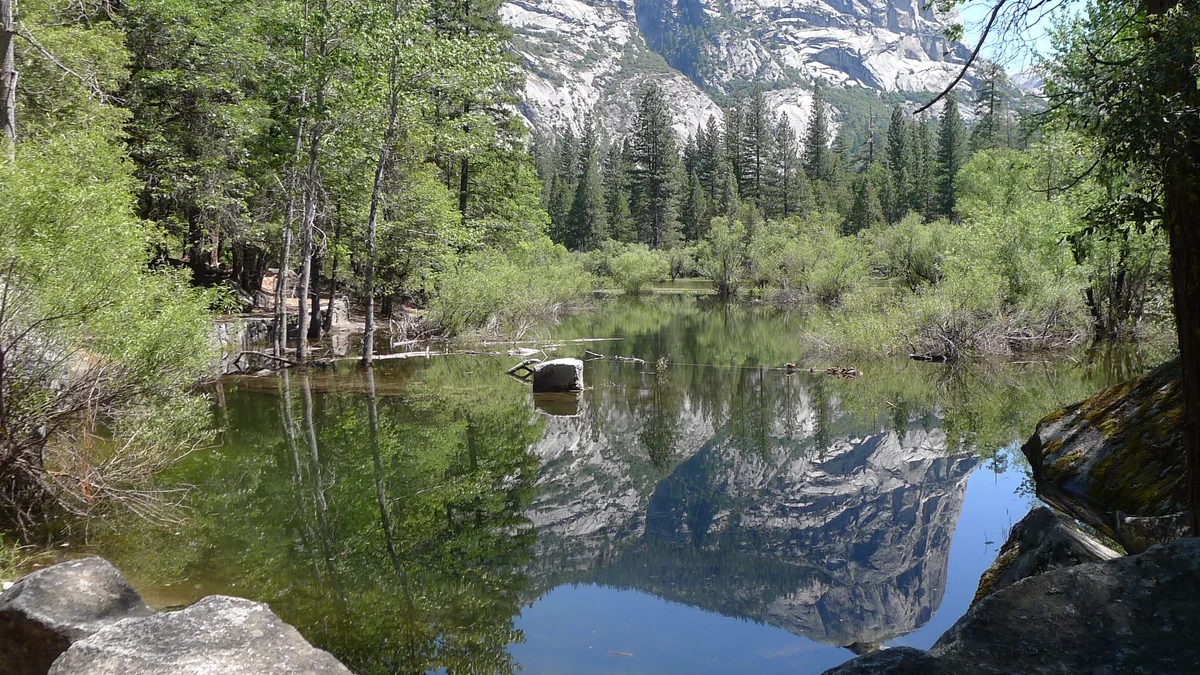
The best national parks in USA travel plans are the ones that fit your season, walking ability and available time. Yosemite’s granite valley, Yellowstone’s geothermal basins and the Everglades’ wetlands deliver very different trips. This guide selects 25 parks for landscape variety, memorable experiences and realistic planning value, then shows how to choose between them. The numbers organize the map and regional sequence; they are not a scientific ranking.
Planning review: September 26, 2026. This article uses verified 2026 rules. For a later trip, confirm the new season’s reservations before booking.
For a first trip, choose one region and spend at least two or three nights near your main park. Our seasonal guides and the 12-day Utah national parks road trip turn this destination shortlist into a more specific plan.
Compare the parks at a glance
Stays exclude flights and long transfers. Windows are planning ranges, not forecasts. See each park below for fees, reservations and conditions.
On a small screen, swipe the table sideways to see every column.
| Park / location | Best for | Planning window | Stay | Airport / gateway |
|---|---|---|---|---|
| Yosemite California |
Granite valleys | May–June; September–October | 3 days | Fresno (FAT); Mariposa or El Portal |
| Sequoia California |
Giant trees | June–September | 2 days | Fresno (FAT); Three Rivers |
| Joshua Tree California |
Boulders and desert plants | November–March | 2 days | Palm Springs (PSP); Joshua Tree or Twentynine Palms |
| Death Valley California/Nevada |
Desert landforms | November–March | 2–3 days | Las Vegas (LAS); Furnace Creek or Beatty |
| Redwood California |
Coastal old-growth forest | May–October | 2–3 days | Arcata–Eureka (ACV); Trinidad or Crescent City |
| Olympic Washington |
Rainforest, mountains and coast | July–September | 3–4 days | Seattle (SEA); Port Angeles and Forks |
| Mount Rainier Washington |
Subalpine meadows | Late July–September | 2 days | Seattle (SEA); Ashford |
| Crater Lake Oregon |
Caldera views | July–September | 1–2 days | Medford (MFR); Klamath Falls |
| Glacier Montana |
Alpine road scenery | July–early September | 3–4 days | Kalispell (FCA); West Glacier or St. Mary |
| Yellowstone Wyoming/Montana/Idaho |
Geysers and wildlife | June–September; guided winter trips | 3–4 days | Bozeman (BZN) or Jackson (JAC); Gardiner or West Yellowstone |
| Grand Teton Wyoming |
Lakes beneath peaks | June–September | 2–3 days | Jackson Hole (JAC); Jackson |
| Rocky Mountain Colorado |
Alpine lakes and tundra | July–September; winter for snow | 2–3 days | Denver (DEN); Estes Park or Grand Lake |
| Grand Canyon Arizona |
Vast canyon viewpoints | April–May; September–October | 2 days | Flagstaff (FLG), Phoenix (PHX) or Las Vegas (LAS); Tusayan |
| Zion Utah |
Sandstone canyon walls | April–May; October–November | 2–3 days | Las Vegas (LAS) or St. George (SGU); Springdale |
| Bryce Canyon Utah |
Hoodoo amphitheater | May–October; winter snow scenes | 1–2 days | Las Vegas (LAS) or Salt Lake City (SLC); Bryce Canyon City or Tropic |
| Arches Utah |
Natural stone arches | April–May; October | 2 days | Grand Junction (GJT) or Salt Lake City (SLC); Moab |
| Canyonlands Utah |
Layered canyon panoramas | April–May; September–October | 1–2 days for Island in the Sky | Grand Junction (GJT) or Salt Lake City (SLC); Moab |
| Badlands South Dakota |
Prairie and eroded ridges | May–June; September | 1–2 days | Rapid City (RAP); Wall |
| Cuyahoga Valley Ohio |
Woodland walks and canal history | May–October | 1–2 days | Cleveland (CLE); Peninsula, Cleveland or Akron |
| Great Smoky Mountains Tennessee/North Carolina |
Forest and Appalachian history | May–June; October | 3 days | Knoxville (TYS) or Asheville (AVL); Townsend, Gatlinburg or Cherokee |
| Shenandoah Virginia |
Scenic ridge driving | May–June; October | 2–3 days | Washington Dulles (IAD); Front Royal or Luray |
| Acadia Maine |
Rocky coast and carriage roads | June–October | 3 days | Bangor (BGR); Bar Harbor |
| Everglades Florida |
Wetlands and birds | December–March | 2–3 days | Miami (MIA); Homestead or Florida City |
| Denali Alaska |
Big landscapes and wildlife | June–early September | 3 days | Fairbanks (FAI) or Anchorage (ANC); Healy |
| Hawaiʻi Volcanoes Hawaiʻi |
Volcanic landscapes | Year-round; expect rain | 2 days | Hilo (ITO); Volcano village |
National parks map
Swipe the map sideways on mobile, or open the full-size map. The numbered list below provides a readable text alternative.
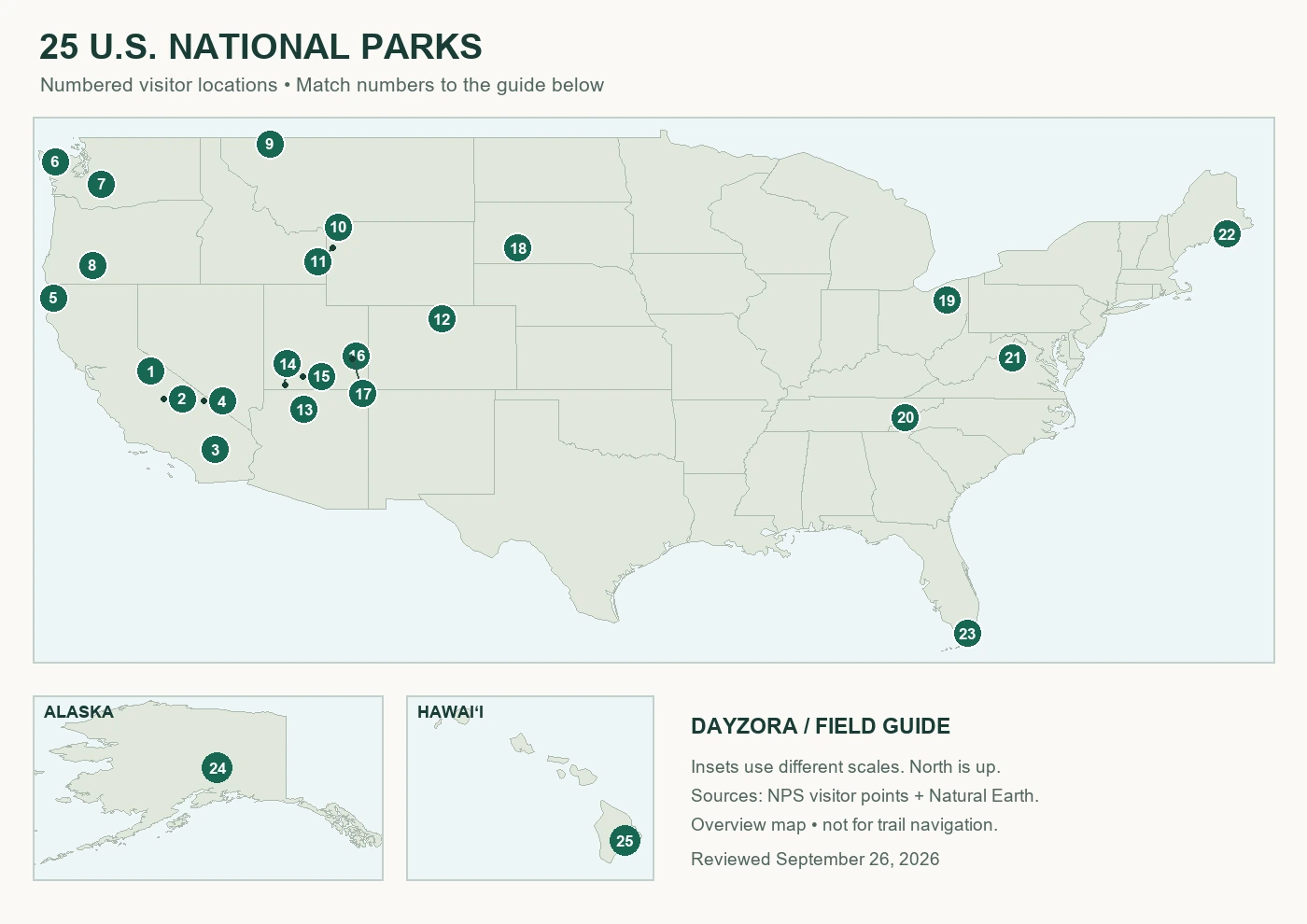
- Yosemite — California
- Sequoia — California
- Joshua Tree — California
- Death Valley — California/Nevada
- Redwood — California
- Olympic — Washington
- Mount Rainier — Washington
- Crater Lake — Oregon
- Glacier — Montana
- Yellowstone — Wyoming/Montana/Idaho
- Grand Teton — Wyoming
- Rocky Mountain — Colorado
- Grand Canyon — Arizona
- Zion — Utah
- Bryce Canyon — Utah
- Arches — Utah
- Canyonlands — Utah
- Badlands — South Dakota
- Cuyahoga Valley — Ohio
- Great Smoky Mountains — Tennessee/North Carolina
- Shenandoah — Virginia
- Acadia — Maine
- Everglades — Florida
- Denali — Alaska
- Hawaiʻi Volcanoes — Hawaiʻi
How to choose the right park for your trip
- First national park trip: Yosemite for a recognizable valley with several short outings, Grand Canyon for rim scenery, or Acadia for compact coastal exploring. Choose by season and flight logistics rather than name recognition alone.
- Hiking: Mount Rainier, Glacier and Rocky Mountain reward summer mountain access. Build up from a short first walk; altitude, lingering snow and afternoon thunderstorms can make a modest distance demanding.
- Wildlife: Yellowstone, Grand Teton, Denali and Everglades offer different habitats. Bring binoculars and patience. No sighting is guaranteed, and an animal beside the road is never permission to approach.
- Families and mixed walking abilities: Look for a useful sequence of short walks, visitor centers and viewpoints. Acadia, Cuyahoga Valley and Yosemite Valley can support this style, but confirm the accessibility of the exact route and facilities.
- Scenic driving: Shenandoah, Badlands and Grand Canyon offer useful road-based sightseeing. Mountain roads are seasonal, and getting out for a short permitted walk often improves the visit more than adding another hundred miles.
- Photography: Choose one sunrise or sunset location with a safe approach and nearby lodging. Avoid an itinerary that expects early starts every day after late-night transfers; darkness makes wildlife and road hazards harder to see.
- Escaping summer heat: Prefer redwood forests, Olympic’s coast or appropriately accessible northern mountains. Death Valley and Joshua Tree are cooler-season choices for ordinary sightseeing and hiking.
How many parks fit in one vacation?
For a long weekend, choose one gateway and one park. A week can work well for Yellowstone plus Grand Teton, or a carefully selected Yosemite–Sequoia trip with driving time allowed. Utah’s five parks are better approached as a substantial road trip than five hurried consecutive day trips. Alaska and Hawaii deserve their own flight and transport plans; they are not useful extensions to a Lower 48 driving loop.
Count nights before you count parks. Arriving at a distant airport late in the afternoon does not create a full park day. If a route relies on a seasonal pass, reserve an alternative overnight location or simplify the route rather than assuming a long mountain detour will be painless.
The 25 parks: what to do and how to plan
1. Yosemite National Park
At a glance: California · Granite valleys · 3 days · May–June; September–October. Gateway: Fresno (FAT); Mariposa or El Portal.
Entry: No timed entry in 2026; Half Dome requires a permit. Fees.
Choose Yosemite for the contrast between a broad, walkable valley and sheer granite walls. It rewards a first visit even without a summit hike: frame El Capitan from a meadow, see Tunnel View, and spend unhurried time beside the Merced rather than collecting overlooks.
Highlights to build around: Tunnel View; Valley meadows; Lower Yosemite Fall; Mariposa Grove.
Walk: Lower Yosemite Fall: 1-mile loop, 50 feet gain; easy on dry pavement.
Suggested itinerary: Day 1: Valley viewpoints and the Lower Yosemite Fall loop. Day 2: Mariposa Grove. Day 3: another open Valley trail or Tioga Road only if open.
Planning tip: At review, Glacier Point Road was closed for the Dome Fire and Yosemite Falls was dry. Use the Valley-based plan, check smoke, and do not expect spring waterfalls in autumn.
Stay: El Portal or Mariposa; reserve Valley accommodation early. NPS planning · Conditions.
2. Sequoia National Park
At a glance: California · Giant trees · 2 days · June–September. Gateway: Fresno (FAT); Three Rivers.
Entry: Reserve lodging/camping; check winter chain controls. Fees.
Sequoia is about scale at close range. The trees are more compelling when you walk beyond a crowded photo stop and notice the younger forest growing around them. Combine the General Sherman approach with part of Congress Trail rather than spending the whole day in a car.
Highlights to build around: Giant Forest; General Sherman; Congress Trail; Generals Highway.
Walk: General Sherman Tree walk: roughly 1 mile round trip from the main lot; downhill first, uphill return at altitude.
Suggested itinerary: Day 1: Giant Forest Museum and General Sherman. Day 2: a longer grove walk and Generals Highway viewpoints, adjusted to road conditions.
Planning tip: The climb back to the main Sherman parking lot feels harder at elevation. Check seasonal shuttle service; Dorst Creek Campground is closed in 2026.
Stay: Three Rivers or Wuksachi Lodge; Lodgepole camping when operating. NPS planning · Conditions.
3. Joshua Tree National Park
At a glance: California · Boulders and desert plants · 2 days · November–March. Gateway: Palm Springs (PSP); Joshua Tree or Twentynine Palms.
Entry: Reserve popular campsites; separate rules for climbing and backcountry trips. Fees.
Joshua Tree suits travelers who enjoy texture: rounded granite, branching yuccas and long desert horizons. A short walk can reveal more than a long drive, but distances between trailheads and supplies are substantial. This is a cool-season hiking choice, not a summer escape.
Highlights to build around: Hidden Valley; Keys View; Skull Rock; roadside Joshua trees.
Walk: Hidden Valley: 1-mile loop, 100 feet gain; short but rocky.
Suggested itinerary: Day 1: Hidden Valley, roadside formations and Keys View. Day 2: Skull Rock area and an evening sky session from a legal parking area.
Planning tip: Bring water from town and keep the day flexible around wind and heat. Winter nights can freeze; a sunny photograph does not indicate a warm campsite.
Stay: Joshua Tree or Twentynine Palms; reserved developed campsites. NPS planning · Conditions.
4. Death Valley National Park
At a glance: California/Nevada · Desert landforms · 2–3 days · November–March. Gateway: Las Vegas (LAS); Furnace Creek or Beatty.
Entry: Check road damage and seasonal camping; do not assume remote roads are passable. Fees.
Death Valley combines salt flats, dunes and mineral-colored hills on a scale that demands selective planning. Choose two geographic areas per day. Trying to add every distant overlook turns a varied desert visit into a windshield marathon.
Highlights to build around: Zabriskie Point; Badwater Basin; Mesquite Flat dunes; Harmony Borax Works.
Walk: Harmony Borax Works: 0.4-mile paved loop, 50 feet gain; exposed to sun.
Suggested itinerary: Day 1: Furnace Creek, Harmony Borax Works, Zabriskie Point and a short Badwater visit in cool conditions. Day 2: Mesquite Flat dunes and Stovepipe Wells.
Planning tip: Scotty’s Castle remains closed. Southern Badwater Road has flood damage, and Titus Canyon is scheduled closed October 1, 2026–September 30, 2027. Stay with verified paved access.
Stay: Furnace Creek or Stovepipe Wells; Beatty outside the east side. NPS planning · Conditions.
5. Redwood National Park
At a glance: California · Coastal old-growth forest · 2–3 days · May–October. Gateway: Arcata–Eureka (ACV); Trinidad or Crescent City.
Entry: Tall Trees permit year-round; Fern Canyon vehicle reservations May 15–September 15. Fees.
Redwood offers a different forest experience from Sequoia: tall coastal trees, fern-filled understory and nearby Pacific shores. The national and state parks form a shared landscape, so a useful visit crosses administrative boundaries rather than looking for one central entrance.
Highlights to build around: Lady Bird Johnson Grove; Prairie Creek; Newton B. Drury Scenic Parkway; coastal overlooks.
Walk: Lady Bird Johnson Grove: 1.5-mile loop; gentle forest walking with uneven spots.
Suggested itinerary: Day 1: Lady Bird Johnson Grove, Prairie Creek and Newton B. Drury Scenic Parkway. Day 2: northern groves and a coastal overlook, using Crescent City as a second base if needed.
Planning tip: Do not assume every grove has identical permits or fees. Tall Trees and Fern Canyon have specific access arrangements; creek crossings can complicate Fern Canyon even after reservation season.
Stay: Trinidad for the south; Crescent City for northern groves. NPS planning · Conditions.
6. Olympic National Park
At a glance: Washington · Rainforest, mountains and coast · 3–4 days · July–September. Gateway: Seattle (SEA); Port Angeles and Forks.
Entry: Wilderness camping permits in advance; reserve seasonal campgrounds. Fees.
Olympic is best understood as several trips around a mountain range. The rainforest, alpine viewpoints and coast are separated by long approach roads; there is no road cutting across the park. Split your lodging to protect walking time.
Highlights to build around: Hoh rainforest; Lake Crescent; Hurricane Ridge; Ruby Beach.
Walk: Hall of Mosses: 0.8-mile loop; short, rooted rainforest path.
Suggested itinerary: Day 1: Port Angeles and Hurricane Ridge if open. Day 2: Lake Crescent, then relocate west. Day 3: Hoh rainforest and Ruby Beach, timing beach exploration to tides.
Planning tip: Mora Road access to Rialto Beach is closed through October 15, 2026. The plan uses Ruby Beach instead. Carry your own water for Hurricane Ridge during utility construction.
Stay: Split nights between Port Angeles and Forks or Kalaloch. NPS planning · Conditions.
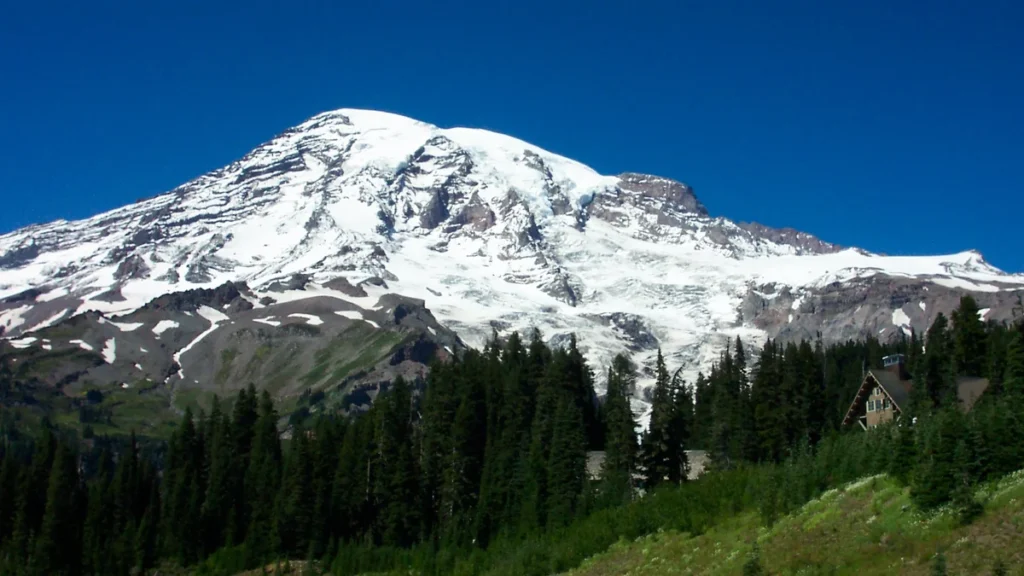
7. Mount Rainier National Park
At a glance: Washington · Subalpine meadows · 2 days · Late July–September. Gateway: Seattle (SEA); Ashford.
Entry: No timed entry in 2026; winter chain-carrying requirement applies. Fees.
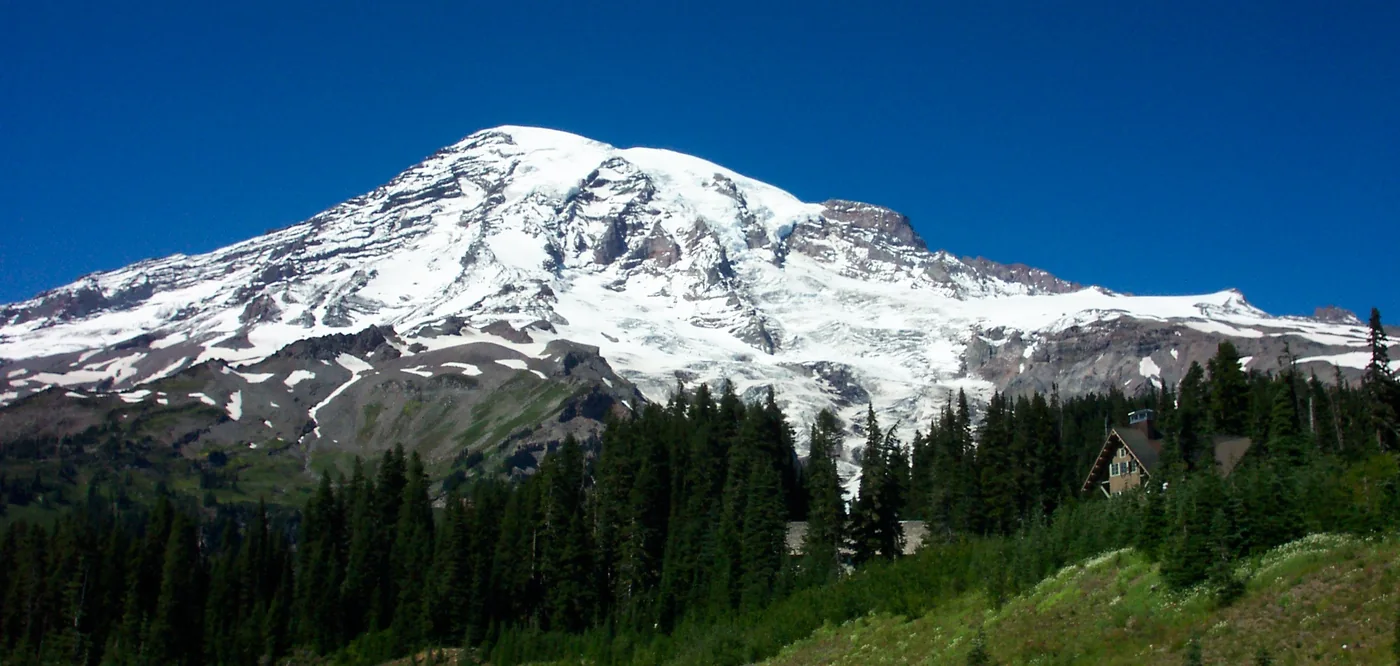
Rainier offers a mountain-centered experience without requiring a climb of the mountain itself. Paradise combines close glacier views, meadow paths and a clear sense of elevation change from the forests below. A short walk in good visibility can be the highlight.
Highlights to build around: Paradise; Nisqually Vista; Longmire; roadside waterfalls.
Walk: Nisqually Vista: 1.2-mile loop, 200 feet gain; paved but sloping when snow-free.
Suggested itinerary: Day 1: Longmire, the Nisqually road approach and Paradise overlooks. Day 2: Nisqually Vista when snow-free, plus another open lower-elevation walk if weather turns.
Planning tip: Sunrise Road is closed to private vehicles for the remainder of 2026. Grove of the Patriarchs is also closed. Use Paradise-based options and check fire-related trail restrictions.
Stay: Ashford or National Park Inn; verify seasonal Paradise lodging. NPS planning · Conditions.
8. Crater Lake National Park
At a glance: Oregon · Caldera views · 1–2 days · July–September. Gateway: Medford (MFR); Klamath Falls.
Entry: Cleetwood Cove closed in 2026: no lake access or boat tours. Fees.
Crater Lake is a strong choice for travelers who prefer viewpoints to a packed activity schedule. The lake’s depth of color changes with light, clouds and wind. Give yourself more than one viewing window rather than staking the entire trip on a single afternoon.
Highlights to build around: Rim Village; West Rim Drive; Watchman overlook; caldera photography.
Walk: Watchman Peak: 1.6 miles round trip, 420 feet gain; moderate climb when snow-free.
Suggested itinerary: Day 1: Rim Village and West Rim viewpoints. Day 2: Watchman Peak if snow-free and an open section of Rim Drive, allowing time for construction delays.
Planning tip: Cleetwood Cove is closed throughout 2026; do not plan swimming or a boat tour. North Entrance and Rim Drive are seasonal, so verify the approach rather than following a default navigation route.
Stay: Klamath Falls or nearby highway lodging; verify seasonal park facilities. NPS planning · Conditions.
9. Glacier National Park
At a glance: Montana · Alpine road scenery · 3–4 days · July–early September. Gateway: Kalispell (FCA); West Glacier or St. Mary.
Entry: No vehicle reservation in 2026; separate summer Logan Pass shuttle rules. Fees.
Glacier combines dramatic road scenery with opportunities to step into alpine country. Going-to-the-Sun Road is the organizing spine, but it is not a guarantee of clear views or convenient parking. Separate a road-focused day from a hiking day.
Highlights to build around: Going-to-the-Sun Road; Lake McDonald; Trail of the Cedars; Logan Pass when open.
Walk: Trail of the Cedars: about 1-mile loop; boardwalk and paved sections.
Suggested itinerary: Day 1: Lake McDonald and Trail of the Cedars. Day 2: an open Going-to-the-Sun Road crossing with selected overlooks. Day 3: explore near your overnight base rather than recrossing the park.
Planning tip: The 2026 Logan Pass shuttle and parking program had its own summer dates. It ended September 7; do not build a late-September hike around that shuttle.
Stay: West Glacier or St. Mary; book accommodation before flights. NPS planning · Conditions.
10. Yellowstone National Park
At a glance: Wyoming/Montana/Idaho · Geysers and wildlife · 3–4 days · June–September; guided winter trips. Gateway: Bozeman (BZN) or Jackson (JAC); Gardiner or West Yellowstone.
Entry: Lodging, campsites and winter transport need separate bookings. Fees.
Yellowstone is the strongest all-round choice here for geothermal variety and a chance of wildlife. Its main attractions are spread across a large road network. A good visit alternates concentrated boardwalk walks with longer travel blocks instead of attempting a full grand loop every day.
Highlights to build around: Old Faithful; Upper Geyser Basin; Grand Canyon of the Yellowstone; Lamar Valley.
Walk: Upper Geyser Basin boardwalks: choose a short out-and-back; wet and icy surfaces require care.
Suggested itinerary: Day 1: Old Faithful and Upper Geyser Basin. Day 2: the canyon and nearby viewpoints. Day 3: Mammoth and Lamar Valley, with a fourth day as weather and wildlife flexibility.
Planning tip: Stay on thermal boardwalks. NPS requires at least 100 yards from bears, wolves and cougars, and 25 yards from other wildlife; use binoculars and legal pullouts.
Stay: Split an in-park stay if possible; Gardiner for northern access. NPS planning · Conditions.
11. Grand Teton National Park
At a glance: Wyoming · Lakes beneath peaks · 2–3 days · June–September. Gateway: Jackson Hole (JAC); Jackson.
Entry: Reserve camping; 2026 trail construction affects Taggart and Death Canyon. Fees.
Grand Teton’s appeal is the immediate relationship between lakes, valley floor and a steep mountain front. It is easier to organize than Yellowstone, but the best moments still require slowing down: a quiet lakeshore, changing cloud cover, or a distant animal viewed safely.
Highlights to build around: String Lake; Jenny Lake; Oxbow Bend; Teton Park Road.
Walk: String Lake: choose a short east-shore out-and-back; roots and rocks underfoot.
Suggested itinerary: Day 1: Jenny Lake, a short String Lake shore walk and Teton Park Road viewpoints. Day 2: Oxbow Bend and another open lakeside trail. Add a third day for weather flexibility.
Planning tip: Taggart’s north-side trail is closed for reconstruction at review, and Death Canyon Trailhead is closed. This plan uses String Lake; check the current trail report before extending it.
Stay: Jackson or reserved park lodging/camping. NPS planning · Conditions.
12. Rocky Mountain National Park
At a glance: Colorado · Alpine lakes and tundra · 2–3 days · July–September; winter for snow. Gateway: Denver (DEN); Estes Park or Grand Lake.
Entry: 2026 timed entry and Bear Lake corridor permits have different windows. Fees.
Rocky Mountain gives visitors a practical introduction to alpine terrain from an established gateway town. Combine a lake walk with a high-country road day, but remember that scenic driving also brings you to elevations where cold and storms can arrive quickly.
Highlights to build around: Bear Lake; Trail Ridge Road; Moraine Park; roadside tundra viewpoints.
Walk: Bear Lake loop: about 0.7 mile with little gain; high elevation and seasonal ice matter.
Suggested itinerary: Day 1: acclimatize with Bear Lake and lower-elevation viewpoints. Day 2: Trail Ridge Road only if conditions allow. Day 3: a ranger-recommended trail suited to your fitness.
Planning tip: Timed Entry and Timed Entry + Bear Lake are different reservations. In 2026 their final dates are October 12 and October 18 respectively; check the NPS planning page for the applicable hours and booking product.
Stay: Estes Park for east-side access; Grand Lake for the west. NPS planning · Conditions.
13. Grand Canyon National Park
At a glance: Arizona · Vast canyon viewpoints · 2 days · April–May; September–October. Gateway: Flagstaff (FLG), Phoenix (PHX) or Las Vegas (LAS); Tusayan.
Entry: Reserve rim lodging/camping; overnight inner-canyon travel needs permits. Fees.
Grand Canyon is unusually rewarding for travelers who want memorable scenery without committing to strenuous hiking. Its scale becomes clearer through geology exhibits, several viewpoints and time spent watching shadows move. The South Rim is the base for this recommendation.
Highlights to build around: Mather Point; Yavapai geology displays; Hermit Road overlooks; Desert View Drive.
Walk: South Rim Trail: pick a short paved section near Mather Point; unguarded edges elsewhere.
Suggested itinerary: Day 1: Mather Point, Yavapai exhibits and a manageable Rim Trail section. Day 2: Hermit Road overlooks using the seasonal shuttle, or Desert View Drive.
Planning tip: A walk down into the canyon is not equivalent to a rim stroll: the return is uphill and can be much hotter. Do not attempt a river-and-back day hike as a casual addition.
Stay: Grand Canyon Village or Tusayan; South Rim base for this plan. NPS planning · Conditions.
14. Zion National Park
At a glance: Utah · Sandstone canyon walls · 2–3 days · April–May; October–November. Gateway: Las Vegas (LAS) or St. George (SGU); Springdale.
Entry: Seasonal canyon shuttle; Angels Landing permit; Narrows conditions check. Fees.
Zion puts the visitor inside the landscape. Canyon walls rise around the river, and the shuttle makes a low-mileage day practical when it is operating. You do not need Angels Landing or a river hike to have a substantial visit.
Highlights to build around: Canyon shuttle viewpoints; Riverside Walk; Pa’rus Trail; Zion–Mt. Carmel Highway.
Walk: Riverside Walk: 2.2 miles round trip, 57 feet gain; paved with slopes; do not enter the river by default.
Suggested itinerary: Day 1: canyon shuttle stops and Riverside Walk. Day 2: Pa’rus Trail and the permitted vehicle route through the east side. Add a third day only for a separately planned hike.
Planning tip: The Narrows involves river travel and flash-flood exposure; Riverside Walk is the dry-land alternative. Angels Landing requires a permit. Large-vehicle restrictions changed in June 2026.
Stay: Springdale or reserved Zion Lodge/Watchman Campground. NPS planning · Conditions.
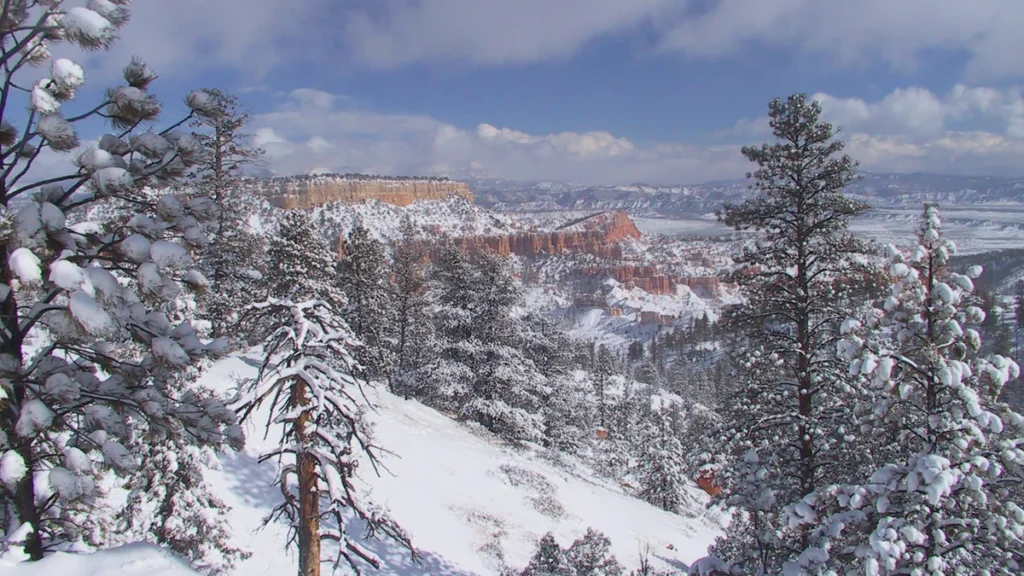
15. Bryce Canyon National Park
At a glance: Utah · Hoodoo amphitheater · 1–2 days · May–October; winter snow scenes. Gateway: Las Vegas (LAS) or Salt Lake City (SLC); Bryce Canyon City or Tropic.
Entry: Reserve camping/lodging; winter trail and road closures vary. Fees.
Bryce’s hoodoos form an intricate amphitheater that can be appreciated from the rim before any descent. Its compact main viewing area makes it an efficient one- or two-day stop, especially for photographers willing to revisit the same overlook in different light.
Highlights to build around: Sunrise Point; Sunset Point; Bryce Point; main park scenic road.
Walk: Sunrise–Sunset rim walk: 1 mile round trip, 40 feet change; exposed high-elevation path.
Suggested itinerary: Day 1: Sunrise and Sunset Points with the connecting rim walk. Day 2: Bryce Point and open viewpoints farther along the main road, or a moderate below-rim hike after checking conditions.
Planning tip: The rim is roughly 8,000 feet or higher. Below-rim walks finish with a climb; snow and ice can turn a normally straightforward trail into a traction-dependent outing.
Stay: Bryce Canyon City or Tropic; check seasonal park lodge dates. NPS planning · Conditions.
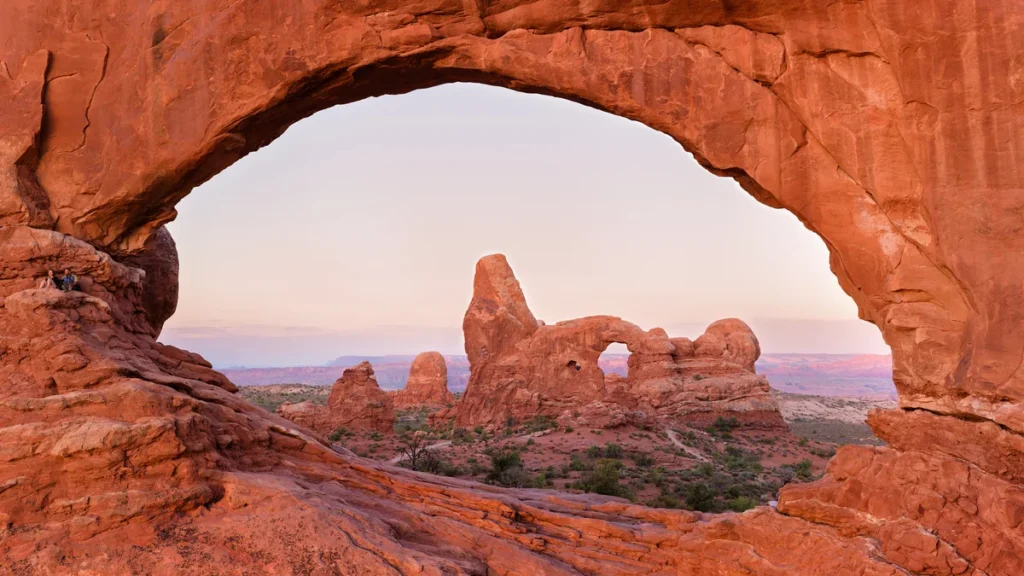
16. Arches National Park
At a glance: Utah · Natural stone arches · 2 days · April–May; October. Gateway: Grand Junction (GJT) or Salt Lake City (SLC); Moab.
Entry: No timed entry in 2026; entry may pause at capacity; Fiery Furnace needs a permit. Fees.
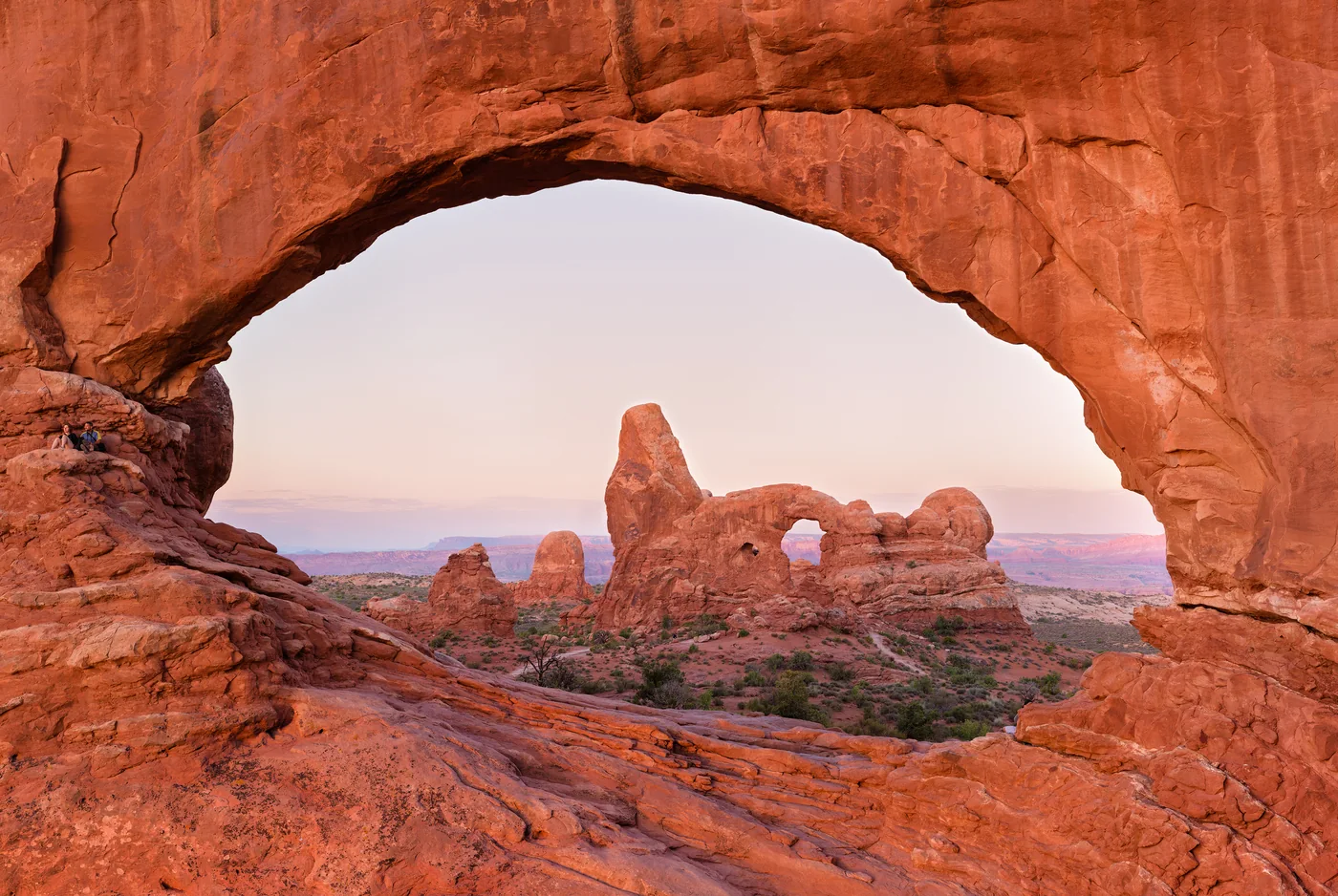
Arches works well for visitors who want several distinct formations linked by one paved scenic road. Short trails provide worthwhile encounters with the rock without making Delicate Arch the mandatory centerpiece. The Windows area is particularly efficient for a first visit.
Highlights to build around: The Windows; Double Arch; Balanced Rock; Devils Garden’s lower trails.
Walk: Double Arch: 0.6 mile round trip; sandy, gently rising approach; scrambling is optional.
Suggested itinerary: Day 1: Balanced Rock, the Windows and Double Arch. Day 2: Devils Garden’s lower trails, with a longer hike only if weather, water and ability fit.
Planning tip: No timed entry is required in 2026, but the entrance can temporarily close when capacity is reached. An early start helps; it does not create a guaranteed parking space.
Stay: Moab; Devils Garden campsites need advance planning. NPS planning · Conditions.
17. Canyonlands National Park
At a glance: Utah · Layered canyon panoramas · 1–2 days for Island in the Sky · April–May; September–October. Gateway: Grand Junction (GJT) or Salt Lake City (SLC); Moab.
Entry: Backcountry roads/overnights have separate permits; districts are not connected by park roads. Fees.
Canyonlands offers a broader, more horizontal view of canyon country than nearby Arches. Island in the Sky is the practical first-visit district from Moab. Its overlooks reveal the landscape without the demanding driving and self-sufficiency required below the mesa.
Highlights to build around: Mesa Arch; Green River Overlook; Island in the Sky road; rim viewpoints.
Walk: Mesa Arch: 0.6-mile loop, 56 feet change; rocky steps beside an unguarded drop.
Suggested itinerary: Day 1: Mesa Arch, Green River Overlook and open rim viewpoints. Day 2: another short mesa-top walk or a quieter return visit, rather than a rushed transfer to the Needles.
Planning tip: Districts have no connecting park roads. Avoid rental-car shortcuts onto Shafer Trail or the White Rim. Grand View Point construction may affect the usual overlook itinerary in 2026.
Stay: Moab for Island in the Sky; Monticello suits the Needles. NPS planning · Conditions.
18. Badlands National Park
At a glance: South Dakota · Prairie and eroded ridges · 1–2 days · May–June; September. Gateway: Rapid City (RAP); Wall.
Entry: Check road conditions; reserve developed camping where required. Fees.
Badlands pairs eroded formations with open prairie, making it especially good for a road trip where geology and wildlife share the day. The landscape is exposed, so the same short walk can feel very different in cool morning air and midday heat.
Highlights to build around: Badlands Loop Road; Door Trail; fossil exhibits; prairie wildlife watching.
Walk: Door Trail: 0.75 mile round trip; boardwalk followed by exposed uneven terrain.
Suggested itinerary: Day 1: Badlands Loop Road, Door Trail and fossil interpretation. Day 2: revisit selected overlooks in softer light and watch prairie wildlife from designated pullouts.
Planning tip: Rain can make the clay exceptionally slippery. Do not substitute a remote dirt road for the paved loop without checking conditions, and never approach bison for photographs.
Stay: Wall or Cedar Pass area; check seasonal lodging/camping. NPS planning · Conditions.
19. Cuyahoga Valley National Park
At a glance: Ohio · Woodland walks and canal history · 1–2 days · May–October. Gateway: Cleveland (CLE); Peninsula, Cleveland or Akron.
Entry: No entrance fee; book separate train experiences; Towpath construction in 2026. Fees.
Cuyahoga Valley is a useful contrast to the big western parks: a lived-in river valley with canal history, woodland trails and nearby cities. It suits a shorter break and travelers who prefer a comfortable urban base to remote lodging.
Highlights to build around: Virginia Kendall Ledges; Brandywine Falls; canal history; open Towpath sections.
Walk: Ledges Trail: 2.2 miles, 80 feet change; rocky footing and steps.
Suggested itinerary: Day 1: Brandywine Falls and the Ledges. Day 2: canal interpretation and an open Towpath segment, or a separately booked train experience if the current schedule fits.
Planning tip: The Towpath segment from Boston Trailhead to Lock 29 is scheduled closed August 24–November 20, 2026. Do not plan a continuous ride through that section; Ice Box Cave is closed too.
Stay: Cleveland or Akron hotels; Peninsula for a small-town base. NPS planning · Conditions.
20. Great Smoky Mountains National Park
At a glance: Tennessee/North Carolina · Forest and Appalachian history · 3 days · May–June; October. Gateway: Knoxville (TYS) or Asheville (AVL); Townsend, Gatlinburg or Cherokee.
Entry: Parking tag required when parked over 15 minutes; not covered by entrance passes. Fees.
The Smokies combine biological richness with visible Appalachian history. Historic farm areas and river paths add variety to a trip otherwise dominated by mountain viewpoints. Pick a gateway that matches your first day rather than repeatedly crossing the range.
Highlights to build around: Newfound Gap Road; Oconaluftee farm; Cades Cove; forest walks.
Walk: Oconaluftee River Trail: walk an out-and-back suited to your group; mostly gentle riverside terrain.
Suggested itinerary: Day 1: Sugarlands and Newfound Gap Road. Day 2: Cades Cove at a patient pace. Day 3: Oconaluftee’s farm and river trail, watching for wildlife from a distance.
Planning tip: The current NPS page still lists Laurel Falls as closed for rehabilitation. Do not rely on an old projected reopening date. Buy the required parking tag before long stops.
Stay: Townsend for Cades Cove; Cherokee for Oconaluftee; Gatlinburg for Sugarlands. NPS planning · Conditions.
21. Shenandoah National Park
At a glance: Virginia · Scenic ridge driving · 2–3 days · May–June; October. Gateway: Washington Dulles (IAD); Front Royal or Luray.
Entry: Old Rag day-use ticket is separate; check Skyline Drive closures. Fees.
Shenandoah is a natural fit for travelers who enjoy a scenic road with walks attached. Skyline Drive follows the ridge, but distances measured along its curves take time. Choose one district for a short visit rather than treating all 105 miles as a quick commute.
Highlights to build around: Skyline Drive; Stony Man; Big Meadows; forest overlooks.
Walk: Stony Man: 1.6 miles round trip, 340 feet gain; rocky viewpoint and drop-offs.
Suggested itinerary: Day 1: a central Skyline Drive section, Big Meadows and Stony Man. Day 2: a different district or a longer woodland trail with a clear turnaround.
Planning tip: Fog can erase the view while rain makes rock slippery. Keep a lower-elevation alternative outside the park and check road status after storms; Old Rag has a separate ticket system.
Stay: Luray or Front Royal; seasonal Skyland or Big Meadows lodging. NPS planning · Conditions.
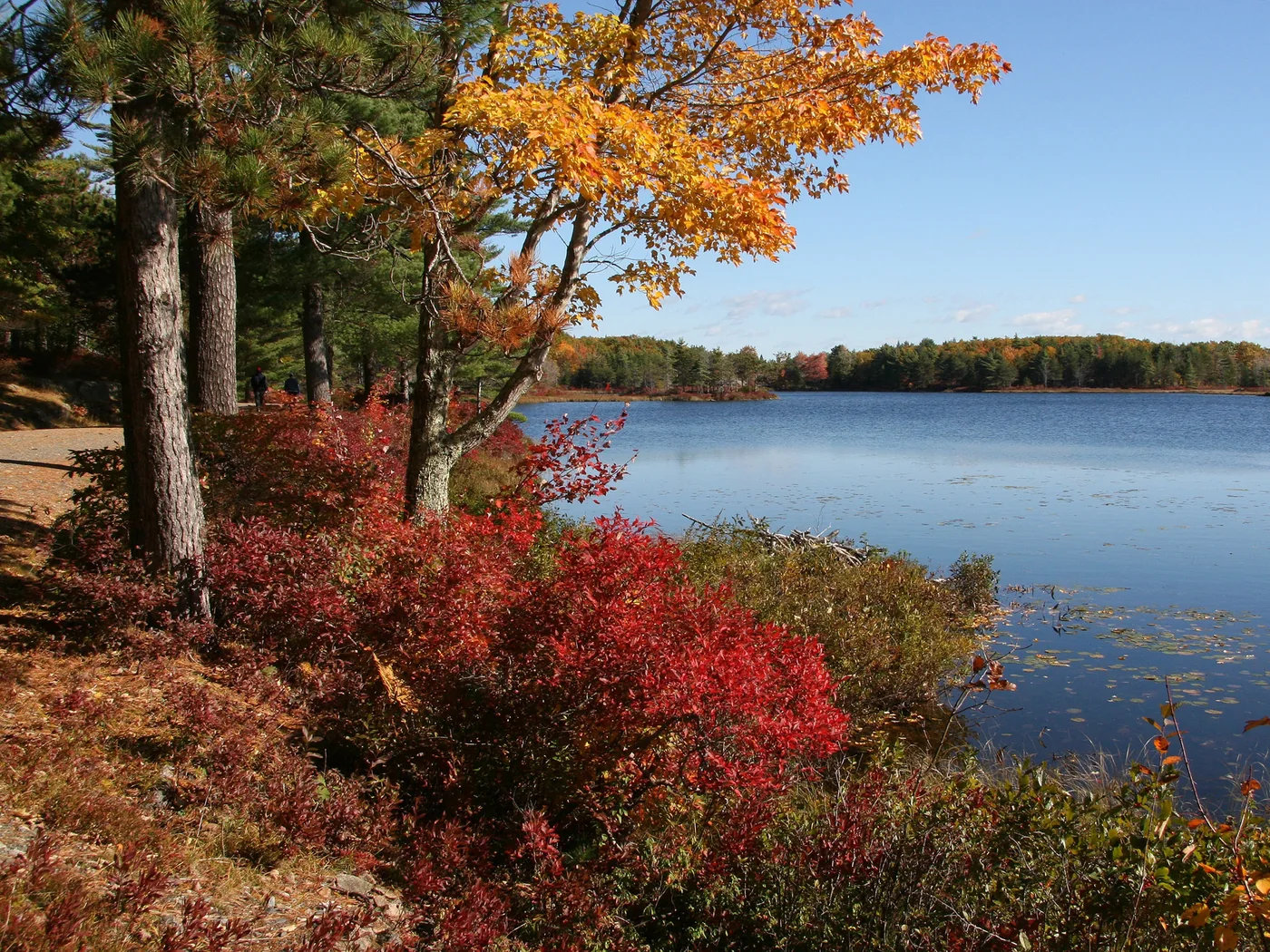
22. Acadia National Park
At a glance: Maine · Rocky coast and carriage roads · 3 days · June–October. Gateway: Bangor (BGR); Bar Harbor.
Entry: Cadillac Summit Road vehicle reservations May 20–October 25, 2026. Fees.
Acadia brings together a rugged coast, wooded lakes and human-scale carriage roads. It works for mixed-interest groups because a day can combine a shore walk, a scenic drive and a gentler inland outing. Bar Harbor is convenient but not a guarantee of quiet.
Highlights to build around: Ocean Path; Park Loop Road; carriage roads; Jordan Pond shoreline.
Walk: Ocean Path: choose a short out-and-back from Sand Beach; uneven shore sections and slippery rocks.
Suggested itinerary: Day 1: Park Loop Road and part of Ocean Path. Day 2: carriage roads and Jordan Pond. Day 3: Cadillac Mountain with the required vehicle reservation, or the Schoodic area.
Planning tip: A Cadillac reservation is separate from the entrance pass. Choose your daylight visit deliberately; sunrise is not essential, and wet shoreline rocks are dangerous even in calm-looking weather.
Stay: Bar Harbor or Mount Desert Island; reserve seasonal camping. NPS planning · Conditions.
23. Everglades National Park
At a glance: Florida · Wetlands and birds · 2–3 days · December–March. Gateway: Miami (MIA); Homestead or Florida City.
Entry: Book tram/boat tours and campsites separately; winter is busy. Fees.
Everglades rewards attention to small movements across a wide wetland. The interest lies in birds, reptiles, water and habitat rather than dramatic elevation. Its districts are far apart, so divide the trip between the Homestead entrance, Shark Valley and other areas you can realistically reach.
Highlights to build around: Royal Palm; Anhinga Trail; Shark Valley tram; Flamingo shoreline.
Walk: Anhinga Trail: 0.8 mile round trip; paved path and boardwalk through marsh.
Suggested itinerary: Day 1: Royal Palm and Anhinga Trail. Day 2: Shark Valley on a reserved tram or suitable bike outing. Day 3: Flamingo and a booked, weather-appropriate boat trip.
Planning tip: The dry season usually improves comfort and wildlife viewing, but sightings are never certain. Keep away from alligators and crocodiles, and do not stop on roadways to watch animals.
Stay: Homestead or Florida City; Flamingo lodging/camping when available. NPS planning · Conditions.
24. Denali National Park
At a glance: Alaska · Big landscapes and wildlife · 3 days · June–early September. Gateway: Fairbanks (FAI) or Anchorage (ANC); Healy.
Entry: 2026 summer bus limit was Mile 43; 2027 full-road service announced, recheck before booking. Fees.
Denali offers broad tundra, mountains and a real sense of distance from urban travel. It asks for a different mindset: clouds may hide the highest peaks, and wildlife viewing works best with time and patience. The entrance area itself has worthwhile walks.
Highlights to build around: Entrance trails; Savage River; ranger interpretation; seasonal bus wildlife viewing.
Walk: Mountain Vista: 0.6-mile loop at Mile 13; gentle grades when snow-free.
Suggested itinerary: For a summer visit, use one day for entrance trails, one for the operating bus route, and one flexible day. For late September 2026, use only currently accessible road and trail options.
Planning tip: Summer buses have ended for 2026. Fall vehicle access is weather-dependent, generally as far as Mile 30 until October 15 or earlier closure. NPS has announced full-road bus service for summer 2027; reconfirm it.
Stay: Healy or entrance-area lodging; reserve seasonal campsites. NPS planning · Conditions.
25. Hawaiʻi Volcanoes National Park
At a glance: Hawaiʻi · Volcanic landscapes · 2 days · Year-round; expect rain. Gateway: Hilo (ITO); Volcano village.
Entry: Check eruption, air-quality and construction closures; lava is never guaranteed. Fees.
Hawaiʻi Volcanoes is a lesson in landscape formation that remains worthwhile without visible lava. Forest, cinders, craters and the descent toward the coast show different stages of volcanic change. The summit’s cool, wet conditions can surprise visitors arriving from a beach resort.
Highlights to build around: Kīlauea overlooks; Devastation Trail; Nāhuku; Chain of Craters Road.
Walk: Devastation Trail: 1 mile round trip on pavement; exposed volcanic terrain.
Suggested itinerary: Day 1: open summit overlooks, Devastation Trail and Nāhuku if accessible. Day 2: Chain of Craters Road with selected stops, allowing time for the return climb by car.
Planning tip: Check the official eruption and air-quality reports before each visit. Construction and volcanic activity can change access; never cross a closure for a closer view. Nēnē may be near roads.
Stay: Volcano village or Volcano House; book before traveling. NPS planning · Conditions.
Entrance fees, passes and reservations in 2026
Check your party’s eligibility before comparing pass prices. In 2026, the America the Beautiful annual pass costs $80 for U.S. citizens and residents and $250 for non-U.S. residents. At 11 specified parks or park groups, non-U.S. residents age 16 and older generally pay an additional $100 per person unless covered by a qualifying pass. Several parks in these guides are on that list. See the official pass options and nonresident fee and pass-coverage rules before buying.
A valid America the Beautiful pass or qualifying park annual pass covers the applicable entrance and nonresident fees for the group defined by its terms. Coverage depends on whether admission is charged per vehicle or per person; do not assume one pass covers an unlimited group. Camping, tours, transportation and reservation charges can remain additional costs.
An entrance pass is not a timed-entry reservation, a campsite booking or a hiking permit. For example, Angels Landing in Zion requires its own permit. Great Smoky Mountains parking tags are separate from entrance passes. Keep confirmation numbers available offline and match the reservation to the entrance, vehicle and date you will actually use.
Build a practical park-trip budget
There is no useful single daily price for all these parks. A mainland car trip, an Alaska boat excursion and a remote island stay have different cost structures. Price the actual dates and route, then compare the total for your party rather than headline room rates.
On a small screen, swipe the table sideways to see every column.
| Cost category | What to include | Useful saving decision |
|---|---|---|
| Transport | Flights, rental, fuel, parking, ferry or boat tickets; one-way rental charges where relevant | Use one region and avoid unnecessary airport changes |
| Access | Park fees or a qualifying pass, timed entry, permits and parking tags | Check which fees your pass covers before buying |
| Accommodation | Taxes, cancellation terms and distance from the actual park entrance | Compare total drive time and fuel as well as nightly price |
| Food and water | Groceries, refill access and a meal reserve for limited-service areas | Bring a picnic without relying on a closed seasonal restaurant |
| Activities | Boat tours, cave tours, snowcoach trips or equipment rental | Choose the activity that defines the trip before optional extras |
| Flexibility | Weather changes, an extra night or rebooking costs | Keep a modest reserve and check cancellation deadlines |
For more ways to control costs without cutting essential preparation, see how to travel on a budget. Follow park food-storage rules, pack out waste, stay on permitted routes and give wildlife space. Download maps and reservation details while you still have reliable service.
Travel responsibly
Follow current fire restrictions, stay on designated routes, pack out litter and secure food as instructed. Never feed or approach wildlife. Approximate trail distances describe ordinary conditions; snow, ice, heat and closures can change the outing.
Frequently asked questions
Which national park is best for a first visit?
Yosemite, Grand Canyon and Acadia are strong starting points for different seasons and regions. Select the one with practical flights, suitable weather and enough nearby nights. No park is the best choice for every traveler.
How many days should I spend in a national park?
Two or three full days is a useful starting point for many large parks. A short scenic stop can be worthwhile, but Yellowstone, Olympic and remote Alaska parks need additional time to avoid spending most of the visit in transit.
Do I need a reservation just to enter?
Sometimes. The rule depends on the park, year, season, entrance and activity. An entrance pass does not replace timed entry, a campsite reservation or a permit. Use the official park links before committing to lodging.
Is an annual parks pass worth it?
Compare the eligible entrance fees for your actual party and route with the appropriate pass. Residency and group-coverage rules matter in 2026. Parking tags, camping and tours may remain additional expenses.
Can I visit Alaska and Hawaii on the same national parks road trip?
They require separate flights and local transport arrangements. Treat them as distinct trips unless you have substantial additional time and budget; their map insets are not adjacent to the mainland route.
Which parks work well without strenuous hiking?
Grand Canyon’s open rim areas, Yosemite Valley, Acadia and selected Everglades boardwalks can offer substantial sightseeing through short outings. Verify specific trail accessibility, gradients, surfaces and transport before booking.
When should I check park conditions?
Check before booking, shortly before departure and again on the day of a weather-sensitive outing. Wildfire, construction, flooding and snow can change a specific road or trail even while the park remains open.
Plan the rest of your national parks trip
Comparing regions before booking? Explore our best road trips in the USA and scenic U.S. road trips. For Yosemite and Sequoia connections, see the California road trip guide.
- 15 Best National Parks to Visit in Summer: Where to Go & What to Do
- 15 Best National Parks to Visit in Fall: Foliage, Weather & Scenic Drives
- 15 Best National Parks to Visit in Winter: Snow, Wildlife & Warm-Weather Escapes
- The Ultimate U.S. National Parks Road Trip: Best Route, Map & Itinerary
For practical preparation, use our travel packing checklist, budget travel guide and travel tips. If you have only a short break, start with our U.S. weekend getaway ideas and choose one nearby park rather than compressing a long road trip.
Sources, image credits and review date
Researched and reviewed September 26, 2026. Park-specific NPS planning, fee and condition pages are linked beside the relevant advice. Recheck alerts before booking and again immediately before travel: weather, wildfire, construction and transportation schedules can change after this review. This is an editorial planning guide based on published sources, not a claim of firsthand visits to every destination.
Featured photograph: Granite cliffs and trees reflected in water in Yosemite Valley. NPS, public domain. Source and license record. Photos have been cropped and compressed for this guide; they illustrate landscapes and do not show live conditions.
Pingback: California Road Trip: 7, 10 & 14-Day Routes and Maps