
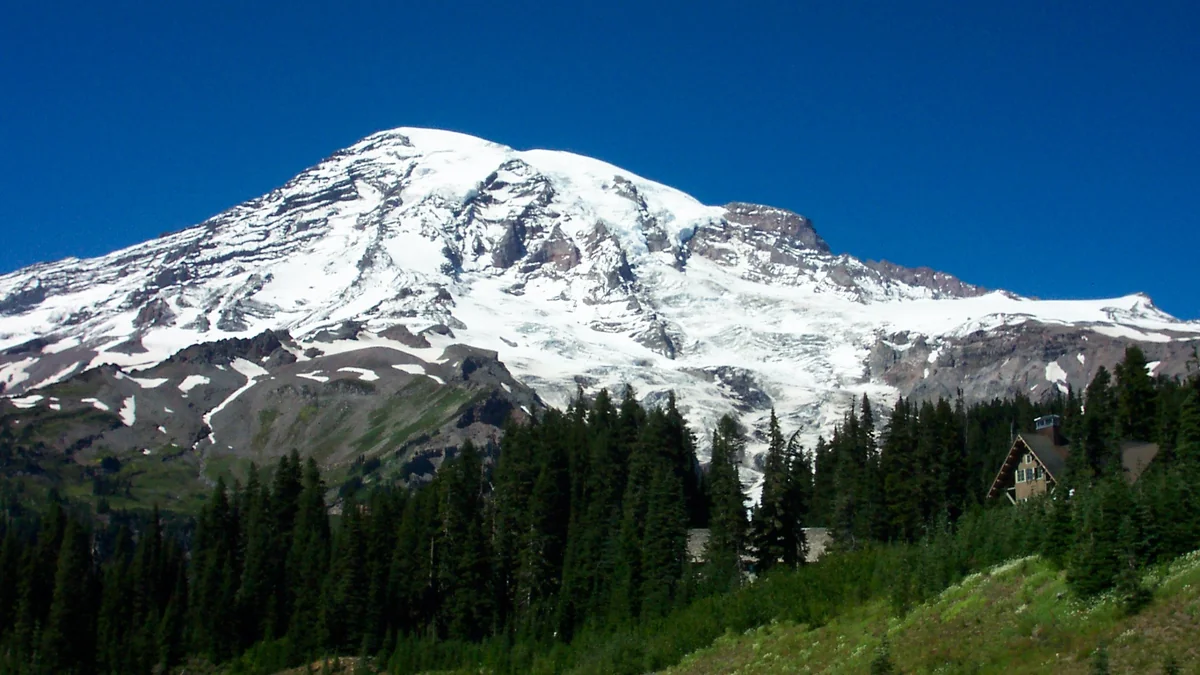
The best national parks to visit in summer give you something that colder months often cannot: access to mountain roads, longer daylight, boat routes or high-country trails. That does not make every June trip a snow-free hiking holiday. These 15 parks balance alpine scenery with coastal forests, northern lakes and Alaska, with practical alternatives when the mountains remain under snow.
Planning review: September 26, 2026. Summer 2026 has passed. Use this guide for seasonal destination selection; the access notes describe verified 2026 rules, and 2027 requirements must be reconfirmed when announced.
Compare the parks at a glance
Stays exclude flights and long transfers. Windows are planning ranges, not forecasts. See each park below for fees, reservations and conditions.
On a small screen, swipe the table sideways to see every column.
| Park / location | Best for | Planning window | Stay | Airport / gateway |
|---|---|---|---|---|
| Yosemite California |
Granite valleys | June–September; high country later | 3 days | Fresno (FAT); Mariposa or El Portal |
| Sequoia California |
Giant trees | June–September | 2 days | Fresno (FAT); Three Rivers |
| Redwood California |
Coastal old-growth forest | June–September | 2–3 days | Arcata–Eureka (ACV); Trinidad or Crescent City |
| Olympic Washington |
Rainforest, mountains and coast | July–September | 3–4 days | Seattle (SEA); Port Angeles and Forks |
| Mount Rainier Washington |
Subalpine meadows | Late July–August | 2 days | Seattle (SEA); Ashford |
| Crater Lake Oregon |
Caldera views | July–September | 1–2 days | Medford (MFR); Klamath Falls |
| Glacier Montana |
Alpine road scenery | July–early September | 3–4 days | Kalispell (FCA); West Glacier or St. Mary |
| Yellowstone Wyoming/Montana/Idaho |
Geysers and wildlife | June–September | 3–4 days | Bozeman (BZN) or Jackson (JAC); Gardiner or West Yellowstone |
| Grand Teton Wyoming |
Lakes beneath peaks | July–September | 2–3 days | Jackson Hole (JAC); Jackson |
| Rocky Mountain Colorado |
Alpine lakes and tundra | July–September | 2–3 days | Denver (DEN); Estes Park or Grand Lake |
| Acadia Maine |
Rocky coast and carriage roads | June–September | 3 days | Bangor (BGR); Bar Harbor |
| Voyageurs Minnesota |
Lakes and boat trips | June–August | 2–3 days | International Falls (INL); International Falls or Ash River |
| Denali Alaska |
Big landscapes and wildlife | June–August | 3 days | Fairbanks (FAI) or Anchorage (ANC); Healy |
| Kenai Fjords Alaska |
Glaciers and marine wildlife | June–August | 2–3 days | Anchorage (ANC); Seward |
| Isle Royale Michigan |
Remote island hiking | July–August | 3–4 days plus travel | Houghton (CMX) or Duluth (DLH); ferry/seaplane gateways |
National parks map
Swipe the map sideways on mobile, or open the full-size map. The numbered list below provides a readable text alternative.
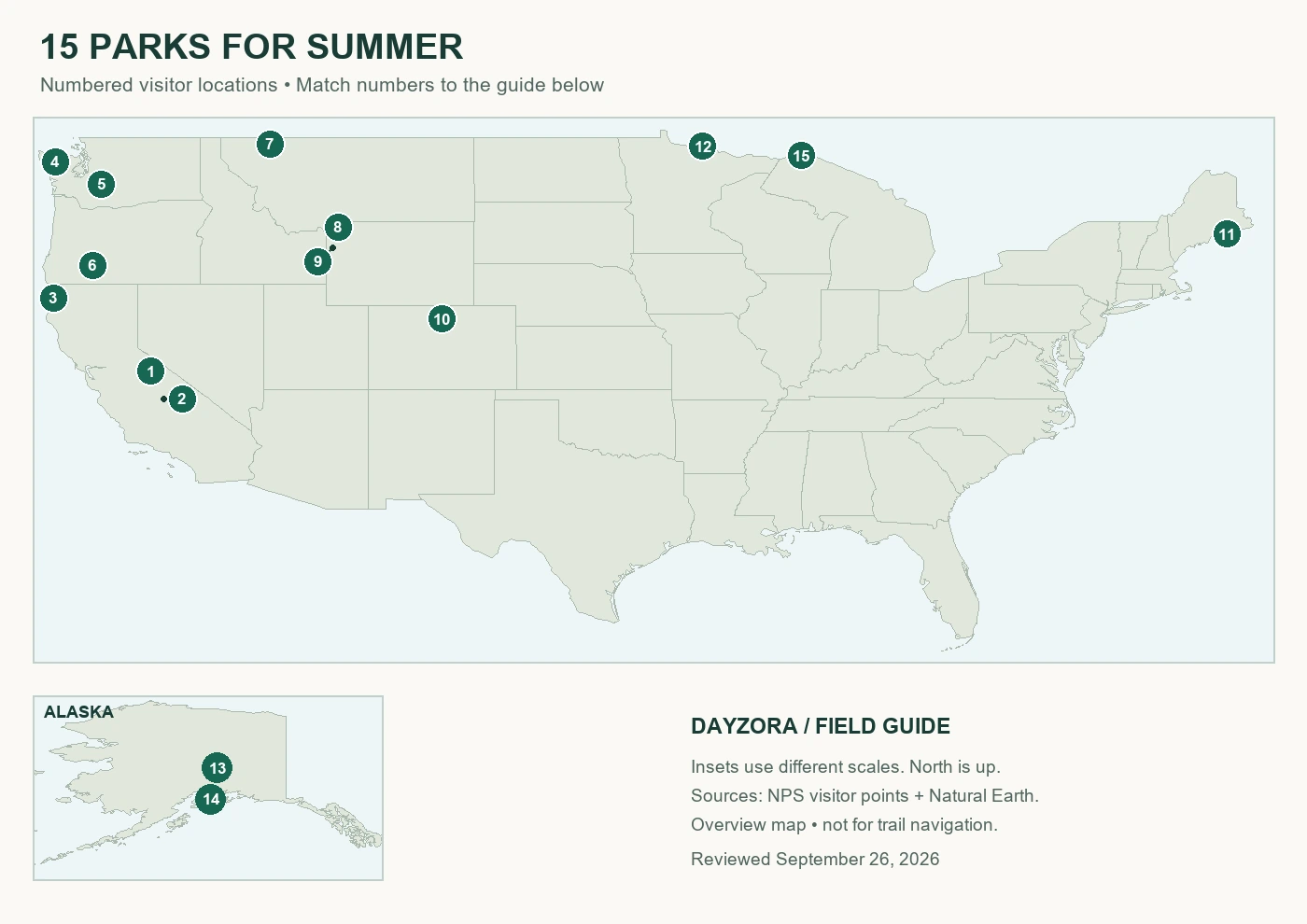
- Yosemite — California
- Sequoia — California
- Redwood — California
- Olympic — Washington
- Mount Rainier — Washington
- Crater Lake — Oregon
- Glacier — Montana
- Yellowstone — Wyoming/Montana/Idaho
- Grand Teton — Wyoming
- Rocky Mountain — Colorado
- Acadia — Maine
- Voyageurs — Minnesota
- Denali — Alaska
- Kenai Fjords — Alaska
- Isle Royale — Michigan
Plan summer access before choosing your hikes
Low-elevation summer and alpine summer run on different clocks. A June visit can work well for forest walks while a July or August visit is more suitable for higher trails. Check the road opening and the trail surface separately: an open road does not prove the trail is snow-free. Do not cross steep snow just because other visitors have left footprints.
For 2026, Yosemite, Arches, Glacier and Mount Rainier did not require general timed-entry vehicle reservations. That does not remove activity permits, campground reservations, capacity controls or Glacier’s season-specific Logan Pass arrangements. Rocky Mountain used two timed-entry products, while Acadia required a separate Cadillac Summit Road vehicle reservation during its reservation season. See NPS summer 2026 access announcements and Mount Rainier’s 2026 notice. Do not carry these policies forward to 2027 without checking.
Choose a base close enough that an early start is realistic. Book ferries, boat transport and Alaska activities before filling every evening with accommodation. Keep one flexible day on a mountain or marine trip for smoke, wind or rain. Carry sun protection and an insulating layer together: both may be useful on the same day.
The 15 parks: what to do and how to plan
1. Yosemite National Park
At a glance: California · Granite valleys · 3 days · June–September; high country later. Gateway: Fresno (FAT); Mariposa or El Portal.
Entry: No timed entry in 2026; Half Dome requires a permit. Fees.
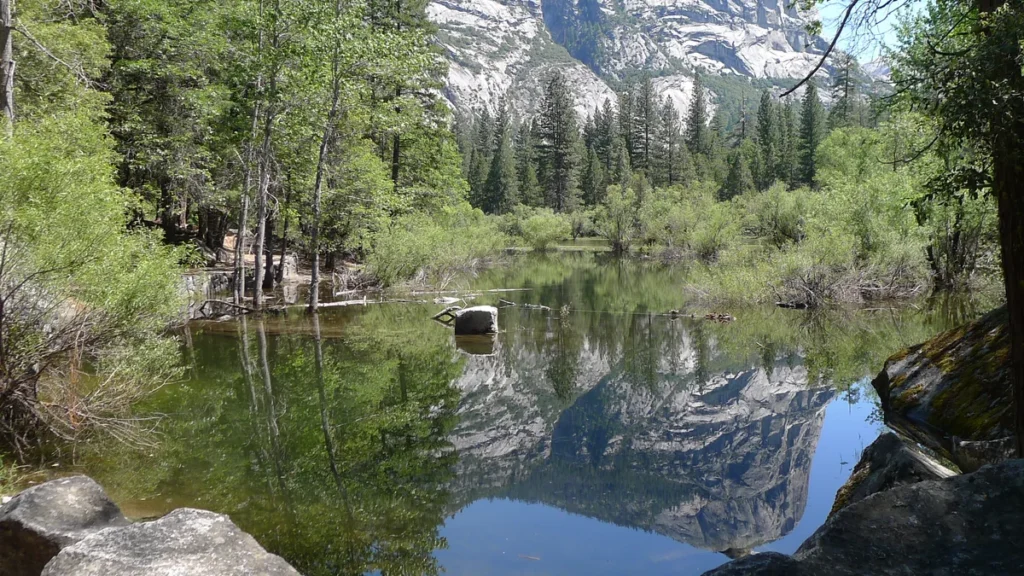
Summer opens the possibility of combining the Valley with higher country, but June and August are different trips. Early summer can bring stronger waterfalls while high roads or trails still have snow; later summer generally favors higher-elevation access but can bring heat, smoke and reduced waterfall flow. Reserve nights first and resist moving the car between every Valley stop.
Highlights to build around: Tunnel View; Valley meadows; Lower Yosemite Fall; Mariposa Grove.
Walk: Lower Yosemite Fall: 1-mile loop, 50 feet gain; easy on dry pavement.
Suggested itinerary: Day 1: use the Valley shuttle or walk between a small group of sights. Day 2: Mariposa Grove early. Day 3: an open Tioga corridor outing, with a lower-elevation fallback. Keep the Lower Yosemite Fall loop as a short walk, not a promise of flowing water.
Planning tip: No entry reservation was required in 2026. At the September review, Glacier Point Road was closed for fire activity and Yosemite Falls was dry. Those facts explain why the next summer’s operating plan must be checked again, rather than copied from this season.
Stay: El Portal or Mariposa; reserve Valley accommodation early. NPS planning · Conditions.
2. Sequoia National Park
At a glance: California · Giant trees · 2 days · June–September. Gateway: Fresno (FAT); Three Rivers.
Entry: Reserve lodging/camping; check winter chain controls. Fees.
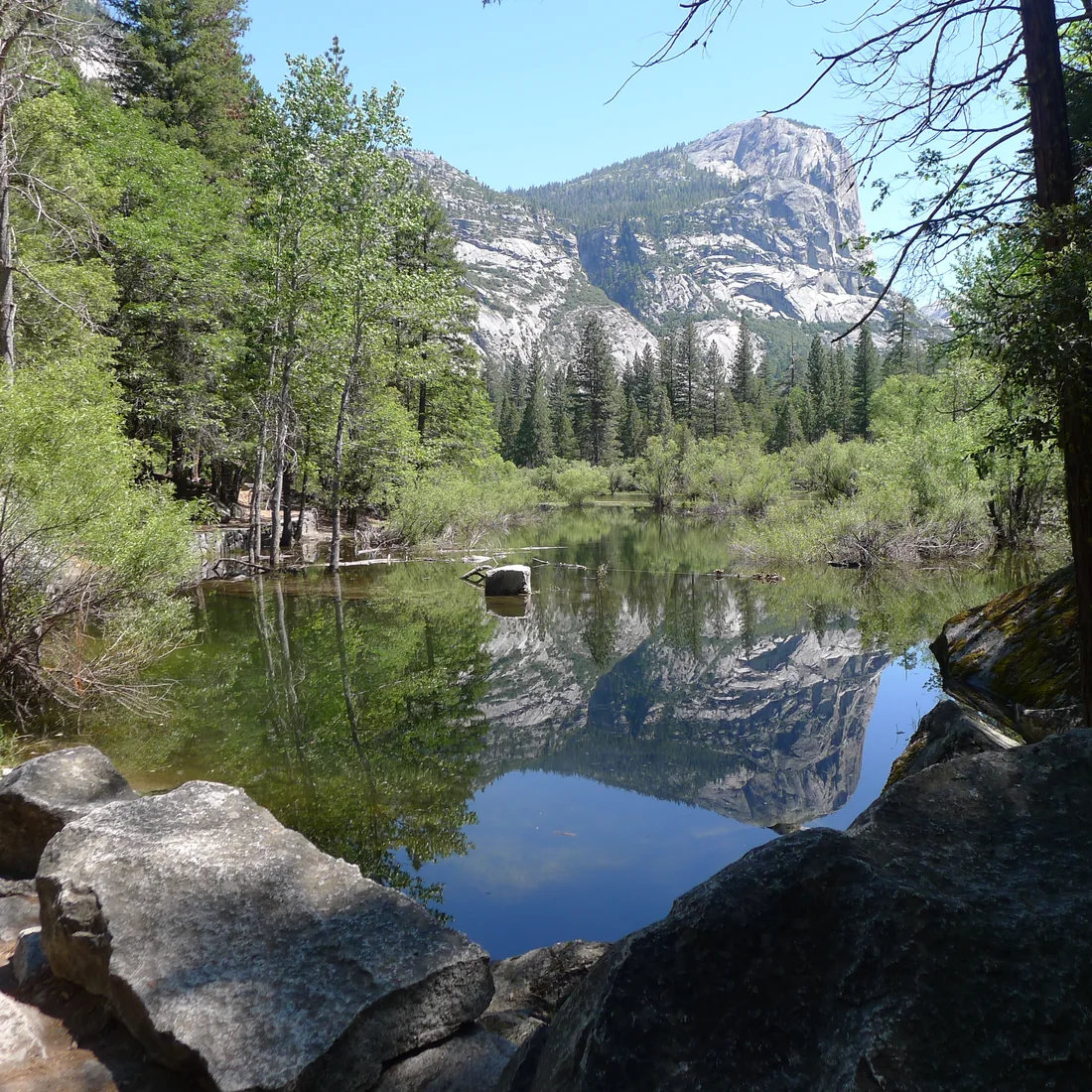
The groves offer a cooler-feeling setting than the low foothills, but summer does not remove altitude, sun or parking pressure. Spend your first morning among the giant trees rather than adding a long approach to a distant trail. The General Sherman area can be busy; a continuation into the surrounding forest often makes the visit feel less concentrated.
Highlights to build around: Giant Forest; General Sherman; Congress Trail; Generals Highway.
Walk: General Sherman Tree walk: roughly 1 mile round trip from the main lot; downhill first, uphill return at altitude.
Suggested itinerary: Allow two days: Giant Forest and the Sherman walk on the first; an open Congress Trail outing and Generals Highway stops on the second. Plan a picnic so lunch does not require driving back down to Three Rivers. Check the seasonal shuttle before relying on it to avoid an uphill return.
Planning tip: Lodgepole is a practical campground when you have a reservation. Dorst Creek is closed in 2026. For hot afternoons, shorten the walk and seek a legitimate indoor or shaded rest stop; do not leave food unsecured around bears.
Stay: Three Rivers or Wuksachi Lodge; Lodgepole camping when operating. NPS planning · Conditions.
3. Redwood National Park
At a glance: California · Coastal old-growth forest · 2–3 days · June–September. Gateway: Arcata–Eureka (ACV); Trinidad or Crescent City.
Entry: Tall Trees permit year-round; Fern Canyon vehicle reservations May 15–September 15. Fees.
Redwood is one of the better choices when avoiding inland summer heat matters more than swimming weather. The coast can remain foggy, cool and damp while inland California is hot. That contrast is a reason to bring layers, not to expect a guaranteed cool forecast. The tall forest also provides a satisfying plan when coastal viewpoints are obscured.
Highlights to build around: Lady Bird Johnson Grove; Prairie Creek; Newton B. Drury Scenic Parkway; coastal overlooks.
Walk: Lady Bird Johnson Grove: 1.5-mile loop; gentle forest walking with uneven spots.
Suggested itinerary: Use one day for Lady Bird Johnson Grove, Prairie Creek and Newton B. Drury Scenic Parkway. On a second day explore northern groves or a beach overlook. Begin popular grove walks early, then give yourself time to notice ferns, fallen trunks and changes in light rather than rushing through several nearly identical stops.
Planning tip: Fern Canyon needs its own May 15–September 15 vehicle reservation, and the approach can involve water crossings. Choose the established grove walks above if your rental vehicle or comfort level does not fit that approach. Tall Trees permits are a separate system.
Stay: Trinidad for the south; Crescent City for northern groves. NPS planning · Conditions.
4. Olympic National Park
At a glance: Washington · Rainforest, mountains and coast · 3–4 days · July–September. Gateway: Seattle (SEA); Port Angeles and Forks.
Entry: Wilderness camping permits in advance; reserve seasonal campgrounds. Fees.
Summer offers the broadest mix of Olympic experiences, but the park’s geometry still governs the trip. Hurricane Ridge, the Hoh and the coast are not neighboring stops in one central valley. Long daylight helps, yet it should create more time outside the car rather than justify an overfilled loop. Coastal fog and mountain showers remain possible.
Highlights to build around: Hoh rainforest; Lake Crescent; Hurricane Ridge; Ruby Beach.
Walk: Hall of Mosses: 0.8-mile loop; short, rooted rainforest path.
Suggested itinerary: Spend the first night near Port Angeles after Lake Crescent or an open Hurricane Ridge outing. Move west for a Hoh morning and Ruby Beach later in the day. A third or fourth day gives you room for tide timing and a weather retry. Hall of Mosses is a short forest walk; exposed coast travel is a different skill set.
Planning tip: In 2026, Mora Road closed access to Rialto Beach July 8–October 15. Ruby Beach is the alternative used here. The Hoh entrance may have long summer queues, and Hurricane Ridge utility work means carrying your own drinking water.
Stay: Split nights between Port Angeles and Forks or Kalaloch. NPS planning · Conditions.
5. Mount Rainier National Park
At a glance: Washington · Subalpine meadows · 2 days · Late July–August. Gateway: Seattle (SEA); Ashford.
Entry: No timed entry in 2026; winter chain-carrying requirement applies. Fees.
Late summer is the strongest window for meadow walks at Paradise because a calendar date in June does not mean the snow has melted. Bloom timing follows snowpack and weather; do not book around a promised peak-flower week. This is also a busy, compact destination, so arrive with one realistic primary walk and a backup below the clouds.
Highlights to build around: Paradise; Nisqually Vista; Longmire; roadside waterfalls.
Walk: Nisqually Vista: 1.2-mile loop, 200 feet gain; paved but sloping when snow-free.
Suggested itinerary: Use two days: Longmire and the road toward Paradise on arrival, then a snow-free Nisqually Vista loop the next morning. Add a ranger-recommended meadow route only after checking its current surface and your group’s energy. The paved loop still gains 200 feet; treat snow cover as a change of activity, not a minor inconvenience.
Planning tip: Rainier did not require timed entry in 2026. Sunrise Road is closed to private vehicles for the rest of that year following fire impacts, and Grove of the Patriarchs remains closed. A Paradise-based plan avoids relying on either location; 2027 access needs a fresh check.
Stay: Ashford or National Park Inn; verify seasonal Paradise lodging. NPS planning · Conditions.
6. Crater Lake National Park
At a glance: Oregon · Caldera views · 1–2 days · July–September. Gateway: Medford (MFR); Klamath Falls.
Entry: Cleetwood Cove closed in 2026: no lake access or boat tours. Fees.
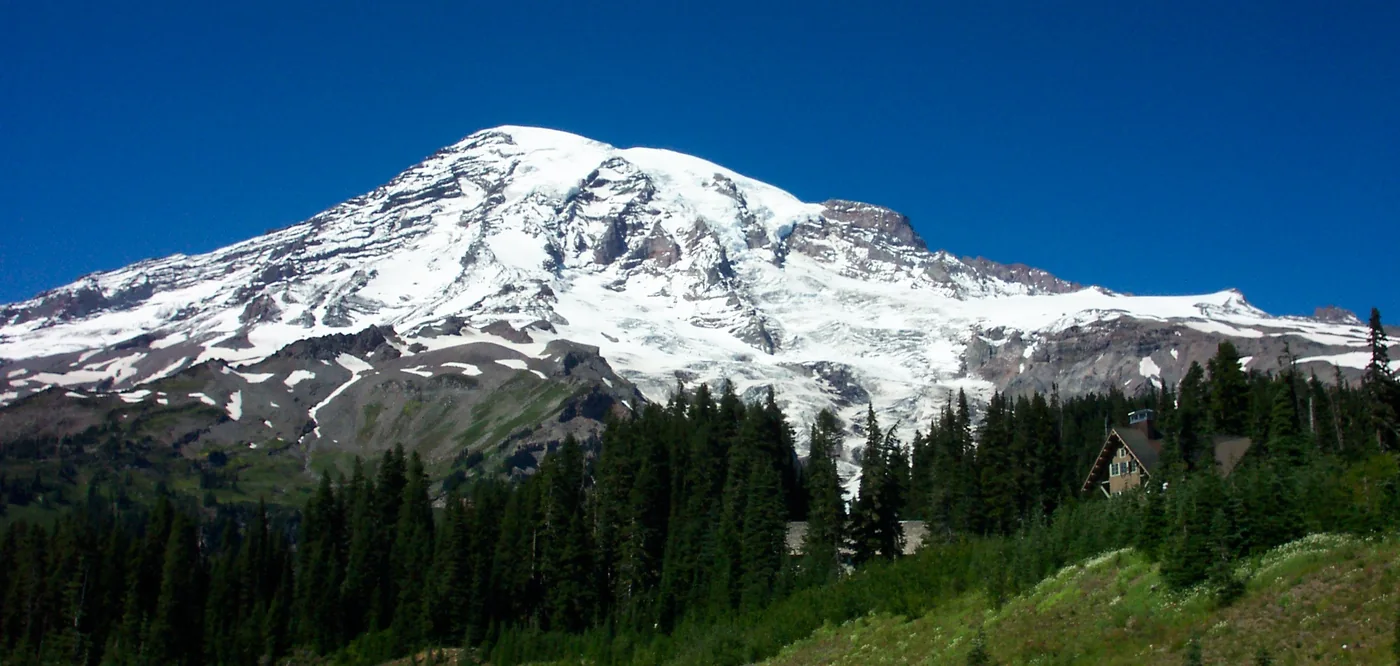
Crater Lake’s summer advantage is road access and repeated opportunities to see the caldera clearly. Snow can linger after lower-elevation Oregon has warmed up, and road openings vary. July through September is a more sensible general target than assuming a June drive around the entire rim. Even then, bring a layer for wind at exposed viewpoints.
Highlights to build around: Rim Village; West Rim Drive; Watchman overlook; caldera photography.
Walk: Watchman Peak: 1.6 miles round trip, 420 feet gain; moderate climb when snow-free.
Suggested itinerary: Give the lake an afternoon and a following morning. Start at Rim Village, select West Rim overlooks, and walk Watchman Peak if the trail is clear. The 420-foot climb is moderate, with altitude and sun adding effort. Add other open sections of Rim Drive on day two instead of rushing to complete a circuit in poor visibility.
Planning tip: The Cleetwood Cove project closes lake access in 2026, so swimming and boat tours are not part of this summer plan. Rim Drive construction can add delays. Confirm the North Entrance before choosing your approach or lodging on that side.
Stay: Klamath Falls or nearby highway lodging; verify seasonal park facilities. NPS planning · Conditions.
7. Glacier National Park
At a glance: Montana · Alpine road scenery · 3–4 days · July–early September. Gateway: Kalispell (FCA); West Glacier or St. Mary.
Entry: No vehicle reservation in 2026; separate summer Logan Pass shuttle rules. Fees.
Glacier is a late-summer choice for travelers whose priority is alpine access. Snow and road work can delay the full Going-to-the-Sun crossing, while wildfire smoke or an early storm can reduce the expected window. Build a trip around several days in the park rather than a single make-or-break pass crossing.
Highlights to build around: Going-to-the-Sun Road; Lake McDonald; Trail of the Cedars; Logan Pass when open.
Walk: Trail of the Cedars: about 1-mile loop; boardwalk and paved sections.
Suggested itinerary: Allocate one day to Lake McDonald and Trail of the Cedars, one to Going-to-the-Sun viewpoints, and a third to walking near your overnight base. If you change from west-side to east-side lodging, use the road crossing as the transfer day. High-elevation routes need their own snow, exposure and bear-safety assessment; the short forest loop is a simpler alternative.
Planning tip: There was no general vehicle reservation in 2026. Logan Pass nevertheless had a separately ticketed summer shuttle and three-hour parking limit, ending September 7. Do not treat that year’s shuttle arrangements as an announced 2027 timetable or assume every trailhead has a shuttle stop.
Stay: West Glacier or St. Mary; book accommodation before flights. NPS planning · Conditions.
8. Yellowstone National Park
At a glance: Wyoming/Montana/Idaho · Geysers and wildlife · 3–4 days · June–September. Gateway: Bozeman (BZN) or Jackson (JAC); Gardiner or West Yellowstone.
Entry: Lodging, campsites and winter transport need separate bookings. Fees.
Summer makes most of Yellowstone’s road-based visitor experience possible, but the distances remain large and afternoon storms can interrupt outdoor plans. The best adjustment is geographic: sleep near the next day’s focus if your budget and booking options allow. Wildlife traffic is not a reason to expect predictable drive times.
Highlights to build around: Old Faithful; Upper Geyser Basin; Grand Canyon of the Yellowstone; Lamar Valley.
Walk: Upper Geyser Basin boardwalks: choose a short out-and-back; wet and icy surfaces require care.
Suggested itinerary: Use day one for Old Faithful and nearby thermal boardwalks, day two for the canyon area, and day three for Mammoth and Lamar Valley. A fourth day keeps the schedule resilient if weather or traffic changes. Walk short basin routes during cooler parts of the day and leave time for an eruption prediction rather than assuming a geyser performs on demand.
Planning tip: Stay on designated thermal paths and keep children close to the boardwalk. Yellowstone requires 100 yards from bears, wolves and cougars and 25 yards from other animals. Stop only where legal, and use a long lens or binoculars instead of reducing that distance.
Stay: Split an in-park stay if possible; Gardiner for northern access. NPS planning · Conditions.
9. Grand Teton National Park
At a glance: Wyoming · Lakes beneath peaks · 2–3 days · July–September. Gateway: Jackson Hole (JAC); Jackson.
Entry: Reserve camping; 2026 trail construction affects Taggart and Death Canyon. Fees.
Grand Teton’s summer season is ideal for putting a lake walk ahead of a long mountain objective. Valley trails usually become usable earlier than high passes, which can retain snow into late July. The season’s common afternoon thunderstorms make an early start useful, but the forecast should decide whether to go high at all.
Highlights to build around: String Lake; Jenny Lake; Oxbow Bend; Teton Park Road.
Walk: String Lake: choose a short east-shore out-and-back; roots and rocks underfoot.
Suggested itinerary: Allow two or three days. Spend the first at Jenny Lake and String Lake’s east shore; use the second for Teton Park Road, Oxbow Bend and another open short trail. A third day can absorb weather or a longer hike. Avoid booking a boat crossing and a demanding hike so tightly that a queue threatens your return plan.
Planning tip: NPS currently recommends groups of three or more for hiking, making noise and carrying bear spray. In 2026, the north side of Taggart Trail and Death Canyon Trailhead are closed for construction. String Lake provides a useful alternative, though its roots and rocks still require attention.
Stay: Jackson or reserved park lodging/camping. NPS planning · Conditions.
10. Rocky Mountain National Park
At a glance: Colorado · Alpine lakes and tundra · 2–3 days · July–September. Gateway: Denver (DEN); Estes Park or Grand Lake.
Entry: 2026 timed entry and Bear Lake corridor permits have different windows. Fees.
Summer brings alpine tundra access, but Rocky Mountain is not a low-effort park just because the trailhead has a parking lot. Elevation affects both short walks and high scenic drives. Begin with a gentler day, keep afternoon thunderstorm exposure in mind, and carry warm layers even after a hot departure from Denver.
Highlights to build around: Bear Lake; Trail Ridge Road; Moraine Park; roadside tundra viewpoints.
Walk: Bear Lake loop: about 0.7 mile with little gain; high elevation and seasonal ice matter.
Suggested itinerary: Day one: Bear Lake and lower viewpoints after acclimatizing. Day two: Trail Ridge Road if open, with short stops rather than an immediate ambitious summit. Day three: select an open trail with current ranger advice. Plan your accommodation on the side you intend to explore; a road closure should not leave your bed across the mountains.
Planning tip: For 2026, ordinary Timed Entry runs May 22–October 12, 9 a.m.–2 p.m.; Timed Entry + Bear Lake runs May 22–October 18, 5 a.m.–6 p.m. These are distinct permits, additional to entrance payment. Recheck the system for 2027 before making reservations.
Stay: Estes Park for east-side access; Grand Lake for the west. NPS planning · Conditions.
11. Acadia National Park
At a glance: Maine · Rocky coast and carriage roads · 3 days · June–September. Gateway: Bangor (BGR); Bar Harbor.
Entry: Cadillac Summit Road vehicle reservations May 20–October 25, 2026. Fees.
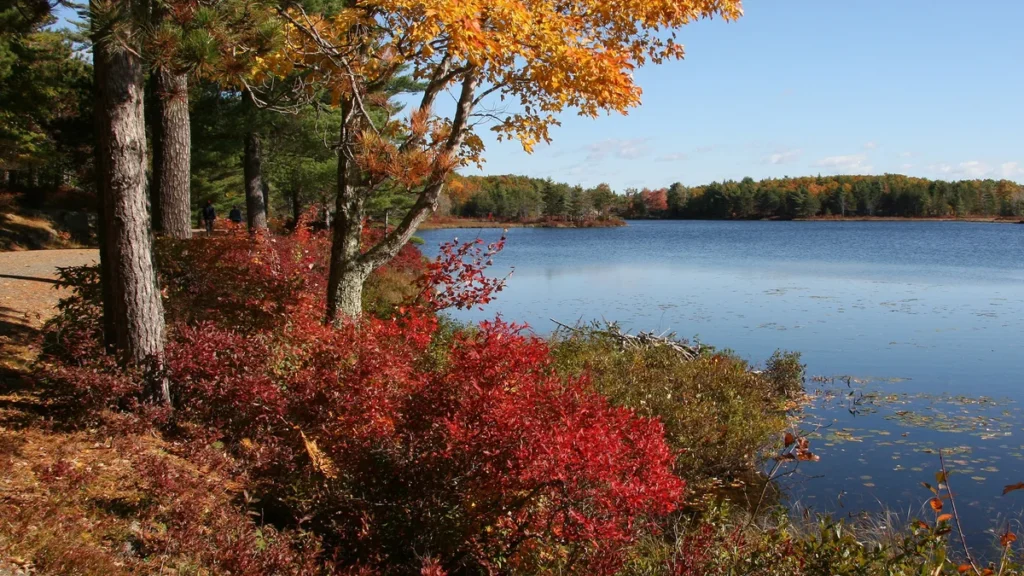
Acadia offers a coastal summer trip with more variety than a beach holiday: rocky shore, forested lakes, carriage roads and small towns. Expect popularity rather than solitude, especially around Bar Harbor and the eastern Park Loop Road. A foggy morning can still work for woodland walking, while a clear interval is worth saving for a viewpoint.
Highlights to build around: Ocean Path; Park Loop Road; carriage roads; Jordan Pond shoreline.
Walk: Ocean Path: choose a short out-and-back from Sand Beach; uneven shore sections and slippery rocks.
Suggested itinerary: Use three days: Ocean Path and selected Park Loop stops; carriage roads and Jordan Pond; then a reserved Cadillac drive or the separate Schoodic Peninsula. Make the walking distance match your group rather than automatically following every shoreline trail to its end. Cold ocean water and slippery granite deserve respect even on warm days.
Planning tip: Cadillac Summit Road requires a vehicle reservation May 20–October 25 in 2026. That does not reserve parking elsewhere or replace the park entrance pass. Check the seasonal Island Explorer route before deciding whether your day can be done without moving the car.
Stay: Bar Harbor or Mount Desert Island; reserve seasonal camping. NPS planning · Conditions.
12. Voyageurs National Park
At a glance: Minnesota · Lakes and boat trips · 2–3 days · June–August. Gateway: International Falls (INL); International Falls or Ash River.
Entry: Boat transport and campsites are separate reservations; all island camps require water access. Fees.
Voyageurs is a summer lake trip with a land-based entry point, not a park where a scenic road reaches every highlight. A guided boat trip is often the most practical introduction for visitors who do not already have boating skills. Wind, thunderstorms and the scale of the lakes matter more than the apparent distance between campsites on a map.
Highlights to build around: Rainy Lake; guided boat trips; Oberholtzer Trail; shoreline wildlife watching.
Walk: Oberholtzer Trail: 1.7-mile loop from Rainy Lake; woodland footing.
Suggested itinerary: Base near International Falls or Ash River for two or three days. Pair the Oberholtzer Trail with Rainy Lake visitor information on day one, reserve a boat outing for day two, and keep a third day for weather or another shore walk. Island camping requires confirmed transport, supplies and an actual campsite reservation.
Planning tip: Wear an appropriate life jacket on the water and avoid open-water crossings beyond your skills. In September 2026, increased bear activity closed Dryweed Island and surrounding sites; do not assume all booked areas remain accessible. Check current closures and food-storage rules before departure.
Stay: International Falls or Ash River; boat-access campsites only with a transport plan. NPS planning · Conditions.
13. Denali National Park
At a glance: Alaska · Big landscapes and wildlife · 3 days · June–August. Gateway: Fairbanks (FAI) or Anchorage (ANC); Healy.
Entry: 2026 summer bus limit was Mile 43; 2027 full-road service announced, recheck before booking. Fees.
The long northern days make summer the natural season for a first Denali trip, but they do not guarantee mountain visibility. Think of a bus outing as a moving observation day rather than a guaranteed wildlife tour. Rain, cool air and mosquitoes should be part of the packing plan even when the forecast looks encouraging.
Highlights to build around: Entrance trails; Savage River; ranger interpretation; seasonal bus wildlife viewing.
Walk: Mountain Vista: 0.6-mile loop at Mile 13; gentle grades when snow-free.
Suggested itinerary: Allow three days plus the approach from Fairbanks or Anchorage. Start with Mountain Vista or another entrance-area trail, reserve one day for the operating bus service, and keep one day flexible. Bring food and layers on the bus; the park road is not a string of restaurant stops. Avoid allocating a long transfer immediately after your one chance at a bus trip.
Planning tip: In summer 2026, buses operated only to Mile 43. NPS has since announced full-road service for summer 2027 following bridge completion, with reservations scheduled to open December 1, 2026. Confirm the final service and your specific departure before building a Wonder Lake itinerary.
Stay: Healy or entrance-area lodging; reserve seasonal campsites. NPS planning · Conditions.
14. Kenai Fjords National Park
At a glance: Alaska · Glaciers and marine wildlife · 2–3 days · June–August. Gateway: Anchorage (ANC); Seward.
Entry: Book boat tours; check Exit Glacier road and weather before travel. Fees.
Kenai Fjords combines a manageable land visit with a much larger marine landscape. Summer is the most practical time for both, but a warm day in Seward can still mean cold wind and rough water offshore. Tour length matters: a short bay cruise and a longer fjord itinerary are different experiences, not interchangeable products.
Highlights to build around: Exit Glacier trails; fjord cruise; Seward visitor center; coastal birdwatching.
Walk: Glacier View Loop: 1 mile; partly paved and compacted gravel.
Suggested itinerary: Plan two or three nights in Seward. Use one day for the one-mile Glacier View Loop at Exit Glacier and the nature center, and another for a booked marine tour. Leave a spare day if a boat trip is central to the journey. Wildlife sightings and clear glacier views depend on conditions; neither should be promised by your itinerary.
Planning tip: Stay on designated Exit Glacier trails: the canyon below is closed because of unpredictable outburst-flood risk. Harding Icefield is a strenuous undertaking with lingering summer snow, so it is not the default extension to the short loop. Book a tour with clear weather-cancellation terms.
Stay: Seward; allow a spare day for marine weather. NPS planning · Conditions.
15. Isle Royale National Park
At a glance: Michigan · Remote island hiking · 3–4 days plus travel · July–August. Gateway: Houghton (CMX) or Duluth (DLH); ferry/seaplane gateways.
Entry: Reserve island transport and lodging; overnight camping permit required. Fees.
Isle Royale rewards travelers willing to trade driving convenience for time on an island. Summer offers the most practical boat and lodging schedules, but Lake Superior can disrupt transport in any month. The park is a poor fit for a tightly connected same-day flight itinerary; a buffer is part of the trip, not wasted time.
Highlights to build around: Rock Harbor shore; Stoll Memorial Trail; ranger programs; quiet forest walks.
Walk: Stoll Memorial Trail: choose an out-and-back from Rock Harbor; rocky shore footing.
Suggested itinerary: Give Rock Harbor three or four days plus mainland travel. Start with the harbor and a short Stoll Memorial Trail outing, then extend walking only after checking footing, distance and the return plan. Add a ranger program and slow shore observation instead of attempting a traverse on a brief first visit. There is no scenic driving circuit to complete.
Planning tip: Book outbound and return transport together, then lodging or camping arrangements. Carry rain protection and understand drinking-water treatment requirements for backcountry trips. Keep distance from moose, which may use the same narrow trails. The seasonal closure and carrier operating dates must be checked before choosing late-summer dates.
Stay: Rock Harbor Lodge or authorized campgrounds; confirm return transport. NPS planning · Conditions.
Entrance fees, passes and reservations in 2026
Check your party’s eligibility before comparing pass prices. In 2026, the America the Beautiful annual pass costs $80 for U.S. citizens and residents and $250 for non-U.S. residents. At 11 specified parks or park groups, non-U.S. residents age 16 and older generally pay an additional $100 per person unless covered by a qualifying pass. Several parks in these guides are on that list. See the official pass options and nonresident fee and pass-coverage rules before buying.
A valid America the Beautiful pass or qualifying park annual pass covers the applicable entrance and nonresident fees for the group defined by its terms. Coverage depends on whether admission is charged per vehicle or per person; do not assume one pass covers an unlimited group. Camping, tours, transportation and reservation charges can remain additional costs.
An entrance pass is not a timed-entry reservation, a campsite booking or a hiking permit. For example, Angels Landing in Zion requires its own permit. Great Smoky Mountains parking tags are separate from entrance passes. Keep confirmation numbers available offline and match the reservation to the entrance, vehicle and date you will actually use.
Travel responsibly
Follow current fire restrictions, stay on designated routes, pack out litter and secure food as instructed. Never feed or approach wildlife. Approximate trail distances describe ordinary conditions; snow, ice, heat and closures can change the outing.
Frequently asked questions
What month is best for a summer national parks trip?
July and August usually offer more high-country access, while June can be better for lower-elevation scenery and some waterfalls. Snowpack and road repairs vary annually. Choose the month around your most important activity.
Are mountain trails snow-free in June?
Not reliably. Higher trails in Rainier, Glacier, Rocky Mountain and Alaska can retain snow well into summer. Check the specific trail report and have a lower-elevation alternative.
Which summer parks are best for avoiding extreme desert heat?
Redwood, Olympic, Acadia and northern lake parks are useful alternatives. Coastal fog, rain and occasional heat waves still occur; “cooler” is a relative planning advantage, not a forecast.
Do 2026 reservation rules apply to summer 2027?
Do not assume so. General vehicle-entry policies and individual activity requirements can change. Use the 2026 notes as context and check the park’s new-season announcement before travel.
Can I combine Yellowstone and Grand Teton in a week?
Yes, with sensible flights and several nights near each park. Avoid using one distant lodging base for the entire week. Reserve a buffer for wildlife stops, road delays and weather.
How do I prepare for wildfire smoke?
Check current alerts and air-quality information, keep bookings as flexible as practical and identify a different activity or area. An open park can still have conditions unsuitable for your planned exertion.
Which parks need boat planning?
Voyageurs, Isle Royale and marine trips in Kenai Fjords need transport matched to lodging and activities. A campground or room reservation does not automatically include a boat ride.
Plan the rest of your national parks trip
- 25 Best National Parks in the USA to Visit in 2026
- 15 Best National Parks to Visit in Fall: Foliage, Weather & Scenic Drives
- 15 Best National Parks to Visit in Winter: Snow, Wildlife & Warm-Weather Escapes
- The Ultimate U.S. National Parks Road Trip: Best Route, Map & Itinerary
For practical preparation, use our travel packing checklist, budget travel guide and travel tips. If you have only a short break, start with our U.S. weekend getaway ideas and choose one nearby park rather than compressing a long road trip.
Sources, image credits and review date
Researched and reviewed September 26, 2026. Park-specific NPS planning, fee and condition pages are linked beside the relevant advice. Recheck alerts before booking and again immediately before travel: weather, wildfire, construction and transportation schedules can change after this review. This is an editorial planning guide based on published sources, not a claim of firsthand visits to every destination.
Featured photograph: Mount Rainier above green meadows near Paradise. Cullen328, CC BY 3.0. Source and license record. Photos have been cropped and compressed for this guide; they illustrate landscapes and do not show live conditions.
Pingback: California Road Trip: 7, 10 & 14-Day Routes and Maps