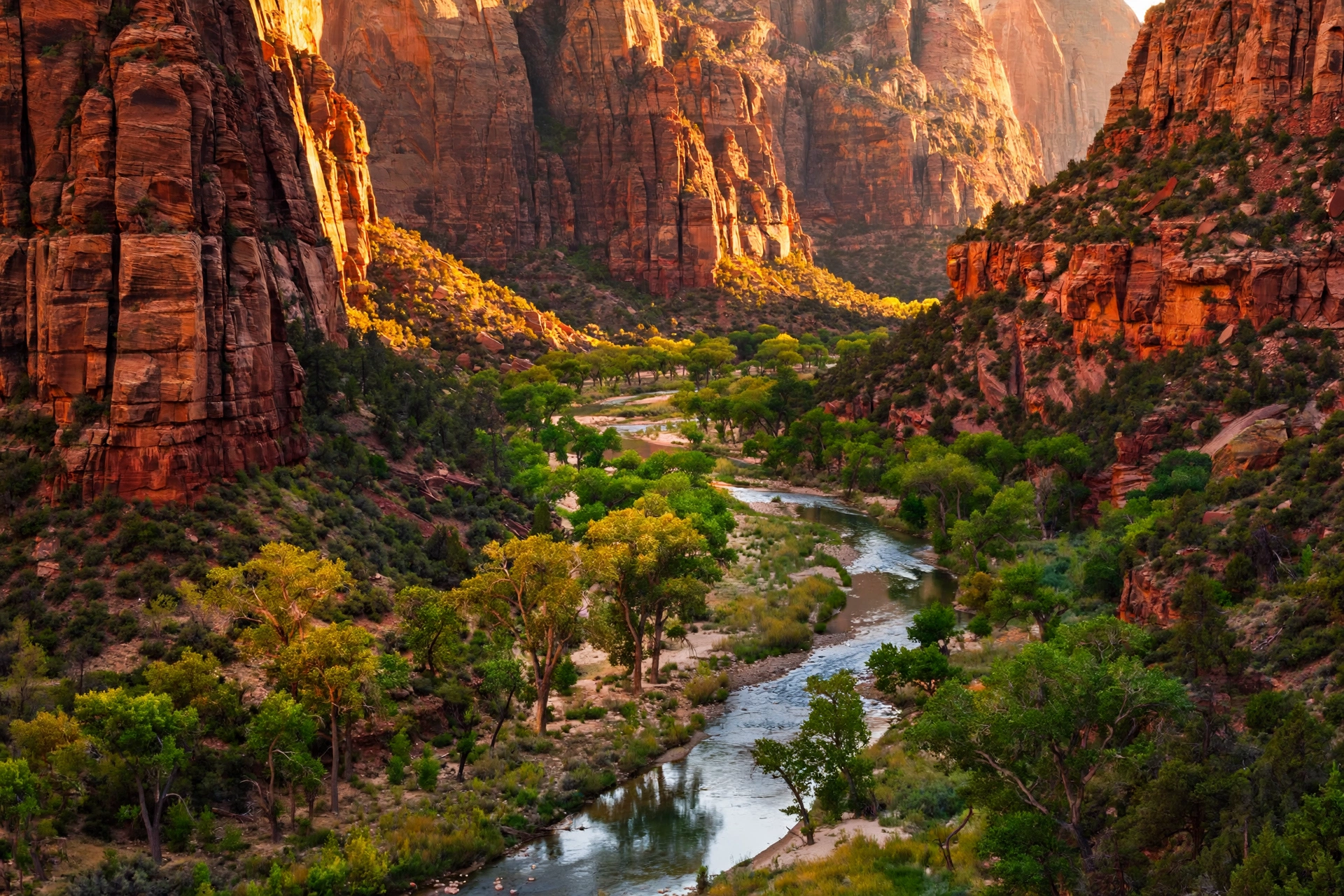
This Zion National Park guide is your complete planning resource for Utah’s most visited national park — a canyon of towering Navajo sandstone cliffs, narrow slot canyons, and desert rivers that draws nearly five million visitors a year. Zion works differently from most national parks: a mandatory shuttle system controls access to the main canyon, the famous Angels Landing hike requires a hard-won lottery permit, and The Narrows — a hike through a river — demands gear and timing knowledge. Get the logistics right and Zion is sublime; get them wrong and you will spend your trip in shuttle lines and parking frustration. This guide explains the shuttle, the permit systems, the best hikes for every level, when to visit, where to stay in Springdale, the 2026 rule changes, and realistic day-by-day itineraries.
Zion’s genius is its compactness. The main canyon is just 15 miles long, and the shuttle stops read like a greatest-hits list: the Court of the Patriarchs, the Emerald Pools, the Grotto (Angels Landing trailhead), Weeping Rock, Big Bend, and the Temple of Sinawava (The Narrows trailhead). You can experience the park’s essence in two full days — one for the canyon floor and a signature hike, one for the east side’s scenic drive or the Kolob Canyons. This guide shows you how.
Zion National Park at a Glance
| Fact | Detail |
|---|---|
| Established | November 19, 1919 |
| Size | 147,242 acres in southwestern Utah |
| Annual visitors | Nearly 5 million — the second most visited national park |
| Signature sights | Angels Landing, The Narrows, Emerald Pools, Observation Point, the Subway |
| Main areas | Zion Canyon (shuttle), East Side / Zion–Mt. Carmel Highway, Kolob Canyons, Kolob Terrace |
| Entrance fee (2026) | $35 per private vehicle, valid 7 days; no general timed-entry reservation |
| Gateway town | Springdale, Utah — walkable to the park entrance |
| Nearest airports | St. George (SGU, ~45 miles), Las Vegas (LAS, ~170 miles), Salt Lake City (SLC, ~300 miles) |
The Zion Canyon Shuttle: How It Works
The shuttle is the key to Zion Canyon — and the source of most visitor confusion. Here is the system:
- When it runs: The Zion Canyon Shuttle operates roughly early March through late November (weekends only in winter). During operating season it is mandatory — private vehicles are not allowed on the Zion Canyon Scenic Drive.
- Cost and reservations: The shuttle is free and requires no reservation. Buses run every 5 to 10 minutes during peak season from the visitor center to the Temple of Sinawava.
- The town shuttle: A separate free shuttle loops through Springdale, connecting hotels and restaurants to the park entrance — you can realistically visit Zion without ever moving your car.
- Strategy: Board at the visitor center before 8 a.m. to ride uncrowded and reach trailheads ahead of the pack. Midday lines at the visitor center stop can exceed 30 minutes in peak season. Ride to the far end (Temple of Sinawava) first, then work your way back down — most crowds do the opposite.
The shuttle system is also why Zion handles its enormous visitation better than you might expect. Embrace it: park the car in Springdale, ride the town shuttle in, and let the canyon shuttle do the driving.
Angels Landing: The Permit Lottery Explained
Angels Landing — the knife-edge fin with 1,000-foot drops on both sides and chains bolted into the rock — is Zion’s most famous hike and its most regulated. Since the permit system began, you cannot hike past Scout Lookout without a permit.
- Two lotteries: A seasonal lottery opens months ahead of each quarter (apply for your exact dates), and a day-before lottery opens for leftover permits. The seasonal lottery is your best shot — apply even before your lodging is final.
- Cost: A small nonrefundable application fee per lottery entry, plus a per-person fee if you win.
- What the permit covers: The chained section from Scout Lookout to the summit. The West Rim Trail to Scout Lookout itself requires no permit and is a worthy hike on its own.
- Reality check: Angels Landing is 5.4 miles round trip with 1,500 feet of elevation gain, and the final half-mile is genuinely exposed. It is not a good choice for anyone uncomfortable with heights, and it is a poor idea in ice, high wind, or thunderstorms.
If you lose the lottery, excellent alternatives deliver similar drama without the permit: Observation Point (higher than Angels Landing, via the East Mesa trail), the Canyon Overlook Trail (one mile, huge payoff), and the West Rim Trail to Scout Lookout all scratch the same itch.
The Narrows: Hiking Through a River
The Narrows is the most fun you can have in a national park: a hike up the Virgin River through a slot canyon where the walls rise 1,000 feet and the river is sometimes only 20 feet wide. Two versions exist:
| Bottom-Up (day hike) | Top-Down (through-hike) | |
|---|---|---|
| Distance | Up to 9.4 miles round trip; turn around anytime | 16 miles one way |
| Permit | None required | Wilderness permit required |
| Time | 2–8 hours depending on turnaround | 12+ hours; usually an overnight |
| Best for | Nearly everyone — the classic Narrows experience | Experienced canyoneers |
Practical essentials: rent canyoneering boots, neoprene socks, and a walking stick in Springdale — outfitters exist precisely for this hike, and the gear transforms the experience. Check the flow rate before you go: the NPS closes the Narrows when the river exceeds 150 cubic feet per second (common during spring snowmelt). Summer water temperatures are refreshing; winter requires a dry suit. Start at the Temple of Sinawava via the Riverside Walk, and turn around at Wall Street — the narrowest, most dramatic section — if you are doing the day hike.
Best Hikes in Zion by Difficulty
| Hike | Distance (RT) | Difficulty | Highlights |
|---|---|---|---|
| Pa’rus Trail | 3.5 miles | Easy, paved | Stroller- and wheelchair-friendly; canyon views along the river |
| Riverside Walk | 2.2 miles | Easy, paved | The gateway to The Narrows; hanging gardens |
| Lower Emerald Pool | 1.2 miles | Easy | Waterfall misting over an alcove; best after rain |
| Canyon Overlook Trail | 1 mile | Easy–moderate | East side gem; huge views for minimal effort |
| Watchman Trail | 3.3 miles | Moderate | Sunset views over Springdale and the Towers of the Virgin |
| Emerald Pools (all three) | 3 miles | Moderate | Waterfalls, pools, and slickrock traverse |
| West Rim Trail to Scout Lookout | 3.6 miles | Strenuous | Angels Landing views without the chains or permit |
| Angels Landing | 5.4 miles | Very strenuous, permit required | The iconic chained fin; not for the faint of heart |
| Observation Point (East Mesa) | 7 miles | Strenuous | Higher than Angels Landing; sweeping canyon panorama |
| The Subway (bottom-up) | 9.5 miles | Very strenuous, permit required | Tubular slot canyon; route-finding and swimming |
Beyond the Main Canyon
Zion–Mt. Carmel Highway and the East Side
The drive east from the canyon climbs through the 1.1-mile Zion–Mt. Carmel Tunnel (an engineering marvel from 1930) into a landscape of checkerboard slickrock and hoodoos. Stop at the Canyon Overlook trailhead just past the tunnel, then explore the East Side’s slickrock expanses. Note the 2026 vehicle size restrictions on this highway — oversized RVs and trailers face new limits, so check current rules before driving a large rig.
Kolob Canyons
The park’s northwest corner is a separate world: crimson finger canyons, a five-mile scenic drive, and trailheads like Taylor Creek (5 miles round trip to pioneer cabins) with a fraction of the main canyon’s visitors. It is the local’s Zion — quiet, red, and spectacular.
Kolob Terrace Road
This high-country road climbs to lava fields and reservoirs, with access to the Wildcat Canyon and Northgate Peaks trails. In fall, the aspen groves along the road turn gold — a side of Zion most visitors never see.
When to Visit Zion
| Season | Weather | Crowds | Notes |
|---|---|---|---|
| March – May | 60s–80s; wildflowers | Building | The Narrows often closed by snowmelt runoff; ideal hiking temps |
| June – August | 90s–100°F+ in the canyon | Peak | Start hikes at dawn; afternoon monsoon storms; Narrows at its best |
| September – October | 70s–80s | High but easing | Many locals’ favorite window; cottonwoods turn gold |
| November – February | 40s–50s; possible ice | Low | Shuttle weekends-only; peaceful; some trails icy |
Spring and fall offer the best balance of weather and crowds. Summer is viable if you hike at dawn, retreat to shade or the Narrows at midday, and carry serious water — canyon temperatures regularly top 100°F. Winter is the solitude play: the main canyon nearly empty, the shuttle running weekends, and snow dusting the red cliffs.
2026 Changes to Know
- Oversized vehicle restrictions: New size and weight limits apply on the Zion–Mt. Carmel Highway beginning summer 2026 — large RVs and trailers that once paid for a tunnel escort now face outright restrictions. Verify your rig’s dimensions before arrival.
- Zion Discovery Center: A new facility near the East Zion entrance is under development, aimed at spreading visitation beyond the main canyon.
- Angels Landing lottery: The permit system continues with seasonal and day-before lotteries — apply early, as demand keeps growing.
- Nonresident fees: International visitors should check the 2026 nonresident surcharge rules, which add per-person fees at major parks on top of the standard vehicle entrance fee.
Where to Stay: Springdale and Beyond
| Option | Pros | Cons |
|---|---|---|
| Zion Lodge (in the canyon) | The only in-park lodging; shuttle stop at the door | Books out months ahead; premium prices |
| Springdale hotels | Walk to the park entrance; restaurants, outfitters, galleries | Summer rates are steep; book 6+ months ahead |
| Watchman Campground | In the canyon; riverside sites | Reservation-only; books out instantly for peak dates |
| South Campground | In the canyon; first-come sites historically | Small; fills by mid-morning in season |
| Hurricane / La Verkin | 20–30 minutes away; better value | Commute each day; fewer dining options |
| St. George | 45 minutes; full city services | Too far for dawn trailheads |
Staying in Springdale is worth the premium: you can walk to the park entrance, ride the town shuttle, and reach trailheads at dawn without a commute. Book lodging before you enter the Angels Landing lottery — and note that Zion Lodge guests still need the Angels Landing permit; in-park lodging exempts you from nothing in Zion since there is no general entry reservation.
2-Day Zion Itinerary
Day 1: Canyon Classics
Board the first shuttle to the Temple of Sinawava and hike the Riverside Walk into the mouth of The Narrows (rent gear in Springdale the evening before if you want to go farther). Afternoon: the Emerald Pools trails or the Watchman Trail. Sunset: the Canyon Overlook or the patio in Springdale with the Watchman glowing red.
Day 2: Big Hike + East Side
Dawn start for Angels Landing (permit in hand) or Observation Point via East Mesa as the permit-free alternative. Afternoon: drive the Zion–Mt. Carmel Highway, stop at the Canyon Overlook Trail, and explore the east side’s slickrock. If you have a third day, dedicate it to Kolob Canyons or a full Narrows bottom-up hike.
Zion pairs naturally with Bryce Canyon (90 minutes northeast) and the Grand Canyon’s North Rim — the classic Utah–Arizona loop. Our national parks road trip guide maps the connections, and if you are weighing a winter trip, see the best national parks to visit in winter for how Zion’s off-season compares.
Zion National Park FAQs
Do you need a reservation to enter Zion?
No general timed-entry reservation is required — you pay the $35 vehicle fee and enter. Permits are required only for specific activities: Angels Landing (lottery), The Narrows top-down, and the Subway.
How do I get an Angels Landing permit?
Apply through the seasonal lottery on Recreation.gov months ahead of your trip, or try the day-before lottery. A small application fee applies; winners pay a per-person fee. The West Rim Trail to Scout Lookout needs no permit.
How many days do you need in Zion?
Two full days covers the canyon highlights and one signature hike. Three days lets you add the east side, Kolob Canyons, or a full Narrows day hike. Pair with Bryce Canyon for a four- to five-day Utah parks trip.
Can you drive through Zion?
You can drive the Zion–Mt. Carmel Highway and access Kolob Canyons and Kolob Terrace by car, but private vehicles are banned on the Zion Canyon Scenic Drive during shuttle season — the shuttle is mandatory there.
Is The Narrows dangerous?
It demands respect: flash floods are the real hazard, and the park closes the hike when flows are high or storms threaten. Check the flow rate and weather forecast, rent proper footwear and a stick, and never enter a slot canyon when rain is forecast anywhere in the watershed.
What is the best time of year to visit Zion?
April–May and September–October offer the best weather and manageable crowds. Summer brings extreme heat and peak crowds; winter brings solitude and possible ice on trails.
Is Zion good for kids?
Very — the Pa’rus Trail and Riverside Walk are paved and stroller-friendly, the shuttle eliminates driving stress, and the Emerald Pools and Weeping Rock trails suit young hikers. Save Angels Landing and the full Narrows for older kids.
Can you visit Zion and Bryce Canyon in one trip?
Easily — they are about 90 minutes apart. Two days in Zion plus one in Bryce makes an excellent long weekend, and adding the Grand Canyon’s North Rim completes the classic southern Utah loop.
More Zion FAQs
Is Zion worth visiting if you don’t win the Angels Landing lottery?
Absolutely. Angels Landing is one experience in a park full of them: the Narrows, Observation Point, the Emerald Pools, the Canyon Overlook Trail, and the Kolob Canyons all deliver without a permit. Many seasoned Zion visitors prefer Observation Point — it is higher than Angels Landing with a wider panorama. Losing the lottery stings, but it should never cancel the trip.
What is the best scenic drive near Zion?
The Zion–Mt. Carmel Highway through the park’s east side is the essential drive, climbing through the historic tunnel into checkerboard slickrock country. Beyond the park, Highway 9 through Springdale and the Kolob Canyons Road offer spectacular red-rock driving. For a full day, the loop connecting Zion, Bryce Canyon, and Cedar Breaks is one of America’s great scenic circuits.
Can you camp for free near Zion?
Yes — the Bureau of Land Management (BLM) lands around Zion offer dispersed camping at no cost, particularly along the Kolob Terrace Road and near the park’s east side. These are primitive sites with no water or toilets, and you must follow Leave No Trace rules and check current fire restrictions. In-park campgrounds (Watchman, South) require reservations and fill fast, so BLM land is the budget backup plan.
Are weekdays really less crowded than weekends in Zion?
Noticeably. Tuesday through Thursday see shorter shuttle lines, easier trailhead parking, and thinner crowds at headline viewpoints than Friday through Sunday. If your schedule allows, structure the trip so your big hikes (Angels Landing, the Narrows) fall on weekdays and save scenic drives or Springdale exploring for the weekend.
What should you pack for a day hiking in Zion?
More water than you think (a gallon per person on hot days), salty snacks, sun protection, and a headlamp even for day hikes — plans change. For the Narrows, rent canyoneering boots, neoprene socks, and a walking stick in Springdale; sneakers will leave you miserable. A dry bag protects your phone and keys on any river hike, and trekking poles help on the steep switchbacks of the West Rim Trail.
The Bottom Line
Zion is a park of systems — shuttle, lotteries, flow rates, tunnel escorts — and mastering them is the price of admission to one of America’s great landscapes. Book Springdale lodging early, enter the Angels Landing lottery the day it opens, rent Narrows gear without hesitation, and ride the first shuttle of the morning. This Zion National Park guide’s promise: do the logistics, and the canyon takes care of the wonder.