This Yosemite National Park guide covers everything you need to plan a trip to California’s most iconic park — from the timed-entry reservation system that now governs peak-season visits, to the best hikes for every fitness level, waterfall season timing, and where to stay in and around Yosemite Valley. Few places on Earth compress so much grandeur into such a compact area: granite monoliths rising half a mile above the valley floor, waterfalls that rank among the tallest in North America, groves of ancient giant sequoias, and high-country meadows that feel a world away from the valley crowds. Yosemite drew nearly four million visitors in recent years, and the reservation system exists precisely because this popularity can overwhelm the valley’s limited roads and parking. Read this guide before you book anything, and you will arrive with reservations secured, hikes chosen, and a realistic plan for beating the crowds.
Yosemite rewards a different strategy than most national parks. The valley is only about seven miles long and one mile wide, yet it holds the park’s most famous sights — El Capitan, Half Dome, Yosemite Falls — and the vast majority of visitors never leave it. The secret to a great Yosemite trip is twofold: secure your entry reservation the moment your booking window opens, and spend at least part of your time in the high country along Tioga Road or in the Mariposa Grove, where the crowds thin dramatically. This guide is organized around that strategy.
Yosemite National Park at a Glance
| Fact | Detail |
|---|---|
| Established | October 1, 1890 (protected as a state park in 1864) |
| Size | 761,747 acres (1,190 square miles) in California’s Sierra Nevada |
| Annual visitors | Nearly 4 million, concentrated in Yosemite Valley |
| Signature sights | El Capitan, Half Dome, Yosemite Falls, Glacier Point, Mariposa Grove of Giant Sequoias |
| Main areas | Yosemite Valley, Glacier Point, Wawona/Mariposa Grove, Tuolumne Meadows (high country) |
| Entrance fee (2026) | $35 per private vehicle, valid 7 days — plus a peak-season entry reservation |
| Gateway towns | Mariposa, Oakhurst, Groveland, Lee Vining (east side) |
| Nearest airports | Fresno (FAT, ~65 miles), Merced, Modesto; San Francisco is ~190 miles |
Timed Entry Reservations: What You Must Know for 2026
Yosemite’s peak-hours reservation system is the most important planning factor for a summer visit. Here is how it works:
- When reservations are required: During peak season — typically late May through September, plus select spring weekends — you need a timed-entry reservation to drive into the park between 6 a.m. and 4 p.m. Requirements shift year to year, so verify the current season’s dates on the park’s website before planning.
- How to book: Reservations are released on Recreation.gov in timed blocks, with a large share released months ahead and a smaller pool released a few days before each date. They sell out within minutes for summer weekends — set an alarm for the release time.
- Who is exempt: Visitors with in-park lodging, campground, or wilderness permit reservations do not need a separate entry reservation. Entering before 6 a.m. or after 4 p.m. also bypasses the requirement, though parking fills early regardless.
- Half Dome cables: Hiking Half Dome via the cables requires a separate permit won through a preseason lottery in March or a two-day-ahead lottery during the season. The preseason lottery is your realistic shot — apply even if your dates are flexible.
The reservation system is the single biggest reason to book early — and the reason many visitors get turned away at the gate in July. Treat the entry reservation as step one of your planning, not an afterthought. For context on how Yosemite’s system compares to other parks’ entry rules, see our overview of the best national parks to visit in summer.
The Best Sights in Yosemite Valley
Nearly every first-timer’s mental image of Yosemite comes from the valley floor. These are the sights to prioritize:
Tunnel View
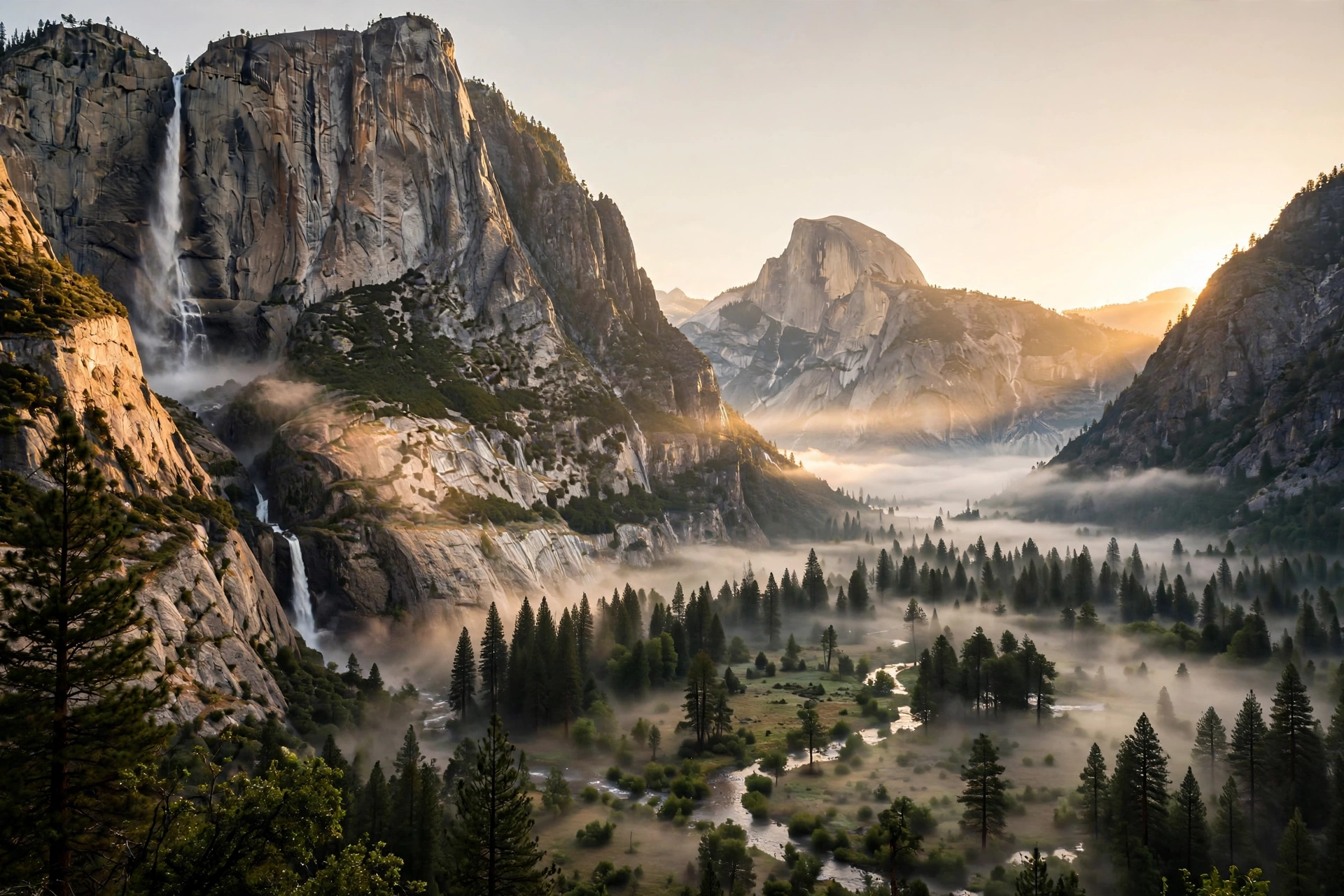
The single most famous viewpoint in the park system. Emerging from the Wawona Tunnel, you face El Capitan on the left, Bridalveil Fall on the right, and Half Dome dead center in the distance. Arrive at sunrise for the thinnest crowds and the softest light — by 10 a.m. the pullout fills with tour buses.
El Capitan and El Cap Meadow
The world’s most famous big wall: 3,000 feet of sheer granite that draws elite climbers from every continent. You do not need to climb it to appreciate it — bring binoculars to El Cap Meadow and watch tiny figures working routes like The Nose. Late afternoon light on the wall is spectacular.
Yosemite Falls
At 2,425 feet, Yosemite Falls is the tallest waterfall in the park and one of the tallest in the world, dropping in three sections (Upper Fall, Middle Cascades, Lower Fall). It is a snowmelt waterfall, which means timing is everything — see the waterfall section below. The one-mile Lower Yosemite Fall loop is paved, wheelchair accessible, and delivers the thundering close-up.
Cook’s Meadow and Sentinel Bridge
For the classic Half Dome reflection photograph, walk the boardwalk through Cook’s Meadow at dawn or cross Sentinel Bridge at sunset. These quiet, flat spots are also among the best places in the valley to spot deer and black bears grazing at the meadow’s edge.
Glacier Point
A 32-mile drive from the valley (open roughly late May through October, weather permitting) leads to the park’s grandest overlook: Half Dome, Yosemite Falls, and the High Sierra spread out 3,214 feet below. Sunset from Glacier Point, with Half Dome glowing orange, rivals any view in America. The Four Mile Trail descends from here to the valley floor for strong hikers.
Best Hikes in Yosemite by Difficulty
| Hike | Distance (round trip) | Difficulty | Why do it |
|---|---|---|---|
| Lower Yosemite Fall Loop | 1 mile | Easy, paved | Thunderous close-up of North America’s tallest waterfall system |
| Cook’s Meadow Loop | 1 mile | Easy, boardwalk | Half Dome reflections, wildlife, best with kids |
| Mirror Lake Loop | 2 miles (to lake), 5 miles (full loop) | Easy | Seasonal reflections of Half Dome; best in spring |
| Bridalveil Fall Trail | 0.5 mile | Easy, paved | Year-round waterfall mist; great first stop |
| Taft Point & Sentinel Dome | 2.2 miles | Moderate | Dramatic cliff-edge fissures and 360° views; fewer crowds |
| Mist Trail to Vernal Fall Footbridge | 1.6 miles | Moderate | The classic valley hike; continue to the top for the full experience |
| Upper Yosemite Fall Trail | 7.2 miles | Strenuous | Eye-level with the falls’ upper drop; huge elevation gain |
| Four Mile Trail | 9.6 miles | Strenuous | Valley to Glacier Point; unmatched descending views |
| Half Dome via Cables | 14–16 miles | Very strenuous, permit required | The bucket-list summit; apply for the March lottery |
| Clouds Rest | 14.5 miles | Very strenuous | Higher and airier than Half Dome — many hikers’ favorite |
Start hiking early — trailhead parking fills by 8 or 9 a.m. in summer, afternoon thunderstorms can build over the high country, and the valley heat makes midday ascents punishing. Carry more water than you think you need; there is no water on most trails above the valley floor.
Waterfall Season: Timing Your Visit
Yosemite’s waterfalls are fed by Sierra snowmelt, so they follow a dramatic annual cycle:
- Late April – June: Peak flow. Yosemite Falls thunders, Bridalveil Fall mists the trail, and ephemeral falls appear on every cliff. This is the prime waterfall window.
- July – August: Flow decreases noticeably. Major falls still run, but the delicate seasonal cascades dry up.
- September – October: Many falls are reduced to a trickle or dry completely. Yosemite Falls can go nearly silent in dry years — check conditions before a fall trip built around waterfalls.
- November – March: Winter storms can recharge the falls; ice formations create the famous “Frazil ice” phenomena at Yosemite Falls.
Mariposa Grove of Giant Sequoias
Near the park’s south entrance, the Mariposa Grove protects some 500 mature giant sequoias, including the Grizzly Giant — one of the largest living trees on Earth at an estimated 1,800 to 2,700 years old. The grove requires a shuttle ride from the welcome plaza (private cars are not allowed past the parking area in season). The two-mile round-trip walk to the Grizzly Giant and California Tunnel Tree is the essential visit; the full Upper Grove loop is seven miles for committed hikers. Arrive before 9 a.m. to ride the first shuttles and walk among the giants in near-solitude.
Tuolumne Meadows: Yosemite’s High Country
At 8,600 feet along Tioga Road, Tuolumne Meadows feels like a different park — subalpine meadows, granite domes, and trailheads into true wilderness, all with a fraction of the valley’s visitors. Tioga Road typically opens between late May and early July depending on snowpack; check the opening date before planning a high-country trip. Highlights include the hike to Cathedral Lakes, the scramble up Lembert Dome for a panorama, and stargazing under some of the darkest skies in California. If the valley is booked solid, the high country is your pressure valve.
Where to Stay: In the Park vs. Gateway Towns
| Option | Location | Pros | Cons |
|---|---|---|---|
| The Ahwahnee | Yosemite Valley | Historic luxury lodge; dining room is a destination | $500+/night in season; books out far ahead |
| Yosemite Valley Lodge | Yosemite Valley | Central, steps from the falls; best mid-range in-park option | Books out 7+ months ahead for summer |
| Curry Village (Half Dome Village) | Yosemite Valley | Budget-friendly tent cabins; lively atmosphere | Shared bathrooms; noisy; sells out fast |
| Wawona Hotel | Near Mariposa Grove | Victorian charm; quieter than the valley | 45+ minutes from valley sights |
| Mariposa / Oakhurst / Groveland | Outside the park | More availability, lower prices, restaurants | 1–1.5 hour drive to the valley each way |
| Valley campgrounds | Yosemite Valley | $36/night; unbeatable location | Lottery/rolling releases; extremely competitive |
In-park lodging reservations open 366 days in advance and summer dates vanish within hours of release. If you miss out, gateway towns along Highway 140 (Mariposa, El Portal) offer the shortest commute to the valley — about an hour. Booking in-park lodging also exempts you from the entry reservation requirement, which alone can justify the effort.
Getting Around: The Valley Shuttle
Once inside Yosemite Valley, leave the car parked. The free valley shuttle runs frequent loops past trailheads, lodges, and viewpoints, and using it eliminates the daily hunt for parking — the valley’s scarcest resource. During peak season, traffic can back up for miles at the valley entrance; arriving before 8 a.m. or after 4 p.m. avoids the worst of it. Bikes are another excellent option: the valley’s flat, paved paths are ideal for cycling, with rentals available at Curry Village.
2-Day Yosemite Itinerary
Day 1: Valley Icons
Enter via the south entrance for the Tunnel View reveal, then spend the morning on the valley floor: Lower Yosemite Fall loop, Cook’s Meadow, El Cap Meadow with binoculars. Afternoon: hike the Mist Trail to the Vernal Fall Footbridge (or to the top of Vernal Fall if you are fit). Sunset at Sentinel Bridge or Glacier Point if the road is open.
Day 2: High Points and Big Trees
Drive to Glacier Point at sunrise for the classic panorama, hike Taft Point and Sentinel Dome, then descend to the Mariposa Grove for an afternoon among the giant sequoias. If Tioga Road is open and you have a third day, dedicate it to Tuolumne Meadows and the high country.
Yosemite National Park FAQs
Do I need a reservation to visit Yosemite?
During peak season (typically late May through September, plus some spring weekends), yes — a timed-entry reservation is required to drive into the park between 6 a.m. and 4 p.m. Book on Recreation.gov the moment your window opens. In-park lodging, campground, or wilderness permit holders are exempt.
How many days do you need in Yosemite?
Two full days covers the valley highlights and one signature experience (Glacier Point or the Mariposa Grove). Three days lets you add the high country along Tioga Road or a longer hike like Upper Yosemite Fall. More than that is for backpackers and climbers.
What is the best month to visit Yosemite?
May and June for peak waterfalls and full access with moderate crowds; September for warm weather, thinner crowds, and open high country. July and August are the busiest months. Winter brings snow-dusted valley views and solitude but closes Tioga Road and Glacier Point Road.
Can you drive to Glacier Point year-round?
No. Glacier Point Road typically opens in late May and closes in October or November with the first major snow. The valley itself is open year-round.
How hard is the Half Dome hike?
Very. It is 14 to 16 miles round trip with 4,800 feet of elevation gain, and the final cable section requires upper-body strength and a head for exposure. A separate permit (preseason lottery in March) is required. Train for it; this is not a casual day hike.
Is Yosemite Valley too crowded in summer?
The valley floor is genuinely crowded from 10 a.m. to 4 p.m. in July and August. The antidotes: start before 8 a.m., use the shuttle, escape to Glacier Point, Taft Point, or Tuolumne Meadows in the afternoon, and visit on weekdays. September weekdays are dramatically calmer.
Where can I see giant sequoias in Yosemite?
The Mariposa Grove near the south entrance is the largest and most accessible, with the Grizzly Giant and California Tunnel Tree. The smaller Tuolumne and Merced Groves offer quieter alternatives.
Is one day enough for Yosemite?
You can see Tunnel View, Lower Yosemite Fall, and the valley meadows in a single long day, but you will miss Glacier Point, the sequoia groves, and any real hiking. If one day is all you have, arrive at sunrise and prioritize the valley loop.
More Yosemite FAQs
Can you visit Yosemite without a car?
Yes, with some planning. The YARTS bus runs from Merced (with Amtrak connections) into Yosemite Valley, and once in the valley the free shuttle covers trailheads and lodges. This works well for a valley-focused trip of two to three days, but you will miss Glacier Point, the Mariposa Grove, and Tuolumne Meadows without a car. For a first visit centered on the valley icons, car-free is genuinely viable.
Is Yosemite open in winter?
Yosemite Valley is open year-round and winter is magical — snow-dusted cliffs, far fewer visitors, and the famous Horsetail Fall “firefall” phenomenon in February when sunset lights the waterfall orange. Tioga Road and Glacier Point Road close with the first major snow (typically November), and tire chains may be required. The valley’s ice skating rink and the Ahwahnee’s historic charm make winter a legitimate season to visit.
Are dogs allowed in Yosemite?
Dogs are allowed only in developed areas: paved roads, sidewalks, bike paths, and campgrounds (on leash, six feet maximum). They are not allowed on trails, in the backcountry, on shuttle buses, or in lodges. If you are traveling with a dog, plan for a valley-floor visit with plenty of paved-path walking, and never leave pets in a hot car.
What is the best easy waterfall hike in Yosemite?
The Lower Yosemite Fall loop — one mile, paved, nearly flat — delivers a thundering close-up of the continent’s tallest waterfall system with almost no effort. Bridalveil Fall’s half-mile paved trail is the runner-up and runs year-round. Both are wheelchair accessible and work for all ages, making them the park’s best effort-to-reward hikes.
How do you avoid the worst crowds in Yosemite Valley?
Start before 8 a.m., use the free valley shuttle instead of driving between stops, eat lunch at off-peak hours, and spend afternoons at Glacier Point, Taft Point, or along the valley’s quieter western end. Visiting on weekdays — especially Tuesday through Thursday — and in September or May rather than July makes an enormous difference.
The Bottom Line
Yosemite is the rare park where logistics are the trip: secure the entry reservation, book lodging a year out, start hikes at dawn, and the park opens up beautifully. Follow this Yosemite National Park guide’s core sequence — reservation first, valley icons second, high country third — and you will experience the granite cathedrals and thundering falls that have inspired visitors from John Muir to today, without spending your vacation in a parking line.