Planning review: September 26, 2026. Recheck official conditions and ticket details for your travel dates.
This Las Vegas Grand Canyon itinerary is a seven-day loop through Hoover Dam, the South Rim, Page and Zion, returning to Las Vegas. It gives the Grand Canyon a full rim day and Zion a full shuttle day, with six hotel nights and one deliberately long transfer. The emphasis is viewpoints and manageable walks rather than demanding canyon hikes.
The sequence is Las Vegas → Hoover Dam → Tusayan/South Rim → Desert View → Page → Zion → Las Vegas. It does not include Grand Canyon West, the North Rim, Bryce Canyon or a mandatory Antelope Canyon tour. Each of those would change the timing or require removing something else.
Seven-day Southwest trip facts
| Question | Recommended plan |
|---|---|
| Start / end | Las Vegas, Nevada |
| Length | 7 days, 6 nights |
| Nights | Las Vegas 1 → Tusayan 2 → Page 1 → Springdale 2 |
| Core drive | About 713 miles / 15 hours before stops and traffic |
| Vehicle | Ordinary passenger car; this route is not an RV itinerary |
| Walking level | Rim viewpoints and short walks; no required inner-canyon descent |
| Best seasonal fit | Spring and fall, with altitude and storm checks |
| Flight requirement | Late departure on day 7, or add a final Las Vegas night |
This is a driving holiday with park time, not a Las Vegas city break with a quick canyon excursion. If two full Las Vegas days are important, add at least one night or remove Zion. The Best Road Trips in the USA guide helps compare this loop with other regional routes.
Route map, nights and realistic driving time
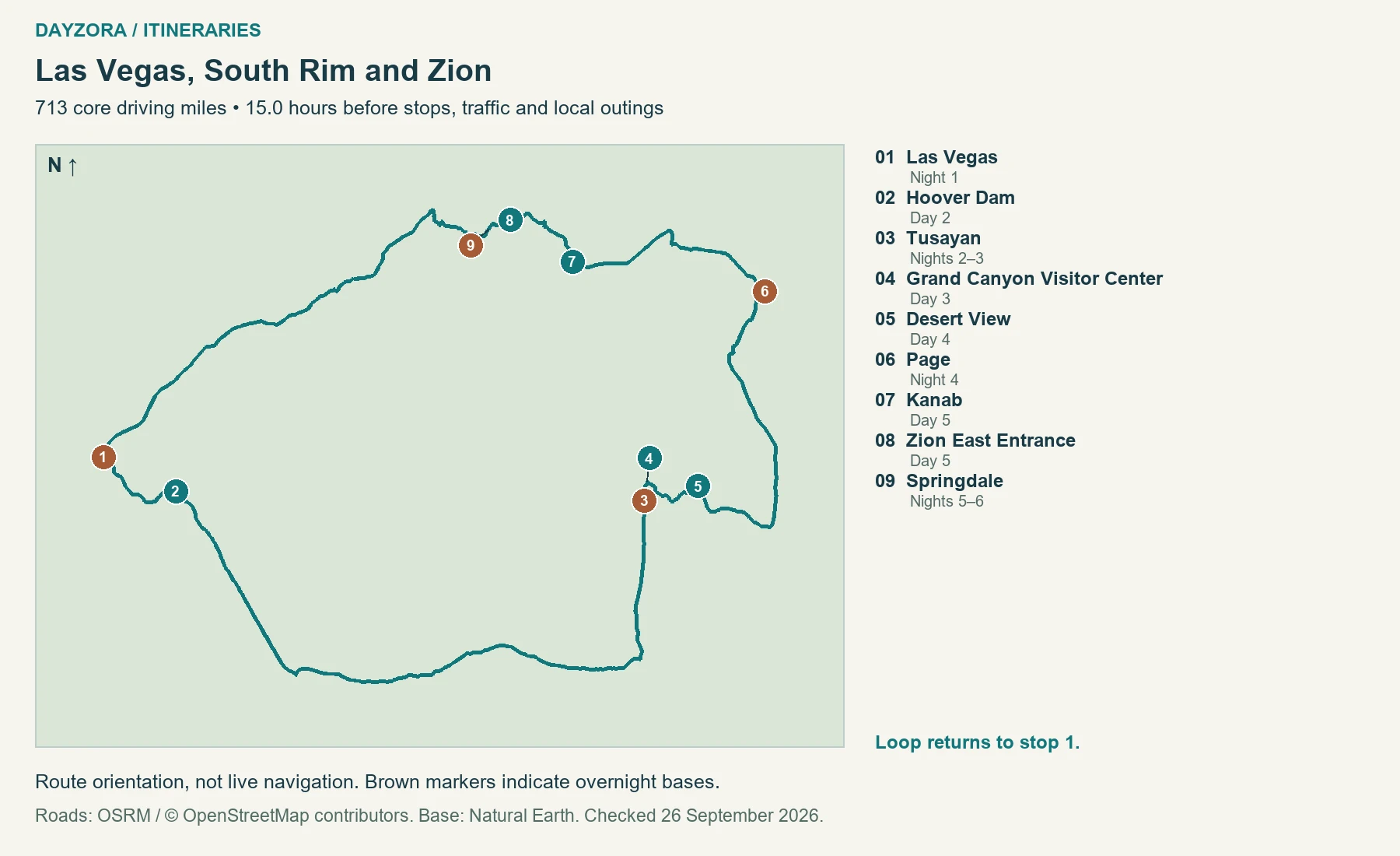
| Day | Route / focus | Night | Baseline driving |
|---|---|---|---|
| 1 | Arrive in Las Vegas | Las Vegas | Local airport / hotel travel |
| 2 | Hoover Dam → Tusayan | Tusayan | 276 miles / 5½ hours |
| 3 | South Rim viewpoints | Tusayan | About 14 miles / ½ hour to visitor center and back; shuttles extra |
| 4 | Desert View → Page | Page | 142 miles / 3¼ hours |
| 5 | Page → Kanab → Zion east entrance | Springdale | 117 miles / 2¾ hours |
| 6 | Zion Canyon shuttle and walks | Springdale | Local access; shuttle time extra |
| 7 | Springdale → Las Vegas | — | 164 miles / 3¼ hours |
The map uses OSRM/OpenStreetMap road geometry checked September 26, 2026. Figures are rounded waypoint-to-waypoint estimates, not live traffic or closure predictions. They exclude airport access, individual hotels, Horseshoe Bend’s access spur, optional outings and time aboard park shuttles. Day 2 needs about 7½–9 hours once the dam visit, food and fuel are included.
Which Grand Canyon are you visiting?
| Place | What it means for this trip |
|---|---|
| South Rim | The national-park rim reached via Tusayan, with the visitor center, Mather Point and Desert View. This is the route used here. |
| North Rim | A different national-park destination with separate access, seasonal limitations and current recovery/operational notices. It is not a short drive across the canyon. |
| Grand Canyon West | A Hualapai-owned and operated destination associated with the Skywalk. It has separate tickets and is not part of Grand Canyon National Park. |
Use the Hualapai Grand Canyon West site if the Skywalk is your priority. A tour advertised as “Grand Canyon from Las Vegas” may visit West rather than South Rim; read the actual destination before paying.
The day-by-day Las Vegas, Grand Canyon and Zion plan
Day 1: Arrive in Las Vegas and prepare for the drive
Keep the first day light, especially after a long flight. Tomorrow contains the week’s longest transfer, so a late night works against the rest of the route.
- Morning / arrival
- Arrive, collect your luggage and reach the hotel. Decide whether collecting the rental today or early tomorrow gives the better combination of rental cost, parking and departure time.
- Lunch
- Eat near the hotel rather than crossing the Strip for a single restaurant. Hotel complexes are large, so leave more walking time than a map’s straight line suggests.
- Afternoon
- Explore one section of the Strip or rest at the hotel. Pick up drinking water, picnic supplies and snacks before the park portion of the trip.
- Evening
- Have dinner and finish practical preparations. If you attend a show, choose one that still allows a sensible bedtime.
- Stay
- Las Vegas, one night. A Strip hotel suits an introductory visit; another convenient hotel can make rental parking and departure easier.
- Transport and booking
- Check all mandatory hotel charges and parking. Set the rental pickup and tomorrow’s first stop before making an evening reservation. Download the driving route for offline use.
Day 2: Hoover Dam, then the long transfer to Tusayan
Leave early and keep the dam visit focused. This is not the day for Hoover Dam, a long Route 66 detour, a full canyon afternoon and a sunset hike.
- Morning
- Drive from Las Vegas to Hoover Dam and allow roughly 60–90 minutes for a brief visitor-area stop, subject to security and parking. A longer guided tour requires an earlier start or a shorter rest of the day.
- Lunch
- Take a meal and fuel break along the onward route, using a town on the main highway corridor. Do not postpone food until everyone is tired and the next services are distant.
- Afternoon
- Continue via the main highway route toward Williams and Tusayan. Allow breaks and arrive with enough time to check in without rushing. The Grand Canyon visit begins properly tomorrow.
- Evening
- Dinner in Tusayan and a conditions check. An additional drive into the park for sunset is optional only if you arrive comfortably early and still feel alert.
- Stay
- Tusayan, night 1 of 2. This is outside Grand Canyon National Park and is the base used while in-park overnight lodging is disrupted.
- Transport and booking
- About 276 miles / 5½ hours moving time; 7½–9 hours for the whole day. The Bureau of Reclamation visitor page distinguishes on-site-only Guided Dam Tour sales from bookable Powerplant tours. A national park pass does not cover the dam tour.
Day 3: A full South Rim day without an inner-canyon hike
Use the visitor center area and rim viewpoints for a satisfying first visit. Seeing the canyon from several angles is a better fit for this week than attempting a strenuous descent and recovery.
- Morning
- Drive from Tusayan into the park, allowing for an entrance queue. Begin around the visitor center and Mather Point, then walk only as far along an open rim section as is comfortable.
- Lunch
- Bring a picnic and sufficient drinking water. Confirm current food and water services instead of assuming every facility is operating normally during the disruption.
- Afternoon
- Use the current park shuttle system to reach additional viewpoints. Choose the Kaibab Rim area or Hermit Road as the main extension; avoid trying to get off at every stop on every route.
- Evening
- If conditions and energy allow, watch the changing light from a convenient rim viewpoint, then return to Tusayan for dinner. A sunset plan must include the final shuttle and the drive back.
- Stay
- Tusayan, night 2. Keep the same room so you can carry only a day bag into the park.
- Transport and booking
- The core visitor-center return drive is about 14 miles; parking, queues and shuttles add time. Check current South Rim shuttle routes and park conditions. No inner-canyon trail is required by this itinerary.
Day 4: Desert View and the drive to Page
Travel east along the South Rim before leaving for Page. This avoids backtracking through Williams and keeps the day’s sightseeing aligned with the transfer.
- Morning
- Check that Desert View Drive and your intended stops are open. Leave Tusayan after breakfast, use a small number of rim viewpoints and finish the park portion around Desert View.
- Lunch
- Carry a picnic or stop for a practical meal along the onward route. Do not depend on a single remote food outlet being open when you arrive.
- Afternoon
- Continue to Page and check in. Horseshoe Bend is an optional outing only if weather, daylight and energy suit an exposed walk. The stop is additional to the driving baseline.
- Evening
- Have dinner in Page and check the next day’s route, time zone and Zion access. Rest rather than adding a late excursion.
- Stay
- Page, one night. Choose a property with straightforward parking and convenient food access.
- Transport and booking
- About 142 miles / 3¼ hours moving time. Allow around 5–6 hours for the transfer with rim stops and a meal, more if adding Horseshoe Bend. Check NPS Horseshoe Bend guidance for the walk, exposure and separate parking arrangements.
Day 5: Page to Zion through the east entrance
This is a scenic transfer day. The default route passes Kanab and enters Zion on UT 9 before descending to Springdale. It does not combine an Antelope Canyon tour, a long drive and a major Zion hike.
- Morning
- Leave Page after breakfast and drive toward Kanab. Keep the clock change in mind when moving from Arizona into Utah; verify local time against the date and any booking confirmation.
- Lunch
- Take a meal break in Kanab or carry food for the journey. Refuel before the park section.
- Afternoon
- Use the Zion–Mount Carmel Highway only if your vehicle is permitted and the road is open. Enjoy legal viewpoints without depending on finding a small trailhead parking space. Continue to Springdale and check in.
- Evening
- Walk to dinner if your accommodation allows it. Prepare a day bag and check the next morning’s park and town shuttle arrangements.
- Stay
- Springdale, night 1 of 2. A practical connection to the park entrance is worth comparing with cheaper but more distant rooms.
- Transport and booking
- About 117 miles / 2¾ hours moving time; allow 4–5 hours with a meal and stops. Zion entrance requirements apply even to a through-drive. Larger vehicles may need a completely different approach; see the current vehicle rules below.
Day 6: Zion Canyon by shuttle, with a modest walk
Protect this full day from additional long-distance driving. Plan around current shuttle service and choose a walk that fits the weather and everyone’s ability.
- Morning
- Reach the visitor-center area early using the appropriate local connection. During shuttle operations, take the park shuttle into Zion Canyon. Go to a chosen walking area rather than treating every stop as mandatory.
- Lunch
- Carry lunch and water, and use designated places for a break. Keep food secured and do not feed wildlife. Return toward services if heat or fatigue changes the plan.
- Afternoon
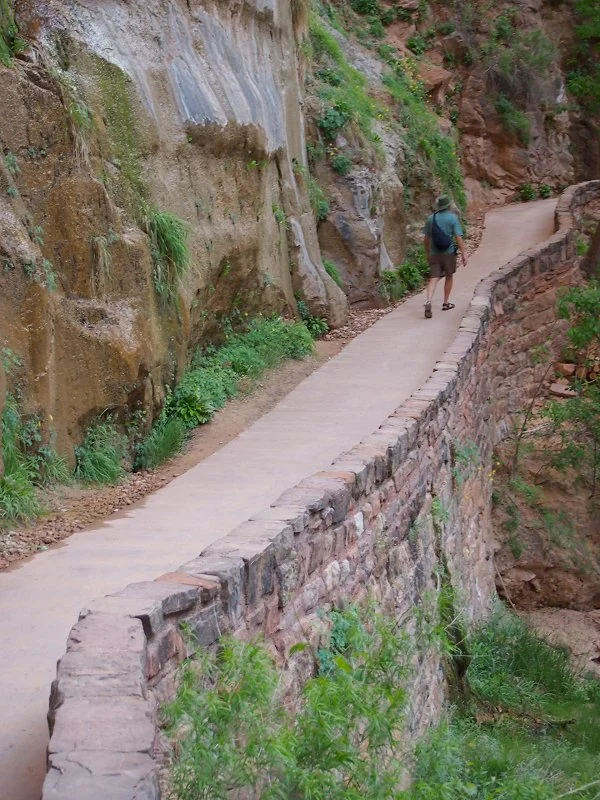
- The paved Riverside Walk can be a useful main outing when open and conditions allow. Stop at its end; continuing into the river becomes a different activity with different hazards. If conditions are poor, choose ranger information and shorter accessible viewpoints instead.
- Evening
- Return well before the last relevant shuttle, then have dinner in Springdale. Keep the second night here rather than turning the park day into a late drive to Las Vegas.
- Stay
- Springdale, night 2.
- Transport and booking
- The Zion shuttle is free and does not require a reservation. Private vehicles cannot use Zion Canyon Scenic Drive during shuttle operations. Verify Riverside Walk conditions and current park alerts.
Day 7: Return to Las Vegas with a real airport buffer
The final drive is substantial enough to deserve its own morning. A very early flight does not fit a Springdale departure today.
- Morning
- Leave Springdale after an early breakfast and drive to Las Vegas, taking a rest break as needed. Check road conditions before setting out.
- Lunch
- Eat once you have a comfortable margin near Las Vegas. Skip a restaurant detour if traffic has used up that margin.
- Afternoon
- Refuel as required, return the rental and reach the correct airport terminal. Include the car-return shuttle and the airline’s recommended check-in margin separately from highway driving.
- Evening
- A late flight can work, but a final Las Vegas hotel night gives more protection against delays. Add that night if your schedule cannot tolerate a disrupted transfer.
- Stay
- No overnight in the base plan; add Las Vegas for a next-day flight.
- Transport and booking
- About 164 miles / 3¼ hours before stops and traffic. Reserve at least a substantial half-day for the road and rental-return process, then add the airline’s airport margin. Do not book a flight by simply adding three hours to your hotel checkout.
Where to stay along the loop
| Base | Useful location strategy | Important tradeoff |
|---|---|---|
| Las Vegas | Near your chosen first-evening area with clear parking arrangements | Include resort or destination fees and rental timing |
| Tusayan | Two nights outside the South Entrance | Current in-park lodging disruption makes this the planned base; check the live NPS notice |
| Page | Simple access to food, fuel and the onward route | A one-night stay benefits from easy logistics more than distant resort facilities |
| Springdale | Two nights near a useful town-shuttle stop or walkable park access | Confirm seasonal shuttle operation and parking; a lower room rate farther away adds commuting |
Book cancellable accommodation where the price difference is reasonable for your circumstances. In-park reopening projections can change, and a reserved Tusayan room should not be abandoned merely because a restoration target has been announced. For this short itinerary, do not switch the canyon base to a much farther town without recalculating both park days.
Estimate the Southwest trip cost
This worked example is for two US-resident adults sharing one room, six hotel nights, seven food days and seven rental days. Except for the separately stated park entrance inputs, the figures are hypothetical planning allowances rather than market quotes. Your rental duration depends on actual pickup and return times.
| Category | Example calculation | Total for two |
|---|---|---|
| Accommodation | 6 × $200 all-in room allowance | $1,200 |
| Rental car | 7 × $75 all-in daily allowance | $525 |
| Fuel | 850 planned miles ÷ 30 mpg × $4/gallon | $113 |
| Food | 2 × 7 days × $55 | $770 |
| National park entry | Standard private vehicle: $35 Grand Canyon + $35 Zion | $70 |
| Other visits / parking | Dam, optional stops and parking allowance | $150 |
| Subtotal | Before flights and contingency | $2,828 |
| Contingency | 15%, rounded | $424 |
| Example total | Flights, shopping and insurance excluded | $3,252 |
Park fees were checked September 26, 2026. The Grand Canyon and Zion fee pages list an additional $100 fee per non-US-resident visitor aged 16 or over at each park unless admitted under an eligible pass. The standard $35 vehicle charge alone is therefore not a complete budget for every group. Compare the current nonresident annual pass and its coverage with your party’s applicable charges before buying.
A pass does not automatically cover Hoover Dam tours, Horseshoe Bend parking, private tours or hotel parking. Replace the $70 line with your actual park-entry solution. Add rental coverage or driver surcharges not included in the quote. Our budget travel guide explains how to build the full total without mixing per-person and per-vehicle costs.
Before you go: access rules that affect this exact route
Zion vehicle restrictions and shuttles
Since June 7, 2026, larger vehicles are restricted on the Zion–Mount Carmel Highway between the east entrance and Canyon Junction. The NPS notice lists limits including 35 feet 9 inches long, 7 feet 10 inches wide, 11 feet 4 inches high and 50,000 pounds, with additional combined-vehicle limits. Check your actual vehicle against the current NPS vehicle rules; do not rely on older advice about simply purchasing a tunnel permit. This itinerary assumes an ordinary passenger car.
The east–west highway and Zion Canyon Scenic Drive are different roads. Being allowed to drive through the tunnel does not mean you can drive up the shuttle-served canyon. Check Zion conditions and the shuttle timetable for your exact dates.
Hikes, heat and storms
Angels Landing is not a required stop. It needs the appropriate permit and suitable preparation. The Narrows is also not an automatic extension of Riverside Walk: water levels, flash-flood risk and other current advisories can make it inappropriate. Summer heat and monsoon storms can require replacing a walk altogether. Avoid making a permit lottery or a weather-sensitive hike the condition for enjoying the week.
Packing and practical preparation
- Carry water for the driving day and park visits, especially while South Rim water services are disrupted. Follow current NPS guidance for the activity and conditions.
- Pack sun protection, a warm layer for high-elevation mornings and sturdy comfortable shoes. Use the full packing checklist for everyday items.
- Download offline maps and keep fuel stops planned; do not expect reliable signal at every viewpoint.
- Check the local time shown by each tour provider. Arizona, Utah and Nevada do not stay on the same clock throughout the year.
- Review accommodation and tour cancellation terms before choosing optional prepaid activities. Keep the flight buffer independent of the sightseeing plan.
How to customize this Southwest itinerary
Only five days
Remove Page and Zion. Use Las Vegas, Hoover Dam and two Tusayan nights, then return to Las Vegas with an overnight before departure if needed. A shorter loop is more useful than reducing both national parks to hurried roadside stops.
Eight to ten days
Add a final Las Vegas night first to protect the flight. Then add a Page night for a separately researched and booked guided activity, or another Springdale night for more park time. If Bryce Canyon is important, extend and redesign the route rather than making it a quick extra on the Zion day. Our National Parks Road Trip itinerary is a better starting point for a park-focused longer trip.
With children
Favor rim viewpoints, short walks and frequent driving breaks. Remove the optional Horseshoe Bend outing if the exposed walk and conditions do not suit your family. Two nights at each national-park base let you pause without losing the whole visit. Keep children close around roads, shuttle stops and unguarded viewpoints.
Prefer a slower week
Choose either the South Rim or Zion and give Las Vegas an extra night. If keeping both parks, extend to eight or nine days rather than filling arrival and departure with more driving. The long Hoover Dam–Tusayan day is the first place to add a night if sustained driving is uncomfortable.
Common mistakes on this route
- Buying a Grand Canyon West tour when the intended destination is the South Rim.
- Booking inside-park South Rim lodging without reading current disruption notices.
- Assuming a large rental RV can use Zion’s east entrance under outdated tunnel rules.
- Adding Antelope Canyon, Horseshoe Bend and a long Zion hike to the same transfer day.
- Using park entrance fees that ignore residency and pass eligibility.
- Treating the return drive as a reliable connection to an early Las Vegas flight.
Las Vegas and Grand Canyon itinerary FAQs
Can I visit the South Rim as a day trip from Las Vegas?
It involves a long return drive and leaves much less time at the canyon. This itinerary uses two Tusayan nights so the main rim visit is not squeezed between long highway legs.
Is Zion worth including in seven days?
Yes if you accept the driving and give it the full day and two Springdale nights shown here. If you want more Las Vegas time or slower travel, remove Zion or extend the trip.
Do I need a reservation to enter the parks?
At the review date, neither this Grand Canyon day visit nor normal Zion entry required a timed-entry reservation. Lodging, special activities and permit-controlled hikes are separate. Check official rules again for your dates.
What is the best thing to cut when the schedule slips?
Cut optional stops and hikes first. Preserve overnight bases, water and meal breaks, and the final airport buffer. Never make up time by rushing unfamiliar roads after dark.
Compare park choices in Best National Parks in the USA. For a city-and-coast alternative with no desert park logistics, see the California week itinerary.
City guide for planning your stay
Explore our Las Vegas travel guide for neighborhoods, places to stay, food and local transport. Use this itinerary for the day-by-day route.