Finding the best dry rub for turkey is the single fastest way to turn an ordinary holiday bird into a deeply seasoned, golden-skinned centerpiece. Unlike a wet brine — which requires a bucket, a refrigerator shelf, and two days of planning — a dry rub works with nothing more than a bowl, your hands, and a little patience. Salt penetrates the meat through osmosis, sugar helps the skin caramelize, and a balanced blend of herbs and spices builds flavor that survives hours in a hot oven. In this guide, you will get five tested dry rub recipes, the science of how they work, a step-by-step application method, and troubleshooting for every common seasoning problem.
Whether this is your first Thanksgiving turkey or your thirtieth, a well-built rub gives you control. You choose the flavor direction — classic herb and garlic, smoky-sweet, Cajun heat, bright citrus, or maple-mustard — and you control the salt, which is the real secret behind juicy meat. If you are still deciding how to cook the bird itself, start with our guide on how to cook a Thanksgiving turkey, then come back here to season it like a professional.
What Makes a Great Dry Rub for Turkey
A turkey is an unusually difficult piece of meat to season. It is large, mild-flavored, and prone to drying out — especially the breast. A great dry rub solves all three problems at once, and understanding why will make you better at improvising your own blends. The three pillars are salt for penetration, sugar for browning, and aromatics for character. Get the balance right and the bird seasons itself almost automatically while it rests in the refrigerator.
The Salt Foundation
Salt is not just a flavoring; it is a technique. When you coat a turkey in a salted rub and let it rest uncovered in the refrigerator for 12 to 48 hours, the salt first draws moisture to the surface through osmosis, then dissolves into that moisture, and is gradually reabsorbed deep into the muscle. This is the same process as dry brining, and it is the reason a dry-rubbed turkey tastes seasoned all the way through instead of only on the skin. Use kosher salt or coarse sea salt — never fine table salt, which packs more densely into a measuring spoon and will oversalt the bird. Diamond Crystal kosher salt is lighter and flakier than Morton kosher salt, so if your recipe was developed with one brand and you use the other, adjust by about 25 percent. For a whole turkey in the 12 to 16 pound range, plan on roughly 1 tablespoon of kosher salt per 4 pounds of bird, and include all of the salt in your rub blend so the total is predictable.
The Sugar Question
Sugar in a rub is there for browning, not sweetness. When exposed to oven heat, sugars caramelize and participate in the Maillard reaction, which is what gives roasted turkey skin its deep mahogany color and roasted flavor. Brown sugar adds molasses notes and a touch of moisture that helps the rub cling; white sugar browns faster and cleaner. Keep sugar at roughly half the volume of salt in most blends, and be aware that sugary rubs burn more easily — if your rub is sugar-heavy, roast at 325°F rather than 350°F and tent the breast with foil if it darkens too quickly. For a savory, old-fashioned bird, you can skip sugar entirely; the skin will still brown from the natural sugars in the meat and the rendered fat, just a shade lighter.
Herbs, Spices, and Aromatics
Turkey pairs beautifully with the classic poultry herbs — thyme, sage, rosemary, and marjoram — plus warm spices like paprika, black pepper, garlic, onion, and mustard powder. Dried herbs are more concentrated than fresh, so when a rub calls for dried thyme and you want to substitute fresh, triple the volume. Ground spices lose potency after about six months, so if your paprika has been sitting in the cabinet since last Thanksgiving, replace it before you season this year’s bird. One more rule of thumb: keep the blend to five or six components. More than that and the flavors muddy together; five well-chosen ingredients will always taste more intentional than twelve.
5 Tested Dry Rub Recipes for Turkey
Each recipe below makes enough for one 12 to 16 pound turkey, which is roughly 1/2 to 3/4 cup of rub. Scale up by 50 percent for birds over 18 pounds. Mix each blend in a small bowl and break up any lumps in brown sugar with your fingers before applying.
1. Classic Herb and Garlic Rub
This is the all-purpose answer — the rub to reach for when you want a traditional Thanksgiving flavor that will please every guest at the table. Dried poultry herbs, garlic, and onion form the backbone; a touch of sugar helps the skin turn golden without pushing the flavor toward sweet.
Ingredients:
- 1/4 cup kosher salt
- 2 tablespoons brown sugar, packed
- 2 tablespoons dried thyme
- 1 tablespoon dried sage, rubbed between your palms to a powder
- 1 tablespoon dried rosemary, crushed
- 2 tablespoons garlic powder
- 1 tablespoon onion powder
- 2 teaspoons freshly ground black pepper
- 1 teaspoon mustard powder
To apply: Pat the turkey completely dry with paper towels, inside and out. Mix the rub, then sprinkle it evenly over the entire bird, using about one-third inside the cavity. Rub the mixture firmly into the skin with your hands. Work softened butter or olive oil under the breast skin first if you want extra insurance against dryness, then apply the rub over the top. Rest the seasoned bird uncovered in the refrigerator for 24 to 48 hours before roasting.
2. Smoky Brown Sugar Rub
For a bird with barbecue soul and a burnished, almost lacquered skin, this smoky blend is the best dry rub for turkey on a smoker or a grill — though it is excellent in the oven too. Smoked paprika does the heavy lifting; chipotle powder adds a low, slow heat that builds without overwhelming.
Ingredients:
- 1/4 cup kosher salt
- 1/4 cup brown sugar, packed
- 3 tablespoons smoked paprika
- 1 tablespoon garlic powder
- 1 tablespoon onion powder
- 2 teaspoons chipotle powder
- 2 teaspoons freshly ground black pepper
- 1 teaspoon ground cumin
- 1 teaspoon dried oregano
To apply: Because this rub is higher in sugar, it benefits from a thin coat of oil or melted butter brushed over the skin first — the fat helps the rub adhere and moderates browning. Apply the full coating, then rest uncovered in the refrigerator for at least 12 hours and up to 36. Roast at 325°F and shield the breast with foil once the skin reaches a deep amber color, usually around the two-hour mark for a 14-pound bird.
3. Cajun-Spiced Rub
This Louisiana-inspired blend brings assertive heat and earthy depth — a fantastic choice if your Thanksgiving table also features cornbread dressing, greens, or other Southern sides. It is bold enough to stand up to deep-fried turkey, where the seasoning has to fight through crackling-crisp skin.
Ingredients:
- 1/4 cup kosher salt
- 1 tablespoon brown sugar
- 3 tablespoons paprika
- 1 tablespoon garlic powder
- 1 tablespoon onion powder
- 2 teaspoons cayenne pepper
- 2 teaspoons dried thyme
- 2 teaspoons dried oregano
- 1 teaspoon freshly ground black pepper
- 1 teaspoon white pepper
- 1/2 teaspoon celery seed
To apply: Cajun rubs are traditionally assertive, so do not be shy — coat the bird heavily and press the rub into the skin. This blend contains less sugar, so the skin will brown more slowly and evenly; it is forgiving at 350°F. Reserve about a tablespoon of the rub to stir into your gravy roux for a subtle background warmth; a turkey gravy made from the drippings picks up the seasoning beautifully.
4. Citrus and Herb Mediterranean Rub
Dried lemon and orange peel give this rub a brightness that cuts through the richness of dark meat and pairs naturally with olive oil instead of butter. It is the best dry rub for turkey when you want a lighter, fresher holiday table — think roasted vegetables, grain salads, and white wine.
Ingredients:
- 1/4 cup kosher salt
- 1 tablespoon sugar
- 2 tablespoons dried lemon peel (or 1 tablespoon lemon pepper seasoning, salt adjusted)
- 1 tablespoon dried orange peel
- 2 tablespoons dried oregano
- 1 tablespoon dried thyme
- 1 tablespoon garlic powder
- 2 teaspoons freshly ground black pepper
- 1 teaspoon fennel seed, lightly crushed
To apply: Brush the turkey all over with olive oil, then apply the rub, pressing the citrus peel firmly so it adheres. Because dried citrus can taste slightly bitter if scorched, keep the oven at 325°F and consider stuffing the cavity with fresh lemon and orange halves, which perfume the meat from the inside and keep the cavity moist.
5. Maple and Mustard Rub
Maple sugar — or granulated maple sugar if you can find it — gives this blend a distinctly autumnal character that echoes the season without turning the turkey into dessert. Dry mustard and sage keep it firmly savory, and the result is a skin with a gorgeous, even glaze-like sheen.
Ingredients:
- 1/4 cup kosher salt
- 3 tablespoons maple sugar (or brown sugar plus 1 teaspoon maple extract)
- 2 tablespoons dry mustard powder
- 2 tablespoons dried sage
- 1 tablespoon garlic powder
- 1 tablespoon onion powder
- 2 teaspoons freshly ground black pepper
- 1/2 teaspoon ground nutmeg
To apply: Rub a thin layer of Dijon mustard over the skin before the dry rub — it acts as a binder and adds a subtle tang that disappears into the background during roasting. Rest 24 hours refrigerated. This rub caramelizes readily, so roast at 325°F and check the breast color at the 90-minute mark.
How to Apply a Dry Rub for Maximum Flavor
The recipe is only half the story. How — and when — you apply the rub determines whether the seasoning stays on the surface or seasons the bird all the way to the bone. These are the techniques professionals use, adapted for a home kitchen.
Timing: The 24-Hour Rule
Salt needs time to penetrate. A turkey rubbed one hour before roasting will taste seasoned on the outside and bland in the center; the same turkey rubbed 24 to 48 hours ahead will taste seasoned throughout. Plan backward from your roasting time: season the bird the day before Thanksgiving at the latest. If your turkey is still frozen, you must thaw it completely first — a rub cannot penetrate ice, and seasoning a partially frozen bird is wasted effort.
Under the Skin, Inside the Cavity
Three zones need seasoning: the skin surface, the cavity, and the meat under the breast skin. Work about a third of the rub inside the cavity — it seasons the interior meat and flavors the drippings that will become your gravy. For the breast, gently slide your fingers between the skin and the meat to loosen it, then push a tablespoon of softened butter mixed with a teaspoon of rub directly onto the breast meat. The fat bastes the breast from the inside as it roasts, and the rub flavors the very meat most prone to dryness. Apply the remaining rub over the entire exterior, including the legs, wings, and back.
The 5-Step Application Checklist
For quick reference on Thanksgiving Eve, here is the entire method in order:
- Thaw the turkey completely and pat it dry inside and out with paper towels.
- Mix your chosen rub, breaking up any lumps in brown sugar.
- Season the cavity with one-third of the rub.
- Loosen the breast skin and push compound butter mixed with rub directly onto the breast meat.
- Coat the entire exterior with the remaining rub, then refrigerate uncovered 24 to 48 hours.
Pat Dry and Rest Uncovered
Moisture is the enemy of crisp skin. Pat the turkey thoroughly dry with paper towels before applying the rub, then rest the seasoned bird uncovered on a rack in the refrigerator. The cold, dry air of the fridge dehydrates the skin’s surface over 24 hours, which is what produces that shattering, golden crispness in the oven. If refrigerator space is tight, a large roasting pan works — just make sure air can circulate around the bird and nothing is touching the skin.
Dry Rub vs. Wet Brine vs. Injection: Which Should You Choose?
Every seasoning method has trade-offs, and the honest answer is that all three can produce an excellent turkey. A wet brine — soaking the bird in salted water — seasons deeply and adds moisture, but it requires a food-safe bucket or brining bag, gallons of refrigerator space, and careful handling of raw poultry in liquid. It also dilutes the turkey’s natural flavor slightly and can make the skin rubbery unless you dry the bird thoroughly afterward. Injection marinades deliver flavor and moisture directly into the meat in minutes, which is ideal for last-minute cooks, but they require a special injector and can leave pockets of intense flavor rather than even seasoning.
A dry rub — which is really a dry brine with extra spices — gives you the deep seasoning of brining with none of the logistics. The bird loses a little surface moisture but gains concentrated flavor, and the skin dries out in the fridge for superior crispness. For most home cooks, it is the best balance of effort and result. If you are curious about the full comparison, our guide to dry brine versus wet brine walks through the science in detail. One combination worth knowing: you can dry-rub the exterior for flavor and inject the breast with butter or broth for insurance — the two methods do not conflict.
Troubleshooting Common Dry Rub Problems
The Skin Burned Before the Meat Was Done
This is almost always a sugar or temperature issue. If your rub is high in brown sugar, roast at 325°F instead of 350°F, and tent the breast loosely with aluminum foil once the skin reaches your desired color — usually about two-thirds of the way through roasting. The USDA target is 165°F (74°C) in the thickest part of the thigh, and the breast will often finish first; a foil tent slows browning without steaming the skin, as long as it is tented loosely rather than wrapped tightly.
The Meat Tastes Bland Under the Skin
The rub was applied too late, or only to the exterior. Remember the three zones: cavity, under the breast skin, and exterior. And remember the clock: salt needs 12 hours minimum, 24 to 48 is better. If you are seasoning the morning of Thanksgiving, add an injection or a compound butter under the skin to compensate — surface seasoning alone cannot rescue a bird in four hours.
The Rub Tastes Bitter or Harsh
Two likely culprits. First, old spices: ground spices oxidize and turn bitter after six months to a year, and a stale rub will taste dusty rather than vibrant. Second, scorched garlic or dried herbs: garlic powder and dried leafy herbs burn faster than the rest of the blend. If your oven runs hot, or if you are roasting above 350°F, consider adding garlic and delicate herbs in a butter applied during the last hour rather than in the initial rub.
The Skin Is Rubbery Instead of Crisp
The bird went into the oven wet, or it was covered too early. Pat the turkey dry before rubbing, rest it uncovered in the fridge, and roast uncovered for at least the first two-thirds of the cooking time. A final blast of heat — 15 minutes at 425°F after the turkey rests — can rescue a pale skin, as long as the meat has already reached temperature.
Storing Rubs and Leftover Turkey
All five rubs keep beautifully. Mixed dry rubs store in an airtight jar at room temperature for up to six months — though the flavor is brightest in the first eight weeks. Label each jar with the blend name and the date you mixed it. These blends are not just for turkey: the classic herb rub is excellent on roast chicken, the smoky blend transforms pork shoulder, and the Cajun blend seasons roasted vegetables or a pot of beans with real authority.
Leftover turkey should be carved off the bone and refrigerated within two hours of roasting, stored in airtight containers for up to four days, or frozen for up to three months. The seasoning from your rub carries into every leftover application — turkey sandwiches, pot pie, and soup all taste better when the meat was seasoned deeply from the start. For gentle reheating that does not dry the meat, warm sliced turkey in a covered dish with a splash of broth at 325°F until it reaches 165°F.
In Pictures: Dry Rubs for Turkey
A good dry rub is salt science plus flavor — no buckets, no mess, just seasoned skin. The five tested rubs, ready to mix.
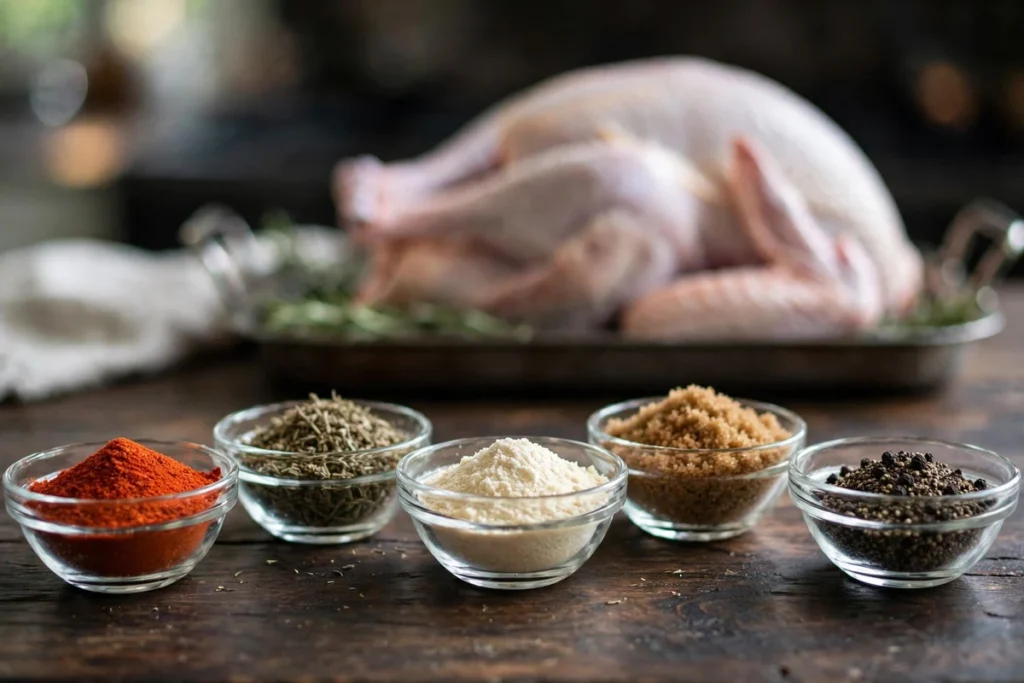
Small bowls of five different dry rubs for turkey, from classic herb to smoky Cajun, with measuring spoons.
Watch: Dry Rubs for Turkey
Jeff Mauro’s crispy-skinned herb-roasted turkey is a masterclass in the dry-rub approach — a salt-herb mix rubbed under the skin, then a high-heat roast for crackling results.
At a Glance: Dry Rubs for Turkey
What makes a great rub, from the guide.
| Element | Notes |
|---|---|
| The salt foundation | Kosher salt is the workhorse — it seasons, draws moisture, and helps the skin crisp |
| The sugar question | A little sugar aids browning and balances salt; too much can burn over long roasts |
| Herbs and aromatics | Thyme, sage, rosemary, garlic, and black pepper are the classic Thanksgiving palette |
| Rub 1: Classic Herb and Garlic | The all-purpose choice — sage, thyme, garlic, and plenty of salt |
| Rub 2: Smoky Brown Sugar | Sweet-heat with smoked paprika and brown sugar for deeper color |
| Rub 3: Cajun-Spiced | Bold and peppery, made for fried or smoked birds |
| Apply ahead | Rub the bird up to 24 hours ahead so the salt has time to penetrate |
Frequently Asked Questions
How far in advance should I apply a dry rub to a turkey?
Apply the rub 24 to 48 hours before roasting for the best flavor penetration. The salt in the rub needs at least 12 hours to work its way deep into the meat through osmosis; anything less seasons only the surface. If you are short on time, even 6 to 8 hours is better than nothing, but combine it with a compound butter under the breast skin to compensate.
Can I use a dry rub on a frozen turkey?
No — the turkey must be fully thawed first. A rub cannot penetrate ice, and seasoning will slide off a partially frozen bird. A 12 to 16 pound turkey needs 3 to 4 days to thaw in the refrigerator, so plan accordingly. Season only once the bird is completely thawed and patted dry.
Should I rinse the rub off before roasting?
No. Unlike a wet brine, which some cooks rinse, a dry rub stays on the bird — it is the seasoning and the browning agent. Do not rinse the turkey at all; rinsing raw poultry spreads bacteria around the sink without removing any meaningful amount of seasoning. Pat the bird dry before rubbing, apply the rub, and roast.
Can I use these rubs on a turkey breast instead of a whole bird?
Absolutely. Use about 2 tablespoons of rub per 3 to 4 pounds of bone-in turkey breast, apply under the skin as well as over it, and rest for 12 to 24 hours. Reduce the roasting time accordingly and pull the breast when the thickest part reaches 165°F (74°C).
Is a dry rub the same as a dry brine?
A dry rub with salt in it functions as a dry brine — the salt penetrates and seasons the meat through osmosis while the other spices flavor the surface. A plain dry brine is just salt (sometimes with sugar), while a rub adds herbs and spices. If your rub contains the right amount of salt and rests long enough, you do not need a separate brining step.
How do I keep a sugary rub from burning?
Roast at 325°F rather than 350°F, and tent the breast with foil once the skin reaches a deep golden color. Position the turkey in the lower third of the oven so the top is farther from the heating element. If the skin still darkens too fast, you can start the bird breast-side down for the first hour, then flip it — though this makes crisp skin on the breast harder to achieve.
Conclusion
The best dry rub for turkey is the one that matches your table: classic herbs for a traditional feast, smoky brown sugar for the grill, Cajun spice for a Southern spread, citrus for a lighter menu, or maple-mustard for pure autumn. Whichever you choose, the method matters as much as the blend — salt generously, season all three zones, and give the bird a full day in the refrigerator. Do that, and the turkey will take care of the rest. For the full holiday spread, pair your perfectly seasoned bird with classic Thanksgiving side dishes and a complete dinner menu built to match.