Thanksgiving in Liberia is one of the world’s least-known national holidays — and one of its most remarkable. Every year, on the first Thursday of November, the West African nation of Liberia pauses for an official day of Thanksgiving, complete with a presidential proclamation calling on bishops, imams, and priests alike to lead the country in gratitude. It is a holiday carried across the Atlantic by freed American slaves in the 19th century, written into law in 1883, and still observed today as a national holiday. For anyone fascinated by how traditions travel and transform, Liberia’s Thanksgiving is a story of resilience, faith, and cultural reinvention unlike anything else on the calendar.
Thanksgiving in Liberia at a Glance
| Detail | Answer |
|---|---|
| Date | First Thursday of November, every year |
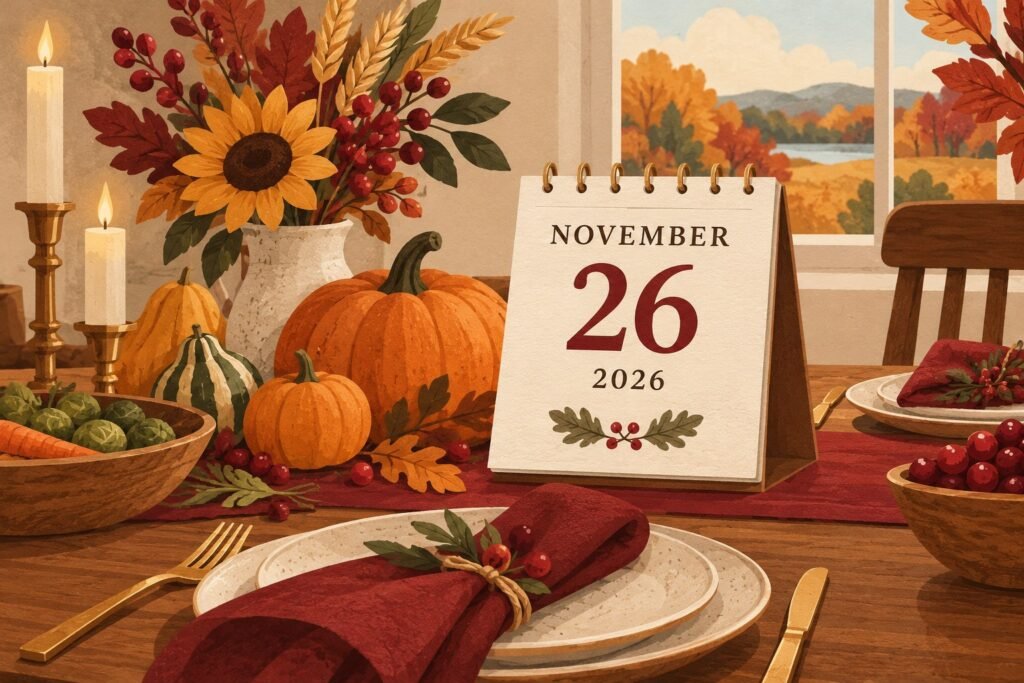
| Thanksgiving 2026 | Thursday, November 5, 2026 |
| Thanksgiving 2027 | Thursday, November 4, 2027 |
| Legal status | National public holiday |
| Established by law | Act of the Liberian Legislature, 1883 |
| Origin | Brought by freed Black American settlers (Americo-Liberians) in the 1800s |
| Character | A religious day of gratitude — church services, prayer, and reflection rather than a fixed feast |
| Signature foods | No single traditional meal; families serve Liberian dishes like mashed cassava, roasted fish, palm butter, jollof rice, and fufu |
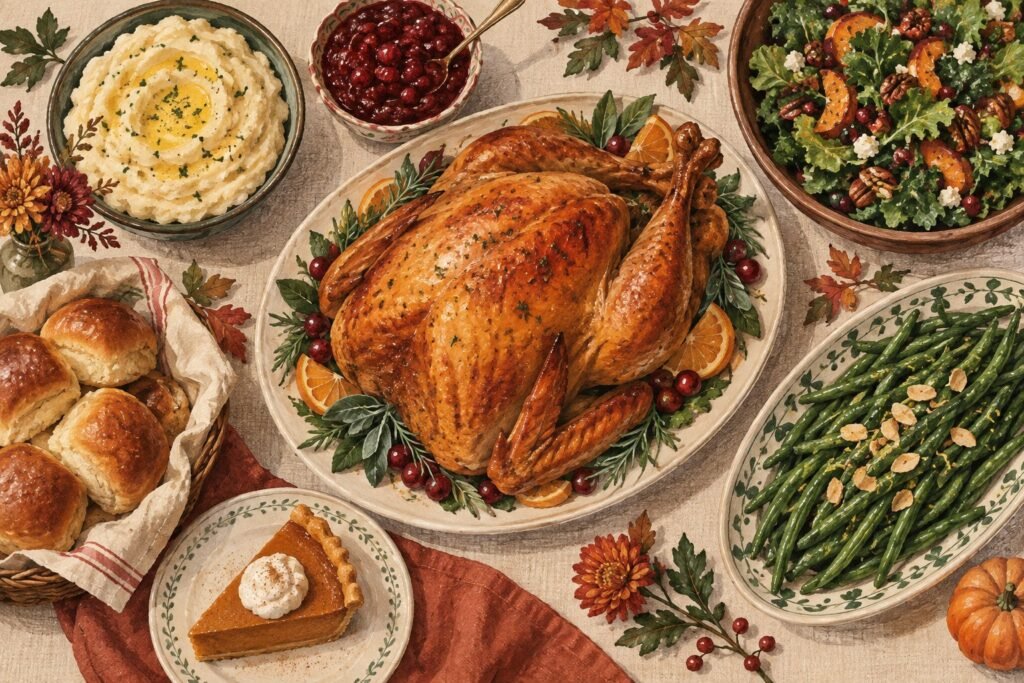
The first thing to understand is what Liberian Thanksgiving is not. It is not a copy of the American fourth-Thursday feast transplanted to Africa. It falls on the first Thursday of November — three weeks earlier than the American holiday — and it has no canonical menu of turkey and pumpkin pie. What it has instead is something arguably deeper: a genuinely national day of spiritual gratitude, observed through worship, proclamation, and community prayer. If you want to see how the same holiday idea can take root in completely different soil, compare it with the other Thanksgivings celebrated around the world.
How Thanksgiving Crossed the Atlantic
To understand Liberia’s Thanksgiving, you have to understand Liberia itself. In the early 19th century, the American Colonization Society — a coalition of abolitionists, politicians, and slaveholders with very different motives — began promoting the idea of resettling free Black Americans in West Africa. Between 1822 and the 1860s, roughly 15,000 Black Americans and several thousand Caribbean Africans made the voyage to the Grain Coast, founding settlements that would become the Republic of Liberia, which declared independence in 1847 — Africa’s first republic.
These settlers, known as Americo-Liberians, carried their American culture with them across the ocean: the English language, Protestant Christianity, American-style architecture, a flag echoing the Stars and Stripes, a constitution modeled on America’s — and American holidays. Thanksgiving was among them. The settlers celebrated it much as they had in the United States, as a day of prayer and gratitude, and over the decades it became woven into the young nation’s civic calendar.
What makes this history poignant is the settlers’ relationship to the holiday’s meaning. These were people who had known slavery — many were formerly enslaved themselves — and who had crossed an ocean seeking the freedom to build their own nation. For them, Thanksgiving was not primarily about harvests. It was about deliverance: gratitude for freedom itself, for survival, for the chance to begin again on African soil. That emphasis on gratitude for liberty, rather than gratitude for crops, still colors the Liberian observance today.
The 1883 Act: Thanksgiving Becomes Law
In 1883, the Liberian Legislature passed an act formally establishing Thanksgiving Day as a national holiday, to be observed on the first Thursday of November each year. The choice of the first Thursday — rather than the last Thursday then customary in the United States — gave Liberia’s holiday its own distinct identity from the start.
Since that act, every Liberian president has issued an annual Thanksgiving proclamation. The proclamation is a remarkable document, and its character sets the tone for the entire holiday. Each year, the president calls upon the nation’s religious leaders — explicitly including bishops, priests, and imams — to lead their congregations in prayers of thanksgiving for God’s blessings and mercy on the nation. In a country that is predominantly Christian but with a significant Muslim minority, this deliberate inclusiveness makes Thanksgiving one of Liberia’s most unifying civic rituals: a day when the whole nation, across faiths, is formally invited to give thanks together.
The proclamation typically recounts the blessings of the past year, acknowledges hardships, and calls for humility, prayer, and national unity. It is read in churches and mosques, reported in the press, and treated as a genuine moment of national reflection — not a formality. For a small nation that has endured civil wars, the Ebola epidemic, and persistent economic hardship, the annual act of collective gratitude carries real emotional weight.
How Liberians Celebrate: A Religious Holiday First
Ask Liberians how they spend Thanksgiving and you will hear a consistent answer: they go to church. The day is, above all, a religious observance. Thanksgiving morning services are the centerpiece — special worship services filled with hymns of gratitude, prayers for the nation, sermons on thankfulness, and often thanksgiving offerings collected for the poor. In Monrovia, the capital, churches are packed; in villages across the country’s fifteen counties, congregations gather in chapels and under open-air shelters.
Mosques hold their own observances, with imams leading prayers of gratitude in keeping with the presidential proclamation’s call. The sight of Christian and Muslim Liberians observing the same national day of thanks, each in their own tradition, is one of the holiday’s most distinctive features — a model of interfaith civic life that few other national holidays anywhere in the world can claim.
After worship, the day turns familial and social. Families gather for large midday or afternoon meals — but here is where Liberia diverges most sharply from the American template: there is no prescribed Thanksgiving menu. As the Liberian-American author and activist Brenda Brewer Moore has noted, there is no traditional Liberian Thanksgiving meal the way there is an American one; her own children, she has said, have been known to celebrate with pizza and popcorn. What families eat depends on means, region, and taste — and that freedom is part of the holiday’s character.
What Liberians Eat on Thanksgiving
While there is no canonical feast, Thanksgiving tables across Liberia feature the country’s beloved dishes, often prepared in larger quantities and with more festivity than usual:
- Mashed cassava with roasted fish — frequently cited as a typical Thanksgiving combination: starchy, pounded cassava served with whole roasted or grilled fish, often with a spicy pepper sauce.
- Jollof rice — Liberia’s version of West Africa’s great party dish, cooked with tomatoes, peppers, and spices, often with chicken or fish.
- Palm butter — a rich, distinctive soup made from palm nuts, served with rice; a celebratory staple.
- Fufu and soup — pounded plantain or cassava fufu served with pepper soup, palava sauce, or bitter-leaf soup.
- Fried plantains, potato greens, and cassava leaf — the everyday glories of Liberian cooking, elevated for the holiday table.
- Fresh tropical fruit — pineapples, mangoes, and papayas for dessert, alongside imported treats for those who can afford them.
Turkey is essentially absent — it is expensive, hard to find, and has no roots in Liberian food culture. Chicken, goat, and fish are the celebratory proteins. Drinks might include fresh coconut water, ginger beer (the West African homemade kind, fiery and sweet), or palm wine in rural areas.
Thanksgiving and Liberian National Identity
Liberia’s Thanksgiving cannot be separated from the country’s complex identity. The Americo-Liberian settlers who founded the republic dominated its politics for over a century, and their American-derived culture — including Thanksgiving — was long associated with that elite. Indigenous Liberians, who make up the vast majority of the population across sixteen major ethnic groups (Kpelle, Bassa, Gio, Kru, Grebo, Mano, Krahn, and others), have their own rich traditions of harvest celebration and gratitude that predate the republic entirely.
Over the generations, Thanksgiving has been gradually Liberianized — absorbed into the broader national culture beyond its settler origins. The 1883 act made it a holiday for all Liberians, the presidential proclamations address the whole nation, and the day’s religious character resonates across ethnic and denominational lines. Still, the holiday’s American roots are occasionally a point of contention, particularly among younger Liberians reexamining the country’s history. Some view it as a cherished national tradition; others see it as a relic of Americo-Liberian dominance. That ongoing conversation is itself part of what makes the holiday culturally alive rather than frozen.
The Liberian diaspora — large communities in the United States, particularly in Minnesota, Rhode Island, and Pennsylvania — keeps the tradition vibrant abroad. Diaspora Liberians often celebrate both Thanksgivings: Liberia’s on the first Thursday of November and America’s on the fourth, a double portion of gratitude that reflects their dual heritage.
Liberia vs. the United States: Two Thanksgivings Compared
| Liberia | United States | |
|---|---|---|
| Date | First Thursday of November | Fourth Thursday of November |
| Established | 1883 act of Legislature | 1863 Lincoln proclamation (national) |
| Legal character | National public holiday with annual presidential proclamation | Federal holiday with annual presidential proclamation |
| Central ritual | Church/mosque services and prayer | Family feast |
| Traditional meal | None prescribed; Liberian dishes | Turkey, stuffing, cranberry sauce, pumpkin pie |
| Core meaning | Gratitude for freedom, blessings, and mercy | Gratitude for harvest, blessings, and togetherness |
| Interfaith character | Explicit — bishops, priests, and imams all called upon | Implicit — observed across faiths but not proclaimed as such |
Visiting Liberia for Thanksgiving
For travelers, Liberian Thanksgiving offers a window into the country’s spiritual and communal life that few tourists ever see. Monrovia’s churches hold special services that visitors are generally welcome to attend respectfully. The city’s markets — Waterside, Duala — bustle in the days before as families shop for the holiday meal. The beaches (think Bernard Beach or the resorts along the Robertsport coast) fill with families enjoying the day off in the tropical warmth; November falls in Liberia’s dry season, with sunny days and temperatures in the 80s Fahrenheit.
Practical notes: Thanksgiving is a public holiday, so government offices and banks close. Dress for church services is formal — Liberians dress beautifully for worship, and visitors should do the same. If you’re invited to a family meal, bring a contribution — fruit, drinks, or a dish — and expect to eat with your hands from shared bowls, the Liberian way. And learn the phrase you’ll hear everywhere that week: “Happy Thanksgiving” is said with genuine warmth, and it means exactly what it says.
A Timeline of Liberian Thanksgiving
- 1822 — The first Black American settlers arrive at Cape Mesurado, founding what will become Monrovia. They bring American customs, including Thanksgiving observances, with them.
- 1847 — Liberia declares independence as Africa’s first republic. Thanksgiving is already part of the young nation’s civic rhythm.
- 1883 — The Liberian Legislature passes the act formally establishing Thanksgiving Day on the first Thursday of November each year.
- Early 1900s — The tradition of the annual presidential Thanksgiving proclamation becomes firmly established, with its distinctive call to bishops, priests, and imams.
- 1989–2003 — Through two devastating civil wars, Thanksgiving endures as one of the few moments of national unity — a day when even a fractured country pauses for gratitude and prayer for peace.
- 2014–2015 — During the Ebola epidemic, Thanksgiving takes on special poignancy as Liberians give thanks for survival and for the health workers who risked everything.
- Today — The holiday continues as a national public holiday, observed in churches and mosques across all fifteen counties and in diaspora communities from Minnesota to London.
The Americo-Liberian Imprint on Everyday Life
Thanksgiving is only one thread in a much larger tapestry of American influence that still shapes daily life in Liberia — and understanding that tapestry helps explain why the holiday feels so natural there. Drive through Monrovia and you’ll see it: the distinctive Liberian architecture with its high porches and shuttered windows, descended from antebellum Southern styles the settlers remembered. Listen and you’ll hear it: Liberian English, with its American-inflected vocabulary and the famous greeting “My man.” Look at a Liberian flag and the resemblance to the American flag is unmistakable — eleven stripes, one star, the same red, white, and blue.
The legal system is based on Anglo-American common law. The currency is the Liberian dollar. Place names echo the American story: Monrovia for President Monroe, Buchanan for President Buchanan, Greenville, Harper, Virginia (a township outside Monrovia), and Maryland County. The national motto — “The Love of Liberty Brought Us Here” — could hardly be more American in spirit. In this context, Thanksgiving isn’t an odd import; it’s one element of a national identity that was deliberately built from American materials and then Liberianized over nearly two centuries.
That Liberianization is the key process to appreciate. The settlers’ descendants intermarried with Indigenous Liberians, adopted local foods and languages, and reshaped American customs into something new. Thanksgiving survived this process because its core — gratitude expressed through worship — translated perfectly into Liberian spiritual life, where faith is central to daily existence in a way that can surprise secular Western visitors. In Liberia, religion isn’t a compartment of life; it’s the frame around everything, and a national day of prayer fits that frame exactly.
Thanksgiving in the Liberian Diaspora
Some of the most vibrant Liberian Thanksgiving celebrations happen far from Liberia itself. The United States is home to the largest Liberian diaspora in the world — tens of thousands of Liberians, concentrated especially in Minnesota (the Twin Cities have one of the biggest Liberian communities outside Africa), Rhode Island, Pennsylvania, and the Washington D.C. area. Many arrived as refugees during the civil wars; their children are now American-born.
For diaspora families, November brings a double celebration. First comes Liberian Thanksgiving on the first Thursday — often marked with a special church service at a Liberian congregation, a big family meal of cassava leaf, jollof rice, and pepper soup, and phone calls home to Monrovia. Then, three weeks later, comes American Thanksgiving — turkey, the Macy’s parade, football — celebrated with American friends, coworkers, and in-laws. Rather than choosing between identities, diaspora Liberians layer them, and the two Thanksgivings become a kind of calendar of belonging: one for the homeland, one for the new home.
Liberian churches in the diaspora — in Brooklyn Park, Minnesota, in Providence, Rhode Island — hold Thanksgiving services that blend Liberian gospel traditions with American church culture, and they are open, joyful occasions. If you live near a Liberian community and are curious about the holiday, attending a diaspora Thanksgiving service (respectfully, and with an invitation) is one of the most accessible ways to experience it.
In Pictures: Thanksgiving in Liberia
Liberia is the only African country with Thanksgiving as a national holiday — a legacy of the freed American slaves who founded the nation. Here's the West African celebration.
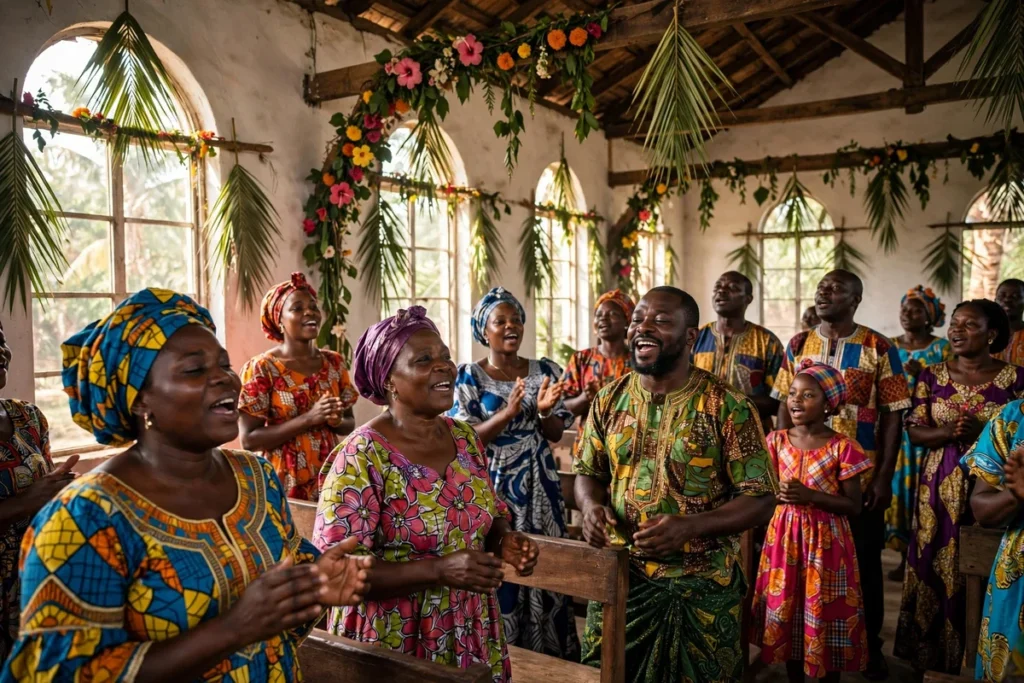
A Liberian Thanksgiving gathering with families sharing a festive outdoor meal under palm trees.
Watch: Thanksgiving in Liberia
Thanksgiving Day in Liberia, up close — a visit to a family farm in Royesville showing how the holiday is really celebrated.
At a Glance: Thanksgiving in Liberia
The facts behind Africa's only Thanksgiving national holiday.
| Fact | Detail |
|---|---|
| The date | First Thursday of November — in 2027, that's 4 November |
| The origin | Founded by freed American slaves (Americo-Liberians) who brought the tradition with them in the 1800s |
| The law | An 1883 Act of the Liberian legislature made Thanksgiving a national holiday by statute |
| The character | A deeply religious holiday — church services and prayer are central, alongside family feasting |
| The menu | Turkey appears, but the table leans Liberian: jollof-style rice, fufu, palm butter, and local greens |
Frequently Asked Questions
When is Thanksgiving in Liberia?
Liberia celebrates Thanksgiving on the first Thursday of November every year. In 2026 that is November 5; in 2027 it is November 4. This is three weeks earlier than American Thanksgiving, which falls on the fourth Thursday of November.
Why does Liberia celebrate Thanksgiving?
Thanksgiving was brought to Liberia by freed Black American settlers in the 19th century and was formally established as a national holiday by an 1883 act of the Liberian Legislature. It is observed as a religious day of gratitude — for freedom, for God’s blessings and mercy, and for the nation’s survival through hardship.
Is Thanksgiving a public holiday in Liberia?
Yes. Thanksgiving is a national public holiday in Liberia. Government offices, banks, and schools close, and the president issues an annual proclamation calling on religious leaders of all faiths to lead thanksgiving observances. For context on how public-holiday status varies elsewhere, see is Thanksgiving a public holiday around the world.
What do Liberians eat on Thanksgiving?
There is no single traditional Thanksgiving meal in Liberia. Families serve festive versions of Liberian dishes — mashed cassava with roasted fish, jollof rice, palm butter, fufu with pepper soup, fried plantains — according to their means and tastes. Turkey is not part of the tradition.
Do other African countries celebrate Thanksgiving?
Liberia is the only African country with an official Thanksgiving modeled on the American holiday. However, many African cultures have their own harvest festivals and gratitude ceremonies — Ghana’s Homowo festival, for example, is a spectacular harvest celebration with its own deep history.
How is Liberian Thanksgiving different from American Thanksgiving?
The date (first vs. fourth Thursday of November), the emphasis (religious worship vs. family feast), the food (Liberian dishes vs. turkey and pumpkin pie), and the meaning (gratitude for freedom and deliverance vs. gratitude for harvest and togetherness). Liberia’s proclamation also explicitly includes Muslim leaders alongside Christian ones, giving the day a distinctive interfaith character.
Why Liberia’s Thanksgiving Matters
In a world where holidays increasingly blur into shopping events, Liberia’s Thanksgiving stands apart as a reminder of what a national day of gratitude can be at its most sincere. There are no doorbuster sales, no televised parades, no arguments about the “right” menu. There is simply a country — one that has known slavery, civil war, and epidemic — choosing, once a year, to gather in its churches and mosques and give thanks together. The 1883 legislators who fixed the first Thursday of November could not have imagined Ebola or the diaspora in Minnesota, but they built something durable: a ritual flexible enough to hold both celebration and mourning, both the homeland and the far-flung. For the rest of the world, Liberia offers a quiet challenge — to remember that gratitude, at its best, is not about abundance but about acknowledgment: of survival, of community, of grace.
Conclusion
Thanksgiving in Liberia is proof that holidays are not fragile heirlooms but living things — capable of crossing an ocean, shedding old skins, and taking root in new soil. What began as an American custom among freed slaves became, through the 1883 act and 140 years of presidential proclamations, something uniquely Liberian: a national day of prayer where bishops and imams alike call their people to gratitude. No turkey, no parade, no shopping frenzy — just a small West African nation pausing, on the first Thursday of every November, to give thanks for freedom and mercy. It may be the least commercialized Thanksgiving on earth, and for that reason alone, it deserves to be better known. To place it in its full global context, browse our Thanksgiving around the world guide, read about Brazil’s own American-inspired celebration in Dia de Ação de Graças, or explore the complete Thanksgiving collection.