Most Americans assume Thanksgiving belongs to them alone. But Brazil — the largest country in South America, home to more than 200 million people — has its own official day of thanks: dia de acao de gracas brazil, the Dia de Ação de Graças, or “Day of Thanksgiving.” Celebrated on the fourth Thursday of November, the exact same day as the United States (November 26 in 2026), Brazil’s Thanksgiving began with a diplomat’s love letter to an American tradition, was written into Brazilian law in 1949, and survives today as a quiet, church-centered holiday that most Brazilians have heard of but few truly celebrate. It is one of the most fascinating “other Thanksgivings” in the world — a holiday imported by admiration rather than colonization. This guide tells the full story: how Brazil got a Thanksgiving, when it falls, how it is observed, what Brazilians eat, and why it remains one of the country’s best-kept secrets.
What Is Dia de Ação de Graças?
Dia de Ação de Graças is Portuguese for “Day of Thanksgiving” (often rendered Dia Nacional de Ação de Graças, the National Day of Thanksgiving). It is Brazil’s official thanksgiving holiday, observed annually on the fourth Thursday of November — the same date as Thanksgiving in the United States. Like its American counterpart, it is a day for giving thanks for the harvest and the blessings of the year, marked by religious services and family meals.
But there the similarities in scale end. Unlike the American holiday, Brazil’s Dia de Ação de Graças is not a public holiday — businesses, schools, and government offices operate normally, and there is no day off work. There is no parade, no football tradition, and no nationwide travel surge. For most Brazilians, the day passes unnoticed; surveys and cultural commentators routinely note that a large share of the population is unaware the holiday exists. It lives on mainly in Protestant churches — particularly Baptist, Methodist, and Presbyterian congregations with historic ties to the United States — in American schools in São Paulo and Rio de Janeiro, among Brazilian families with US connections, and in the hearts of a small but devoted group of celebrants who keep the tradition deliberately alive.
That obscurity is precisely what makes it interesting. Brazil’s Thanksgiving was not imposed by history or demanded by popular movement. It was adopted out of admiration — and its quiet persistence says something lovely about how gratitude travels.
The Remarkable History: A Diplomat, a President, and a Law
The story of Brazil’s Thanksgiving begins with Joaquim Nabuco, Brazil’s ambassador to the United States from 1905 to 1910. Nabuco — already one of Brazil’s most celebrated statesmen, famous as the leading voice of the abolitionist movement that ended slavery in Brazil in 1888 — spent his Washington years immersed in American life. He attended Thanksgiving celebrations, was charmed by the holiday’s spirit of gratitude and family unity, and became convinced that Brazil would be enriched by a similar day of thanks.
Nabuco returned to Brazil and advocated for the idea, but he died in 1910, and the proposal slept for decades. It was revived after World War II, when Brazil’s close wartime alliance with the United States had deepened cultural ties between the two countries. President Eurico Gaspar Dutra — who had led Brazil during the war years — took up the cause, and in 1949 he formally established the holiday: Law No. 781, signed on August 17, 1949, instituted the Dia Nacional de Ação de Graças on the fourth Thursday of November each year.
The choice of date was deliberate and symbolic. By aligning Brazil’s thanksgiving with America’s, the law acknowledged the holiday’s inspiration and invited a sense of shared celebration across the Americas. Brazil thus became one of the very few countries in the world with an officially legislated Thanksgiving modeled directly on the United States — alongside Liberia, whose own Thanksgiving (on the first Thursday of November) arrived via freed American slaves rather than diplomacy. For the American side of the story, see our guides to the first Thanksgiving and Thanksgiving in Liberia.
When Is Dia de Ação de Graças? Key Dates
Dia de Ação de Graças falls on the fourth Thursday of November every year — the same day as US Thanksgiving:
- 2025: November 27
- 2026: November 26
- 2027: November 25
Because it is not a public holiday, the date matters less in Brazil than in the US — there is no long weekend built around it, and celebrations are typically small evening gatherings or church services rather than day-long feasts. (For the American calendar, see when is Thanksgiving 2027.)
How Brazilians Celebrate: Church Services and Family Feasts
Where Dia de Ação de Graças is observed, the celebration follows a recognizable two-part pattern: gratitude first, feasting second.
The Service of Thanksgiving
The day traditionally begins — or, for working Brazilians, the evening begins — with a religious service. Protestant churches hold special cultos de ação de graças (thanksgiving services) featuring hymns of gratitude, prayers for the harvest and the nation, testimonies from congregants about the year’s blessings, and often the decoration of the sanctuary with fruits, grains, and flowers in a manner reminiscent of both American Thanksgiving and the European harvest festival tradition. In a country where the end of November falls in late spring, with jacarandas blooming and the first summer rains arriving, the “harvest” being celebrated is as much spiritual as agricultural — thanks for health, family, work, and deliverance through the year.
The Brazilian Thanksgiving Table
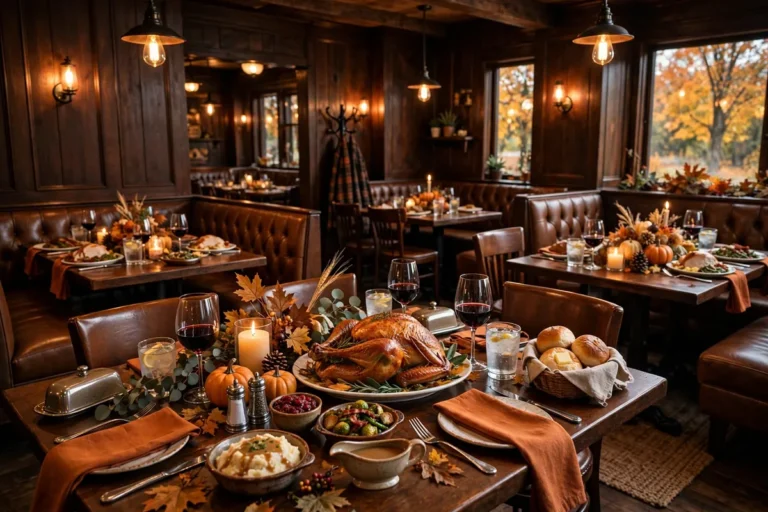
The festive meal will look familiar to any American — and then surprise them. The centerpiece is peru, roast turkey, often prepared with Brazilian touches: marinated in wine or cachaça, stuffed with farofa (the toasted cassava-flour mixture that is Brazil’s indispensable side dish), and accompanied by rice, salads, and roasted vegetables. But the most distinctively Brazilian twist is the cranberry sauce — or rather, its replacement. Cranberries do not grow in Brazil and were historically hard to import, so Brazilian Thanksgiving tables traditionally substitute a sweet-tart sauce made from jabuticaba (also spelled jaboticaba), the extraordinary native fruit that grows directly on the trunk of its tree and tastes like a wild grape. Jabuticaba sauce with roast turkey is the signature flavor of Brazil’s Thanksgiving — a perfect symbol of the holiday itself: an American form filled with Brazilian content.
Other Brazilian touches appear depending on the family: chester (a specially bred Brazilian roasting bird, larger and bred for the Christmas table, sometimes standing in for turkey), rabanada (Brazilian French toast) or American-style pumpkin pie for dessert, tropical fruits, and caipirinhas alongside the meal. In a delicious irony, many Brazilian families who celebrate Thanksgiving do so with greater enthusiasm than the holiday’s low profile would suggest — precisely because it is a choice rather than an obligation, the feast feels personal and intentional.
Why So Few Brazilians Know About It
The obscurity of Dia de Ação de Graças is one of its defining features, and the reasons are instructive. First, it was never a public holiday — without a day off, a holiday struggles to enter the national rhythm. Second, it arrived without a founding myth: unlike America’s Pilgrims or Liberia’s settlers, Brazil’s Thanksgiving has no dramatic origin story in the popular imagination, just a law and a diplomat’s admiration. Third, Brazil already has a crowded festive calendar — Carnival, Festa Junina, Christmas (Natal), and New Year’s (Réveillon) dominate the cultural year, leaving little room for a quiet Thursday of gratitude. And fourth, the Catholic majority, which sets much of Brazil’s religious calendar, never embraced a holiday rooted in Protestant American tradition with the same fervor as the evangelical churches that keep it alive.
Yet the holiday persists, and in recent years it has found new life. American multinational companies in Brazil hold Thanksgiving lunches for staff; international schools stage full celebrations; Brazilian YouTubers and food bloggers publish Dia de Ação de Graças menus each November; and evangelical churches — now representing a large and growing share of Brazilians — continue the tradition of thanksgiving services. The holiday may never rival Carnival, but as a deliberate, chosen celebration of gratitude, it has a quiet integrity all its own.
Dia de Ação de Graças vs. American Thanksgiving
| Feature | Brazil: Dia de Ação de Graças | USA: Thanksgiving |
|---|---|---|
| Date | 4th Thursday of November | 4th Thursday of November |
| Established | 1949 (Law No. 781) | 1863 (Lincoln proclamation); date fixed 1941 |
| Public holiday | No | Yes (federal) |
| Origin | Diplomatic admiration (Joaquim Nabuco) | 1621 harvest feast; national unity |
| Centerpiece dish | Roast turkey (peru), often with farofa stuffing | Roast turkey with bread stuffing |
| Signature sauce | Jabuticaba sauce | Cranberry sauce |
| Parade/football | None | Macy’s Parade, NFL games |
| Public awareness | Low — mainly churches and US-connected families | Universal |
Experiencing Dia de Ação de Graças as a Visitor
If you happen to be in Brazil on the fourth Thursday of November, you can experience Dia de Ação de Graças — but you will need to seek it out, because the country will not announce it to you. Here is how:
Attend a Thanksgiving Service
The most authentic way to experience the holiday is at a culto de ação de graças in a Protestant church. Baptist, Methodist, and Presbyterian churches in São Paulo, Rio de Janeiro, Belo Horizonte, and Brasília are the most likely to hold one; many announce it on their social media pages in the week before. Services are typically in the evening, last one to two hours, and — even if your Portuguese is limited — the structure of hymns, prayers, and testimonies of gratitude is easy to follow. Visitors are warmly welcomed; Brazilian church hospitality is legendary.
American Schools and Cultural Centers
Brazil’s American schools — such as the Escola Americana in São Paulo and Rio — stage full Thanksgiving celebrations, sometimes open to the broader community. Binational cultural centers (the centros binacionais affiliated with the US Embassy network) occasionally host Thanksgiving events as well. These are excellent options for American expats craving a taste of home.
Cook a Brazilian-American Feast
The most rewarding option may be to cook it yourself, Brazilian style. Turkey (peru) is widely available in Brazilian supermarkets in November — the birds are raised for the Christmas season, which begins early in Brazil’s retail calendar. Buy farofa pronta (ready-made toasted cassava flour) for stuffing, hunt down jabuticaba in season (November is within its spring fruiting) or use jabuticaba jelly for the sauce, and finish with pudim de leite or pumpkin pie. Invite Brazilian friends and explain the holiday — you will be introducing most of them to a tradition from their own country’s law books that they never knew existed, which makes for a wonderful evening.
Frequently Asked Questions About Dia de Ação de Graças
When is Dia de Ação de Graças in Brazil?
Dia de Ação de Graças is celebrated on the fourth Thursday of November every year — the same day as Thanksgiving in the United States. In 2026 it falls on November 26; in 2027, on November 25.
Is Dia de Ação de Graças a public holiday in Brazil?
No. Although it was established by federal law in 1949, it is not a public holiday — there is no day off work, and most businesses and schools operate normally. It is observed mainly in churches, American schools, and US-connected families. For a country-by-country breakdown, see is Thanksgiving a public holiday.
Who created Thanksgiving in Brazil?
The idea was championed by Joaquim Nabuco, Brazil’s ambassador to the United States (1905–1910), who admired the American holiday. It was formally established by President Eurico Gaspar Dutra through Law No. 781, signed on August 17, 1949, setting the fourth Thursday of November as the National Day of Thanksgiving.
What do Brazilians eat on Dia de Ação de Graças?
Roast turkey (peru), often stuffed with farofa (toasted cassava flour), accompanied by rice, salads, and roasted vegetables. The signature Brazilian touch is jabuticaba sauce — made from the native jabuticaba fruit — in place of cranberry sauce. Desserts may include pumpkin pie or Brazilian sweets.
Do Brazilians celebrate Thanksgiving like Americans?
A small minority does — mainly evangelical Protestant churches, international schools, and families with American ties. There is no parade, no football tradition, and no nationwide travel. Most Brazilians are unaware the holiday exists. It is a genuine but quiet observance, which is part of its charm.
How do you say “Thanksgiving” in Portuguese?
Dia de Ação de Graças — literally “Day of Thanksgiving” or “Day of Action of Thanks.” The full official name is Dia Nacional de Ação de Graças (National Day of Thanksgiving).
Conclusion: Brazil’s Quietest Holiday
The dia de acao de gracas brazil story is a reminder that holidays do not only spread by conquest or commerce — sometimes they travel by admiration. A Brazilian diplomat fell in love with an American Thursday in November, a president wrote it into law, and seventy-five years later a handful of churches, schools, and families still set an extra place for gratitude. It will never be Carnival. It was never meant to be. But on the fourth Thursday of every November, while the jacarandas bloom and the turkey roasts, Brazil keeps its own small, deliberate thanksgiving — and that is worth celebrating. To see how Brazil’s holiday fits into the global picture, explore our guide to Thanksgiving around the world, and browse more Thanksgiving and harvest celebrations on DayZora.
The Churches That Keep the Flame
To understand why Dia de Ação de Graças survives at all, look to Brazil’s churches. The holiday’s most faithful custodians are the country’s historic Protestant denominations — Baptists, Methodists, Presbyterians, and Lutherans — whose missionary roots trace directly to the United States. For these congregations, Thanksgiving is not a borrowed novelty but a piece of their own heritage: American missionaries brought both the gospel and the gratitude Thursday, and Brazilian Protestants kept both.
The holiday’s prospects have brightened considerably with the explosive growth of evangelical Christianity in Brazil. Over recent decades, evangelicals have grown from a small minority to roughly a third of Brazil’s population, and thanksgiving services fit naturally into their worship culture of testimony and gratitude. Each November, thousands of evangelical churches across the country hold cultos de ação de graças, many of them completely unaware that they are observing a holiday established by federal law — they simply consider gratitude a biblical mandate worth a dedicated service. In this way, Brazil’s Thanksgiving has achieved something quietly remarkable: it survives not through state power or commercial promotion, but through genuine religious devotion.
Catholic participation remains limited but not absent. Some Catholic parishes, particularly those with American priests or strong youth ministries, have adopted thanksgiving-themed Masses in November. And Brazil’s growing community of American expatriates — concentrated in São Paulo, Rio de Janeiro, and Brasília — celebrates enthusiastically, often inviting Brazilian friends and inadvertently evangelizing for the holiday one dinner party at a time.
A Sample Brazilian Thanksgiving Menu
For readers inspired to cook a Brazilian-style Thanksgiving, here is a classic menu that honors both traditions:
- Entrance: Caldo de abóbora — Brazilian pumpkin soup, silky and warming, a natural bridge between the two cuisines.
- Main: Peru assado — roast turkey marinated in white wine, garlic, and herbs, stuffed with farofa made from toasted cassava flour, bacon, and raisins.
- Sauce: Molho de jabuticaba — the signature sweet-tart jabuticaba sauce, Brazil’s answer to cranberry.
- Sides: White rice, salpicão (Brazilian chicken-vegetable salad), roasted root vegetables, and maionese de legumes (Brazilian potato salad).
- Dessert: Pumpkin pie for the American half of the table; pudim de leite condensado (condensed-milk flan) for the Brazilian half.
- Drinks: Caipirinhas before dinner, Brazilian wines or sparkling espumante with the meal.
Serve it on the fourth Thursday of November, begin with each guest naming something they are grateful for — in Portuguese or English — and you will be celebrating Dia de Ação de Graças exactly as its founders intended: two cultures, one table, shared thanks.
More Questions About Brazil’s Thanksgiving
Why is Brazil’s Thanksgiving on the same day as America’s?
Deliberately so. When President Dutra established the holiday in 1949, the fourth Thursday of November was chosen to align with the United States — an acknowledgment of the holiday’s American inspiration and a gesture of Pan-American fellowship. Brazil is the only country whose thanksgiving was synchronized with America’s by design.
Can I find Thanksgiving dinner at a restaurant in Brazil?
It is difficult. Because the holiday is not widely observed, Brazilian restaurants do not typically offer Thanksgiving menus. Your best bets are international hotels in São Paulo and Rio de Janeiro — which sometimes cater to American business travelers in late November — or the expat community’s potluck dinners. Cooking at home, Brazilian style, is the most authentic option.
The Future of Dia de Ação de Graças
What lies ahead for Brazil’s quiet Thanksgiving? The trends point gently upward. Brazil’s deepening economic and cultural ties with the United States keep the holiday visible in multinational workplaces and international schools. Food media — Brazilian cooking channels and food bloggers — discover it anew every November, publishing peru de Ação de Graças recipes that introduce the holiday to audiences who never knew it was theirs. And the continued growth of evangelical churches guarantees the thanksgiving service tradition a durable home.
There is even a case that obscurity is the holiday’s strength. Unburdened by commercial pressure or obligatory travel, Dia de Ação de Graças remains what Thanksgiving was always meant to be: a deliberate pause for gratitude, chosen rather than imposed. In a world of increasingly frantic holidays, Brazil’s may be the most countercultural Thanksgiving of all — small, sincere, and entirely its own.
In Pictures: Dia de Ação de Graças in Brazil
Brazil has its own Thanksgiving — Dia de Ação de Graças — born from a diplomat's admiration and a president's signature. Here's the Brazilian celebration.

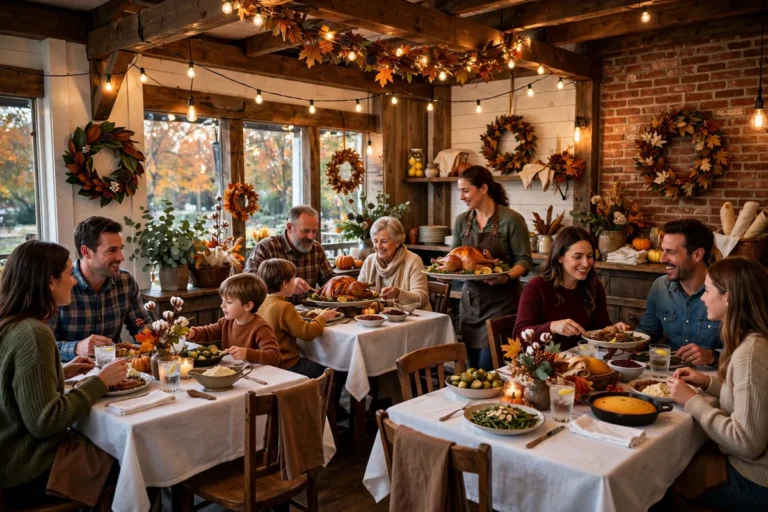
A Brazilian family Thanksgiving table with farofa, roasted meats, and tropical touches alongside traditional dishes.
Watch: Dia de Ação de Graças in Brazil
Thanksgiving Brazilian-style — the whole family together for a countryside lunch, showing how the holiday feels in Brazil.
At a Glance: Dia de Ação de Graças in Brazil
The facts behind Brazil's Thanksgiving.
| Fact | Detail |
|---|---|
| The date | Fourth Thursday of November — same day as the United States |
| The law | Law No. 781 of 1949, signed by President Eurico Gaspar Dutra |
| The diplomat | Inspired by Ambassador Joaquim Nabuco's admiration for the American holiday and Pan-American friendship |
| The status | Officially recognized but not a public holiday — no day off work |
| The character | A quiet, church-centered observance — most Brazilians have heard of it, few celebrate it widely |