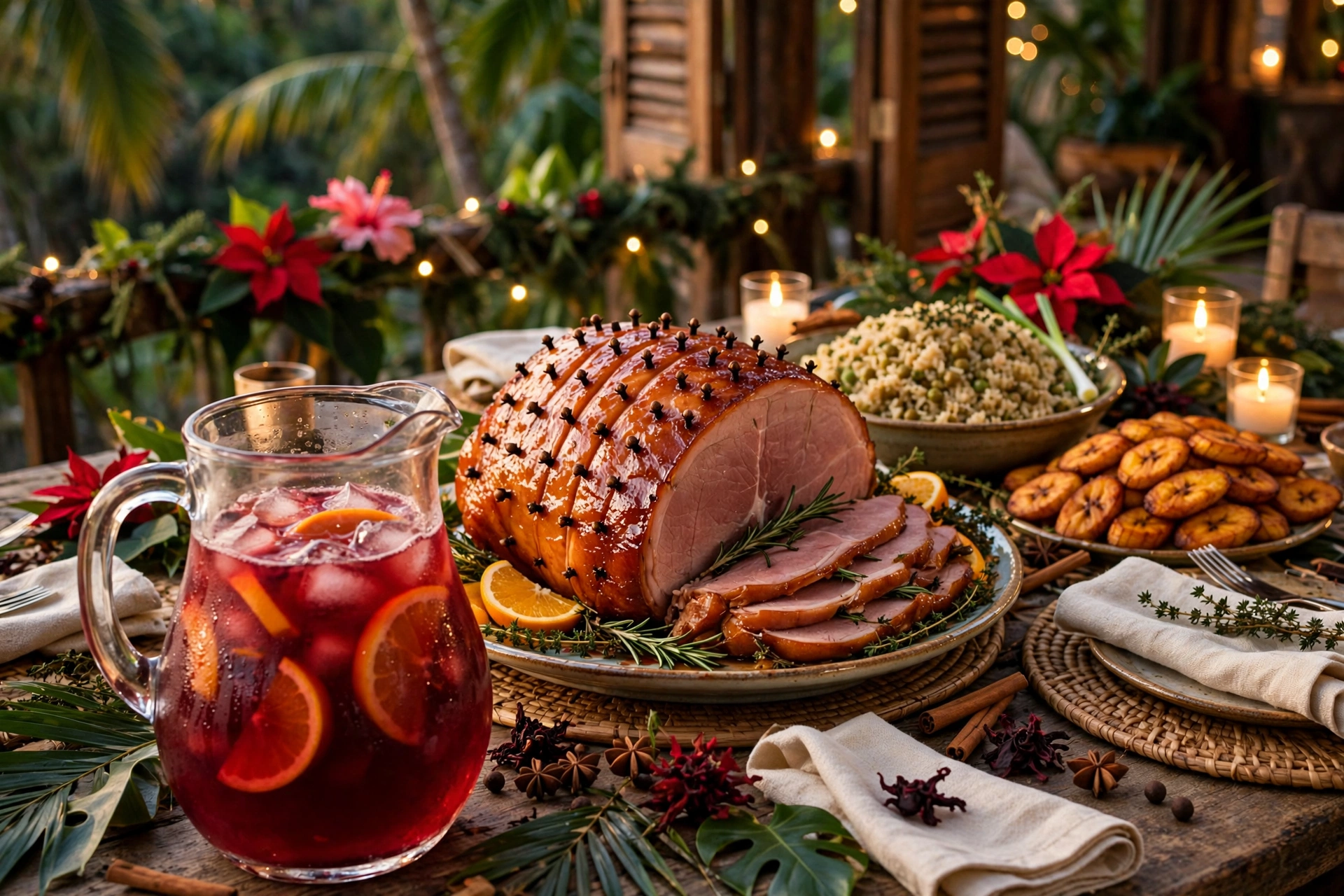
Christmas in Jamaica is a full-sensory celebration — the sound of carols mixed with reggae on the radio, the smell of pimento and rum in the air, and at the center of every gathering, a tall glass of deep-red sorrel. The jamaican christmas dinner sorrel tradition is inseparable from the holiday itself: this ruby-colored drink, brewed from dried hibiscus sepals with ginger, pimento, and a whisper of rum, is Christmas in a glass for Jamaicans at home and across the diaspora. Around it gathers one of the Caribbean’s great festive tables — Christmas ham, gungo peas and rice, roast meats, and the legendary Jamaican Christmas cake. This guide explores the complete Jamaican Christmas dinner: the sorrel, the dishes, the customs, and how to bring this joyful table to your own home.
Sorrel: The Drink That Means Christmas
Ask a Jamaican what sorrel is and you will get a look of affection usually reserved for family members. Sorrel (Hibiscus sabdariffa, known elsewhere as roselle or Jamaica flower — the plant is literally named for the island in botanical trade) is harvested in late autumn, and its fleshy red calyces are dried and sold in markets just in time for Christmas. The drink is made by steeping the dried sorrel with fresh ginger, pimento (allspice) berries, cloves, and sometimes orange peel, then sweetening and chilling it. The result is a tart, aromatic, crimson cooler that tastes like the holidays.
Sorrel is emphatically a Christmas drink. Jamaicans may sip it occasionally through the year, but December is sorrel season: the fresh harvest arrives, every household brews its batch, and no Christmas party, church social, or family dinner is complete without a jug of it. Many families add white rum — sometimes a generous pour — making “sorrel with a kick” the adult version; children get the virgin brew. The drink keeps for weeks refrigerated, and its flavor deepens over days, which is why experienced hosts brew it well before Christmas. If you are building a holiday drinks lineup, sorrel deserves a place alongside the classics in our Christmas party ideas for festive entertaining.
How to Make Jamaican Christmas Sorrel
Ingredients: 2 cups dried sorrel (hibiscus) sepals; 1 large piece fresh ginger (about 4 inches), crushed or grated; 8–10 pimento (allspice) berries, lightly crushed; 4–6 whole cloves; 1 cinnamon stick; peel of 1 orange (optional); 8 cups water; 1–1½ cups sugar (to taste); white rum to taste (optional).
Method: Bring the water to a boil with the ginger, pimento, cloves, cinnamon, and orange peel. Remove from heat, stir in the dried sorrel, cover, and steep overnight (8–12 hours) at room temperature — the long steep is what builds the deep color and complex flavor. Strain through a fine sieve or cheesecloth, pressing the solids. Stir in sugar while the liquid is still slightly warm until dissolved; sweeten boldly, as the tartness needs balance. Chill thoroughly. Add rum to taste if desired — start with ½ cup per batch and adjust. Serve over ice with a slice of orange or lime. The sorrel keeps 2–3 weeks refrigerated and the flavor improves over the first few days.
The Jamaican Christmas Dinner: Course by Course
The Jamaican Christmas dinner is a feast of abundance, reflecting the island’s African, European, Indian, and Chinese culinary heritage. Christmas Day lunch — typically served in the early afternoon — is the main event. Here is how the traditional table unfolds:
The centerpiece: Christmas ham
The Jamaican Christmas ham is legendary. A large smoked ham — often a bone-in picnic ham — is simmered, then glazed (pineapple, honey, brown sugar, and mustard are classic) and baked until caramelized. It is the visual and culinary anchor of the table, carved thick and served to all. Some families do a roast pork or roast chicken as well, but ham is the non-negotiable star. The leftovers — and there are always leftovers — become sandwiches, soups, and breakfast plates through the new year.
Gungo peas and rice
If sorrel is the drink of Jamaican Christmas, gungo peas and rice is its starch. Gungo peas (pigeon peas) — fresh in December, which is exactly why they belong to Christmas — are cooked with rice, coconut milk, thyme, scallion, and Scotch bonnet pepper into a fragrant, savory pilaf. The coconut milk gives it richness; the peas give it substance. Sunday dinner in Jamaica is rice and peas year-round, but Christmas demands the fresh gungo peas of the season, and the dish is made in quantities that suggest a small army is coming — because one usually is.
Roast meats and more
Beyond ham, the Christmas table often includes:
- Roast chicken or turkey: Seasoned with Jamaican herbs and spices — thyme, scallion, pimento, garlic — and roasted golden.
- Curried goat: In many households, a rich curried goat appears at Christmas, reflecting the island’s Indian heritage.
- Oxtail: Slow-braised oxtail in a rich brown gravy is celebration food in Jamaica, and Christmas is its natural stage.
- Fried chicken: Crispy, well-seasoned fried chicken is a crowd-pleaser that appears at large family gatherings.
- Escovitch fish: In coastal families, fried fish dressed with pickled vegetables in vinegar may join the spread.
Sides and salads
- Macaroni pie: Jamaica’s beloved baked macaroni and cheese — firm, sliceable, golden on top — is essential at holiday tables.
- Potato salad: Creamy and well-seasoned, a cooling counterpoint to the rich meats.
- Coleslaw and tossed salad: Fresh crunch against the feast’s richness.
- Fried plantains: Sweet, caramelized ripe plantains — no Jamaican celebration is complete without them.
- Bammy or festival: Cassava flatbread or sweet fried dumplings, for scooping and sopping.
- Callaloo: Steamed leafy greens with onion, thyme, and Scotch bonnet — the vegetable anchor of the plate.
Dessert: Jamaican Christmas cake and beyond
The Jamaican Christmas cake — also called black cake or rum cake — is one of the great fruit cakes of the world. Dried fruits are soaked in rum and port for months (serious bakers start in summer), then folded into a dark, moist, intensely flavored cake that is nothing like the much-maligned dry fruitcake of other traditions. It is rich, boozy, and magnificent. A proper Jamaican Christmas table also features:
- Sweet potato pudding: Dense, spiced, coconut-milk pudding with a caramelized top — a close rival to the Christmas cake for dessert supremacy.
- Coconut drops and grater cake: Traditional coconut sweets that appear on holiday sweet trays.
- Christmas pudding: The British-style steamed pudding persists in some families, a colonial legacy.
- Ice cream and fruit cake: Simple vanilla ice cream alongside a slice of black cake is a classic pairing.
For more festive finales from around the globe, see our Christmas desserts around the world roundup.
Christmas Customs in Jamaica: Beyond the Table
The Jamaican Christmas dinner sits within a rich web of holiday customs that make December on the island unforgettable:
- Grand Market: On Christmas Eve, towns across Jamaica hold Grand Market — a festive night market where vendors sell toys, clothes, food, and fireworks, and families stroll, shop, and snack until the early hours. It is part shopping trip, part street party, and a beloved institution.
- Midnight Mass and church services: Jamaica is a deeply churchgoing nation, and Christmas Eve and Christmas Day services — with choirs, candles, and carols — anchor the holiday spiritually.
- Caroling and music: Carol singing, both formal and impromptu, fills December. Sound systems play Christmas reggae and soca; the season has its own soundtrack.
- Jonkonnu (John Canoe): The traditional masked street parade — with roots in West African festival culture — still appears in some communities at Christmas, with costumed dancers, drummers, and the horned “Pitchy Patchy” character.
- House cleaning and painting: The pre-Christmas deep clean — and in many households, a fresh coat of paint — is a serious tradition. The house must be spotless for the holidays.
- New clothes: Christmas outfits, especially for children, are a big deal — traditionally worn to church on Christmas morning.
- Fireworks: Christmas Eve and New Year’s Eve bring fireworks and firecrackers, adding literal sparks to the celebration.
The Diaspora Table: Christmas Away From Home
For the vast Jamaican diaspora — in the UK, the US, Canada, and beyond — the Christmas dinner is an act of cultural preservation. Dried sorrel is shipped or carried in suitcases; gungo peas (fresh or dried) are sourced from Caribbean grocers; the Christmas cake’s fruit soaks in rum through the autumn. In cities like London, Toronto, and New York, December brings a thriving trade in Caribbean Christmas provisions, and community gatherings replicate the island’s warmth against the northern cold. The sorrel brewed in a Brooklyn or Brixton kitchen tastes of memory as much as hibiscus — and that is exactly the point. Community Christmas parties, church fundraisers, and Caribbean restaurants all serve the full spread through December, so even those who cannot cook the feast can still taste it. If you are far from home this Christmas, our Christmas wishes and messages can help you send the season’s love across the miles.
Hosting a Jamaican Christmas Dinner: A Practical Plan
Want to bring this table to your own home? Here is how to plan it:
- Start the sorrel early: Brew it at least 3–4 days before Christmas so the flavor develops. Make a double batch — it disappears fast.
- Soak the cake fruit ahead: Ideally weeks ahead, but even a week of soaking in rum transforms the Christmas cake. In a pinch, simmer the fruit in rum for 20 minutes to jump-start the process.
- Order the ham: A bone-in smoked ham feeds a crowd; glaze it with pineapple juice, brown sugar, and mustard for the classic finish.
- Source the peas: Fresh gungo peas are seasonal; dried pigeon peas (available at Caribbean and Latin grocers as gandules) work beautifully when fresh are unavailable.
- Cook in waves: The Jamaican Christmas table is abundant — assign dishes to family members potluck-style, as Jamaican families do.
- Do not skip the plantains: Use very ripe (nearly black) plantains for maximum sweetness; fry in hot oil until deeply golden.
- Set the soundtrack: Christmas reggae, soca parang, and classic carols — the music is part of the menu.
- Plan for Boxing Day: Like much of the Caribbean, Jamaica observes Boxing Day (26 December); leftovers — ham, cake, sorrel — fuel the second day of celebration.
Compare this abundant island table with other tropical Christmas traditions in our series, like the South African Christmas braai menu or the Indian Christmas kuswar sweets — proof that Christmas tastes wonderful far from the snow.
The Story of Sorrel: From West Africa to Jamaica
Sorrel’s journey to the Jamaican Christmas table spans continents and centuries. Hibiscus sabdariffa is native to West Africa, where hibiscus drinks — known as bissap in Senegal, zobo in Nigeria — have been brewed for generations. Enslaved Africans carried the plant and the knowledge of it across the Atlantic, and it took root in Jamaica’s tropical soil, where it thrived. The plant even picked up the name “Jamaica flower” (flor de Jamaica) in Latin American trade, a testament to how strongly the island became associated with it.
The Christmas connection grew naturally: sorrel harvests in Jamaica peak in late November and December, just as the holiday season begins. What was available became what was traditional, and over generations the drink absorbed Jamaican character — the ginger, the pimento, the rum — until it became inseparable from Christmas itself. Today, when Jamaicans abroad taste sorrel in December, they are tasting a direct line to West African heritage filtered through centuries of island history. Few Christmas traditions carry such deep roots in such a joyful package.
The plant’s versatility extends beyond the drink: the fresh calyces can be made into jams and sauces, the leaves are cooked as greens in some traditions, and dried sorrel is now a global commodity, exported from Jamaica and West Africa to markets worldwide. But in Jamaica, in December, it has one true destiny: the Christmas jug.
Christmas Morning: Breakfast Jamaican-Style
Before the great Christmas dinner, there is Christmas breakfast — and in Jamaica, it is an event in its own right. After church (many families attend Christmas morning service in their new outfits), the table fills with the island’s beloved breakfast dishes:
- Ackee and saltfish: Jamaica’s national dish — sautéed ackee fruit with salted cod, onion, thyme, and Scotch bonnet — is the crown of any festive breakfast.
- Fried dumplings (johnnycakes): Golden, crisp-edged fried dough, perfect alongside ackee.
- Callaloo and saltfish: Steamed greens with flaked saltfish, another breakfast classic.
- Bammy: Cassava flatbread, fried or steamed, for sopping up every last bit.
- Chocolate tea: Traditional Jamaican hot chocolate, made by grating balls of locally grown cocoa with spices — rich, dark, and nothing like instant cocoa.
- Festival and plantains: Sweet fried dumplings and caramelized plantains round out the spread.
- Fresh fruit: June plum, mangoes (out of season but sometimes found), bananas, and pineapples.
Christmas breakfast is leisurely — a slow build toward the afternoon’s main feast, with sorrel flowing from the first jug of the day. Children, meanwhile, are occupied with the serious business of new toys and the neighborhood’s collective excitement.
Sorrel Variations Worth Trying
The classic sorrel recipe is the foundation, but Jamaican households love to riff:
- Sparkling sorrel: Top chilled sorrel with ginger beer or sparkling water for a festive fizz — excellent as a Christmas party punch.
- Sorrel sangria: Add sliced oranges, apples, and a bottle of red wine to a jug of sorrel for a Caribbean sangria.
- White sorrel: Made with extra ginger and less steeping time for a lighter, paler brew — some families prefer it less tart.
- Sorrel syrup: Reduce sweetened sorrel into a syrup for drizzling over ice cream, cheesecake, or Christmas cake — or for making sorrel cocktails year-round.
- Sorrel tea (hot): The steeped brew, served hot with honey, makes a wonderful winter warmer — closer to its West African roots.
- Sorrel rum punch: For the adults’ table: sorrel, white rum, lime, and a grating of nutmeg over crushed ice.
Whatever the variation, the rule holds: brew it ahead, serve it cold (unless it’s the hot version), and make more than you think you need. Running out of sorrel at a Jamaican Christmas gathering is a hosting failure of the first order.
Setting the Scene: The Jamaican Christmas Home
The Jamaican Christmas dinner tastes even better in a properly dressed house, and Jamaican holiday décor has its own joyful character. The Christmas tree — real or artificial — goes up in early December, often with a distinctly tropical flair: ornaments in the red, green, and gold of the season mixed with handmade decorations. Many homes display a nativity scene, and Christmas lights outline verandas and gardens, glowing against the warm December nights.
Because the weather is warm, entertaining flows between indoors and outdoors — the veranda, the yard, the patio all become dining rooms. Tables are dressed with the best tablecloths, and the sorrel jug takes pride of place. Poinsettias grow naturally in Jamaica’s climate and appear in gardens and as cut decorations. If you are decorating your own space for a Jamaican-themed Christmas dinner, lean into the color: deep red sorrel tones, lush greens, gold accents, and candlelight. Our Christmas decoration ideas can help you build the festive backdrop.
And the celebration does not end on the 25th. Boxing Day brings more gatherings and the serious business of finishing the leftovers. New Year’s Eve is another major feast night, and the sorrel jug — if any survived — makes its final appearance. In Jamaica, the Christmas season is a marathon, not a sprint, and the table is its finish line, crossed again and again.
Finding Sorrel and Jamaican Ingredients Near You
Outside Jamaica, dried sorrel is sold at Caribbean, Latin American, and African grocery stores — often labeled “Jamaica flower,” “flor de Jamaica,” or “roselle” — and through online retailers, with the widest selection appearing from November onward. Gungo peas turn up dried (as pigeon peas or gandules) or canned; fresh ones are a rare treat outside the tropics. Jamaican Christmas cake is sold by Caribbean bakeries every December in cities with large diaspora communities, and many take holiday orders weeks in advance. Stock up early: the best provisions sell out well before Christmas week.
One final note for the curious: sorrel’s deep red color also makes it a natural holiday dye and cocktail ingredient, and health-conscious drinkers prize it unsweetened as a tart, refreshing tisane. However you brew it, serve it proudly — in Jamaica, offering a guest sorrel at Christmas is offering them the season itself.
In Pictures: Jamaican Christmas Dinner and Sorrel
Christmas in Jamaica centers on a tall glass of deep-red sorrel — dried hibiscus brewed with ginger and pimento — surrounded by Christmas ham, gungo peas and rice, and rum-soaked cake.
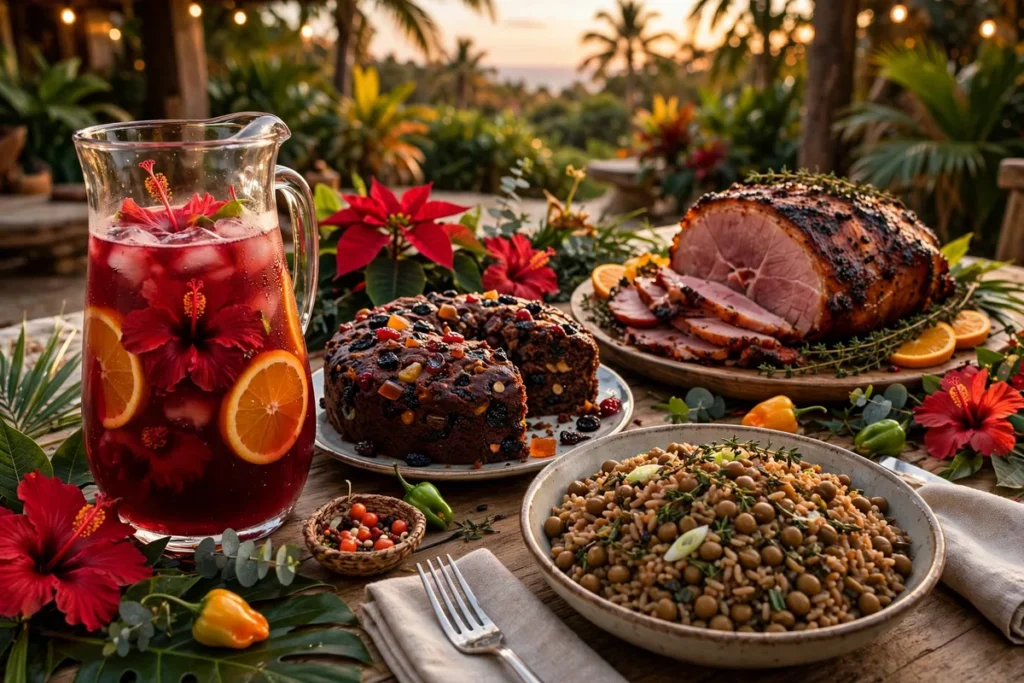
The Jamaican Christmas table: a pitcher of deep-red sorrel with hibiscus and orange, rum fruit cake, and gungo peas and rice among the poinsettias.
Watch: Jamaican Christmas Dinner and Sorrel
Jamaica With Irie shares the story and recipe of sorrel juice — the traditional Jamaican Christmas drink — from ingredients to the origins behind it.
At a Glance: Jamaican Christmas Dinner and Sorrel
The drink, the dishes, and the customs of a Jamaican Christmas table.
| Element | Role | Key detail |
|---|---|---|
| Sorrel | The drink | Dried calyces of Hibiscus sabdariffa (roselle), harvested in late autumn and brewed in December — sorrel season is Christmas season |
| Ginger and pimento | The spice | Fresh ginger, pimento (allspice) berries, cloves, and orange peel steeped with the sorrel for its signature warmth |
| White rum | The adult version | Many families add a generous pour of white rum — “sorrel with a kick”; children get the virgin brew |
| Christmas ham | The main | Roast ham anchors the Jamaican Christmas dinner, often with jerk seasoning |
| Gungo peas and rice | The side | Rice and peas made with gungo (pigeon) peas and coconut — the classic Caribbean pairing |
| Christmas cake | The dessert | The legendary rum-soaked Jamaican fruit cake, dark, rich, and months in the making |
| Brewing ahead | The custom | Experienced hosts brew sorrel well before Christmas; its flavor deepens over days and it keeps for weeks refrigerated |
Frequently Asked Questions
What is Jamaican Christmas sorrel made of?
Dried sorrel (hibiscus) sepals steeped with fresh ginger, pimento (allspice) berries, cloves, and cinnamon, then sweetened with sugar and chilled. Many families add white rum. It is brewed in December from the fresh harvest and served throughout the holidays.
What is traditionally eaten for Christmas dinner in Jamaica?
Glazed Christmas ham is the centerpiece, with gungo peas and rice, roast chicken or turkey, curried goat or oxtail, macaroni pie, potato salad, fried plantains, and Jamaican black (rum) cake and sweet potato pudding for dessert.
What are gungo peas?
Gungo peas are pigeon peas, a staple legume in Caribbean cooking. They are in season in December in Jamaica, which is why gungo peas and rice — cooked with coconut milk, thyme, and Scotch bonnet — is the definitive Christmas side dish.
Is Jamaican sorrel alcoholic?
Not necessarily. The base drink is non-alcoholic and served to all ages; adults often add white rum to their glasses or to a separate batch. Always label which jug is which at a party.
What is Jamaican black cake?
Black cake (Jamaican Christmas cake or rum cake) is a dark, moist fruit cake made with dried fruits soaked in rum and port for weeks or months. It is rich, boozy, and completely different from dry commercial fruitcake.
What is Grand Market in Jamaica?
Grand Market is the festive Christmas Eve night market held in towns across Jamaica — vendors sell toys, clothes, food, and fireworks while families stroll and celebrate into the early hours of Christmas morning.