
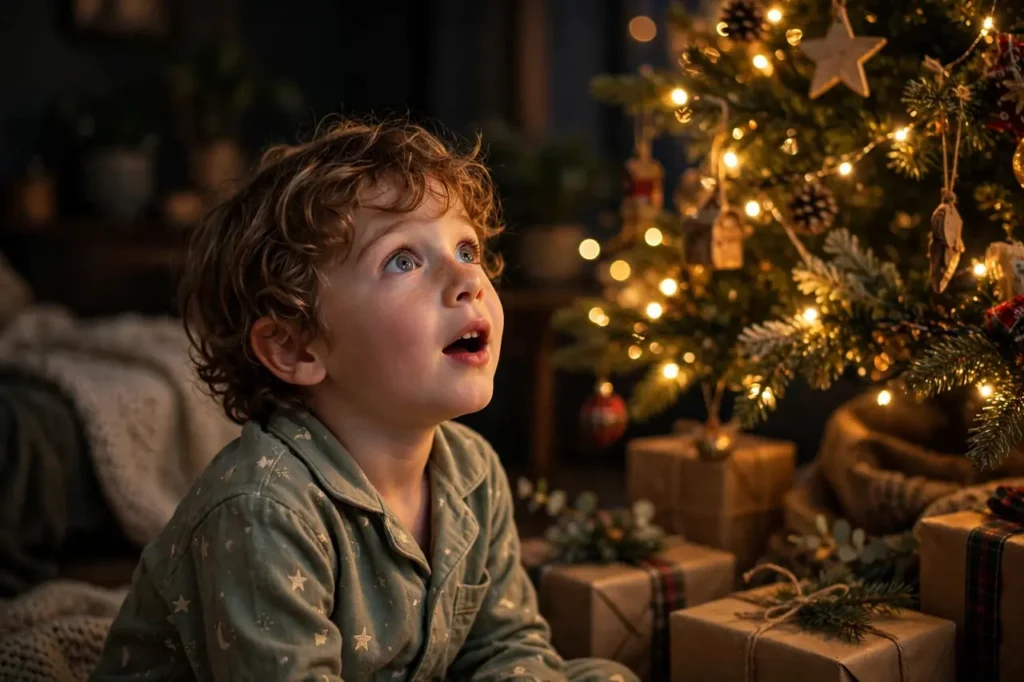
Do you remember when Christmas felt like actual magic? Not the pleasant, well-organized holiday cheer of adulthood, but the electric, stomach-fluttering, cannot-sleep kind of magic. The tree lights looked like they were breathing. The air itself seemed to sparkle. And somewhere along the way, between the gift budgets and the grocery lists and the group-chat logistics, the magic quietly packed its bags and left. If you are wondering how to make Christmas feel special again, not just pleasant, not just successful, but genuinely, heart-expandingly special, this guide is your way back.
Here is the good news the nostalgia does not tell you: the magic did not die. It just got buried under logistics. Psychologists who study ritual and well-being have found something beautiful: the feeling of “specialness” is not an accident of childhood or a property of the holiday itself. It is manufactured, reliably and repeatably, by three ingredients: sensory richness, deliberate slowness, and shared meaning. Children get all three by default. Adults have to build them on purpose. But build them you can, and the Christmas you create deliberately will feel more magical than any you remember, because this time you will be awake for it.
This guide gives you 33 small rituals for how to make Christmas feel special again, organized by what they feed: rituals that slow you down, rituals that flood your senses, rituals that bind you to your people, rituals of giving, rituals just for you, and rituals that rebuild wonder for your kids. You will also find the psychology of why the magic fades and how to reverse it, a magic matrix matching every ritual to its effort and impact, and answers to the questions everyone asks about recapturing the feeling. Pick five rituals. Start this week. The magic is closer than you think.
Why Christmas Stops Feeling Special (and How to Get It Back)
The magic fades for specific, fixable reasons, and naming them is the first step to reversing them. Reason one: Christmas became a project. Somewhere in adulthood, the holiday shifted from something you experience to something you manage: budgets, menus, travel plans, gift spreadsheets. Management mode and wonder mode cannot run simultaneously; the brain that is tracking shipping deadlines cannot also feel awe at fairy lights. Reason two: the senses went quiet. Childhood Christmas was a full-body experience: the smell of the tree, the cold air on your face, the crinkle of wrapping paper, the taste of once-a-year cookies. Adult Christmas is often experienced through a to-do list, with the senses on mute.
Reason three: novelty died. The tenth identical Christmas blurs together because the brain stops recording what it has seen before. Children feel magic partly because everything is new; adults feel routine because everything repeats. Reason four: you stopped being the audience and became the crew. Someone has to buy the gifts, cook the food, and hang the lights, and that someone is you now. The crew rarely feels the magic; they feel the labor. The fix for all four is the same: deliberately reintroduce sensory richness, slowness, novelty, and moments where you get to be the audience again. That is exactly what the 33 rituals below do, one small ceremony at a time.
Slow-Down Rituals: Reclaiming the Season (1–6)
Magic needs time the way fire needs oxygen. These rituals carve slowness out of the busiest month of the year, and they are the highest-impact changes on this entire list.
1. The December 1st deceleration. On the first day of December, write down everything Christmas-related you are doing this year, then cross off three things. Not reschedule, cross off. The party you dread, the third batch of cookies nobody asked for, the elaborate thing you do from guilt. Every crossed-off item is an hour returned to wonder. This single ritual, done once, changes the texture of the entire month.
2. The nightly tree-light sit. Every evening in December, turn off every light in the house except the tree, and sit with it for ten minutes. No phone, no planning, just the glow. Drink something warm. Let your mind wander. This sounds almost too simple to matter, and it is the ritual readers report back about most: ten quiet minutes with the tree lights rewires the whole season.
3. The slow morning rule. Declare that Christmas week mornings have no alarms, no schedules, and no rushing. Wake when you wake, move slowly, let the day unfold. The feeling of unhurried time is the single rarest luxury of adult life, and gifting it to yourself for one week recreates the endless-feeling days of childhood Decembers.
4. The one-thing day. Pick one day in December and do exactly one Christmas thing: only the tree, only the baking, only the wrapping. No multitasking, no errands squeezed in. Doing one thing with full attention turns a chore into a ceremony, and you will remember that day vividly while the frantic multi-tasking days blur together.
5. The phone-free evening. Choose one evening a week in December, dinner through bedtime, with phones in a drawer. No photos, no scrolling, no “just checking.” The first time feels strange; by the third week it feels sacred. Presence is the price of magic, and this ritual pays it in full.
6. The Christmas Eve pause. Before the chaos of Christmas Eve begins, take fifteen minutes alone. Walk, sit by the tree, drive around the neighborhood looking at lights. Use the time to consciously arrive at the holiday: this is happening, it is beautiful, I am here for it. This deliberate pause is the difference between Christmas happening to you and you happening to Christmas.
Sensory Magic: Making It Feel Like Christmas (7–12)
Your brain decides how special something feels largely through your senses. These rituals flood the senses with the specific smells, sounds, tastes, and sights that your nervous system has filed under “Christmas magic” since childhood.
7. The signature scent. Choose one scent for the season and saturate your home with it: simmering orange, clove, and cinnamon on the stove; a pine or balsam candle; fresh eucalyptus in the shower. Scent is the sense most directly wired to memory and emotion, and a consistent seasonal scent will, within days, make your whole house feel like Christmas every time you walk in.
8. The Christmas music curfew. No Christmas music until December 1st, then all of it, all the time: while cooking, while driving, while wrapping. The enforced wait rebuilds the novelty your brain needs to feel the thrill, and the flood afterward feels like a celebration rather than background noise. Make a family playlist everyone adds to; the arguments about which version of “Last Christmas” is definitive are part of the fun.
9. The taste calendar. Assign one special Christmas taste to each week of December: week one, the first candy cane; week two, the first batch of your signature cookie; week three, eggnog; week four, the Christmas dinner flavors. Spacing the tastes out restores the “once-a-year” thrill that makes holiday food magical instead of merely available.
10. The lights walk. Once a week, walk or drive through the best-decorated neighborhood near you, slowly, with hot drinks. No destination, no hurry. The childlike wonder of looking at lights is not childish; it is your visual cortex responding exactly as designed to beauty and novelty. Go after rain when the wet streets double the glow.
11. The texture ritual. Wear the soft things: the fuzzy socks, the cashmere-feeling throw, the flannel that is worn to perfection. Touch the tree branches when you walk past. Hold the warm mug with both hands. Deliberate physical comfort signals safety to your nervous system, and safety is the soil wonder grows in.
12. The first-snow ceremony. If snow comes, stop everything and go outside for five minutes, no matter what you are doing. Catch flakes on your tongue, make one snowball, breathe the specific cold air that smells like winter. Adults who maintain a first-snow ritual report it as one of their most cherished traditions; it is five minutes that says the world is still capable of surprising you.
Togetherness Rituals: The People Are the Magic (13–19)
Ask anyone over sixty what made childhood Christmases magical and they will not mention a single gift. They will mention people. Connection is the deepest well of specialness, and these rituals draw from it deliberately.

13. The annual question. At Christmas dinner, go around the table with one question everyone answers: “What was your favorite moment of this year?” or “What are you most grateful for right now?” The answers become an oral history of your family, and the ritual of asking, year after year, turns dinner into something closer to ceremony. Write the answers down; future you will weep with gratitude.
14. The Christmas Eve box. Give each person, especially kids, a small box on Christmas Eve containing new pajamas, hot chocolate, a Christmas book or movie, and a handwritten note. It creates a whole second celebration on the night before, stretches the magic across two days, and the matching-pajamas photo it produces is a bonus. This tradition has exploded in popularity because it works: anticipation, ritualized.
15. The ornament story night. One December evening, decorate the tree slowly, and with each ornament, tell its story: who gave it, what year, what it means. The chipped one from childhood, the baby’s-first from the hospital gift shop, the ridiculous one from a white-elephant exchange that became beloved. The tree becomes a memoir, and the decorating becomes the year’s best storytelling night.
16. The caroling walk. Gather whoever will come, print simple lyric sheets, and walk the neighborhood singing, badly and joyfully. It feels mortifying for the first three houses and transcendent by the tenth. Strangers’ lit-up faces in doorways will restore your faith in the season faster than anything else on this list.
17. The movie marathon with rules. Not just watching Christmas movies, but ritualizing it: same order every year, specific snacks for specific films, phones banned, intermissions for the tree-light sit. The repetition is the point; by year three, the marathon is not entertainment but liturgy, and everyone anticipates it like a holiday within the holiday.
18. The letter to the future. On Christmas night, everyone writes a short letter to themselves to be opened next Christmas: hopes, fears, predictions, a message to future-you. Seal them in an envelope and put it with the decorations. Opening last year’s letters becomes the emotional centerpiece of the next Christmas Eve, a ritual that compounds in meaning every year.
19. The gratitude toast. Before Christmas dinner, everyone raises a glass and names one specific thing they are grateful for about the person to their left. Specific, not generic: not “I am grateful for Mom” but “I am grateful Mom drove four hours in the snow to be here.” The room will glow. This five-minute ritual reliably produces the emotional peak of the entire holiday.
Giving and Kindness Rituals (20–25)
Here is a paradox the research confirms: the fastest way to feel the magic yourself is to create it for someone else. Generosity is not just virtuous; it is a direct pipeline to wonder. For organized ways to give, our Christmas volunteering guide has beautiful options.
20. The secret gift. As a family, secretly choose one person or family who is having a hard year, and shower them anonymously: gifts on the doorstep, a grocery card in the mail, paid utility bill. The secrecy is essential; it transforms giving from transaction to mystery, and the wondering-together about their reaction becomes its own family joy.
21. The toy purge with purpose. Before Christmas, have each child choose five toys in good condition to donate, and deliver them together to a shelter or toy drive. Let the kids feel the full arc: choosing, giving, imagining the other child’s joy. It inoculates against the gimmes and plants the season’s deepest lesson.
22. The server’s Christmas. One December outing, tip extravagantly, a hundred dollars on a small bill, with a Christmas card. Do it as a family and let the kids hand it over. The server’s reaction will be a core memory for your children, and the feeling of secret generosity will warm you for weeks.
23. The handmade gift. Make at least one gift by hand this year, whatever your skill level: baked goods, a framed photo, a letter, a knitted scarf with dropped stitches. Handmade gifts carry the giver’s time, which is the scarcest and most precious thing anyone owns. The imperfection is the signature; it proves a human made it with love.
24. The neighbor knock. Bake double and take a plate to a neighbor, especially an elderly one or someone new to the street. Five minutes of doorstep chat, a plate of cookies, and you have performed the oldest Christmas ritual there is: community. Do it early in December and watch the street feel friendlier all month.
25. The volunteer shift. Spend one morning or afternoon volunteering as a family: serving a holiday meal, wrapping gifts for a charity drive, sorting donations. It takes three hours, it costs nothing, and it recalibrates everyone’s sense of what matters faster than any lecture. Kids who volunteer at Christmas remember it forever.
Rituals Just for You (26–29)
The crew needs magic too. These rituals are for the person who makes Christmas happen for everyone else, because your wonder matters just as much as theirs.
26. The solo Christmas outing. Take yourself somewhere Christmassy alone: a holiday market, a beautifully decorated street, a matinee of a Christmas film, a café with a seasonal drink. No logistics, no companions to manage, just you receiving the season like a gift. Solo holiday experiences have a particular, luminous quality; try it once and you will understand.
27. The Christmas morning first hour. Wake an hour before everyone else on Christmas morning. Make coffee, sit by the tree in the quiet, and have the holiday to yourself before the beautiful chaos begins. This stolen hour, the presents waiting, the lights glowing, the house asleep, is the most peaceful hour of the year, and it is yours.
28. The annual ornament for yourself. Every year, buy one ornament that represents your year: a tiny airplane for the travel year, a book for the reading year, a star for the hard year you survived. Hang it yourself, last, after the family decorating is done. Over the years, your ornaments become an autobiography in miniature, and the annual choosing becomes a ritual of reflection.
29. The permission slip. Write yourself an actual permission slip and put it on the fridge: permission to rest on December 26th, permission to not send cards this year, permission to buy the pie instead of baking it, permission to feel whatever you feel. Read it when the guilt creeps in. Self-compassion is not indulgence; it is maintenance, and the holiday is hard enough without you as your own critic.
Rituals for Kids’ Wonder (30–33)
Children are wonder-generating machines; they just need raw material. These rituals feed their imagination and, as a bonus, let you experience the magic secondhand through their eyes, which is almost as good as feeling it yourself.
30. The Santa evidence kit. Go all in on the magic: boot prints in flour by the fireplace, a half-eaten cookie, a thank-you note in wobbly handwriting, reindeer food (oats and glitter) sprinkled on the lawn. The effort-to-wonder ratio of Santa evidence is the highest of any parenting activity in existence. Do it while they believe; you will miss it when they stop.
31. The North Pole breakfast. On Christmas morning, before the kids come down, transform the kitchen table into Santa’s workshop aftermath: donuts, hot chocolate, candy canes in milk glasses, a note from the elves. The children’s faces when they walk into it will be a photograph you frame. It takes thirty minutes of setup the night before and produces a lifetime memory.
32. The magic key or special delivery. If you have no chimney, hang a special “Santa’s magic key” on the door on Christmas Eve with a note explaining how it works. Or arrange for a neighbor to ring the doorbell and run, leaving a small gift “from Santa’s sleigh.” Theatrical? Completely. Worth it? Beyond measure.
33. The Christmas Eve sleepover. Let the kids sleep under the tree on Christmas Eve, in sleeping bags, with the lights on low. It feels like camping in the most magical place on earth, it builds anticipation to an exquisite pitch, and the photos are unreal. Many families report this becoming the single most requested tradition within one year.
The Magic Matrix: Effort vs. Impact
Not all rituals are equal, and your December has limited bandwidth. Use this matrix to spend your effort where the magic-per-minute is highest. Start with the low-effort, high-impact quadrant; it is pure gold.
| Ritual | Effort | Magic impact | Best for |
|---|---|---|---|
| Nightly tree-light sit | Low (10 min) | Very high | Everyone, daily |
| Phone-free evening | Low | Very high | Families, couples |
| Signature scent | Low | High | Whole home |
| Lights walk | Low | High | Families, dates |
| Gratitude toast | Low (5 min) | Very high | Christmas dinner |
| Neighbor knock | Low | High | Community feeling |
| Solo Christmas outing | Low | High | The holiday crew |
| Santa evidence kit | Medium (30 min) | Very high | Young kids |
| Christmas Eve box | Medium | Very high | Families with kids |
| Ornament story night | Medium | High | Multigenerational |
| Secret gift family | Medium | Very high | Teens, adults |
| North Pole breakfast | Medium | Very high | Young kids |
| Caroling walk | Medium | High | Brave families |
| Volunteer shift | Medium (3 hrs) | Very high | Whole family |
| Letter to the future | Low | High (compounds) | Everyone |
Watch: Rediscovering the Christmas Spirit
Sometimes the journey back to Christmas magic is easier to feel than to describe. This video follows one creator’s personal journey to rediscover the wonder of Christmas, step by step, and it is the perfect companion to the rituals above.
FAQs About Making Christmas Feel Special
Why does Christmas feel less magical as an adult?
Four reasons: it became a project to manage instead of an experience to have, the sensory richness got muted by busyness, repetition killed novelty, and you moved from being the audience to being the crew. All four are reversible with deliberate rituals around slowness, senses, novelty, and moments where you get to receive instead of produce.
Can you really manufacture the feeling of Christmas magic?
Yes, because the feeling was always manufactured, by your parents, by ritual, by sensory richness. Psychologists find that specialness comes reliably from three ingredients: sensory richness, deliberate slowness, and shared meaning. Build those three into December on purpose and the feeling follows, often stronger than nostalgia, because you are conscious for it this time.
What is the single highest-impact thing I can do?
The nightly tree-light sit: ten minutes every evening with only the tree lights on, no phone, something warm to drink. It costs nothing, takes ten minutes, and readers consistently report it as the ritual that changed their whole season. Start tonight.
How do I make Christmas special on a budget?
The most magical rituals on this list are free: the tree-light sit, the lights walk, the phone-free evening, the gratitude toast, caroling, the letter to the future. Specialness comes from attention and ritual, not spending. Our Christmas on a budget guide has a full playbook for a rich holiday on lean spending.
What if my family will not participate in rituals?
Start with the ones that need no cooperation: the tree-light sit, the signature scent, the solo outing, the Christmas morning first hour. Rituals are contagious; when the holdouts see you genuinely enjoying yourself, most join within a week or two. Never force it; invitation beats obligation every time.
How early should I start these rituals?
December 1st is the traditional start, and the deceleration ritual is designed for that day. But the tree-light sit and the signature scent can start the day your decorations go up. If you are wondering about timing, our guide to when to put up Christmas decorations settles the debate.
What about Christmas morning traditions specifically?
Christmas morning deserves its own ritual architecture: the early quiet hour, the North Pole breakfast or Christmas Eve box, the staircase anticipation moment, and the gratitude toast at dinner. Our Christmas morning traditions routine builds the whole day into a ceremony from wake-up to bedtime.
Is it too late if Christmas is next week?
Never. Pick three rituals right now: tonight’s tree-light sit, this week’s lights walk, and the gratitude toast at dinner. Three rituals practiced with full attention will transform even the final days before Christmas. The magic does not check the calendar; it responds to intention.
The Magic Was Never Gone
Here is the final secret, the one the nostalgia industry does not want you to know: the magic you remember from childhood was not a property of being young. It was a property of paying attention, of slowness, of senses wide open, of people gathered close. You have not lost the ability to feel it. You have just been too busy managing Christmas to experience it.
So pick five rituals from this list. Start with the tree-light sit tonight, ten minutes, no phone, something warm. Do the deceleration on December 1st. Plan one lights walk, one act of secret generosity, one phone-free evening. That is it. Five small ceremonies, and the season will start to shimmer again, not like a memory of magic, but like the real thing, happening now, to you, on purpose. The magic was never gone. It was just waiting for you to slow down enough to see it. Merry Christmas.