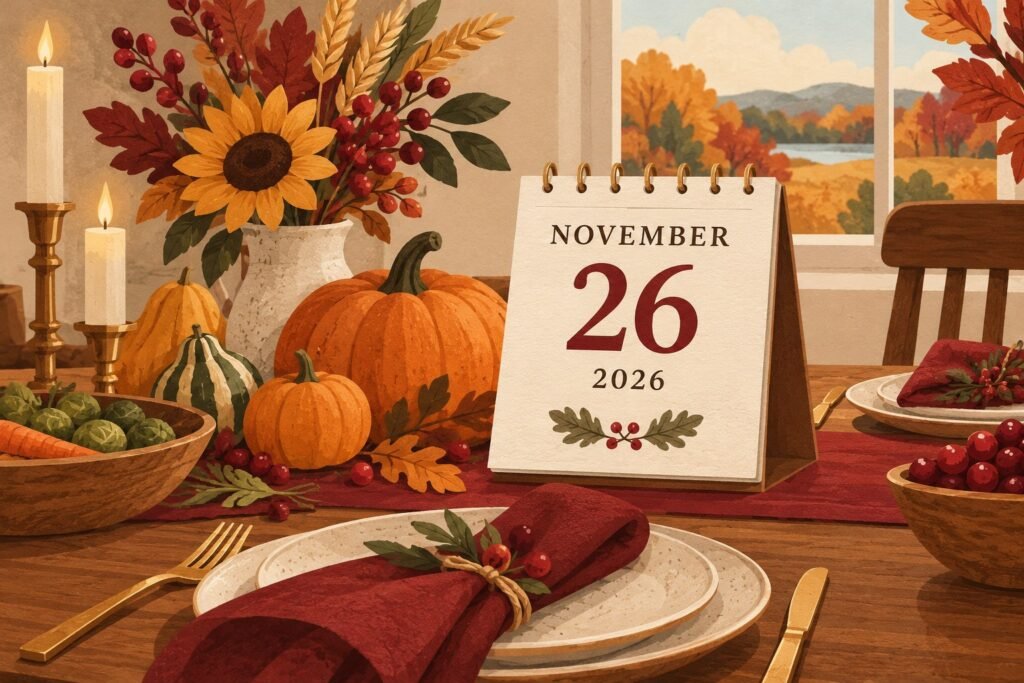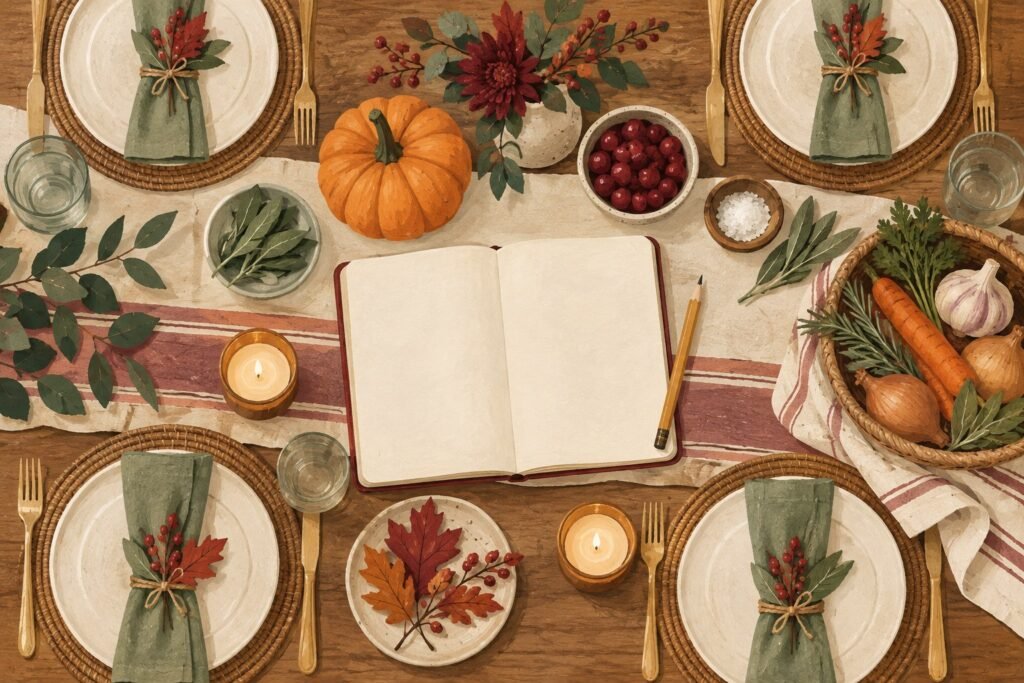
Some of the best Thanksgiving dessert table ideas turn a simple lineup of pies into the most photographed corner of your home on Thanksgiving Day. If your Thanksgiving 2026 gathering falls on November 26 and you are hosting this year, a thoughtfully styled dessert table does more than feed guests — it signals the celebratory climax of the meal, keeps the kitchen clear of grazers, and gives every pie, tart, and cookie its moment in the spotlight. This guide walks you through everything you need: theme inspiration, layout anatomy, serving logistics, decor tricks, and a realistic make-ahead plan so your dessert table looks effortless even when it is anything but.
Whether you have a dining room sideboard or a folding card table in the garage, the principles are the same. A great dessert display balances height, color, texture, and abundance; it accounts for how guests actually move and serve themselves; and it weaves in the warm visual language of late November — amber, copper, cranberry, cream, and deep green — so the whole table reads as unmistakably Thanksgiving. Below, you will find fifteen-plus concrete ideas, shopping-free decor strategies using things you already own, portion guidance, and answers to the questions hosts ask most.
Why a Dedicated Dessert Table Is Worth the Effort
The Thanksgiving meal is a marathon, not a sprint. By the time dessert arrives, most hosts are tired, the kitchen is chaotic, and guests are scattered between the living room and the dining table. A dedicated dessert table solves all of that at once. It moves the sweet course out of the kitchen workflow so you can plate, wash, and reset without a crowd underfoot. It lets guests serve themselves at their own pace — crucial when half the table is ready for pie at 5:30 and the other half is still recovering from turkey. And it transforms dessert from an afterthought into an event, which matters because, for many families, dessert is the part of Thanksgiving everyone remembers most fondly.
There is also a practical argument. A consolidated dessert station simplifies food safety, keeps temperature-sensitive items (whipped cream, custards, ice cream) easier to manage, and centralizes allergy and dietary information in one place — one small labeled card can prevent an awkward or dangerous mistake. If you are planning a full holiday spread, coordinate your dessert table with your Thanksgiving dinner menu so flavors echo across courses without repeating: a cranberry-forward cocktail at dinner, for instance, should not collide with a cranberry pie at dessert.
Finally, a dessert table photographs beautifully, and in an era when holiday hosting doubles as content, that is not trivial. A single well-styled table gives you social media moments, family photos, and a visual anchor for the whole evening. The good news: it does not require florist budgets or rental linens. It requires height, light, repetition, and restraint — four things this guide will teach you to fake convincingly.
Choose a Theme First: Five Styling Directions
Before you buy, bake, or arrange a single thing, pick one theme and commit. A theme is simply a small set of decisions — a palette, a mood, and a decor vocabulary — repeated consistently across the table. Every strong dessert table you have ever admired was built on this discipline. Here are five directions that work beautifully for Thanksgiving, each with its own palette, materials, and dessert suggestions.
1. Rustic Harvest
Think farmhouse table, burlap or linen runners, wooden crates, and real produce as decor. Palette: wheat gold, barn red, chocolate brown, cream. Materials: wood, raffia, mason jars, brown kraft paper, eucalyptus or dried wheat. Serve apple pie, pear galette, caramel-drizzled cheesecake, and spiced nuts in wide wooden bowls. The Rustic Harvest look forgives imperfection — a slightly lopsided pie looks more charming here than anywhere else — which makes it ideal for first-time hosts. Scatter a few unshelled walnuts, chestnuts, and small gourds among the desserts; the produce fills gaps and costs almost nothing.
2. Modern Minimalist
For the host who finds traditional Thanksgiving decor fussy: a clean white or ivory tablecloth, a single color accent (burnt orange or deep plum), and generous negative space. Palette: ivory, taupe, one saturated accent. Materials: matte ceramics, glass cake stands, brushed brass or black serving utensils, linen napkins. Desserts should be geometric and precise — a glossy chocolate tart, a neat pumpkin roll with a visible swirl, uniform mini Thanksgiving desserts in identical cups. This theme photographs exceptionally well and suits small spaces, because restraint makes a table look bigger than it is. Resist the urge to add “just one more thing.”
3. Classic Elegant
The timeless Thanksgiving: silver or gold accents, candlelight, and a tiered presentation. Palette: cream, gold, cranberry, deep green. Materials: heirloom silver trays, crystal cake stands, taper candles, fresh greenery garlands, velvet ribbon. Serve pecan pie, chocolate pecan pie, a towering layer cake, and a trifle in a cut-glass bowl. Classic Elegant is the most effort-intensive of the five because it depends on polished surfaces and real candles, but it is also the most forgiving of store-bought desserts — a bakery pie on a silver tray looks intentional, while the same pie in its box looks like an errand.
4. Cozy Kid-Friendly
A dessert table the grandkids can touch (within reason). Palette: orange, yellow, red, chocolate — bright, warm, cheerful. Materials: chalkboard labels, galvanized metal trays, kraft paper, colorful napkins, plastic-free but kid-proof serving tools. Feature apple cider donuts, mini cupcakes, Rice Krispie treats shaped like turkeys, and a “decorate your own cookie” station with frosting tubes and sprinkles. Put the interactive station at kid height on a low side table so small hands are not reaching over the good china. Include at least one nut-free and one gluten-free option, clearly labeled — see our ideas for gluten free Thanksgiving desserts if you have celiac guests.
5. Outdoor or Porch Gathering
For hosts in mild climates or anyone doing Thanksgiving on the patio: windproof, bug-proof, sturdy. Palette: natural greens, copper, candlelight amber. Materials: weighted linens, lanterns instead of tapers, mesh food covers, real pumpkins as stands and decor. Serve sturdy, room-temperature desserts — slab pies, bar cookies, whole fruit pies under domes — and skip anything with unchilled dairy if the day runs warm. Fairy lights or string lights do the decorative heavy lifting after sunset and cost very little. Anchor tablecloths with clips; one gust can undo an hour of styling.
The Anatomy of a Great Dessert Table
Every professional-looking dessert table, regardless of theme, shares the same underlying architecture. Learn these five elements and you can style any table, at any scale, with confidence.
The hero: one showstopper at center stage
Pick the tallest, most dramatic dessert you have and give it the center. A three-layer cake on a pedestal, a pumpkin roll cake with its spiral facing forward, or a towering apple pie under a glass dome — the hero should be visible from across the room and slightly elevated. Everything else radiates outward from this anchor. If you do not have a natural hero, create one: stack brownies into a pyramid, arrange a trifle in a tall glass bowl, or place a whole pie on a cake stand with a scattering of sugared cranberries around the base. Height plus drama equals hero.
Height variation: the single biggest styling trick
Flat tables look like buffets; varied heights look like design. You need at least three levels: high (cake stands, tiered trays, stacked boxes), medium (pies on platters, bowls), and low (cookies, bars, and truffles on trays or directly on the table). If you own only one cake stand, improvise height with sturdy household objects — an overturned wooden crate draped with linen, a stack of hardcover cookbooks, a soup pot turned upside down and covered with a napkin. Keep the back of the table higher than the front so every item is visible from the front edge, and make sure every riser is stable before you load it with food.
Color story: repeat, don’t rainbow
Choose three to four colors and repeat them everywhere: in the desserts, the linens, the florals, and the serving ware. Thanksgiving gives you a natural palette — caramel, cranberry, pumpkin, cream, evergreen — but discipline matters more than hue. A table with ten colors looks chaotic; a table with three repeated colors looks designed. One easy method: match your napkins to your cranberries, your candles to your caramel, and let everything else stay neutral. Edible color (pomegranate seeds, sugared rosemary, candied orange peel) doubles as garnish and decor.
Balance and flow: design for how guests serve
A beautiful table that cannot be served from is a failure. Arrange for one-directional traffic if possible: plates at one end, desserts in the middle, napkins and forks at the far end. Leave at least six inches of clear table frontage so guests can set down a plate. Put sticky items (pecan pie, caramel sauce) near the napkins, not at the far reach. Provide a small plate or bowl for pits, stems, and used toothpicks. If the table is against a wall, keep the prettiest items forward; if it floats in a room, style all four sides. For crowds over fifteen, consider two smaller stations instead of one mega-table — it halves the line and doubles as decor in two rooms.
Labels and dietary clarity
Tented cards with each dessert’s name are the single most appreciated detail on a dessert table. They end the “what is this?” questions, they look professional, and they are where you note allergens: “contains nuts,” “gluten-free,” “dairy-free.” Match the card style to your theme — kraft tent cards for Rustic, white calligraphy-style cards for Elegant, chalkboard mini-easels for Kid-Friendly. Write legibly and keep wording short. If a dessert was made in a nut-containing kitchen, say so; guests with allergies make decisions on that information.
15 Thanksgiving Dessert Table Ideas to Steal
Ideas are cheaper than mistakes. Scan this list, pick the three or four that fit your space and guest list, and build your table around them.
Layout ideas
1. The sideboard showcase. Use a dining room sideboard or console as your table. Its built-in height variation (shelves, drawers as backdrop) does half the styling for you, and a mirror or framed art above it becomes free decor. Line the hero dessert up with the mirror’s center.
2. The two-tier island. If your kitchen island is free after dinner, split the table: pies and cakes on the island, cookies and candy on a nearby cart. Two stations feel abundant and keep traffic moving.
3. The fireplace mantel backdrop. Style the mantel above the dessert table with garland, candles, and a few mini pumpkins, then keep the table itself simple. The mantel draws the eye up and makes a modest spread look grand.
4. The bookcase bar. A small bookcase or etagere styled shelf-by-shelf with desserts at staggered heights is a ready-made tiered display. Drape a runner down the front and it reads as intentional furniture, not storage.
5. The kids’ corner table. A separate low table with kid-scale treats, juice boxes, and a coloring-page placemat keeps little hands off the main display and gives children their own special station.
6. The outdoor lantern line. For porch hosting, line desserts between lanterns of staggered heights along a long table. The lanterns provide the height variation and the lighting in one move.
Decor ideas using what you own
7. Produce as filler. Apples, pears, pomegranates, mini pumpkins, and eucalyptus sprigs tucked between platters fill gaps, add color, and cost a fraction of florals. Nobody ever looked at a table and thought “too many pomegranates.”
8. The runner trick. No tablecloth? A strip of kraft paper, a folded quilt, or even brown paper bags cut open and ironed flat works as a runner. Kraft paper doubles as a guest book — leave markers out and let guests write what they are thankful for.
9. Candlelight layering. Mix pillar candles, tea lights, and one set of tapers for depth. Keep all flame at least a foot from anything edible and never leave candles unattended — battery-operated candles have become convincingly realistic and are the safer choice with kids and pets.
10. Fresh greenery garland. A loose garland of eucalyptus, cedar, or pine down the center of the table costs little at a grocery store floral department and instantly reads as holiday. Tuck in a few dried orange slices for color.
11. The coffee-and-cordial corner. Dedicate one end of the table to after-dinner drinks — a carafe of coffee, a small bottle of cream, sugar cubes, and maybe a bottle of something warming. It turns the dessert table into a full dessert course. Our roundup of Thanksgiving coffee drinks has station-worthy ideas.
12. Sugared fruit garnishes. Brush cranberries and rosemary sprigs with egg white (or simple syrup), roll in granulated sugar, and let dry. They look like frost, cost pennies, and elevate every platter they touch.
13. Vintage serving pieces. Borrow grandmother’s cake stand, the silver tray from the wedding registry, the cut-glass compote. Thanksgiving is the one day a year these pieces earn their shelf space, and mixed metals look collected, not mismatched.
14. A “pie flight” tasting board. Slice three or four pies into small wedges and arrange them on a big wooden board with labels, so guests can taste several. It is interactive, photogenic, and solves the “I can’t choose” problem.
15. Take-home boxes. Stack small kraft boxes or bags with a “thankful for you — take pie home” tag at the end of the table. Guests leave happy, and you are not eating pie for a week. (Though there are worse fates.)
16. The gratitude tree. A bare branch in a vase with hanging paper tags and pens. Guests write one thing they are grateful for and hang it up. It becomes decor during dinner and a keepsake after.
What Desserts to Serve (and How Many)
A dessert table needs variety in flavor, texture, and format — but not chaos. Aim for five to eight distinct offerings for a crowd of ten to twenty, scaled up for larger parties. Cover these bases: one classic pie (pumpkin or apple), one rich/chocolate option, one fruit-forward option, one creamy option (cheesecake, trifle, or mousse), one bite-size or cookie option for grazers, and one dietary-inclusive option (gluten-free or dairy-free). Browse our full Thanksgiving desserts roundup for tested recipes across all of these categories.
For quantities, plan roughly two to three dessert servings per guest — people sample. A standard 9-inch pie yields eight slices; a 9×13 pan of bars yields twelve to twenty-four pieces depending on cut; a batch of cookies (three dozen) disappears faster than you expect. It is better to have one extra pie than one too few, because leftovers are a feature of Thanksgiving, not a bug.
Think about temperature and timing, too. Anything with whipped cream, custard, or cream cheese frosting should not sit at room temperature more than two hours — set those out when dessert service begins, not at cocktail hour. Pies, cakes, cookies, and bars are room-temperature-safe for the evening. If you are serving ice cream, keep it in the freezer and announce it; a small chalkboard sign (“ice cream in the freezer — help yourself!”) prevents a melted disaster.
Do not overlook the savory-sweet bridge. A cheese course with honey, figs, and candied nuts between dinner and dessert gives the meal a natural intermission and satisfies guests who do not have a sweet tooth. A simple Thanksgiving charcuterie board can double as this bridge if you style it with autumn fruits and honey.
Table Setting Essentials Checklist
Before the day, gather everything in one place — a laundry basket works — so you are not hunting for pie servers mid-service. Your kit: a tablecloth or runner, at least three risers or cake stands, serving utensils for each dessert (pie servers, tongs, spoons), small dessert plates, forks and napkins, tented label cards and a pen, a small trash bowl, take-home boxes, candles or lanterns, and your decor (greenery, pumpkins, fruit). Count your serving utensils against your dessert list the night before; the classic hosting failure is eight desserts and three serving spoons.
Plates deserve a thought. Small dessert plates (6–7 inches) encourage sampling and slow the depletion of your hero pie; full dinner plates invite guests to load up and leave nothing for the latecomers. If you are short on plates, sturdy disposable dessert plates in a solid color that matches your theme are perfectly fine — nobody judges, and you will thank yourself at cleanup. Provide real forks if you can; plastic forks and pie crust are natural enemies.
Lighting is the most underrated essential. If your dessert table sits in a dim corner, nothing on it will look appetizing. A nearby floor lamp, a string of warm fairy lights, or simply relocating the table closer to existing light changes everything. Photograph the table before guests arrive — you will want the memory, and the photo reveals styling gaps (empty spots, crooked labels) that your tired eyes miss.
Practical Tips: Timing, Budget, and Dietary Needs
Build a make-ahead timeline. Two weeks out: finalize the dessert list and theme. One week out: buy non-perishables, decor, labels, and take-home boxes; bake and freeze pie dough, cookie dough, and sturdy cakes. Two days out: bake pies and bars (most improve with a rest). One day out: make anything creamy, set up the table skeleton (linens, risers, decor — everything except food), and write your label cards. Thanksgiving morning: bake anything best fresh, whip cream, and set out room-temperature-safe items an hour before dessert. This pacing means you are arranging, not cooking, when guests arrive.
Budget wisely. A stunning table does not require a stunning budget. Produce decor is cheap, borrowed serving pieces are free, and a single bakery showstopper (one great cake or pie) surrounded by homemade cookies looks more luxurious than the reverse. Our guide to a budget Thanksgiving dinner covers cost-saving strategies that apply equally to the dessert course — buy seasonal fruit, bake from scratch where it counts, and spend where it shows.
Handle dietary needs gracefully. Ask about allergies and restrictions when you invite, not when you serve. Label everything, keep at least one dessert each that is nut-free and gluten-free, and place allergen-friendly items at the end of the table with their own serving utensil to avoid cross-contact. A small separate tray for the gluten-free guest is kinder than making them hunt. Nobody wants to be the person asking “does this have nuts?” in front of twelve people — your labels answer before they have to ask.
Plan the flow of the evening. Announce dessert rather than hoping people notice: “Dessert is on the sideboard whenever you’re ready!” Clear the dinner table first so the dessert table becomes the new gathering point — guests follow the host’s energy. Put coffee on at the same time; the smell is the best announcement of all.
Common Mistakes to Avoid
Overcrowding the table. More desserts crammed together reads as clutter, not abundance. Leave breathing room between platters; if you run out of space, remove the weakest dessert rather than squeezing. Negative space is a design element.
Forgetting height. Everything at table level looks like a potluck. Even one cake stand changes the whole composition — borrow one if you must.
No labels. Guests should never have to ask what something is or whether it contains nuts. Ten minutes with tent cards prevents an evening of questions.
Setting out dairy desserts too early. Anything with cream, custard, or cream cheese should wait until dessert service. Two hours at room temperature is the widely used food-safety guideline — plan around it, not against it.
One serving utensil per three desserts. Count utensils against desserts the night before. Cross-contamination of flavors (pecan pie crumbs in the cheesecake) and long waits both trace back to this.
Styling only the front. If guests circulate around the table, the back matters. Walk a full circle before you declare it done.
Ignoring the kids’ reach. If small children are present, either put the fragile hero out of reach or accept the risk with grace. A separate kid-height station (idea #5 above) is the elegant solution.
In Pictures: Thanksgiving Dessert Table Ideas
A dessert table is half styling, half baking. This styled spread shows how to make every sweet earn its place.
An elegantly styled Thanksgiving dessert table with a tiered stand, eucalyptus garlands and candlelight.
Watch: Thanksgiving Dessert Table Ideas
Joselene creates a modern Thanksgiving tablescape in blue, white and orange — styling ideas that translate beautifully to dessert tables.
At a Glance: Thanksgiving Dessert Table Ideas
Planning notes for a dessert table that looks abundant and serves a crowd smoothly.
| Detail | Tip |
|---|---|
| Variety | Offer 3–5 different sweets for balance |
| Heights | Tiered stands and cake plates add visual interest |
| Labels | Small cards help guests spot allergens and favorites |
| Portions | Mini portions let guests try more without waste |
| Flow | Set plates at one end of the table and napkins at the other |
| Backup | Keep a refill tray nearby for the most popular items |
Frequently Asked Questions
How far in advance can I set up a Thanksgiving dessert table?
Set up the non-food skeleton — linens, risers, decor, candles, labels, plates, and utensils — a day or two ahead. Add room-temperature-safe desserts (pies, cookies, bars) a few hours before serving, and dairy-based items (anything with whipped cream, custard, or cream cheese) only when dessert service begins. Fully styling the table with food more than a few hours ahead risks staleness, weeping meringues, and food-safety issues. The skeleton-first approach means setup on the day takes twenty minutes, not two hours.
How many desserts do I need for 20 guests?
Plan on six to eight distinct desserts and roughly two to three servings per person — about 40 to 60 total servings. In practical terms: three 9-inch pies (24 slices), one 9×13 pan of bars (cut into 24), one cake or trifle (12–16 servings), and two to three dozen cookies or mini desserts. Variety matters more than volume; guests sample widely but eat modestly after a big meal. Always have take-home boxes ready — leftovers are part of the Thanksgiving tradition.
What is the cheapest way to make a dessert table look expensive?
Three moves: borrow real serving pieces (cake stands, silver trays) instead of buying disposables; use fresh produce and greenery as decor instead of florals; and invest in one bakery-quality showstopper surrounded by homemade supporting desserts. Candlelight and a restrained color palette do the rest. Most guests cannot tell a $40 table from a $400 table once the styling is consistent — they respond to cohesion, height, and light, not price tags.
How do I keep desserts safe for guests with nut allergies?
Ask about allergies in advance, label every dessert with its major allergens, and give allergen-friendly items their own serving utensils to prevent cross-contact. Place nut-free options at the end of the table so serving spoons do not drag crumbs across them, and consider a small separate tray for guests with severe allergies. When in doubt, keep ingredient lists handy — most packaged ingredients list allergens clearly. Never guess about an allergen; if you are unsure, say so on the label.
Can I do a dessert table outdoors?
Yes, with adjustments. Choose sturdy, room-temperature desserts (slab pies, bars, cookies, whole fruit pies under domes) and skip unchilled dairy if the weather is warm. Use mesh food covers against insects, weight or clip your linens against wind, and use lanterns or battery candles instead of open flame. Set up as close to serving time as possible, and have a backup indoor plan if the forecast turns. String lights after dark make an outdoor dessert table genuinely magical.
Should the dessert table match the dinner table decor?
It should coordinate, not match exactly. Use the same color palette and one repeated element (the same greenery, the same napkin color) so the two tables feel like one event, but give the dessert table its own personality — a little more sparkle, a little more indulgence. Think of it as the evening’s second act: same story, higher energy. If your dinner table is formal, the dessert station can be slightly more relaxed, which also signals to guests that the formal part of the evening is over.
Conclusion
The best Thanksgiving dessert table ideas are not about perfection — they are about intention. Pick one theme, build height, repeat your colors, label everything, and plan the timing so you are enjoying your own party instead of rescuing it. Your guests will remember the pie flight board, the gratitude tags, the candlelight on the cranberries — and, most of all, that dessert felt like a celebration rather than an afterthought.
Start with the skeleton a day early, lean on the make-ahead timeline, and do not be afraid to borrow the good cake stand. Thanksgiving 2026 is November 26 — plenty of time to plan, and every reason to make the sweetest course of the year look as good as it tastes. For the full holiday picture, pair your dessert table with our Thanksgiving dinner timeline and our Thanksgiving party ideas, and enjoy every bite of the evening you worked so hard to create.