A budget Thanksgiving dinner does not have to look or taste like a compromise. With smart shopping, a clear spending plan, and a few strategic choices about where your money goes, you can serve a generous, golden-roasted holiday feast for eight guests for well under $75 — sides, dessert, and all. The secret is not cutting corners on flavor; it is cutting waste, timing your purchases around seasonal sales, and building your menu around ingredients that are naturally inexpensive in late November.
Every year, grocery stores compete fiercely for Thanksgiving shoppers, which means turkey prices drop to their lowest point of the entire year in the two weeks before the holiday. Cranberries, sweet potatoes, potatoes, and pie pumpkins flood the shelves at rock-bottom prices. If you know how to read those cycles — and how to stretch every ingredient across multiple dishes — a holiday spread that looks like it cost $200 can genuinely cost a third of that. This guide walks you through the whole process: setting a realistic budget, shopping the sales, planning a menu that maximizes value, and cooking techniques that make humble ingredients taste luxurious.
Whether you are a first-time host watching every dollar, a student feeding friends, or simply someone who would rather spend money on memories than on markup, this budget Thanksgiving dinner playbook has you covered. We will break down real costs line by line, compare three budget scenarios, share a complete $75 sample menu for eight, and show you exactly where to splurge (a little) and where to save (a lot).
What Does a Budget Thanksgiving Dinner Actually Cost?
Before you can save money, you need an honest baseline. A traditional Thanksgiving dinner for eight to ten people, bought at regular grocery prices with name-brand ingredients, typically runs somewhere between $120 and $200 depending on your region, the size of the turkey, and how many side dishes you prepare. The turkey itself is usually the single biggest line item — a 14 to 16-pound bird at standard prices can cost $25 to $45 alone.
But “typical” is not the same as “necessary.” By shopping strategically, almost every one of those line items can be cut by 30 to 60 percent. Here is a realistic comparison of what the same eight-person dinner costs at three different spending levels:
| Item (serves 8) | Full-Price Approach | Smart Budget Approach | Your Savings |
|---|---|---|---|
| 14-lb turkey | $35–$45 | $12–$18 (sale price) | $20+ |
| Potatoes (5 lbs) | $6 | $2.50 (loss-leader sale) | $3.50 |
| Sweet potatoes (3 lbs) | $6 | $2 (seasonal bulk bag) | $4 |
| Green beans (2 lbs) | $7 | $3 (frozen) | $4 |
| Cranberries (fresh, 12 oz) | $4 | $2 (store brand) | $2 |
| Stuffing/dressing ingredients | $12 | $5 (homemade bread cubes) | $7 |
| Dinner rolls (12) | $6 | $2.50 (bake from scratch) | $3.50 |
| Pumpkin pie (homemade) | $12 | $5 (canned pumpkin) | $7 |
| Butter, broth, spices, misc. | $15 | $8 (buy only what you lack) | $7 |
| Total | $103–$113 | $42–$48 | ~$60 |
That is not a fantasy spreadsheet — it reflects how holiday grocery pricing actually works. Turkeys routinely drop below $1 per pound during Thanksgiving week as stores use them as loss leaders. Potatoes and sweet potatoes go on deep multi-pound-bag sales. Frozen vegetables, which are nutritionally equivalent to fresh, cost a fraction of the price. And pantry staples like flour, sugar, and broth concentrate are cheapest when bought as store brands in the weeks leading up to the holiday.
The golden rule of budget holiday cooking: the calendar is your coupon. Almost every classic Thanksgiving ingredient hits its annual low price in the ten days before Thanksgiving. Shop that window and you have already won half the battle.
Step 1: Set Your Budget Before You Shop
Walking into a grocery store without a number in mind is the fastest way to overspend. Before you buy a single cranberry, decide on your total budget and your guest count, then work backward to a per-person target. For reference, here are three realistic scenarios:
The $50 Feast (8 guests, ~$6.25 per person)
This is the lean, mean holiday machine: a sale-priced turkey, four to five homemade sides built on potatoes and pantry staples, one homemade pie, and water or homemade punch to drink. You will cook almost everything from scratch, lean on frozen vegetables, and skip the appetizers — guests arrive hungry and go straight to the main event. It is entirely doable and, done well, nobody will guess the price tag.
The $75 Sweet Spot (8–10 guests, ~$7.50–$9 per person)
This is the budget most hosts find comfortable: a sale turkey, six sides, homemade rolls, two desserts, and a simple appetizer like a Thanksgiving appetizer cheese ball or deviled eggs made from ingredients you already buy. You can afford one small splurge — good butter, real vanilla, or fresh herbs — and the table looks abundant. This is the scenario our sample menu below is built around.
The $100 Comfortable Spread (10–12 guests, ~$8–$10 per person)
At this level you can add a second dessert, a nicer wine or sparkling cider, fresh flowers for the table, and pre-made items where they genuinely save you time (like quality store-bought pie crust). You are still far below the typical $150+ holiday spend, but nothing on the table feels like a compromise.
Pick your tier, write the number on your shopping list, and treat it as a hard ceiling. A helpful trick: withdraw the budget in cash or load it onto a prepaid card for grocery runs. When the money is tangible, impulse buys — the $8 artisan crackers, the fancy cheese you do not need — stay on the shelf. If you are also figuring out portions, our guide on how much food per person for Thanksgiving will keep you from overbuying, which is the quietest budget killer of all.
Step 2: Shop Smart — The Savings Strategy
Where and when you shop matters as much as what you buy. Thanksgiving is one of the few times of year when grocery stores genuinely compete on price for the exact ingredients you need, so a little strategy goes a long way.
Shop the Sales Cycle, Not the Calendar
Start watching prices two to three weeks before Thanksgiving. Most stores run their deepest holiday sales in two waves: an early wave (about 10–14 days out) featuring pantry staples, canned pumpkin, broth, and frozen vegetables, and a late wave (the week of Thanksgiving) featuring the turkey itself, fresh produce, dairy, and bakery items. Buy shelf-stable and freezable items in the early wave; buy fresh items in the late wave. Never buy everything in one trip — the single-trip shopper pays full price on half the list.
Store Brands Are Your Best Friend
For Thanksgiving staples, store-brand quality is essentially identical to name brands: canned pumpkin, chicken broth, evaporated milk, flour, sugar, butter, frozen green beans, and cranberry sauce all perform the same in recipes regardless of the label. The price difference is typically 20 to 40 percent per item, which compounds fast across a 15-item list. Save the brand loyalty for the one or two items where you can genuinely taste the difference.
Frozen and Canned Wins
Some of the smartest budget moves are also the easiest: frozen green beans instead of fresh (half the price, zero trimming, and they hold up better in casseroles), canned pumpkin instead of fresh pie pumpkins (more consistent, far cheaper, and what most award-winning pie recipes actually call for), and frozen pie crusts or even frozen dinner rolls that you bake off on the day. Nobody at the table can tell the difference once everything is seasoned and served hot — but your wallet absolutely can.
Check Discount and Warehouse Stores
If you have access to a discount grocer or warehouse club, Thanksgiving is the time to use it. Warehouse stores often sell turkeys, butter, and bulk produce at prices regular supermarkets cannot match, and discount grocers carry perfectly good cranberries, sweet potatoes, and baking supplies for a fraction of the price. Just be careful with bulk buying: a 10-pound bag of onions is only a deal if you will use them. Build your Thanksgiving grocery list first, then buy exactly to the list.
The Budget Menu Framework: Cheap Ingredients, Luxurious Results
The most powerful budget technique is menu architecture — choosing dishes whose core ingredients are inherently cheap in November and making them shine with technique. Here is the framework:
Turkey Math: Buy the Right Size
Plan on about 1 to 1.5 pounds of turkey per person if you want leftovers (and you do — leftovers are part of the value). For eight guests, a 12 to 14-pound turkey is the sweet spot. Crucially, smaller turkeys often cost less per pound than giant ones during sale season, and they cook faster and more evenly. A 12-pound bird at $0.79 per pound costs under $10 and feeds eight generously. For detailed roasting guidance that keeps a budget bird juicy, see our guide on how to cook a Thanksgiving turkey — brining and proper temperature control matter more than the price of the bird.
Sides That Stretch: The Potato Principle
Potatoes, sweet potatoes, bread, rice, and carrots are among the cheapest foods on earth, and they happen to be Thanksgiving classics. Build your side lineup around them: garlic mashed potatoes, roasted sweet potatoes with brown sugar, classic bread stuffing, honey-glazed carrots, and a green bean casserole made with frozen beans and homemade sauce. Five generous sides built on these ingredients can cost less than $15 total and will fill the table edge to edge. Creamy, buttery, well-seasoned starches read as indulgent — that is the whole magic trick.
Dessert on a Budget: One Showstopper
Instead of three mediocre store-bought pies, make one spectacular homemade pumpkin pie (about $5 in ingredients) and serve it with lightly sweetened whipped cream you whip yourself (heavy cream plus a spoonful of sugar — cheaper and better than the canned stuff). One beautiful, tall-sliced pie with real whipped cream feels more special than a crowded dessert table of compromises. If you want a second option, add a simple apple crisp, which uses inexpensive apples and pantry staples.
Sample $75 Thanksgiving Menu for 8 Guests
Here is a complete, costed-out menu that proves the math. Prices reflect typical Thanksgiving-week sale prices at a mid-range US grocery store; your local prices will vary, but the proportions hold almost everywhere:
| Dish | Key Ingredients | Est. Cost |
|---|---|---|
| Roast turkey (13 lbs) | Turkey, butter, herbs, salt | $14 |
| Garlic mashed potatoes | 5 lbs potatoes, butter, milk, garlic | $4 |
| Classic bread stuffing | Day-old bread, onion, celery, broth, herbs | $5 |
| Brown-sugar sweet potatoes | 3 lbs sweet potatoes, brown sugar, butter | $3.50 |
| Green bean casserole | Frozen green beans, mushrooms, milk, crispy onions | $5 |
| Honey-glazed carrots | 2 lbs carrots, honey, butter | $3 |
| Cranberry sauce (homemade) | Fresh cranberries, sugar, orange | $2.50 |
| Homemade dinner rolls (12) | Flour, yeast, butter, sugar, milk | $2.50 |
| Turkey gravy | Pan drippings, flour, broth | $1 |
| Pumpkin pie + whipped cream | Canned pumpkin, evaporated milk, eggs, spices, cream | $6 |
| Apple crisp | Apples, oats, flour, butter, sugar, cinnamon | $4 |
| Deviled eggs (appetizer) | Eggs, mayo, mustard, paprika | $3 |
| Drinks | Sparkling cider, homemade punch | $8 |
| Pantry overlap (butter, spices, oil) | Only buy what you do not already own | $8 |
| Total | ~$69.50 |
That leaves you a $5 cushion for the inevitable forgotten item — and note how the menu is abundant: an appetizer, six sides, two desserts, homemade bread, and drinks. Nothing about this table whispers “budget.” The gravy costs almost nothing because it is built on drippings you get for free from the turkey. The cranberry sauce costs $2.50 and tastes infinitely better than the $4 can. This is the budget cook’s real advantage: scratch cooking is both cheaper and better.
Where to Splurge vs. Where to Save
A smart budget is not about spending the minimum on everything — it is about spending deliberately. Some upgrades punch far above their price; others are pure markup. Here is how to think about it:
| Category | Verdict | Why |
|---|---|---|
| Good butter | Splurge | Used in nearly every dish; the flavor difference is real and the cost difference is ~$2 |
| Fresh herbs (sage, thyme, rosemary) | Splurge | A $4 herb pack transforms turkey, stuffing, and potatoes; dried cannot compare |
| Real vanilla extract | Splurge | One $5 bottle lasts many holidays; imitation is noticeably flat in pie |
| Turkey (organic/free-range) | Save | A properly brined conventional turkey beats an unbrined premium bird every time |
| Pre-made pie crust | Save | Store-brand frozen crusts are excellent; homemade costs pennies if you have time |
| Fresh vs. frozen vegetables | Save | Frozen green beans and corn are picked at peak ripeness and cost half as much |
| Artisan bread for stuffing | Save | Day-old sandwich bread or sale loaves work perfectly once cubed and toasted |
| Fancy cheese appetizers | Save | Deviled eggs and a simple cheese ball cost under $5 and disappear just as fast |
| Wine and drinks | Save | Sparkling cider and homemade punch cost a few dollars; ask guests to BYOB if they want wine |
| Table decorations | Save | Pinecones, fall leaves, and candles you own beat $30 of store decor |
The pattern is clear: splurge on flavor multipliers — the small ingredients that touch every dish — and save on everything where technique can close the gap. A $2 upgrade in butter quality across six dishes is the best money in the entire budget.
Cook Smart: Techniques That Save Money
Make Ahead to Avoid Waste and Panic Buys
Last-minute cooking is expensive cooking. When you are rushed, you buy pre-made, you overbuy “just in case,” and you throw away mistakes. Cooking ahead reverses all of that: pies bake perfectly two days early, cranberry sauce keeps for a week, stuffing components can be prepped the night before, and potatoes can be peeled and held in water. Spreading the work over three days also means you can shop in two trips — catching both sale waves — instead of one frantic run. Our make-ahead Thanksgiving recipes guide maps out exactly what to cook when.
Cook From Scratch Where It Counts
The labor-for-savings exchange rate is highest on: dinner rolls (pennies versus $5+ for bakery), pie crust, cranberry sauce, whipped cream, chicken stock (make it from the turkey neck and giblets — free flavor), and gravy. You do not need to make everything from scratch; pick the three or four items with the biggest savings-to-effort ratio and buy the rest smart.
Use the Whole Bird
A turkey is not just breast meat. The neck and giblets become rich stock for gravy and stuffing. The carcass becomes soup that feeds your family for days — a turkey noodle soup or leftover turkey pot pie stretches your $14 bird into three or four additional meals. When you count those, the true per-meal cost of your Thanksgiving turkey drops to just a few dollars. Budget cooking is really about refusing to let value escape the kitchen.
Right-Size Your Menu
The most expensive dish is the one nobody eats. Eight side dishes for eight guests guarantees waste; five generous sides get fully enjoyed. Follow a Thanksgiving dinner timeline so everything lands hot at once — food served at its best gets eaten, while lukewarm extras get scraped into the trash. Plan one appetizer, not three. Make one pie per eight guests, not two. Abundance is about full serving dishes, not the number of different dishes.
The Potluck Option: Share the Cost, Keep the Joy
If even a $50 budget feels tight, consider the potluck model: you provide the turkey and gravy (the centerpiece, roughly $15–$20) and assign each guest a side, dessert, or drink. Everyone spends $5–$10 instead of one person spending $75, and the table ends up more varied than any single cook could manage. The key is organization — vague “bring something” invitations produce five desserts and no vegetables. Our guide on how to organize a Thanksgiving potluck covers sign-up sheets, dish assignments, and timing so the shared meal actually works. Many families find the potluck becomes a beloved tradition in its own right, not just a budget tactic.
Leftover Economics: The Meal That Keeps Paying
A budget Thanksgiving dinner is really several dinners in disguise, and planning for leftovers is part of the financial strategy. Before the holiday, clear space in your fridge and freezer, stock up on storage containers, and plan two or three leftover meals in advance. The classic progression: day-after turkey sandwiches, then soup from the carcass, then a pot pie or tetrazzini that uses up remaining meat and vegetables. An ultimate leftover turkey sandwich done right — with cranberry sauce, stuffing, and gravy — is genuinely one of the great sandwiches of the year, and it costs you nothing extra.
Safe handling matters here: refrigerate leftovers within two hours of serving, and use or freeze them within three to four days. (Our Thanksgiving food safety tips cover the full rules.) Food you have to throw away is the most expensive food of all, so treat leftover storage as part of the budget plan, not an afterthought.
Troubleshooting: When the Budget Wobbles
Scenario: Turkey prices are not as low as expected. Ask the meat department about smaller birds, or check whether turkey breasts (often cheaper per pound of actual meat, since there is no carcass weight) are on sale. A large bone-in turkey breast feeds six to eight for the price of a whole small turkey and roasts in half the time.
Scenario: Two extra guests just confirmed. Do not panic-buy a second turkey. Stretch the meal with an extra starch side (a big pan of mac and cheese or extra mashed potatoes costs $3–$4 and feeds six), add a loaf of good bread, and put out a hearty soup as a first course. Nobody will feel shortchanged.
Scenario: You blew the budget on week-one shopping. Audit what you bought: pantry staples like flour, sugar, and spices are investments that last beyond the holiday — mentally move them out of the “Thanksgiving” column. Then go austere on the remaining fresh items: frozen vegetables, one dessert instead of two, homemade punch instead of sparkling cider. The menu still works.
Scenario: Something fails on the day. A lumpy gravy, a dry turkey, a fallen pie — these happen at every budget level, and the fixes are free: whisk gravy smooth with a splash of hot broth, slice dry turkey thin and ladle warm broth over it, serve fallen pie as a “rustic crumble” in bowls with whipped cream. Confidence is free, and it is the most convincing ingredient on the table.
Remember: your guests came for warmth, not wealth. The holidays they remember are the ones where the host was relaxed and present — and nothing keeps a host relaxed like knowing the budget is under control.
In Pictures: Budget Thanksgiving Dinner
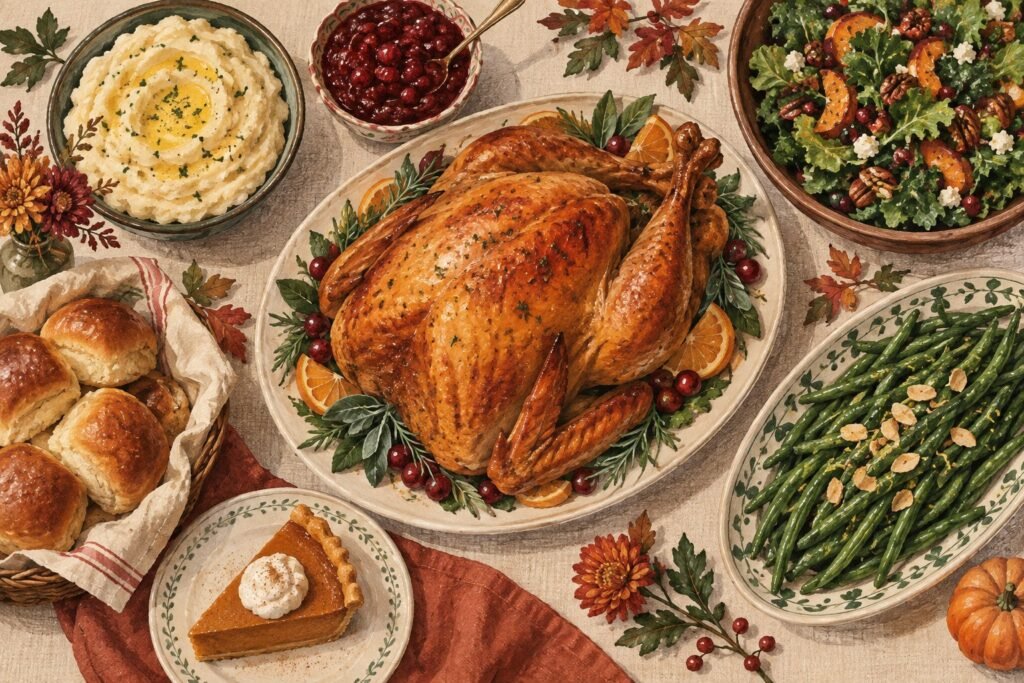
A beautiful Thanksgiving does not require a big budget — just smart shopping and from-scratch staples.
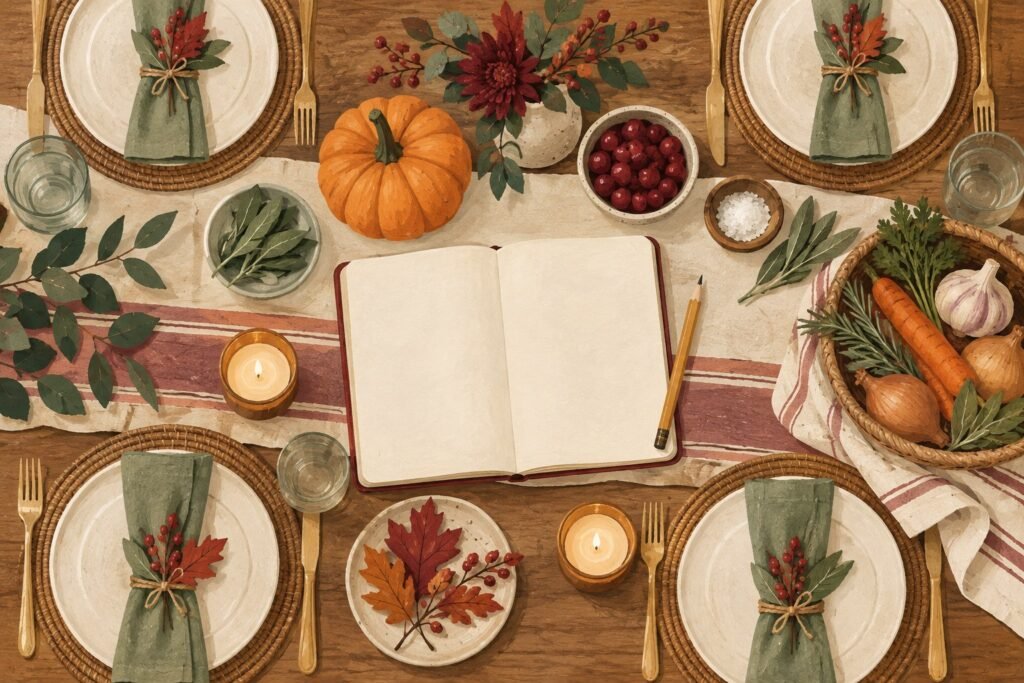
A beautiful budget Thanksgiving dinner on a simple farmhouse table with a modest autumn centerpiece.
Watch: Budget Thanksgiving Dinner
Camirra's Kitchen makes a large Thanksgiving dinner for $20, feeding 8 or more people.
At a Glance: Budget Thanksgiving Dinner
Where the money goes at Thanksgiving, and the swaps that bring the total down.
| Detail | Budget tip |
|---|---|
| Turkey | Loss-leader holiday sales often price turkey under $1/lb |
| Store brands | Pantry staples taste the same for far less |
| Seasonal produce | In-season vegetables cost less and taste better |
| From scratch | Homemade pie crust, rolls and stock beat packaged prices |
| Potluck style | Asking guests to bring a dish splits the cost |
| Leftovers | Plan leftover meals so nothing goes to waste |
Frequently Asked Questions
What is the cheapest way to feed a crowd on Thanksgiving?
The cheapest proven formula is a sale-priced turkey plus starch-heavy homemade sides: mashed potatoes, stuffing, sweet potatoes, dinner rolls, and one homemade pie. Starches cost pennies per serving and are deeply satisfying when well seasoned. Avoid the two big money drains — overbuying (cooking for 12 when 8 are coming) and last-minute pre-made purchases (bakery rolls, deli sides, pre-made pies) — and an eight-person feast reliably lands under $75, often under $60. Using a potluck model, where you supply only the turkey and guests bring sides, can drop your personal cost below $25.
How far in advance should I buy Thanksgiving groceries to save money?
Start two to three weeks out for shelf-stable items (canned pumpkin, broth, flour, sugar, spices, frozen vegetables) when the first wave of holiday sales hits. Buy the turkey and fresh produce during Thanksgiving week when loss-leader pricing is deepest — turkeys often drop under $1 per pound. Shop in at least two trips rather than one: single-trip shoppers pay full price on roughly half their list. And always check your pantry before you shop; most hosts already own half the spices, oils, and baking supplies their recipes call for.
Is it cheaper to buy a fresh or frozen turkey?
Frozen turkeys are almost always cheaper — often dramatically so during Thanksgiving-week sales, when stores use them as loss leaders to draw shoppers in. A frozen turkey thawed properly (about 24 hours per 4–5 pounds in the refrigerator) roasts up just as juicy as a fresh bird. Fresh turkeys command a premium of $1–$2+ per pound, which adds $15–$30 to a 14-pound bird, with no meaningful difference in the finished dish once brined and roasted correctly.
How can I make a budget Thanksgiving dinner look expensive?
Presentation is free. Serve food in warmed serving dishes rather than cooking pots, garnish with fresh herbs (a $4 herb pack transforms the whole table), use cloth napkins if you own them, light candles, and scatter pinecones or fall leaves down the center of the table. Slice the turkey on a platter rather than serving from the roasting pan. Plate the pie with real whipped cream and a dusting of cinnamon. Guests judge abundance by full dishes and thoughtful details — not by receipts.
Should I ask guests to contribute dishes or money?
Asking guests to bring a dish is completely normal and widely welcomed — most people enjoy contributing, and it is far more gracious than asking for money, which can feel transactional. Frame it positively: “We would love it if you brought your famous green bean casserole!” Assign specific categories (side, dessert, drinks, appetizer) so you do not end up with duplicates. For guidance on coordinating contributions smoothly, see our guide on what to bring to Thanksgiving dinner as a guest, which you can share with your invitees.
What is the single biggest waste of money at Thanksgiving?
Overbuying food that gets thrown away. The USDA estimates significant holiday food waste, and every uneaten pound is money in the trash. The fixes are simple: plan portions with a per-person guide, refrigerate leftovers within two hours, and plan two or three specific leftover meals before the holiday so nothing languishes. The second-biggest waste is duplicate pantry buying — check what you own before shopping. Between those two habits, most hosts can cut 20 percent off their bill with zero impact on the meal.
Conclusion
A budget Thanksgiving dinner is not a lesser Thanksgiving — it is a smarter one. The holiday’s greatest dishes were born from thrift: stuffing stretches bread, soup stretches the carcass, pie stretches a humble squash into dessert. When you shop the sales cycle, build your menu around November’s cheapest ingredients, cook the high-value items from scratch, and treat leftovers as part of the plan, you end up with a table that is generous, delicious, and genuinely affordable.
Start with your number — $50, $75, $100 — and let every decision flow from it. Watch the sales, buy store brands without apology, splurge only on the flavor multipliers, and remember that the most memorable ingredient is a relaxed host. For more planning help, explore our best Thanksgiving recipes of 2026 and the complete Thanksgiving dinner menu for 2026. Happy — and thrifty — Thanksgiving.