The ultimate leftover turkey sandwich is not a sandwich. It is a monument — a towering, day-after-Thanksgiving engineering marvel that takes everything glorious about the holiday plate and rebuilds it between two slices of bread. Done right, it is the meal people dream about while the turkey is still in the oven. Done wrong, it is a sad stack of dry meat and cold stuffing that slides apart in your hands. This guide exists to make sure you land firmly in the first category, every single time.
Here is the truth about day-after sandwiches: most of them are afterthoughts. Someone slaps cold turkey on white bread with a smear of mayonnaise, takes one bite, and wonders why it doesn’t taste like Thanksgiving. The problem isn’t the ingredients — your refrigerator is full of greatness. The problem is architecture. A great sandwich is designed, not assembled. The order of layers matters. The temperature of each component matters. The moisture barriers matter enormously. Treat sandwich-making with the seriousness it deserves, and the results are nothing short of transcendent.
Welcome to the sandwich lab. Over the next few thousand words, we will break down the physics and flavor science of the perfect leftover turkey sandwich: choosing bread that can handle the load, sequencing layers for structural integrity and flavor progression, building sauces that tie everything together, and executing the master recipe step by step. Then we will tour the variations — hot-pressed, open-faced, globally inspired — that keep the concept fresh all weekend long.
The Architecture: Why Layer Order Is Everything
Think of your sandwich as a building. The bread is the foundation and roof. The spreads are the waterproofing membrane. The proteins and hearty components are the load-bearing walls. The delicate items — lettuce, fresh herbs — are the interior finishes, protected from the elements. Build in the wrong order and the structure fails: soggy bread, sliding layers, flavors that never quite come together.
The Golden Rules of Sandwich Engineering
Rule 1: Moisture barriers go directly against the bread. Anything wet — cranberry sauce, gravy, juicy tomatoes — must be separated from the bread by a fat-based spread (mayonnaise, butter, cream cheese) or a sturdy dry layer (cheese, lettuce). Fat repels water; this is simple chemistry working in your favor. Spread both slices of bread edge to edge — a naked patch of bread is a future soggy spot.
Rule 2: Heavy, flat items on the bottom. Turkey slices, being the densest component, sit closest to the bottom bread. This lowers the sandwich’s center of gravity and prevents the dreaded top-slide, where the upper layers hydroplane off on a slick of cranberry sauce. Lighter, looser items (lettuce, sprouts) go near the top, where they are protected by the lid.
Rule 3: Temperature contrast is a feature. The ultimate sandwich plays warm against cool: warm turkey and stuffing against cool cranberry sauce and crisp lettuce. This contrast is what makes each bite interesting. If everything is fridge-cold, the flavors stay muted; if everything is hot, the sandwich becomes a homogeneous mush. Plan for at least one warm and one cool element.
Rule 4: Every bite should contain every layer. Distribute ingredients evenly to the edges — no bald spots, no ingredient cliffs where the turkey ends abruptly. A sandwich that delivers the full experience only in the center third is a failed design. Take the extra thirty seconds to arrange things properly.
Choosing Your Bread: The Foundation Decision
Bread is not a neutral carrier; it is an active participant. The wrong bread collapses under Thanksgiving leftovers’ weight and moisture. The right bread elevates everything.
The Top Contenders, Ranked
Sourdough: The champion. Its sturdy crumb, chewy crust, and tangy flavor stand up to every leftover and cut through richness. Thick-sliced sourdough, lightly toasted, is the gold standard for the ultimate sandwich. The acidity in sourdough also brightens the heavy flavors — a genuine flavor contribution, not just structure.
Ciabatta: The airy, open crumb looks delicate but the chewy crust provides excellent structure. Ciabatta’s holes catch sauces beautifully. Best when warmed in the oven for a few minutes before building.
Focaccia: Especially rosemary or herb focaccia, which adds its own seasoning to the build. The oily crumb resists sogginess naturally. A thick slab of focaccia makes a sandwich that eats like a meal and a half.
Hearty whole grain or multigrain: The nutty flavor complements turkey wonderfully, and the dense crumb is structurally excellent. Choose a true hearty loaf, not soft sandwich bread in disguise.
Dinner rolls (the Thanksgiving kind): Using actual leftover dinner rolls is deeply charming and thematically perfect — a slider-style approach. Split, toast the cut sides, and build mini sandwiches. Ideal for grazing and for kids.
Breads to Avoid
Soft white sandwich bread, however nostalgic, turns to paste under cranberry sauce within minutes. Flimsy wraps tear under the load. Save the delicate breads for delicate fillings; this sandwich is a heavyweight and needs a heavyweight foundation. And whatever you choose, toast it. Toasting drives off surface moisture, firms the crumb, and adds flavor through the Maillard reaction — it is the single highest-return step in sandwich construction.
The Layers, In Order: The Master Blueprint
Here is the canonical build for the ultimate leftover turkey sandwich, from bottom to top. Memorize this sequence; it is the result of extensive (and delicious) testing.
Layer 1: Bottom Bread + Primary Spread
Toasted sourdough, spread edge-to-edge with garlic-herb mayonnaise (recipe below). The mayo is your primary moisture barrier and your first flavor layer — the garlic and herbs wake up the palate immediately.
Layer 2: The Turkey Foundation
A generous 6 to 8 ounces of sliced leftover turkey — a mix of white and dark meat if possible. Slice it 1/4-inch thick; too thin and it disappears, too thick and it dominates. Arrange the slices shingled (overlapping like roof tiles) rather than stacked in a pile — shingling distributes the meat evenly and creates a more stable, easier-to-bite structure. Warm the turkey gently before building (see the warming methods below).
Layer 3: The Cheese Melt
Two slices of cheese over the warm turkey — sharp white cheddar, Gruyère, or smoked Gouda. The cheese goes directly on the warm turkey so it softens and melds, acting as a second moisture barrier and a flavor bridge between the savory meat and the sweet-tart layers above. If you are pressing or grilling the sandwich, this cheese becomes the glorious melted glue holding everything together.
Layer 4: The Stuffing Layer
A 1/2-inch layer of warmed leftover stuffing, pressed gently to compact it. Stuffing is the secret weapon — it adds the herby, bready, sage-scented soul of Thanksgiving in concentrated form. Pressing it prevents crumbling and creates a cohesive stratum. If your stuffing is dry, moisten it with a spoonful of warm stock before building.
Layer 5: The Cranberry Layer
Two to three tablespoons of whole-berry cranberry sauce, spread in an even layer. The tartness cuts through all the richness below — this is the acid component, and the sandwich fails without it. Whole-berry sauce provides better texture than jellied, with little bursts of fruit. If you only have jellied, whisk it vigorously to loosen it into a spreadable consistency.
Layer 6: The Fresh Crunch
A handful of peppery arugula or crisp shredded lettuce, plus a few thin slices of red onion or quick-pickled shallots if you like bite. This layer goes near the top, protected from moisture by the cranberry layer below and the spread above. The freshness is essential — it keeps the sandwich from tasting like a homogeneous mass of leftovers and adds the textural snap that makes people close their eyes on the first bite.
Layer 7: Top Spread + Top Bread
The top slice gets its own spread — Dijon mustard mixed with a touch of honey, or a smear of cranberry mayo — applied edge to edge. Mustard’s sharpness on top balances the richness from above the way the cranberry balances from below. Crown with the second slice of toasted sourdough, press gently, and behold your creation.
The Sauces and Spreads: Flavor Multipliers
A great spread does three jobs: moisture barrier, flavor bridge, and personality. Make these in minutes; they keep for days and elevate every sandwich you build all weekend.
Garlic-Herb Mayonnaise
Stir 1/2 cup of good mayonnaise with 1 minced garlic clove, 1 tablespoon of chopped fresh herbs (thyme, rosemary, and parsley), a squeeze of lemon juice, and black pepper. Rest 15 minutes for the flavors to marry. This is the workhorse spread — use it on the bottom slice of every turkey sandwich you make this weekend.
Hot Honey Dijon
Whisk 3 tablespoons of Dijon mustard with 1 tablespoon of honey and a pinch of cayenne. The sweet-heat-sharp trifecta is addictive on turkey, and it doubles as a dipping sauce for the sandwich’s crusty edges. For the top slice, this is the move.
Cranberry Aioli
Blend 1/3 cup of whole-berry cranberry sauce with 1/4 cup of mayonnaise and a teaspoon of orange zest until mostly smooth. It is pink, gorgeous, and tastes like Thanksgiving in spread form. Use it when you want the cranberry flavor integrated throughout rather than confined to a single layer.
Gravy Dip (Au Jus Style)
Warm 1 cup of leftover gravy with 1/2 cup of turkey stock until it reaches a dippable consistency — thinner than serving gravy. Serve alongside the sandwich in a small ramekin for dunking. A French-dip-style turkey sandwich with hot gravy for dunking is arguably the ultimate form of the ultimate sandwich, and it deserves its place in the hall of fame.
Warming the Turkey: Three Methods
Cold turkey straight from the fridge makes a cold, muted sandwich. Warming the meat is what activates its flavor and melts the cheese. Three approaches, from simplest to best:
The Skillet Warm (Quick)
Heat a skillet over medium heat with a teaspoon of butter. Lay the turkey slices in a single layer and warm 1 to 2 minutes per side, just until heated through and lightly golden at the edges. Fast, easy, and adds a touch of caramelization.
The Stock Steam (Gentlest)
Bring 1/2 cup of turkey or chicken stock to a simmer in a skillet, add the turkey slices, cover, and steam 2 to 3 minutes. The stock rehydrates the meat as it warms — this is the best method for dry breast meat, restoring moisture rather than driving more out. Drain well before building.
The Gravy Bath (Most Decadent)
Warm the turkey slices directly in simmering leftover gravy for 2 minutes, then lift them out with tongs, letting excess drip off. The meat absorbs savory gravy flavor and stays incredibly moist. Reserve the gravy for dunking. This method produces the most indulgent sandwich of the three — proceed accordingly.
The Master Recipe: Ultimate Leftover Turkey Sandwich
Yield: 2 monumental sandwiches | Prep time: 15 minutes | Cook time: 10 minutes | Total time: 25 minutes
Ingredients
- 4 thick slices sourdough bread (3/4-inch thick)
- 12 to 16 ounces leftover turkey, sliced 1/4-inch thick (mix of white and dark meat)
- 1/2 cup leftover stuffing, warmed and lightly moistened with stock if dry
- 4 to 6 tablespoons whole-berry cranberry sauce
- 4 slices sharp white cheddar or Gruyère
- 2 handfuls baby arugula
- 1/4 red onion, very thinly sliced (optional)
- 1/3 cup garlic-herb mayonnaise (recipe above)
- 2 tablespoons hot honey Dijon (recipe above)
- 2 tablespoons butter, softened, for grilling (optional)
- Salt and freshly ground black pepper
Instructions
- Warm the turkey using your preferred method above. While it warms, toast the sourdough slices until golden and crisp at the edges.
- Spread the bottom slices edge-to-edge with garlic-herb mayonnaise. Spread the top slices edge-to-edge with hot honey Dijon.
- On each bottom slice, shingle half the warm turkey in overlapping slices. Season lightly with salt and pepper. Lay 2 slices of cheese over the turkey while it is still warm so they begin to soften.
- Press half the warmed stuffing over the cheese in an even 1/2-inch layer, compacting gently with the back of a spoon.
- Spread 2 to 3 tablespoons of cranberry sauce evenly over the stuffing, reaching the edges.
- Top with a handful of arugula and a few red onion slices if using. Crown with the top bread slice, mustard-side down.
- Press gently but firmly to compact. For a cold-deluxe sandwich, slice diagonally and serve immediately. For the pressed version (highly recommended), proceed to the next step.
- Optional press: Butter the outsides of both sandwiches. Heat a skillet or panini press over medium heat and grill 3 to 4 minutes per side, pressing gently, until the bread is deeply golden and crisp and the cheese is fully melted. Rest 2 minutes, slice diagonally, and serve with warm gravy for dunking.
Variations: The Extended Sandwich Universe
The Hot Brown Turkey Melt
Kentucky’s famous Hot Brown meets Thanksgiving: build the sandwich open-faced on thick toast, pile on turkey and stuffing, ladle over a rich Mornay-style cheese sauce (butter, flour, milk, Gruyère, nutmeg), and broil until bubbling and browned in spots. Top with crumbled bacon and diced tomato. Eat with a knife and fork and zero regrets.
The Thanksgiving Panini
A streamlined pressed version: turkey, cranberry sauce, stuffing, and Brie (instead of cheddar — Brie’s creaminess is magnificent pressed) on ciabatta, pressed until the cheese oozes. The Brie-cranberry-turkey combination is the flavor equivalent of a cashmere blanket.
The Day-After Club
Triple-decker architecture: three slices of toasted bread creating two filling strata. Bottom stratum: turkey, bacon, lettuce, tomato, mayo. Top stratum: stuffing, cranberry, turkey, mustard. Secure with long sandwich picks, cut into quarters, and serve like the diner classic it aspires to be.
The Global Tour
Banh mi style: turkey, pickled carrots and daikon, cucumber, cilantro, jalapeño, and sriracha mayo on a baguette. The Vietnamese flavor profile loves roast poultry. Mediterranean: turkey, roasted red peppers, artichoke hearts, feta, and lemon-herb mayo on focaccia. Thanksgiving torta: turkey, refried-adjacent mashed sweet potatoes, chipotle mayo, and pickled red onions on a telera roll, pressed. Each proves that turkey is a world citizen.
The Breakfast Sandwich
Saturday morning demands it: a fried egg (runny yolk essential) over sliced turkey and stuffing on a toasted English muffin or biscuit, with cranberry sauce as the condiment. The yolk becomes the sauce, the cranberry provides the acid, and the whole thing eats like the best breakfast sandwich you have ever had. For more morning-after inspiration, browse our Thanksgiving breakfast ideas.
The Deconstructed Sandwich Bowl
For the bread-averse: layer chopped turkey, stuffing croutons (cube and toast leftover stuffing), cranberry sauce, arugula, and cheese over a base of shredded lettuce or grain, and drizzle with thinned garlic-herb mayo as dressing. All the flavors, none of the structural engineering — and a genuinely great lunch.
Make-Ahead and Packing for Lunch
The ultimate sandwich is best built fresh, but components can be prepped ahead for lightning-fast assembly. Slice the turkey and store it in its container; make the spreads (they keep 5 days refrigerated); portion the cranberry sauce; wash the greens. In the morning, warming the turkey and toasting the bread takes 10 minutes, and assembly takes 5.
For packed lunches, build the sandwich with a strategic modification: keep wet ingredients (cranberry sauce) in a small separate container and add them just before eating, and pack the arugula separately so it doesn’t wilt. Wrap the built portion tightly in parchment or foil. A sandwich packed this way stays excellent for 4 to 6 hours — though honestly, it rarely survives that long uneaten.
Food Safety for Sandwich Builders
Sandwiches sit in the temperature danger zone (40°F to 140°F / 4°C to 60°C) more casually than any other leftover preparation, so the rules matter. Use turkey within 3 to 4 days of roasting, and keep built sandwiches refrigerated if not eaten within 2 hours. When warming turkey for the sandwich, bring it to 165°F (74°C) — the stock-steam and gravy-bath methods accomplish this naturally; the quick skillet method should be verified if the slices are thick.
Spreads containing mayonnaise follow the same 2-hour rule at room temperature. And remember the cardinal rule of all leftover cooking: reheat only once. Turkey that has been warmed for sandwiches and then refrigerated again should be eaten cold or discarded — don’t warm it a second time. Our Thanksgiving food safety tips cover the full protocol, and our reheating guide ensures every component arrives at its best.
Sides and Pairings
Even the ultimate sandwich benefits from supporting players. Kettle-cooked potato chips are the classic partner — the salt and crunch contrast the sandwich’s richness. A simple pickle spear (dill, not sweet) provides acid and snap. A cup of turkey noodle soup alongside makes the legendary soup-and-sandwich combo, and honestly might be the single greatest lunch in the leftover canon. For drinks, keep it simple: iced tea, sparkling water with lemon, or a crisp lager for the indulgent pressed version.
“A sandwich is the most democratic of foods — and the day-after turkey sandwich is its finest hour.”
In Pictures: Ultimate Leftover Turkey Sandwich
Some say the day-after sandwich is the real Thanksgiving meal. This stacked version makes the case.
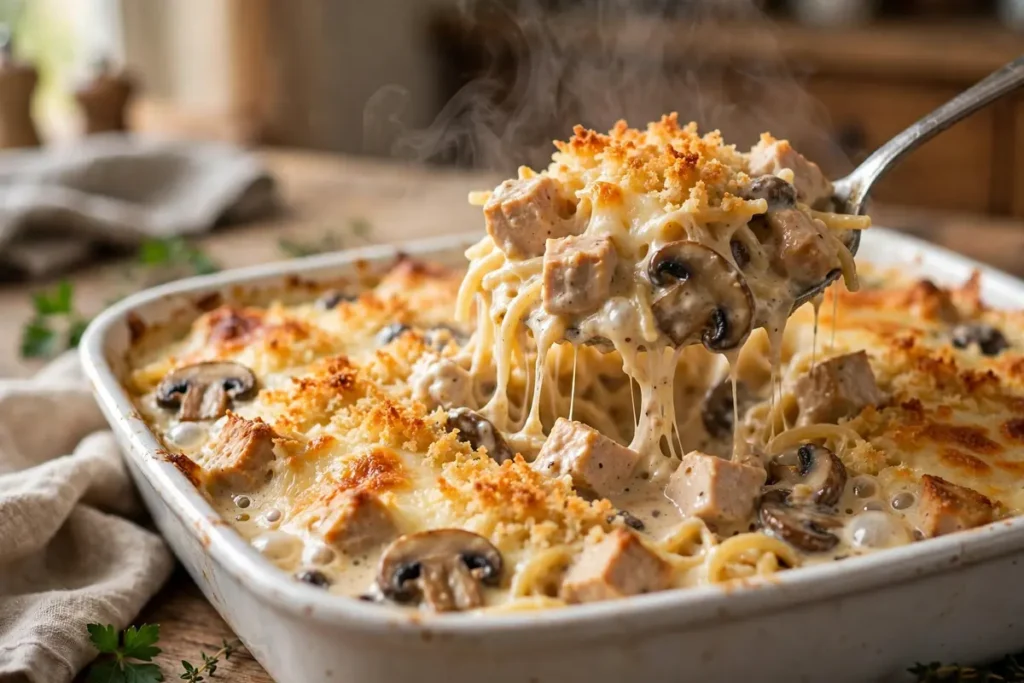
The ultimate leftover turkey sandwich with turkey, cranberry sauce, stuffing and melted cheese on toasted sourdough.
Watch: Ultimate Leftover Turkey Sandwich
Ree Drummond turns Thanksgiving leftovers into a crispy panini on Food Network.
At a Glance: Ultimate Leftover Turkey Sandwich
Layering strategy for a leftover sandwich that holds together and reheats beautifully.
| Layer | Tip |
|---|---|
| Bread | Sturdy sourdough or a toasted roll holds up to fillings |
| Turkey | Warm the turkey gently so it stays juicy |
| Cranberry sauce | A tangy layer cuts the richness |
| Stuffing | A thin layer adds texture without falling apart |
| Cheese | Swiss or provolone melts beautifully |
| Heating | Press in a panini press or skillet until crisp and melty |
| Gravy | Serve warm gravy on the side for dipping |
Frequently Asked Questions
How long is leftover turkey good for sandwiches?
Cooked turkey stored at or below 40°F (4°C) is safe for 3 to 4 days after roasting. That gives you Friday through Sunday (or Monday) of sandwich bliss after a Thursday Thanksgiving. When in doubt, freeze the sliced turkey on day two — it thaws quickly and makes excellent sandwiches later.
What’s the best bread for a leftover turkey sandwich?
Thick-sliced sourdough is the top choice: sturdy enough to hold the layers, tangy enough to cut the richness, and excellent toasted. Ciabatta, focaccia, and hearty multigrain are all strong alternatives. Avoid soft white bread, which turns soggy quickly under cranberry sauce and other moist layers.
How do I keep my sandwich from getting soggy?
Four defenses: toast the bread, spread fat-based condiments (mayo, butter) edge-to-edge on both slices as moisture barriers, keep wet ingredients like cranberry sauce separated from the bread by cheese or dry layers, and add the wettest components just before serving if packing ahead. Layer order matters — follow the blueprint above.
Can I make the ultimate turkey sandwich ahead of time?
Partially. Prep all components ahead (sliced turkey, spreads, portioned cranberry sauce, washed greens) and assemble just before serving — assembly takes 5 minutes. If you must build ahead, omit the cranberry sauce and greens, wrap tightly, refrigerate up to 24 hours, and add those fresh elements before eating.
Should the turkey be warm or cold?
Warm is better for the ultimate build: warming activates flavor, melts the cheese, and creates the warm-cool contrast with the cranberry sauce and greens that makes the sandwich sing. Use the skillet, stock-steam, or gravy-bath method. A fully cold version still works for packed lunches — just make sure the spreads are generous.
What cheese goes best with turkey and cranberry?
Sharp white cheddar is the classic — its bite stands up to the sweet-tart cranberry. Gruyère adds nutty sophistication, smoked Gouda brings depth, and Brie (for pressed versions) delivers luxurious melt. Avoid mild cheeses that disappear; the sandwich has bold flavors and needs a cheese with presence.
Conclusion
The ultimate leftover turkey sandwich rewards the cook who treats it as a design problem rather than a dumping ground. Toast the bread. Barrier the moisture. Sequence the layers. Warm the turkey, melt the cheese, balance rich with acid and fresh with savory. Do these things and your refrigerator full of leftovers becomes the raw material for the best sandwich of the year — maybe the best sandwich, period. And when you have worked through the sandwich phase, the pot pie phase awaits: our leftover turkey pot pie and turkey tetrazzini are standing by. It all starts, of course, with a perfectly roasted bird — see how to cook a Thanksgiving turkey when next November comes around.