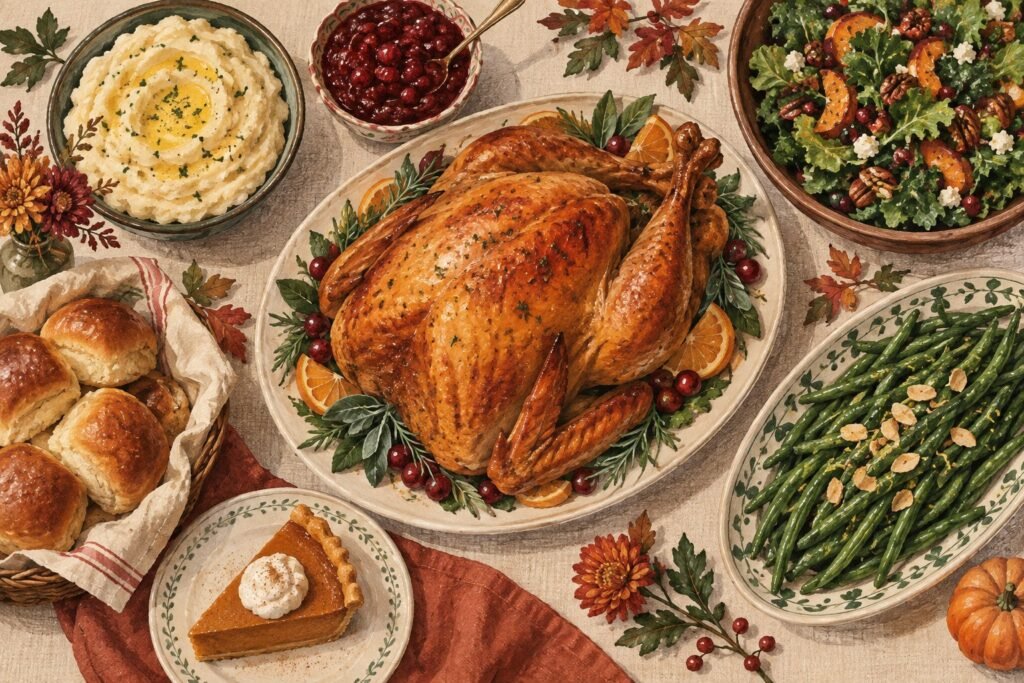
Turkey curry is the beloved post-holiday tradition that turns leftover roast turkey into something rich, warming, and completely new — a fragrant, gently spiced curry that tastes like it simmered for hours but comes together in about 40 minutes. In the UK, turkey curry on Boxing Day is practically a national institution, and the idea has spread worldwide for good reason: tender cooked turkey absorbs aromatic spices beautifully, coconut milk or tomato-based sauces keep every bite succulent, and a single pot stretches modest leftovers into a generous family dinner. This recipe builds a classic mildly-spiced curry with onion, ginger, garlic, garam masala, turmeric, and creamy coconut milk, with clear paths to make it hotter, milder, dairy-free, or slow-cooked. Below you will find the full ingredient list with metric and US measurements, step-by-step instructions, spice-level guidance, regional variations (Indian-style, Thai-style, and British curry-house style), USDA-based storage and reheating rules, troubleshooting, nutrition notes, serving ideas, and answers to frequently asked questions.
Why Turkey Curry Works So Well
Curry is one of the kindest things you can do to leftover turkey. The meat is already cooked and full of roasted flavor; what it needs is moisture, warmth, and bold seasoning — exactly what a curry sauce provides. Simmering diced turkey gently in a spiced sauce rehydrates even slightly dry breast meat, while the spices (turmeric, cumin, coriander, garam masala) complement poultry’s mild flavor without overwhelming it. Curry is also supremely practical: it is a one-pot meal, it scales effortlessly for crowds, it freezes brilliantly, and it welcomes whatever vegetables need using up. The Boxing Day turkey curry tradition exists because it solves the same problem every household faces — too much turkey, too little enthusiasm for plain reheated slices — with a dish that feels like a treat rather than a chore. If your turkey is freshly roasted and you want it to shine in its first outing too, our guide to how to cook a Thanksgiving turkey covers roasting, brining, and timing. And for the full safety picture on your leftover timeline, see how long Thanksgiving leftovers last.
Understanding Curry: A Quick Primer
The word “curry” covers an enormous family of dishes, and knowing the landscape helps you choose your version. Indian-style curries typically build flavor from whole and ground spices bloomed in oil or ghee, with tomato and onion bases and finishes of cream, yogurt, or coconut milk depending on region. Thai curries use pounded curry pastes (red, green, yellow) simmered in coconut milk, with fish sauce, lime, and fresh herbs. British curry-house style — the tradition behind Boxing Day turkey curry — tends toward a smooth, mildly sweet, golden sauce, often thickened with blended onion and finished with cream or coconut. This recipe sits closest to the British-Indian home style: aromatic and warming rather than fiery, with a creamy coconut-tomato sauce that pleases the widest range of palates. The variations section shows you how to steer it toward Thai or more traditionally Indian profiles.
Ingredients for Turkey Curry
Serves 6 (about 8 cups / 1.9 liters). The spice list looks long, but most are pantry staples — and the whole dish uses one pot.
Protein and Base
- 3 to 4 cups (450 to 600 g) cooked leftover turkey, cut into bite-size pieces — thigh and leg meat stay most tender; breast works if added gently
- 2 tablespoons (30 ml) neutral oil or ghee — ghee adds wonderful nutty depth
- 2 large onions (about 400 g total), finely diced
- 4 cloves garlic, minced
- 1 tablespoon fresh ginger, grated (about a 2.5 cm / 1-inch piece)
- 1 to 2 green chiles (such as serrano or Thai bird’s eye), slit lengthwise — adjust to taste; omit for mild
Spices
- 1 tablespoon ground coriander
- 2 teaspoons ground cumin
- 1½ teaspoons ground turmeric
- 1 tablespoon garam masala, divided (half now, half at the end)
- 1 teaspoon smoked or sweet paprika — for color
- ½ teaspoon cayenne pepper or Kashmiri chili powder — adjust to taste
- 1 teaspoon kosher salt, plus more to taste
- ½ teaspoon freshly ground black pepper
- 2 bay leaves (optional)
Sauce
- 1 can (400 g / 14 oz) crushed or diced tomatoes
- 1 can (400 ml / 14 oz) full-fat coconut milk — shake well; light coconut milk makes a thinner sauce
- 1 cup (240 ml) chicken or turkey broth, low-sodium preferred
- 1 teaspoon brown sugar or honey (optional) — balances tomato acidity
- Juice of ½ lime or lemon
Vegetables (Optional but Recommended)
- 2 medium potatoes (about 300 g), peeled and cut into 2 cm / ¾-inch cubes — they thicken the sauce as they cook
- 1 cup (about 130 g) frozen peas, or 1 diced red bell pepper
- A handful of baby spinach (about 60 g), added at the end
To Finish
- ¼ cup (about 60 ml) heavy cream or plain yogurt (optional) — for extra richness; omit for dairy-free
- Fresh cilantro leaves, chopped
- Steamed basmati or jasmine rice, or warm naan bread, for serving
Equipment
- Large heavy-bottomed pot or Dutch oven (5 quarts / 4.7 liters minimum)
- Wooden spoon, chef’s knife, cutting board, measuring tools
Step-by-Step Method
Total time: about 40 minutes (15 minutes prep, 25 minutes cooking). The method follows the classic curry-building sequence: brown the aromatics deeply, bloom the spices, build the sauce, then add the protein last.
Step 1: Brown the Onions (8 to 10 Minutes)
Heat the oil or ghee in your pot over medium heat. Add the diced onions with a pinch of salt and cook, stirring regularly, until they turn deep golden brown — 8 to 10 minutes. Do not rush this step: properly browned onions are the flavor foundation of the entire curry, contributing sweetness and body that pale, merely-softened onions cannot. If they start catching, add a tablespoon of water and scrape the bottom. This patience pays off more than any single spice.
Step 2: Add Ginger, Garlic, and Chiles (2 Minutes)
Stir in the garlic, ginger, and green chiles. Cook 1 to 2 minutes until fragrant but not browned — burnt garlic turns bitter and will haunt the whole pot. If using bay leaves, add them now.
Step 3: Bloom the Ground Spices (1 Minute)
Add the coriander, cumin, turmeric, half the garam masala, paprika, cayenne, salt, and black pepper. Stir constantly for 45 to 60 seconds. The mixture will become intensely aromatic and stain everything a gorgeous golden-orange. Add a splash of water if the spices threaten to stick — blooming in a slightly wet paste is fine and prevents scorching.
Step 4: Build the Sauce (12 to 15 Minutes)
Pour in the crushed tomatoes and broth, scraping up any browned bits. Add the cubed potatoes if using. Bring to a gentle boil, then reduce to a steady simmer, partially covered, for 12 to 15 minutes, until the potatoes are nearly tender and the sauce has thickened slightly. The oil may begin to glisten at the edges — a classic sign the sauce is properly cooked.
Step 5: Add Coconut Milk and Turkey (8 to 10 Minutes)
Stir in the coconut milk and bring back to the barest simmer — do not boil hard, or the coconut milk can separate. Add the turkey pieces, peas or bell pepper, and the brown sugar if using. Simmer gently for 8 to 10 minutes, just until the turkey is heated through and the vegetables are tender. Remember: the turkey is already cooked, so this step is about marrying flavors, not cooking meat.
Step 6: Finish (3 Minutes)
Remove from the heat. Stir in the remaining garam masala (adding it at the end preserves its volatile aromatics), the lime or lemon juice, and the cream or yogurt if using. Fold in the spinach and let it wilt in the residual heat, about 2 minutes. Taste and adjust: more salt for flatness, more lime for brightness, more cayenne for heat, a pinch more sugar if the tomatoes taste sharp.
Step 7: Rest and Serve (5 Minutes)
Cover and rest 5 minutes — curries always taste better after a brief rest as the flavors settle. Serve over fluffy basmati rice with warm naan for scooping, scattered generously with fresh cilantro. Offer lime wedges, sliced green chiles, and plain yogurt at the table so everyone customizes their bowl.
Regional Variations
Thai-Style Turkey Curry
Replace the Indian spice blend with 3 to 4 tablespoons of Thai red curry paste, fried in the coconut cream (the thick layer at the top of the can) until fragrant and darker. Add the remaining coconut milk, a tablespoon of fish sauce, a teaspoon of brown sugar, sliced bamboo shoots or bell peppers, and Thai basil at the end. Finish with lime juice. The flavor profile shifts completely — bright, herbal, and aromatic — from the same leftover turkey.
South Indian-Style Coconut Curry
Add 1 teaspoon of black mustard seeds and 10 to 12 fresh curry leaves to the hot oil before the onions (they will splutter — cover briefly), include a ½ teaspoon of ground fenugreek with the spices, and finish with tamarind paste (1 teaspoon dissolved in water) instead of lime juice. The result is tangier and more aromatic, wonderful over red rice or with dosa-style flatbreads.
British Curry-House Style (Boxing Day Classic)
For the nostalgic UK version: blend the browned onions with a little broth into a smooth purée before adding the spices (many curry houses pre-cook a base sauce this way), use mild curry powder instead of individual spices, add a diced apple and a tablespoon of mango chutney with the tomatoes for gentle sweetness, and finish with cream. Serve with pilau rice and poppadoms. This is the version that has graced millions of Boxing Day tables.
Slow Cooker Turkey Curry
Brown the onions and bloom the spices on the stovetop (worth the effort), then transfer everything except the turkey, coconut milk, spinach, and finishing garam masala to a slow cooker. Cook on LOW 5 to 6 hours or HIGH 2½ to 3 hours. Stir in the coconut milk and turkey for the final 30 minutes on LOW. The long simmer deepens the sauce remarkably.
Spice Level Guide
Curry heat is fully adjustable. For a mild, family-friendly curry: omit the green chiles and cayenne, use sweet paprika, and let the garam masala and ginger provide warmth without burn. For medium: include one slit green chile and ¼ teaspoon cayenne, as in the base recipe. For hot: add two chiles plus ½ to 1 teaspoon cayenne or a chopped habanero, and finish with chili oil. Remember that coconut milk and yogurt both temper heat, so dairy-rich curries can handle more chile than tomato-only versions. Heat also intensifies overnight — if serving tomorrow, season slightly milder today. For kids, serve the mild base curry and put sliced chiles and hot sauce on the table for the adults.
Storage, Reheating, and Food Safety
Curry follows standard USDA leftover guidance, with one advantage: acidic tomato-based sauces and reheating to a full simmer make it one of the safer leftover dishes when handled properly.
How Long It Keeps
Cool the curry within 2 hours of cooking — transfer to shallow containers to speed chilling — and refrigerate at or below 40°F (4°C). Properly stored turkey curry is safe for 3 to 4 days. In the freezer at 0°F (-18°C), it keeps 3 to 4 months at best quality. Note that coconut-milk-based curries can separate slightly after freezing; vigorous stirring while reheating restores them. Potato-containing curries also freeze acceptably, though the potatoes soften a little more — still delicious. For the complete holiday food-safety reference, see our guide on how long Thanksgiving leftovers last.
Reheating Safely
Reheat gently on the stovetop over medium-low heat, stirring frequently, until the curry reaches 165°F (74°C) throughout and simmers. Avoid boiling coconut-milk curries hard — a vigorous boil can split the sauce. If it does separate, whisk in a tablespoon of cold coconut milk or cream off the heat. Reheat only the portion you plan to serve, and reheat only once. From frozen, thaw overnight in the refrigerator for the best texture.
Make-Ahead Tips
Turkey curry is a genuine make-ahead champion: the flavors deepen overnight as the spices continue to meld. Cook it a day ahead, refrigerate, and reheat gently — many cooks insist day-two curry is superior. If making ahead for guests, slightly under-salt it, since flavors concentrate; adjust seasoning when reheating.
Troubleshooting Common Problems
Sauce Too Thin
Simmer uncovered to reduce, mash some of the potato cubes into the sauce as a natural thickener, or stir in 1 tablespoon of tomato paste. A slurry of 1 tablespoon cornstarch in 2 tablespoons cold water, stirred in and simmered 2 minutes, also works. Remember that curry thickens as it cools, so judge the final consistency after the 5-minute rest.
Sauce Split or Oily
Coconut milk splits when boiled hard or when acidic tomatoes are added to cold coconut milk. Prevent it by bringing the coconut milk to temperature gradually and keeping the simmer gentle. To rescue a split curry, remove from heat and whisk vigorously, or blend a ladleful of the sauce and stir it back in. A spoonful of yogurt whisked in off the heat can also re-emulsify it.
Bitter or Harsh Flavor
Bitterness usually comes from burnt garlic or scorched spices. If caught early, a teaspoon of brown sugar or honey plus extra coconut milk can round it out. Turmeric in excess also tastes bitter and medicinal — measure it rather than eyeballing. A squeeze of lime at the end brightens and balances.
Turkey Dried Out
Lean breast meat toughens with prolonged simmering. Add it only in the final 8 to 10 minutes and keep the heat at a gentle simmer. Cut pieces bite-size so they heat through quickly. Dark meat is far more forgiving — when building curry from mixed leftovers, add breast pieces last.
Too Spicy
Stir in more coconut milk or a few spoonfuls of plain yogurt — dairy and coconut fat dissolve capsaicin. A teaspoon of sugar or honey helps, as does serving over extra rice. Adding a diced potato and simmering 10 minutes also absorbs some heat (remove or keep the potato as you like).
Nutrition Notes
Per 1½-cup (355 ml) serving over ¾ cup cooked basmati rice, turkey curry as written provides approximately 520 to 600 calories, 32 to 38 grams of protein, 55 to 65 grams of carbohydrates, 16 to 22 grams of fat (largely from coconut milk), and 5 to 7 grams of fiber. Turkey contributes lean complete protein, B vitamins, selenium, and zinc; turmeric provides curcumin (best absorbed with the black pepper and fat in this recipe — a happy accident of traditional spice pairing); coconut milk adds medium-chain fats; tomatoes and peppers add vitamins A and C. Sodium runs about 500 to 700 mg per serving with low-sodium broth. For a lighter version, use light coconut milk (saves roughly 100 calories per serving), skip the cream finish, and serve over cauliflower rice. These are estimates, not laboratory values.
Serving Ideas and Pairings
Basmati rice is the classic partner — its long, fragrant grains are the ideal sauce vehicle. Jasmine rice, brown rice, or quinoa all work. Warm naan, roti, or chapati for scooping turns it into a feast; store-bought naan warmed in a dry skillet with a brush of ghee tastes remarkably fresh. Side dishes: a simple cucumber raita (yogurt, grated cucumber, mint, salt) cools the palate; a kachumber-style salad of diced cucumber, tomato, and onion with lime adds crunch; mango chutney and lime pickle on the side let guests add sweet or funky notes. For drinks, a cold lager, a lightly sweet Riesling, or mango lassi all pair beautifully with spiced food. If you are planning a full week of leftover reinvention, alternate this curry with our leftover turkey chili and turkey fried rice — three cuisines, zero boredom.
In Pictures: Turkey Curry
The Boxing Day tradition in a bowl — tender turkey simmered in a fragrant coconut-turmeric sauce that rehydrates even slightly dry breast meat.
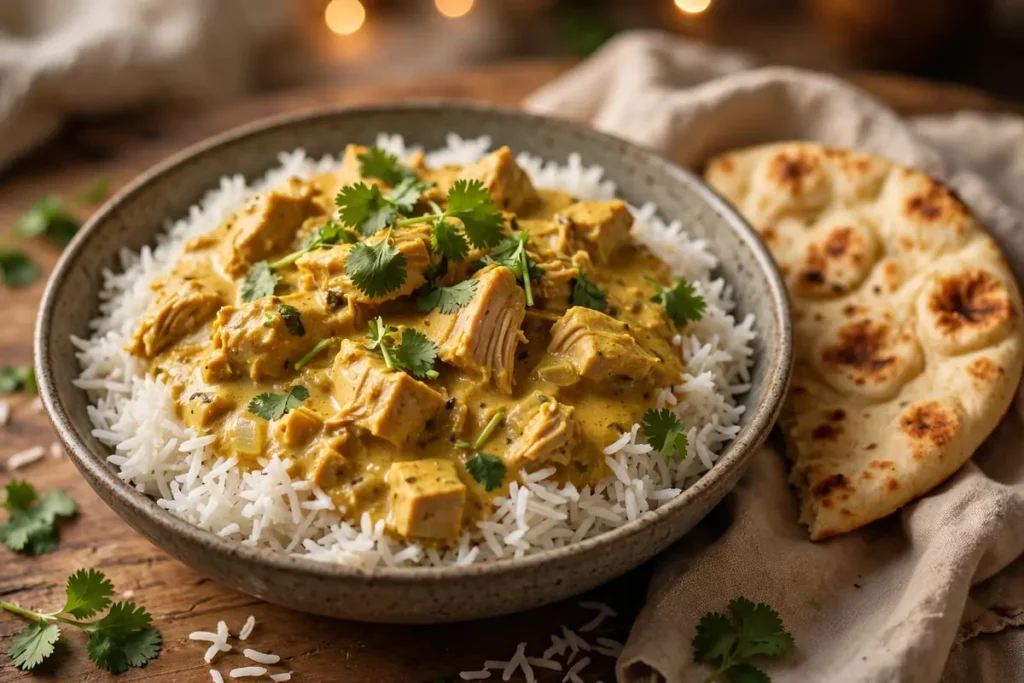
A bowl of creamy golden turkey curry over basmati rice with fresh cilantro, served with warm naan.
Watch: Turkey Curry
Sarah Carey of Everyday Food shows a weeknight turkey curry built on store-bought simmer sauce — shredded turkey, basmati rice, and bright toppings in under 30 minutes.
At a Glance: Turkey Curry
The essential facts for this post-holiday classic.
| Detail | What to know |
|---|---|
| Total time | About 40 minutes (15 minutes prep, 25 minutes cooking) |
| Yield | Serves 6 — about 8 cups (1.9 liters), all in one pot |
| Sauce base | Onion, ginger, garlic, garam masala, turmeric, and creamy coconut milk with tomato |
| Best cuts | Thigh and leg meat stay most tender; breast works if added gently near the end |
| Regional paths | British curry-house style is the default; variations steer it toward Indian or Thai profiles |
| Tradition | Turkey curry on Boxing Day (December 26) is a long-standing UK post-holiday institution |
| Storage | Refrigerate 3 to 4 days (USDA guidance); freezes brilliantly for easy winter meals |
Frequently Asked Questions
Can I make turkey curry with raw turkey instead of leftovers?
Yes. Cut 700 g (1½ lbs) of raw boneless turkey thigh or breast into bite-size pieces, brown them in the pot after the onions (before the spices), and simmer in the sauce for 20 to 25 minutes until cooked through to 165°F (74°C). Thigh meat stays juicier through the longer cooking this requires.
Is turkey curry gluten-free?
Yes, as written — all spices, coconut milk, tomatoes, and vegetables are naturally gluten-free. Check your broth and curry paste (if using a variation) for hidden wheat. Serve with rice rather than naan (which contains wheat flour) to keep the meal gluten-free, or use gluten-free flatbreads.
Can I make it dairy-free?
Easily — the base recipe already is, if you use oil instead of ghee and skip the cream/yogurt finish. Coconut milk provides all the richness needed. Just verify that any store-bought curry paste in the variations contains no dairy or shrimp paste if those matter to you.
How do I keep the turkey from getting tough in curry?
Add cooked turkey only in the last 8 to 10 minutes of gentle simmering, never boil it hard, and favor dark meat, which stays tender far longer than breast. Cut pieces small so they heat through quickly.
Can I freeze turkey curry?
Yes — it freezes excellently for 3 to 4 months at 0°F (-18°C). Cool within 2 hours, portion into airtight containers leaving headspace, and label with the date. Thaw overnight in the refrigerator and reheat gently to 165°F (74°C), stirring well to re-emulsify the coconut milk.
What is the difference between curry powder and garam masala?
Curry powder (a British invention) is a pre-mixed blend meant to be cooked into the dish from the start; it usually contains turmeric, coriander, cumin, and fenugreek. Garam masala (“warming spice mix”) is an Indian blend of aromatic spices like cardamom, cinnamon, cloves, and black pepper, traditionally added near the end of cooking so its volatile aromatics survive. This recipe uses individual ground spices for the base plus garam masala at the finish for layered complexity — the best of both approaches.
Conclusion
Turkey curry takes the most familiar of leftovers and carries it somewhere entirely new — no longer Thanksgiving dinner, but a fragrant, warming one-pot meal with its own identity and its own traditions, from Boxing Day tables in Britain to weeknight kitchens everywhere. The method is forgiving, the ingredients are flexible, and the result reliably tastes like far more effort than it requires. Make the classic coconut-tomato version first, then explore: Thai with basil and lime, South Indian with curry leaves and tamarind, or curry-house style with apple and mango chutney. Serve it over basmati, scoop it with naan, and watch the last of the holiday turkey disappear without a single complaint. For more leftover inspiration, browse our full Thanksgiving recipes collection.