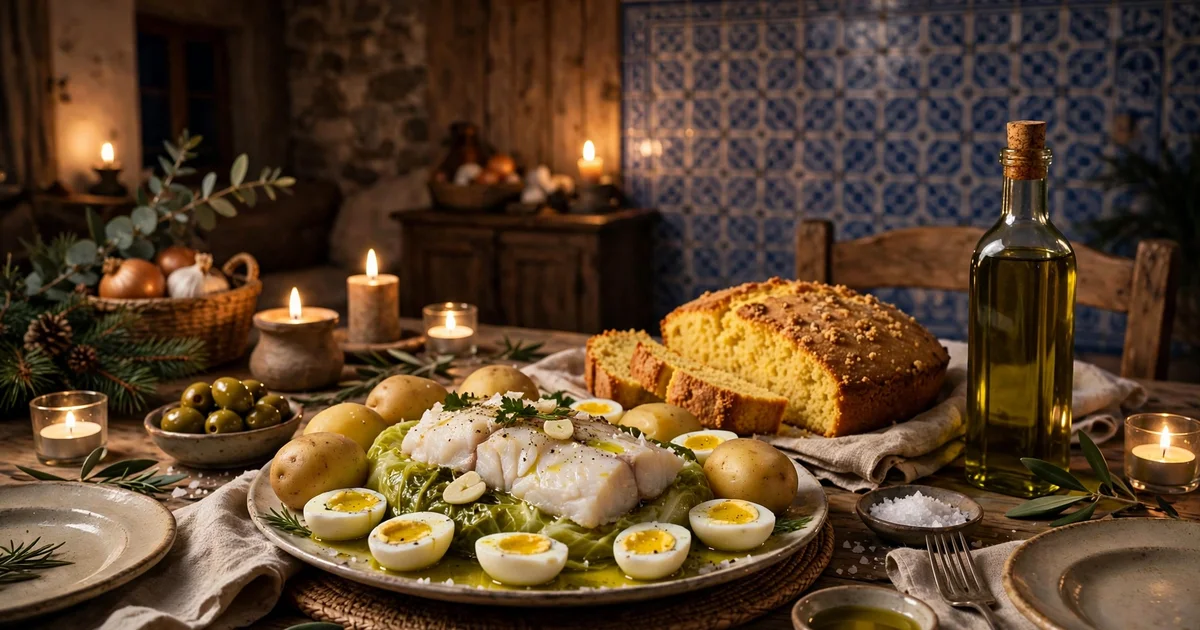
While much of the world roasts a turkey on December 24, Portugal sits down to a very different centerpiece — and Portuguese Christmas dinner bacalhau is the delicious reason why. On Christmas Eve, millions of Portuguese families gather for the Consoada, the traditional Christmas Eve supper, where salt cod (bacalhau) is served simply boiled with cabbage, potatoes, and eggs, drenched in olive oil. It is humble, it is historic, and it is utterly non-negotiable: for many Portuguese, Christmas without bacalhau simply is not Christmas. This guide explains why codfish conquered the Portuguese Christmas table, how the classic Consoada is prepared and served, what sweet treasures follow it, and how you can bring this beautiful tradition to your own table.
The Consoada: Portugal’s Christmas Eve Supper
The Consoada (from consoar, to comfort or console) is the heart of the Portuguese Christmas. Eaten on the evening of December 24, it is traditionally a lean, meatless meal — a legacy of the Catholic custom of abstinence on Christmas Eve, when the faithful ate simply before the celebration of Christ’s birth. After supper, many families attend the Missa do Galo (the Rooster’s Mass) at midnight, named for the legend that a rooster crowed at the moment of Jesus’s birth.
Historically, the Consoada was a modest affair: boiled cod, boiled vegetables, cornbread, and perhaps a glass of wine — food that consoled and sustained rather than indulged. Christmas Day (Dia de Natal) was the day for abundance, with roast turkey, cabrito (roast kid goat), or other meats. In modern Portugal the lines have blurred — many families now serve generous spreads on both days — but the symbolism holds: Christmas Eve belongs to bacalhau, and it is served with a reverence that turns simplicity into ceremony.
Timing matters. The Consoada is typically eaten earlier than the Spanish Nochebuena — often around 7 or 8 in the evening — so the family can reach midnight Mass unhurried. After Mass, the sweet course truly begins: trays of fried and baked Christmas sweets appear alongside port wine, and the table stays set late into the night. If you are mapping a European Christmas food journey, compare this rhythm with its Iberian neighbor in our guide to Spanish Christmas dinner traditions, where the feast starts late and runs past midnight.
Bacalhau: The Faithful Friend of the Portuguese Table
The Portuguese call salt cod “o fiel amigo” — the faithful friend — and the nickname is earned. For over 500 years, bacalhau has been Portugal’s defining food. Portuguese fishermen were sailing to the cod-rich waters of Newfoundland as early as the 1500s, and salted, dried cod became the protein that could survive long voyages and feed a nation far from its fishing grounds. It kept without refrigeration, it was cheap, and — crucially for a deeply Catholic country — it was fish, permitted on the many days of abstinence when meat was forbidden.
The old saying claims there are 365 ways to cook bacalhau — one for every day of the year — and any Portuguese cook will happily start listing: bacalhau à brás (shredded with eggs and matchstick potatoes), bacalhau com natas (baked in cream), bacalhau à Gomes de Sá (with potatoes, eggs, and olives), pastéis de bacalhau (cod fritters). But at Christmas, all that creativity is set aside. The Consoada cod is bacalhau cozido — simply boiled — because on this night, tradition demands the purest expression of the faithful friend.
There is a beautiful logic to it. After a year of 364 inventive preparations, Christmas Eve strips bacalhau back to its essence: good salt cod, good olive oil, good vegetables. The simplicity is the point — it connects the family to generations who ate the same humble meal, and it makes the sweetness that follows taste all the sweeter.
Bacalhau da Consoada: The Classic Recipe, Step by Step
The Christmas Eve bacalhau is deliberately simple, but simple does not mean careless. Every step — from desalting to the final pour of olive oil — has been refined over generations. Here is how to do it properly.
Step 1: Desalting (24–48 hours ahead)
Salt cod is preserved in salt — aggressively so. Buy thick, center-cut loins of dried salted cod (bacalhau crescido) and begin desalting two days before Christmas Eve. Rinse the fish, place it skin-side up in a large bowl of cold water, and refrigerate. Change the water every 6–8 hours. Thin pieces need about 24 hours; thick loins need a full 48. The cod is ready when a small flaked piece tastes pleasantly seasoned rather than salty. This is the single most important step: under-soaked cod is inedibly salty, over-soaked cod turns bland and waterlogged.
Step 2: The Boil (Christmas Eve afternoon)
Bring a large pot of water to a gentle boil — never a rolling one, which toughens the fish. Add the soaked cod and poach for 10–15 minutes, until it flakes easily. In the same pot (or a second one), boil waxy potatoes in their skins, and separately cook couve — traditionally Portuguese cabbage or collard greens — plus hard-boiled eggs. Everything is boiled; there is no frying, no roasting, no sauce-making. The Consoada cod is a monument to the boiled dinner, elevated by ingredient quality.
Step 3: The Assembly
Drain everything and arrange it on a large platter: the cod broken into generous flakes, the potatoes peeled and halved, the cabbage in ribbons, the eggs quartered. Then the finishing touch that makes the dish sing: a lavish pour of good Portuguese olive oil — be generous, this is Christmas — and perhaps a scattering of black olives and a drizzle of vinegar. Serve with thick slices of broa de milho (dense corn-rye bread) for mopping up the oil. That is it. No garnish, no reduction, no foam. Just the faithful friend, treated with respect.
What to Drink With It
A crisp vinho verde is the classic pairing — its lightness and acidity cut through the olive oil beautifully. Douro whites work equally well. Save the port for the sweet course that follows.
Beyond the Cod: The Rest of the Consoada Table
While bacalhau is the undisputed star, the Consoada table holds supporting players worth knowing:
- Polvo (octopus): In some regions, particularly the north, octopus rivals or replaces cod — often simply boiled and dressed with olive oil and paprika, in the Galician style (polvo à lagareiro when roasted).
- Broa de milho: The dense, slightly sweet corn bread that is the Consoada’s essential carbohydrate — for sopping, for sandwiching flakes of cod, for eating on its own.
- Couves and greens: Boiled cabbage, collards, or turnip greens, always present, always drowned in olive oil.
- Sopa: Some families open with a simple caldo verde (kale and potato soup) or a fish soup, though purists consider the cod course the true beginning.
And then Christmas Day flips the script: with abstinence over, the table welcomes peru recheado (stuffed turkey), cabrito assado (roast kid), or leitão (roast suckling pig), and the meal grows richer and longer. The two-day rhythm — humble fish, then festive meat — is one of the most elegant structures in European Christmas dining. For a broader look at Christmas main courses across traditions, see our Christmas dinner ideas roundup.
The Sweet Second Act: Portugal’s Christmas Doçaria
If the Consoada’s savory course is defined by restraint, the sweet course is defined by glorious excess. After midnight Mass — or for many families, as the evening wears on — the table fills with doçaria de Natal, Portugal’s Christmas sweets, and they arrive in staggering variety. Portuguese Christmas is arguably a sweeter celebration than a savory one, and the convent-born traditions of egg yolks, sugar, cinnamon, and fried dough reach their annual peak.
Bolo Rei: The King of the Table
The bolo rei (king cake) is Portugal’s answer to the French galette des rois and the Spanish roscón: a ring-shaped, brioche-like cake studded with candied fruits and nuts, symbolizing the gifts of the Magi. Traditionally it hides two tokens — a small figurine (o brinde, bringing luck to whoever finds it) and a dried fava bean (a fava, obliging its finder to buy next year’s cake). The bolo rei appears in bakeries from late November and stays through January 6 (Dia de Reis). Its plainer cousin, bolo rainha (queen cake), swaps the candied fruit for extra nuts for those who prefer it.
The Fried Treasures: Sonhos, Filhoses, and Azevias
Portugal’s Christmas fryers work overtime producing:
- Sonhos (“dreams”): ethereally light fried puffs, rolled in cinnamon sugar — the name promises exactly what they deliver.
- Filhoses: thin, crisp fried dough ribbons, often flavored with pumpkin or orange, dusted with sugar and cinnamon.
- Azevias: half-moon pastries filled with sweetened chickpea, sweet potato, or chila (fig-leaf gourd) jam — a legacy of convent sweets.
- Coscorões: another lacy fried dough, crackling and delicate, from the Alentejo tradition.
Spoon Sweets and Showpieces
- Aletria: a fragrant vermicelli pudding cooked in milk with lemon, cinnamon, and egg yolks, served chilled and decorated with cinnamon patterns.
- Arroz doce: Portuguese rice pudding, richer and eggier than its cousins, the cinnamon decoration a point of family pride.
- Lampreia de ovos: the spectacular “egg lamprey” — a molded sweet of egg yolk threads and sugar shaped like the fearsome river fish, complete with gummy eyes. It is the centerpiece that makes children gasp and adults reach for the port.
- Pão de ló: the impossibly light sponge cake, its center still trembling, served at its best barely set.
The sweet course is traditionally accompanied by port wine — tawny or LBV — and strong coffee. Many families also serve jeropiga, a sweet fortified wine. For fellow dessert devotees, our tour of Christmas desserts around the world places these Portuguese treasures in global company.
Regional Tables: How the Consoada Changes Across Portugal
Portugal is small but its Christmas tables vary beautifully by region:
- Minho and the North: The most traditional Consoada country — bacalhau cozido with couves, broa de milho, and perhaps papas de sarrabulho (a rich pork-blood porridge) at other festive meals. Lamprey (lampreia) rice appears where the rivers run.
- Trás-os-Montes: Mountain tables add alheira (the historic “Jewish sausage” of bread and game) and hearty cozidos in the days around Christmas.
- Lisbon and the Center: Urban tables are the most cosmopolitan — turkey and international dishes join the cod, and the sweet trays mix convent classics with modern patisserie.
- Alentejo: The breadbasket’s Christmas features ensopado de borrego (lamb stew) on Christmas Day and an exceptional array of fried sweets — coscorões, filhoses, and broas de mel.
- Algarve: The south adds marzipan fruits (frutas de Doce) shaped like figs and oranges, and Dom Rodrigos — egg-thread sweets wrapped in colored foil.
- Madeira and the Azores: Island Christmases bring bolo de mel (Madeira’s dark honey cake, aged for months), licor de tangerina, and the beloved tradition of missas do parto — nine dawn Masses before Christmas, each followed by shared food and drink.
How to Host a Portuguese Christmas Dinner
Bringing the Consoada to your table is one of the most achievable — and most meaningful — Christmas traditions to adopt, because its beauty lies in simplicity rather than spectacle.
The Countdown Plan
- December 22: Buy thick salt-cod loins (about 200–250g per person). Begin desalting: rinse, submerge in cold water, refrigerate.
- December 23: Change the soaking water every 6–8 hours. Buy broa de milho or a dense country loaf, waxy potatoes, cabbage or collard greens, eggs, and the best olive oil you can afford. Pick up a bolo rei from a Portuguese bakery (order ahead — they sell out).
- December 24, afternoon: Test a flake of cod for salt. Boil potatoes in skins, cook the greens, hard-boil the eggs. Poach the cod gently for 10–15 minutes.
- December 24, evening (~7–8 PM): Arrange everything on a big platter, pour over generous olive oil, and serve. Open the vinho verde.
- After dinner: Bring out the bolo rei, sonhos or filhoses (bakeries sell these too), aletria or arroz doce if you are ambitious — plus port and coffee.
Sourcing Notes
Real dried salted cod (bacalhau seco) is sold at Portuguese, Spanish, and Brazilian markets, and increasingly online — look for thick, white, flexible loins rather than thin yellowed pieces. If you cannot find broa de milho, a dense German-style rye or Portuguese corn bread from a bakery works. Do not skimp on the olive oil: it is effectively the sauce of the entire dish. And buy the bolo rei rather than baking it on your first attempt — Portuguese bakeries guard their recipes for good reason.
From Missa do Galo to the Janeiras: Portugal’s Christmas Rituals
Portuguese Christmas dinner bacalhau does not exist in isolation — it sits inside a web of rituals that give the meal its meaning. Understanding them turns a fish dinner into a cultural experience.
The Rooster’s Mass
The Missa do Galo takes its name from an old legend: at the moment of Christ’s birth, a rooster crowed to announce the news to the world. Portuguese churches celebrate the midnight Mass with particular warmth — nativity scenes (presépios) are unveiled, choirs sing, and in many villages the congregation shares jeropiga or hot wine after the service. The tradition of attending Mass between supper and sweets is why the Consoada is eaten relatively early: the evening is choreographed around midnight.
The Presépio and the Madeiran Dawn Masses
The presépio (nativity scene) is Portugal’s essential Christmas decoration, often elaborate, with moss, cork bark, and running water. In Madeira, devotion takes an extraordinary form: the missas do parto, nine dawn Masses celebrated in the days before Christmas, each ending with the congregation sharing food, poncha, and song outside the church as the sun rises. It is one of Europe’s most beautiful Advent traditions, and the food served — honey cake, sandwiches, hot drinks — blurs the line between worship and feast.
The Janeiras
After Christmas comes the Janeiras: groups of singers going door to door in January, singing traditional songs (as janeiras) in exchange for food, drink, or small gifts. It is Portugal’s answer to caroling, and it extends the season’s hospitality well into the new year — proof that in Portugal, Christmas generosity is not confined to a single dinner.
Bolo Rei Season and the End of the Sweets
The sweet course that begins at the Consoada does not end on Christmas Day. Bolo rei remains on bakery shelves and family tables through Dia de Reis (January 6), when the last slice is eaten and the season formally closes. Many families also keep pão de ló and fried sweets on hand for every visitor through the Twelve Days — in Portugal, turning up empty-handed at Christmas is unthinkable, and so is leaving hungry.
What Portugal Drinks at Christmas
The Consoada’s drinks follow the same humble-to-grand arc as its food. With the cod, a chilled vinho verde — light, lightly sparkling, inexpensive — is the people’s pairing, though Douro and Alentejo whites are equally at home. Christmas Day’s roasts call for reds: Douro, Dão, or Alentejo reds, generous and food-friendly. Then comes the sweet course, and with it Portugal’s most famous export: port wine. Tawny port with its nutty, oxidative character is the classic partner for bolo rei and fried sweets; LBV (Late Bottled Vintage) offers richer fruit. Many families also pour jeropiga, a sweet fortified wine traditionally made at harvest, and ginjinha — sour cherry liqueur — appears at Christmas markets and after-dinner gatherings, especially in Lisbon and Óbidos. Coffee is served strong and short (um café or uma bica in Lisbon), and the evening often ends with a small glass of aguardente or muscatel. The through-line: Portuguese Christmas drinking is regional, unpretentious, and always in service of the table. And when the wine is done, the evening ends the Portuguese way — with a tiny, intense café standing at the counter of life, even at midnight, because in Portugal coffee is not a drink but a punctuation mark, and Christmas deserves a proper full stop.
In Pictures: Portuguese Christmas Dinner — Bacalhau
Portugal’s Consoada is Christmas Eve with cod — boiled bacalhau with everything, then the sweetest of convent-inspired desserts.
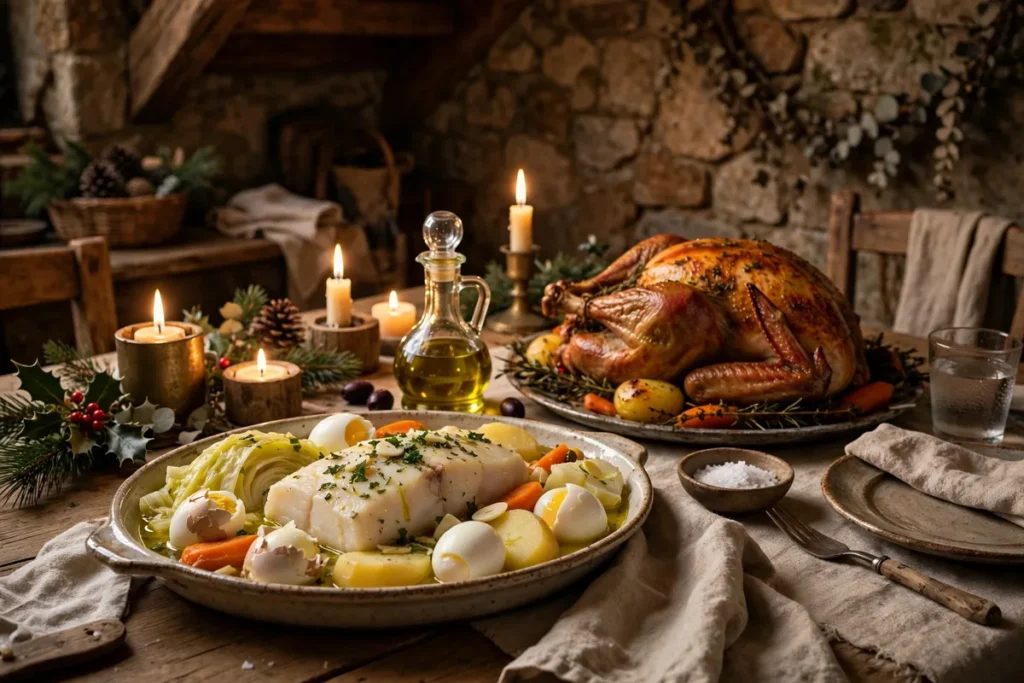
A Portuguese Consoada table: boiled bacalhau with cabbage, carrots and potatoes, olive oil, and Christmas candles.
Watch: Portuguese Christmas Dinner — Bacalhau
Why do the Portuguese eat cod on Christmas Eve? The story of bacalhau at the Consoada.
At a Glance: Portuguese Christmas Dinner — Bacalhau
The Consoada table, dish by dish.
| Dish | When | Key detail |
|---|---|---|
| Consoada | 24 December | Christmas Eve supper — traditionally meatless, bacalhau is king |
| Bacalhau com todos | 24 December | Boiled cod “with everything” — cabbage, potatoes, carrots, egg, olive oil |
| Bacalhau à lagareiro | 24 December | Baked cod in garlic olive oil — another Eve classic |
| Roupa velha | 25 December | “Old clothes” — the Christmas Day hash of leftover cod |
| Bolo-rei | December | The crowned king cake — dried fruits, with a fava bean hidden inside |
| Rabanadas & filhós | December | Wine-soaked French toast and fried dough — the Christmas sweets |
| Missa do Galo | 24 December | The Rooster’s Mass — midnight mass after supper |
Frequently Asked Questions
Why do the Portuguese eat bacalhau for Christmas dinner?
Bacalhau is the traditional Christmas Eve dish because of the Catholic custom of abstinence — Christmas Eve was historically a meatless day, and salt cod was the affordable, storable fish of the Portuguese people. The simple boiled preparation (bacalhau cozido) honors that humble origin, and the tradition has endured as a beloved national ritual.
What is the Consoada?
The Consoada is Portugal’s traditional Christmas Eve supper, eaten on December 24 before the midnight Missa do Galo (Rooster’s Mass). It centers on simply boiled salt cod with cabbage, potatoes, and eggs, dressed with olive oil — followed by an abundant course of Christmas sweets and port wine.
How long does salt cod need to soak before cooking?
Thick salt-cod loins need 36–48 hours of soaking in cold water (refrigerated), with the water changed every 6–8 hours. Thinner pieces need about 24 hours. Always taste a small flake before cooking — it should taste pleasantly seasoned, not aggressively salty.
What is bolo rei?
Bolo rei (king cake) is Portugal’s ring-shaped Christmas cake studded with candied fruits and nuts, symbolizing the Magi’s gifts. It traditionally hides a lucky figurine and a fava bean — the finder of the bean buys next year’s cake. It is eaten from late November through January 6.
What do Portuguese eat on Christmas Day?
With Christmas Eve’s abstinence over, Christmas Day lunch features roast meats: stuffed turkey (peru recheado), roast kid goat (cabrito assado), or roast suckling pig (leitão). Leftovers from the Consoada’s sweet course carry over, and the table stays festive.
Can I make a Portuguese Christmas dinner without salt cod?
You can approximate the spirit with fresh cod, but it will not be the Consoada — the flavor of properly desalted bacalhau is distinctively firm and savory. If dried salt cod is truly unavailable, a meaty white fish simply poached with the same accompaniments (potatoes, cabbage, eggs, olive oil) makes an honorable substitute.