In Spain, Christmas dinner is not a single meal but a season-long celebration of food, and Spanish Christmas dinner traditions are among the most delicious in Europe. The festivities begin on December 22 with the thunderous singing of the El Gordo lottery numbers, peak with the lavish seafood feast of Nochebuena (Christmas Eve), and roll on through midnight cava toasts, sweet trays of turrón and polvorones, and finally the twelve lucky grapes of New Year’s Eve. Unlike the turkey-centered tables of the English-speaking world, the Spanish Christmas table belongs to the sea: prawns, sea bream, spider crab, and goose barnacles take pride of place, followed by some of the continent’s oldest Christmas sweets. This guide walks you through the entire Spanish Christmas food season — what is eaten, when, why, and how you can recreate it at home.
The Spanish Christmas Season at a Glance
To understand Spanish Christmas dinner traditions, you first need to understand the calendar. Christmas in Spain is a marathon, not a sprint, and each date has its own food ritual:
| Date | Occasion | Food ritual |
|---|---|---|
| December 22 | El Gordo lottery draw | Sweet snacks and cava while watching the numbers sung live |
| December 24 | Nochebuena (Christmas Eve) | The year’s grandest dinner: seafood, jamón, roast meats |
| December 25 | Navidad (Christmas Day) | Leftover-friendly family lunch; turkey or stuffed dishes |
| December 28 | Día de los Inocentes | Pranks and lighthearted sweets (Spain’s April Fools’) |
| December 31 | Nochevieja (New Year’s Eve) | Twelve grapes at midnight, then cava and celebration |
| January 5 | Cabalgata de Reyes | Hot chocolate and churros after the parade |
| January 6 | Día de Reyes (Epiphany) | Roscón de Reyes cake — the season’s sweet finale |
Notice that the 25th is relatively quiet compared to the 24th. In Spain, Christmas Eve is the main event — families gather for La Cena de Nochebuena, often starting around 9 or 10 in the evening and stretching past midnight, when those who attend will head to La Misa del Gallo (Midnight Mass) or simply keep celebrating at the table. Christmas Day lunch exists, but it plays second fiddle. This late-night, long-table rhythm shapes everything about how Spaniards eat at Christmas: the meal is built in waves — tapas-style starters, a showpiece main, then an extended dessert course that can last an hour — because nobody is in a hurry to leave.
El Gordo Night: How the Lottery Shapes Christmas Dinner
The Spanish Christmas food season does not begin with a meal at all — it begins with a song. On the morning of December 22, schoolchildren from Madrid’s Colegio de San Ildefonso stand on stage at the Teatro Real and sing the winning numbers of the famous El Gordo Christmas lottery in a centuries-old chant that the whole country watches live. Offices stop work, bars turn up the television volume, and families keep one eye on the screen while the other stays on the table.
Food-wise, El Gordo day is a grazing day rather than a feast day. Offices and workplaces lay out platters of embutidos (cured meats), manchego cheese, olives, and the first turrón of the season. Someone always brings a bottle of cava “just in case,” and if a shared office ticket wins even a small prize (la pedrea, the shower of minor prizes), the cava gets opened on the spot. It is the unofficial starting gun of Spanish Christmas eating: from this day forward, there will be sweets on every counter and an open bottle within reach until January 6.
The lottery also explains one of the season’s most practical traditions. Because Spaniards buy lottery tickets in shared groups — with coworkers, bar regulars, and entire villages — the weeks before Christmas involve constant small gatherings to split tickets and daydream about winnings. Each gathering needs snacks, so December becomes a month of impromptu tapas: a wedge of tortilla here, a plate of jamón there. By the time Nochebuena arrives, everyone has been nibbling festively for weeks.
Nochebuena: The Christmas Eve Feast
La Cena de Nochebuena is the undisputed heavyweight of Spanish Christmas dinner traditions. This is the meal families plan for weeks, the one where grandparents insist on the old recipes and parents compete over who found the best seafood. A traditional Nochebuena dinner unfolds in three acts, and understanding the structure is the key to understanding the tradition.
Act One: Jamón, Cheese, and the Fruits of the Sea (as Starters)
The table opens with what looks like the world’s most luxurious tapas spread. At the center sits the jamón ibérico — ideally a whole leg, hand-carved into translucent slices at the table, though excellent pre-sliced paleta works for smaller gatherings. Around it: wedges of aged manchego and perhaps a creamy Torta del Casar, marinated olives, and conservas — Spain’s superb tinned seafood, served with pride rather than apology. Top-tier conservas (white asparagus from Navarra, cockles, mussels in escabeche) are genuinely celebration food.
Then come the cold seafood starters that signal this is no ordinary night: gambas (prawns) and langostinos (king prawns), often simply boiled and served with lemon; centollo (spider crab) from Galicia; and for the adventurous, percebes (goose barnacles), the bizarre-looking delicacy pried from wave-battered rocks on the Galician and Asturian coasts. Percebes are expensive, fiddly, and utterly unforgettable — the kind of food that exists purely for celebration. If you want to understand how deeply seafood runs in Christmas tradition, our guide to the Feast of the Seven Fishes explores a similar Mediterranean devotion to Christmas seafood from the Italian side.
Act Two: The Showpiece Main Course
After the starters are cleared — usually an hour or more into the evening — the main course arrives, and in most Spanish homes it comes from the sea. The classic centerpiece is a whole baked fish: besugo (red sea bream) prepared a la madrileña with garlic, white wine, and parsley, or lubina (sea bass) baked in a salt crust that is cracked open tableside to theatrical effect. In the north, merluza (hake) in green sauce appears; in Catalonia, a rich seafood suquet or zarzuela stew might take the starring role.
Land-based alternatives exist and have deep roots. In Castile, cordero asado (roast suckling lamb) or cochinillo (roast suckling pig) from Segovia are the traditional Christmas roasts, their crackling skin a source of fierce family pride. Turkey (pavo) stuffed with dried fruits and nuts has gained ground in recent decades, especially for Christmas Day, but it remains the newcomer — the old soul of the Spanish Christmas main course is fish. Many families solve the debate the Spanish way: seafood on Nochebuena, meat on Navidad.
Act Three: Regional Variations Across Spain
Spain’s regions guard their Christmas menus fiercely, and the differences are a delicious geography lesson:
- Galicia: The seafood capital goes all in — centollo, percebes, vieiras (scallops), and caldeirada fish stews. Christmas here tastes of the Atlantic.
- Catalonia: Christmas Day belongs to escudella i carn d’olla, a hearty broth with a giant meatball (pilota) and galets pasta shells, followed on Sant Esteve (December 26) by canelons made from the previous days’ roast leftovers.
- Andalusia: The south leans into its sweet tooth — the region produces the famous mantecados and polvorones of Estepa — and Christmas tables feature pestiños (honey-glazed fritters) and alfajores.
- Basque Country: Expect txangurro (spider crab gratin), salt cod preparations, and the apple-based dessert intxaursalsa (walnut sauce).
- Madrid and the center: Besugo a la madrileña, roast lamb, and the classic late-night chocolate con churros after Midnight Mass.
What unites them is abundance and lateness: wherever you are in Spain, Christmas dinner starts late, involves far more courses than anyone planned, and ends with the table still full of sweets at an hour when northern Europeans are long asleep.
The Sweet Finish: Turrón, Polvorones, and Mantecados
No account of Spanish Christmas dinner traditions is complete without the sweets, because in Spain the dessert course is practically a separate meal. The undisputed king is turrón, the almond nougat with roots in the Moorish past of Alicante and Jijona (Xixona). Two classic styles dominate:
- Turrón de Alicante (turrón duro): hard, crunchy, studded with whole toasted Marcona almonds — the one you crack and share.
- Turrón de Jijona (turrón blando): soft, smooth, ground to a paste with honey and egg — the one that melts on the tongue.
Modern shelves groan with variations — chocolate turrón, whiskey turrón, turrón with candied fruit — but traditionalists insist the two originals are the only true Christmas turrón. Alongside it come polvorones (crumbly almond shortbreads that dissolve into powder — the name comes from polvo, dust) and mantecados (lard-based crumbly cakes), both traditionally from the town of Estepa in Seville province. Eating a polvorón correctly is a Christmas skill: you squeeze it in its paper wrapper to compact it before unwrapping, or it disintegrates. Add mazapanes from Toledo, alfajores, and candied frutas escarchadas, and you have a sweet tray that stays on the table from Nochebuena through Reyes, refilled as needed.
Cava at Midnight: The Toast That Ends the Night
As Nochebuena stretches toward midnight, the cava comes out — Spain’s sparkling wine, made by the traditional method, and the non-negotiable drink of every Christmas toast. The midnight toast is the emotional peak of the evening: glasses raised, the year reviewed, absent loved ones remembered. Many families then head to La Misa del Gallo, returning home for hot chocolate and the last of the turrón in the small hours.
Cava returns a week later for the season’s most nail-biting food ritual: las doce uvas de la suerte, the twelve lucky grapes of Nochevieja. As the clock tower of Madrid’s Puerta del Sol strikes twelve, Spaniards eat one grape per chime — twelve grapes, twelve chimes, twelve months of luck. It sounds easy; on television, with the whole country watching and the chimes coming fast, it is gloriously chaotic. Seedless grapes sold in tins specifically for the occasion appear in every supermarket in December, and families practice with varying degrees of dignity. After the grapes: more cava, more sweets, and parties that run until dawn.
Navidad, Reyes, and the Season’s Sweet Finale
Christmas Day (Navidad) in Spain is a gentler affair — a long family lunch built around leftovers and rest. Turkey, stuffed capon (capón), or a hearty sopa de Navidad often appear, and the sweet tray from the night before simply migrates to the lunch table. The 26th is a normal day in most of Spain (though Catalonia celebrates Sant Esteve with canelons), and the days between Christmas and New Year are for visiting, snacking, and more lottery-adjacent daydreaming.
The season’s true finale belongs to the Reyes Magos (the Three Wise Men), who — not Santa Claus — traditionally bring Spanish children’s gifts on the morning of January 6. The night before, cities hold the spectacular Cabalgata de Reyes parade, and families fortify themselves with thick hot chocolate and churros. On the morning of the 6th, the table holds the Roscón de Reyes: a ring-shaped brioche decorated with candied fruit, hiding a small figurine (la sorpresa) and a dried bean. Whoever finds the figurine is crowned king for the day; whoever finds the bean pays for next year’s roscón. It is the perfect ending to the Spanish Christmas food season — communal, sweet, and just superstitious enough to be fun.
How to Host a Spanish Christmas Dinner at Home
You do not need to be in Spain to eat like a Spaniard at Christmas. Here is a practical Nochebuena-style menu plan, timed the Spanish way — late, abundant, and unhurried:
The Timeline
- 9:00 PM — Act One: Set out jamón ibérico (or serrano), manchego, olives, and good conservas. Open the cava. Let people graze for a full hour.
- 10:00 PM — Act Two: Serve a showpiece main. Easiest impressive option: a whole sea bass or sea bream baked in a salt crust (1 kg fish, 2 kg coarse salt mixed with egg whites, 25 minutes at 220°C/425°F), or garlic-butter king prawns if a whole fish feels ambitious.
- 11:00 PM — Act Three: Clear everything. Bring out the sweet tray: turrón (one hard, one soft), polvorones, mantecados, and chocolate. Serve with coffee, sweet wine, or more cava.
- Midnight — The toast: Raise a glass of cava. If it is New Year’s Eve instead, add the twelve grapes.
Shopping Notes
Source the best seafood you can afford — Spanish Christmas cooking is simple precisely so the ingredients shine. A whole fish from a good fishmonger, the best prawns in the case, and real jamón ibérico de bellota if the budget allows. For sweets, look for turrón labeled “de Alicante” or “de Jijona” from Spanish import shops; the mass-market versions pale beside the real thing. And buy more cava than you think you need — Spanish Christmas dinners have a way of extending themselves. For more festive menu inspiration beyond Spain, browse our Christmas dinner ideas, and if the season puts you in a traveling mood, see our picks for the best places to spend Christmas — several Spanish cities rank high for a reason.
What Time Do Spaniards Eat Christmas Dinner?
Visitors are often surprised by the Spanish Christmas clock. La Cena de Nochebuena typically begins around 9 or 10 in the evening — a normal Spanish dinner hour — and the sobremesa can easily carry the gathering to 1 or 2 in the morning. Those attending La Misa del Gallo slip out around midnight and return for chocolate and turrón. Christmas Day lunch (la comida de Navidad) follows the standard Spanish lunch rhythm, starting around 2 or 3 in the afternoon and stretching for hours. Nochevieja dinner begins around 9 PM, deliberately timed so the table is cleared, the grapes are ready, and the cava is chilled well before the midnight chimes. The practical takeaway for travelers: restaurants serving Christmas menus follow the same late hours, and booking the early seating — if one exists — means dining almost alone. Plan your appetite accordingly, because a Spanish Christmas dinner is measured in hours, not courses, and the evening only truly ends when the last polvorón has been eaten.
Drinks and the Sobremesa: How Spaniards Stretch the Night
Ask a Spaniard what the best part of Christmas dinner is and many will not name a dish — they will name the sobremesa, the sacred stretch of table talk that follows the meal. Spanish Christmas dinner traditions are inseparable from this ritual: after the sweets are served, nobody moves. Coffee arrives, then digestifs, then more coffee, and the conversation rolls on for hours. Rushing the sobremesa is a minor social crime.
The drinks that fuel it are distinctly Spanish. Cava opens the night, but the after-dinner lineup varies by region: licor de hierbas (herb liqueur) in Galicia, pacharán (sloe berry liqueur) in Navarre and the Basque Country, orujo in the north, and sweet vino de Jerez or Málaga Virgen alongside the turrón. In Asturias, Christmas might end with sidra (cider) poured from a height in the traditional escanciado style — a theatrical flourish that doubles as aeration. Coffee is non-negotiable: a proper Spanish Christmas dinner ends with café solo or cortado, often with a square of dark chocolate turrón on the side.
This lingering culture also explains Spain’s beloved Christmas bar tradition. On Nochebuena and especially Nochevieja, after the family dinner winds down, younger Spaniards head out for las copas — the cities’ bars and plazas fill from midnight until dawn. Madrid’s Puerta del Sol, Barcelona’s Plaça de Catalunya, and Seville’s Alameda become open-air parties. It is all part of the same philosophy: Christmas is not a meal with a schedule but a season to be savored slowly, one glass and one conversation at a time.
If you are hosting, honor the sobremesa: do not plan anything after dinner, keep the coffee coming, put the digestifs on the table and let guests serve themselves, and resist clearing the sweet tray. The turrón stays until the last guest leaves — that is the tradition, and it is the best one.
In Pictures: Spanish Christmas Dinner Traditions
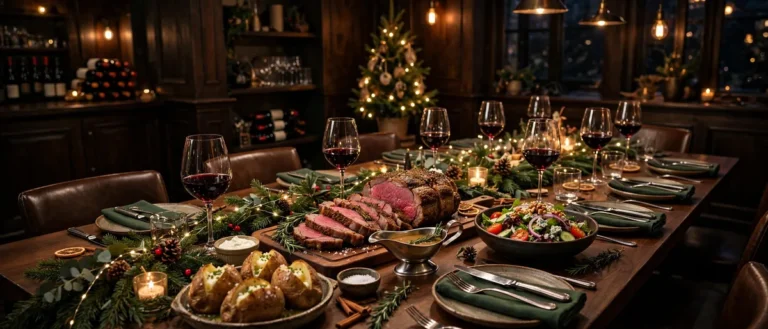
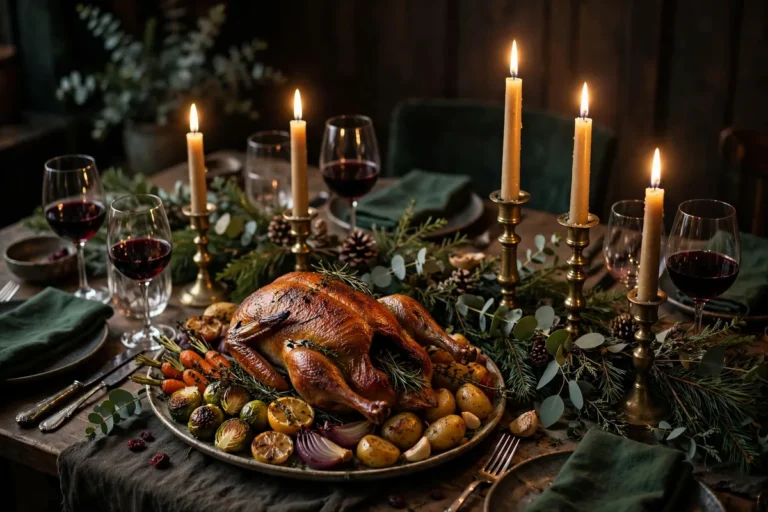
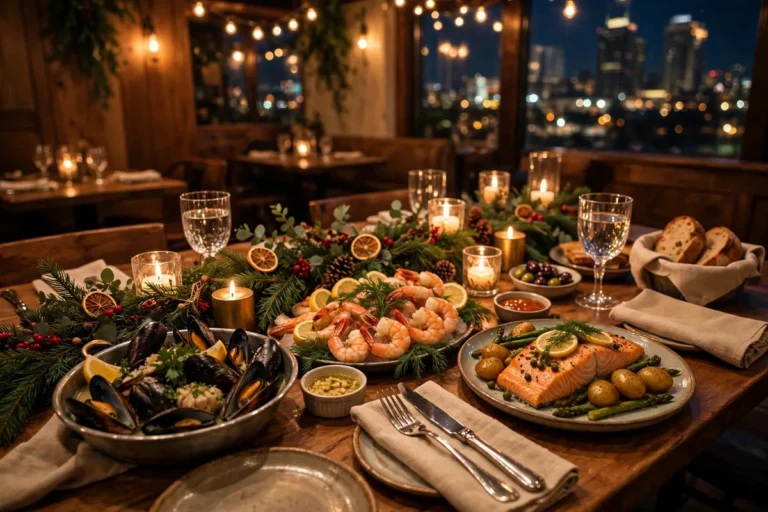
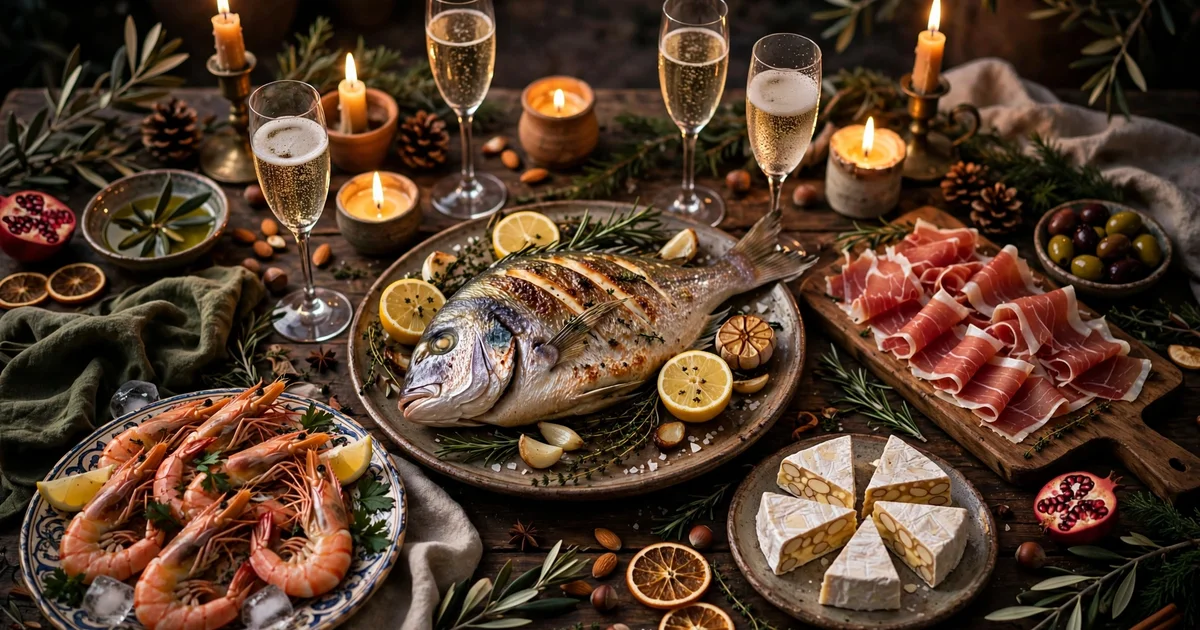
Spain’s Nochebuena is the feast of the year — a late, long dinner of ham, seafood, roast lamb, turrón and cava.
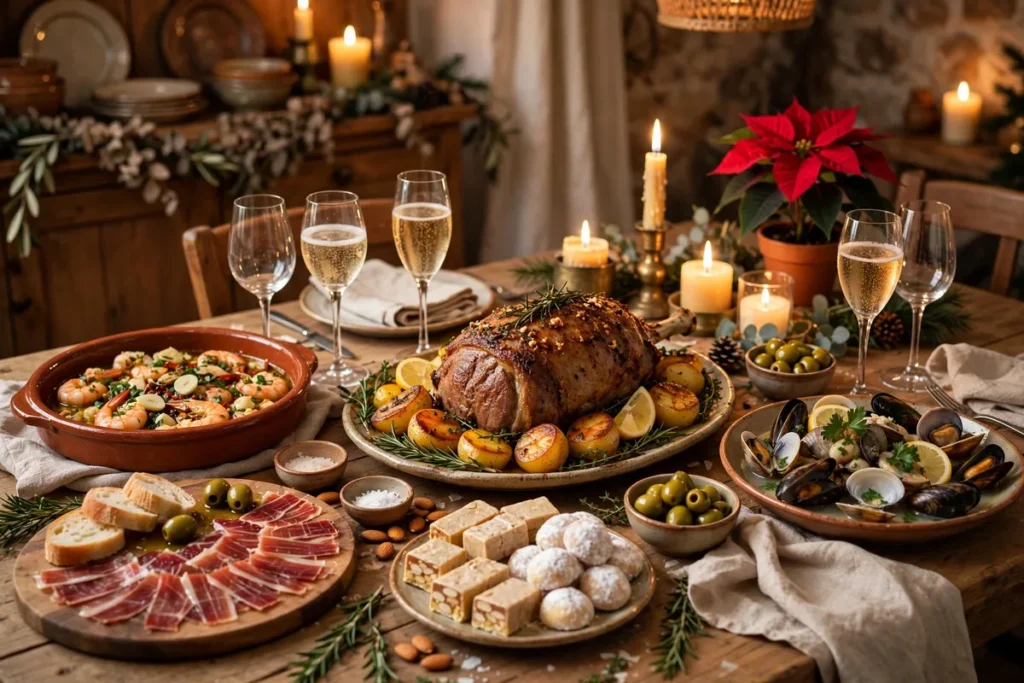
A Spanish Nochebuena table: roast lamb, seafood, jamón ibérico, turrón and polvorones, and cava glasses in candlelight.
Watch: Spanish Christmas Dinner Traditions
A look at the Spanish Christmas Eve feast — what families actually eat on Nochebuena, from jamón to turrón.
At a Glance: Spanish Christmas Dinner Traditions
The dishes and rituals of Nochebuena.
| Tradition | Date | Key detail |
|---|---|---|
| Nochebuena | 24 December | Christmas Eve is the main feast — dinner starts around 10pm and lasts hours |
| Jamón ibérico | 24 December | The opening star — Iberian ham with seafood starters |
| Cordero asado | 24 December | Roast lamb (or cochinillo, suckling pig) — the classic centerpiece |
| Turrón & polvorones | December | Almond sweets of Jijona and Estepa — Christmas-only |
| Cava at midnight | 24 December | The toast that ends the night — many then go to Misa del Gallo |
| El Gordo | 22 December | The Christmas lottery — drawn since 1812, the world’s biggest pot |
| Los Reyes | 6 January | The Three Kings bring the main gifts — Roscón de Reyes to finish |
Frequently Asked Questions
What do Spaniards eat for Christmas dinner?
The traditional Nochebuena (Christmas Eve) dinner centers on seafood — prawns, king prawns, spider crab, and whole baked fish like sea bream or sea bass — opened with jamón ibérico, cheese, and conservas, and finished with turrón, polvorones, and mantecados. Roast lamb or suckling pig appears in central Spain, but fish dominates the Christmas table nationally.
Why is El Gordo connected to Spanish Christmas dinner traditions?
The El Gordo lottery draw on December 22 unofficially opens the Christmas eating season: offices and families gather to watch the numbers sung live, sharing embutidos, cheese, turrón, and cava. The weeks of ticket-sharing gatherings turn December into a month of festive nibbling before the Nochebuena feast.
What is the difference between turrón de Alicante and turrón de Jijona?
Turrón de Alicante (turrón duro) is hard and crunchy, made with whole toasted Marcona almonds set in honey nougat. Turrón de Jijona (turrón blando) is soft and smooth, ground to an almond paste with honey and egg. Traditionalists serve both on the Christmas sweet tray.
What are the twelve grapes of New Year’s Eve in Spain?
On Nochevieja (New Year’s Eve), Spaniards eat twelve grapes — one per clock chime at midnight, following the Puerta del Sol clock in Madrid — for twelve months of luck. Seedless grapes are sold in tins specifically for the ritual every December.
Do Spaniards eat turkey at Christmas?
Turkey has become more common, especially for Christmas Day lunch, but it is not the traditional centerpiece. The classic Spanish Christmas main courses are seafood (on Nochebuena) and roast lamb or suckling pig (in central Spain), with turkey as a relatively modern addition.
What is Roscón de Reyes?
Roscón de Reyes is the ring-shaped brioche cake eaten on January 6 (Día de Reyes), decorated with candied fruit and hiding a small figurine and a dried bean. Finding the figurine crowns you king for the day; finding the bean means you buy next year’s cake.