Memorial Day vs Veterans Day: these two holidays are confused more than any other pair on the American calendar — and the confusion matters, because mixing them up can genuinely offend the people each day is meant to honor. The short version: Memorial Day (last Monday of May; next observed May 31, 2027) honors military personnel who died in service. Veterans Day (November 11 every year) honors all who served in the U.S. armed forces, living and dead. This guide compares their history, meaning, dates, traditions, and etiquette side by side, so you never mix them up again. For more holiday explainers, visit our Holidays hub.
Memorial Day vs Veterans Day: The Quick Comparison
| Memorial Day | Veterans Day | |
|---|---|---|
| Who it honors | Military personnel who died in service | All who served in the armed forces, living and dead |
| Date | Last Monday of May | November 11 (fixed) |
| Next observance | Monday, May 31, 2027 | Thursday, November 11, 2027 |
| Federal holiday? | Yes | Yes |
| Origin | Post–Civil War Decoration Day (1860s) | WWI Armistice Day (1918/1919) |
| Mood | Solemn remembrance, mourning | Gratitude, recognition, celebration of service |
| Key ritual | National Moment of Remembrance, 3:00 p.m. | Moment of silence, 11:00 a.m. (11th hour) |
| Flag protocol | Half-staff until noon, then full staff | Full staff all day (half-staff only if ordered) |
| Symbol | Red poppy | No single flower; often the American flag itself |
| What to say | “Have a meaningful Memorial Day” | “Thank you for your service” / “Happy Veterans Day” |
Who Each Holiday Honors — The Core Difference
This is the distinction everything else follows:
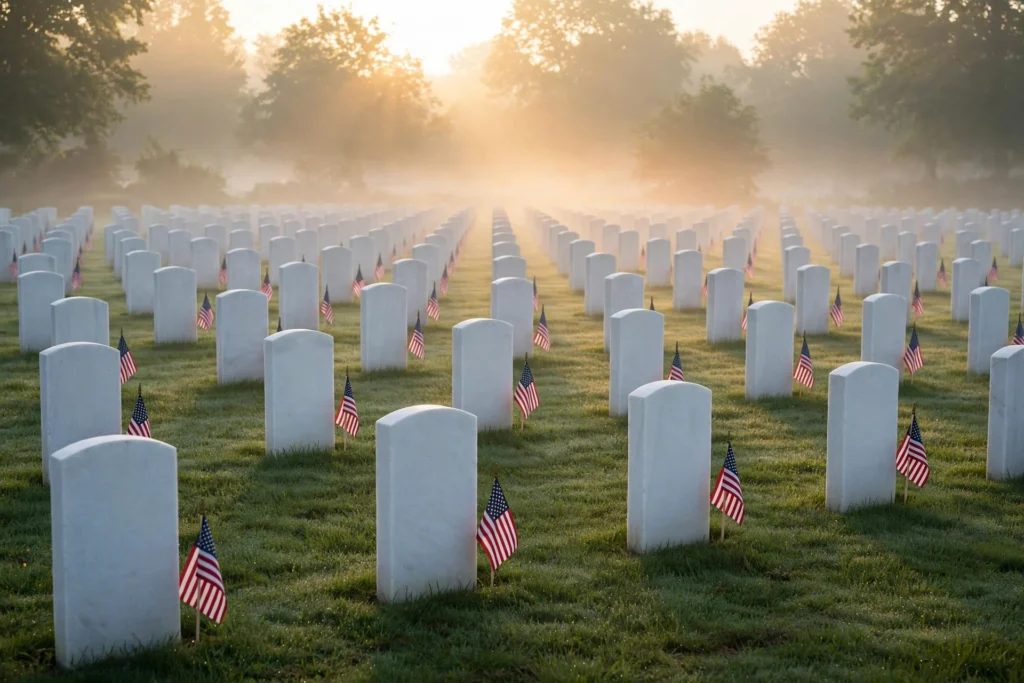
- Memorial Day is for the fallen — the more than one million Americans who died while serving, from the Revolutionary War to the present. It is a day of mourning. The appropriate posture is remembrance: visiting graves, attending ceremonies, pausing in silence.
- Veterans Day is for all veterans — the roughly 16–18 million living American veterans plus those who served and have since died of other causes. It is a day of gratitude. The appropriate posture is thanks: thanking veterans, attending celebratory parades, recognizing service.
A useful test: if the person you want to honor is alive, Veterans Day is their day. Memorial Day belongs to those who cannot hear your thanks.
History: Two Very Different Origins
Memorial Day: born of the Civil War
Memorial Day grew from Decoration Day, the grassroots post–Civil War tradition of decorating soldiers’ graves with flowers each spring. General John A. Logan’s 1868 order formalized May 30 observances; the name “Memorial Day” gradually replaced “Decoration Day”; the Uniform Monday Holiday Act of 1968 moved it to the last Monday of May, effective 1971. It is a holiday the country built for itself, town by town, out of grief.
Veterans Day: born of the Great War’s end
Veterans Day began as Armistice Day, marking the armistice that ended World War I — signed on the 11th hour of the 11th day of the 11th month of 1918. President Wilson proclaimed the first Armistice Day in 1919; Congress made it a legal holiday in 1938, dedicated to world peace. After World War II and Korea, veterans’ organizations pushed to honor all veterans rather than just WWI’s — and in 1954, Armistice Day officially became Veterans Day. (A brief 1968–1975 experiment with moving it to October was reversed after veterans’ protests; November 11 was restored in 1978.)
Dates and Scheduling
| Holiday | 2026 | 2027 | 2028 |
|---|---|---|---|
| Memorial Day | Mon, May 25 (passed) | Mon, May 31 | Mon, May 29 |
| Veterans Day | Wed, Nov 11 (passed) | Thu, Nov 11 | Sat, Nov 11 |
Key scheduling difference: Memorial Day always creates a three-day weekend (it is defined as the last Monday of May). Veterans Day falls on fixed November 11 — when it lands midweek, as in 2026 (Wednesday) and 2027 (Thursday), there is no automatic long weekend, though many employers and schools observe it. Federal workers get the day off regardless of weekday; when November 11 falls on a weekend, the federal observance shifts to the adjacent Friday or Monday.
Our When Is July 4th 2027 guide covers the summer’s other fixed-date federal holiday.
Traditions Compared
Memorial Day traditions
- Flag at half-staff until noon, then full staff
- National Moment of Remembrance: one minute of silence at 3:00 p.m. local time
- Visiting cemeteries; placing flags and flowers on graves
- Arlington wreath-laying at the Tomb of the Unknown Soldier
- Wearing the red poppy
- Parades with solemn elements (Gold Star families, moments of silence)
- Backyard barbecues and the start-of-summer weekend — remembrance first, celebration second
Veterans Day traditions
- Flag at full staff all day
- Moment of silence at 11:00 a.m. — the 11th hour, echoing the 1918 armistice
- Arlington’s national ceremony at the Memorial Amphitheater (wreath at the Tomb of the Unknown Soldier)
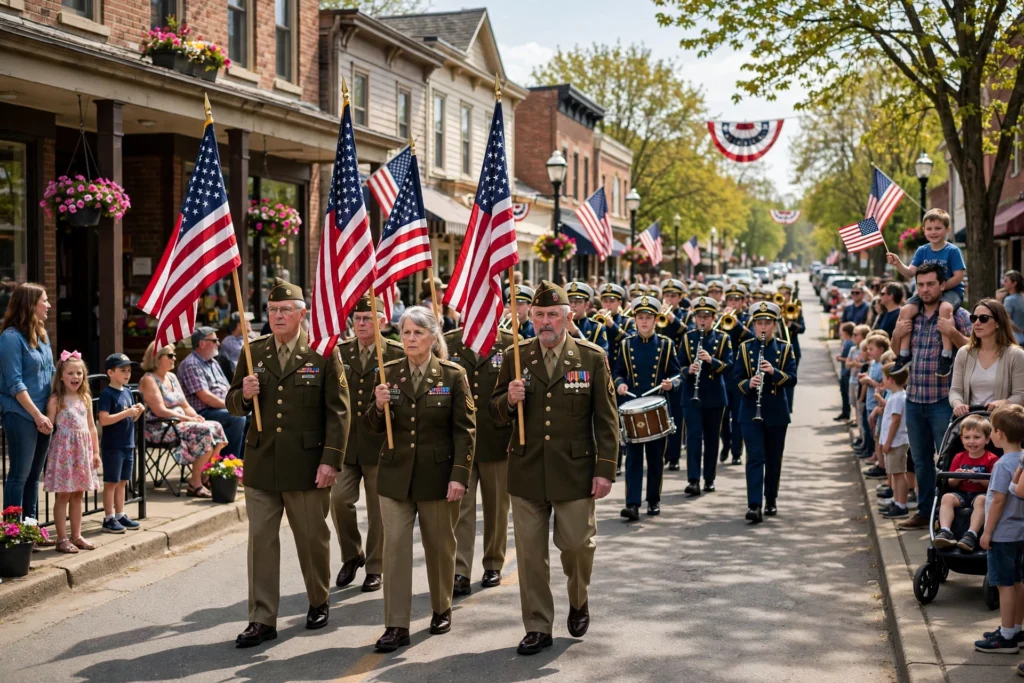
- Parades honoring veterans — celebratory in tone, with veterans as guests of honor
- Free meals and discounts for veterans at restaurants nationwide
- School programs and veterans visiting classrooms
- Thanking veterans personally — the day’s central social ritual
Etiquette: What to Say and Do on Each Day
Getting the etiquette right is the most practical reason to understand the difference:
| Situation | Memorial Day | Veterans Day |
|---|---|---|
| Greeting | “Have a meaningful Memorial Day” | “Happy Veterans Day” is fine |
| To a veteran | Thank them, but acknowledge their fallen comrades; keep focus on the dead | “Thank you for your service” — this is the day for it |
| To a Gold Star family | “Thank you for your family’s sacrifice”; use their loved one’s name | Include them warmly, but the day centers living veterans |
| Social media | Center the fallen: memorials, ceremonies, remembrance | Center veterans: thank them, share their stories |
| At work/school | Moment of silence; share the holiday’s meaning | Recognize veteran employees/students; invite speakers |
| What to avoid | “Happy Memorial Day”; sales-focused messaging without remembrance | Conflating with Memorial Day; forgetting living veterans’ ongoing needs |
Common Mistakes — and Why They Sting
- “Happy Memorial Day” to a Gold Star family. For a family whose loved one died in service, the day is not happy — it is the hardest day of the year. This is the single most common and most painful mix-up.
- Thanking veterans instead of remembering the fallen on Memorial Day. Veterans themselves often redirect: “Don’t thank me today — remember the ones who didn’t come home.”
- Treating Veterans Day as a somber mourning day. Veterans Day is celebratory. Living veterans want recognition and thanks, not mourning.
- Assuming one holiday covers both. They exist precisely because remembrance of the dead and gratitude to the living are different obligations.
- Forgetting either day’s meaning in commercial messaging. “Memorial Day mattress sale” emails that never mention the fallen read as tone-deaf; the best retailers pair promotions with remembrance messaging and veteran hiring.
How the Two Holidays Work Together Across the Year
Think of them as bookends of American military remembrance: Memorial Day in late May opens the summer with mourning for the fallen; Veterans Day in November closes the year with gratitude for all who served. Between them, the country carries both obligations — and each November-to-May cycle is a reminder that freedom’s costs are both past (the dead we remember) and present (the living veterans among us, many carrying wounds visible and invisible).
Many families observe both deliberately: Memorial Day for the cemetery visit and the 3:00 p.m. pause; Veterans Day for thanking the veteran uncle, attending the school assembly, and donating to veteran support organizations. Teaching kids both holidays — and the difference — is one of the simplest civic lessons a family can pass down. Our Best Family Events in the USA can help you find ceremonies for either holiday near you.
Other U.S. Military Holidays Worth Knowing
| Holiday | Date | Who It Honors |
|---|---|---|
| Armed Forces Day | Third Saturday of May | Those currently serving on active duty |
| Memorial Day | Last Monday of May | Those who died in service |
| Veterans Day | November 11 | All who served, living and dead |
| Gold Star Mother’s/Family Day | Last Sunday of September | Families of fallen service members |
| POW/MIA Recognition Day | Third Friday of September | Prisoners of war and those missing in action |
Frequently Asked Questions
What is the difference between Memorial Day and Veterans Day?
Memorial Day (last Monday of May) honors military personnel who died in service. Veterans Day (November 11) honors all who served in the armed forces, living and dead.
Is it okay to say “Happy Veterans Day”?
Yes — Veterans Day is a celebratory day of gratitude, so the greeting fits. “Happy Memorial Day,” by contrast, can offend Gold Star families.
Should I thank veterans on Memorial Day?
You can, kindly — but keep the day’s focus on the fallen. Many veterans will tell you: “Don’t thank me today; remember the ones who didn’t come home.” Save the full “thank you for your service” for Veterans Day.
When is Veterans Day 2027?
Thursday, November 11, 2027. Unlike Memorial Day, it falls on a fixed date rather than a Monday.
Why is Veterans Day on November 11?
It marks the armistice that ended World War I, signed on the 11th hour of the 11th day of the 11th month of 1918. The 11:00 a.m. moment of silence echoes that history.
Do both holidays close federal offices?
Yes — both are federal holidays. Federal offices, banks, and post offices close; most retail stays open.
What is Armed Forces Day?
The third Saturday of May, honoring those currently serving on active duty — completing the trio with Memorial Day (the fallen) and Veterans Day (all veterans).
Which holiday has the bigger parades?
Both have major parades, but they feel different: Memorial Day parades are solemn, centered on the fallen and Gold Star families; Veterans Day parades are celebratory, honoring living veterans as guests of honor.
Armed Forces Day: The Third Holiday in the Trio
Many Americans have never heard of Armed Forces Day — the third Saturday of May (May 15, 2027) — which honors those currently serving on active duty. Together, the three May-adjacent observances form a complete picture:
- Armed Forces Day (third Saturday of May): honors active-duty service members — the present force.
- Memorial Day (last Monday of May): honors those who died in service — the fallen.
- Veterans Day (November 11): honors all who served — the full community of veterans, living and dead.
Military bases traditionally hold open houses and air shows on Armed Forces Day, and it is the least commercialized of the three — no major sales, no beach-weekend associations. If you want to thank someone currently serving, this is their day.
International Equivalents: How Other Countries Remember
America’s paired holidays have counterparts worldwide — useful context, and a good answer for the kid who asks “do other countries have Memorial Day?”:
| Country | Observance | Date | Closest U.S. Analog |
|---|---|---|---|
| United Kingdom & Commonwealth | Remembrance Day (Armistice Day) | November 11 (nearest Sunday) | Veterans Day — honors all who served; red poppy symbol |
| Canada | Remembrance Day | November 11 | Veterans Day |
| Australia & New Zealand | Anzac Day | April 25 | Memorial Day — dawn services honor the fallen |
| France | Armistice Day | November 11 (public holiday) | Veterans Day |
| Israel | Yom Hazikaron | Spring (Hebrew calendar) | Memorial Day — sirens, national mourning for the fallen |
| Netherlands | Remembrance Day (Dodenherdenking) | May 4 | Memorial Day — two minutes’ silence for war dead |
Two patterns emerge: November 11 is the world’s shared date (the WWI armistice), and nearly every country separates mourning the dead from honoring the living — the same instinct behind America’s Memorial Day / Veterans Day split. The red poppy, worn across the Commonwealth, is the same flower Americans wear on Memorial Day.
Why the Confusion Persists — and How to Fix It
The mix-up endures for understandable reasons: both holidays involve flags, parades, veterans, and the military; both close federal offices; and Memorial Day’s three-day weekend buries its solemnity under leisure. Retail doesn’t help — “Memorial Day Sale” and “Veterans Day Sale” blur together in the inbox.
The fix is cultural, not complicated: say the distinction out loud once a year. When someone wishes you a happy Memorial Day, a gentle “it’s actually a day of remembrance for the fallen — Veterans Day in November is the one for thanking veterans” educates without lecturing. Schools that teach both holidays side by side — which is exactly what this comparison enables — produce kids who never confuse them. And media, retailers, and public figures who model the right language (“meaningful Memorial Day”) shift the norm one greeting at a time.
One-Calendar Cheat Sheet
Save this for the fridge:
- Third Saturday of May → Armed Forces Day → thank active-duty troops
- Last Monday of May → Memorial Day → remember the fallen (half-staff flag, 3 p.m. pause)
- Last Sunday of September → Gold Star Family Day → support families of the fallen
- November 11 → Veterans Day → thank all veterans (full-staff flag, 11 a.m. pause)
Memorial Day vs Veterans Day in Popular Culture
The two holidays show up differently in American public life — and the difference reveals how the country feels about each:
- Memorial Day dominates the start-of-summer conversation: the Indianapolis 500, the National Memorial Day Concert broadcast, beach openings, and the year’s first big sales. Its solemnity competes with leisure every year — which is exactly why the confusion matters.
- Veterans Day gets the quieter, more institutional treatment: school assemblies, free meals for veterans, the Arlington national ceremony, and workplace recognitions. Less commercial noise, more direct gratitude.
- Media coverage of Memorial Day often leads with travel and sales, with remembrance as the second paragraph — a perennial criticism from veterans’ groups. Veterans Day coverage centers veterans themselves.
- Hollywood rarely touches either holiday directly, but Memorial Day weekend is the film industry’s traditional summer blockbuster launch — another way the solemnity gets crowded out.
The cultural takeaway: Memorial Day needs its meaning actively defended each year in a way Veterans Day does not. Saying the distinction out loud — at the cookout, in the group chat, on social media — is small cultural work with real cumulative effect.
Quiz: Which Holiday Is It?
Test yourself — and share with the family:
- The flag flies at half-staff until noon. → Memorial Day
- You thank a veteran for their service. → Veterans Day (though kindness is welcome any day)
- The date is fixed: November 11. → Veterans Day
- You wear a red poppy. → Memorial Day
- The holiday always creates a three-day weekend. → Memorial Day (last Monday of May)
- A restaurant offers a free meal to veterans. → Veterans Day
- You pause for one minute at 3:00 p.m. → Memorial Day (National Moment of Remembrance)
- You pause for silence at 11:00 a.m. → Veterans Day (the 11th hour)
- The holiday honors those who died in service. → Memorial Day
- The holiday honors all who served. → Veterans Day
Score 9–10 and you are ready to gently correct the group chat. Score lower and you have learned exactly what this guide is for.
The Bottom Line
Two holidays, two obligations: Memorial Day asks us to remember the dead — with solemnity, with flags at half-staff, with a minute of silence at 3:00 p.m. on the last Monday of May. Veterans Day asks us to thank the living — with gratitude, with flags at full staff, with recognition on November 11. Confusing them is understandable; continuing to confuse them, now that you know the difference, is a choice. Choose remembrance in May, gratitude in November — and teach the distinction to everyone at your table. That is how the meaning survives.
Related: Labor Day vs Memorial Day
If this comparison clarified Memorial Day and Veterans Day, the summer’s other commonly confused pair deserves the same treatment: Memorial Day vs Labor Day. Both bring three-day weekends, sales, and barbecues — but one mourns the fallen while the other honors workers. Our Labor Day vs Memorial Day guide compares their history, meaning, dates, and traditions side by side, completing your map of America’s summer holidays.