Learning How to Honor Veterans on Memorial Day starts with understanding what the day asks of us: remembrance of American service members who died in military service — not a generic celebration, and not a day for thanking living veterans (that is Veterans Day). This guide offers respectful, concrete ways to honor the fallen and support those they left behind: ceremonies and traditions, volunteering, donations, flag etiquette, and quiet personal tributes. Whether you have an hour or the whole weekend of May 29–31, 2027, there is a meaningful way to participate. Note that Memorial Day 2026 (May 25, 2026) has already passed; plan around the 2027 observance. For the holiday’s full history, see our Holidays hub.
First, Get the Meaning Right
The most respectful thing you can do on Memorial Day is understand it. The day honors military personnel who died in service to the United States. Common mix-ups, gently corrected:
- Do not say “Happy Memorial Day” to Gold Star families (immediate family of fallen service members) or at solemn events. “Have a meaningful Memorial Day” or “Thank you for your family’s sacrifice” is better.
- Do not make it about living veterans. Thanking a veteran for their service is always kind — but on Memorial Day, the focus belongs to those who never came home. If you thank a veteran on this day, consider adding that you are also remembering their fallen comrades.
- Do not treat it as just a long weekend. Enjoy the barbecue and the beach — then make room for remembrance. Both can be true.
Attend a Ceremony or Parade
Showing up is the foundation of public remembrance. Options for the 2027 weekend:
Local remembrance ceremonies
Nearly every town holds one — typically Monday morning at a veterans’ memorial, cemetery, or town green. Expect a wreath-laying, speeches, a rifle salute, and Taps. They are free, usually under an hour, and often deeply moving precisely because they are small. Check your town website or American Legion post in May 2027 for times.
National ceremonies
The Arlington National Cemetery wreath-laying at the Tomb of the Unknown Soldier is the nation’s formal observance. The National Memorial Day Parade on Constitution Avenue in Washington, D.C. and the National Memorial Day Concert on the Capitol’s West Lawn are the weekend’s largest public events. All free; all worth attending once in your life.
Parades
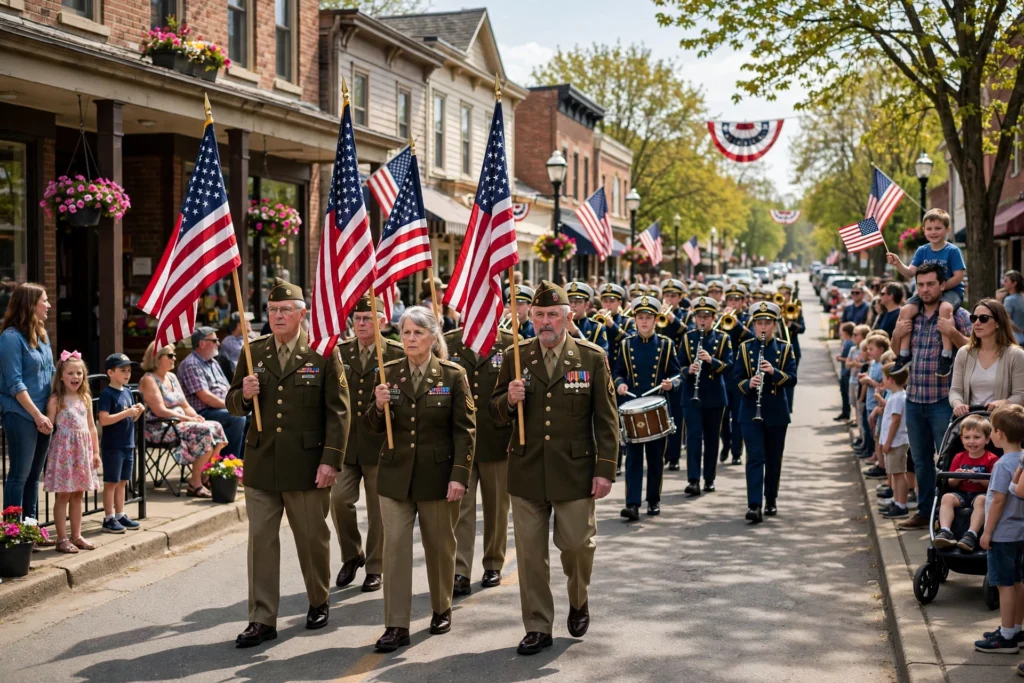
Memorial Day parades honor the fallen through community presence — veterans’ units marching, bands playing, Gold Star families riding. Stand, remove your hat, and stay quiet for the flag and veterans’ contingents. Our July 4th Parade Guide covers parade-going tips that apply to any holiday parade.
Volunteer: Give Your Time
Time is the most personal tribute. Proven ways to volunteer around Memorial Day 2027:
| Opportunity | What You Do | Time Needed | How to Join |
|---|---|---|---|
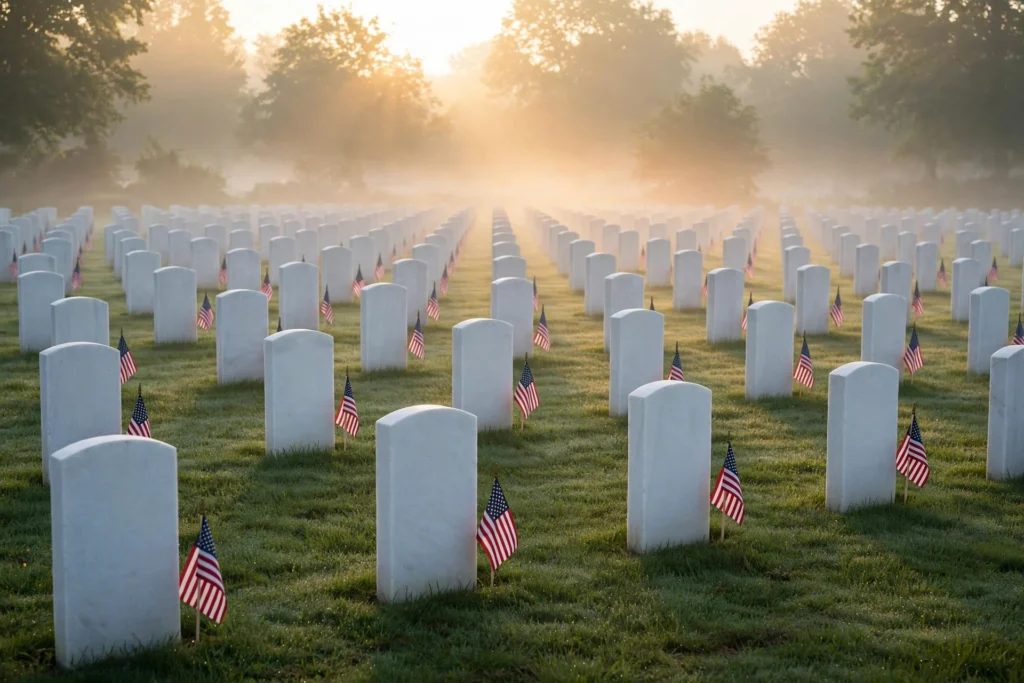
| Cemetery flag-placing | Place small flags on veterans’ graves | 2–4 hours, weekend before | Contact local cemetery or American Legion post in May 2027 |
| Memorial cleanup | Clean and landscape a local veterans’ memorial | Half day | Organize with neighbors or a scout troop |
| Poppy distribution | Hand out remembrance poppies for donations | A few hours | American Legion Auxiliary units coordinate locally |
| Parade support | Marshal, setup, or cleanup crew | Half day | Town parade committee, usually seeking volunteers |
| Visit a veterans’ home | Spend time with elderly veterans | 1–2 hours | Call ahead; many welcome Memorial Day visitors |
| Wreath programs | Lay wreaths on veterans’ graves | A few hours, December and May events | Wreaths Across America chapters and local groups |
Donate: Give Where It Counts
If you cannot give time, give money — thoughtfully. Reputable categories of Memorial Day giving:
- Gold Star family organizations: support the immediate families of fallen service members — scholarships, retreats, and ongoing community.
- Veterans’ cemeteries and memorial funds: maintain the grounds and monuments where remembrance happens.
- Wreath programs: fund wreaths placed on veterans’ graves.
- Disabled veteran support: the American Legion’s poppy program is made by disabled veterans; your donation supports them directly.
- Military scholarship funds: educate the children of the fallen.
Before donating, check any charity’s ratings on independent evaluators and confirm how much of each dollar reaches programs. The poppy you accept from a volunteer in late May is the simplest vetted donation of the season.
Flag Etiquette: The Visible Tribute
Flying the flag correctly on Memorial Day is a tribute visible to your entire street:
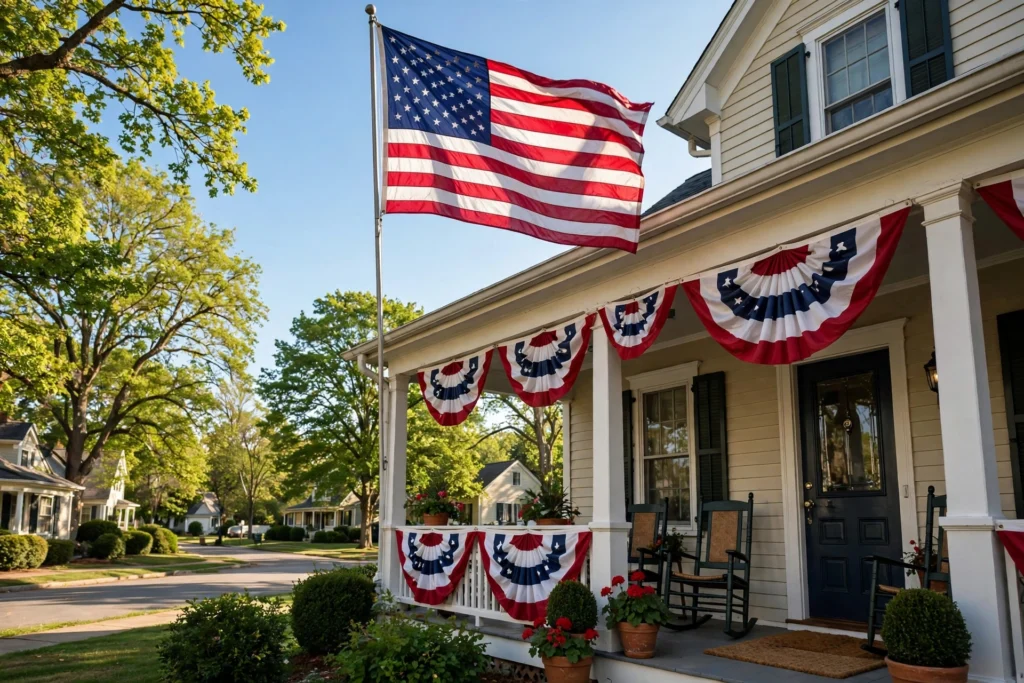
- Half-staff from sunrise to noon on Monday, May 31, 2027 — honoring the fallen.
- Raise to full staff at noon for the rest of the day — the living nation’s resolve.
- Lower at sunset unless the flag is properly illuminated overnight.
- Never let the flag touch the ground; keep it clean and undamaged; retire worn flags through an American Legion post or scout troop.
- On a wall or window: the union (blue field) goes to the observer’s upper left.
No pole? A garden flag, porch-mounted flag, or window display all count. What matters is the correct half-staff observance in the morning.
Observe the National Moment of Remembrance
At 3:00 p.m. local time on Memorial Day, Congress asks every American to pause for one minute of silence. It is the day’s simplest collective act — no travel, no cost, no planning. Set a phone alarm for 2:55 p.m. on May 31, 2027. Wherever you are — the cookout, the beach, the highway rest stop — stop for sixty seconds. Millions of others are doing the same.
Wear the Red Poppy
The red poppy — inspired by John McCrae’s 1915 poem “In Flanders Fields” — is the international flower of remembrance. In the U.S., American Legion volunteers distribute crepe-paper poppies handmade by disabled veterans in the days before Memorial Day. Wear one on the left lapel, over the heart, from the weekend through the holiday. It is a quiet signal to every veteran and Gold Star family member you pass: I remember.
Personal Tributes: Quiet and Powerful
Not every tribute is public. Some of the most meaningful are private:
- Learn one story. Research a fallen service member — from your town, your state, your family’s history — and read their story aloud at your table. Remembrance with a name is remembrance that lasts.
- Write a letter. Gold Star family organizations facilitate letters of remembrance and support. A handwritten note means more than you can imagine.
- Visit a grave. Walk a veterans’ cemetery; leave a flag or flower; read names. Go alone or bring your kids — both work.
- Light a candle. A simple candle at home on Memorial Day evening, in memory of the fallen, is an old and dignified tradition.
- Share a story online — respectfully. If you post about the holiday, center the fallen: share a memorial’s story, a Gold Star family’s words, or your ceremony photos — not just the barbecue.
- Mentor a Gold Star child. Several organizations connect volunteers with children of fallen service members for mentoring and camp programs — a long-term commitment that extends far beyond the weekend.
How Businesses and Communities Can Honor the Day
| Who | What to Do | Impact |
|---|---|---|
| Employers | Give the day off; share the holiday’s meaning in a company note; match employee donations to Gold Star charities | Normalizes remembrance at work |
| Restaurants & venues | Observe the 3 p.m. pause; display the flag correctly; offer a remembrance toast | Brings the meaning into public spaces |
| Schools | Teach the history the week before; hold a Friday moment of silence | Plants understanding in the next generation |
| Neighborhoods | Coordinate porch flags; organize a block ceremony or potluck with a remembrance toast | Turns a street into a community |
| Faith communities | Include the fallen in weekend services; ring bells at 3 p.m. | Connects remembrance to congregational life |
What to Say (and Not Say) to Gold Star Families
If you meet a Gold Star family member — at a ceremony, in your neighborhood, at work — a few words go a long way, and the wrong words sting:
- Say: “Thank you for your family’s sacrifice.” / “I’d be honored to hear about them, if you’d like to share.” / “I’m thinking of your family today.”
- Avoid: “Happy Memorial Day!” / “I know how you feel.” / “Everything happens for a reason.” / Asking for combat details.
- Do: use their loved one’s name if you know it; listen more than you talk; follow up after the holiday — grief does not end Tuesday.
A Simple Memorial Day of Honor: Sample Schedule
For Monday, May 31, 2027 — remembrance woven through celebration:
- 9:00 a.m.: Raise the flag at half-staff.
- 10:00 a.m.: Attend the local ceremony.
- 12:00 p.m.: Raise the flag to full staff; start the grill.
- 2:30 p.m.: Gather for the cookout meal.
- 3:00 p.m.: National Moment of Remembrance — one minute of silence together.
- 3:05 p.m.: Remembrance toast to the fallen; share one story.
- Evening: Dessert, games, and a candle lit in memory.
For family-friendly ceremony options, see our Best Family Events in the USA.
Frequently Asked Questions
How do you honor fallen soldiers on Memorial Day?
Attend a ceremony, fly the flag at half-staff until noon, pause at 3:00 p.m. for the National Moment of Remembrance, wear a red poppy, visit a veterans’ cemetery, donate to Gold Star family organizations, or volunteer at a flag-placing.
Is it appropriate to thank veterans on Memorial Day?
Thanking veterans is always kind, but Memorial Day specifically honors those who died in service. If you thank a veteran on this day, acknowledge their fallen comrades too — and save the main “thank you for your service” for Veterans Day.
What should I say to a Gold Star family on Memorial Day?
“Thank you for your family’s sacrifice” or “I’m thinking of your family today.” Avoid “Happy Memorial Day” and avoid asking for combat details.
What time is the National Moment of Remembrance?
3:00 p.m. local time on Memorial Day — one minute of silence observed nationwide.
Why do we wear poppies on Memorial Day?
The red poppy symbolizes remembrance of fallen service members, inspired by the World War I poem “In Flanders Fields.” American Legion poppies are handmade by disabled veterans.
How should the flag be flown on Memorial Day?
At half-staff from sunrise until noon, then raised to full staff for the remainder of the day. Lower at sunset unless illuminated.
Can I volunteer for Memorial Day?
Yes — cemetery flag-placings, memorial cleanups, poppy distribution, and parade support all need volunteers. Contact your local American Legion post or cemetery office in May 2027.
Where can I donate for Memorial Day?
Gold Star family organizations, veterans’ cemetery funds, wreath programs, and military scholarship funds are all meaningful. Verify any charity through independent evaluators before giving.
Gold Star Families: Understanding Their Sacrifice
A Gold Star family is the immediate family of a service member who died in military service — the term comes from the Gold Star lapel pin and the service flags families have displayed since World War I, where a gold star signifies a loved one lost. On Memorial Day, these families are the holiday’s moral center: the parades march for their loved ones, the moments of silence honor their loss, and the ceremonies speak their names.
Understanding a few things about Gold Star families deepens any observance. First, their grief does not follow the holiday calendar — Memorial Day simply makes it public. The days before the holiday can be especially hard, as media coverage and public ceremonies resurface loss. Second, they often describe feeling both honored and isolated: honored by remembrance, isolated because few people know what to say. Third, many become lifelong advocates — founding scholarships, mentoring other survivors, and working to ensure their loved one is never forgotten.
If your community has Gold Star families, Memorial Day is the right moment to acknowledge them — and the weeks after are the right moment to follow up. A note in June (“thinking of your family”) often means more than anything said on the holiday itself, because it says the remembrance did not end when the weekend did.
Remembrance Beyond the Weekend
Memorial Day is one day, but the obligations it represents run year-round. Consider extending your observance:
- Adopt a gravesite. Some cemeteries and organizations coordinate year-round care of veterans’ graves — cleaning headstones, leaving seasonal flowers, and ensuring no grave is forgotten.
- Support a memorial. Local veterans’ memorials need maintenance, landscaping, and occasional restoration; “friends of” groups welcome volunteers and donations.
- Mentor or donate monthly. Organizations serving Gold Star children, disabled veterans, and veteran families operate on recurring gifts — a small monthly donation made on Memorial Day weekend compounds all year.
- Vote and stay informed. Policies affecting veterans, military families, and memorial funding are decided year-round. Informed citizenship is a quiet, powerful tribute.
- Keep the story alive. Share the story of a fallen service member with your kids each year. Memory transmitted across generations is the ultimate honor — it means they are never truly gone.
The measure of a meaningful Memorial Day is not how solemn the Monday was, but whether the remembrance changed anything about the other 364 days. A flag correctly flown, a story learned and retold, a donation made monthly, a Gold Star family remembered in July as well as May — these are the tributes that endure.
Frequently Asked Questions (Continued)
What is a Gold Star family?
The immediate family of a U.S. service member who died in military service. The term comes from the gold star on service flags and lapel pins signifying a loved one lost.
How can I support Gold Star families year-round?
Donate monthly to Gold Star family organizations, mentor a Gold Star child through recognized programs, attend their events, and simply remember them beyond Memorial Day weekend — a note in an ordinary month means a great deal.
Is it disrespectful to post barbecue photos on Memorial Day?
Not inherently — but consider pairing them with remembrance: a photo from the morning ceremony, the flag at half-staff, or a note about the day’s meaning. Centering only the party reads as forgetting why the weekend exists.
The Language of Remembrance: Words That Honor
Words matter on Memorial Day — they signal whether we understand the day. A quick reference for getting them right:
| Instead of… | Say… | Why |
|---|---|---|
| “Happy Memorial Day!” | “Have a meaningful Memorial Day.” | The day mourns the dead; “happy” jars, especially for Gold Star families. |
| “Thanks for your service” (on this day, to a veteran) | “Thinking of your fallen brothers and sisters today.” | Redirects the focus to the fallen, which most veterans prefer on this day. |
| “They died for our freedom” (as a slogan) | Name a specific person or share a specific story. | Specifics honor; slogans flatten. |
| “All gave some, some gave all” (overused) | Your own sincere words. | The phrase is well-worn; genuine language lands harder. |
| Nothing at all | Anything sincere and brief. | Silence from discomfort is worse than imperfect words from the heart. |
If you speak at a ceremony, write for a program, or post on behalf of an organization, have a veteran or Gold Star family member review the language. They will catch tones the rest of us miss — and they almost always appreciate being asked.
Remembering the Fallen — and Understanding the Calendar
Honoring veterans on Memorial Day includes understanding where the holiday sits among America’s observances. Memorial Day’s solemnity is distinct from Labor Day’s celebration of workers — confusing the two dilutes both. Our Labor Day vs Memorial Day comparison lays out the history, meaning, and traditions of each holiday side by side, so your remembrance is grounded in the full picture.