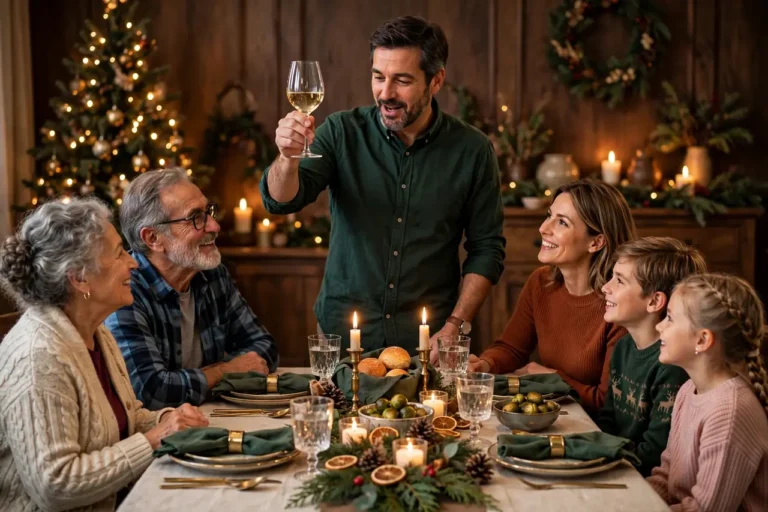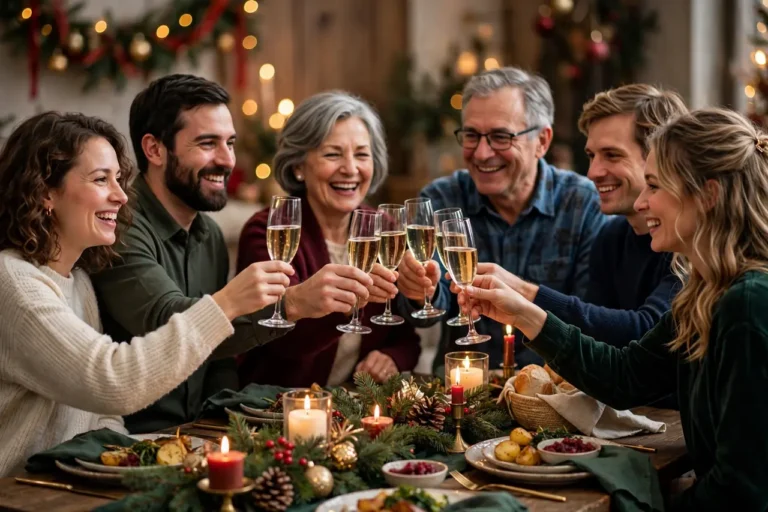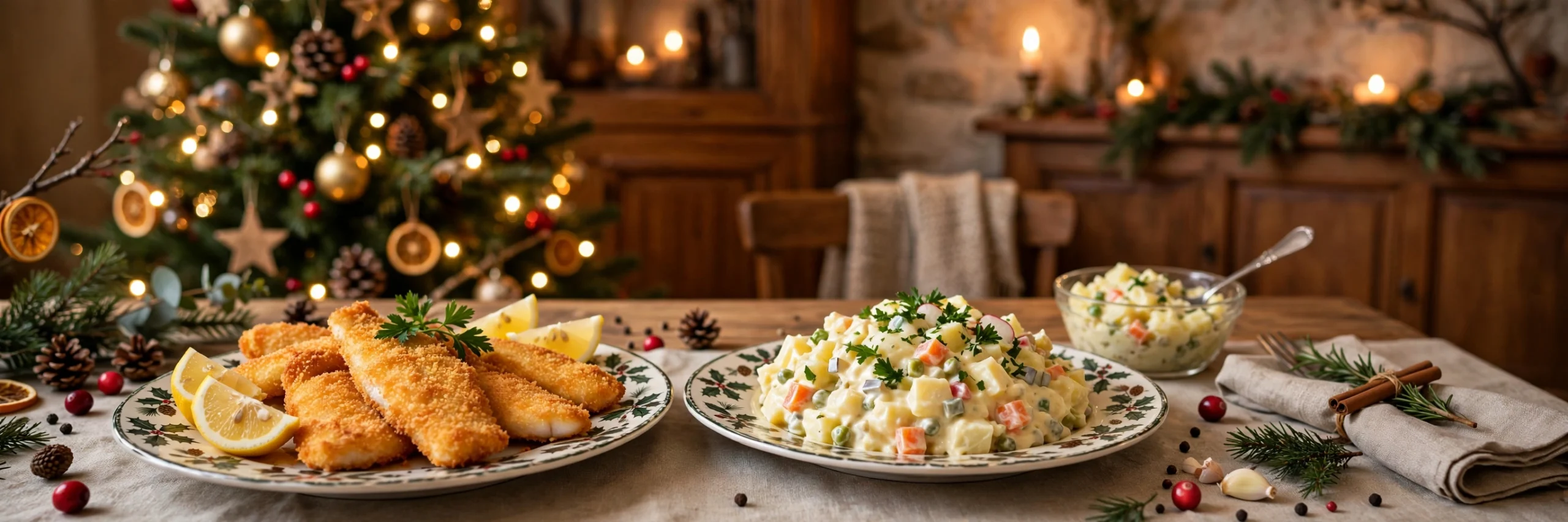
In the days before Christmas, bathtubs across the Czech Republic fill with water — and with live carp. The czech christmas carp tradition is one of Europe’s most distinctive holiday customs: for the main Christmas Eve dinner (Štědrý den), Czech families serve fried carp with potato salad, a meal rooted in centuries of fishpond culture, Catholic fasting tradition, and a healthy dose of national humor. Some families keep the carp swimming in the tub for days as a temporary pet; others buy it ready-to-cook. This guide dives into the whole story — the history, the bathtub custom, the classic recipes, and the superstitions (like the carp scale in the wallet) that make the Czech Christmas carp tradition unforgettable.
Why Carp? The History Behind the Tradition
The Czech lands have farmed carp in artificial fishponds since the Middle Ages — the great pond systems of South Bohemia, built by the Rožmberk family in the 15th and 16th centuries, made Bohemia one of Europe’s great carp-producing regions. Carp was the practical choice: it thrived in ponds, could be harvested in winter, and — crucially — counted as fasting food. Christmas Eve was traditionally a day of strict fasting in Catholic Bohemia, with no meat allowed until after the evening meal; fish was the permitted centerpiece.
The specific pairing of fried carp with potato salad crystallized in the 19th century and became the national standard in the 20th. Before that, Christmas Eve tables featured various fasting dishes — mushroom soup (kuba), dried-fruit compotes, and sweet breads — but carp won out as the main course. Today, surveys consistently find that the large majority of Czech households serve carp on Christmas Eve, making it one of the most faithfully observed food traditions in Europe. The Czechs take their Christmas customs seriously — and few are more beloved than this one. For more on how Central Europe celebrates, compare the Hungarian Christmas fish soup tradition.
The Bathtub Custom: A Carp’s Christmas Vacation
The most famous — and to outsiders, most baffling — part of the tradition is the live carp in the bathtub. In the week before Christmas, street vendors and market stalls across Czech towns sell live carp from large tanks. Many families buy the fish alive and keep it swimming in the bathtub (or a large tub) for several days before Christmas Eve.
The practical explanation: keeping the carp alive in clean, cold water was traditionally believed to “clean” the fish and improve its flavor, flushing out any muddy taste from the pond. The emotional reality is more complicated: children inevitably name the carp, grow attached to it, and lobby for its release — and in a surprisingly common twist, many families do exactly that, freeing the Christmas carp into a river or pond and buying fillets for dinner instead. Czechs joke about this constantly; the bathtub carp is a staple of Czech Christmas humor, films, and cartoons.
In recent years, the custom has evolved: more families buy pre-killed carp or fillets for convenience and animal-welfare reasons, and fishmongers increasingly offer ready-to-cook options. But the street tanks of live carp remain a quintessential December sight in Prague and every Czech town — and the bathtub, for a few days each year, belongs to the fish.
The Christmas Eve Dinner: Štědrý Večeře
The Christmas Eve supper — štědrovečerní večeře — is the main festive meal of the Czech Christmas, bigger and more important than Christmas Day lunch. The traditional sequence:
- Fasting through the day: Traditionally, the family fasts (or eats lightly) on Christmas Eve day — children are told that if they hold out until dinner, they will see the zlaté prasátko, the “golden piglet,” a shimmering apparition that rewards the steadfast.
- The first star: Like many Central European traditions, dinner begins when the first star appears in the evening sky.
- Fish soup or mushroom kuba: The meal often opens with a fish soup or kuba — a savory baked dish of barley, dried mushrooms, and garlic — both fasting-appropriate starters.
- Fried carp with potato salad: The main course — carp fillets or steaks, breaded and fried golden, served with creamy potato salad.
- Sweets: Vánočka (Christmas bread, a braided sweet loaf), an array of Christmas cookies (cukroví), and fruit.
- Gifts: After dinner, the family gathers around the tree — where Ježíšek (the Baby Jesus, not Santa) has left the presents — signaled by the ringing of a bell.
An extra plate is traditionally set for an unexpected guest, and no one should rise from the table before the meal is finished — lest, as the superstition goes, someone at the table die within the year. Czech Christmas is rich with such folk beliefs, observed with a mixture of seriousness and wry humor.
How to Make Classic Czech Fried Carp
The canonical preparation is simple — carp, breaded and fried — but the details matter. Czech cooks insist the fish must be absolutely fresh, and many swear by a milk or buttermilk soak to mellow any muddy flavor.
Ingredients (serves 4–6)
- 1 whole carp (about 3–4 lb / 1.5 kg), scaled, gutted, and cut into steaks; or 2 lb carp fillets
- 2 cups milk (for soaking, optional but recommended)
- Salt and freshly ground black pepper
- 1 tablespoon lemon juice
- 1 cup all-purpose flour
- 2 eggs, beaten with a splash of milk
- 2 cups fine breadcrumbs
- Lard, clarified butter, or neutral oil for frying
- Lemon wedges, for serving
Method
Rinse the carp pieces and soak in milk for 2–4 hours in the refrigerator (or overnight) to sweeten the flesh; drain and pat very dry. Season generously with salt, pepper, and lemon juice. Set up a breading station: flour, beaten egg, breadcrumbs. Dredge each piece in flour (shaking off excess), dip in egg, then coat thoroughly in breadcrumbs, pressing to adhere. Heat a generous layer of lard or oil in a large skillet over medium-high heat until shimmering. Fry the carp in batches, 4–5 minutes per side, until deep golden and crisp — the flesh should flake easily. Drain on a rack (not paper towels, which steam the crust). Serve immediately with potato salad and lemon wedges.
Pro tips: Carp has Y-shaped bones — eat carefully, or ask the fishmonger to score the fillets finely, which crisps the small bones. Do not overcrowd the pan; the crust needs space to crisp. Lard is traditional and gives the best flavor, though oil works. The carp is at its peak within minutes of frying — time the potato salad to be ready and waiting.
Czech Potato Salad: The Essential Partner
Czech Christmas potato salad (bramborový salát) is not a side dish — it is a co-star, and families guard their recipes fiercely. The classic version:
Ingredients: 2 lb waxy potatoes, boiled in skins, peeled and diced while warm; 3 hard-boiled eggs, chopped; 1 cup diced cooked carrots and peas; ½ cup diced pickles; 1 small onion or shallot, finely minced; ½ cup mayonnaise; 2 tablespoons Dijon mustard; 2 tablespoons pickle brine or white wine vinegar; salt, pepper, and a pinch of sugar; fresh parsley.
Method: Combine the warm potatoes with the vegetables, eggs, pickles, and onion. Whisk the mayonnaise with mustard, brine, salt, pepper, and sugar; fold through the salad. Chill at least 4 hours — overnight is better, as the flavors marry. Taste before serving and adjust the mustard-brine balance; every family has its preferred tang. Garnish with parsley and serve cold alongside the hot fried carp — the hot-cold, crisp-creamy contrast is the whole point of the meal.
Carp Scales and Other Christmas Superstitions
The Czech Christmas carp comes with a bundle of folk beliefs:
- The scale in the wallet: A carp scale, dried and carried in the wallet through the coming year, is said to bring wealth and ensure the money never runs out. Fishmongers hand out extra scales for this purpose; dried scales are even sold as New Year gifts.
- Scales under the plate: Placing carp scales under dinner plates on Christmas Eve brings prosperity to the household.
- The golden piglet: Children who fast all Christmas Eve day are promised a glimpse of the zlaté prasátko — motivation that works remarkably well.
- Apple cutting: After dinner, an apple is cut crosswise; a perfect star in the core foretells health and happiness, a cross warns of illness.
- Walnut boats: Halved walnut shells with tiny candles are floated in a bowl of water — if your boat stays afloat and burning, good fortune follows; if it sinks, take care.
- Lead pouring: Molten lead poured into cold water forms shapes that are read like fortunes — a tradition shared with Finland and Germany.
Whether observed in earnest or in fun, these customs make Czech Christmas Eve feel enchanted — and they give the carp a mythological dimension no other Christmas dish can claim. For more holiday magic of the interactive kind, see our Christmas activities for families.
The Great Carp Debate: Tradition vs. Modern Tastes
The carp tradition is beloved but not uncontested. Younger Czechs increasingly note that carp is bony, that its flavor can be muddy, and that frying a whole fish is work — polls suggest a growing minority now serves salmon, trout, or even non-fish mains on Christmas Eve. Animal-welfare concerns about the bathtub custom have also grown, with campaigns urging buyers to have the fish killed humanely at the stall.
Yet the tradition endures, and even its critics usually come home to carp on Christmas Eve. The dish is less about the fish than about continuity — about eating what your grandparents ate, on the night they ate it, with the same potato salad and the same jokes about the bathtub. Traditions that survive do so because they mean something, and the carp means Christmas in the Czech Republic. Our Christmas dinner ideas collection celebrates exactly this kind of meaningful holiday cooking.
Christmas Markets and the December Carp Season
December in the Czech Republic is carp season in every sense. The fishponds of South Bohemia are harvested in autumn — the famous výlov (pond draining), a centuries-old spectacle where fishermen wade through the shallows with nets, draws crowds — and the catch moves to Christmas markets and street tanks nationwide. Prague’s Christmas markets sell fried carp sandwiches and fish soup alongside trdelník and mulled wine; the scent of frying carp mingles with cinnamon and pine in the cold air. If you visit Prague in December — and its markets rank among Europe’s finest — eating carp at a market stall is as essential as seeing the Old Town Square tree. The best places to spend Christmas guide has more on planning the trip.
Cukroví: The Czech Christmas Cookie Marathon
If the carp is the savory soul of Czech Christmas, cukroví — the Christmas cookies — are its sweet obsession. Czech home bakers produce staggering quantities of small, intricate cookies every December, and the variety is dazzling:
- Vanilkové rohlicky: Vanilla crescents — delicate, nutty, rolled in vanilla sugar while warm. The most beloved of all.
- Linecké cukroví: Linzer-style sandwich cookies with jam centers, often cut into stars and hearts.
- Perníčky: Spiced honey gingerbread, decorated with white icing — the Czech answer to gingerbread men.
- Vosí hnizda (“wasp nests”): No-bake rum-and-nut confections shaped in special molds, sometimes called úly (beehives).
- Medvědí tlapky (“bear paws”): Cocoa-and-nut molded cookies.
- Rumové kuličky: Rum balls — a fixture wherever rum balls are loved.
- Sádlové pracny: Old-fashioned lard cookies, crisp and rich.
Baking begins in late November — some cookies, like perníčky, improve with age — and the finished cukroví is arranged on tiered platters and offered to every visitor through the holidays. A Czech Christmas without a groaning cookie platter is barely a Christmas at all. For more festive baking inspiration, our Christmas desserts around the world guide tours the globe’s holiday sweets.
Vánočka: The Braided Christmas Bread
Alongside the cookies stands vánočka — the traditional Czech Christmas bread, a rich, braided loaf studded with raisins and almonds, dusted with powdered sugar. Its elaborate braid — traditionally woven from multiple strands representing everything from the Christ child to the apostles — makes it the visual centerpiece of the sweet table.
Simplified vánočka: Activate 2¼ teaspoons dry yeast in ½ cup warm milk with a spoonful of sugar. Mix with 4 cups flour, ½ cup sugar, a pinch of salt, lemon zest, ½ cup softened butter, 2 eggs, and ½ cup warm milk; knead until smooth and elastic, then knead in ¾ cup raisins and ½ cup chopped almonds. Rise until doubled, about 1½ hours. Divide into 9 ropes; braid 4 into a base, 3 into a middle layer, and 2 twisted into a top, stacking with egg wash between layers. Rise 45 minutes, brush with egg wash, sprinkle with sliced almonds, and bake at 350°F (175°C) for 35–45 minutes until deep golden. Cool and dust with powdered sugar. Serve in thick slices with butter — it is Christmas morning in loaf form.
Ježíšek: The Baby Jesus Brings the Gifts
One of the most charming Czech Christmas traditions: gifts are brought not by Santa Claus but by Ježíšek — the Baby Jesus himself. After the Christmas Eve dinner, the family waits for the tinkle of a bell — the signal that Ježíšek has visited the tree — and then rushes in to find the presents. Children write their wish lists to Ježíšek, and the mystery of the unseen gift-bringer is preserved with the same fierce protectiveness found in Santa cultures. Santa (Santa Claus) appears in commercial contexts, and St. Nicholas (Mikuláš) visits on December 5th with his angel and devil companions — but on Christmas Eve, it is Ježíšek who reigns.
After Christmas Eve: Stephen’s Day and the Quiet Days
December 25th and 26th (St. Stephen’s Day, Štěpán) are public holidays for visiting, resting, and eating leftovers — cold carp is surprisingly good, and the potato salad keeps for days. Families walk off the feast, visit relatives, and children play with new gifts. New Year’s Eve (Silvestr) brings its own celebration — often lentil soup (lentils symbolize money) and champagne — but the emotional peak of the Czech holiday season remains that starlit Christmas Eve dinner: the fried carp, the potato salad, the bell, and Ježíšek’s invisible visit.
The Pond Harvest: Where Christmas Carp Comes From
The journey of the Christmas carp begins months earlier in the great fishponds of South Bohemia — a landscape of artificial lakes created over 500 years ago that remains one of Europe’s most remarkable aquaculture systems. Each autumn, the ponds are ceremonially drained in the výlov: fishermen in waders sweep huge nets through the shallows, hauling in tons of carp amid crowds of spectators, food stalls, and a festival atmosphere. The largest ponds yield thousands of fish; the biggest specimens — carp can live for decades and grow enormous — are celebrated like local heroes.
The harvested carp are sorted and held in clean storage ponds, then distributed to Christmas markets and vendors across the country in December. This direct line from medieval pond to modern bathtub is part of what makes the tradition so resonant: the Czech Christmas carp is not an imported luxury but a product of the national landscape, farmed the same way for half a millennium. Visitors to South Bohemia can tour the pond country around Třeboň — a UNESCO biosphere reserve — and eat carp in the region’s historic restaurants year-round.
Cooking Carp Outside the Czech Republic
Want to try the tradition at home? Carp is available at Asian, Eastern European, and specialty fish markets in many countries — ask for it fresh, never previously frozen if possible. If live carp feels like too much (and the bathtub is non-negotiable for the full experience, jokes aside), buy whole fish or fillets and follow the classic fried preparation above. The milk soak is the single most important step for first-timers: it reliably tames any muddiness. And if carp proves elusive, the Czech spirit of the meal — a simply fried freshwater fish with tangy potato salad, eaten on Christmas Eve by candlelight — works beautifully with trout, pike, or walleye. The tradition is the point; the species is negotiable.
A final word for the tempted: the Czech Christmas carp tradition rewards the bold. Buy the fish, brave the bones, fry it golden, and eat it on Christmas Eve with people you love. You will understand, somewhere around the second helping of potato salad, why an entire nation has kept this custom alive for centuries.
In Pictures: Czech Christmas Carp Tradition
In the days before Christmas, bathtubs across the Czech Republic fill with water — and live carp — ahead of the fried carp and potato salad of Štědrý den, Christmas Eve.
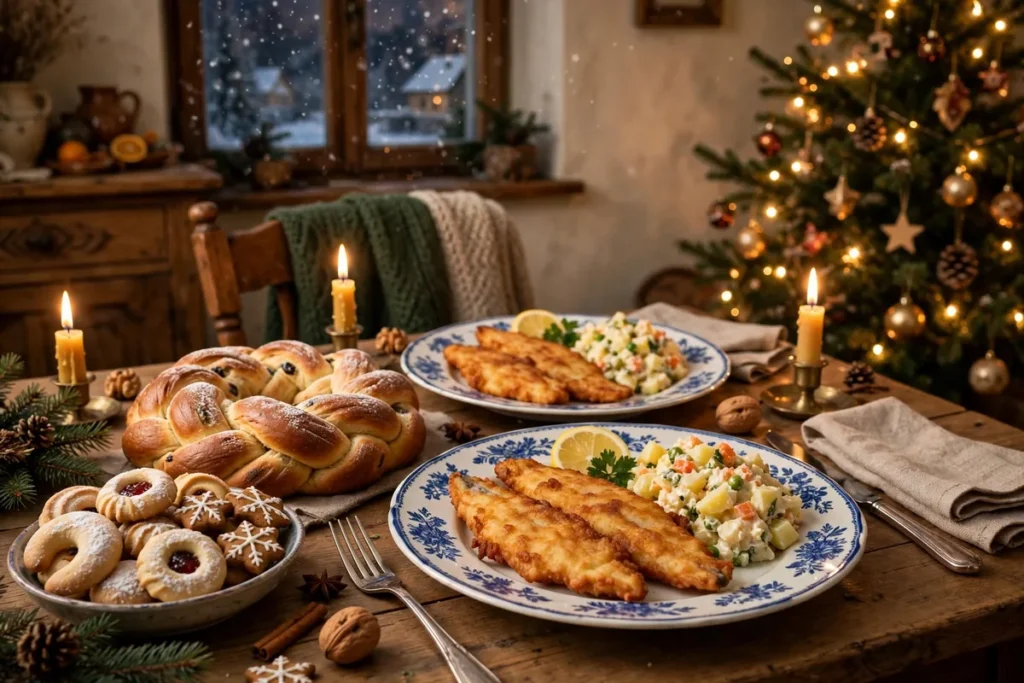
The Czech Christmas Eve table: golden fried carp with potato salad, vánočka braided bread, and cukroví cookies beneath the tree.
Watch: Czech Christmas Carp Tradition
Prague Morning explains the Christmas carp tradition — from the fishpond culture of Bohemia to the carp swimming in the bathtub before Christmas Eve dinner.
At a Glance: Czech Christmas Carp Tradition
The history, customs, and superstitions behind the Czech Christmas carp.
| Element | What it is | Key detail |
|---|---|---|
| Fried carp | The main dish | Fried carp with potato salad — the national Christmas Eve dinner; the pairing crystallized in the 19th century |
| The bathtub | The custom | Families buy live carp days early and keep them swimming in the bathtub — temporary pets before the feast |
| Fishpond culture | The history | South Bohemian pond systems built by the Rožmberk family in the 15th–16th centuries made Bohemia a great carp region |
| The fasting rule | The reason | Christmas Eve was traditionally a day of strict fasting; fish — not meat — was the permitted centerpiece |
| Carp scale in the wallet | The superstition | Keeping a carp scale in your wallet through the year is said to bring prosperity |
| Vánočka | The bread | Sweet braided Christmas bread, tasted for breakfast on Christmas morning |
| The golden pig | The legend | Those who fast all day on Christmas Eve are said to see a vision of the golden pig in the evening |
Frequently Asked Questions
Why do Czechs keep a live carp in the bathtub at Christmas?
Families buy live carp from street vendors and keep them in the bathtub for a few days before Christmas Eve — traditionally to let the fish “clean out” in fresh water for better flavor. Children often get attached to the carp, and many families end up releasing it and buying fillets instead.
What do Czechs eat on Christmas Eve?
The traditional Christmas Eve dinner is fried carp with potato salad, often preceded by fish soup or mushroom kuba, and followed by vánočka (Christmas bread) and Christmas cookies. Gifts are opened after dinner.
What is the carp scale tradition?
A dried carp scale carried in the wallet is said to bring wealth in the coming year; scales placed under dinner plates on Christmas Eve bring household prosperity. Fishmongers give out extra scales for this purpose every December.
Is Czech Christmas carp bony?
Yes — carp has distinctive Y-shaped bones, so it is eaten carefully. Asking the fishmonger to score fillets finely helps, as does choosing thick steaks where the bone structure is easier to navigate.
Do all Czechs eat carp at Christmas?
The large majority do — it remains the dominant Christmas Eve main course. A growing minority, especially younger people, serve salmon, trout, or other dishes, but carp is still the national standard.
When is the Czech Christmas Eve dinner?
Christmas Eve, December 24th — Štědrý den — is the main celebration, with dinner traditionally beginning when the first star appears. Christmas Day (25th) and St. Stephen’s Day (26th) are quieter holidays for visiting family.