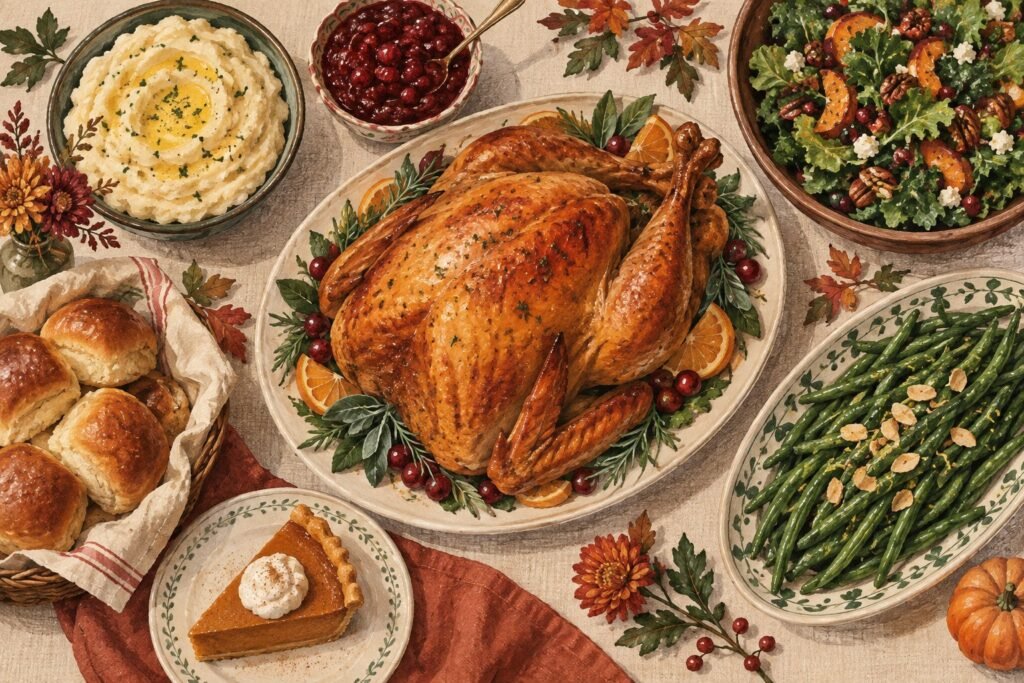
Leftover mashed potato recipes are the delicious answer to the bowl of creamy potatoes still sitting in your fridge after the feast. Rather than reheating the same scoop for the third day running, you can transform leftover mashed potatoes into golden crispy pancakes, pillowy gnocchi, shepherd’s pie with a browned potato crown, cheesy potato croquettes, savory waffles, and half a dozen other dishes that taste entirely new. Mashed potatoes are one of the most versatile leftovers in the kitchen: their soft, starchy texture binds, thickens, and crisps in ways few other ingredients can. This guide collects the best ideas — from 15-minute skillet cakes to weekend-project gnocchi — with practical tips on which potato textures work best, how to fix common problems (gummy, gluey, or watery mash), USDA-based storage and reheating safety, and answers to frequently asked questions. Whether your mash is buttery, garlicky, dairy-free, or loaded with cheese, there is a second act here worthy of it.
Why Mashed Potatoes Are a Leftover Superstar
Few leftovers reinvent themselves as completely as mashed potatoes. Their high starch content makes them a natural binder for patties, croquettes, and doughs; their creamy texture enriches soups and bakes; and their mild, buttery flavor is a blank canvas for global seasonings — from Indian-spiced aloo tikkis to Italian gnocchi to Irish boxty. Unlike leftover turkey, which announces itself in every dish, mashed potatoes disappear into their new roles: nobody eating a crisp potato pancake thinks “leftovers.” They are also economical — potatoes are cheap, but the butter, cream, and effort in holiday mash deserve better than the trash. Before you start cooking, check that your potatoes are within their safe window with our guide on how long Thanksgiving leftovers last (3 to 4 days refrigerated at or below 40°F / 4°C, per USDA guidance).
Know Your Mash: Texture Matters
Not all mashed potatoes behave the same in these recipes, so assess yours first. Smooth, creamy mash (riced or whipped with plenty of butter and cream) is ideal for gnocchi, duchess potatoes, and soups — it incorporates evenly. Rustic, slightly lumpy mash makes the best pancakes and croquettes, where texture is an asset. Stiff, dry mash (the kind that holds firm peaks) is perfect for patties and waffles, which need structure; if yours is very stiff, loosen slightly with a splash of milk. Loose, milky mash needs help: stir in a beaten egg and a few tablespoons of flour or breadcrumbs to give it body before shaping. Flavored mash — garlic, cheese, herbs, roasted garlic, horseradish — simply steers your choice: garlicky mash loves Italian preparations, cheesy mash begs to become croquettes, and herbed mash shines in pancakes. Very watery mash (from over-boiled potatoes) should be cooked down in a dry pan for a few minutes before use in any shaped recipe.
Recipe 1: Crispy Mashed Potato Pancakes (15 Minutes)
The fastest and most beloved transformation. For every 2 cups (about 480 g) of leftover mashed potatoes, mix in 1 beaten egg, 3 tablespoons all-purpose flour, 2 sliced green onions, salt, and plenty of black pepper. Heat 2 tablespoons of oil or butter in a skillet over medium-high heat. Scoop ¼-cup (60 ml) mounds, flatten into 1 cm / ½-inch patties, and fry 3 to 4 minutes per side until deeply golden and crisp. Drain on a rack (not paper towels, which steam the crust). Serve with sour cream, applesauce, or smoked salmon and crème fraîche for an elegant brunch. Variations: add ½ cup shredded cheddar and a pinch of cayenne for cheese-and-heat cakes; fold in diced ham or leftover turkey for a heartier cake; or go Indian with 1 teaspoon garam masala, minced ginger, and peas for aloo tikki, served with yogurt and chutney. The keys to crispness: a hot pan, enough fat, and patience — do not move the cakes until the crust sets.
Recipe 2: Potato Gnocchi from Scratch (45 Minutes)
Yes, you can make genuine gnocchi from leftover mash — Italian home cooks have done it for generations. For 2 cups (480 g) of smooth mashed potatoes, mix in 1 beaten egg yolk, ¾ to 1 cup (95 to 125 g) all-purpose flour, and 1 teaspoon salt. Knead gently just until a soft dough forms — overworking develops gluten and makes gummy gnocchi. Roll into 2 cm / ¾-inch ropes on a floured surface, cut into 2.5 cm / 1-inch pieces, and roll each over a fork or gnocchi board for ridges (optional but they hold sauce beautifully). Boil in well-salted water; they are done 1 to 2 minutes after they float. Toss with brown butter and sage, simple tomato sauce, or creamy mushroom sauce. Critical tips: use the minimum flour that lets you handle the dough; work quickly; and test-boil 2 or 3 gnocchi first — if they fall apart, knead in a little more flour. Leftover-flavored mash (garlic, parmesan) makes extraordinary gnocchi with zero extra seasoning needed.
Recipe 3: Shepherd’s Pie with Leftover Mash (40 Minutes)
The classic two-leftovers-in-one dinner. Brown 450 g (1 lb) ground lamb or beef (or use 2 cups diced leftover turkey — see our leftover turkey chili for another turkey reinvention) with 1 diced onion, 2 diced carrots, and 2 minced garlic cloves. Stir in 2 tablespoons tomato paste, 1 tablespoon Worcestershire sauce, 1 cup (240 ml) broth, 1 cup frozen peas, salt, pepper, and thyme; simmer 10 minutes until thick. Spread in a baking dish, top with 3 to 4 cups of leftover mashed potatoes (dollop and swirl — rustic peaks brown beautifully), and bake at 400°F (200°C) for 20 minutes until the top is golden. For extra-browned peaks, broil 2 minutes at the end. Cottage pie (beef) vs. shepherd’s pie (lamb) is the traditional distinction; turkey versions are sometimes called “shepherdess” or simply turkey pot pie with a mash top — delicious regardless of name.
Recipe 4: Cheesy Potato Croquettes (30 Minutes)
For 2 cups (480 g) mashed potatoes, mix in 1 beaten egg, ½ cup (50 g) grated parmesan, ¼ cup flour, salt, pepper, and nutmeg. Chill 20 minutes for easier shaping. Form into walnut-size balls, pressing a small cube of mozzarella into the center of each for a molten core. Roll in flour, beaten egg, then fine breadcrumbs. Shallow-fry in 1 cm / ½ inch of oil at 350°F (175°C) until golden all over, about 3 to 4 minutes, turning once. Drain on a rack and serve hot with marinara or garlic aioli. For baking instead of frying: arrange on an oiled sheet pan, spray with oil, and bake at 425°F (220°C) for 20 to 25 minutes, turning once — slightly less crisp but far less hands-on. These disappear at parties; make double.
Recipe 5: Mashed Potato Waffles (20 Minutes)
The viral-worthy one. For 2 cups (480 g) mashed potatoes, whisk in 2 beaten eggs, ¼ cup (60 ml) milk or buttermilk, 3 tablespoons melted butter, ½ cup (65 g) flour, 1 teaspoon baking powder, salt, pepper, and ½ cup shredded cheddar (optional). Cook in a well-greased hot waffle iron for 4 to 5 minutes until deeply golden and crisp — longer than regular waffles, because the dense batter needs time. The lacy, crunchy exterior with a creamy center is extraordinary. Serve savory: topped with leftover stuffing, gravy, and a fried egg for the ultimate Thanksgiving-redux brunch; or with smoked salmon, crème fraîche, and dill. Sweet version: omit the cheese and pepper, add 1 tablespoon sugar, and serve with cranberry sauce — see our ideas for what to do with leftover cranberry sauce.
Recipe 6: Duchess Potatoes (35 Minutes)
The elegant option. For 2 cups (480 g) smooth mashed potatoes, beat in 2 egg yolks, 3 tablespoons softened butter, salt, white pepper, and a pinch of nutmeg until silky. Pipe rosettes (or dollop swirls) onto a parchment-lined sheet pan using a star tip — or two spoons for a rustic quenelle shape. Brush lightly with beaten egg and bake at 425°F (220°C) for 15 to 20 minutes until golden. These crisp-edged, creamy-centered puffs elevate any plate and freeze well unbaked: freeze piped rosettes solid, bag them, and bake from frozen adding 5 minutes.
More Ideas: Soups, Bakes, Breads, and Beyond
Loaded Potato Soup (25 Minutes)
Whisk 2 cups mashed potatoes into 4 cups (950 ml) hot chicken or vegetable broth until smooth — instant creamy soup base with no blender needed. Add diced potatoes, corn, or leftover turkey for texture; simmer 10 minutes; finish with cream, cheddar, bacon bits, and green onions. The mash thickens luxuriously.
Potato Bread and Rolls
Replace about 1 cup (240 g) of the flour-liquid in your favorite bread or dinner-roll recipe with mashed potatoes — the starch keeps bread soft for days. Potato rolls are pillowy and golden; potato focaccia with rosemary is exceptional. Reduce the recipe’s liquid slightly, since mash adds moisture.
Irish Boxty and Colcannon Cakes
For boxty (Irish potato pancakes), mix equal parts mashed potato and grated raw potato with flour, egg, and milk, then griddle. For colcannon cakes, fold sautéed cabbage or kale and green onions into the mash, form patties, and pan-fry — a beautiful nod to the dish’s Irish roots.
Potato Pierogi Filling
Seasoned mashed potato (with cheddar and caramelized onion) is the classic pierogi filling. Make or buy dumpling wrappers, fill, seal, boil until they float, then pan-fry in butter until crisp. Serve with sour cream.
Fish Cakes and Salmon Patties
Mix 2 cups mash with 1 can (about 400 g) drained salmon or tuna, 1 egg, breadcrumbs, lemon zest, dill, salt, and pepper. Form patties and pan-fry 3 to 4 minutes per side. The potato binds without overwhelming the fish.
Top a Pot Pie or Casserole
Any savory pie or baked casserole — turkey pot pie filling, creamed vegetables, leftover turkey curry — becomes a complete meal under a swirled blanket of mashed potatoes, baked until golden. It is shepherd’s pie logic applied to everything.
Twice-Baked-Style Stuffed Potatoes
Hollow out baked potatoes (or use leftover baked potatoes), mix the scooped flesh with leftover mash, shredded cheddar, green onions, and crumbled bacon or diced turkey, then refill the shells, top with more cheese, and bake at 400°F (200°C) for 15 minutes until golden. It is the steakhouse classic built entirely from leftovers, and it works as a side dish or a light main with a green salad.
Storage, Reheating, and Food Safety
Mashed potatoes follow standard USDA leftover rules, with a few potato-specific notes.
How Long They Keep
Refrigerate leftover mashed potatoes within 2 hours of serving, in shallow airtight containers at or below 40°F (4°C). They are safe for 3 to 4 days. In the freezer at 0°F (-18°C), plain mashed potatoes keep up to a year at safe quality, with best texture within 2 to 3 months; dairy-rich versions may separate slightly on thawing but stir back together with a splash of warm milk. For the full holiday reference, see our guide on how long Thanksgiving leftovers last.
Reheating Mashed Potatoes
Reheat to 165°F (74°C) throughout. The stovetop is best: warm over low heat with a splash of milk or cream, stirring frequently — the added liquid restores creaminess lost in the fridge. Microwaving works: cover, heat in 90-second intervals, stirring between each. Avoid high heat, which makes potatoes gummy. A clever trick for dried-out mash: whisk in a tablespoon of cream cheese or mascarpone while reheating for instant silkiness.
Food-Safety Notes for Transformed Dishes
When you cook mashed potatoes into a new dish (pancakes, gnocchi, shepherd’s pie), the 3-to-4-day clock does not reset — count from when the potatoes were originally cooked. The new dish should be eaten promptly or refrigerated within 2 hours and consumed within the remaining window. Always cook egg-containing mixtures (croquettes, waffles, gnocchi) to safe internal temperatures: 165°F (74°C) for the egg components is automatically achieved by proper frying, baking, or boiling.
Troubleshooting Common Problems
Gummy or Gluey Mash
Overworked potatoes release excess starch and turn gluey — usually from food processors or over-mashing. For shaped recipes, gummy mash still works in pancakes and waffles (where binders help), but avoid it for gnocchi, which will be dense. Next time, rice or mash potatoes gently and never use a food processor or blender.
Too Watery
Cook the mash in a dry nonstick pan over medium heat for 3 to 5 minutes, stirring, to evaporate excess moisture before using in shaped recipes. Alternatively, stir in instant potato flakes (a legitimate rescue ingredient) a tablespoon at a time until the texture firms up.
Pancakes Falling Apart
The binder ratio is off. Add another beaten egg and 2 more tablespoons of flour per 2 cups of mash, chill the mixture 15 minutes before shaping, and make sure the pan is properly hot before the patties go in — a patty added to a lukewarm pan absorbs oil and disintegrates instead of searing.
Gnocchi Dissolving in the Water
Too little flour or too-wet mash. Test-boil 2 or 3 pieces first; if they fall apart, work in more flour a tablespoon at a time. Also ensure the water is at a full rolling boil — gnocchi boiled in merely simmering water sit too long and disintegrate.
Bland Results
Holiday mash is seasoned for the holiday table, not for its second act — taste every mixture before cooking and season assertively. Salt, black pepper, garlic powder, parmesan, fresh herbs, and a squeeze of lemon all wake up potato dishes. Remember that frying and baking mute seasoning, so mixtures should taste slightly over-seasoned raw.
Nutrition Notes
Per cup (about 240 g) of classic butter-and-cream mashed potatoes: roughly 240 calories, 4 grams of protein, 35 grams of carbohydrates, 9 grams of fat, and 3 grams of fiber, with meaningful potassium (about 600 mg), vitamin C, and vitamin B6. Potatoes are naturally fat-free and gluten-free; nearly all the calories beyond the potato itself come from added butter, cream, and milk. Transformed dishes add their own profiles: pan-fried pancakes add oil (about 50 calories per teaspoon absorbed); gnocchi adds flour and egg; shepherd’s pie adds the meat filling’s protein. Lighter paths: make the original mash with olive oil and warm broth instead of butter and cream; bake croquettes instead of frying; load pancakes with vegetables. These are estimates, not laboratory values.
Meal-Planning: A Week of Potato Reinvention
Stretch one big batch of leftover mash across days without repetition: Friday — crispy potato pancakes with sour cream for brunch; Saturday — shepherd’s pie for dinner (two leftovers, one dish); Sunday — potato waffles topped with a fried egg; Monday — gnocchi with brown butter and sage for a dinner that feels entirely new. Freeze any remaining plain mash in 2-cup portions for future soups and bakes. Pair this plan with our other leftover guides — leftover stuffing recipes and turkey fried rice — and the entire holiday table gets a second life.
In Pictures: Leftover Mashed Potato Recipes
Cold mashed potatoes are a blank canvas — crisp them into golden cakes with cheese and chives and nobody will guess they started as a side dish.
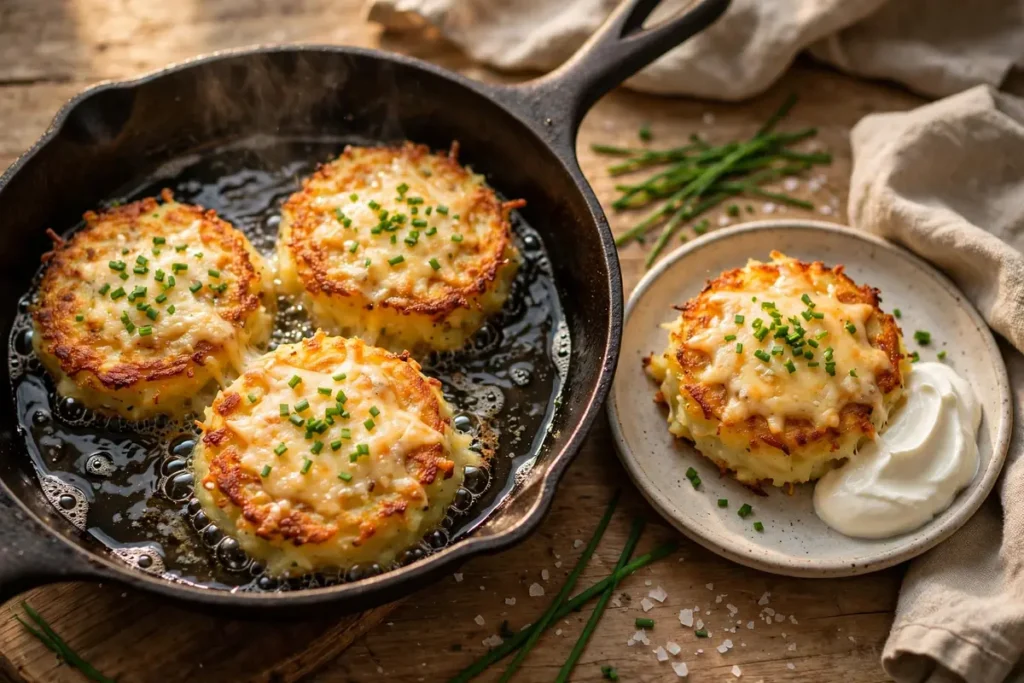
Golden, crispy mashed potato cakes frying in a cast iron skillet, topped with melted cheese and chives.
Watch: Leftover Mashed Potato Recipes
Simply Mamá Cooks turns leftover mashed potatoes into crispy potato-and-cheese pancakes — a fast, stretch-the-meal remake with just a handful of ingredients.
At a Glance: Leftover Mashed Potato Recipes
The best second acts for a bowl of cold mash.
| Remake | Method | Tip |
|---|---|---|
| Crispy potato cakes | Mix mash with egg, cheese, and flour; pan-fry until golden | Chill the mixture 20 minutes so the cakes hold their shape |
| Potato pancakes | Combine 1 cup mash with cheese and 2 eggs; fry in oil | Season simply with salt and pepper — the cheese does the rest |
| Mashed potato gnocchi | Work in flour and egg, roll, cut, and boil until they float | Add flour a quarter-cup at a time to avoid gummy gnocchi |
| Loaded potato soup | Whisk mash into warm stock with sautéed aromatics | Thin gradually — cold mash thickens fast |
| Shepherd's pie topping | Spread cold mash over the filling and bake until browned | Fluff with a fork first for crisp peaks |
| Safety window | Use within 3 to 4 days refrigerated (USDA guidance); reheat to 165°F | |
Frequently Asked Questions
Can I freeze leftover mashed potatoes?
Yes. Cool within 2 hours, portion into airtight containers or freezer bags (flatten bags for fast thawing), and freeze at 0°F (-18°C). Best texture within 2 to 3 months, safe up to a year. Thaw overnight in the refrigerator and reheat gently with a splash of milk, stirring well. Dairy-rich mash may look separated after thawing — vigorous stirring restores it.
Why did my mashed potato pancakes fall apart?
Usually insufficient binder or a pan that wasn’t hot enough. Per 2 cups of mash, use 1 egg plus 3 tablespoons flour, chill the mix 15 minutes, and fry in properly hot oil without moving the cakes until the crust sets. Very loose, milky mash needs extra flour.
Can I make gnocchi from instant mashed potatoes?
You can, but fresh leftover mash gives far better flavor and texture. If using instant, prepare it thick (less liquid than the package says), cool completely, and proceed — the drier the base, the less flour needed and the more tender the gnocchi.
How do I keep mashed potatoes from getting gummy when reheating?
Reheat gently over low heat with added liquid (milk, cream, or broth), stirring just enough to combine — vigorous stirring develops starch and creates gumminess. Never reheat in a food processor or blender, and avoid the microwave’s highest setting for large quantities.
Are leftover mashed potatoes gluten-free?
Plain mashed potatoes (potato, butter, milk, salt) are naturally gluten-free. Check flavored versions for hidden gluten in bouillon, gravy mixed in, or soup-mix seasonings. For the transformed recipes, use gluten-free flour and breadcrumbs where needed — pancakes, waffles, and croquettes all adapt well.
What is the best leftover mashed potato recipe for kids?
Cheesy potato croquettes and crispy pancakes win with kids — crunchy outside, soft inside, and dippable. Let children help shape croquettes or choose their dipping sauces (ketchup, sour cream, cheese sauce). Mild seasoning and familiar shapes make these an easy sell.
Conclusion
Leftover mashed potato recipes prove that the humble spud is the hardest-working leftover on the holiday table. From 15-minute crispy pancakes to hand-rolled gnocchi, from shepherd’s pie to lacy waffles, a bowl of yesterday’s mash contains a week of dinners waiting to be discovered — each one tasting like a deliberate creation rather than a rerun. The techniques are forgiving, the ingredients are flexible, and the results reliably delight. So before you resign yourself to reheating the same scoop, pick one transformation and start cooking: your refrigerator’s most unassuming container is about to become its most valuable. Keep this guide bookmarked through the holiday weekend, share your favorite reinvention with family, and remember that every crispy pancake or pillowy gnocchi is also a small victory against food waste. For the complete holiday leftover playbook, explore our Thanksgiving recipes collection and our roundup of the season’s best Thanksgiving side dishes.