Few dishes carry a century of American dining history in a single baking dish, but turkey tetrazzini does exactly that. Born in the grand hotels of early-1900s San Francisco, named for a world-famous opera diva, and perfected in mid-century home kitchens, tetrazzini is the elegant ancestor of every creamy casserole you have ever loved. Made with Thanksgiving leftovers, it becomes something even better: a luxurious, golden-topped bake where tender turkey, silky pasta, and mushrooms are enveloped in a sherry-kissed cream sauce and crowned with a crisp, buttery crumb.
If you have never made tetrazzini, you are in for a revelation. If you grew up with it — perhaps a grandmother’s version with canned soup — this recipe will show you what the dish was always meant to be when built from scratch. The difference between a from-scratch tetrazzini and its shortcut cousins is the difference between a live performance and a recording: the notes are the same, but the feeling is entirely different. A proper béchamel-based sauce, real mushrooms browned until deeply savory, pasta cooked to the perfect bite, and a topping that shatters — these are the details that elevate leftovers into legacy.
This guide is both a recipe and a story. We will trace tetrazzini’s journey from San Francisco’s Palace Hotel to your Thanksgiving weekend, dissect what makes the dish distinct from every other turkey casserole, master the sauce technique that is the heart of the recipe, and explore make-ahead strategies that make it the easiest impressive dish of the holiday weekend. Along the way: variations, troubleshooting, and the food-safety basics for casserole cooking.
A Brief History: The Diva and the Dish
The story begins with Luisa Tetrazzini, an Italian coloratura soprano who was one of the most celebrated opera stars of the early 20th century. In the 1900s, she was a sensation in San Francisco, performing to packed houses and adored by the city’s dining establishments. According to the most widely repeated account, the dish was created in her honor around 1908–1910 — either at San Francisco’s Palace Hotel or by the chef Ernest Arbogast, with competing claims from New York’s Knickerbocker Hotel adding to the legend.
What is certain is that “Tetrazzini” became shorthand for a specific preparation: diced poultry or seafood, combined with pasta (traditionally spaghetti or linguine) and mushrooms in a rich cream sauce, topped with cheese and breadcrumbs, and baked until golden. It was restaurant food — sophisticated, continental, the kind of dish that signaled cosmopolitan taste. By the 1950s, it had migrated into American home kitchens, where canned cream soups offered a shortcut that made the dish a weeknight staple and, arguably, sanded off some of its elegance.
Today’s from-scratch revival restores what the shortcuts lost. When you make turkey tetrazzini with a real béchamel, properly browned mushrooms, and good cheese, you are not making a retro casserole ironically — you are making the dish as its creators intended, and discovering why it survived for over a century. Thanksgiving, with its abundance of cooked turkey, is the perfect occasion for its annual return.
What Makes Tetrazzini Different From Other Turkey Casseroles
Not every baked dish with turkey and cream sauce is tetrazzini, and understanding the distinctions helps you nail the authentic character. Three elements define the dish:
The Pasta Must Be Long
Spaghetti, linguine, or fettuccine — broken into shorter lengths for serving ease, but long pasta nonetheless. This is non-negotiable in the classic preparation and it matters texturally: long strands create a nest-like structure that holds the sauce differently than short shapes, giving each forkful a satisfying twirl-and-pull quality. Short pasta (penne, rotini) makes a fine turkey pasta bake, but it isn’t tetrazzini.
The Sauce Is a Béchamel, Enriched
Authentic tetrazzini sauce starts as a béchamel — butter, flour, milk or cream — then gets enriched with cheese (traditionally Parmesan), egg yolk or extra cream for silkiness, and the dish’s signature flavoring: dry sherry. The sherry is the soul of tetrazzini; its nutty, complex warmth is what separates the dish from a generic cream-sauce casserole. A teaspoon of nutmeg and a squeeze of lemon complete the classic seasoning profile.
The Topping Must Shatter
Buttered breadcrumbs — preferably fresh or panko — mixed with grated Parmesan, baked until deeply golden and crisp. The contrast between the creamy interior and the crunchy lid is essential to the dish’s pleasure. A tetrazzini without a proper crispy topping is like a crème brûlée without the crack — technically the same dessert, spiritually a different one.
Ingredient Deep Dive: Choosing Well
The Turkey
You need 4 cups of cooked turkey (about 1 to 1 1/4 pounds), cut into bite-sized pieces or shredded into generous strands. Both white and dark meat work; dark meat’s richness is particularly good here, but white meat’s clean flavor lets the sauce shine. The turkey goes into the dish already cooked and is heated through in the oven — so avoid overcooking it in advance, and cut pieces large enough to remain distinct in the finished casserole (3/4-inch pieces are ideal).
The Mushrooms: Don’t Skip the Browning
One pound of mushrooms — cremini are ideal, with their deep, meaty flavor; a mix of cremini and shiitake is even better. The critical technique: brown them properly. Mushrooms release a great deal of water, and if you crowd the pan or rush the process, they steam into gray rubber. Cook them in batches in a hot pan with butter, giving them space, until they are deeply golden and their liquid has evaporated and re-concentrated. This browning develops the savory, almost meaty depth that makes the whole dish taste expensive. White button mushrooms work but are milder; whatever you use, brown them well.
The Pasta
Twelve ounces of spaghetti or linguine, broken into 2-to-3-inch lengths before cooking. Cook it 1 to 2 minutes shy of the package directions — it will finish cooking in the oven, absorbing sauce as it goes, and pasta that starts fully cooked ends up mushy. Salt the pasta water generously; it is the only chance to season the pasta itself. Reserve a cup of the starchy pasta water before draining — it is liquid gold for adjusting the sauce consistency.
The Dairy: Cream, Cheese, and the Sherry
The sauce uses a combination of whole milk and heavy cream (or half-and-half for a slightly lighter version) — about 3 cups total. For cheese, freshly grated Parmesan is traditional and essential; pre-grated cheese contains anti-caking agents that prevent smooth melting, so grate it yourself. A cup of Parmesan in the sauce plus more for the topping gives the dish its savory depth. And the dry sherry — 1/3 cup, added to the sauce — is the ingredient that makes guests ask what your secret is. Use a drinkable dry sherry, not “cooking sherry,” which is salted and harsh.
Peas and Pimentos: The Traditional Garnish-Vegetables
Classic tetrazzini includes peas (1 cup, frozen is fine) for color and sweetness, and diced pimentos or roasted red peppers (1/4 cup) for their gentle sweetness and jewel-like color. They are traditional for a reason — the bright pops of color and flavor cut through the dish’s richness. Feel free to add sautéed diced bell pepper or a handful of chopped sun-dried tomatoes if you want to riff, but keep the peas; they belong.
The Recipe: Classic Turkey Tetrazzini From Scratch
Yield: One 9×13-inch casserole, 8 servings | Prep time: 30 minutes | Bake time: 30 to 35 minutes | Total time: About 1 hour 10 minutes
Ingredients
- 12 ounces spaghetti or linguine, broken into 2-to-3-inch lengths
- 4 cups cooked turkey, cut into 3/4-inch pieces (about 1 to 1 1/4 pounds)
- 1 pound cremini mushrooms, sliced 1/4-inch thick
- 6 tablespoons (85 g) unsalted butter, divided
- 1 medium yellow onion, finely diced (about 1 cup)
- 3 garlic cloves, minced
- 1/3 cup all-purpose flour
- 1 1/2 cups whole milk, warmed
- 1 1/2 cups heavy cream
- 1/3 cup dry sherry
- 1 cup freshly grated Parmesan cheese, plus 1/2 cup for topping
- 1 cup frozen peas, thawed
- 1/4 cup diced pimentos or roasted red peppers, drained
- 1/2 teaspoon freshly grated nutmeg
- 1 tablespoon fresh lemon juice
- 2 tablespoons chopped fresh parsley, plus more for serving
- 1 1/2 cups panko breadcrumbs
- 3 tablespoons unsalted butter, melted (for topping)
- Salt and freshly ground black pepper to taste
Instructions
- Heat the oven to 375°F (190°C). Butter a 9×13-inch baking dish. Bring a large pot of generously salted water to a boil and cook the pasta 1 to 2 minutes shy of package directions. Reserve 1 cup of pasta water, then drain.
- While the pasta cooks, brown the mushrooms: melt 2 tablespoons of butter in a large, deep skillet or Dutch oven over medium-high heat. Add half the mushrooms in a single layer — do not crowd — and cook undisturbed for 3 minutes, then stir and cook 3 to 4 minutes more until deeply golden. Transfer to a plate and repeat with 2 more tablespoons of butter and the remaining mushrooms. Set aside.
- In the same skillet over medium heat, melt the remaining 2 tablespoons of butter. Add the onion with a pinch of salt and cook until soft and translucent, about 6 minutes. Add the garlic and cook 1 minute more.
- Sprinkle the flour over the onions and stir constantly for 2 minutes to cook out the raw taste — this roux is the foundation of your béchamel. Slowly pour in the warm milk, whisking constantly to prevent lumps, then whisk in the cream. Bring to a gentle simmer, stirring, until the sauce thickens enough to coat a spoon, about 5 to 7 minutes.
- Remove from the heat. Whisk in the sherry, then the 1 cup of Parmesan a handful at a time, letting each addition melt before adding more. Stir in the nutmeg, lemon juice, and parsley. Taste and season generously with salt and pepper — the sauce should taste slightly bold, as the pasta will mute it. If the sauce seems too thick, thin with splashes of the reserved pasta water until it flows like heavy cream.
- Add the drained pasta, turkey, browned mushrooms, peas, and pimentos to the sauce. Toss gently but thoroughly until every strand is coated. Transfer to the prepared baking dish and spread evenly.
- Toss the panko with the melted butter and the remaining 1/2 cup of Parmesan, plus a pinch of salt. Scatter evenly over the casserole, covering it completely — this is your shattering lid.
- Bake 30 to 35 minutes, until the topping is deeply golden and the sauce bubbles at the edges. If the top browns before the center is bubbling, tent loosely with foil. Rest 10 to 15 minutes before serving — the sauce sets slightly as it cools, and the wait improves every serving. Garnish with parsley.
Mastering the Sauce: Technique Notes
The béchamel is the technical heart of tetrazzini, and three details determine success. First, warm milk incorporates into the roux far more smoothly than cold milk — cold liquid shocks the roux into lumps. Second, add the liquid gradually at first: a splash, whisked to a smooth paste, then a slow stream while whisking. Once the sauce is simmering and smooth, you can relax. Third, add the cheese off the heat or over very low heat. Boiling a cheese sauce causes the proteins to seize and the fat to separate, producing a grainy, greasy result. Gentle heat melts cheese into silk.
The sherry goes in before the cheese so its alcohol cooks off slightly and its flavor melds into the sauce. If you prefer to avoid alcohol entirely, replace the sherry with an equal amount of turkey or chicken stock plus a teaspoon of white wine vinegar — you will lose some complexity but keep the dish delicious. The nutmeg and lemon are the quiet seasonings that make the sauce taste complete rather than merely creamy; don’t skip them.
Troubleshooting the Sauce
Lumpy sauce: Strain it through a fine-mesh sieve before adding the pasta — two minutes of work that saves the dish. Too thick: Thin with reserved pasta water, a splash at a time; the starch in the water keeps the sauce cohesive. Too thin: Simmer a few minutes longer, remembering that the sauce thickens further in the oven and as it rests. Grainy cheese: The heat was too high when the cheese went in; next time, remove the pan from the burner first. A squeeze of lemon juice whisked in can sometimes smooth a mildly grainy sauce.
Make-Ahead and Freezer Strategy: The Casserole Advantage
Tetrazzini is one of the great make-ahead dishes — arguably better when assembled in advance, as the pasta absorbs the sauce’s flavors overnight. You have several options:
Refrigerate Unbaked (Up to 24 Hours)
Assemble the casserole completely but hold the breadcrumb topping separately (toss it on just before baking so it stays crisp). Cover the dish tightly and refrigerate up to 24 hours. Add 10 to 15 minutes to the bake time since it goes into the oven cold. This is the ideal Thanksgiving-weekend move: assemble Friday night, bake Saturday.
Freeze Unbaked (Up to 3 Months)
Assemble in a freezer-safe dish without the topping, wrap tightly in plastic wrap and foil, and freeze up to 3 months. Thaw overnight in the refrigerator, add the fresh breadcrumb topping, and bake as directed (plus 10 minutes). The texture is excellent — the sauce protects the pasta during freezing.
Freeze Baked Portions
Baked tetrazzini freezes beautifully in individual portions — perfect for future weeknight dinners. Cool completely, portion into containers, and freeze up to 3 months. Reheat from thawed in a 350°F (175°C) oven, covered with foil, until steaming (165°F/74°C in the center), about 20 to 25 minutes. Refresh the topping’s crunch under the broiler for 2 minutes if you like.
Storing Leftovers
Refrigerate leftover tetrazzini within 2 hours of baking; it keeps 3 to 4 days. Reheat covered in the oven rather than the microwave for the best texture — the microwave makes the topping soggy and the pasta rubbery. A splash of milk or stock drizzled over before reheating restores creaminess.
Creative Variations
Seafood Tetrazzini
The other classic: replace the turkey with 1 pound of cooked shrimp or crab meat (or a combination), added at the very end of sauce assembly so it doesn’t overcook. Everything else stays the same. This was arguably the original luxury version, and it remains spectacular for a dinner party.
Chicken Tetrazzini (Year-Round)
Use 4 cups of shredded rotisserie chicken instead of turkey. This is the version to make in March when no one has a turkey carcass in sight — proof that the dish stands on its own, independent of the holiday.
Wild Mushroom Tetrazzini
Replace half the cremini with an assortment of wild mushrooms — shiitake, oyster, chanterelle when in season — and add a teaspoon of fresh thyme to the sauce. The wild mushrooms’ complex, earthy flavors make this the connoisseur’s version, worthy of a dinner party centerpiece.
Lighter Tetrazzini
Use half-and-half instead of heavy cream, reduce the butter to 4 tablespoons, and increase the mushrooms and peas for bulk. The dish will be less decadent but still genuinely creamy and satisfying — the béchamel technique carries it. You can also use whole-wheat spaghetti for extra fiber, though the texture is heartier.
Spicy Southwestern Tetrazzini
Add a diced poblano pepper with the onion, a teaspoon of cumin and 1/2 teaspoon of smoked paprika to the sauce, replace the Parmesan with Monterey Jack, and top with crushed tortilla chips mixed with butter instead of panko. It is a departure from tradition, but a delicious one — the creamy-sherry base is surprisingly compatible with Southwestern flavors.
What to Serve With Tetrazzini
Tetrazzini is rich, so its companions should be bright and simple. A crisp green salad with a sharp lemon vinaigrette is the essential partner — the acid cuts the cream beautifully. Steamed or roasted green vegetables (green beans, asparagus, broccoli) add color and freshness. Crusty bread is optional but welcome for chasing the last of the sauce.
If tetrazzini is part of a post-Thanksgiving spread, let it be the hearty anchor alongside lighter fare — perhaps the best Thanksgiving side dishes served as a fresh salad course. For wine, an oaked Chardonnay mirrors the dish’s creaminess, while a dry Riesling’s acidity provides contrast; both are classic pairings. And if your leftover journey continues, the leftover turkey pot pie and turkey noodle soup offer completely different second acts, while the ultimate leftover turkey sandwich handles lunch.
“Tetrazzini proves that leftovers, treated with respect and a little sherry, can outshine the feast they came from.”
Food Safety for Casserole Cooks
Creamy casseroles need the same care as any leftover dish. Use the turkey within 3 to 4 days of roasting, refrigerate the assembled casserole within 2 hours, and bake until the center reaches 165°F (74°C) — the bubbling edges are your visual cue, but a thermometer is certain. Cool leftovers quickly in shallow containers and refrigerate within 2 hours. Reheat only the portion you plan to eat, bringing it to 165°F throughout. Our Thanksgiving food safety tips and reheating guide cover the complete protocol.
In Pictures: Turkey Tetrazzini
Creamy pasta, golden cheese, crispy topping — tetrazzini is the casserole leftovers were invented for.
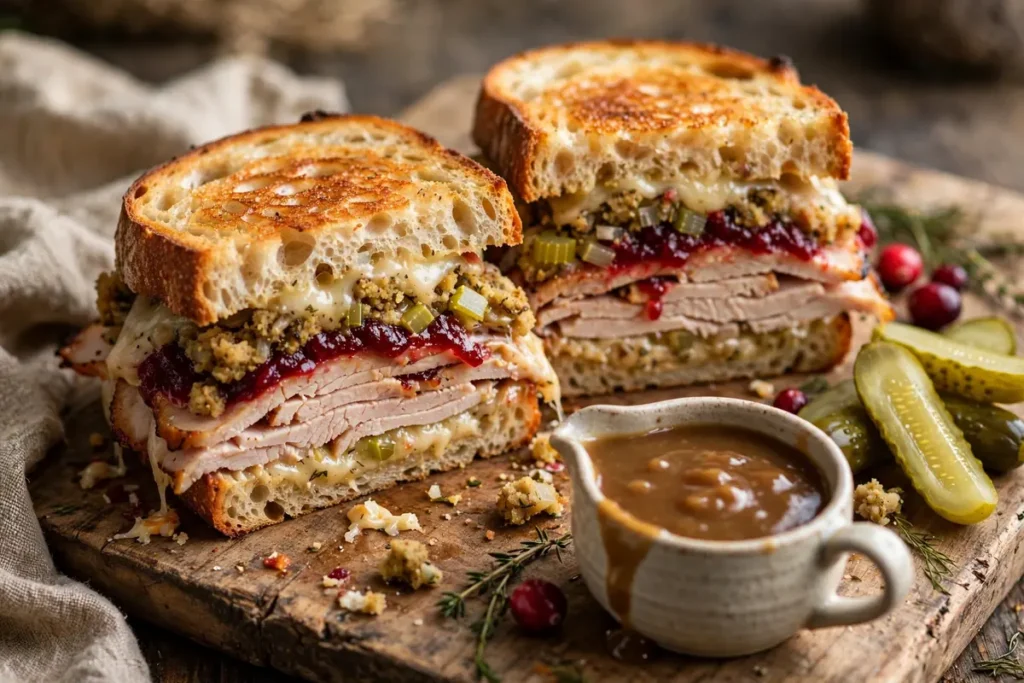
A bubbling turkey tetrazzini casserole with creamy spaghetti, golden cheese and breadcrumb topping.
Watch: Turkey Tetrazzini
I Heart Recipes bakes a creamy turkey tetrazzini that puts leftover turkey to delicious use.
At a Glance: Turkey Tetrazzini
The components and timing for a creamy, golden tetrazzini.
| Detail | What to know |
|---|---|
| Prep time | About 30 minutes of active prep |
| Total time | Roughly 1 hour including baking |
| Pasta | Spaghetti or linguine, cooked just shy of al dente |
| Sauce | A creamy mushroom-based sauce coats every strand |
| Turkey | About 2–3 cups of diced leftover turkey |
| Bake | Around 25–30 minutes at 375°F until bubbly and golden |
| Topping | Buttered breadcrumbs and parmesan for crunch |
| Make-ahead | Assemble a day ahead; add 10 minutes to the bake if chilled |
Frequently Asked Questions
Can I make turkey tetrazzini ahead of time?
Yes — it’s an ideal make-ahead casserole. Assemble it completely (holding the breadcrumb topping separate), refrigerate up to 24 hours, then add the topping and bake, adding 10 to 15 minutes to the bake time. You can also freeze the assembled casserole (without topping) for up to 3 months; thaw overnight before baking.
What can I substitute for sherry in tetrazzini?
Dry white wine or dry vermouth are the closest substitutes, used in the same quantity. For an alcohol-free version, use turkey or chicken stock plus a teaspoon of white wine vinegar. The sherry’s nutty complexity is distinctive, but the dish remains delicious without it.
Why is my tetrazzini dry?
The usual causes are overcooked pasta (it absorbs too much sauce in the oven), a sauce that was too thick before assembly, or overbaking. Cook the pasta 1 to 2 minutes shy of done, thin the sauce to a heavy-cream consistency with pasta water, and pull the casserole when the edges bubble — then rest it 10 to 15 minutes. A dry baked tetrazzini can be revived with warm cream drizzled over each serving.
Can I use a different pasta shape?
Traditionally, tetrazzini uses long pasta — spaghetti, linguine, or fettuccine broken into shorter lengths. Short shapes like penne or rotini will taste good but won’t be authentic tetrazzini; the long strands create the dish’s characteristic nest-like texture. If you must substitute, choose something with ridges or curves that catches sauce.
How do I get the topping extra crispy?
Three tricks: use panko rather than fine breadcrumbs (its larger flakes stay crisp longer), toss the crumbs thoroughly with melted butter so every piece is coated, and add the topping just before baking rather than in advance. For maximum crunch, broil the finished casserole for 1 to 2 minutes at the end — watch it constantly, as the line between golden and burnt is thin.
Is turkey tetrazzini freezer-friendly?
Very. Freeze the assembled unbaked casserole (without the breadcrumb topping) for up to 3 months, or freeze baked portions for easy weeknight meals. Thaw overnight in the refrigerator before baking or reheating, and always add a fresh breadcrumb topping for the best texture.
Conclusion
Turkey tetrazzini is a dish with a pedigree — born in grand hotels, named for a diva, and beloved for over a century because it delivers exactly what comfort food promises: richness, warmth, and the deep satisfaction of a meal made with care. Built from scratch with a proper béchamel, deeply browned mushrooms, and a shattering Parmesan crumb, it transforms Thanksgiving leftovers into something worthy of the holiday’s finest traditions. Make it this weekend, make it ahead, freeze a portion for January — and take pleasure in cooking a recipe with a story. When you are ready to begin the whole cycle anew, our guide to how to cook a Thanksgiving turkey is where every great leftover begins.