Twice a year, in cities across America, some of the best restaurants in town quietly cut their prices by thirty to fifty percent — same chefs, same dining rooms, fixed-price menus designed to show off. If you’ve ever wondered what is Restaurant Week, here’s the short answer: it’s a limited-time event, usually one to two weeks, during which participating restaurants offer special multi-course prix-fixe menus at set prices well below normal à la carte cost. New York invented it in 1992; today hundreds of cities run editions, from Chicago and Los Angeles to Charleston and Denver. For diners, it’s the year’s best excuse to try that white-tablecloth spot you’ve been eyeing. For restaurants, it’s a way to fill seats in slow seasons and turn first-timers into regulars. This guide explains how Restaurant Week works, when and where to find your city’s edition, how to squeeze maximum value from every menu, reservation tactics for the hardest-to-book tables, and the pitfalls — limited menus, upsells, tipping math — that separate savvy diners from disappointed ones.
How Restaurant Week Works: The Prix-Fixe Playbook
Strip away the marketing and Restaurant Week runs on a simple, elegant structure. Participating restaurants each create a special fixed-price menu — almost always multi-course, typically a choice of appetizer, entrée, and dessert — offered at one set price for lunch and another (higher) set price for dinner. The prices are standardized across the event by the organizer: think $25–$35 for a three-course lunch and $45–$65 for a three-course dinner in most major cities, though exact tiers vary by market. You don’t need a coupon, a code, or a membership — you simply make a reservation during the event dates and order from the Restaurant Week menu when you sit down.
The menus themselves are the heart of the deal. Restaurants design them to showcase what they do best while keeping food costs manageable: you’ll usually get two to four choices per course, drawn from signature dishes, seasonal specials, and sometimes dishes created just for the event. A $60 three-course dinner at a restaurant where appetizers run $18, entrées $42, and desserts $14 represents genuine savings — often 30–40% off the à la carte equivalent. But the value proposition goes beyond arithmetic. Restaurant Week is engineered as a discovery mechanism: restaurants put their best foot forward for an audience of adventurous eaters, and many diners use the week to audition restaurants for future full-price visits — anniversaries, client dinners, date nights. That’s the unspoken bargain: the restaurant bets a discounted meal today on your return at full price tomorrow.
It’s also worth understanding what Restaurant Week is not. It isn’t a clearance sale on struggling restaurants — many of a city’s most acclaimed rooms participate. It isn’t all-you-can-eat or bottomless anything. And the “week” part is increasingly flexible: many cities now run ten days to two weeks, some do a full month, and a few have stretched the branding across entire seasons. The format stays consistent even as the calendar flexes: fixed price, multiple courses, limited time, book ahead.
When and Where: Timing and Participating Cities
Restaurant Week timing is no accident — it’s scheduled for the restaurant industry’s slowest stretches, when dining rooms need the boost most.
The Winter Edition: January and February
The classic Restaurant Week lands in mid-to-late January or early February, right after the holiday dining frenzy collapses. January is historically the slowest month in American restaurants: holiday budgets are exhausted, everyone’s on a diet, and brutal weather keeps people home. A fixed-price event gives diners a reason to brave the cold and gives restaurants a way to keep staff hours up. Winter editions tend to be the biggest and most competitive — the most participating restaurants, the most media coverage, and the hardest reservations. If your city only does one Restaurant Week a year, this is almost certainly it. Bonus: winter menus lean hearty and comforting, so expect braises, rich pastas, and chocolate desserts built for cold weather.
The Summer Edition: July, August, and September
The second wave hits in mid-summer through early fall — late July, August, or September depending on the city. Summer Restaurant Weeks capitalize on a different dynamic: locals are around, tourists are visiting, patios are open, and produce is at its peak. Summer menus skew lighter and brighter — crudos, heirloom tomatoes, stone fruit desserts — and the overall vibe is more relaxed. Reservations are often slightly easier to snag than in winter, making summer the savvy diner’s pick for bucket-list restaurants. Some cities also use the summer edition to spotlight newer openings that missed the winter cycle.
Which Cities Participate (and How They Differ)
New York’s Restaurant Week — the original, run by NYC Tourism — remains the flagship, with hundreds of restaurants across all five boroughs and the most tiered pricing structure. But the model has gone national: Chicago, Los Angeles, San Francisco, Washington D.C., Boston, Philadelphia, Miami, Atlanta, Houston, Dallas, Denver, Seattle, Portland, Las Vegas, New Orleans, Charleston, Nashville, and Minneapolis all run well-established editions, joined by dozens of smaller cities and regions. Formats differ in the details: some cities set a single price point, others offer two or three tiers; some include lunch, others are dinner-only; a few fold in cocktail or wine pairings at fixed add-on prices. A handful of cities run themed variants — “vegan restaurant week,” “taco week,” neighborhood-specific editions — which follow the same prix-fixe logic on a smaller stage. Wherever you are, assume your metro area has one; if it doesn’t, the nearest big city certainly does, and it can be worth the drive.
How to Find Your City’s Restaurant Week
Finding your local edition takes about five minutes once you know where to look. Start with the city’s official tourism or convention bureau website — most Restaurant Weeks are organized or co-sponsored by these bodies (NYC Tourism, Choose Chicago, Visit Philly), and their event pages carry the authoritative dates, price tiers, and participant lists. From there, drill into the participant list itself: it’s usually searchable by neighborhood, cuisine, and price tier, which is exactly how you should plan — pick a shortlist before you start booking, because popular spots fill within days of reservations opening. New to town? Start with our guide to finding good restaurants before you build your shortlist.
Local food media is your second source. Eater‘s city editions, Time Out, and local alt-weeklies publish ranked “best Restaurant Week menus” roundups that do the curation work for you — flagging which restaurants are offering genuinely exciting menus versus phoning it in with a stripped-down version of their regular offerings. These roundups typically drop a week or two before the event, which still leaves time to book the second tier of popular spots.
Set a calendar alert for the announcement. Dates are usually published two to three months ahead, and reservations at the most coveted restaurants can vanish within 48 hours of the booking window opening. Follow your city’s tourism account and a couple of favorite restaurants on social media; announcements and menu previews surface there first. And check whether your city runs a summer edition too — many diners only know about the winter event and miss the lower-competition summer round entirely.
Getting Maximum Value from Every Menu
A fixed price doesn’t automatically mean a good deal — the spread between the best and worst Restaurant Week value is enormous. Here’s how to land on the right side of it.
Lunch vs. Dinner: Where the Real Deal Hides
The lunch menus are, pound for pound, the best value in Restaurant Week. A three-course lunch at $30 in a restaurant where dinner entrées alone start at $38 is a steeper discount than the dinner menu offers, and lunch crowds are thinner, service is calmer, and the kitchen is less slammed. If your schedule allows a long lunch, it’s the move — especially for fine-dining rooms where the dinner upcharge narrows the savings. That said, dinner menus sometimes include more ambitious dishes and a livelier atmosphere, and some restaurants offer a more generous menu at dinner to justify the higher tier. The tactical play: do lunch at the expensive fine-dining spots where the discount is deepest, and save dinner slots for mid-range favorites where the evening experience matters more.
The Supplement Strategy
Read every menu for the word “supplement” — the extra charge (often $10–$25) for premium dishes like wagyu, lobster, or truffle preparations. Supplements aren’t scams; they let restaurants offer genuinely luxurious dishes within a fixed-price framework. The strategy is selective indulgence: a $15 supplement on a dish that would cost $40 à la carte is still a deal, but three supplements across three courses can quietly push your “$60 dinner” past $110. Decide in advance which course matters most to you — usually the entrée — and pay the supplement there while choosing standard options elsewhere. And always check whether the supplement dish is actually exclusive to the Restaurant Week menu or just the regular menu’s priciest item wearing a costume; the menu math should still favor you.
Order Like a Regular, Not a Tourist
The diners who get the most out of Restaurant Week approach it with a regular’s mindset. First, do the menu math: compare the Restaurant Week offerings against the restaurant’s standard menu (most are online) and estimate the à la carte value of your picks — if your three courses would total $95 normally and the fixed price is $60, you’re winning; if they’d total $62, you’re paying for the occasion, not the savings. Second, pick the dishes the restaurant is known for, not the safest options — this is an audition, and you want the signature braised short rib, not the chicken breast that exists to keep food costs down. Third, ask your server what’s good: during Restaurant Week, servers know exactly which dishes are firing and which are filler, and a simple “what would you order?” unlocks the kitchen’s honest best. Finally, consider the beverage pairing if offered — fixed-price wine pairings ($25–$40) are often well-curated and fairly priced, though ordering a single glass is fine too.
Stack the Week: Planning Multiple Visits
The deepest Restaurant Week veterans don’t do one dinner — they plan a campaign. With events running 10–14 days, three to five visits is ambitious but doable: mix a blowout dinner at the bucket-list spot, a value lunch at a fine-dining room, and a couple of mid-range discoveries. Space them out — back-to-back three-course dinners blur together and wreck the enjoyment. Book the hardest reservation first, then fill around it. And keep notes: which restaurant earned a full-price return visit, which dish to order next time, which server to request. Restaurant Week’s real ROI isn’t the money saved in January — it’s the shortlist of new favorite restaurants you carry into the rest of the year.
Reservation Tactics for the Hottest Tables
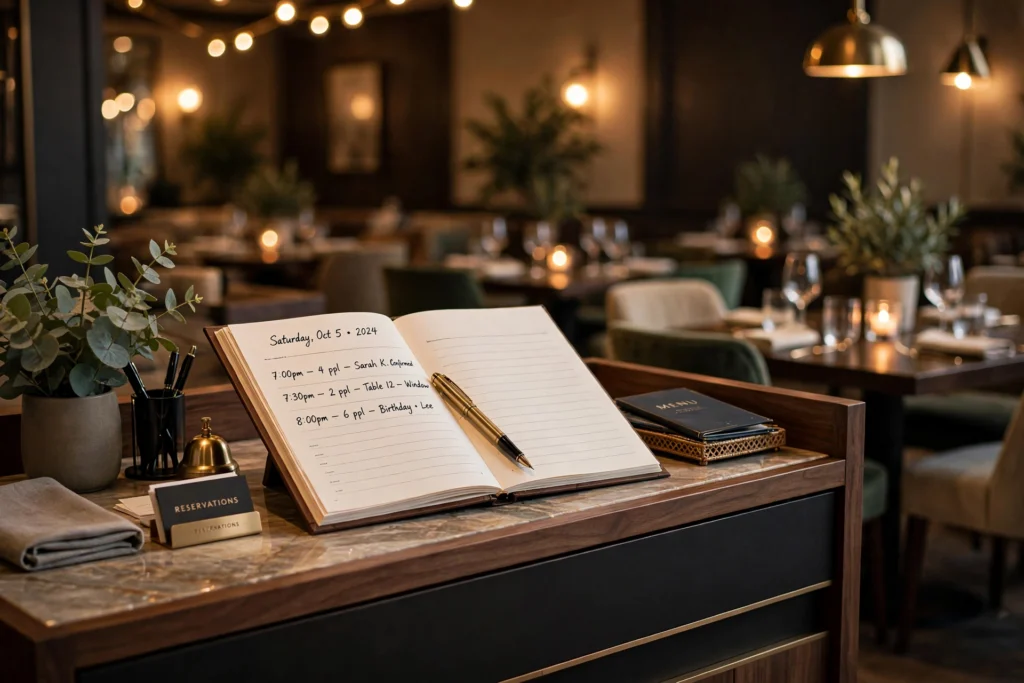
Restaurant Week compresses months of demand into two weeks, and the booking dynamics reward the prepared. The single most important tactic is timing: reservations for the most popular restaurants often open the moment the participant list is announced, and prime-time weekend slots can disappear within days. Mark the announcement date, have your shortlist ready, and book immediately — you can always cancel a reservation you don’t need, but you can’t conjure one that’s gone. For the full playbook on competitive tables, see our guide to getting restaurant reservations.
Be strategic about when you dine. Tuesday through Thursday evenings offer the best combination of availability and experience: the kitchen is in rhythm, the dining room isn’t chaotic, and you’ll actually get your server’s attention. Friday and Saturday nights during Restaurant Week can feel like a banquet service — rushed courses, packed rooms, and the sense that you’re on a conveyor belt. If you must do a weekend, book the earliest or latest seating; the middle slots bear the brunt of the rush. Lunch, as noted, is the value play and the availability play in one.
Use the booking platforms’ full toolkit. Set alerts on Resy or OpenTable for your target restaurants so you’re notified of cancellations — prime slots free up constantly as people’s plans change, especially 24–48 hours before. Check back mid-week during the event itself; restaurants sometimes release additional tables once they gauge demand. And don’t overlook the phone: for restaurants that hold tables back from online platforms, a polite call asking about Restaurant Week availability can uncover slots the apps don’t show. When booking, note “Restaurant Week” in the reservation if there’s a field for it — some restaurants seat prix-fixe diners in specific sections, and flagging it avoids confusion at the host stand.
Finally, respect the cancellation policy. Restaurants plan food orders and staffing around Restaurant Week reservations, and no-shows during the event are especially costly. Most platforms now enforce cancellation fees for prime-time no-shows. If your plans change, release the table early — another diner will happily take it, and you’ll keep your booking privileges intact for the next event.
Pitfalls to Watch: Limited Menus, Upsells, and Tipping
For all its value, Restaurant Week has well-known traps — none of them deal-breakers, but all worth knowing before you sit down.
Limited menus cut both ways. The fixed menu is a curated subset, which means the dish you came craving might not be on it. Always read the actual Restaurant Week menu before booking, not just the restaurant’s name — a disappointing menu at a great restaurant is still a disappointing dinner. Some restaurants also run a leaner kitchen during the event, so execution on the prix-fixe menu occasionally trails their à la carte standards at peak rush. The defense is timing (weeknights over weekends) and research (local media roundups flag the menus worth your time).
The upsell architecture is real. The base price is the headline, but restaurants make their margin on everything around it: supplements on premium dishes, beverage pairings, bottled water, coffee, and the dessert course you might have skipped à la carte. None of this is dishonest — it’s the business model — but it means your “$45 lunch” can become $80 per person without a single surprising line item. Set a mental budget before you arrive, decide your supplement policy in advance, and remember that sparkling water and an extra cocktail are choices, not requirements.
Tip on the full value, not the deal price. This is the etiquette point that matters most. Your server works just as hard during Restaurant Week — often harder, given the volume — and standard practice is to tip 18–22% on what the meal would have cost at full à la carte prices, not on the discounted fixed price. Some restaurants print a suggested gratuity based on full value right on the Restaurant Week menu; when they don’t, do the quick math yourself from the regular menu. Undertipping on a deal menu is the fastest way to be remembered for the wrong reasons, and generous tipping during the event is genuinely noticed — it’s how regulars are born.
Watch for the “Restaurant Week only” fine print. A few practical checks: confirm whether the prix-fixe menu is available at all seatings or only certain times (some restaurants exclude Friday/Saturday or offer it only in the main dining room, not the bar). Ask about substitutions for dietary restrictions before you book — fixed menus are less flexible than à la carte, though most kitchens accommodate with notice. And note that loyalty points or certain credit-card dining credits sometimes exclude prix-fixe menus; check the terms if you’re counting on them.
Your Seasonal Restaurant Week Calendar
One of the best ways to think about Restaurant Week is as a twice-yearly season — like fashion weeks for people who’d rather eat. Here’s how to play the full year.
Fall (October–December): Reconnaissance. This is research season. Follow your city’s tourism bureau and food media, note which restaurants impressed you this year, and start a running shortlist for January. Many restaurants also debut fall menus now, which hints at what their winter Restaurant Week offerings will look like. If your city announces winter dates in the fall — many do — this is when you set the calendar alert.
Winter (January–February): The main event. Book early, prioritize the bucket-list rooms, and lean into the hearty winter menus. This is the edition with the most participants and the most competition, so deploy the full reservation playbook: alerts, weeknight slots, phone calls for held-back tables. Plan two to four visits if you can, mixing a splurge dinner with a value lunch.
Spring (March–June): The follow-up. Revisit your favorites at full price — this is when the Restaurant Week bargain pays its real dividend, and restaurants notice who came back. Spring is also when summer edition dates typically get announced, so keep an eye out and start a fresh shortlist.
Summer (July–September): The relaxed round. Lighter menus, easier reservations, patio season. Use the summer edition for discovery — newer spots, cuisines you haven’t tried, the restaurant that was fully booked in January. The competition is gentler and the produce is at its peak, which makes this the connoisseur’s edition even if it gets less hype.
Treat the two editions as a portfolio: winter for the greatest hits, summer for exploration. Over a year or two, you’ll build a personal map of your city’s dining scene that no single full-price splurge could buy — all at a fraction of the cost.
Frequently Asked Questions
What is Restaurant Week, exactly?
Restaurant Week is a limited-time dining event — typically one to two weeks — during which participating restaurants offer special multi-course prix-fixe menus at fixed, discounted prices. A standard format is three courses (appetizer, entrée, dessert) with a few choices per course, priced well below the à la carte equivalent — often 30–40% less. You don’t need coupons or memberships; you just book a table during the event dates and order from the special menu. Most major US cities run editions in winter (January/February) and summer (July–September), organized by tourism bureaus. It’s designed as a discovery event: restaurants showcase their best cooking to new diners at an accessible price, hoping to win regulars.
How much does Restaurant Week cost?
Pricing is set by each city’s organizer and standardized across participating restaurants in tiers. Typical ranges are $25–$35 for a three-course lunch and $45–$65 for a three-course dinner in most major markets, though New York and other top-tier cities can run higher, and smaller cities lower. That’s the base price before tax, tip, beverages, and any supplements for premium dishes (like lobster or wagyu, often $10–$25 extra). A realistic all-in budget is roughly double the menu price per person once you add a drink, tax, and a proper tip on the full value. Check your city’s official event page for the exact tiers — they’re published with the participant list.
Do I need reservations for Restaurant Week?
Yes — reservations are strongly recommended and effectively required at popular restaurants. The most coveted spots can book out prime-time slots within days of the announcement, and walk-in availability during the event is unreliable. Book as soon as the participant list and booking window open, favor Tuesday–Thursday evenings for the best experience, and set alerts on booking platforms for cancellations at your top choices. When reserving, mention Restaurant Week if the platform allows it, and always confirm the prix-fixe menu is available at your chosen time — some restaurants restrict it to certain seatings or exclude weekends.
Is Restaurant Week actually a good deal?
Usually yes, but value varies enormously by restaurant — which is why menu math matters. Compare the Restaurant Week menu against the regular à la carte menu: if your three courses would cost $95 normally and the fixed price is $60, that’s a genuine deal; if they’d cost $62, you’re paying for the occasion. Lunch menus tend to offer the deepest discounts, and fine-dining rooms generally deliver better value than casual spots. Watch for supplements that erode the savings, and remember beverages, tax, and tip are extra. Pick restaurants where the math clearly favors you, and treat the event as subsidized discovery of places you’ll return to.
Can restaurants accommodate dietary restrictions during Restaurant Week?
Most can, but fixed menus are less flexible than à la carte, so advance notice is essential. Call the restaurant before booking to ask whether the Restaurant Week menu can be adapted for your restriction — vegetarian and gluten-free swaps are commonly available with notice, while severe allergies need a direct conversation with the kitchen about preparation and cross-contact. Read the published menu first: some are naturally adaptable (Mediterranean, modern American), while others are rigid. Don’t wait until you’re seated to raise a serious restriction; the kitchen plans prix-fixe prep around expected covers, and last-minute changes during a slammed service are where mistakes happen.
How much should I tip during Restaurant Week?
Tip 18–22% on the full à la carte value of your meal, not on the discounted fixed price. Your server’s workload during Restaurant Week is the same — often heavier, given the volume — and the discount is the restaurant’s marketing investment, not a reduction in service. Estimate the regular-menu value of the courses you ordered (most restaurant menus are online) and calculate the tip from that. Some restaurants print a suggested gratuity based on full value directly on the Restaurant Week menu, which makes it easy. Generous, correct tipping during the event is also simply good strategy: it’s how you get remembered fondly when you return at full price.
What happens if I need to cancel a Restaurant Week reservation?
Cancel as early as possible through the same platform you booked on — restaurants plan food purchasing and staffing around Restaurant Week covers, so late cancellations and no-shows are especially costly during the event. Many booking platforms enforce cancellation fees for prime-time no-shows, and some restaurants require credit-card holds for event reservations with per-person no-show charges. Releasing your table even 24 hours ahead usually lets another diner take it and keeps your booking account in good standing. If you’re waitlisted at a popular spot, cancellations are your opportunity — check back frequently, especially the day before, when plans firm up and tables free.
Conclusion
So, what is Restaurant Week at its core? It’s the restaurant industry’s open house: a couple of weeks a year when great kitchens lower the velvet rope and invite everyone in at a price that makes experimentation easy. Done right — with the menu math checked, reservations booked early, weeknight tables favored, supplements chosen deliberately, and tips calculated on the full value — it’s the highest-ROI dining of the year, a chance to eat at the rooms you’ve been saving for a special occasion and discover the ones you’ll love next. Mark both editions on your calendar, build your shortlist before the announcement drops, and treat each visit as an audition for a future favorite. And when Restaurant Week ends, our guide to eating out on a budget keeps the savings going all year. The deals end when the week does, but the shortlist of restaurants you carry out of it lasts all year.