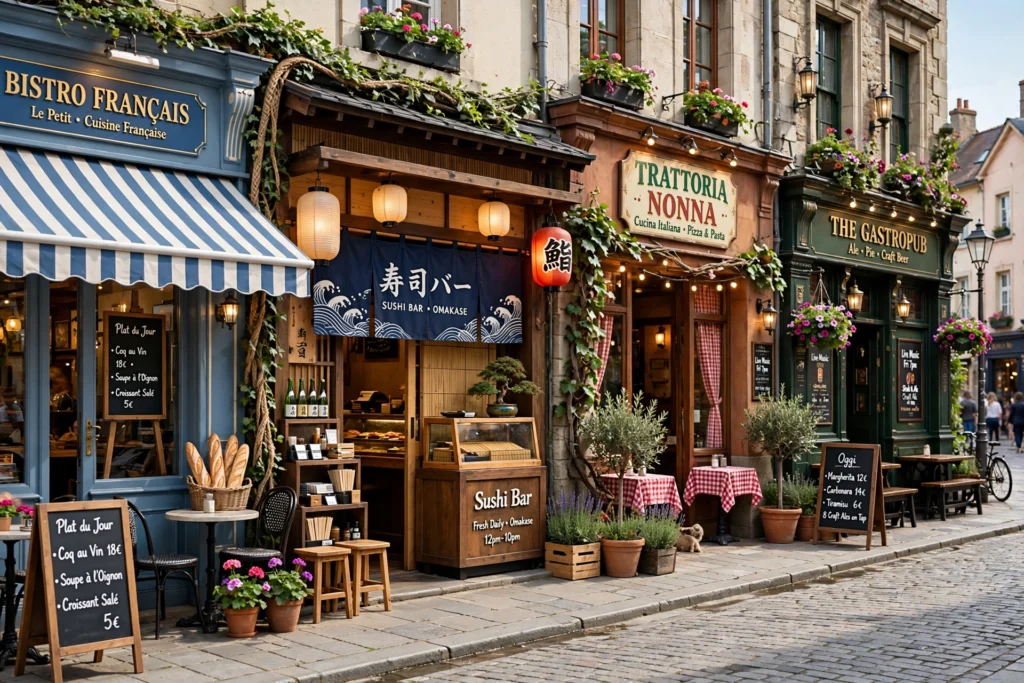
The table for one. For many people, those words trigger a full-body cringe — imagined pity from neighboring tables, the awkwardness of asking for a single seat, the empty minutes staring at the bread basket. If you’ve ever walked past a restaurant you wanted to try and kept walking for lack of company, you know the feeling. But confident solo diners know a truth worth hearing: learning how to eat alone at a restaurant is one of the most quietly liberating adult skills. It hands back every meal you skipped, every cuisine you postponed, every dinner you deserved but didn’t take.
And you’d be in excellent company. Solo dining is one of the fastest-growing trends in American restaurants — single-cover reservations keep rising, and restaurants have responded with more counter seating, more bar tables for one, and hosts trained to welcome solo guests like any valued customer. The stigma is dissolving, replaced by a healthier recognition: a meal can be an experience you give yourself, not just a social event you attend.
This guide is your warm, practical companion for the whole journey — from the mindset reframes that make the first step easy, to choosing the right restaurant, to the small tactical decisions (bar or table? book or phone? appetizer and dessert?) that separate an awkward evening from a genuinely lovely one. We’ll cover what to bring, how to order with confidence, safety considerations especially for women dining alone, and how to turn the occasional solo meal into a ritual you’ll actually look forward to. By the end, “table for one” won’t sound like an apology. It’ll sound like a plan.
Reframing the Mindset: Nobody Is Watching (and If They Are, They’re Jealous)
The belief that stops most people: eating alone is a public display of loneliness. It feels true because of the spotlight effect — our tendency to wildly overestimate how much attention others pay us. In reality, fellow diners are deep in their own evenings, the server has twelve other things to think about, and the host has already forgotten your party size.
When did you last notice a solo diner and think something negative? When people notice at all, it’s closer to admiration — there’s someone comfortable enough to take themselves out for ramen on a Tuesday. That person isn’t pitied; they’re quietly envied.
A few reframes that genuinely help:
You’re not “eating alone.” You’re dining solo. “Alone” sounds like something went wrong; “solo” sounds like a choice — because it is. Solo travel and solo concerts made the same journey from sad to aspirational. Solo dining is next.
The restaurant wants you there. A single diner is a paying customer at a small table with fast turnover — efficient, low-drama, high-margin. Any decent establishment treats you like a table of four. If one doesn’t, that’s information about the restaurant, not you.
Discomfort is a first-time tax, not a permanent condition. The universal arc: the first meal feels strange, the second feels fine, and by the third you’re annoyed you waited. The awkwardness is unfamiliarity wearing a costume, not a verdict.
You already eat alone constantly. Breakfast at the counter, lunch at the desk, takeout on the couch — you dine solo weekly without a thought. The restaurant version differs only in location. You’re relocating a behavior you own, not learning a new one.
Choosing the Right Restaurant for Your First Solo Meals
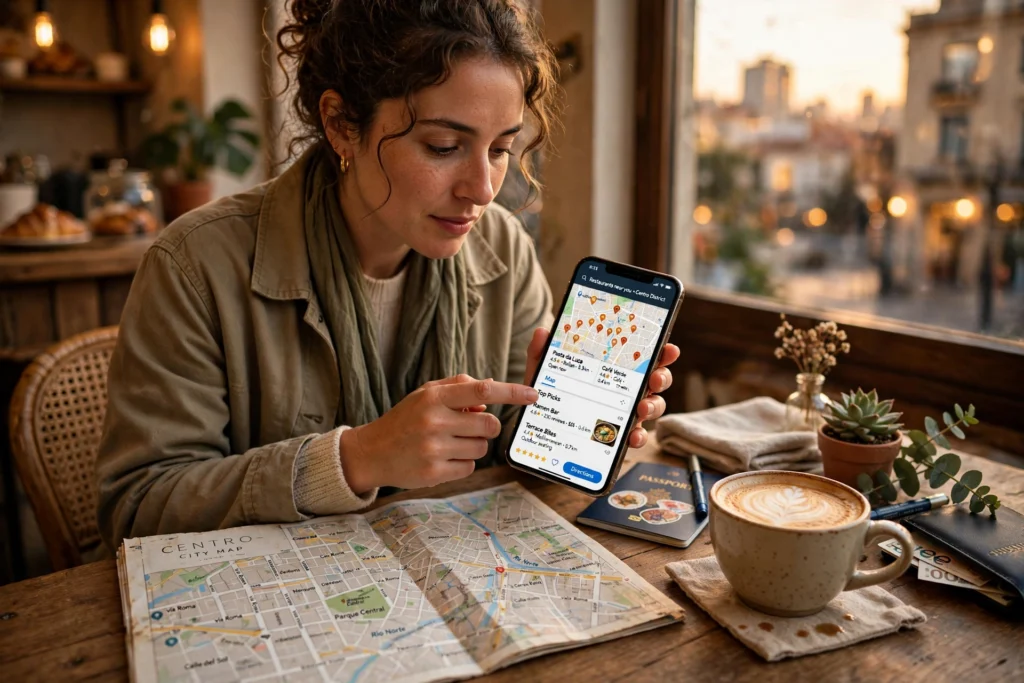
Not every restaurant is equally welcoming to the first-time solo diner, and there’s no virtue in making your debut at the hardest possible venue. Choosing well is a kindness to yourself — think of it as picking the right trail for your first hike. Our guide on how to find good restaurants covers the full research system for picking winners.
Start with places built for one. Ramen shops, sushi counters, noodle bars, taquerias, and oyster bars are solo-dining naturals — counter seating erases the “person alone at a table” visual and turns the kitchen into dinner theater.
Match the meal to your confidence level. Lunch is the gentlest entry — faster, cheaper, and full of fellow solo diners on work breaks. Save the Saturday-night tasting menu for after a few solo meals under your belt.
Read the room before you book. Photos reveal solo-friendliness: abundant two-tops and counter seats signal welcome; nothing but six-tops suggests afterthought. Search reviews for “great for solo dining” — those mentions are gold.
Consider the cuisine’s solo logic. Sushi, ramen, tapas, dim sum — foods where you order exactly what you want — shine solo. Save family-style feasts for group nights.
Your neighborhood regular spot is a secret weapon. Becoming a known solo regular — the bartender knows your order, the host waves you to your corner — turns dining alone from event into habit.
Where to Sit: The Bar vs. Table Decision
Where you sit shapes the entire experience of eating alone at a restaurant, and the good news is that both main options are excellent — they just serve different moods.
The Bar or Counter: The Solo Diner’s Home Turf
For most solo meals, the bar is the best seat in the house: you face the room’s action rather than an empty chair, bartender conversation is available but never obligatory, and nobody registers a solo diner at a bar as unusual. Bars are designed for unaccompanied guests.
Practical perks: fastest service (the bartender is steps away), free entertainment watching drinks built and food fired, and sometimes a bar-only menu. Tell the host “bar’s perfect” with confidence — it’s the most normal request they hear all night.
Open-kitchen counters deserve special mention: watching chefs work inches away turns dinner into a show and often earns extras — a taste of something new, a chat with the line cooks.
A Table for One: When You Want the Full Experience
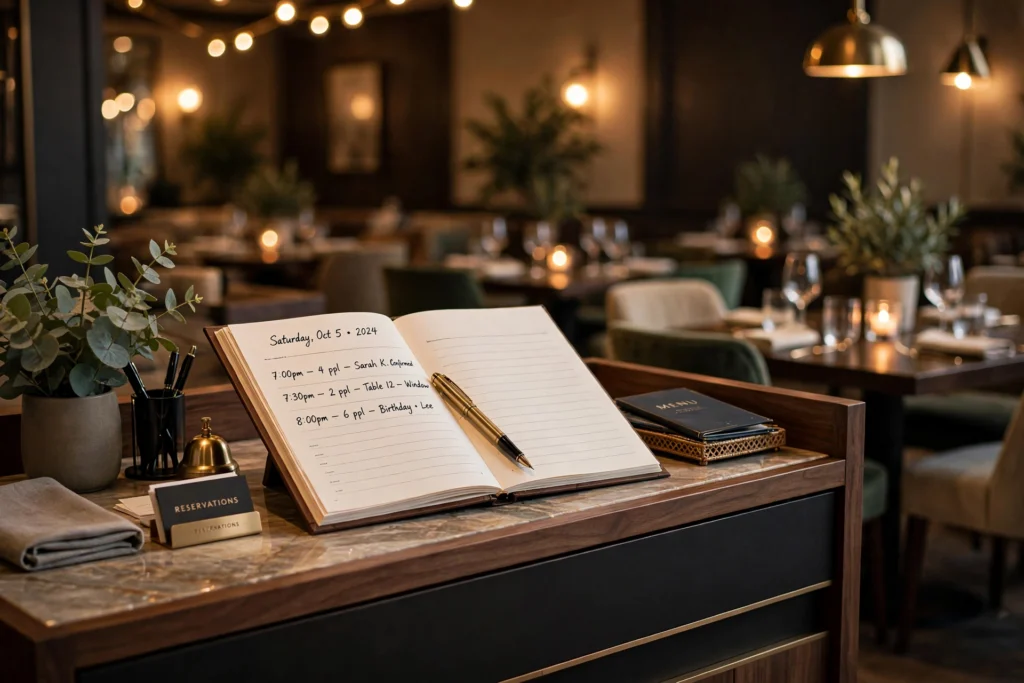
Sometimes you want the white tablecloth, the paced courses, the full ceremony — solo. Take the table; hosts seat parties of one dozens of times a week. Book for one honestly (booking for two “just in case” messes with planning), and ask for a corner or a room-view seat over mid-floor.
The empty chair isn’t evidence of absence. With a book it’s a reading nook; with a journal, a thinking room. It’s simply the best seat in the house — yours.
Seats to Avoid (or at Least Think Twice About)
Skip the dead-center table in a romantic dining room on Valentine’s weekend, and weigh the communal table by mood — ambient company or draining, depending on the night. If a host parks you at a wobbly two-top by the kitchen door, politely ask for better. Solo diners deserve good tables too.
What to Bring: Your Solo Dining Toolkit
One of the quiet anxieties about how to eat alone at a restaurant is the empty time — the minutes before your food arrives, the pauses between courses. Experienced solo diners don’t white-knuckle through these gaps; they fill them deliberately. Think of it as packing for a pleasant two-hour appointment with yourself.
A book or e-reader. The classic companion: a physical book signals contentment; an e-reader does it discreetly. Choose something absorbing but interruptible — a novel beats dense nonfiction when the server arrives mid-paragraph.
Your phone — with etiquette. Most solo diners use their phones; nothing wrong with it. Scrolling with a glass of wine and relaxed expression reads as leisure; hunching with a furrowed brow reads as hiding. Keep brightness reasonable, use earbuds, take calls outside, and try phone-free stretches — appetizer arrival to first bite — so the meal stays yours.
Work you actually enjoy. A solo laptop lunch suits cafés and casual spots; a fine-dining room does not. When in doubt, the bar is more laptop-tolerant than a table.
Nothing at all. The advanced move: sitting with your own thoughts, watching the room, tasting deliberately — almost meditative. You don’t have to earn the meal with productivity.
Ordering Like You Own the Table (Because You Do)
Here’s a secret advantage of dining solo that nobody mentions: you are the easiest customer a server will have all night. No splitting bills, no dietary-negotiation diplomacy, no “we’ll share everything” logistics. Ordering for one is ordering at its purest — everything on the table is exactly what you wanted.
Order what you actually want. Group dining trains compromise — skipping the adventurous dish because someone wrinkled their nose. Solo, the negotiation is over. Get the bone marrow. Get dessert and the cheese course. This is the entire point.
Don’t shrink your order out of self-consciousness. The first-timer mistake: ordering as little as possible to minimize table time. Resist it — lingering is not loitering, it’s dining. Order the full arc of the meal you want.
Talk to your server. Mention it’s your first time with the cuisine, or ask what they’d order. Engaged solo diners get the best service in the building — servers remember the friendly table for one and reward it with tastes and genuine recommendations.
The tasting menu question. Do it solo if budget allows — tasting menus are arguably better alone: no pacing mismatches, no course envy, total attention per plate. Many top restaurants explicitly welcome solo tasting-menu diners.
Drinks without awkwardness. Wine programs increasingly cater to solo diners — by-the-glass lists, half-bottles, and flights exist precisely for this. A flight of three small pours is the solo diner’s power move: variety, ceremony, no waste.
Handling the Awkward Moments (They’re Smaller Than You Think)
Even confident solo diners hit small frictions. Having a plan for each one keeps them small.
“Just one?” from the host. Smile: “Just one — the bar would be great.” Warm, unapologetic, done. A flustered host is their training gap, not your problem.
The long wait for food. This is what the book is for — plus people-watching, savoring the bread course like it matters (it does), noticing the room’s details. Boredom at a solo meal is usually under-attention in disguise.
Needing the restroom. Ask your server to watch your table; take valuables with you and leave the book as your placeholder. Nobody clears a table in ninety seconds.
The check. Catch your server’s eye or give a small wave — no need to perform urgency. Tip on the full experience, generously when service was good; you’re occupying a seat that could have held a larger party.
Feeling eyes on you. They’re almost certainly not watching — but if the feeling persists, reposition to face the window, kitchen, or bar mirror so your sightline has somewhere to rest.
Safety Tips for Dining Solo (Especially for Women)
Most solo dining is completely safe, but dining alone — particularly as a woman, particularly at night — deserves the same clear-eyed preparation as any solo outing. These habits are what let you relax fully.
Choose well-lit, well-staffed restaurants. For evening meals, favor established spots with visible staff and steady customer flow — a busy room is a safe room. Save the empty, out-of-the-way spot for lunch.
Sit where staff can see you. The bar or a main-dining-room table are naturally supervised. Avoid isolated patios or tables out of sightlines at night.
Watch your drink. Keep it in sight, don’t accept drinks you didn’t see poured, and take your glass or finish it before stepping away.
Manage your alcohol intentionally. Decide in advance — two glasses, say — and let the meal’s pacing do the rest. Have your ride home arranged before the second pour, not after the third.
Keep your exit easy. Sit near the room’s flow, keep your phone charged and payment accessible, and have your ride plan set before you sit down.
Trust the staff. Restaurant teams are overwhelmingly protective of solo guests. If another patron makes you uncomfortable, tell your server or host immediately — handling this is literally their job. You can ask to be moved, no explanation needed.
Share your plans. Text a friend the restaurant name and expected timing — the two-second habit buys complete peace of mind.
Same toolkit as a solo movie or a walk in a new neighborhood — preparation is what makes the evening feel carefree.
Turning Solo Meals Into a Ritual You’ll Actually Crave
The difference between “I guess I’ll eat alone” and “I can’t wait for my solo dinner” is ritual — the small, repeated pleasures that turn an activity into a tradition. Here’s how solo diners who love it describe their practice:
Claim a recurring slot. The monthly solo dinner, the Friday lunch escape, the birthday meal you take yourself on — calendaring transforms fallback into fixture.
Build a rotation. Three or four trusted spots means no decision fatigue, and regulars get the warmest version of every restaurant. Being known is the antidote to feeling anonymous.
Add one ceremonial element. The appetizer you always order first, the journal entry before the entrée, the walk afterward. Rituals need to be yours, repeated until they feel like home.
Document it lightly. A photo per meal, a one-line note on the best bite, a running list of conquered restaurants — small records turn isolated evenings into a collection you’re proud of.
Invite yourself to the good stuff. Stop saving “nice” restaurants for other people. The tasting menu, the chef’s counter, the three-month waitlist — more rewarding solo, not less. Your company is occasion enough.
The Solo Dining Trend: You’re Part of Something Bigger
You’re riding a wave: solo dining has grown steadily for years, driven by remote work (the solo lunch is the new power lunch), smaller households, and the normalization of self-care spending.
The industry has adapted: more counter and bar seating, frictionless booking for one, and chefs who openly love solo diners — they order adventurously and actually taste the food.
Like solo travel a decade ago, what looked like loneliness has been re-identified as independence — and every solo meal makes it easier for the next person hovering outside the door.
Frequently Asked Questions
Is it weird to eat alone at a restaurant?
No — the feeling comes from the spotlight effect, not reality. Other diners focus on their own evenings, servers treat solo guests like anyone else, and restaurants increasingly design for one-top dining. The first meal might feel strange, but the arc is universal: awkward once, fine twice, genuinely enjoyable from the third time on.
Where should I sit when dining alone at a restaurant?
The bar or counter is the best default: you’re part of the room’s energy and nobody registers a solo diner at a bar as unusual. Open-kitchen counters add dinner theater. Take a table for the full formal experience — book for one honestly, ask for a corner over mid-floor. Avoid dead-center romantic tables on big date nights and isolated back areas at night.
What should I do while waiting for my food alone?
Bring a book, e-reader, or journal — classics that transform waiting into chosen time. Your phone is fine with relaxed intention: reasonable brightness, earbuds, calls outside. Or bring nothing — watching the room and tasting deliberately is the advanced move. The bread course, the playlist, neighboring plates: a solo meal is full of small entertainments once you notice them.
How do I order confidently when eating by myself?
Order exactly what you want — the whole privilege of the solo table. Don’t shrink your order from self-consciousness; let the evening take its natural shape. Talk to your server about recommendations — engaged solo diners get the best service in the room. Try a wine flight over a full bottle, and don’t shy away from tasting menus: no pacing compromises, no course envy.
Is it safe for a woman to eat alone at a restaurant?
Yes, with the same precautions as any solo outing. Choose well-lit, well-staffed restaurants; sit where staff can see you; keep your drink in sight and manage alcohol intentionally. Keep your exit easy, phone charged, ride arranged. Staff are overwhelmingly protective of solo guests — report bother immediately and ask to be moved. Text a friend your plans. These habits make the evening feel fully relaxed.
Should I tip differently when dining alone?
Tip the usual 18–20% for good service, more when exceptional. Solo diners occupy a seat that could have held a larger party, so generous tipping acknowledges your server’s care and keeps you welcome back. There’s no “solo discount” on gratitude — tipping well earns remembered orders and better tables.
What are the best types of restaurants for solo dining?
Counter-seating spots are the gold standard: ramen shops, sushi counters, noodle bars, oyster bars, open kitchens. Wine bars, bistros, and cafés with good bar seating are equally welcoming. Favor personal-portion cuisines — sushi, ramen, tapas, dim sum — over family-style feasts. Lunch and brunch are the gentlest entries, and your neighborhood regular spot dissolves self-consciousness fastest.
How can I stop feeling self-conscious eating alone?
The spotlight effect means you’re vastly overestimating how much anyone notices — and when they do, it’s usually admiration, not pity. Make early outings easy: lunch over Saturday dinner, counter over center table, a familiar restaurant. Bring a book so your hands have a home. Reframe the language: you’re dining solo, a deliberate choice. Self-consciousness is a first-time tax.
Conclusion
Learning how to eat alone at a restaurant is really about refusing to postpone your enjoyment until the guest list fills up. Every cuisine, every room, every slow evening you deserve: available to a party of one, right now. Start easy — a lunch counter, a familiar spot, a book in your bag. Order what you want, tip like a regular, sit where the light is good, and watch “table for one” stop sounding like an apology and start sounding like what it is: a plan.