Every diner has a story about the meal they wish they’d walked away from — the suspiciously empty dining room they ignored, the sticky menu they should have taken as a sign, the “fresh fish” that tasted like it had given up days ago. Professional chefs and restaurant insiders have these stories too, except theirs come with a trained eye: they can read a restaurant’s health the way a mechanic reads an engine, spotting restaurant red flags in the first ninety seconds. The good news is that you don’t need culinary school to learn their tricks. The warning signs of a bad restaurant experience are remarkably consistent — empty tables at peak hours, menus that try to do everything, bathrooms that tell the truth the dining room hides — and once you know what to look for, you’ll never unsee them.
This isn’t about being a snob or demanding perfection. Great neighborhood joints can have wobbly tables and still serve transcendent food. These red flags are about the patterns that reliably predict a bad meal, bad service, or in a few cases, a genuine food-safety risk. For each flag, you’ll get the sign itself, why it actually matters (straight from chef and industry insider logic), and what to do instead — because the goal isn’t to ruin your appetite, it’s to redirect it toward the restaurant down the street that’s doing things right.
How to Use This List: Trust Patterns, Not Single Data Points
Before we dive in, one important framing note from the pros: a single red flag is a data point; three are a verdict. A beloved family-run spot might have a big menu and be empty at 5:30 PM for perfectly innocent reasons (it’s early, and grandma’s recipes genuinely span three cuisines). The power of this list is in pattern recognition. When the dining room is empty at 7:30 on a Friday and the menu has 80 items and the bathroom is grimy, you’re not looking at bad luck — you’re looking at a restaurant telling you exactly who it is. Walk out politely, eat elsewhere, and thank yourself later.
The Dining Room Tells
1. Empty at Peak Hours
The sign: It’s 7 or 8 PM on a Friday or Saturday night — prime time — and the dining room is a ghost town, or nearly so.
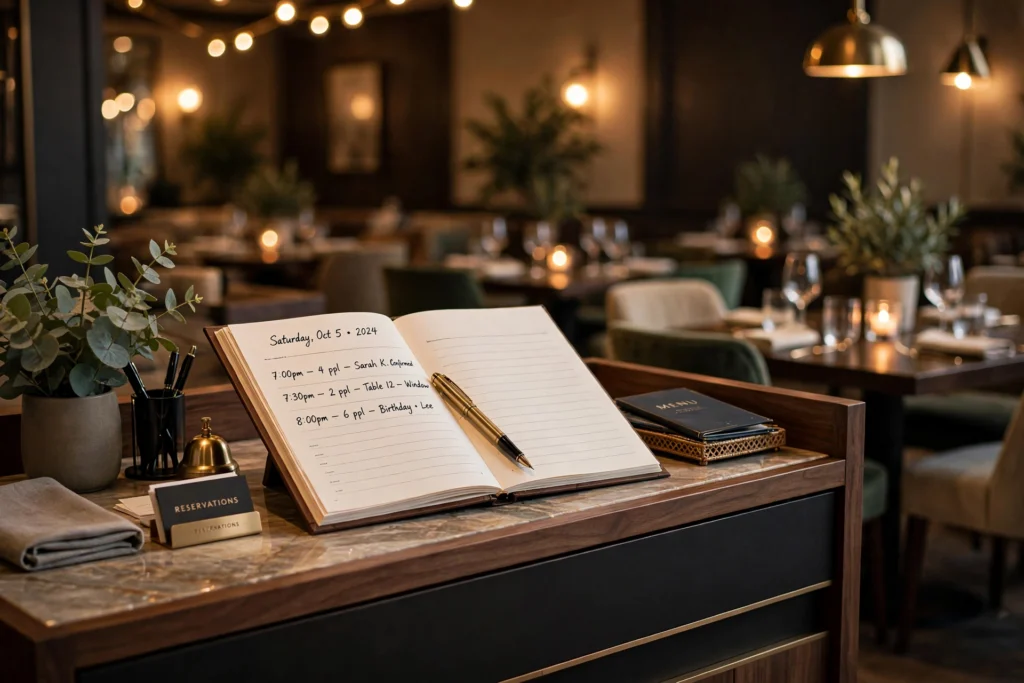
Why it matters: Restaurants live on weekend dinner traffic. If locals, who have every opportunity to know better, are choosing to eat anywhere else on the busiest night of the week, they’re telling you something with their absence. Chefs put it bluntly: an empty restaurant at peak hours usually means the food, the value, or the experience has failed the market test repeatedly. There are exceptions — brand-new openings still building word of mouth, or spots in genuinely odd locations — but a restaurant that’s been open for months and can’t fill seats on a Saturday is waving the biggest red flag there is.
What to do instead: Peek through the window before committing. If it’s dead at peak hours, keep walking to the place next door with the wait — a short wait at a busy restaurant beats immediate seating at an empty one almost every time.
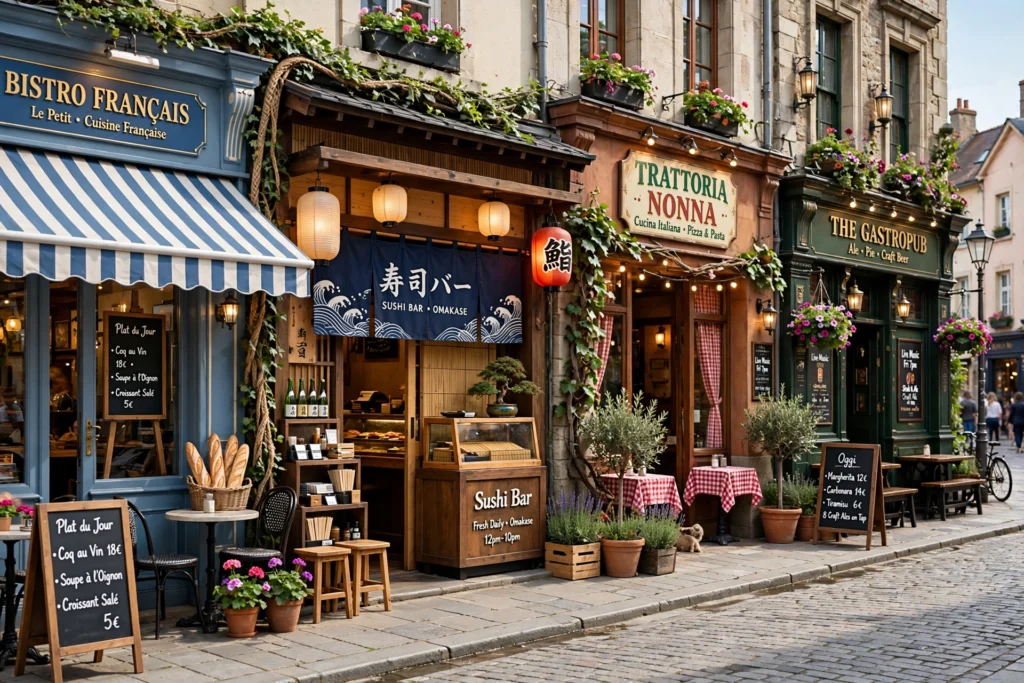
2. The Menu Is a Novel (Huge, Unfocused, and Trying to Do Everything)
The sign: The menu runs to six laminated pages spanning sushi, pasta, burgers, tacos, pad thai, and “authentic” dishes from four continents.
Why it matters: This is the red flag chefs cite most often, and the logic is simple inventory math: no kitchen can keep fresh ingredients on hand for 80+ disparate dishes. A massive, unfocused menu almost guarantees heavy reliance on frozen, pre-made, and reheated components, because that’s the only way the economics work. Great restaurants edit ruthlessly — a tight menu means the kitchen buys fresh, cooks to order, and actually masters what it serves. When a menu tries to be everything, it’s usually good at nothing.
What to do instead: Favor restaurants with focused menus — one cuisine, done with confidence. If you’re already seated somewhere with a phone-book menu, order the simplest thing on it (grilled proteins and straightforward preparations are hardest to fake) or pivot to drinks and appetizers.
3. No Specials, Ever
The sign: There’s no specials board, no seasonal insert, no “ask your server” — the menu is identical every visit, month after month.
Why it matters: Specials are how good kitchens show they’re alive: buying what’s fresh at the market, testing new dishes, letting cooks flex creativity. A restaurant with zero specials is often running a static, cost-optimized program — the same frozen-to-fryer pipeline, day after day. It can also signal a disengaged kitchen team just going through the motions. The absence of specials doesn’t prove bad food, but their presence is one of the most reliable green flags in dining.
What to do instead: Ask your server “is there anything off-menu or seasonal tonight?” anyway — sometimes specials exist but aren’t advertised. If the answer is a flat no and the menu looks photocopied from 2019, calibrate your expectations (and your order) accordingly.
4. Sticky Menus, Wobbly Tables, and Visible Neglect
The sign: The menu is tacky to the touch, your table rocks on uneven legs, the light fixture above you is out, and nobody seems to notice or care.
Why it matters: Chefs read front-of-house maintenance as a proxy for back-of-house standards. The reasoning: if management can’t be bothered to wipe down menus or fix a wobbling table — the things customers can see — what corners are being cut in the kitchen where customers can’t see? It’s not about luxury finishes; plenty of beloved dives have mismatched furniture. It’s about care. A sticky menu is a small, telling confession that details aren’t being managed.
What to do instead: Run the “visible care” test in the first two minutes: clean menus, stable tables, working lights, tidy host stand. Minor wear is fine and often charming; active neglect is not.
The Food Tells
5. The Bread Basket Test (Stale, Cold, or Suspiciously Perfect)
The sign: The complimentary bread arrives stale, refrigerator-cold, or — the subtler tell — as suspiciously uniform, pillowy-soft rolls that taste like they came from a freezer bag.
Why it matters: Bread is the kitchen’s handshake. Restaurants that care serve bread with pride — warm, fresh, maybe baked in-house or sourced from a real bakery. Stale or ice-cold bread suggests it was put out hours ago or stored improperly, and the freezer-bag uniformity suggests a kitchen cutting corners on the very first thing you taste.
What to do instead: If the bread is bad, treat it as an early warning and order conservatively — simple grilled or roasted dishes rather than the ambitious specials. If the bread is excellent, relax: you’re probably in good hands.
6. The “Fresh Fish” on a Monday Problem
The sign: It’s Monday, and the menu proudly features an extensive fresh seafood selection — or the server pushes the fish special hard on a day when fish deliveries don’t run.
Why it matters: Most restaurants receive fish deliveries Tuesday through Saturday; Monday fish is often Friday’s fish, held over the weekend. This is the classic insider test of menu honesty. A restaurant pushing “fresh catch” on a day it couldn’t possibly have received a delivery is either misleading you or serving week-old product — neither inspires confidence. The broader lesson: be skeptical of perishable specials that don’t match the rhythm of supply.
What to do instead: On Mondays (and at landlocked restaurants generally), order from the menu’s strengths — meats, pastas, vegetarian dishes — rather than the seafood. Or ask directly: “when did the fish come in?” An honest answer is a green flag; a dodgy one tells you everything.
7. Everything Arrives Suspiciously Fast
The sign: You order a well-done steak, a complex pasta, and a soufflé-adjacent dessert, and all of it lands within ten minutes.
Why it matters: Real cooking takes real time. A steak needs resting, pasta needs boiling to order, and anything baked needs an oven cycle. When complex dishes arrive at fast-food speed, they were almost certainly reheated, not cooked — microwaved or held under heat lamps. One fast dish is fine (salads and soups should be quick); an entire table of “cooked” food arriving simultaneously and instantly is the tell of a reheat operation.
What to do instead: A 15–25 minute wait for mains at a sit-down restaurant is normal and healthy — it means someone is actually cooking. If speed seems impossible, it’s because it is.
8. The Smell Test: What Hits You at the Door
The sign: You walk in and the first thing you smell is stale grease, a sour mop-bucket funk, or an overwhelming blast of artificial air freshener.
Why it matters: A restaurant should smell like food — ideally the specific food it cooks. Stale grease suggests fryers and ventilation that aren’t maintained; sour or musty smells suggest cleaning failures; and heavy air freshener is often deployed to mask something worse. Chefs trust their noses above almost everything: the smell of a place is the unfiltered truth about its hygiene and ventilation, and unlike the dining room, it can’t be staged for your arrival.
What to do instead: Trust your nose immediately, before you’re seated and invested. If the smell is wrong at the door, it won’t be right at the table — excuse yourself and leave before ordering.
The Service Tells
9. Pushy Upselling From the Moment You Sit Down
The sign: Before you’ve opened the menu, the server is pushing the most expensive appetizer, the premium cocktail list, the “amazing” specials that happen to be the priciest items, and a bottle of wine.
Why it matters: There’s a line between good service (genuine recommendations) and a sales operation. Aggressive upselling usually signals management pressure — servers incentivized or required to push high-margin items rather than guide you to what you’ll enjoy. It correlates with kitchens and dining rooms run for extraction rather than hospitality. The subtler version: specials described only in glowing adjectives with no prices mentioned, a classic tactic to get you to order blind.
What to do instead: Ask prices directly — “and what does that run?” is a perfectly normal question that honest servers answer cheerfully. If upselling pressure continues, order what you actually want and don’t be moved. Persistent pressure is itself a reason to downgrade the restaurant in your mental ranking.
10. Staff Morale Is Visibly Terrible
The sign: Servers arguing within earshot, eye-rolling at requests, a host who looks miserable, visible tension between front and back of house.
Why it matters: Restaurant insiders consider staff morale the single most underrated predictor of your experience. Unhappy, stressed, or resentful staff don’t deliver good hospitality — they can’t, consistently — and high turnover (the usual companion of low morale) means the kitchen is constantly training new cooks. A dining room where the team clearly likes being there produces better food and better service through sheer engagement. You can feel a healthy restaurant’s energy within minutes; you can feel a toxic one’s just as fast.
What to do instead: Watch the staff for 60 seconds after you’re seated. Genuine warmth and teamwork is a green flag worth more than any review. Visible misery is a sign to keep your order simple, tip the server kindly anyway (it’s not their fault), and not return.
11. The Server Can’t Answer Basic Menu Questions
The sign: “What’s in the sauce?” gets a blank stare. “Which dish is the house specialty?” gets “uh, they’re all good.” Questions about ingredients, preparation, or allergens get vague deflections.
Why it matters: In a well-run restaurant, servers taste the menu and are trained on ingredients — it’s basic professionalism. A server who knows nothing about the food suggests no training program, no tasting culture, and a management team that doesn’t invest in its people. It also raises a practical concern: if the staff can’t tell you what’s in a dish, diners with allergies or dietary restrictions are taking a real risk.
What to do instead: Ask one genuine question early (“what’s the dish you’d tell a friend to order?”). An enthusiastic, specific answer is a great sign. A shrug across multiple questions means you should stick to simple, hard-to-mess-up orders.
The Hygiene Tells
12. The Bathroom Test
The sign: The restroom has no soap, the trash is overflowing, the floor is sticky, there’s no hot water, or it just looks like it hasn’t been checked in hours.
Why it matters: This is the most famous red flag in dining for a reason — Anthony Bourdain popularized it, and health inspectors privately agree. The logic is airtight: the bathroom is the one back-of-house-adjacent space customers are allowed to inspect, and restaurants know it. If management neglects the space they know you’re judging, the kitchen you can’t see is almost certainly worse. Health-code experts note that restroom maintenance correlates with overall sanitation culture: it’s the same staff, the same checklists, the same management priorities.
What to do instead: Always visit the restroom before ordering, especially at unfamiliar spots. A clean, stocked bathroom doesn’t guarantee a clean kitchen, but a filthy one is close to a guarantee of the opposite. This is the one red flag that justifies walking out on its own.
13. Dirty Tables, Floors, and Tableware
The sign: Your table wasn’t properly wiped (there’s residue from the last party), the floor under your feet is gritty, glasses are spotted, silverware has dried food on it.
Why it matters: Table turnover hygiene is the absolute baseline of restaurant operation — it’s the minimum viable cleanliness a customer can verify. Spotted glasses suggest a failing dishwasher (wrong temperature or detergent), which raises questions about everything the dishwasher touches. Dirty silverware is inexcusable because polishing flatware takes seconds and is pure visible care. When the basics fail in front of you, the invisible basics (cutting boards, refrigeration logs, handwashing) deserve zero benefit of the doubt.
What to do instead: Inspect your glass against the light and glance at your silverware when you sit down. One spotted glass can be a fluke — ask for a replacement. A pattern across the table setting is a walk-out signal.
The Reputation Tells
14. Review Patterns That Don’t Add Up
The sign: The rating is suspiciously perfect (hundreds of five-star reviews with generic praise), or there’s a sharp recent downturn — a 4.5-star place with a flood of 1-star reviews in the last two months.
Why it matters: Review fraud is a real industry: some restaurants buy fake positive reviews, and competitors occasionally plant fake negatives. The patterns to watch: generic, detail-free five-star reviews posted in clusters (bought), versus specific, detailed complaints about the same issues across many reviewers (real). A sudden rating collapse usually means something changed — new ownership, a chef departure, cost-cutting — and recent reviews describe the restaurant as it is, not as it was.
What to do instead: Read the 2- and 3-star reviews — they’re usually the most honest, written by fair-minded diners with specific complaints. Filter for “most recent” and read the last month. And cross-check across platforms: a place with 4.8 stars on one site and 3.2 on another is telling you something.
15. The Hard Sell at the Door (Hawkers, Giant “Best in Town” Banners)
The sign: Someone is standing outside actively pulling tourists in, or the signage screams “#1 RATED!!!” “BEST PIZZA IN TOWN!!!” with stock photos of food.
Why it matters: Great restaurants don’t need to hustle pedestrians — their reputation fills seats. Aggressive street hawking is the business model of tourist traps: high foot traffic, one-time customers who’ll never return, and no incentive to earn a second visit. The economics of the trap require cutting corners, because the customer can’t punish them by not coming back. Locals-eating-there is the green flag; touts-dragging-you-in is the red one.
What to do instead: In tourist areas, walk two or three blocks off the main drag — prices drop and quality rises almost immediately. Look for the restaurant full of people who clearly live nearby. That’s your spot.
The Green Flags: What Great Restaurants Do Instead
For balance — because this list is about avoidance, not cynicism — here’s what the good places do, so you can recognize them too. Great restaurants have focused menus that change with the seasons. Their dining rooms hum at peak hours with a mix of regulars and newcomers. Servers answer questions with genuine enthusiasm and can tell you what’s in the sauce. The bathroom is clean, the bread is warm, the specials board shows a kitchen that’s thinking. Staff seem to actually like each other. Reviews mention specific dishes by name. Nobody needs to drag you in off the street, because the food does the talking. When you see three or more of these patterns, sit down with confidence — you’ve found a good one. If you want to get better at finding restaurants worth your time in the first place, read our guide on how to find good restaurants.
Frequently Asked Questions
Is it rude to walk out of a restaurant after being seated?
It’s not rude to leave before ordering if something is genuinely wrong — a filthy bathroom, a terrible smell, or a bait-and-switch on prices. The polite move is to be brief and kind: “I’m sorry, we’re going to head out — thank you.” You don’t owe a detailed explanation, and staff have seen it before. What is rude is ordering a full meal, eating it, and then refusing to pay over vague dissatisfaction — that’s a different situation entirely. Trust your instincts early: the first five minutes are the cheapest time to change your mind, and any restaurant worth your money would rather you leave happy than stay and leave a one-star review.
Can a restaurant with bad decor still have great food?
Absolutely — decor and food quality are genuinely independent variables. Some of the best meals in America are served in strip malls, basements, and dining rooms that haven’t been redecorated since the 1980s. The red flags in this list aren’t about style or fanciness; they’re about care and honesty. A dated dining room with clean tables, a focused menu, and a busy local crowd is a completely different signal from a dated dining room with sticky menus, an empty floor, and a phone-book menu. Judge maintenance and effort, not aesthetics — shabby-chic is a vibe, but neglect is a warning.
How reliable are online reviews for spotting bad restaurants?
Moderately reliable if you read them correctly. The star average alone is a weak signal — it’s easily gamed and slow to reflect recent changes. What’s reliable is patterns in the text: multiple reviewers independently describing the same specific problem (slow service, a particular dish that’s gone downhill, cleanliness issues) is strong evidence. Recent reviews outweigh old ones, detailed reviews outweigh generic ones, and mid-range reviews (2–3 stars) tend to be the most balanced. Photos uploaded by diners are especially trustworthy — they show the actual food and dining room, unfiltered by the restaurant’s marketing.
What should I do if I get food poisoning from a restaurant?
First, take care of yourself — hydrate and rest, and seek medical attention if symptoms are severe or persist beyond a day or two. Once you’re able, report it: contact your local health department (most have online food-illness reporting forms), because your report could be the one that reveals a pattern and triggers an inspection. Also consider reporting to the FDA‘s reporting system for serious cases. Write an honest, factual review describing what happened without exaggeration — future diners deserve the information, and a factual account is also legally safest. Keep any receipts and note what you ate and when; if you dined with others, check whether they got sick too, since a cluster is much stronger evidence than a single case.
Are chain restaurants safer than independent restaurants?
Not necessarily — it’s more complicated than that. Chains have standardized procedures, corporate inspections, and brand reputation to protect, which creates a floor on quality and safety. But independents with strong local reputations often exceed that floor significantly, because the owner is in the building and their name is on the door. The real safety signal isn’t chain vs. independent — it’s the patterns in this list. A well-run independent with a clean bathroom, focused menu, and happy staff is a safer bet than a neglected chain location with high turnover and a dirty dining room. Judge the specific restaurant in front of you, not the category.
Should I trust a restaurant’s health inspection grade?
Yes, with context. Health inspection grades (letter grades in some cities, numeric scores in others) reflect a snapshot of code compliance on inspection day — they’re meaningful, but they’re a floor, not a ceiling. A restaurant can pass inspection and still serve mediocre food, and a minor violation (a dented can in storage, a missing thermometer calibration log) doesn’t mean the food is dangerous. What matters is the pattern: repeated critical violations, especially around temperature control and handwashing, are serious. Many jurisdictions publish full inspection reports online — reading the actual violations is far more informative than the letter on the window. When in doubt, the FDA Food Code is the national model behind most local rules, and it prioritizes exactly the things this list’s hygiene flags cover.
Do celebrity chef restaurants have fewer red flags?
The celebrity name on the door guarantees marketing, not quality — especially at airport locations, casino outposts, and licensed spin-offs where the famous chef may never set foot in the kitchen. Some celebrity-chef flagships are genuinely excellent, run with obsessive standards. But the name alone tells you nothing about this location, this kitchen team, tonight. Apply the same red flags uniformly: if the celebrity-branded spot has a phone-book menu, an empty dining room at 8 PM, and a sticky table, the famous name doesn’t override what your eyes are telling you. Judge the restaurant, not the brand.
Conclusion: Your Eyes Are the Best Review Site
The ultimate lesson behind every one of these restaurant red flags is that you already own the best inspection tool ever made: your own attention, applied for ninety seconds before you commit. Chefs aren’t using secret knowledge — they’re just looking: at the crowd (or lack of it), the menu’s focus, the bathroom’s honesty, the staff’s energy, the bread’s freshness. Now you know what they’re looking at, and you can do the same on every dinner out for the rest of your life. Use the list as pattern recognition, not paranoia — most restaurants are trying hard, and the green flags are everywhere once you start noticing them.