

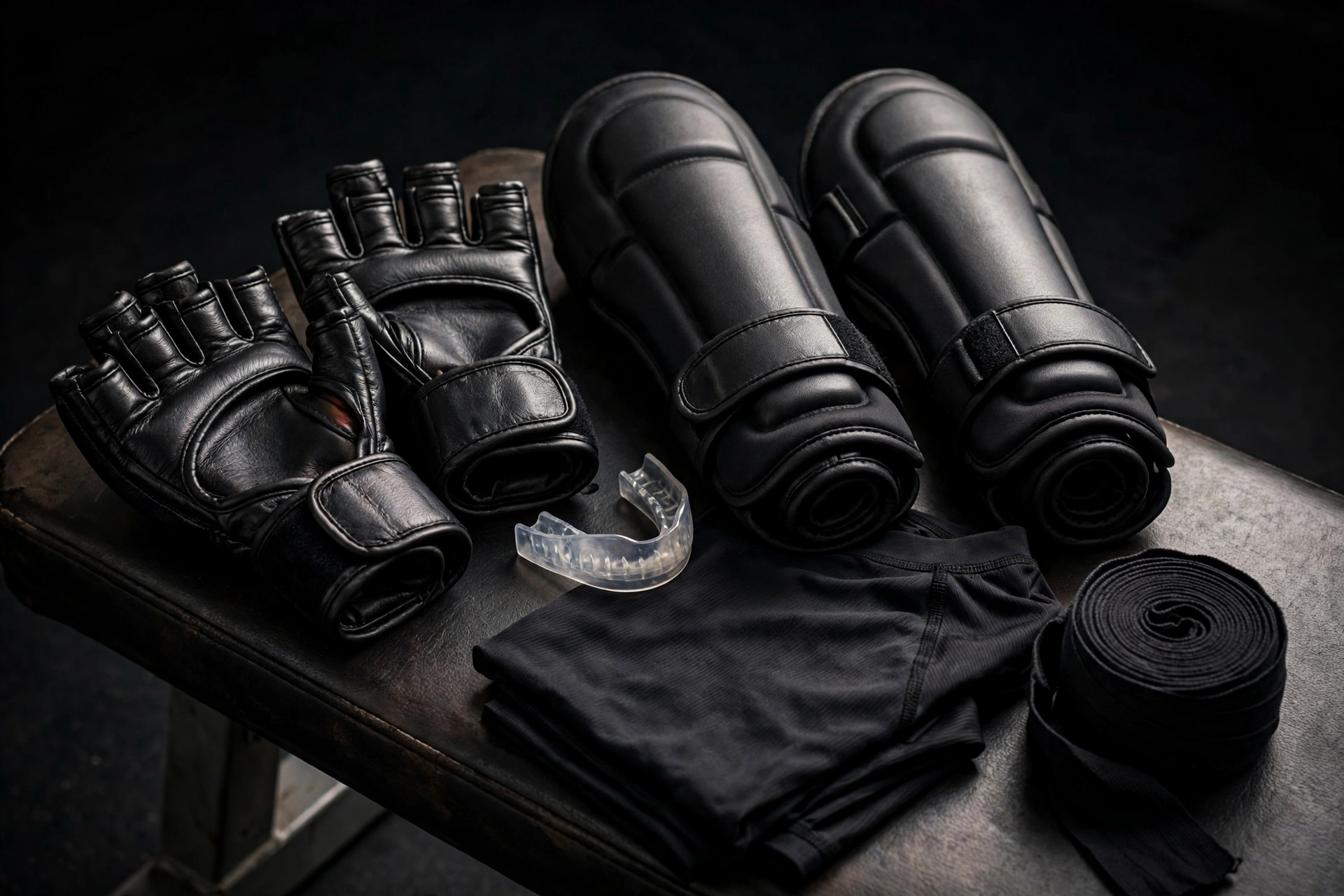
MMA gear sits in a unique middle ground: it must protect like fight equipment but move like athletic wear, because the same session demands punching, kicking, wrestling, and submissions. This MMA Gloves and Gear guide breaks down every piece of equipment an MMA practitioner needs — from the iconic 4-ounce gloves to the rash guards that prevent mat infections — with sizing guidance, buying advice, and the mistakes beginners make when kitting up.
MMA Gloves: The Iconic 4-Ounce Glove
MMA gloves are instantly recognizable: small, open-fingered, with just enough padding over the knuckles to protect the puncher’s hand while leaving fingers free to grapple. Unlike boxing gloves, they’re sized by hand fit (S/M/L/XL) as well as weight:
| Glove Type | Weight | Padding | Used For |
|---|---|---|---|
| Competition | 4 oz | Minimal — knuckle coverage only | Actual fights; never for daily training |
| Training / bag gloves | 7 oz | Moderate | Bag work, mitt work, drilling |
| Sparring (hybrid) | 7 oz with extra padding | Enhanced knuckle + wrist | Controlled MMA sparring |
| Grappling gloves | 4–6 oz | Minimal | Grappling-focused sessions where grip matters most |
What to look for: a secure wrist closure (dual-strap or wide velcro), padding that doesn’t shift over the knuckles, an open palm design that allows full grip for grappling, and thumb protection. The glove should fit snugly with wraps on — loose MMA gloves rotate on impact and injure wrists.
Critical safety note: never spar hard in 4 oz competition gloves. Their minimal padding is designed for fights, not gym wars. Use 7 oz training gloves or 16 oz boxing gloves for sparring, depending on your gym’s rules.
Budget: $40–$80 for quality training MMA gloves; competition gloves $60–$120.
Hand Wraps for MMA
MMA fighters wrap hands just like boxers — 180-inch Mexican-style wraps are standard. The wrap job differs slightly: leave the palm more open and the fingers freer than a boxing wrap, since you’ll need grip dexterity for grappling. Some fighters prefer gel-knuckle guards under wraps for extra knuckle protection with small gloves. Same rule as boxing: wrap every time you strike, no exceptions.
Shin Guards: Non-Negotiable for Kick Training
Unprotected shin-on-shin contact is one of the most painful experiences in combat sports — and a common source of fractures. Shin guards are mandatory for any kick sparring or hard pad rounds.
- Style: instep-included guards protect the top of the foot (where kicks land); slip-on sleeves with separate instep pads offer a closer fit.
- Fit: measure calf circumference and shin length; guards should cover from just below the knee to the ankle without restricting knee bend.
- Material: dense foam with a durable synthetic leather shell. Avoid ultra-cheap guards with thin padding — they protect neither you nor your partner.
Budget: $40–$80 for solid beginner-to-intermediate shin guards.
Headgear for MMA Sparring
MMA sparring headgear differs from boxing headgear: it typically offers more ear and cheek protection (for grappling exchanges) and a snugger fit that won’t shift during clinch work. Look for:
- Full ear coverage (cauliflower ear prevention matters in grappling)
- Secure multi-point strapping that survives takedown drills
- Good peripheral vision — you need to see takedowns coming
- Cheek and chin padding without excessive bulk
Budget: $60–$130. As with boxing, headgear prevents cuts — not concussions. Controlled sparring intensity is the real brain protection.
Rash Guards and Grappling Apparel
The rash guard is MMA’s most underrated gear — a tight compression top (short or long sleeve) that:
- Prevents mat burn during grappling
- Reduces skin infection risk by limiting skin-to-mat and skin-to-skin contact (staph and ringworm spread fast in grappling)
- Wicks sweat and stays in place unlike a t-shirt
- Provides light compression that aids muscle warmth and recovery
Pair with grappling shorts (board-short style, no pockets/zippers/buttons that catch fingers) or spats (compression leggings) for no-gi grappling. Own at least three rash guards — you’ll sweat through one per session, and hygiene is sacred in grappling gyms. Budget $25–$50 per rash guard from reputable combat-sports brands.
Mouthguard, Groin Protector, and Ear Protection
- Mouthguard: mandatory for all sparring. Boil-and-bite ($15–$30) for beginners; custom-molded ($100–$300) for regulars. MMA-specific guards often have breathing channels for grappling.
- Groin protector: mandatory for sparring. MMA-specific cups in compression shorts stay put during grappling better than standard athletic supporters. Budget $25–$45.
- Wrestling ear guards: optional but wise if you grapple heavily — cauliflower ear (permanent ear deformity from repeated trauma) is the grappler’s badge and curse. Soft ear guards ($20–$40) prevent it during drilling.
Training Equipment for Home
Heavy Bag
A 70–100 lb hanging bag works for MMA striking just like boxing — add low kicks once your technique is sound (wrap the bag’s lower section or accept faster wear). Freestanding bags suit apartments. Budget $100–$250 plus mounting.
Grappling Dummy
A throwing/grappling dummy ($150–$400) lets you drill takedowns, transitions, and ground-and-pound solo. It’s a significant investment — worthwhile once you’re training 4+ days/week and want extra reps, overkill for month one.
Focus Mitts and Thai Pads
Curved focus mitts ($40–$80) for punching; Thai pads ($80–$150/pair) for kicks, knees, and elbows — thicker and longer than boxing mitts, worn on the forearms. Thai pads are the defining pad of MMA striking training.
Mats
Home grappling needs real mats — interlocking puzzle mats (1.5″+ thick, $100–$200 for a small area) at minimum. Thin yoga mats on hard floors invite injury; don’t grapple on them.
Complete Beginner Kit: What to Buy and What to Spend
| Item | Priority | Budget |
|---|---|---|
| 7 oz MMA training gloves | Essential | $40–$80 |
| Hand wraps ×2 | Essential | $20–$30 |
| Rash guards ×3 | Essential | $75–$150 |
| Grappling shorts | Essential | $30–$50 |
| Mouthguard | Essential (before partner work) | $15–$30 |
| Shin guards | Before kick sparring | $40–$80 |
| Headgear | Before sparring | $60–$130 |
| 16 oz boxing gloves (for sparring) | Before sparring | $50–$100 |
| Groin protector | Before sparring | $25–$45 |
| Total starter kit | $200–$350 |
Buy the essentials first; add sparring gear when your coach clears you to spar. Quality mid-range gear from established combat-sports brands outperforms both bargain-bin equipment (which fails dangerously) and premium pro gear (wasted on beginners). The same “buy for your actual level” principle applies to any sport’s equipment — see our beginner guides to rock climbing, skiing, and camping gear for parallel advice.
Gear Care and Hygiene
MMA gear takes more abuse than almost any other sport’s equipment — sweat, mat bacteria, and impact. And in grappling, hygiene is a safety issue, not just a smell issue:
- Rash guards and shorts: wash after every single session. Own enough to never re-wear.
- Gloves: air dry immediately; use deodorizing inserts; wipe shells with disinfectant weekly.
- Shin guards and headgear: wipe down after every use; air dry fully before bagging.
- Hand wraps: machine wash in a mesh bag after every use.
- Mouthguard: rinse and ventilated case, always.
- Your body: shower immediately after class, ideally at the gym. Trim fingernails and toenails before every grappling session.
Skin infections (ringworm, staph, impetigo) sideline grapplers for weeks and spread through gyms like wildfire. If you develop a suspicious skin lesion, stay off the mats and see a doctor — training through it endangers everyone.
Frequently Asked Questions
What size MMA gloves should I get?
MMA gloves are sized by hand fit (S/M/L/XL) — measure your hand circumference and check the brand’s chart, trying them on with wraps if possible. For training, 7 oz gloves are the standard; save 4 oz competition gloves for actual fights.
Can I use boxing gloves for MMA training?
For pure striking work (bag, mitts, boxing sparring) — yes, and most MMA gyms require 16 oz boxing gloves for sparring. For MMA-specific drilling and grappling, you need open-fingered MMA gloves. Most practitioners own both.
Do I need a cup for MMA training?
For any sparring or live grappling, yes — it’s mandatory at reputable gyms. For technique-only classes, it’s optional but recommended. MMA-specific compression-short cups stay in place during grappling.
How long does MMA gear last?
Rash guards: 6–12 months of heavy use. MMA gloves: 12–18 months. Shin guards and headgear: 2+ years with care. Hand wraps: 6–12 months. Replace anything with compromised padding or structural damage immediately — failed gear injures people.
What’s the difference between gi and no-gi gear?
MMA uses no-gi grappling (no kimono) — rash guard and shorts. Some MMA fighters cross-train in gi jiu-jitsu (wearing the traditional kimono), which requires a gi ($80–$180). It’s excellent supplemental training but not required for MMA.
Are expensive MMA gloves worth it for beginners?
The $40–$80 range hits the sweet spot — real wrist support, durable stitching, padding that doesn’t migrate. Below that, gloves fail quickly; above that, you’re paying for pro-level refinements beginners can’t feel yet.
Do I need wrestling shoes for MMA?
No — MMA is trained and fought barefoot (with ankle supports optional). Wrestling shoes are for pure wrestling; in MMA’s blended training, bare feet are standard for grappling and striking alike.
Gi vs. No-Gi: Do MMA Beginners Need a Gi?
MMA grappling is no-gi (no kimono), but many gyms offer gi jiu-jitsu classes too. Should you buy one?
- Arguments for: gi training develops grip strength, technical precision, and defensive fundamentals that transfer powerfully to no-gi. Many elite MMA grapplers credit gi backgrounds.
- Arguments against: it’s an additional $80–$180 plus laundry burden, and time spent in the gi is time not spent on MMA-specific grappling.
- The verdict for beginners: focus on no-gi (your MMA requirement) for the first 6 months. Add gi training later if your gym offers it and you’re training 4+ days/week — it’s excellent supplemental education, not a requirement.
The Travel Kit: Gear for Seminars and Camps
Visiting another gym or attending a seminar? Pack the complete kit:
- MMA gloves + boxing gloves (some gyms spar MMA-style, others boxing-style)
- Shin guards and headgear
- 3+ rash guards and shorts (seminar days run multiple sessions)
- Hand wraps (2+ pairs) and mouthguard
- Groin protector
- Flip-flops (never walk barefoot off the mats — mat-to-bathroom is how infections spread)
- Small towel and disinfectant wipes
- Water bottle and snacks
A dedicated gear bag ($40–$80) with ventilated compartments keeps sweaty gear separated and your car habitable.
Kids’ MMA Gear Guide
Youth MMA programs are growing fast. Kids need scaled — not shrunken — equipment:
- Gloves: youth MMA gloves (4–6 oz) with proper wrist closures; junior sizes from established brands.
- Headgear: youth-specific fit is critical — adult headgear shifts and blinds small fighters.
- Shin guards: junior sizes; look for lightweight options that don’t exhaust small legs.
- Rash guards: youth sizes; buy several — kids’ hygiene discipline is still developing.
- Mouthguard: boil-and-bite remolded as teeth change; check fit every few months.
- Philosophy: prioritize fun and fundamentals. Quality mid-range gear, replaced as they grow, beats premium gear outgrown in months.
Gear Bag Packing Checklist
Laminate this and keep it in your bag — every practitioner has arrived at the gym missing wraps:
- ☐ MMA gloves
- ☐ Hand wraps
- ☐ Rash guard + shorts (or gi, if training gi)
- ☐ Mouthguard
- ☐ Shin guards (striking days)
- ☐ Headgear (sparring days)
- ☐ Boxing gloves (sparring days)
- ☐ Groin protector
- ☐ Water bottle
- ☐ Towel + flip-flops
- ☐ Athletic tape (for fingers/toes)
When Gear Fails: Warning Signs
Retire equipment at these signals — failed gear injures you or your partners:
- Gloves: padding you can compress to the knuckle with a thumb press; torn lining; wrist strap that won’t stay closed.
- Shin guards: cracked shell; compressed padding; straps that slip mid-round.
- Headgear: flattened padding over cheekbones or forehead; stretched straps that allow shifting.
- Rash guards: stretched-out collar or seams; thinning fabric (loses protective and hygienic function).
- Mouthguard: chew-through spots; loss of shape; any tear.
The Upgrade Path: From Beginner to Serious
| Stage | Gear Milestone |
|---|---|
| Month 1–3 | Starter kit: training MMA gloves, wraps, rash guards, shorts, mouthguard |
| Month 3–6 | Add sparring kit: headgear, shin guards, 16 oz boxing gloves, groin protector |
| Month 6–12 | Quality upgrades: premium gloves, custom mouthguard, dedicated gear bag, grappling dummy for home |
| Year 2+ | Specialization: competition gloves, multiple gis (if cross-training), premium Thai pads, home mats |
Let your training volume justify each purchase. The practitioner training twice a week needs the starter kit; the one training six days a week earns the upgrades through use.
Ankle Supports, Knee Sleeves, and Joint Protection
MMA’s explosive direction changes and grappling torque stress joints. Supportive gear helps:
- Ankle supports: neoprene sleeves ($15–$30) stabilize ankles during striking — popular among fighters with prior sprains. They’re legal in most amateur competition and standard in training.
- Knee sleeves: compression sleeves ($20–$40) provide warmth and light support for grappling-heavy sessions. They don’t prevent ligament injuries, but they improve proprioception and comfort.
- Finger tape: athletic tape on fingers and toes prevents mat burns, jammed digits, and torn nails during grappling. A roll of 1.5-inch athletic tape ($5–$10) belongs in every gear bag.
- Elbow sleeves: useful for fighters with tendonitis from repetitive armbar defense and posting.
Support gear supplements — never replaces — proper technique, strength training, and rest. If a joint needs a brace to train, get it evaluated rather than bracing through the pain indefinitely.
Supplements and Recovery Tools: What’s Worth It
Gear extends beyond wearables. Recovery tools serious practitioners use:
- Foam roller + lacrosse ball: daily tissue work for hips, back, and shoulders ($20–$30 total). The highest-value recovery purchase.
- Massage gun: useful for large muscle groups between sessions ($100–$300). A luxury, not a necessity.
- Epsom salts: cheap, traditional, and genuinely soothing after hard grappling days.
- Quality sleep setup: the ultimate recovery tool — dark room, consistent schedule, 8+ hours. Free and more effective than any gadget.
Skip the exotic: ice baths, compression boots, and infrared gadgets have marginal evidence for combat-sport recovery compared to sleep, nutrition, and sensible programming.
Brand Landscape: How to Shop Smart
The combat-sports gear market has three tiers:
- Established fight brands: decades in the sport, sponsor professional fighters, consistent quality control. The safe default for gloves, shin guards, and headgear.
- Grappling specialists: brands born in BJJ that excel at rash guards, gis, and no-gi apparel — often with better fits for grapplers.
- Budget newcomers: variable quality. Some offer genuine value; others cut corners on padding and stitching. Read reviews from actual practitioners, not just star ratings.
Buy protective gear (gloves, headgear, shin guards) from established fight brands — this is safety equipment, not fashion. Buy apparel (rash guards, shorts) more freely; fit and durability matter, but the stakes are lower.
Sustainable and Ethical Gear Choices
Combat-sports gear has an environmental footprint worth considering. Leather gloves last longer than synthetics (fewer replacements), and several brands now offer repair programs for premium gloves — restitching and repadding extend life by years. When gear is truly done, textile recycling programs accept wraps and apparel; metal bag hardware recycles as scrap. Buying durable gear once beats buying disposable gear repeatedly — for your wallet and the planet. Consider purchasing from companies with transparent labor practices, since much fight gear is hand-made; fair wages in manufacturing matter in a sport built on respect.
Insurance and Gym Requirements
Some gyms and all amateur competitions require specific gear certifications. USA Boxing-sanctioned events mandate approved headgear, gloves, and mouthguards — check the approved equipment list before competing, as non-compliant gear means disqualification at weigh-in. Many MMA gyms require members to carry personal accident insurance for sparring; your gym’s waiver will specify. Keep receipts and certification tags for competition gear — officials do check.


