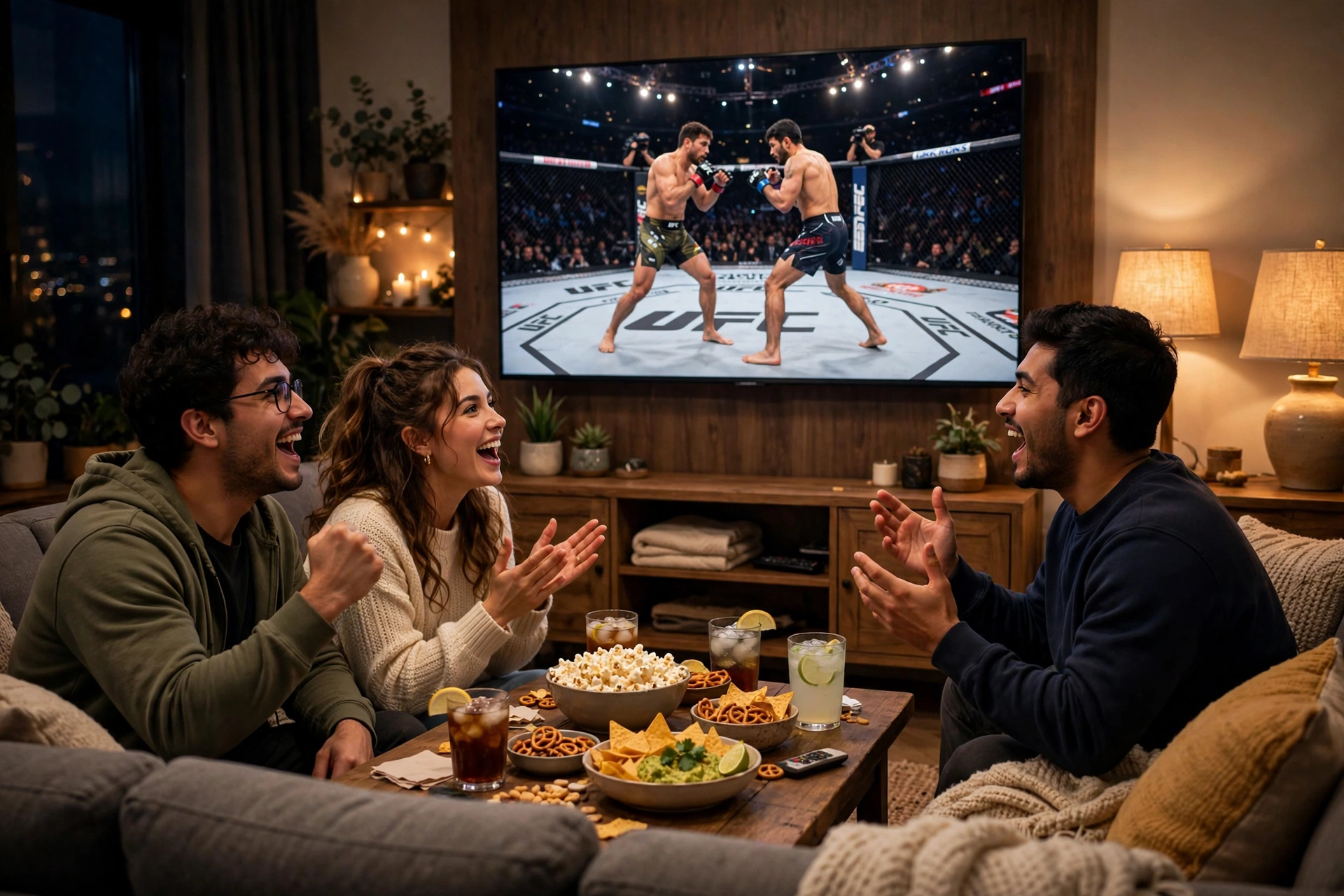
You want to watch the fights, but the options are a maze: ESPN+, pay-per-view, Fight Pass, prelims, main cards, Fight Nights. How to Watch UFC events legally and reliably is simpler than it looks once you understand the UFC’s event structure and where each piece lives. This guide covers every way to watch UFC fights in the United States — streaming, cable, and in person — plus how fight cards work, what fight week looks like, and how to get the most out of every event.
Understanding UFC Event Types
Not all UFC events are equal. The promotion runs two main formats:
| Event Type | Frequency | How to Watch (US) | What’s on It |
|---|---|---|---|
| Numbered PPV events (e.g., UFC 300) | Roughly monthly | ESPN+ pay-per-view purchase | Championship fights and the biggest matchups; 5-fight main card |
| UFC Fight Nights | Most other weekends | Included with ESPN+ subscription | Ranked contenders, rising prospects; headlined by a notable main event |
Numbered events are the blockbusters — title fights, grudge matches, the cards that define eras. Fight Nights are the sport’s weekly heartbeat: excellent fights, smaller stakes, no extra purchase required. A complete fan watches both.
How to Watch UFC on ESPN+ (United States)
In the US, ESPN+ is the exclusive streaming home of the UFC. Here’s exactly how it works:
- Subscribe to ESPN+. It’s a standalone streaming subscription (monthly or annual plans available), accessible through the ESPN app or website. It also bundles with Disney+ and Hulu in the Disney Bundle.
- For Fight Nights: you’re done — every Fight Night streams live on ESPN+ at no extra cost, along with prelims for PPV events.
- For numbered PPV events: purchase the pay-per-view through ESPN+ in addition to your subscription. The PPV price is set per event (typically in the $70–80 range in recent years — check the current price when ordering, as it changes over time).
- Stream on your devices: the ESPN app runs on smart TVs (Roku, Fire TV, Apple TV, Samsung, Android TV), game consoles (PlayStation, Xbox), phones, tablets, and web browsers.
New-subscriber tip: ESPN+ periodically offers bundle deals combining an annual subscription with the upcoming PPV at a discount. If you’re signing up fresh before a big card, check for the bundle first.
Other Ways to Watch UFC
UFC Fight Pass
The UFC’s own streaming service is the sport’s deep archive: thousands of past fights, events from promotions worldwide, original programming, and live international cards. In the US, Fight Pass does not include live numbered PPVs or Fight Nights (those are ESPN+ territory), but it’s essential for hardcore fans who want the back catalog and global MMA.
Cable and Satellite Providers
Numbered PPV events can also be ordered through most major cable and satellite providers (Xfinity, DirecTV, Spectrum, and others) — the same PPV price, delivered through your set-top box. Some providers also carry ESPN channels airing select prelims.
Watching at Sports Bars
Many sports bars purchase the commercial PPV license and show numbered events — often with no cover charge, though some charge $10–$20 on big nights. This is the best atmosphere-per-dollar in fight watching: a packed bar erupting for a knockout beats a living room every time. Call ahead to confirm the bar is showing the event and whether there’s a cover. Big fight nights in fight cities are bucket-list experiences — our guides to the best nightclubs in Las Vegas and New Orleans nightlife cover where the energy goes after the final bell.
International Viewing
Outside the US, UFC broadcast rights vary by country — the UK and Ireland use TNT Sports, Canada uses Sportsnet and UFC Fight Pass for PPV, Australia uses Main Event/Foxtel and Kayo Sports, and much of Latin America and Asia use UFC Fight Pass or local partners. Check the UFC’s official broadcast listings for your region.
How a UFC Fight Card Works
A typical UFC event runs 5–6 hours and is split into three segments:
- Early prelims (first ~2 hours): prospects and newcomers, often streaming on UFC Fight Pass or ESPN+.
- Prelims (~2 hours): ranked fighters and name veterans; on ESPN/ESPN+ in the US.
- Main card (~2.5 hours): the five biggest fights, headlined by the main event.
The main event is the last fight — usually a championship or top-contender bout, scheduled for five rounds. The co-main event (second-to-last) is often nearly as big. Casual viewers who tune in only for the main card miss excellent prelim fights; hardcore fans watch the whole card.
Fight Week: The Schedule Around the Event
Major UFC events come with a week of free programming that builds the story:
- Media day (mid-week): fighters do interviews; storylines emerge.
- Open workouts: fighters train publicly for fans and cameras — free to attend in the host city.
- Ceremonial weigh-ins (Friday): the staredowns, the crowd, the drama. Free and open to the public — an underrated live experience.
- Embedded / Countdown shows: behind-the-scenes video series on the UFC’s YouTube channel — the best free fight-week content.
- Fight night (Saturday): the event itself.
The UFC’s YouTube channel also posts free fights, highlights, and full-event replays of older cards — the best legal free MMA content on the internet.
Getting the Best Stream Quality
- Use a wired connection or sit close to your router — live sports expose every weakness in your Wi-Fi.
- Close background apps and pause downloads during the event.
- Test your setup during the prelims, not five minutes before the main event.
- Have a backup screen ready — phone or tablet logged into the same ESPN+ account — in case your TV app misbehaves.
- Start the stream early. PPV buys can take a few minutes to activate; purchase at least 30 minutes before the main card.
Attending a UFC Event Live
Nothing compares to being there. Tips for your first live event:
- Buy early. Numbered events in major arenas sell out; presales and the UFC’s newsletter get you ahead of the general public. The same ticket-buying strategies in our live entertainment guides apply.
- Upper bowl is underrated. MMA’s best viewing is actually elevated — you see the grappling exchanges and cage positioning that floor seats obscure.
- Arrive for the prelims. The arena fills gradually; early fights have the most electric crowd-per-dollar.
- Budget for the host city. Fight weekends in Las Vegas, New York, or Miami pair naturally with a night out — see our Los Angeles nightlife guide for West Coast event weekends.
Watch-Party Etiquette
Hosting or attending a UFC watch party? A few unwritten rules:
- No spoilers for anyone watching delayed — this includes texting the group chat.
- The host’s stream, the host’s rules — don’t backseat-drive the commentary.
- Chipping in for the PPV is standard when someone hosts — offer before you’re asked.
- Respect the casuals — not everyone knows what a gogoplata is; explain without condescension.
Frequently Asked Questions
Do I need ESPN+ to watch UFC Fight Nights?
In the United States, yes — UFC Fight Nights stream exclusively on ESPN+, included with the subscription at no extra cost. Numbered pay-per-view events require both the subscription and a separate PPV purchase.
How much does a UFC pay-per-view cost?
PPV pricing is set per event and has risen over the years, recently landing in the roughly $70–80 range for ESPN+ subscribers in the US. Always check the current price when ordering, as it changes periodically.
Can I watch UFC for free legally?
Full live events are never free legally, but there’s plenty of free content: the UFC’s YouTube channel (highlights, free fights, Countdown/Embedded series), select prelims occasionally on broadcast TV, and free open workouts and ceremonial weigh-ins during fight week.
What time do UFC events start?
US events typically start early prelims around 6 PM ET, prelims at 8 PM ET, and the main card at 10 PM ET — meaning the main event often walks out after midnight Eastern. International cards adjust to local prime time.
What’s the difference between UFC Fight Pass and ESPN+?
ESPN+ is where Americans watch live UFC events (Fight Nights and PPVs). UFC Fight Pass is the UFC’s own service with the historical fight library, international live events, and programming from other promotions — a supplement for hardcore fans, not a replacement for ESPN+ in the US.
Can I watch UFC at a bar without paying for PPV?
Yes — many sports bars buy the commercial license and show events free to patrons (some charge a cover on the biggest nights). It’s the best atmosphere for major cards, but call ahead to confirm they’re showing it.
How many UFC events are there per year?
Roughly 40+ events per year — about 12 numbered pay-per-views plus 30 or so Fight Nights. There’s a UFC event almost every weekend.
Do I need cable to watch UFC?
No. ESPN+ is a standalone streaming subscription — no cable required. You can watch on smart TVs, streaming sticks, game consoles, phones, and browsers.
Understanding the Broadcast: Commentary, Stats, and Tale of the Tape
UFC broadcasts are packed with information once you know how to read them:
- Tale of the Tape: the pre-fight graphic comparing age, height, weight, reach, and records. Reach (fingertip to fingertip) matters enormously — a 6-inch reach advantage shapes the entire striking dynamic.
- Significant strikes: the key broadcast stat — power strikes landed (not light jabs or glancing blows). “Significant strikes landed per minute” and “striking accuracy” tell you who’s effective, not just busy.
- Takedown stats: attempts vs. completions, plus takedown defense percentage. A wrestler with 8 failed takedown attempts is losing even if they’re “trying.”
- Control time: time spent in dominant positions. Modern broadcasts track it because judges increasingly reward it.
- The commentary team: typically a play-by-play voice plus former fighters providing technical analysis. The fighter-analysts explain grappling exchanges in real time — invaluable for learning the ground game.
The UFC Calendar: What to Expect Through the Year
While exact dates shift annually, the UFC’s rhythm is predictable:
- January–March: the new year opens with a major numbered card; divisions reset after year-end title fights.
- Spring: a steady mix of Fight Nights and PPVs; often features international cards.
- Summer (International Fight Week): late June/early July brings the year’s biggest Las Vegas celebration — a flagship PPV surrounded by fan events, the Hall of Fame ceremony, and open workouts.
- Fall: traditionally stacked — marquee PPVs in New York (November, around the anniversary of the UFC’s Madison Square Garden debut) and Las Vegas.
- December: the year-end blockbuster PPV, often the biggest card of the year.
Fight announcements typically drop 2–3 months ahead, with full cards filling in over the following weeks. Follow the UFC’s official channels and reputable MMA media to track announcements.
Beyond the UFC: Other MMA Worth Watching
The UFC is the major leagues, but the MMA world is bigger:
- PFL (Professional Fighters League): a season-and-playoff format unique in MMA — fighters earn points across regular-season bouts, with playoffs culminating in million-dollar championship finals.
- ONE Championship: Asia’s biggest promotion, featuring MMA alongside kickboxing and Muay Thai on the same cards.
- Rizin FF: Japan’s spiritual successor to Pride, known for spectacular New Year’s Eve events and openweight Grand Prix tournaments.
- Cage Warriors: Europe’s top developmental promotion — a proven pipeline of future UFC champions.
- Invicta FC: the all-women’s promotion that has developed many of the UFC’s top female fighters.
- Regional MMA: local promotions in every major US city — where future stars fight for hundreds of dollars in front of hundreds of fans. Some of the most entertaining MMA on earth happens at this level.
UFC Fight Pass streams many of these promotions, making it the hub for exploring MMA beyond the octagon’s biggest stage.
Building Your Fight Library: Essential Viewing for New Fans
To understand the sport’s depth, supplement live events with classic fights (widely available on UFC Fight Pass and official archives):
- A heavyweight classic showcasing one-punch power and heart
- A technical lightweight chess match between elite grapplers
- A five-round championship war that defined a division’s era
- A breakthrough women’s title fight that changed the sport’s landscape
- An underdog submission victory that demonstrates why “it’s never over”
Watch with purpose: pick one fighter and track only their decisions for a full round — when they engage, when they disengage, how they respond to adversity. You’ll learn more from one analytical viewing than ten passive ones.
Staying Spoiler-Free
Watching delayed is common — but MMA results spread fast:
- Mute MMA keywords on social media before watching a delayed event.
- ESPN+’s replay interface can spoil results via thumbnails — navigate carefully.
- Tell friends you’re watching delayed; true fans respect the code.
- Watch replays within 24 hours — beyond that, spoilers become nearly unavoidable.
Fantasy MMA and Prediction Games
Several platforms offer fantasy MMA and free prediction games tied to UFC events. They’re excellent learning tools — researching fighters to set a fantasy lineup teaches you the roster faster than passive watching. Treat them as education and entertainment, never as income.
UFC on the Road: Fight Nights in Your City
The UFC visits dozens of cities yearly, and regional shows run constantly. To catch live MMA near you:
- Check the schedule early: tickets for arena shows go on sale 2–3 months out; the best seats vanish in presale.
- Consider Fight Nights over PPVs: smaller venues, cheaper tickets, closer views — and often more action-packed cards.
- Explore regional MMA: local promotions offer $20–$50 tickets, intimate venues, and the thrill of discovering future stars. Search your city plus “MMA” or “cage fighting” for listings.
- Make a weekend of it: fight weekends pair naturally with a city’s entertainment scene — dinner, nightlife, and the event itself. Our city guides cover making the most of event trips.
Watching With Kids: A Parent’s Guide
MMA’s violence raises fair questions for parents. Practical guidance:
- Know your child: some kids handle combat sports fine; others don’t. There’s no universal right age.
- Start with highlights, not full events: curated clips let you gauge reactions before committing to a 6-hour card.
- Emphasize the sport: the discipline, respect, and athleticism — not just the knockouts. Many parents find MMA’s visible sportsmanship (fighters embracing after wars) teaches good lessons.
- Use broadcasts as teaching moments: discuss why referees stop fights, why corners throw towels, and why tapping out is smart, not weak.
- Consider the training side: many parents who watch with kids end up enrolling them in youth martial arts — where the values of respect and discipline shine brightest.
Quick-Start Checklist: Your First UFC Event
- ☐ Subscribe to ESPN+ (US) well before fight night — not during the main card
- ☐ For numbered events, purchase the PPV at least 30 minutes early
- ☐ Test your stream on the prelims, with a backup device logged in
- ☐ Check the card order — know the main and co-main events
- ☐ Stock snacks and silence spoiler sources if watching delayed
- ☐ Invite friends — fights are exponentially better shared
Follow this guide and you’ll never again wonder where to watch, what’s happening, or why the crowd just erupted. Welcome to fight night — you’re going to love it here. The journey from curious newcomer to knowledgeable fan starts with a single event.