Japan Labor Thanksgiving Day — Kinrō Kansha no Hi (勤労感謝の日) — is one of the most misunderstood holidays on the Japanese calendar. Celebrated every year on November 23, it’s often assumed to be Japan’s version of American Thanksgiving. It isn’t — not exactly. It’s a national holiday honoring workers, rooted in an ancient imperial harvest ritual over a thousand years old, reshaped by postwar democracy into a day of gratitude for labor itself. No turkey, no parades, no football: instead, schoolchildren making thank-you cards for firefighters, companies honoring employees, and the Emperor performing a sacred rice rite in the palace. This is the complete guide to Japan’s unique day of thanks.
Japan Labor Thanksgiving Day at a Glance
| Detail | Answer |
|---|---|
| Japanese name | 勤労感謝の日 (Kinrō Kansha no Hi) |
| Translation | “Labor Thanksgiving Day” / “Labor Appreciation Day” |
| Date | November 23, every year (if it falls on Sunday, the holiday moves to Monday) |
| 2026 | Monday, November 23, 2026 |
| 2027 | Tuesday, November 23, 2027 |
| Established | 1948 (National Holidays Law) |
| Legal purpose | To respect labor, celebrate production, and for citizens to give thanks to one another |
| Ancient root | Niiname-sai, the imperial harvest festival |
| How it’s observed | Schoolchildren make thank-you crafts for workers; companies hold appreciation events; labor unions hold festivals |
The date is the first clue to the holiday’s nature: November 23 wasn’t chosen for labor history (Japan’s May Day rallies happen on May 1, like much of the world). It was inherited — the fixed Gregorian-calendar date of the ancient Niiname-sai harvest ritual. When postwar Japan needed a secular replacement for the imperial harvest festival, it kept the date and transformed the meaning: from thanking the gods for the harvest to thanking each other for the year’s work. For context on how other nations handle the “is it a holiday” question, see is Thanksgiving a public holiday around the world.
Niiname-sai: The Ancient Harvest Ritual
To understand Labor Thanksgiving Day, you must go back more than thirteen centuries. Niiname-sai (新嘗祭) — the “tasting of the new rice” — was the imperial court’s harvest festival, among the most sacred rites of the Japanese state. In the ceremony, the Emperor would offer the year’s newly harvested rice to the kami (deities/spirits) and then taste it himself — the first tasting of the new harvest, shared symbolically between heaven, sovereign, and people.
The ritual’s documented history is extraordinary. The Nihon Shoki (Chronicles of Japan, 720 CE) records harvest rites during the legendary reign of Emperor Jimmu; more formalized celebrations appear under Emperor Seinei in the 5th century; and scholars date the rite’s mature form to Emperor Tenmu’s reign (667–686 CE). Under the old lunisolar calendar, Niiname-sai was held on the second Day of the Rabbit in the eleventh month; when Japan adopted the Gregorian calendar in 1873, the date was fixed at November 23.
For over a millennium, this was Japan’s true thanksgiving: an agricultural rite at the heart of the state, binding the harvest, the divine, and the imperial institution. The Emperor’s first tasting of the new rice wasn’t symbolic garnish — in a rice civilization, it was the year’s most important meal.
1948: From Imperial Rite to Workers’ Holiday
After World War II, the Allied occupation authorities moved to dismantle State Shinto — the imperial ideology that had underpinned Japanese militarism. National holidays rooted in imperial mythology, including Niiname-sai, were targeted for abolition or secularization. The Japanese government’s response, in the 1948 National Holidays Law (Shukujitsu-hō), was elegant: keep the November 23 date, but rename and redefine the holiday entirely.
Kinrō Kansha no Hi was born with a purpose statement written into law: a day “to respect labor, to celebrate production, and for citizens to give each other thanks.” The shift was profound and deliberate:
- From the sacred to the civic: gratitude moved from the Emperor-to-kami axis to a citizen-to-citizen axis. Everyone thanks everyone.
- From agriculture to all labor: the harvest became production in the broadest sense — factory work, office work, teaching, nursing, public service. Postwar Japan was industrializing at breakneck speed; the holiday honored the workers building the new economy.
- From hierarchy to mutuality: the old rite flowed downward (Emperor shares rice with people); the new holiday flows in all directions (citizens thank one another).
Crucially, Niiname-sai didn’t disappear — the Imperial family still performs it privately each November 23, even as the nation celebrates Labor Thanksgiving Day. The ancient and modern observances coexist on the same date: the Emperor tasting new rice in the palace, schoolchildren handing thank-you cards to police officers in the streets. It’s a uniquely Japanese layering of old and new.
How Japan Celebrates: A Quiet, Sincere Holiday
Labor Thanksgiving Day is not a festival of spectacle. There are no parades, no special foods, no decorations. Its observance is quiet, decentralized, and — by many accounts — deeply sincere:
Children Thank Workers
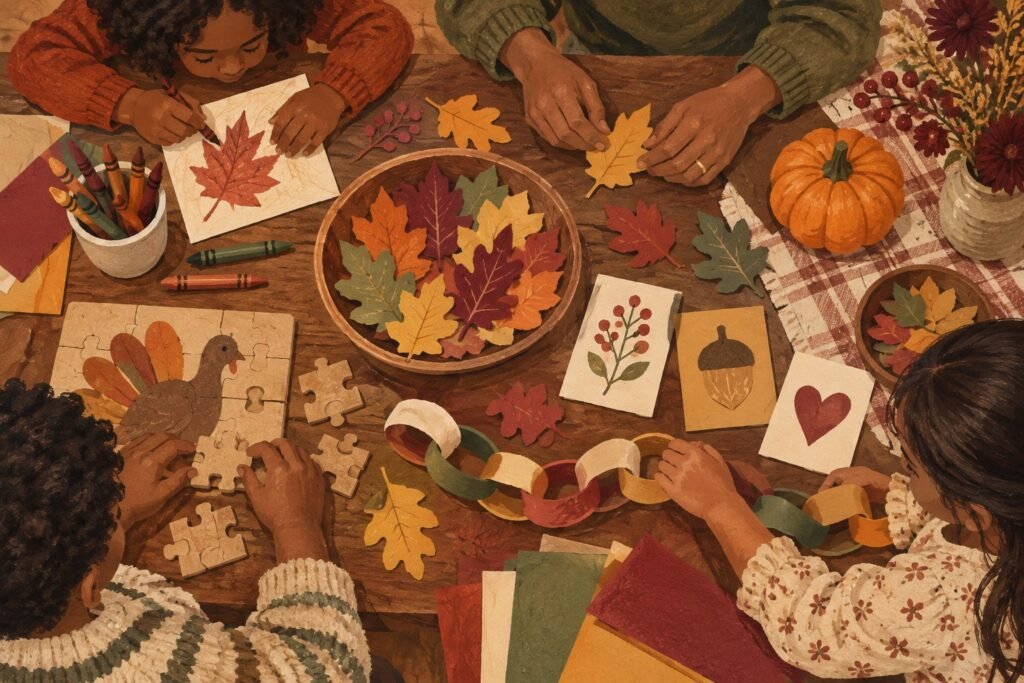
The holiday’s most beloved tradition happens in schools and kindergartens across Japan. In the days before November 23, children make thank-you cards, drawings, and small crafts — then deliver them to the workers who protect and serve their communities: firefighters, police officers, hospital staff, sanitation workers, bus drivers. Local fire stations and police boxes (kōban) receive streams of small visitors bearing handmade gifts. It’s a simple ritual, but it captures the holiday’s essence perfectly: labor made visible, gratitude made personal.
Companies Honor Employees
Many Japanese companies use the holiday (or the days around it) for ceremonies recognizing employees’ contributions — awards, speeches, sometimes bonuses. Labor unions hold their own events: the most famous is the Nagano Labor Festival, a large annual gathering in Nagano City featuring parades, performances, and labor-organization booths — the closest thing the holiday has to a public festival.
A Day of Rest
For most Japanese people, November 23 is simply a welcome day off in late autumn — a pause between the frenzy of year-end and the New Year holidays. Families might take a short trip to see autumn leaves (the kōyō season is at or near peak in many regions), visit grandparents, or just rest. The holiday’s low-key nature is part of its charm: gratitude without performance.
The Imperial Rite Continues
Behind palace walls, the Emperor performs Niiname-sai as his predecessors have for centuries — offering new rice to the deities and partaking of it. Every few decades, a Daijōsai (the first Niiname-sai of a new Emperor’s reign, a grander once-in-a-reign ceremony) reminds the nation of the rite’s ancient weight. The most recent, in 2019 for Emperor Naruhito’s enthronement, drew national attention to the tradition underlying the modern holiday.
Labor Thanksgiving Day vs. American Thanksgiving
| Japan: Kinrō Kansha no Hi | USA: Thanksgiving | |
|---|---|---|
| Date | November 23 (fixed) | Fourth Thursday of November |
| Established | 1948 | 1863 (national) |
| Root | Niiname-sai imperial harvest rite (7th century+) | 1621 Plymouth harvest feast |
| Honors | Workers and production; mutual gratitude | Harvest, blessings, togetherness |
| Central activity | Thanking workers; rest | Family feast |
| Signature food | None | Turkey, stuffing, pumpkin pie |
| Public events | School crafts, union festivals (Nagano) | Parades, football |
| Mood | Quiet, civic, sincere | Festive, familial, abundant |
The comparison highlights a philosophical difference: American Thanksgiving is gratitude for things (harvest, blessings, family); Japan’s Labor Thanksgiving Day is gratitude toward people (workers, colleagues, community helpers). Both are thanksgivings — but they thank different things.
November 23 in the Japanese Year
The holiday’s placement is culturally resonant. Late November in Japan is kōyō (autumn leaf) season at its finest — Kyoto’s maples blaze red, and the tradition of momijigari (leaf-viewing) peaks. The holiday often anchors a long weekend of autumn outings. It’s also the season of Shichi-Go-San (November 15), when children ages seven, five, and three visit shrines in formal dress — so late November is rich with family ritual.
For food lovers, it’s the season of new rice (shinmai) — the very rice at the heart of Niiname-sai — plus persimmons, chestnuts, Pacific saury (sanma), and matsutake mushrooms. There’s no official holiday meal, but a dinner of new rice with autumn’s best is the unofficial way to taste the day’s meaning.
Experiencing Kinrō Kansha no Hi as a Visitor
November 23 is a national holiday, so expect closures: government offices, banks, and many museums shut; department stores and restaurants generally stay open. If you’re in Japan:
- Visit Nagano for the Labor Festival — the holiday’s liveliest public event.
- Watch for the children’s visits at local fire stations and police boxes — heartwarming and very photogenic (ask permission before photographing children).
- Eat shinmai. Seek out restaurants advertising new-harvest rice; it’s the edible soul of the holiday.
- Combine with kōyō. Kyoto, Nara, and Nikko are spectacular in late November — the holiday weekend is prime leaf-viewing.
- Reflect the spirit. The holiday asks citizens to thank one another. Thank your hotel staff, your guides, the convenience store clerk — in Japan, on this day especially, it’s noticed and appreciated.
Americans in Japan sometimes host their own Thanksgiving dinners on the fourth Thursday — a week after Kinrō Kansha no Hi — creating a delightful double holiday. Our guide to celebrating Thanksgiving in Tokyo covers the practicalities.
The Five Cereals: Why Rice Is Sacred in Japan
Niiname-sai was specifically a celebration of the Five Cereals (gokoku): rice, wheat, millet, beans, and barnyard millet (or, in some listings, rice, barley, wheat, soybeans, and adzuki beans). Of these, rice towered above the rest — not just as food but as the measure of wealth, the medium of taxation, and the soul of the civilization. To be Japanese, for most of history, was to live by rice: planting it in spring mud, tending it through summer, harvesting it in autumn, and offering the first fruits to the kami.
This is why Labor Thanksgiving Day’s harvest root matters more than it might seem. When the 1948 law spoke of “celebrating production,” it was translating an agricultural worldview into industrial language. The factory worker of 1950s Osaka stood, in the holiday’s logic, where the rice farmer of 750 CE had stood: as the producer whose labor sustains the community. The continuity is the point. Japan’s modern economy was built by people who still thought in harvest terms — and the holiday honors them in those terms, even as rice paddies gave way to assembly lines and then to office towers.
Today, the rice connection survives most tangibly in shinmai culture. Each autumn, Japanese consumers eagerly await the new harvest rice, marketed with its prefecture and variety like fine wine. Eating shinmai on or around November 23 — simply cooked, unadorned — is the closest thing the holiday has to a traditional meal: a direct, delicious line back to the Emperor’s first tasting.
Regional Celebrations and Events
While the holiday is nationally low-key, several places mark it distinctively:
- Nagano City — The Nagano Labor Festival (Nagano Rōdō-sai) is the flagship public event: a large gathering with parades, music, food stalls, and labor-union exhibitions. If you want to see Labor Thanksgiving Day celebrated outwardly, this is the place.
- Major cities — Tokyo, Osaka, and Nagoya see May-Day-style labor rallies on a smaller November scale, plus union-organized cultural events.
- Shrines and temples — Some shrines hold autumn thanksgiving rites (aki-matsuri) around the holiday, blending the civic observance with local religious tradition.
- Schools nationwide — The children’s thank-you visits to fire stations, police boxes, and hospitals happen everywhere, from Hokkaido to Okinawa, and are covered warmly by local media each year.
- Workplaces — Many companies hold their bōnenkai (year-end party) planning around this time, and some fold employee-recognition ceremonies into the holiday week.
November’s Other Rituals: Shichi-Go-San and Autumn
Labor Thanksgiving Day doesn’t stand alone in Japan’s late-November calendar. Just eight days earlier, on November 15, comes Shichi-Go-San — the festival when children aged seven, five, and three (odd numbers being lucky) dress in kimono or formal wear and visit shrines to pray for health and growth. The sight of tiny children in elaborate kimono at shrines is one of Japan’s most charming traditions, and its proximity to Labor Thanksgiving Day creates a fortnight rich in gratitude: thanks for children’s growth, thanks for workers’ labor.
The season also brings Tori no Ichi (the Rooster Fair) at shrines like Tokyo’s Asakusa — raucous markets selling kumade (decorative bamboo rakes symbolizing “raking in” good fortune) for business prosperity. Between Shichi-Go-San’s prayers, Tori no Ichi’s commerce, and Kinrō Kansha no Hi’s labor gratitude, late November is Japan’s unofficial season of thankfulness — no single feast, but a constellation of small gratitudes.
The Holiday in Japanese Media and Popular Culture
Unlike American Thanksgiving — endlessly depicted in film and TV — Kinrō Kansha no Hi is almost invisible in Japanese pop culture, which is itself revealing. The holiday is too quiet, too sincere, too ordinary to dramatize. What does appear, reliably each year, is news coverage of the children’s thank-you visits: local TV stations film kindergarteners presenting handmade cards to firefighters, and the segments are beloved precisely because they’re unpolished and genuine.
The Imperial Niiname-sai occasionally breaks into national news, especially the once-in-a-reign Daijōsai. Emperor Naruhito’s 2019 Daijōsai — a night-long ritual in a specially built palace compound, costing billions of yen and drawing both reverence and republican criticism — sparked Japan’s biggest public conversation about the holiday’s roots in decades. For one autumn, the ancient rite behind the modern day off was front-page news.
Social media has given the holiday a modest new life: each November 23, Japanese Twitter/X fills with #勤労感謝の日 posts — workers thanking colleagues, people posting photos of their own labor (farmers with harvests, nurses after shifts), and the wry annual jokes about being thankful for labor while laboring through the holiday. It’s a very Japanese internet observance: understated, a little self-deprecating, and quietly heartfelt.
Lessons from Kinrō Kansha no Hi: Thanking People, Not Just Things
There’s a philosophy embedded in Labor Thanksgiving Day that the rest of the world could use. Most gratitude holidays thank providence — God, fate, the harvest, luck. Kinrō Kansha no Hi thanks people: the firefighter, the nurse, the train driver, the colleague who covered your shift. It’s gratitude with a face.
Try borrowing the practice. On November 23 — wherever you live — write one thank-you note to someone whose work makes your life possible and whom you’d never normally thank: the sanitation worker, the night-shift nurse, the delivery driver, the school custodian. Japanese schoolchildren have been doing exactly this for generations, and they understand something profound: that a society is held together not by grand gestures but by millions of small, competent, mostly invisible acts of labor — and that noticing them is a civic duty as much as a kindness.
The 1948 lawmakers who wrote “for citizens to give each other thanks” understood that gratitude is a social technology. A country that thanks its workers is a country that sees its workers. In an age of automation anxiety and essential-worker debates, that 75-year-old idea feels strikingly current.
In Pictures: Japan's Labor Thanksgiving Day
Japan's 23 November holiday honors workers and the harvest alike — with roots in an ancient imperial rice ritual. Here's Kinrō Kansha no Hi.

A serene Japanese autumn scene with maple leaves and a traditional festival atmosphere for Labor Thanksgiving Day.
Watch: Japan's Labor Thanksgiving Day
Learn the culture behind Labor Thanksgiving Day — what the holiday means and how Japan observes it.
At a Glance: Japan's Labor Thanksgiving Day
The facts behind Japan's November national holiday.
| Fact | Detail |
|---|---|
| The date | 23 November every year — a national holiday since 1948 |
| The name | Kinrō Kansha no Hi (勤労感謝の日) — 'Labor Thanksgiving Day' |
| The purpose | Honors workers, labor, and production — and gives thanks for one another's efforts |
| The roots | Descends from Niiname-sai, an ancient imperial harvest ritual offering new rice to the deities |
| How it's observed | A quiet public holiday — schoolchildren often make thank-you cards for workers like police and firefighters |
Frequently Asked Questions
What is Japan Labor Thanksgiving Day?
Kinrō Kansha no Hi (Labor Thanksgiving Day), held every November 23, is a Japanese national holiday honoring workers and production. Established in 1948, it replaced the ancient imperial harvest rite Niiname-sai with a secular day on which citizens thank one another for the year’s labor. Schoolchildren make thank-you gifts for community workers, and companies hold appreciation events.
Is Japan’s Labor Thanksgiving Day the same as American Thanksgiving?
No. They share a name element and a November date, but Japan’s holiday honors workers (rooted in the Niiname-sai harvest rite), while American Thanksgiving is a family harvest feast rooted in the 1621 Plymouth story. There’s no turkey dinner tradition in Japan on November 23.
Why is it on November 23?
November 23 was the fixed Gregorian-calendar date of Niiname-sai, the imperial harvest festival, after Japan adopted the Western calendar in 1873. When the 1948 holidays law created Labor Thanksgiving Day, it kept the traditional date while changing the meaning.
Do Japanese people get the day off?
Yes — it’s a national holiday (shukujitsu). If November 23 falls on a Sunday, the holiday is observed on Monday. Most workers get the day off; schools close.
What is Niiname-sai?
Niiname-sai is the ancient imperial harvest ritual in which the Emperor offers newly harvested rice to the kami (deities) and tastes it himself. Dating back over 1,300 years, it’s still performed privately by the Imperial family each November 23, alongside the public Labor Thanksgiving Day.
How do children participate?
In the days before the holiday, schoolchildren across Japan make thank-you cards, drawings, and crafts, then deliver them to local firefighters, police officers, hospital workers, and other community workers — the holiday’s most cherished tradition. Kindergartens organize group visits to fire stations and kōban police boxes, and local media covers these small ceremonies warmly every year, making them the public face of the holiday.
Conclusion
Japan Labor Thanksgiving Day is a quiet masterpiece of cultural reinvention: an ancient imperial rice rite, transformed by postwar democracy into a day when a whole nation thanks its workers. No feast, no mythology, no shopping — just schoolchildren with handmade cards, companies honoring their people, and, behind palace walls, an Emperor tasting the new rice as his ancestors did thirteen centuries ago. In a world of loud holidays, Kinrō Kansha no Hi whispers — and what it says is worth hearing: that every pair of working hands deserves thanks, and that a nation’s truest harvest is the dignity of its labor. For more of the world’s gratitude traditions, explore Thanksgiving around the world or browse the full Thanksgiving collection.