

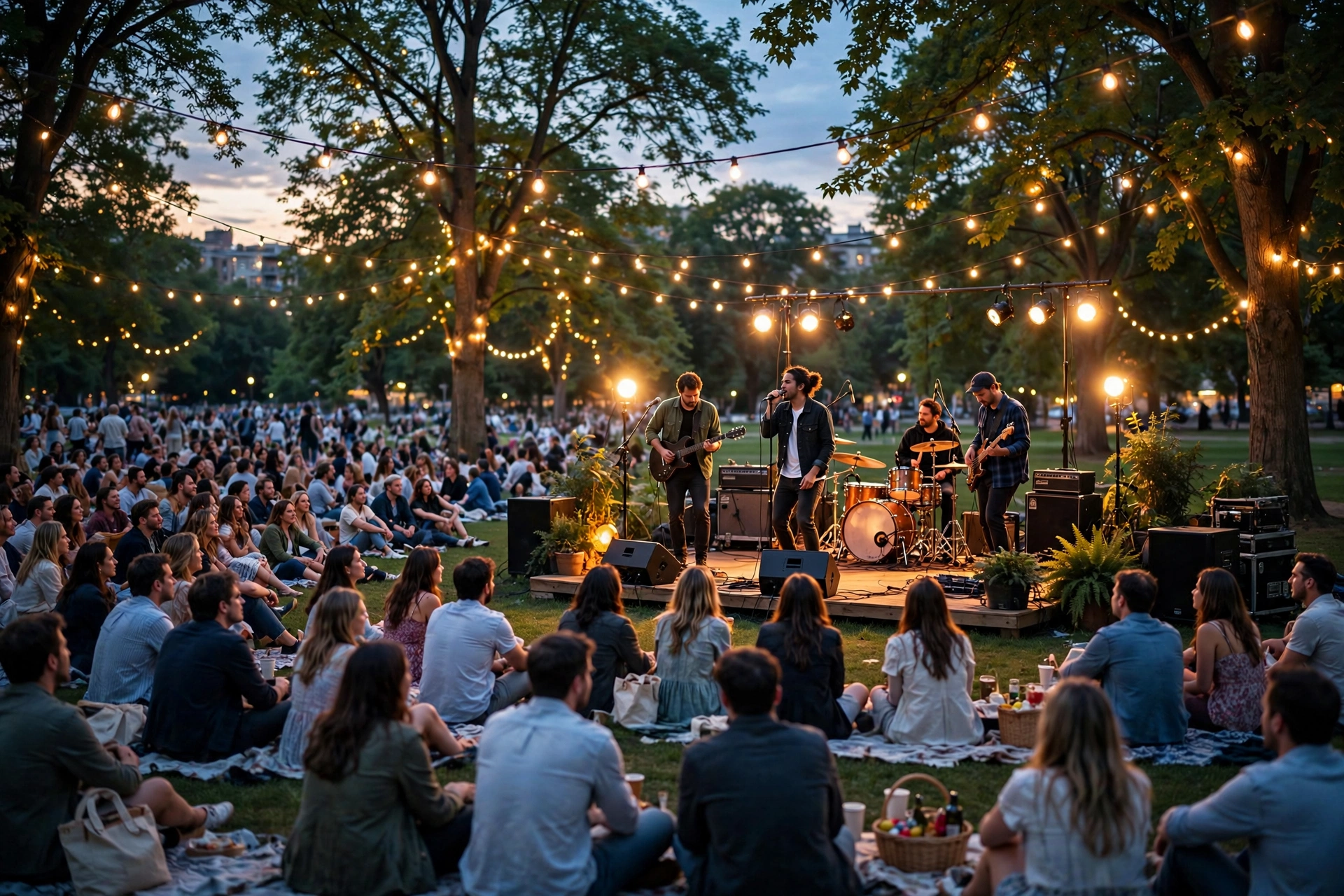
Every summer, thousands of free outdoor concerts take over America’s parks, piers, plazas, and botanic gardens — and most people never hear about the ones in their own neighborhood. From the Grant Park Music Festival in Chicago to SummerStage in New York to twilight series in small-town bandshells, free concert season runs roughly May through September nationwide. This guide explains how free outdoor concert series work, where to find them near you, what to bring, and how to get the best spot on the lawn.
Whether you’re into classical, jazz, indie rock, salsa, or bluegrass, there’s a free series playing your music within driving distance this summer. Here’s how to find it.
How Free Outdoor Concert Series Work
Most free concert series share the same DNA:
- Who pays: city parks departments, nonprofit arts organizations, corporate sponsors, and tourism boards foot the bill. Your tax dollars and sponsor logos make the music free.
- Where: public parks with bandshells or lawns, downtown plazas, waterfront piers, botanical gardens, and courthouse squares.
- When: typically weekday evenings (6–8 p.m.) or weekend afternoons, May through September, with some series running into October in warm climates.
- Seating: almost always bring-your-own — blankets and low-profile lawn chairs. Some venues rent chairs or sell reserved sections.
- Food and drink: most allow outside picnics; many host food trucks on-site. Alcohol policies vary wildly by city — check before you pack the wine.
- Rain policy: light rain usually means the show goes on; severe weather cancels. Follow the series’ social media for day-of calls.
Free doesn’t mean low quality. Series like the Grant Park Music Festival feature professional symphony musicians; SummerStage books nationally touring acts; and countless jazz and Americana series showcase genuinely excellent regional bands. For context on how these compare to ticketed shows, see our concerts vs. music festivals breakdown.
Where to Find Free Outdoor Concerts Near You
1. Your Parks Department Calendar
The number-one source. City and county parks departments run the majority of free concert series, and their event calendars list every performance with dates, times, and rain policies. Search “[your city] parks and recreation concerts” to find yours.
2. Downtown and Business Improvement Districts
Lunchtime concert series in office districts (free, weekday midday) and evening plaza series are run by downtown associations. These skew toward jazz, acoustic, and world music — perfect for a post-work date.
3. Botanic Gardens and Arboretums
Gardens nationwide host summer concert series — some free, some with garden admission. Evening concerts among the plantings are among the most beautiful free dates imaginable.
4. Libraries
Public libraries increasingly host free concerts — jazz trios, classical ensembles, singer-songwriters — in their auditoriums and courtyards. Check the events calendar at your central library branch.
5. Eventbrite (Free Filter)
Set Eventbrite’s price filter to “Free” and search “concert” in your city. Independent promoters, breweries, and community groups list free shows here that never make the parks calendar.
6. Local Media Roundups
Alt-weeklies, local blogs, and tourism boards publish “free summer concerts” roundups each May. Bookmark one or two and check back — series announce schedules on rolling timelines.
7. Social Media
Follow your parks department, downtown association, and local venues on social media. Day-of weather calls, surprise guest announcements, and schedule additions land here first.
Famous Free Concert Series Worth Traveling For
| Series | City | What Makes It Special |
|---|---|---|
| SummerStage | New York (all boroughs) | Nationally touring acts, free, June–October |
| Grant Park Music Festival | Chicago | Free professional classical concerts all summer |
| Grand Performances | Los Angeles | Free downtown concerts, dance, and theater |
| Stern Grove Festival | San Francisco | Free Sunday concerts in a eucalyptus grove, 1938–present |
| Blues on the Mall / Jazz in the Park | Dozens of cities | The classic municipal free-concert format |
| Levitt Pavilion concerts | Multiple cities | Free concerts in a national network of venues |
| Shakespeare-adjacent music series | Many cities | Free pre-show concerts at outdoor theater festivals |
Traveling for a show? Our best outdoor concert venues in the USA roundup covers the legendary amphitheaters — many of which also host free community nights.
What to Bring to a Free Outdoor Concert: The Checklist
- Blanket or low lawn chairs — check the venue’s chair-height rules; many restrict chairs to low-profile “beach” height so everyone can see.
- Layers — temperatures drop fast after sunset, even in summer. A hoodie or light blanket per person.
- Picnic dinner and snacks — most series allow outside food; it’s the whole point.
- Water — more than you think, especially for afternoon shows.
- Bug spray — non-negotiable for evening lawn concerts near water or woods.
- Small flashlight or headlamp — for packing up after dark without blinding neighbors.
- Cash — for food trucks and merchandise; many vendors are still cash-preferred.
- A trash bag — leave the lawn cleaner than you found it.
For outfit planning, see our what to wear to a concert guide — the outdoor edition principles apply.
Free Concert Etiquette: The Unwritten Rules
- Arrive early for good spots, but don’t tarp-squat. Claiming a huge blanket footprint for a party arriving in two hours is the fastest way to annoy a lawn.
- Keep chair height low. If the venue allows full-height chairs, sit toward the back.
- Talk quietly or not at all during the music. The lawn is not a bar — the people around you came to listen.
- Keep kids and dogs under control. Many series are family- and dog-friendly; that privilege depends on good behavior.
- Don’t block the aisles. Leave walking lanes between blanket clusters for latecomers and bathroom trips.
- Pack out everything. Free concerts survive on goodwill and sponsor money; trashed lawns kill series.
Our full concert etiquette guide covers the rest — from phone brightness to encore behavior.
Free Concerts by Genre: What You’ll Find
Classical and Symphony
The Grant Park Music Festival (Chicago), free symphony nights in parks nationwide, and university music schools’ outdoor performances. These are often the highest-production-value free concerts available — professional musicians, serious repertoire, zero dollars.
Jazz
Jazz is the backbone of the free-concert world: municipal jazz series, library jazz nights, and festival-affiliated free stages. The improvisation means no two shows are alike.
Americana, Folk, and Bluegrass
Small-town bandshells and courthouse-square series lean heavily on folk, bluegrass, and classic country — often with dancing on the lawn.
Latin and World Music
Salsa nights, Afrobeat, mariachi, and global fusion series thrive in diverse cities — and they’re among the most dance-friendly free shows you’ll find.
Indie Rock and Tribute Bands
Suburban “concerts in the park” series love tribute bands (Beatles, Fleetwood Mac, 80s acts); downtown series book emerging indie acts. Both are reliably fun.
Beyond Summer: Free Concerts Year-Round
Free outdoor concerts peak in summer, but the music doesn’t stop in fall:
- Holiday concert series — tree-lighting ceremonies and holiday markets with free live music, November–December.
- Library and community-center concerts — indoor, free, year-round.
- University recitals — music schools host free student and faculty recitals throughout the academic year; the quality is often excellent.
- Church and faith-community concerts — many host free community concert series open to all.
- First Friday art walks — gallery districts pair free art with free live music monthly.
Free Outdoor Concerts With Kids
Lawn concerts are among the most kid-friendly live music experiences: kids can dance, wiggle, and snack without theater-seat constraints. Tips: bring ear protection for toddlers (lawn speakers can be loud up close), sit near the back for easy exits, pack twice the snacks you think you need, and choose early-evening shows over late ones. Our kid-friendly concerts guide has venue-specific advice.
From Free to Front Row: Leveling Up
Once you’re hooked on live music, you may want to try ticketed shows too. Our concert ticket buying guide explains presales, fees, and resale strategy, and our cheap concert tickets guide shows how to pay less. New to concerts entirely? Start with our first concert guide.
Frequently Asked Questions About Free Outdoor Concerts
How do I find free outdoor concerts near me?
Start with your city or county parks department’s event calendar — it lists most municipal concert series. Then check downtown associations, botanic gardens, libraries, and Eventbrite’s free filter. Local media publish “free summer concerts” roundups each May.
What should I bring to a free outdoor concert?
A blanket or low lawn chairs, layers for after sunset, a picnic dinner, water, bug spray, a small flashlight, cash for food trucks, and a trash bag. Check the venue’s rules on chair height and outside alcohol before you go.
Are free outdoor concerts actually good?
Yes — many feature professional musicians and touring acts. The Grant Park Music Festival uses a professional symphony orchestra, SummerStage books national acts, and regional jazz and Americana series showcase excellent local talent.
Can I bring food and alcohol to free concerts?
Outside food is allowed at most free concert series; alcohol policies vary by city and venue — some allow it, some restrict it to purchased beverages, some ban it. Check the series’ FAQ before packing.
What happens if it rains?
Light rain usually means the show goes on; severe weather cancels. Follow the series’ social media accounts for day-of weather calls, and have an indoor backup plan.
Free Outdoor Concerts by Region
Northeast
- New York: SummerStage (all boroughs), Celebrate Brooklyn! at the Prospect Park Bandshell, Bryant Park’s contemporary music series, and free concerts at Lincoln Center’s outdoor spaces.
- Boston: the Hatch Shell’s free summer concerts on the Esplanade, Berklee’s Summer in the City series, and free concerts at the Boston Public Library.
- Philadelphia: free concerts at Dilworth Park, the Mann Center’s free community nights, and neighborhood park series.
- Washington, D.C.: Jazz in the Garden at the National Gallery of Art’s Sculpture Garden (free, lottery-based), Fort Reno’s free summer concerts, and the Kennedy Center’s free Millennium Stage performances (indoor, year-round).
South
- Atlanta: free concerts in Piedmont Park, the Atlanta Symphony’s free community concerts, and neighborhood series in Decatur and Marietta.
- Austin: the self-declared live music capital backs it up — free concerts at Zilker Park, Blues on the Green (Austin’s beloved free summer series), and free shows at countless venues.
- Nashville: free concerts at Ascend Amphitheater’s community nights, Musicians Corner in Centennial Park (free, May–June and September), and the constant free live music on Lower Broadway.
- New Orleans: free concerts in Armstrong Park, French Quarter Festival’s free stages (spring), and the year-round free live music in clubs and on streets.
- Charlotte: free concert series at Romare Bearden Park and neighborhood bandshells.
Midwest
- Chicago: the Grant Park Music Festival (free classical all summer), Chicago SummerDance, and the citywide park concert series.
- Minneapolis–St. Paul: free concerts at the Lake Harriet Bandshell (a local institution), the Basilica Block Party’s free day, and the Twin Cities Jazz Festival’s free stages.
- Detroit: free concerts at Campus Martius Park, the Detroit Symphony’s free community concerts, and the Concert of Colors (free, July).
- Kansas City: free concerts at the Crossroads and Berkley Riverfront, plus the city’s deep free jazz tradition.
West
- Los Angeles: Grand Performances at California Plaza, Santa Monica Pier concerts, Levitt Pavilion shows, and the Hollywood Bowl’s free community events.
- San Francisco: the Stern Grove Festival (free since 1938), Golden Gate Park’s free concerts, and the SF Symphony’s free community concerts.
- Seattle: free concerts at the Seattle Center, the Frye Art Museum’s concert series, and the Seafair summer events.
- Denver: free concerts at Red Rocks’ community nights (the venue hosts free events beyond its famous paid shows), Levitt Pavilion Denver, and the City Park Jazz series.
- Portland: free concerts at Pioneer Courthouse Square and the city’s park series.
The Food and Drink Question: Picnics vs. Vendors
Most free concert series allow outside food — and a well-packed picnic is part of the tradition. But consider the economics: many series survive on food-truck revenue shares and sponsorships. The sweet spot: pack your main picnic, then buy a dessert or drink from a vendor. You keep the series funded for next year without breaking your free outing. As for alcohol: policies range from bring-your-own (many suburban series) to purchase-only (downtown venues) to prohibited (family-focused series). Check the FAQ — don’t assume.
Free Concerts for Music Discovery
Free series are the best low-risk way to expand your taste. Strategies:
- Go to genres you don’t know: a free Afrobeat night or bluegrass evening costs nothing if it’s not your thing — and might become your thing.
- Follow the openers: free series often book emerging acts; the unknown opener at a free show is tomorrow’s headliner.
- Try the classical series: even if you’ve never been to a symphony, a free outdoor classical concert (Grant Park, the Hollywood Bowl’s community nights) is the perfect no-stakes introduction.
- Make it a series: pick one weekly series and attend all summer. You’ll learn the regulars, the best spots, and the bands — it becomes a seasonal ritual.
Accessibility at Free Outdoor Concerts
- ADA seating: most municipal series provide accessible viewing areas — check the venue map or ask staff on arrival.
- ASL interpretation: larger series (SummerStage, Grant Park) often provide interpreters; check the schedule.
- Sound levels: lawn seating lets you control your distance — sit farther back for a gentler experience.
- Transportation: many series are transit-accessible by design; check the organizer’s “getting here” page for shuttle and transit info.
When Free Isn’t Available: Cheap Alternatives
If your city’s free series doesn’t cover your taste, the next tier is cheap, not free: $10–$20 club shows, community orchestra concerts ($15–$25), university performances (often $5–$10), and lawn seats at amphitheaters (sometimes under $30). Our cheap concert tickets guide covers how to find these deals.
The Free Concert Season Calendar
Mark these rhythms: April–May — series announce schedules; follow your favorites now. Memorial Day weekend — the unofficial opening of concert season; many series launch. June–July — peak season; the most series running concurrently, the biggest crowds. August — still peak, but the Perseid meteor shower (mid-August) pairs beautifully with evening concerts. September — shoulder season; thinner crowds, cooler evenings, many series’ best lineups as they close out. October — harvest festivals and final outdoor shows in warm climates. November–March — indoor free concerts (libraries, cultural centers, universities) carry the torch. The free music year has no true offseason — only a change of venue.
Starting Your Own Free Concert Tradition
The best free-concert strategy is ritual: pick one series, attend every week, bring the same friends, claim the same patch of lawn. By midsummer you’ll know the regulars, the sound techs will know you, and the series will feel like yours. Free outdoor concerts are one of the last genuinely communal experiences in American life — no tickets, no tiers, just a lawn full of neighbors listening together. All it costs is showing up.
Bringing Friends: The Group Lawn Strategy
Free concerts are better with a crew. Coordinate arrival times in a group chat, designate one person to claim the blanket zone early (with a reasonably sized footprint — no tarp empires), and run a snack potluck: one person brings drinks, another brings sandwiches, another brings dessert. Assign a “weather watcher” to monitor the radar and the series’ social media. Groups that plan together actually show up — and the shared ritual of a weekly concert series is how acquaintances become real friends by Labor Day.
Final note: free concert season rewards the prepared. Keep the tote packed, the blanket in the car, and the parks calendar bookmarked — when a perfect summer evening arrives, you’ll be on the lawn instead of scrolling past it.


