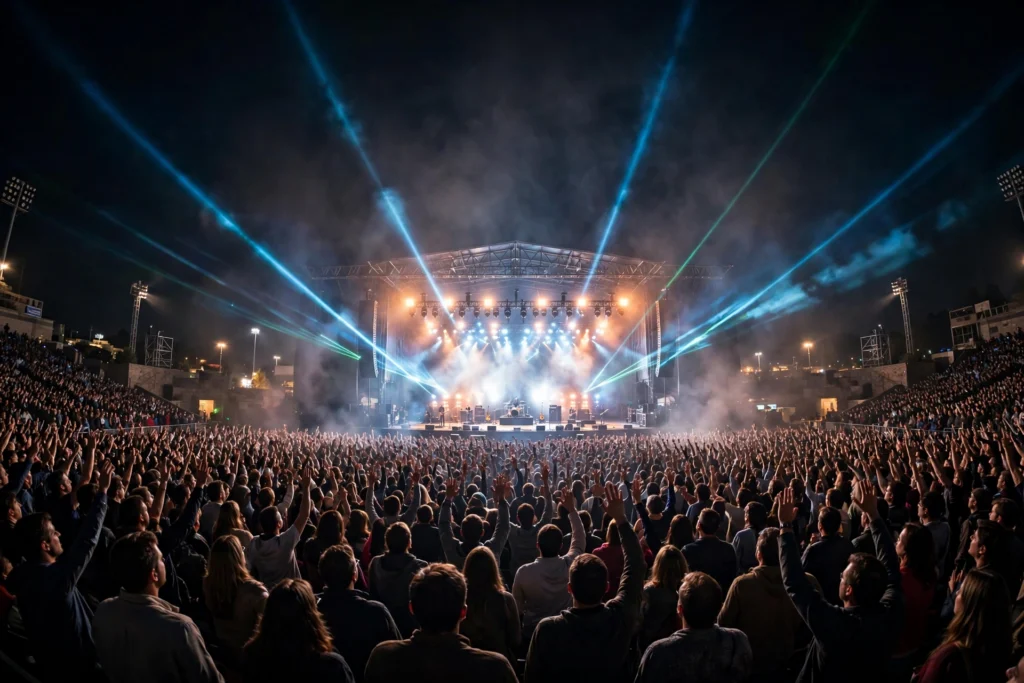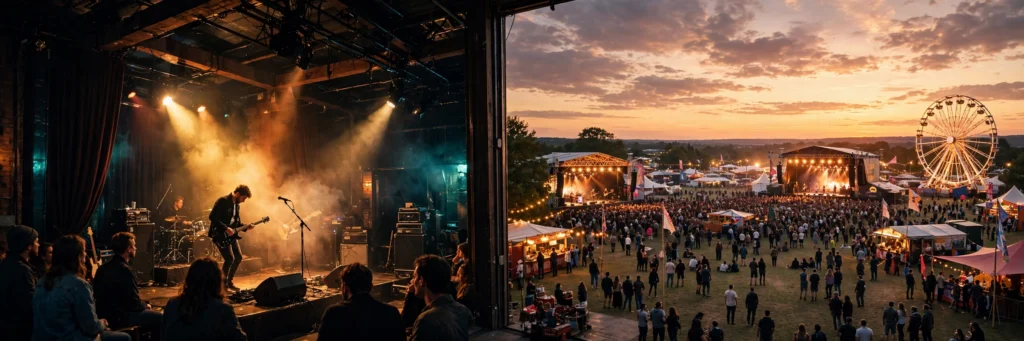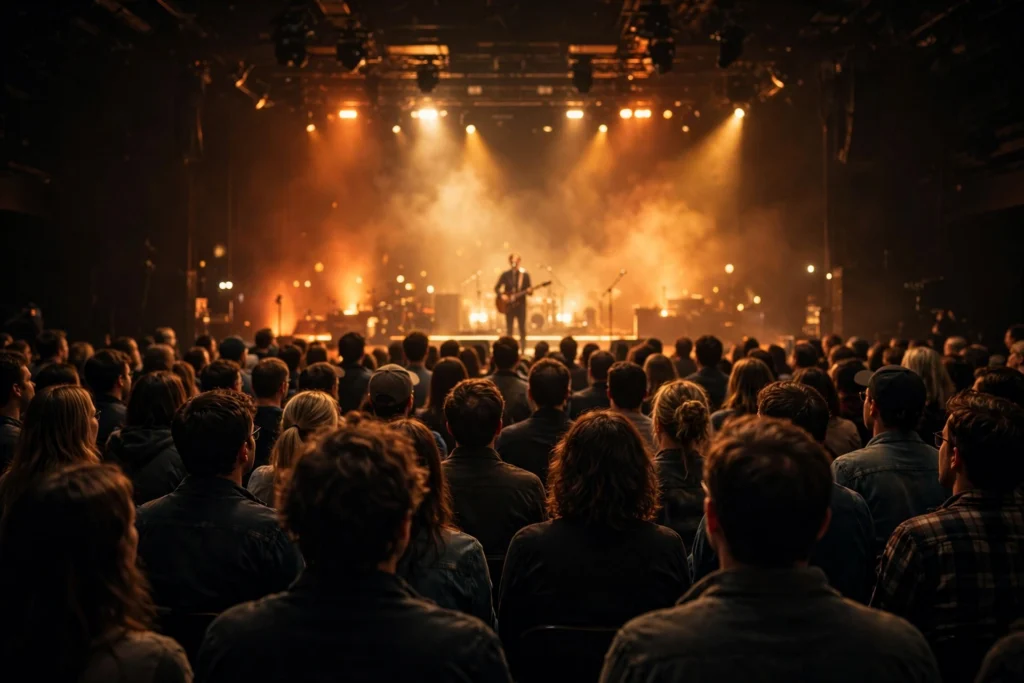
The Best Outdoor Concert Venues in the USA aren’t just places to see a show — they’re destinations worth planning a whole trip around. A summer night under open sky, with the music rising into warm air and the horizon doing something beautiful behind the stage, is a different art form from an indoor concert. This guide covers America’s twelve greatest outdoor rooms as travel destinations: how to get there, where to stay, when to go, and how to build a weekend around the show.
Think of this as the travel companion to our ranked Best Concert Venues in the USA list — that one ranks the rooms; this one plans the trip. And if you’re weighing an outdoor amphitheater show against a full festival weekend, our Concerts vs Music Festivals comparison will help you decide where your summer music budget goes.
How to Plan an Outdoor Concert Trip
Before the destinations, the universal playbook for outdoor venue travel:
- Book lodging the day tickets go on sale. Hotels near popular venues spike on show weekends — sometimes tripling. Refundable bookings made early are free insurance.
- Check the weather plan, not just the forecast. Outdoor venues play through rain. Know the venue’s poncho/umbrella policy (umbrellas are usually banned) and pack accordingly.
- Arrive the day before if you can. Travel delays plus a same-day show equals stress. A relaxed arrival day means you actually enjoy the pre-show hours.
- Plan the exit. Rideshare surges after shows are brutal at remote venues. Pre-scheduled rides, venue shuttles, or a designated driver beat a $120 surge fare.
- Budget beyond the ticket. Parking, food, merch, and lodging add 50–150% to the ticket cost. Outdoor shows reward picnics and pre-gaming — the venues with the best outside-the-gates scenes save you real money.
1. Red Rocks Amphitheatre — Morrison, Colorado
The trip: Fly into Denver (DEN), 30–40 minutes from the venue. Stay in Denver’s LoDo or RiNo neighborhoods for nightlife, or in Morrison/Golden for proximity and small-town charm.
Make a weekend of it: Hike the Red Rocks Trail and the Trading Post loop in the morning (the venue opens the park to visitors on non-show days — walking the empty amphitheater is a pilgrimage in itself), explore Denver’s brewery scene, and drive the Peak to Peak Highway if you have an extra day. The elevation is 6,450 feet — hydrate aggressively and take it easy on alcohol the first day.
When to go: The season runs April through October; June–September is peak. Sunset shows in late summer are the platonic ideal — golden light on red stone, warm air, the city lights coming on below.
Seating intel: Rows 1–20 are close enough to read setlists; rows 30–50 offer the best balance of view and sound; the top rows have the panoramic view but the longest stair climb. There are no bad seats, only different workouts.
2. The Gorge Amphitheatre — George, Washington
The trip: Fly into Seattle (SEA), then drive 2.5 hours east across the Cascades — the drive itself, through mountain passes into high desert, is part of the experience. The venue’s on-site camping is the move for multi-night runs; otherwise, the nearest towns (George, Quincy, Ellensburg) have limited motels that book out instantly.
Make a weekend of it: This is a commit-to-the-weekend venue by design. Camp on-site, float the Columbia River by day, catch the sunset set by night. Leavenworth (a Bavarian-themed village, 45 minutes away) makes a fun day trip. Stock up on supplies in Seattle or Ellensburg — there’s essentially nothing near the venue.
When to go: May through September. July and August are hot and dry (bring sun protection and dust management); September shows get golden light and cooler nights.
Seating intel: Reserved seats up front, lawn behind — but the lawn at the Gorge, with the canyon view, is arguably the best lawn in America. General admission pit for the closest experience.
3. Hollywood Bowl — Los Angeles, California
The trip: Fly into LAX or Burbank. Stay in Hollywood, Los Feliz, or West Hollywood — all within easy shuttle range. The Bowl’s official shuttles run from lots across the city and are strongly recommended over driving.
Make a weekend of it: Griffith Observatory at sunset before an evening show, the Getty Center by day, dinner in Thai Town or Koreatown. The Bowl’s picnic culture means your pre-show can be a proper event: the venue allows outside food and wine in most sections, so pack a real dinner.
When to go: The summer season runs roughly June through September, with the LA Phil, fireworks finales, and the biggest pop bookings. September offers the warmest reliable evenings.
Seating intel: The private boxes (groups of 4–6) are the signature experience but pricey; terrace boxes offer the best value. Bench seating is fine and social. Avoid the far sides if precise stereo imaging matters to you.
4. Merriweather Post Pavilion — Columbia, Maryland
The trip: Fly into BWI, 20 minutes away. Stay in Columbia or Ellicott City — both pleasant, affordable, and close. D.C. is 35 minutes south if you want the city weekend with the show as the centerpiece.
Make a weekend of it: Merriweather sits in Symphony Woods, a genuinely beautiful 40-acre forest setting between Baltimore and D.C. Pair the show with a D.C. day (museums are free) or Baltimore’s Inner Harbor. The venue’s backstage-to-woods vibe makes it feel like a retreat rather than a shed.
When to go: May through October. The pavilion’s roof covers reserved seats; the lawn is open sky — check the forecast and choose your section accordingly.
Seating intel: The reserved pavilion has excellent sightlines throughout. The lawn is spacious and gently sloped — great for groups, with the woods as a backdrop.
5. The Greek Theatre, Berkeley — Berkeley, California
The trip: Fly into OAK (closest) or SFO. BART to Downtown Berkeley puts you a 20-minute uphill walk from the venue — the walk is part of the ritual. Stay in Berkeley or North Oakland.
Make a weekend of it: The UC Berkeley campus is worth exploring (the Campanile views are superb), Telegraph Avenue for the counterculture history, and the Bay Area’s food scene needs no introduction. Pair with a San Francisco day across the bay.
When to go: The season runs spring through fall. Berkeley evenings cool down fast once the sun drops — even in August, bring a layer.
Seating intel: One of the smaller major amphitheaters (8,500 cap), so even the back rows feel connected. The hillside bowl shape means sound carries well throughout.
6. Saratoga Performing Arts Center (SPAC) — Saratoga Springs, New York
The trip: Fly into Albany (ALB), 40 minutes away, or drive from NYC (3 hours) or Boston (3 hours). Stay in Saratoga Springs itself — a gorgeous Victorian spa town that makes the trip twice as good.
Make a weekend of it: Saratoga is the destination as much as the venue: mineral springs, the racetrack (summer meet), Broadway’s restaurants and bars, and Saratoga Spa State Park. Dave Matthews Band’s annual two-night stand here is a pilgrimage event; Phish and Dead & Company have deep history too.
When to go: June through August is peak season, coinciding with the track meet — book lodging very early for those weekends.
Seating intel: The amphitheater seats are comfortable and covered; the lawn is enormous and social. The venue’s classical pedigree (it’s the summer home of the Philadelphia Orchestra and NYC Ballet) shows in the acoustics.
7. Ascend Amphitheater — Nashville, Tennessee
The trip: Fly into BNA. Stay downtown — the venue sits on the riverfront, walkable from Lower Broadway’s honky-tonks. Nashville’s downtown core is compact and made for show weekends.
Make a weekend of it: Broadway’s live music (free, all day), the Ryman tour, hot chicken, the Country Music Hall of Fame. An Ascend show slots perfectly into a Nashville weekend — show at sunset on the river, Broadway after.
When to go: April through October. Summer shows are hot and humid — the river breeze helps, but dress for it.
Seating intel: Reserved seats under the canopy, lawn behind with the Nashville skyline as the backdrop. The skyline view from the lawn at sunset is the venue’s signature image.
8. Hayden Homes Amphitheater (Les Schwab) — Bend, Oregon
The trip: Fly into Redmond (RDM), 20 minutes away, or drive 3 hours from Portland. Bend is a mountain town built for outdoor living — stay downtown for walkability.
Make a weekend of it: This is the Pacific Northwest outdoor fantasy: Deschutes River floating, Smith Rock climbing views, Cascade lakes, and one of America’s best beer towns (Bend has 20+ breweries). The venue sits in the Old Mill District on the river — arrive early and walk the waterfront.
When to go: June through September. High-desert climate means warm days, cool nights, and very little rain — the most reliable summer weather of any venue on this list.
Seating intel: Intimate for an amphitheater (8,000 cap). Reserved and lawn; the lawn’s river setting is lovely. Shows here feel like a well-kept secret compared to the mega-sheds.
9. Forest Hills Stadium — Queens, New York
The trip: Take the LIRR to Forest Hills — 20 minutes from Penn Station. Stay in Forest Hills (quiet, residential, charming) or anywhere in Manhattan/Queens with subway access.
Make a weekend of it: The stadium sits in a storybook English-garden neighborhood that feels nothing like the NYC you expect. Pair the show with Flushing’s legendary food scene (15 minutes away) or a U.S. Open-style tennis pilgrimage — the venue hosted the U.S. Open until 1977.
When to go: June through September. The 13,000-capacity room hits the sweet spot: big enough for major acts, small enough to feel special.
Seating intel: The stadium bowl means good sightlines throughout; the floor is GA standing, the stands are reserved. The ivy-covered walls and intimate scale make it feel like a secret.
10. White Oak Music Hall (Lawn) — Houston, Texas
The trip: Fly into IAH or Hobby. Stay in the Heights — Houston’s most walkable, characterful neighborhood, minutes from the venue.
Make a weekend of it: Houston’s food scene is world-class and underrated; the Heights’ vintage shops and bars reward wandering. The venue’s multiple stages (indoor, lawn, upstairs) often run simultaneous shows — check the full calendar.
When to go: March–May and September–November. Houston summers are genuinely punishing — outdoor shows in July/August are for the committed.
Seating intel: The lawn overlooks the downtown skyline — one of the great urban concert backdrops. Multiple stages mean you can bar-hop between sets.
11. Dillon Amphitheater — Dillon, Colorado
The trip: Fly into Denver, drive 1.5 hours into the mountains. Stay in Dillon, Frisco, or Silverthorne — mountain towns on the Dillon Reservoir.
Make a weekend of it: Red Rocks’ little sibling, at 9,000 feet on a mountain lake. Sail or paddle the reservoir by day, catch the show at dusk with peaks behind the stage. Free and cheap shows are common here — it’s the anti-Red Rocks in the best way: same mountain magic, fraction of the price and crowds.
When to go: June through September. Mountain weather is volatile — afternoon storms are routine; the venue handles them well, but pack rain gear.
Seating intel: Small (3,000 cap), mostly open seating on the hillside. Arrive early for the best lakeside spots.
12. The Caverns — Pelham, Tennessee
The trip: Fly into Nashville (BNA), drive 1.5 hours southeast into the Cumberland Mountains. Stay in Monteagle or Chattanooga; camping options abound.
Make a weekend of it: Yes — a concert venue inside a cave. The Caverns hosts shows in a subterranean amphitheater (constant 59°F year-round, which is glorious in a Tennessee summer) and an above-ground amphitheater. The PBS-taped “Bluegrass Underground” series put it on the map; the booking now spans jam, folk, and rock. Tour the cave system by day.
When to go: Year-round — the cave’s constant temperature makes it the only venue on this list immune to weather. Summer is peak season for the full experience.
Seating intel: The cave room is intimate with otherworldly acoustics; above-ground shows use the natural amphitheater. Both are unlike anywhere else you’ve seen a show.
Packing for the Outdoor Season
- Layers, always. Even summer shows cool down after sunset, and mountain venues swing 30 degrees in a day.
- Rain plan. Packable poncho (umbrellas are banned at most venues), ziplock bags for electronics.
- Sun plan. Sunscreen, sunglasses, hat for daytime and golden-hour shows; the lawn has no shade.
- Ground plan. Blanket or stadium seat for lawns (check venue rules on chair height); you’ll be on grass or hillside for hours.
- Bug plan. Riverside and wooded venues mean mosquitoes — repellent wipes pack flat.
- Footwear. Closed-toe shoes with grip. Lawns get muddy, hillsides get slippery, and you’ll walk farther than you think from parking.
Ticket Strategy for Outdoor Venues
Outdoor venues have their own ticketing quirks worth knowing. Lawn seats are the value play at nearly every amphitheater — often half the price of pavilion seats — and at scenic venues the lawn experience (sunset, breeze, space to spread out) can surpass the covered seats. For the best pavilion seats, venue presales matter more than at arenas because the premium inventory is smaller. Many amphitheaters also run summer lawn-pass programs: one price for lawn access to every show in the season, which pays for itself in three to four visits if you live nearby. And because weather is a factor, resale prices for outdoor shows dip on threatening forecasts — a rainy forecast can be a discount if you’re prepared with a poncho. Our cheap concert tickets guide covers the full playbook; the outdoor-specific moves above stack on top of it. One more: weekday shows at amphitheaters are consistently cheaper than Friday and Saturday nights, with the same sunset and often a more relaxed crowd.
Frequently Asked Questions
What should I bring to an outdoor concert?
Layers, a packable poncho, sunscreen, a blanket or low chair if the venue allows, closed-toe shoes, bug repellent, and a portable charger. Check the venue’s specific policies on bags, chairs, and outside food — they vary widely.
Do outdoor concerts get cancelled for rain?
Rarely. Shows go on in rain; cancellations happen only for dangerous weather (lightning, high winds). Venues monitor storms and will delay or evacuate if needed. The show happening in light rain is normal — dress for it and you’ll have a story.
Are lawn seats worth it at amphitheaters?
Usually yes, especially at scenic venues like the Gorge or Red Rocks where the lawn includes the view. Lawn seats cost a fraction of pavilion seats and the atmosphere is relaxed and social. The tradeoff: you’re farther from the stage and relying on screens and the PA. For singalong shows and sunsets, the lawn wins; for detail and production, the pavilion wins.
What is the most beautiful outdoor venue in the US?
Red Rocks Amphitheatre is the consensus answer — the red sandstone monoliths at sunset are unmatched. The Gorge’s canyon-over-the-river view and the Hollywood Bowl’s hillside setting are the other finalists. Beauty is subjective, but these three are everyone’s shortlist.