Diwali Home Decoration Ideas 2026: Diyas, Lights, Torans & Flowers
Diwali is the one festival where your home becomes the celebration itself. Long before the first guest arrives or the first firecracker is lit, the house starts glowing — rows of clay diyas along the steps, marigold torans swaying over doorways, fairy lights tracing the balcony railing, and the sweet-sharp scent of fresh flowers drifting through every room. If you are planning your Diwali home decoration for 2026, this guide gives you the complete playbook: how to arrange diyas like a designer, where string lights make the biggest impact, which torans suit which doorway, and how to use fresh flowers for maximum effect without maximum spending.
We have organized everything room by room, with a realistic budget table, safety tips for open flames, and plenty of ideas for apartments as well as big family homes. Whether this is your first Diwali hosting or your thirtieth, you will find at least a dozen ideas you have never tried. For the spiritual side of the festival, our Diwali and Hindu New Year festival of lights guide covers the meaning behind every ritual.

Start With Light: Diya Arrangements That Set the Mood
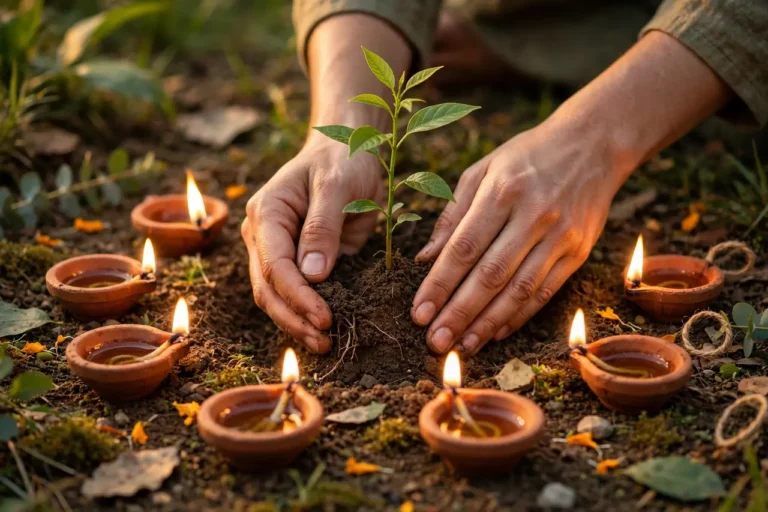
Nothing says Diwali like the warm, flickering glow of clay diyas. Before you buy a single string light, plan your diya layout — it is the soul of Diwali home decoration, and it costs almost nothing. A hundred traditional clay diyas cost less than a single strand of premium fairy lights, yet their effect is unmatched: real flames, real warmth, real tradition.
Choose the right diyas for each spot
Plain terracotta diyas are your workhorses — buy them by the hundred for stairs, pathways, and window ledges. Painted and decorated diyas, with their bright colors and mirror work, belong where guests will see them up close: the coffee table, the dining table, and the puja altar. Brass and copper diyas are heirlooms — reserve the finest for the main puja lamp, which traditionally burns through the night. Floating diyas go in urlis (wide brass bowls filled with water and flower petals) at the entrance, and LED diyas are the safe choice for homes with toddlers, pets, or apartments with flame restrictions. Our detailed guide on Diwali festival of lights guide compares oil types and placement in depth.
Diya placement patterns that look professional
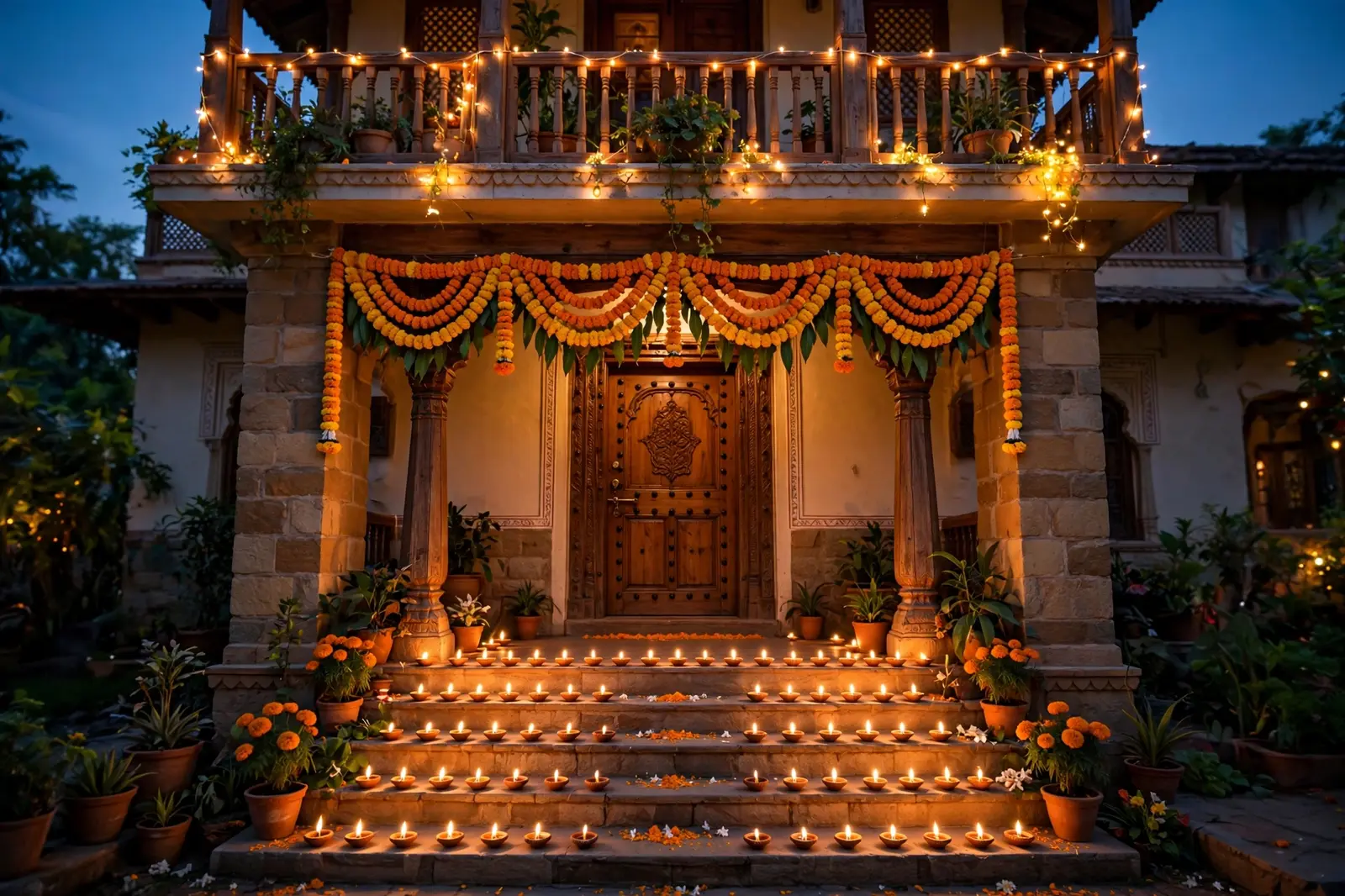
The secret to a designer look is repetition and rhythm. Line both sides of your entrance steps with diyas spaced evenly — odd numbers (3, 5, 7) per step look more natural than even rows. Trace the outline of your rangoli with small diyas to make the design glow after dark. On the balcony, cluster diyas in groups of three or five inside glass hurricane holders so the wind cannot kill them. Indoors, a brass tray of five diyas surrounded by marigold petals makes an instant centerpiece. For window sills, alternate lit diyas with small potted plants or flower bowls so the light has something to play against. And the classic: a continuous line of diyas along the boundary wall or compound gate, visible from the street, announcing the festival to the whole neighborhood.
How many diyas do you actually need?
For a two-bedroom apartment: 40–60 diyas (entrance, balcony, windows, one centerpiece). For a three-bedroom home with a garden or terrace: 80–120. For a large family house with a compound: 150–250. Always buy 20 percent extra — clay diyas crack, some leak, and a few will inevitably be casualties of curious pets. Soak new clay diyas in water for two hours and sun-dry them before filling with oil; this stops the clay from drinking your oil and prevents heat cracking.
Fairy Lights and String Lights: The Modern Glow
Diyas bring tradition; fairy lights bring magic. The two together — real flame plus tiny warm LEDs — is the signature Diwali 2026 look. The rules are simple: warm white always (cool white reads as Christmas, not Diwali), layer at least two heights, and never leave a dark corner.
Where string lights make the biggest impact
Drape fairy lights in swags along the balcony railing, letting them dip between each post like a garland. Outline the main door frame with a single strand so the entrance glows from the street. Inside, run lights along the top of bookshelves, around window frames, and behind sheer curtains — the fabric diffuses the glow into something dreamy. Wind a strand through your indoor plants; the leaves catch the light beautifully. For the puja room, a curtain of fairy lights behind the deities creates a halo effect that photographs wonderfully.
Outdoor lighting that survives the night
Outdoor-rated LED strings are non-negotiable for balconies, terraces, and gardens — indoor strands will fail at the first touch of dew or Diwali-night drizzle. Solar-powered fairy lights are brilliant for pathways and garden beds: charge all day, glow all evening, zero wiring. For trees, use net lights or wrap-and-go strings, working from the trunk outward. If you want the old-school festive look, paper lantern strings and marigold-colored LED curtains on the terrace wall give you that wedding-pandall feel at home.
Smart combinations to try this year
Try pairing warm fairy lights with fresh marigold garlands along the staircase banister — greenery plus gold light is the most photographed Diwali combination for a reason. Line the dining table with a runner of eucalyptus or mango leaves, tuck LED tea lights between the leaves, and set your painted diyas on top. In the living room, fill glass apothecary jars or simple mason jars with a coil of fairy lights and a handful of dried rose petals: instant lanterns for every side table.

Torans: Dressing Your Doorways
The toran — the garland hung over the main door — is Diwali’s welcome sign. Traditionally made of mango leaves and marigolds, it is believed to invite prosperity and keep negativity out. In 2026, torans come in every material imaginable, and mixing a fresh one at the main door with decorative ones inside is the current trend.
Fresh torans: mango leaves and marigolds
The classic toran strings fresh mango leaves with marigold flowers on a cotton thread. Mango leaves stay green for three to four days if you mist them lightly each morning; marigolds hold their color for the full five days of Diwali. Make the toran the day before Dhanteras so it is at its freshest for Lakshmi Puja. A standard main-door toran needs about 25–30 mango leaves and 15–20 marigold heads. Hang it with the leaves pointing downward — this is the traditional orientation — and secure it with small hooks rather than tape, which damages paint.
Fabric, pearl, and artificial torans
For interior doorways — bedroom doors, the puja room, the kitchen entrance — reusable torans are practical and pretty. Bandhani and mirror-work fabric torans in red, orange, and gold bring Rajasthani richness. Pearl and bead torans suit modern minimalist homes. Artificial marigold torans have become remarkably lifelike; keep one quality set for the main door as a backup if fresh flowers wilt early. Whatever you choose, match the toran’s colors to your door: deep reds and oranges pop against white and cream doors, while gold and green suit dark wooden doors.
Toran placement beyond the main door
Do not stop at the entrance. A small toran over the puja room door marks it as sacred space. Hang a toran across the top of a large mirror and the reflection doubles the effect. Short toran swags on either side of windows frame the fairy lights behind them. Even the balcony railing benefits: string a lightweight flower toran along its length for a continuous festive border visible from inside and out.
Fresh Flowers: The Fragrance of Diwali
Flowers do what no LED can: they bring scent, softness, and living color into Diwali decoration. Marigolds are the undisputed star — cheap, long-lasting, and available in the oranges and yellows that define the festival palette. But a thoughtful mix of flowers elevates your home from festive to unforgettable.
Which flowers to buy and how much
For a full home, buy in bulk the morning of Dhanteras: 4–5 kg of marigold strings for torans and garlands, 2 kg of loose marigold heads for rangoli borders and urli bowls, a dozen roses (red and yellow) for the puja room and dining table, and a few bunches of jasmine or rajnigandha (tuberose) for fragrance near the entrance. Chrysanthemums in white and yellow last the longest — up to a week — and fill large vases cheaply. Orchids and carnations, though pricier, survive the full five days without wilting and suit modern arrangements.
The urli: Diwali’s most beautiful decoration
Fill a wide brass or copper urli with water, scatter marigold heads and rose petals across the surface, and float three to five diyas on top. Place it at the entrance, in the foyer, or as a dining table centerpiece. Change the water daily and it stays fresh through Bhai Dooj. For a modern twist, use a glass bowl instead of brass and add a strand of waterproof LED fairy lights under the water — the glow through the petals is mesmerizing after dark.
Keeping flowers fresh for five days
Mist garlands and torans with water every morning. Keep loose flowers in the refrigerator overnight in a damp cloth bag. Add a teaspoon of sugar and a few drops of lemon juice to vase water to extend cut-flower life. Avoid placing flower arrangements near lit diyas — the heat wilts petals within hours — and keep them out of direct afternoon sun.
Room-by-Room Diwali Decoration Plan
A whole-home plan keeps you from over-decorating one corner and forgetting another. Work through this sequence in the two days before Diwali.
Entrance and foyer
This is your first impression — spend your best effort here. Hang the fresh mango-leaf toran over the main door, flank the doorway with two large potted marigold plants or brass planters, and line the steps with diyas. Place the urli bowl to one side of the door with floating diyas. Add a rangoli at the threshold (see our festival lights guide for the tradition behind it) and outline it with diyas after dark. A “Shubh Deepavali” door hanging or a small chalkboard with a festive message completes the welcome.
Living room
Layer light at three heights: fairy lights along the curtain rod or bookshelf tops, diyas and candles at table height, and a floor-level glow from diyas along the skirting or a low lantern cluster in the corner. Drape a marigold garland across the mantel or TV console, and swap your everyday cushion covers for silk or brocade ones in jewel tones — deep red, emerald, royal blue, gold. A brass tray centerpiece with five painted diyas, marigold heads, and a few tea lights anchors the coffee table.
Puja room or altar
The puja space deserves the most reverent decoration. Drape a fresh flower toran over its door, hang a curtain of fairy lights behind the deities, and arrange brass diyas — including the main akhand jyot lamp — on a clean cloth. Fresh rose and jasmine garlands for the idols, a new altar cloth in red or yellow silk, and bowls of fresh fruit complete the setup. Keep this room’s decoration natural and flame-forward; it is the spiritual heart of your Diwali.
Dining room
Your guests will spend hours here, so make it glow. A table runner of mango leaves or eucalyptus down the center, LED tea lights tucked between the leaves, painted diyas as place markers, and a low urli or flower bowl as the centerpiece. Tie napkins with a single marigold head and a sprig of leaves — a five-second touch that looks professionally styled. If you are serving a full Diwali feast, our Christmas traditions in India piece shows how Indian families style festive tables for other celebrations too.
Bedrooms
Bedrooms need only a whisper of Diwali: a small toran on the door, two diyas on the windowsill (LED if you will be out), fairy lights around the headboard or mirror, and fresh flowers on the dresser. Swap to festive bed linen if you have it — even a gold throw over the foot of the bed changes the mood.
Balcony, terrace, and garden
Outdoor spaces carry the neighborhood-facing half of your decoration. String lights along railings, diyas in hurricane holders on every flat surface, solar lights along pathways, and marigold plants in every empty pot. If you have a terrace, a seating corner with floor cushions, a low table of diyas, and a lantern cluster becomes the evening hangout spot through the whole festival week.

Diwali Decoration Budget Planner
You do not need to spend a fortune. This table shows realistic costs for the ideas in this guide, so you can mix high-impact cheap wins with one or two splurges:
| Decoration Idea | Approx. Cost | Time Needed | Best For |
|---|---|---|---|
| 100 clay diyas + oil and wicks | Low | 1 hour (soak + arrange) | Steps, pathways, windows |
| Fairy light strands (3–4, warm white) | Low–Medium | 1–2 hours | Balcony, curtains, shelves |
| Fresh mango-leaf + marigold toran | Low | 45 minutes to make | Main door |
| Brass urli with floating diyas | Medium | 20 minutes | Entrance, dining centerpiece |
| Bulk marigolds (5 kg strings + loose) | Low | 1 hour (stringing) | Garlands, rangoli, vases |
| Painted diya set (12 pieces) | Low–Medium | Ready-made | Table centerpieces, gifting |
| Rangoli colors + stencils | Low | 1–3 hours | Entrance threshold |
| Silk cushion covers (set of 5) | Medium | 10 minutes | Living room refresh |
| Solar pathway lights (set of 6) | Medium | 30 minutes | Garden, driveway |
| Brass diya pair (heirloom quality) | Medium–High | Ready-made | Puja altar |
| LED curtain lights for puja backdrop | Low | 30 minutes | Puja room halo effect |
| Fresh flower arrangements (roses, tuberose) | Medium | 30 minutes | Puja room, bedrooms |
Budget-Friendly Decoration Hacks
Buy diyas from local potters, not malls: street-side kumhars sell diyas at a fraction of boutique prices, and you support a traditional craft. Reuse last year’s fairy lights: test every strand in September and replace only the dead ones. Grow your own marigolds: plant seedlings in September and you will have free garland material by Diwali. DIY your toran: a fresh mango-leaf toran costs almost nothing if you string it yourself — the leaves are often free from a friendly neighbor’s tree. Repurpose glass jars: old jam jars and pickle bottles become lanterns with a coil of fairy lights inside. One statement piece per room: rather than scattering small decorations everywhere, invest effort in a single striking arrangement per room — an urli, a diya cluster, a garland swag — and let it carry the space.
Diya and Light Safety Tips
Never leave flames unattended: extinguish all diyas and candles before sleeping or leaving home — switch to LED diyas for overnight displays. Keep flames from fabrics: diyas need at least a foot of clearance from curtains, torans, cushion covers, and paper decorations. Stable surfaces only: place diyas on brass trays, stone, or ceramic plates — never directly on wood, plastic, or cloth. Outdoor-rated electrics: only use IP44-rated (or better) light strings outdoors, and keep connections off the ground. Child and pet zones: use LED diyas exclusively in rooms where children play or pets roam, and keep real flames above their reach. Fire safety basics: keep a bowl of sand or a small fire extinguisher near your main diya display, and know where your home’s main electrical switch is before you hang a dozen light strands.
Decorating for Different Home Styles: Traditional, Modern & Fusion
Not every home wants the same Diwali. Match your decoration to your interior style and the whole house feels intentional rather than cluttered.
Traditional homes lean into the classics: brass urlis, fresh mango-leaf torans, rows of plain terracotta diyas, marigold garlands on every doorway, and a rangoli at the threshold. The palette is marigold orange, deep red, and gold. Banana stems flanking the entrance (a South Indian tradition) and mango-leaf festoons across the ceiling complete the look. Nothing here needs to be bought new each year except flowers and diyas.
Modern minimalist homes do Diwali with restraint: a single statement urli, three oversized glass hurricane diyas instead of thirty small ones, one strand of warm fairy lights rather than five, and orchids instead of marigolds. Stick to two colors — gold and white, or copper and cream — and let negative space do the talking. LED candles in frosted holders give you the glow without visual clutter, and a lone toran of white jasmine over the main door is quietly stunning.
Fusion homes mix it up: a traditional rangoli beside a Scandinavian sideboard, fairy lights woven through a monstera plant, diyas lined up on a concrete windowsill. The rule for fusion is contrast with intention — one traditional hero piece per room (the urli, the toran, the brass diya set) surrounded by your everyday modern pieces. It photographs beautifully and feels personal rather than themed.
Your Diwali 2026 Decorating Timeline
Two weeks before: deep-clean the house, test all fairy light strands, and order or buy diyas, torans (reusable ones), and cushion covers. One week before: hang fairy lights, set up the puja room backdrop, arrange indoor plants, and buy non-perishable decor. Three days before (Dhanteras): buy fresh flowers and mango leaves, string the fresh toran, make the rangoli base sketch, and soak clay diyas. Diwali eve: hang the fresh toran, lay marigold garlands, fill the urli, arrange diyas (unlit), and do a full lighting test after dark. Diwali morning: draw the rangoli, place fresh flowers, fill diyas with oil and wicks. At dusk: light everything, starting with the puja altar lamp. This staged approach means you are enjoying the festival — not frantically decorating — when guests arrive.
Photographing Your Diwali Decorations
After all that effort, capture it properly. Shoot at blue hour — the 20 minutes after sunset when the sky is deep blue and your diyas and fairy lights glow against it; this is when Diwali homes look most magical. Turn off overhead lights and let the diyas and fairy lights be the only illumination for moody, glowing shots. Get low for rangoli photos — shoot from standing eye height looking down at an angle rather than directly overhead for depth. Use portrait mode on your phone for urli and diya close-ups; the blurred background makes flames glow. And photograph the entrance from the street at night — that is the view your neighbors get, and it is usually the most impressive one. These photos, paired with lines from our Happy Diwali quotes, make greetings people actually save.
Watch: Beautiful Flower Rangoli and Decoration Ideas
Need visual inspiration? This video walks through gorgeous flower rangoli designs that pair perfectly with the diya and toran ideas above — watch how the colors come together, then adapt the patterns for your own entrance:
Frequently Asked Questions About Diwali Home Decoration
When should I start decorating my home for Diwali 2026?
Start deep cleaning and planning two weeks before Diwali, hang fairy lights and set up reusable decorations the weekend before, and add fresh elements — the toran, marigold garlands, rangoli, and lit diyas — on Dhanteras or the day before Lakshmi Puja. Fresh flowers are best bought the morning of Dhanteras so they stay vibrant through all five days. If you want a day-by-day plan, our festival of lights guide maps the full five-day celebration.
How do I decorate a small apartment for Diwali?
Focus on the entrance, one statement wall, and the dining table. A toran on the main door, fairy lights around the living room window, a brass-tray diya centerpiece, and a small urli bowl deliver the full festive effect in under 500 square feet. Use LED diyas freely — they are safe, reusable, and look convincing in small spaces. Mirrors multiply light, so place diyas and fairy lights where they will reflect.
What is the traditional order for lighting diyas on Diwali night?
Traditionally, the first diya is lit at the puja altar during Lakshmi Puja, then diyas are placed at the main entrance (to welcome Goddess Lakshmi), at the tulsi plant or sacred spots, along windows and balconies, and finally along the boundary or gate. Lighting begins at dusk — the exact muhurat varies by year and location, so check your local panchang for 2026 timings.
How can I make my Diwali decoration eco-friendly?
Choose clay diyas over plastic ones, buy flowers from local vendors instead of imported decor, use LED or solar lights to cut electricity use, avoid single-use plastic torans and thermocol decorations, and compost your marigold garlands after the festival instead of binning them. Beeswax or soy candles are cleaner-burning alternatives to paraffin tea lights.
How do I keep marigold garlands fresh for all five days?
Mist them with water every morning, keep them out of direct afternoon sun, and store spare garlands in the refrigerator overnight wrapped in a damp cloth. Marigolds naturally last 4–5 days; roses and tuberose last 2–3 days, so buy those closer to the main Puja day. Our Happy Diwali quotes collection pairs nicely with photos of your fresh decorations for festive greetings.
Can I decorate for Diwali if I live outside India?
Absolutely — and many NRIs do it beautifully. Source diyas and torans from Indian grocery stores or online, use LED diyas where open flames are restricted by building rules, and lean on fairy lights, marigolds (available at most flower markets in October), and rangoli stencils for the festive look. Our guide on New Year traditions in India shows how festival decorating travels across cultures and continents.
The Bottom Line
Diwali home decoration is not about spending the most — it is about layering light, color, and fragrance until your home feels like the festival itself. Start with diyas, add fairy lights, dress your doorways with torans, and let fresh flowers do the rest. Plan room by room, buy fresh at the right time, and never compromise on flame safety. Do that, and when the sun sets on Lakshmi Puja night, your home will glow exactly the way Diwali is meant to: warm, welcoming, and full of light. Happy Diwali 2026!