The diyas are lit, the puja is done, dinner is over, and now comes the dangerous part of Diwali night: the long, glowing evening when everyone is full, happy, and starting to reach for their phones. This is the moment that separates a good Diwali from a legendary one. The wonderful families who play together on Diwali night are the families whose celebrations get talked about with love for years.
Games are the secret engine of Diwali night. They bridge generations, giving grandparents and grandchildren something to do together. They fill the hours between dinner and fireworks with laughter instead of scrolling. And they create the legendary family stories everyone retells, the wildly disputed tambola win, the dramatic last-minute card-game comeback, the uncle who takes musical chairs far too seriously, that become family legend.
This guide gives you thirty-five diwali games for family night, organized from timeless classics to modern twists, with complete setup instructions, player counts, variations, and hosting tips. Whether your family is fiercely competitive or just wants to laugh together, whether you have toddlers or teenagers or ninety-year-olds at the table, you will find wonderful games that fit your family perfectly. Let the games begin, and may the best family win.
Why Games Belong at the Heart of Diwali Night
Diwali night has a natural rhythm: the sacred (puja), the communal (dinner), and then the celebratory, which is where games live. Without something to do, that third phase dissolves into people drifting to separate rooms. Good games hold the whole group together through the evening’s best hours, and they do something phones cannot: they create shared attention, everyone focused on the same moment, reacting together, remembering together.
There is also a beautiful cultural fit. Card games on Diwali night are a tradition in many families, rooted in the legend of Shiva and Parvati playing dice. Tambola (housie) is practically a festival institution. You are not inventing something new; you are continuing something old, with a few fresh additions for the modern family.
“The families who laugh and play together on Diwali night are the families whose celebrations get talked about fondly for years.”
Setting Up Game Night for Success
A little preparation turns chaotic fun into smooth fun. Before the night begins, designate a game zone with enough seating, good lighting (you need to see cards and tickets), and a surface for game materials. Prepare a simple scoreboard, even a whiteboard or chart paper, because visible scores fuel friendly rivalry. Stock small prizes in advance. And appoint one enthusiastic person as the game master for each game; games with a confident host run twice as well as games everyone tries to run together.
| Group Size | Best Game Types | Avoid |
|---|---|---|
| 4-8 players | Card games, board games, team quizzes | Games needing large teams |
| 8-15 players | Tambola, party games, relay games | Slow turn-based strategy games |
| 15+ players | Tambola, bingo variants, big team competitions | Games with long individual turns |
| Mixed ages | Simple rules, luck-based games, team formats | Complex strategy, long explanations |
| Mostly kids | Active games, short rounds, instant prizes | Anything lasting over 20 minutes |
35 Diwali Games for Family Night
The games, grouped by style. Each includes player count and a quick how-to so you can start immediately.
Timeless Diwali Classics
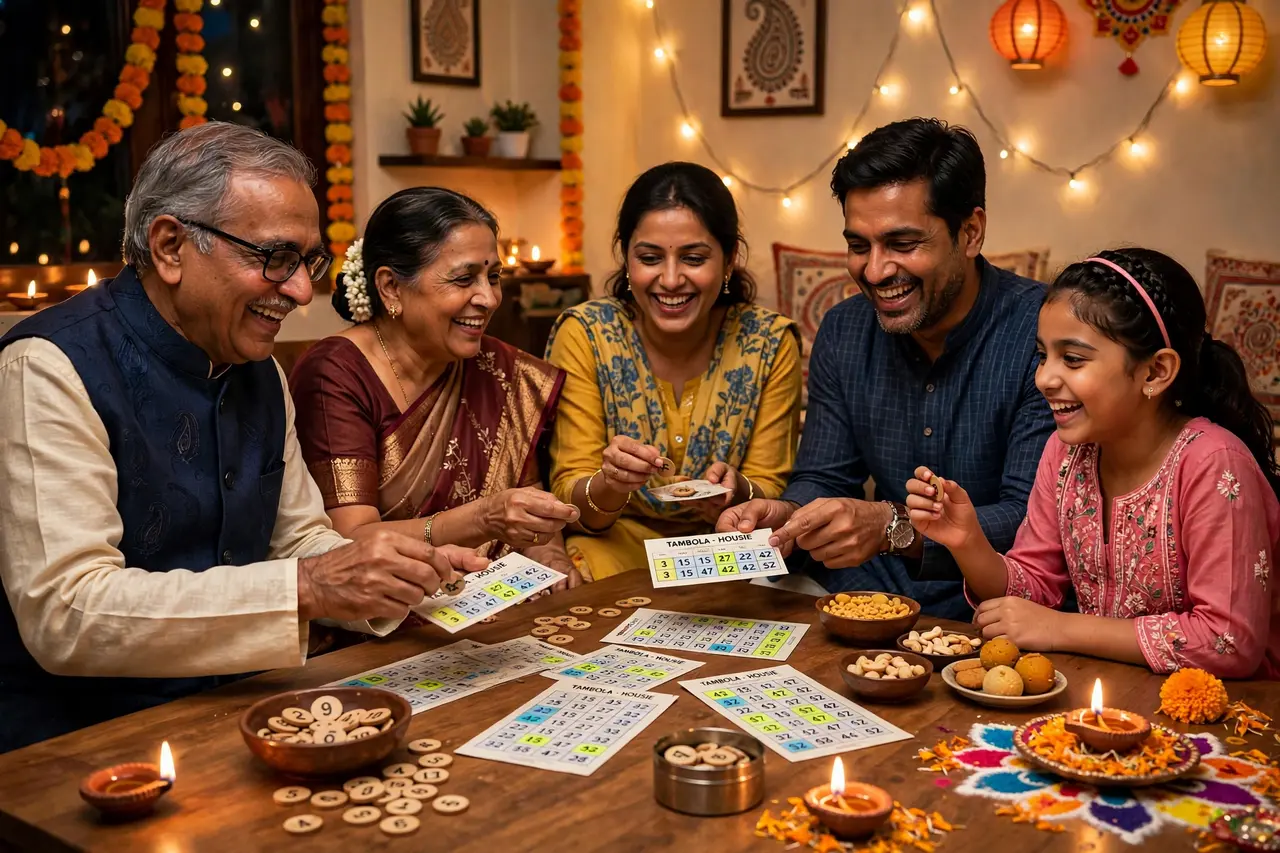
- Tambola (Housie). The undisputed king of Diwali games. One caller, numbered tickets for everyone, prizes for lines and full house. Works for 5 to 50 players, all ages. Pro tip: use Diwali-themed calls (“Diya number 1!”) for extra festivity.
- Teen Patti (Flash). The traditional Diwali card game. Simple betting rounds that even beginners learn in minutes. Set a small fixed buy-in of sweets or tokens to keep it friendly.
- Rummy. For the card sharks. Thirteen-card Indian rummy rewards skill and keeps serious players engaged for hours.
- Bluff (Cheat). A hilarious card game of deception that gets funnier as the night goes on and the acting gets worse.
- Antakshari. The classic Bollywood singing battle, teams taking turns with songs starting from the last letter. No equipment needed, infinite entertainment.
- Dumb Charades (Bollywood edition). Act out movie titles while your team guesses. Restrict to festive or classic films for a Diwali twist.
Active Party Games
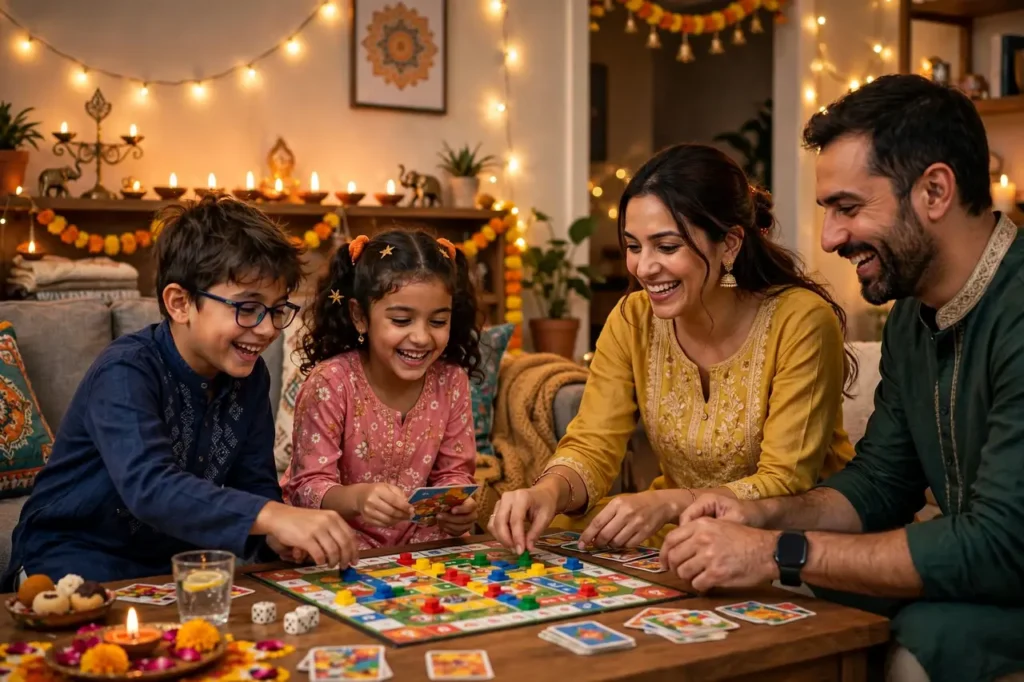
- Musical Chairs, Diwali style. Chairs in a circle, festive music, one chair removed each round. The sight of uncles diving for chairs is worth the entire evening.
- Pass the Parcel with dares. Wrap a prize in many layers; each layer removed reveals a dare or question. The final unwrapper keeps the prize.
- Balloon pop relay. Teams race to pop balloons by sitting on them, each balloon containing a Diwali trivia question to answer first.
- Spoon and lemon race. The school sports day classic, now with festive stakes. Surprisingly competitive among adults.
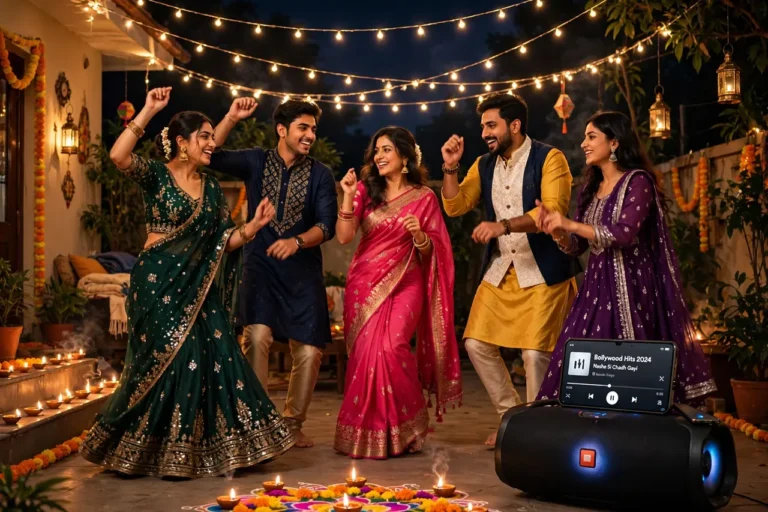
- Freeze dance. Dance to Bollywood hits; freeze when the music stops. Last dancer moving is out. The photos are gold.
- Tug of war: family vs. family. If you have outdoor space, nothing bonds like a good-natured tug of war. Men vs. women is traditional and heated.
” alt=”Kids and adults playing a festive party game on Diwali night”>
Brain Games and Quizzes
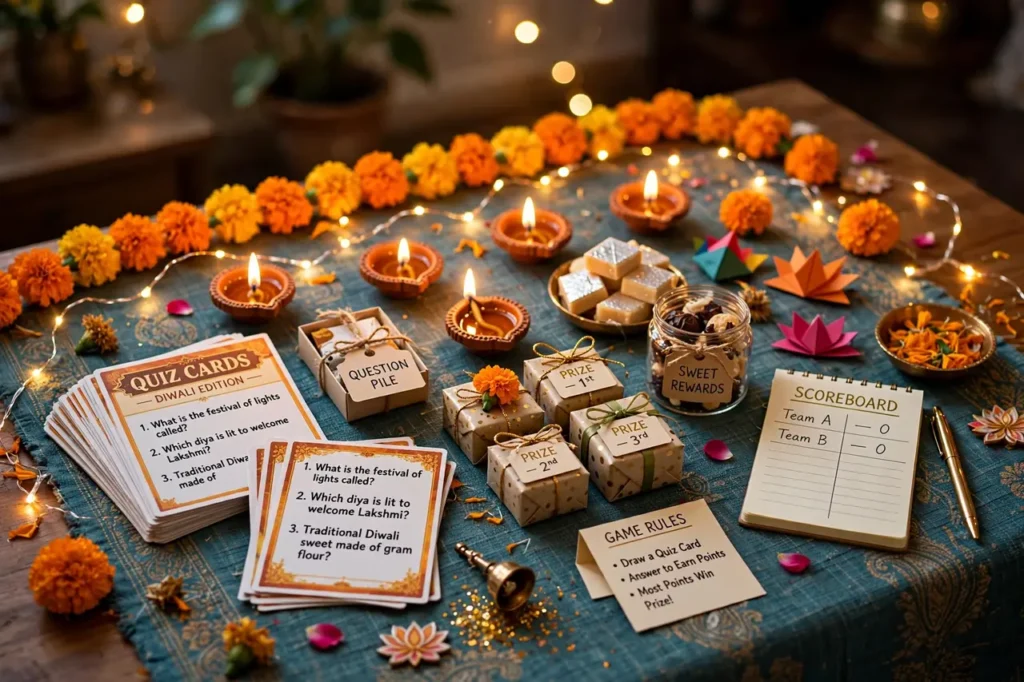
- Diwali trivia championship. Questions about the festival’s stories, traditions, and regional customs. Teams of mixed ages work best, combining elders’ knowledge with kids’ speed.
- Guess the mithai. Blindfolded tasting of different sweets. Harder than it sounds, and hilarious to watch.
- Bollywood dialogue quiz. Play famous dialogues; teams guess the movie. A guaranteed crowd-pleaser in film-loving families.
- Memory tray game. A tray of Diwali items shown for 30 seconds, then hidden; players list what they remember. Simple, surprisingly hard.
- Word chain: festival edition. Each word must relate to Diwali and start with the last letter of the previous word. Diya, aarti, incense…
- Two truths and a lie: family edition. Each person shares three Diwali memories, one invented. The family votes on the lie. Secrets emerge.
Games for the Little Ones
- Diya hunt. Hide small LED diyas around the house; kids search with a checklist. Like Easter eggs, but glowing.
- Pin the flame on the diya. The birthday-party classic with a festive reskin. Blindfolds and giggles guaranteed.
- Rangoli coloring contest. Print rangoli outlines; kids color them in. Judge on creativity, display all entries proudly.
- Statue dance. Musical statues with a festive name. Kids love it, and it burns off mithai energy.
- Balloon stomp. Balloons tied to ankles; last balloon intact wins. Contained chaos, maximum laughter.
- Story stones. Painted stones with Diwali images; kids draw stones and build a story together. Quiet, creative, lovely.
” alt=”Diwali party game setup with quiz cards and prizes”>
Card and Dice Favorites
- Uno with house rules. Add Diwali house rules: every skip means singing a festive line, every draw-four comes with a dare. Familiar game, fresh chaos.
- Satte Pe Satta (Sevens). A simple, fast card game everyone from 8 to 80 can play. Great filler between bigger games.
- Dice jackpot. Roll dice for points across rounds; highest total wins. Pure luck means grandparents and grandkids compete evenly.
- Mendikot. The classic Indian trick-taking game for serious card players who want something meatier than Teen Patti.
- Donkey (Gadha). The silly card-passing game where nobody wants to be left holding the donkey. Kids find it endlessly funny.
Team Competitions and Grand Finales
- Family Olympics. Five quick events, spoon race, trivia sprint, balloon pop, dumb charades lightning round, memory tray, with cumulative team scores.
- The Great Diwali Cook-Off. Teams get 30 minutes and mystery ingredients to create a festive snack. Elders judge. Delicious either way.
- Lip-sync battle. Teams perform Bollywood numbers with full drama. Costumes from the dress-up box encouraged.
- Human bingo. Bingo cards with family traits (“has been to Varanasi,” “can name 5 mithai”); mingle to fill the card. Perfect icebreaker for big gatherings.
- The Diwali awards ceremony. End the night with silly awards: best dancer, loudest cheerer, most dramatic tambola loss, best-dressed. Everyone wins something.
Prizes That People Actually Want
Prizes fuel participation, but they do not need to be expensive. The best Diwali game prizes are festive, funny, or delicious: boxes of premium mithai, small diyas in gift packaging, scented candles, lottery-style scratch cards, “chore coupons” redeemable against family members, the coveted title of Diwali Champion with a handmade crown, or simply the right to choose tomorrow’s movie. For kids, instant small prizes per round beat one big prize at the end; their attention spans demand immediate rewards. Wrap even small prizes nicely; the unwrapping is half the fun.
One caution: keep betting games friendly. If Teen Patti or similar games involve money, set a tiny fixed buy-in agreed by all, or play for sweets and tokens instead. The moment money creates tension, the festival spirit evaporates. Games should end with laughter, not ledgers.
Matching Games to Ages
| Age Group | Best Picks | Tips |
|---|---|---|
| Under 5 | Diya hunt, statue dance, coloring contest | Short rounds, instant prizes, no elimination |
| 6-12 | Balloon stomp, treasure hunt, Uno, dumb charades | Team them with adults for harder games |
| Teens | Lip-sync battle, trivia, freeze dance, card games | Let them run the music and be game masters |
| Adults | Teen Patti, rummy, tambola, antakshari | The classics never fail |
| Elders | Tambola, antakshari, memory games, storytelling | Comfortable seating, good lighting, no rushing |
| All ages together | Tambola, dumb charades, trivia teams, awards | Mix ages on teams; luck-based games level the field |
The magic formula for mixed-age fun is teams that blend generations. A team with a grandmother’s wisdom, a parent’s strategy, and a child’s speed is unbeatable and unforgettable. Deliberately mix ages rather than letting the kids cluster together; the cross-generational bonding is the point.
Hosting Tips: Keeping the Energy High
- Start with something easy. Open with tambola or antakshari, games everyone knows, to warm up the room before introducing anything new.
- Keep explanations under two minutes. If a game needs a longer explanation, it is too complicated for the night. Demo one round instead of lecturing.
- Read the room. If energy dips, switch to something active. If the room is wired, switch to something calm. The game master is also the energy manager.
- Do not force participation. Some people genuinely prefer watching. Let them keep score, take photos, or heckle lovingly from the sidelines.
- End on a high. Stop while everyone is still having fun, not when they are exhausted. The awards ceremony is the perfect finale.
- Capture the chaos. Assign someone to photograph the games. The mid-game faces, concentration, triumph, despair, are the photos you will treasure.
For more ideas on celebrating together at home, our anniversary celebration at home guide and romantic date ideas at home share the same philosophy: the best celebrations are the ones where everyone participates. And when the night winds down, our Happy Diwali quotes make perfect captions for your game-night photos.
The Diwali Card Party: A Beloved Tradition
No discussion of Diwali games is complete without the card party, a tradition with genuine mythology behind it. Legend says that on Diwali night, Goddess Parvati played dice with Lord Shiva, and he decreed that anyone who gambled on this night would prosper through the year. Whether or not you believe the legend, the tradition stuck: for generations, Diwali night has meant cards, laughter, and friendly stakes.
The modern family card party keeps the spirit while ditching the stress. Set a festive table with good lighting, provide snacks within arm’s reach, and choose games the whole table can play. Teen Patti is traditional; rummy satisfies strategists; bluff keeps everyone laughing. Agree on the format before dealing: fixed small buy-in, play money, or sweets as currency. The cards are an excuse; the real game is togetherness. Deal everyone in, including the beginners, and teach as you play. Some of the best Diwali memories are made by the novice who wins their first hand through pure luck.
DIY Games Using Things You Already Have
Forgot to prepare? These games need zero shopping, just household items and imagination.
- The newspaper fashion show. Teams get newspapers, tape, and 15 minutes to create a festive outfit on one model. A runway walk and judging follow. Hilarious and photogenic.
- Cup stacking relay. Plastic cups, two teams, race to build and unbuild pyramids. Simple, loud, thrilling.
- Guess the spice. Blindfolded sniffing of kitchen spices. Cumin versus coriander has ended friendships.
- The flour game. A bowl of flour with a sweet buried inside; players use only their mouths to find it. Messy, memorable, best played outdoors.
- Story building. One person starts a Diwali story with one sentence; each person adds a sentence. The tales get gloriously absurd.
- Telephone with a twist. Whisper a festive phrase around the circle; compare the final version. The distortion is the entertainment.
- Chair trivia. Everyone sits; the game master asks questions. Wrong answer means standing until someone else errs. Last seated wins.
The best DIY games share a trait: they use the familiar in unfamiliar ways. Your kitchen and living room are already full of game equipment; you just have to see it.
Virtual Games for Family Far Away
When family cannot gather in person, game night goes online, and it can still be wonderful. Video-call tambola works beautifully: one person shares their screen as the caller, everyone plays tickets at home. Online trivia platforms let far-flung cousins compete in real time. Dumb charades over video is chaotic in the best way. Antakshari works perfectly across screens.
Tips for virtual game night: send tickets or materials in advance, keep groups small enough that everyone can be seen, appoint a tech-savvy host to manage the platform, and schedule across time zones with kindness. Mail small prizes to winners afterward; receiving a Diwali parcel days later extends the joy. Distance is no excuse for missing the laughter.
Game Night Snacks: Fuel for the Fun
Gaming runs on snacks. The ideal game-night spread is finger food that does not grease up the cards: namkeen mixes, roasted nuts, cut fruit, mini sandwiches, and bite-sized mithai. Keep drinks in spill-proof cups near card tables, a lesson learned through experience. Schedule a halftime snack break rather than letting people graze distractedly; the pause refreshes energy and gives the game master time to set up the next round. And always have chai ready. In Indian households, chai is not a beverage; it is a game mechanic.
Building Your Family’s Game Night Tradition
One great game night is fun. A game night tradition is legacy. Families with Diwali game traditions report something interesting: the games become part of the family’s identity, referenced year-round. “Remember when Dad lost at tambola three years running?” becomes shorthand for belonging. To build yours, start simple: pick three anchor games you play every Diwali, add one new game each year to keep it fresh, and keep a running champions board. Photograph the winners with their prizes. Let kids graduate to harder games as they grow; the promotion is a rite of passage. Traditions do not need to be ancient to be meaningful. They just need repetition with love.
The Beautiful Psychology of Festival Play
There is real science behind why game night feels so good. Play triggers laughter, and laughter synchronizes groups physiologically, heart rates align, stress hormones drop, bonding hormones rise. Games also create what psychologists call “shared adversity,” even trivial adversity like losing at cards bonds people. For families that only gather at festivals, these compressed hours of play do the bonding work of months of ordinary contact. And for children, festival games become core memories, the sensory-rich, emotionally warm experiences that shape how they feel about family and tradition for life. You are not just passing time. You are building the emotional architecture of your family.
Game Night Ideas for Couples
After the family games wind down, couples deserve their own playful hour. Try the newlywed-style quiz with Diwali questions about each other, a two-player card game tournament, or a private tambola with romantic dares instead of prizes. Cook a midnight snack together as a team challenge. Or simply play twenty questions with festival memories: first Diwali together, funniest celebration disaster, dream Diwali trip. Intimacy is playfulness sustained, and Diwali night, glowing and unhurried, is made for it.
Deal Everyone In
Thirty-five games, one principle: nobody sits out unless they choose to. The shy cousin gets the easy tambola ticket. The competitive uncle gets the card table. The toddler gets the diya hunt. The grandmother gets the front-row seat for antakshari. A great Diwali game night is inclusive by design, and the host’s real job is making sure every person in the room has a moment to shine. Shuffle the cards, light the diyas, gather the generations around one table, and deal everyone in. This is the night your family will talk about all year long.
Watch: Diwali Theme Tambola and Party Games
See festive Diwali party games in action, including themed tambola and group games perfect for family night:
Your Printable Game Night Planner
Use this template to plan the evening in ten minutes:
- 8:00 PM: Opener, tambola round one while stragglers arrive and settle with snacks.
- 8:40 PM: Active game, musical chairs or freeze dance to lift the energy.
- 9:10 PM: Snack and chai break, halftime socializing.
- 9:30 PM: Team game, dumb charades or trivia with mixed-age teams.
- 10:10 PM: Card tables open for the serious players; kids’ movie or quiet game in the other room.
- 11:00 PM: Grand finale, the awards ceremony with silly titles for everyone.
- 11:20 PM: Sparklers outside together, the perfect ending.
Adjust timings to your family’s rhythm, but keep the arc: easy opener, energy peak, calm middle, competitive late games, joyful finale. Print the plan, assign a game master per slot, and enjoy being the host who actually gets to play.
Frequently Asked Questions
What is the best game for a large Diwali family gathering?
Tambola (housie) is the best all-rounder for large groups: it handles 5 to 50 players, all ages play together, and it needs minimal explanation. Dumb charades and antakshari are excellent runners-up.
What games can kids and grandparents play together?
Luck-based games level the field: tambola, dice games, memory tray, and team trivia with mixed-age teams. Avoid complex strategy games and anything requiring speed or physical agility that excludes elders.
How do I keep Diwali game night from getting boring?
Start with a familiar crowd-pleaser, rotate game types every 20 to 30 minutes, mix active and calm games, and end with an awards ceremony while energy is still high. A confident game master who reads the room makes all the difference.
Should we play card games involving money on Diwali?
Keep it friendly: set a tiny fixed buy-in everyone agrees to, or play for sweets and tokens instead of cash. The moment money creates tension, the festive spirit suffers. Many families play Teen Patti purely for fun with no stakes at all.
What prizes work best for Diwali family games?
Mithai boxes, small diyas, scented candles, funny titles and handmade crowns, and “coupon” prizes redeemable against family members. For kids, give small instant prizes each round rather than one big prize at the end.
How long should Diwali game night last?
Two to three hours is the sweet spot for most families. Start after dinner, plan four to six games with breaks, and end with the awards ceremony while everyone is still laughing.
What if some family members do not want to play?
Never force it. Give non-players roles: scorekeeper, photographer, DJ, or judge. Many reluctant participants join in once they see the fun, and willing spectators still feel included.
Can we play these games at a Diwali party with friends too?
Absolutely. Most of these games scale beautifully to friend groups; just lean toward the livelier options like lip-sync battles, freeze dance, and team competitions, and adjust prizes to suit the crowd.
What games work when the power goes out?
Diwali power cuts happen. Keep candlelight-friendly games ready: antakshari, dumb charades, storytelling, two truths and a lie, and the telephone game all thrive by diya light. Some families say their best game nights happened during blackouts.
How do I include family members joining by video call?
Screen-share tambola calling, run trivia through a quiz app everyone can join, and play charades over video. Mail prizes to remote winners afterward. Keep virtual groups small enough that every face is visible.
The Morning After: What Game Night Leaves Behind
The games end, the diyas burn low, and everyone drifts to sleep. But game night leaves things behind that outlast the evening: the champions board with this year’s winners, the photos of mid-game faces that become family classics, the inside jokes that will surface at every gathering for years. (“Remember the flour game?”) Save the scoreboard photo, print the best candid, and add the new champion’s name to the running tally. These artifacts are how a single evening becomes a tradition. Years from now, nobody will remember the score, but everyone will remember the laughter. That is the real prize, and everybody wins it.