Every Diwali morning, millions of people wake up to the same sight: a sky turned grey, streets carpeted in burnt paper and plastic, and air that stings the eyes. The beautiful festival of lights has a growing shadow, and it grows darker every single year. Firecrackers pump particulates and heavy metals into the air, single-use decor piles up in landfills, and food waste peaks during the celebration week. Loving Diwali deeply and loving the planet fiercely can sometimes feel like a painful contradiction.
It is not. An eco friendly Diwali is not a lesser Diwali in any way; in most meaningful ways, it is a more authentic and joyful Diwali celebration. Clay diyas glow warmer than LED strips. Fresh marigolds smell better than plastic garlands ever could. Homemade sweets taste better than packaged ones. The greenest choices are often the most traditional ones, because Diwali was eco-friendly for centuries before consumerism got involved. This complete guide shows you exactly how to return to that, with forty practical and beautiful ideas that lovingly keep every single bit of the magic while leaving all the smog, waste, and guilt far behind.
Whether you are fully committed to a zero-waste Diwali or just want to make a few meaningful swaps, you will find wonderful ideas here for every level: crackers, lights, decor, food, thoughtful gifts, and the conversations that bring skeptical family members along. Let us celebrate the glorious festival of lights together without dimming the bright future.
Why Diwali Needs a Green Rethink
The numbers are sobering. In major Indian cities, air quality routinely spikes to hazardous levels on Diwali night, with particulate matter many times the safe limit. Firecrackers release not just smoke but heavy metals: lead, cadmium, and barium compounds that settle into soil and water. The noise traumatizes pets, wildlife, and vulnerable people, from infants to the elderly to those with sensory sensitivities. Beyond crackers, the festival generates mountains of waste: plastic decor, synthetic rangoli colors that poison soil, gift packaging, and food waste from over-catering.
But here is the hopeful part: none of this is essential to Diwali. The festival’s core, light over darkness, good over evil, is inherently about renewal and care. An eco-friendly Diwali is not a modern imposition on tradition; it is tradition reclaimed from excess. Your grandparents’ Diwali, clay diyas, fresh flowers, homemade sweets, modest fireworks or none, was greener than anything marketed as “eco” today. We are not inventing a new Diwali. We are remembering the real one.
“The greenest Diwali is the most traditional one. Your grandparents celebrated sustainably before it had a name.”
The Green Diwali Framework: Swap, Don’t Sacrifice
The secret to a sustainable Diwali that actually sticks is substitution, not deprivation. For every conventional choice, there is a greener alternative that is equally or more beautiful:
| Conventional Choice | Eco-Friendly Swap | Why It Is Better |
|---|---|---|
| Loud firecrackers | Skip, or quiet sparklers only | Clean air, calm animals, real conversation |
| Plastic diyas | Clay diyas with natural oil | Biodegradable, warmer glow, supports artisans |
| Synthetic rangoli powder | Flower petals, rice flour, turmeric | Compostable, fragrant, safe for soil |
| Plastic garlands | Fresh marigold strings | Biodegradable, fragrant, traditional |
| Power-hungry lights | LED fairy lights on timers | Fraction of the energy, same sparkle |
| Packaged sweets | Homemade mithai | No packaging, better taste, made with love |
| Glossy gift wrap | Cloth, newspaper, or reusable boxes | Zero waste, often more beautiful |
| Disposable tableware | Real plates or banana leaves | No landfill, better experience |
Notice the pattern: the eco swap is usually the more beautiful, more traditional, and more meaningful option. Sustainability is not the enemy of celebration; it is celebration done right.
40 Eco-Friendly Diwali Celebration Ideas
The ideas, organized by area. Start with five that feel easy; add more each year.
Rethinking Firecrackers
- Skip crackers entirely. The single greenest choice. Replace the spectacle with a sparkler moment, a lantern release (biodegradable), or a light show with projectors.
- Choose quiet, low-emission options only. If crackers are non-negotiable for your family, limit to a small number of low-noise varieties and skip the worst offenders entirely.
- Make it a family decision. Discuss the air quality impact openly, especially with kids. Children who understand why become the family’s greenest advocates.
- Celebrate the silence. A cracker-free Diwali night has its own magic: conversation, music, the sound of diyas being lit. Many families report enjoying it more.
- Donate the cracker budget. Redirect what you would have spent on fireworks to a cause: clean-air initiatives, animal shelters, or education. Light over darkness, literally.
Diyas and Lighting, the Green Way
- Buy clay diyas from local artisans. Handmade clay diyas support traditional craftspeople and biodegrade completely. Buy extra; they are inexpensive.
- Use natural oils. Mustard oil, sesame oil, or ghee in diyas instead of paraffin. They burn cleaner and smell wonderful.
- Switch to LED fairy lights. LEDs use a fraction of the energy of incandescent strings. Put them on timers so they do not burn all night.
- Harness solar lights. Solar diyas and solar string lights charge by day and glow by night, with zero electricity cost.
- Reuse last year’s lights. The greenest light is the one you already own. Test strands early and repair rather than replace.
- Light fewer, better diyas. Twenty well-placed clay diyas outshine two hundred scattered carelessly. Intention beats quantity.
” alt=”Clay diyas with flowers and natural petal rangoli, eco-friendly Diwali decor”>
Natural Decor and Rangoli
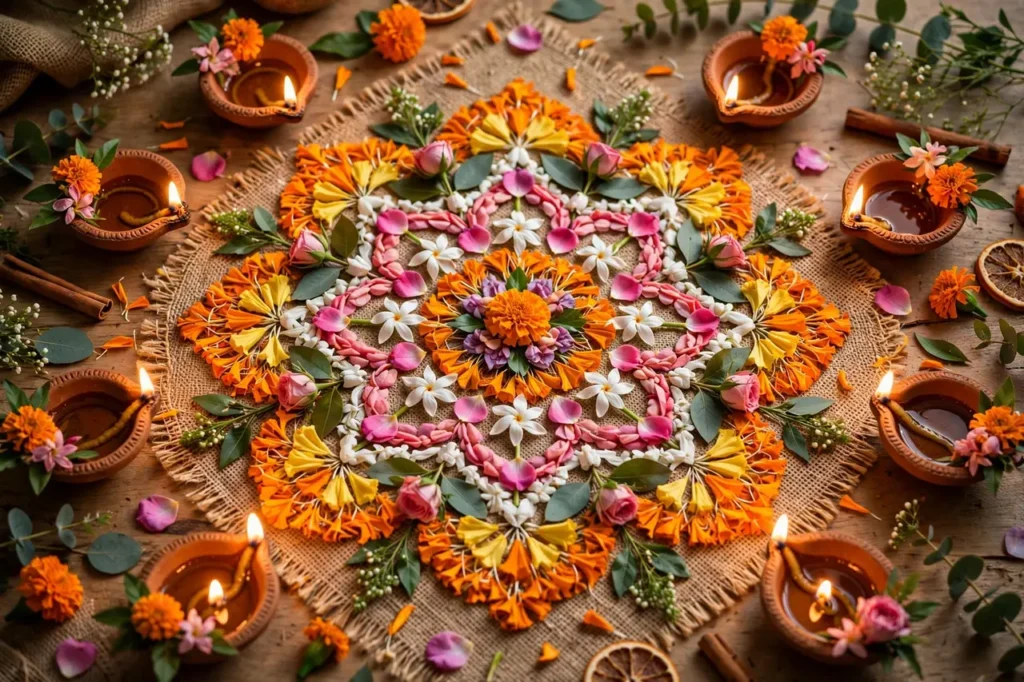
- Make rangoli from flower petals. Marigolds, roses, and chrysanthemums create stunning, fragrant, fully compostable rangoli.
- Use kitchen colors. Turmeric, rice flour, coffee powder, and kumkum make beautiful natural rangoli powders that wash away harmlessly.
- Decorate with fresh flowers. Marigold torans, rose petal trails, and jasmine strings beat plastic garlands in every way that matters.
- Compost everything after. Flowers, petals, and natural rangoli go straight to compost, returning to the earth that grew them.
- Craft with recycled materials. Paper lanterns from old newspapers, bunting from scrap fabric, jars as candle holders. DIY decor is greener and more personal.
- Borrow and share decor. Coordinate with neighbors or family to share large decor items rather than everyone buying new.
Food: The Sustainable Feast
- Cook at home. Homemade mithai and snacks eliminate packaging waste and taste better. Make it a family activity.
- Buy local and seasonal. Source ingredients from local markets, reducing transport emissions and supporting nearby farmers.
- Plan portions to avoid waste. Diwali’s biggest food sin is over-catering. Plan realistically, and have a leftover plan before you cook.
- Share surplus food. Pack extra for neighbors, staff, or local shelters. No festive food should reach a bin while someone is hungry.
- Serve on real tableware. Steel, ceramic, or banana leaves instead of disposables. Wash up together; it is part of the celebration.
- Compost kitchen waste. Peels, scraps, and leftover flowers compost beautifully. Start the bin before the festival.
Green Gifting
- Gift plants. A potted plant, a sapling, or a seed kit is a Diwali gift that literally grows. Tulsi, money plants, and flowering saplings are traditional and perfect.
- Choose experiences over objects. Concert tickets, a cooking class, a spa voucher. Memories do not need packaging.
- Give homemade. Homemade mithai, preserves, candles, or crafts carry love that store-bought cannot match, with a fraction of the footprint.
- Support artisans. Handmade goods from local craftspeople have lower footprints and higher meaning than mass-produced imports.
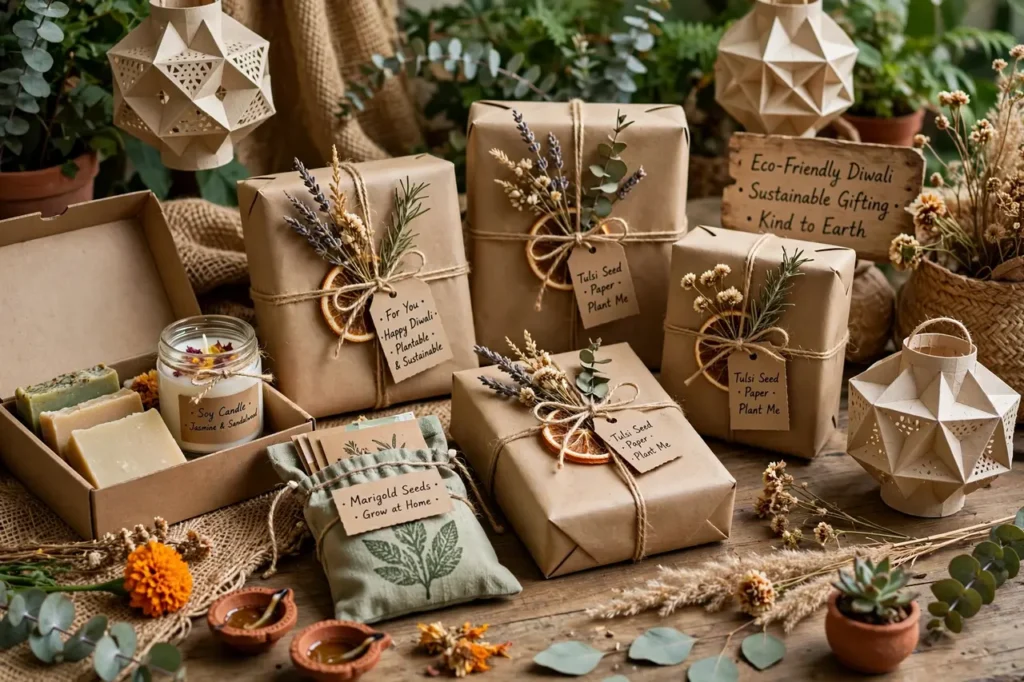
- Wrap sustainably. Cloth wraps (furoshiki-style), newspaper with twine, reusable boxes and bags. Beautiful wrapping does not need to be wasteful.
- Gift consumables. Good tea, spices, honey, or dry fruits get used and enjoyed, never shelved or discarded.
” alt=”Eco-friendly Diwali gifts in recycled wrapping with paper lanterns”>
Water, Waste, and Community
- Conserve water during cleanup. Festival cleaning uses enormous water. Use buckets, not hoses, and reuse rinse water for plants.
- Set up waste segregation. Three bins during the party: compostable, recyclable, and landfill. Label them clearly and watch guests comply happily.
- Clean up your street. Organize a post-Diwali neighborhood cleanup. Collective action multiplies individual effort and builds community.
- Protect pets and strays. Keep pets indoors on firecracker nights, leave water out for strays, and support local shelters during the festival.
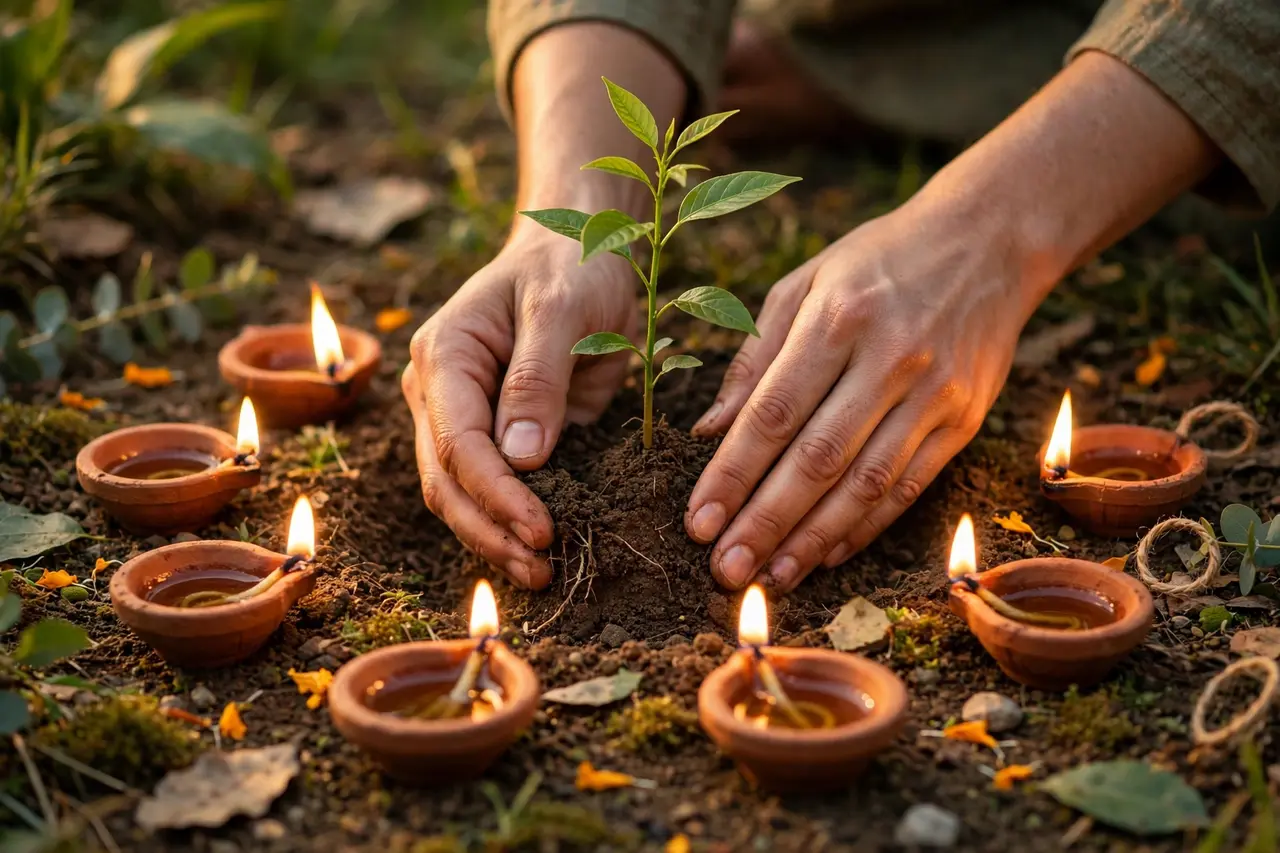
- Plant a Diwali tree. Make it a family tradition: plant one sapling every Diwali. In a decade, you will have a grove of memories.
- Share the message. Talk about your green choices without preaching. Visible example convinces more than lectures.
Energy and Air
- Air out wisely. If crackers are burst nearby, keep windows closed during peak hours and ventilate when air clears.
- Add indoor plants. Festive and functional: plants improve indoor air and double as decor and gifts.
- Carpool to celebrations. Coordinate rides to family gatherings. Fewer cars, less fuel, more togetherness.
- Choose public transport for shopping. Festival shopping trips by metro or bus cut the season’s transport footprint noticeably.
- Offset what you cannot avoid. Contribute to tree-planting or clean-energy initiatives to balance unavoidable impacts.
The Green Gifting Guide in Detail
Gifting is where Diwali’s waste peaks, and where thoughtful choices shine brightest. The hierarchy of green gifting: experiences first, consumables second, plants third, handmade fourth, and sustainably-made durable goods fifth. What to avoid: fast-fashion items, plastic-heavy toys, over-packaged gift sets, and anything the recipient did not want. The greenest gift is one that is wanted, used, and loved.
For wrapping, the Japanese art of furoshiki, wrapping in cloth, turns the wrap into part of the gift. A beautiful scarf or dupatta wrapping a box is zero-waste and gorgeous. Newspaper wrapping with twine and a dried flower looks artisanal and costs nothing. And reusable gift bags, used year after year, become a family tradition themselves. For more handmade inspiration, our DIY anniversary gift ideas adapt beautifully to Diwali gifting.
Eco Decor That Costs Almost Nothing
| Budget | Green Decor Plan | Impact |
|---|---|---|
| $0 | Rearrange existing lights, foraged greenery, DIY paper lanterns | Zero purchase, zero waste |
| Under $20 | Clay diyas in bulk, marigold strings from the market | Supports artisans, fully compostable |
| $20-$50 | Brass urli (reused yearly), LED timer lights, potted plants | Durable investments, multi-year use |
| $50+ | Quality solar lights, artisan-made lanterns, perennial plants | Long-term sustainable setup |
The most sustainable decor is the decor you already own, used creatively. Before buying anything, shop your home: last year’s lights, fabric that can drape, jars that can hold candles, plants that can move indoors for the week. New purchases should be durable, natural, or both.
Celebrating beautifully on a budget and celebrating sustainably go hand in hand. Our celebration ideas on a budget guide shares the same philosophy: intention over expenditure.
Involving Kids in Green Diwali
Children are the most powerful force for green Diwali, because they carry the habits forward. Involve them concretely: let them plant the Diwali sapling, make rangoli from petals they collected, paint clay diyas, wrap gifts in newspaper they decorated, and sort waste into the three bins. Explain the why in terms they grasp: “the smoke hurts the dog’s ears,” “the flowers go back to the earth to grow more flowers.” Kids who grow up with green Diwali will not need convincing as adults; it will simply be how Diwali is done. And their enthusiasm converts skeptical grandparents faster than any argument.
Bringing Skeptical Family Along
The hardest part of green Diwali is rarely logistics; it is people. The uncle who loves crackers, the aunt who insists on plastic decor because it is “practical.” Preaching backfires. What works: leading by example without commentary, making the green alternative visibly better (the clay diyas really do glow warmer), involving kids as ambassadors, compromising gradually (fewer crackers this year, none next), and framing it as tradition rather than restriction. “This is how our grandparents did it” disarms more resistance than any environmental statistic. Change the default quietly, celebrate the results loudly, and let the experience convert the skeptics.
Understanding the festival’s deeper meaning helps these conversations. Our Diwali festival of lights guide is a gentle resource to share with family members who are open to the why behind the traditions.
The Air We Share: Understanding Diwali Pollution
To act effectively, it helps to understand what actually happens on Diwali night. Firecrackers release fine particulate matter (PM2.5), tiny particles that penetrate deep into lungs and bloodstream, along with sulfur dioxide, nitrogen oxides, and heavy metals used for colors: barium for green, strontium for red, copper for blue. These do not just vanish; they linger for days, settling on surfaces, soil, and water. The health impacts are well documented: spikes in asthma attacks, eye irritation, and cardiovascular stress, hitting children, the elderly, and outdoor workers hardest.
The noise is a pollutant too. Firecrackers routinely exceed safe decibel limits, causing distress to animals whose hearing is far more sensitive than ours, and genuine suffering for people with PTSD, sensory processing differences, or heart conditions. When we choose quiet celebrations, we are not being killjoys; we are being neighbors. Clean air and peace are public goods, and Diwali, the festival of shared light, is the perfect occasion to protect them.
Green Diwali in Apartments and Small Homes
Small spaces can be the greenest celebrants of all. Without a garden for crackers, apartments naturally lean toward light-based celebration, which is the sustainable kind. Focus on windowsills and balconies: rows of clay diyas visible from the street, fairy lights outlining the balcony, a small potted marigold display. Indoors, one beautiful urli with floating diyas becomes the centerpiece, and scent does the rest.
Apartment-specific green tips: coordinate with neighbors to share decor and reduce duplication, use the building’s common areas for collective rangoli, organize a society-level cracker-free agreement with a shared celebration instead, and compost collectively if your building supports it. Density is an advantage: one shared celebration for fifty flats has a fraction of the footprint of fifty separate ones, and it builds the community that festivals are for.
Multiplying Impact: Community Green Diwali
Individual choices matter, but community action transforms. Organize or join a neighborhood green Diwali initiative: a collective pledge to skip crackers, a shared bulk order of clay diyas from artisans (cheaper and more impactful together), a community rangoli competition using only natural materials, a post-Diwali cleanup drive, or a group sapling-planting event. Schools and offices can run green Diwali campaigns with real reach: diya-painting workshops, waste-segregation demos, and student pledges that travel home to parents.
The multiplier effect is real. When one family goes green, neighbors notice. When a whole street does, it becomes the new normal. Social proof is the most powerful environmental tool we have, and festivals, with their visibility and emotion, are where norms shift fastest. Be the house with the beautiful cracker-free celebration that everyone admires; next year, there will be three more.
The Honest Economics of Green Diwali
Let us talk money, because the myth that green costs more stops many families. Add up a conventional Diwali: premium firecrackers, plastic decor bought new each year, packaged sweets and gifts, disposable tableware. Now the green version: clay diyas (pennies each), marigolds (inexpensive and abundant), homemade sweets (ingredients cost less than packaged), cloth wrapping (free from the closet), real tableware (already owned). The green Diwali is consistently cheaper, often dramatically so.
Where green choices do cost more, like quality solar lights or artisan-made lanterns, they are durable investments amortized over years, unlike crackers that literally go up in smoke. The economics are clear: the most wasteful Diwali is also the most expensive, and the most sustainable is the most economical. Your wallet and the planet want the same thing.
A Green Diwali Pledge for Your Family
Commitments made together stick. Consider adopting a family green Diwali pledge, written down and signed by everyone, even the kids with their wobbly signatures. Keep it simple and positive: “This Diwali, we celebrate with clay diyas, fresh flowers, homemade sweets, and no firecrackers. We gift thoughtfully, waste little, and share generously.” Post it where everyone sees it during the festival. Review it next year, celebrate what you achieved, and add one new commitment. Traditions begin with intention, and a written pledge turns good intentions into family identity. This is how change lasts: not through guilt, but through pride.
Green Diwali Myths, Debunked
- “Green Diwali is boring.” Ask anyone who has experienced a cracker-free Diwali done well: the diyas, the food, the music, the togetherness. Boredom comes from lack of planning, not lack of pollution.
- “Kids will be disappointed without crackers.” Kids are disappointed by boredom, not by the absence of any specific thing. Diya painting, treasure hunts, sparklers, and late-night feasts delight children far more than ten minutes of noise.
- “Eco-friendly means expensive.” As shown above, the green Diwali is usually cheaper. The expensive myth comes from premium “eco” products marketed to the anxious, not from actual sustainable practice.
- “One family cannot make a difference.” One family going green influences neighbors, inspires relatives, and raises children who will do the same. Change spreads through visible example, and festivals are maximally visible.
- “Tradition requires crackers.” Crackers are a recent addition to a thousands-of-years-old festival of lights. The tradition is light, not noise. Clay, flowers, and oil are the actual tradition.
- “It is too late to change this year.” It is never too late for the next choice. Skip the next box of crackers, buy clay diyas instead of plastic, compost the flowers. Every swap counts, starting now.
Your First Green Diwali: A Starter Plan
If this is your first green Diwali, do not try to do everything. Pick five starters: skip firecrackers (or halve them), buy clay diyas from an artisan, make one rangoli from petals, cook the sweets at home, and wrap gifts in newspaper or cloth. That is it. Five changes, each simple, together transformative. Notice how the festival feels: the cleaner air, the warmer light, the pride. Next year, add five more. Within three years, you will have the greenest, most beautiful Diwali on your street, achieved gradually and joyfully. The perfect green Diwali is not the goal; the greener Diwali, every year, is.
Watch: Kids Celebrate a Green Diwali
See how families celebrate Diwali the eco-friendly way, with clay diyas, organic rangoli, green crackers alternatives, and plant gifting:
Frequently Asked Questions
What is an eco-friendly Diwali?
An eco-friendly Diwali celebrates the festival while minimizing harm to the environment: skipping or limiting firecrackers, using clay diyas and natural decor, avoiding plastic waste, cooking mindfully, and gifting sustainably. It keeps all the joy while dropping the pollution.
Are green crackers really better?
Green crackers produce less particulate matter and noise than conventional ones, but they still pollute. They are a harm-reduction step, not a solution. The greenest choice remains skipping crackers entirely.
How can I convince my family to skip firecrackers?
Lead by example, involve children as advocates, frame it as returning to traditional celebrations rather than giving something up, and compromise gradually. Making the alternative visibly more enjoyable works better than lecturing.
What are the best eco-friendly Diwali decorations?
Clay diyas, fresh marigold garlands, flower-petal rangoli, LED fairy lights on timers, and DIY decor from recycled materials. All are beautiful, traditional, biodegradable, and often cheaper than plastic alternatives.
How do I reduce waste during Diwali parties?
Serve on real tableware, plan food portions realistically, set up waste segregation bins, wrap gifts sustainably, compost flowers and food scraps, and share surplus food rather than discarding it.
What are good eco-friendly Diwali gifts?
Plants and saplings, experiences, consumables like good tea or honey, homemade gifts, and artisan-made goods. Wrap in cloth, newspaper, or reusable packaging.
Is an eco-friendly Diwali more expensive?
Usually it is cheaper. Clay diyas, marigolds, homemade sweets, and DIY decor cost less than premium crackers, plastic decorations, and packaged gifts. The most sustainable choices are often the most economical.
How do I handle Diwali air pollution in my home?
Keep windows closed during peak firecracker hours, use indoor plants, ventilate when outdoor air clears, and consider an air purifier if pollution is severe in your area. Celebrate the cracker-free way to contribute to cleaner air for everyone.
Light Up, Don’t Burn Out
Diwali teaches that light defeats darkness. This year, let your celebration embody the lesson fully: light that warms without wounding, brightness that does not blind the future, joy that does not cost the earth. The clay diya, the marigold, the homemade ladoo, the planted sapling, these are not compromises. They are the festival at its most authentic, the way it was celebrated for centuries before excess arrived.
Start exactly where you are today. Make five simple swaps this year, add five more next year, and keep your family pledge going strong. Talk about it, share the beautiful photos, let the neighbors ask how your Diwali glowed so warmly. The future is watching this festival, in the children learning what celebration means and in the air they will breathe tomorrow. Make it a Diwali they will thank you for. Light up brightly, don’t burn out. Happy green Diwali to all.