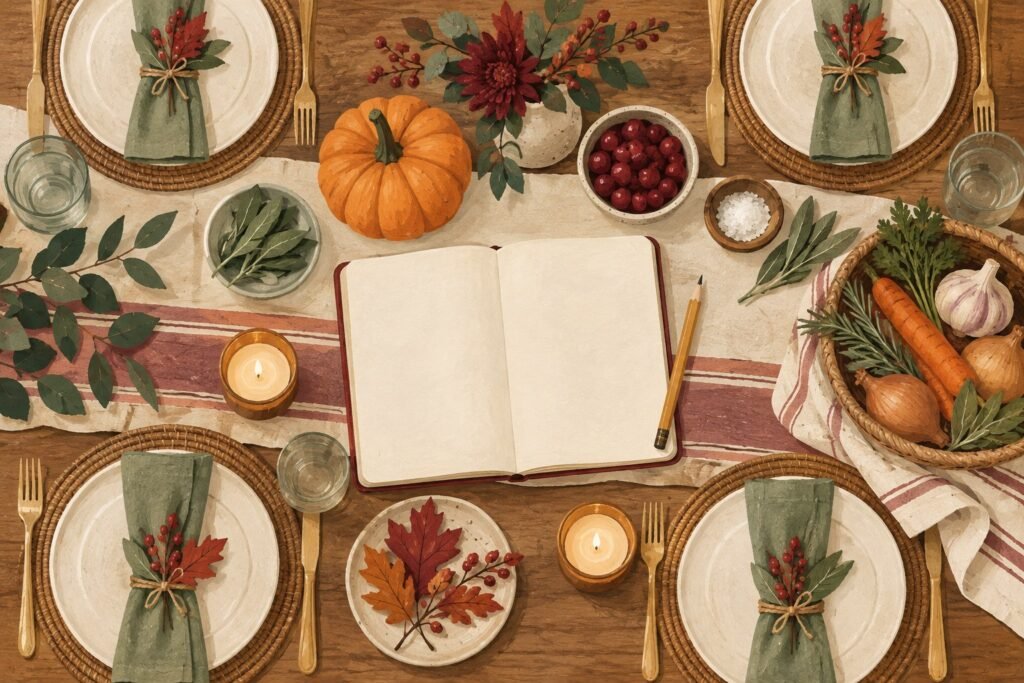
If you are hunting for cornucopia decoration ideas that feel fresh rather than predictable, you are in the right place. The horn of plenty — that curved, overflowing basket of harvest bounty — is Thanksgiving’s most iconic symbol, and it deserves better than the dusty silk-fruit version gathering cobwebs in your grandmother’s attic. A cornucopia, styled thoughtfully, can anchor a dining table, warm up an entryway, or become the first thing guests photograph when they walk through your door. The trick is understanding what makes the shape work: it is abundant but directional, traditional but endlessly remixable, and it flatters nearly every decorating style from rustic farmhouse to sleek modern minimalism. In this guide, you will find 25 distinct cornucopia decoration ideas organized by style and setting, a short history of the symbol so you can answer curious kids (and in-laws), a step-by-step DIY tutorial for building your own horn from scratch, and practical advice for keeping fresh produce looking gorgeous for days. Whether you spend five dollars or fifty, an afternoon or an hour, there is a horn of plenty here with your name on it.
What Is a Cornucopia, and Why Is It Thanksgiving’s Icon?
Before you style one, it helps to know what you are styling. A cornucopia — from the Latin cornu copiae, literally “horn of plenty” — is a curved, horn-shaped vessel overflowing with produce, grain, and flowers. The symbol reaches back to ancient Greece, where myth credited the horn to the goat Amalthea, whose broken horn was blessed by Zeus to fill endlessly with food and drink. The Romans carried the motif forward as an emblem of abundance and prosperity, and it appears on everything from ancient coins to American currency: look closely at a United States quarter or the seal of several states and you will spot the horn tucked into the design.
Its Thanksgiving association is a natural fit. The American holiday is, at its core, a harvest celebration — a meal built around the fruits of autumn — and no symbol communicates “our harvest was good” more directly than a horn spilling pumpkins, apples, and wheat. The cornucopia began appearing on Thanksgiving greeting cards, magazine covers, and schoolroom decorations in the late 19th century, and by the mid-20th century it had become the holiday’s visual shorthand, as recognizable as the turkey itself. If you want to explore the deeper meanings behind the holiday’s imagery, our guide to Thanksgiving symbols and their meanings walks through the cornucopia, the turkey, the wishbone, and more.
Traditional cornucopias are woven — grapevine, wicker, or twig — and shaped like a tapered horn, narrow at the curled tip and wide at the mouth. But there is no rule that says yours must be. Modern interpretations use everything from hammered copper to ceramic to felt, and the “spill” can be real produce, dried botanicals, candles, or even dessert. The unifying principle is abundance with direction: everything flows outward from the mouth of the horn, as though the plenty can barely be contained. Keep that in mind as you browse the ideas below, and you will instinctively style a better cornucopia than any step-by-step could teach.
25 Cornucopia Decoration Ideas, Organized by Style
Twenty-five ideas is a lot, so we have grouped them by decorating personality. Find the group that matches your home, then mix and match individual ideas to make the look your own.
Classic Harvest Cornucopias (Ideas 1–5)
1. The traditional table runner horn. Place a medium woven cornucopia horizontally at the center of your dining table, mouth facing one end of the table, and spill real produce from it: mini pumpkins, gourds, red and green apples, pears, clusters of grapes, and a few ears of Indian corn. Tuck dried wheat stalks behind the arrangement so they rise like a golden fan. This is the look most people picture when they hear the word “cornucopia,” and it earns its place through sheer timelessness.
2. The entryway welcome horn. Set a large cornucopia on your entryway console table or foyer bench, mouth angled toward the front door, so the abundance appears to spill toward arriving guests. Add height with tall branches — dried eucalyptus or curly willow — and ground it with a plaid or burlap table runner underneath. First impressions matter, and this one says “you are about to be fed well.”
3. The mantel-top cornucopia. A cornucopia works beautifully on a fireplace mantel, where its horizontal shape suits the long, low surface. Flank it with candlesticks on both sides and lay a Thanksgiving garland of dried leaves along the mantel to tie everything together. Keep the horn’s spill modest — five or six pieces of produce — so it reads as elegant rather than cluttered.
4. The all-gourd cornucopia. Limit the spill to one family of produce: gourds only. Mix shapes, sizes, and colors — warty green gourds, smooth orange ones, striped turban squash, tiny white baby boos — for a sculptural, almost artistic arrangement. The restraint makes the horn itself the star, and the textural variety keeps it interesting up close.
5. The heirloom display. If you own a genuinely old woven cornucopia, let it be a museum piece: place it on a sideboard with a small handwritten card noting its origin (“Grandma Ruth’s horn, Thanksgiving 1974”). Fill it lightly with dried wheat and preserved leaves rather than fresh produce, so nothing stains or damages the vintage weave. Storytelling is decoration too.
Rustic and Farmhouse Cornucopias (Ideas 6–10)
6. The burlap-and-wood horn. Line a grapevine cornucopia with a scrap of burlap, fill it with apples and pears, and set it on a reclaimed-wood tray with pinecones scattered around the base. The palette — tan, brown, warm red — is pure farmhouse. For more ideas in this lane, see our rustic Thanksgiving table decor guide.
7. The galvanized metal cornucopia. Swap the woven horn for a galvanized metal one (sold at craft stores and farm-supply shops) and fill it with white pumpkins, cotton stems, and dried hydrangeas. The silvery metal against white produce reads modern-farmhouse rather than colonial, and it photographs beautifully.
8. The harvest-crate horn. Instead of placing the cornucopia on a table, nestle it inside a low wooden harvest crate with excelsior (wood wool) padding, and let apples and small squash spill over both the horn’s mouth and the crate’s edges. It looks like you just carried the harvest in from the field — because, visually, you did.
9. The dried-only cornucopia. Fill a twig horn entirely with dried materials: wheat, dried lavender, preserved eucalyptus, dried orange slices, cinnamon sticks, and pinecones. Nothing will rot, wilt, or attract fruit flies, so you can set this up in early November and forget it. The scent alone — cinnamon and orange — justifies the effort.
10. The candlelit farmhouse horn. Weave battery-operated fairy lights through the grapevine of the horn itself, then fill the mouth with dark red apples and sprigs of faux berries. At dusk, switch the lights on: the horn glows from within, and the whole arrangement turns into a lantern of abundance. Pair with candle centerpieces for Thanksgiving elsewhere on the table for a cohesive candlelit theme.
Elegant and Modern Cornucopias (Ideas 11–15)
11. The monochrome horn. Choose one color — all white (white pumpkins, white gourds, cream hydrangeas, white candles) or all gold (spray-painted pumpkins, gilded pears, gold-dipped wheat). A monochrome cornucopia looks intentional and gallery-like, and it suits contemporary dining rooms that would reject a traditional harvest spill.
12. The metallic horn. Use a hammered copper or brushed-brass cornucopia (or spray-paint a wicker one metallic gold) and fill it with deep jewel tones: burgundy artichokes, black grapes, dark plums, and purple kale. The combination of warm metal and moody produce feels like a Dutch still-life painting, and it is stunning under dining-room lighting.
13. The minimalist horn. Place a small, clean-lined ceramic cornucopia at each place setting — or one small horn as the entire centerpiece — filled with just three perfect pieces of fruit and a single sprig of greenery. Minimalism is about editing, and a tiny horn with breathing room around it makes a bolder statement than a crowded one. Our modern Thanksgiving decor guide has more ideas for design-forward homes.
14. The floral cornucopia. Fill the horn with fresh fall flowers instead of produce: burnt-orange roses, deep red dahlias, golden mums, and trailing amaranthus. Treat it exactly like a floral arrangement — floral foam or a water tube inside the horn — and you get a cornucopia that works for hosts who find produce centerpieces too literal.
15. The glass and light horn. Use a clear or mercury-glass cornucopia shape and fill it with fairy lights, gold ornaments, and a few white mini pumpkins. It reads as festive and luminous rather than harvest-y, which makes it perfect for homes where Thanksgiving decor needs to transition straight into Christmas without a full redecoration.
Edible Cornucopias (Ideas 16–18)
16. The bread-dough horn. Shape bread dough into a cornucopia (wrap it around a greased foil cone form and bake), then fill the baked horn with dinner rolls, breadsticks, and cheese straws. It is a centerpiece and a serving vessel in one, and guests will talk about it for years. Bake the horn a day ahead; it keeps beautifully in a cool, dry spot.
17. The dessert cornucopia. Fill a waffle-cone-style horn (or a large sugar cone) with Thanksgiving desserts: mini pumpkin whoopie pies, maple candies, chocolate truffles, and candied nuts spilling from the mouth onto a cake stand. Serve it with the dessert course for maximum drama.
18. The cheese-and-charcuterie horn. Line a horn with parchment and fill it with cubed cheeses, rolled cured meats, crackers, dried figs, and nuts, spilling onto a wooden board. Set it out as an appetizer station: beautiful for the first hour, deliciously demolished by the second.
Mini Cornucopias and Kid Tables (Ideas 19–21)
19. The place-card horn. Make or buy mini cornucopias (about four inches long) and set one at each place setting with a name card tucked into the mouth and a few wrapped candies inside. Guests get a favor and a seating chart in one object.
20. The kids’ craft horn. Give children paper or felt cornucopia cutouts and let them glue on paper fruit, stickers, and glitter during the afternoon before dinner. Display the finished crafts along the kids’ table as decoration they made themselves — pride is the best centerpiece. See our Thanksgiving kids table decor guide for a full kid-table plan.
21. The candy cornucopia. Fill a small horn with candy corn, wrapped caramels, and chocolate leaves, and set it on the coffee table or dessert buffet. It is the lowest-effort cornucopia on this list and one of the most popular with anyone under twelve.
Unexpected Twists (Ideas 22–25)
22. The gratitude cornucopia. Fill a horn with blank cards and pens instead of produce, and invite each guest to write one thing they are thankful for and tuck it into the horn’s mouth. Read a few aloud after dinner. It transforms decoration into ritual, and it costs almost nothing.
23. The outdoor cornucopia. Place a large, weatherproof cornucopia (grapevine or metal — never fresh produce that will freeze or rot) on your porch steps or beside the front door, filled with hardy gourds, pinecones, and faux berries. It extends your Thanksgiving welcome to the whole street. For more exterior ideas, browse our outdoor Thanksgiving decorations guide.
24. The no-carve pumpkin horn. Pair your cornucopia with decorated-but-uncarved pumpkins: paint, decoupage, or stencil pumpkins in coordinating colors and cluster them around the horn’s base. The two traditions amplify each other. Our no carve pumpkin decorating ideas are the perfect companion project.
25. The year-round horn. Keep a neutral woven cornucopia and simply change its contents with the seasons: pinecones and evergreens in winter, lemons and white flowers in spring, seashells in summer, harvest produce in fall. One purchase, four seasons of decorating, and a permanent home on your sideboard.
Where to Place Your Cornucopia for Maximum Impact
Placement matters as much as styling. The dining table is the classic choice, but think about sightlines: a cornucopia reads best when its mouth points toward the room’s entrance or toward the host’s seat, so the “spill” draws the eye inward. On a long rectangular table, center the horn and build the rest of the tablescape symmetrically around it — candlesticks, small pumpkins, and greenery radiating outward. On a round table, push the horn slightly off-center and let the spill flow toward the table’s edge; perfect symmetry on a round table looks staged.
Beyond the dining room, the cornucopia shines in transitional spaces: entryway consoles, sideboards in the living room, the kitchen island (keep the spill compact so it does not interfere with cooking), and the mantel. Avoid bathrooms — produce and humidity are a bad combination — and avoid anywhere the horn blocks conversation sightlines across a table. A good rule of thumb: if you cannot see the face of the person across from you over the arrangement, it is too tall. Cornucopias are naturally low and horizontal, which is one reason they make such forgiving centerpieces.
Lighting completes the placement. A cornucopia near a window looks best in daylight, when the colors of the produce glow. In the evening, position it where candlelight or a nearby lamp will rake across the textures — wicker, gourd skin, wheat — because texture is what makes the horn interesting after dark. If your dining room is dim, the fairy-light trick from idea 10 solves the problem elegantly.
DIY: How to Make a Cornucopia From Scratch
Store-bought cornucopias are perfectly fine, but making your own is surprisingly easy and gives you exactly the size and shape you want. Here is a reliable method using grapevine, the traditional material.
What You Will Need
Grapevine garland or loose grapevine (about 6 to 8 feet for a medium horn), floral wire, wire cutters, a cone-shaped form (a large paper cone, a traffic-cone shape cut from cardboard, or even a rolled-up magazine), burlap or moss for lining, and your chosen fill materials. Grapevine is available at craft stores in the floral section, often sold as “natural grapevine garland.”
Step-by-Step Instructions
Step 1: Build the cone form. Roll heavy paper or thin cardboard into a cone about 18 inches long and 8 inches wide at the mouth, and tape it securely. This is your mold — the grapevine will be wrapped around it.
Step 2: Wrap the vine. Starting at the narrow tip, wrap the grapevine around the cone in overlapping spirals, working toward the mouth. Every few wraps, secure the vine to itself with short pieces of floral wire. Overlap generously; gaps will show. For a sturdier horn, do two full layers.
Step 3: Shape the curl. The signature cornucopia tip curls upward. Before the vine fully dries and stiffens, gently bend the narrow end of your wrapped cone into a curl and wire it in place. Let it sit overnight so the shape sets.
Step 4: Remove the form and line the horn. Slide the paper cone out, line the inside of the horn with burlap or a sheet of moss (this hides the wire and protects fresh produce from direct contact with the vine), and trim any poky twig ends with wire cutters.
Step 5: Fill it. Place a small ball of crumpled paper or a floral foam block inside the mouth to give your produce something to rest against, then arrange your spill from largest pieces at the mouth to smallest trailing outward. Step back, squint, and adjust until the abundance looks effortless — which, paradoxically, takes a little effort.
Keeping a Fresh Cornucopia Looking Gorgeous
A cornucopia filled with real produce is a living arrangement, and a little maintenance keeps it photo-ready from setup through dessert. Choose produce with unblemished skin and firm flesh; one soft apple will drag down the whole display. Wipe each piece with a damp cloth before arranging to remove orchard dust and give the skins a subtle sheen. If you want extra gloss, a very light misting of food-safe produce shine (sold in the produce aisle) works — but skip it on anything porous like gourds, which can spot.
Assemble the horn no more than one to two days before Thanksgiving for peak freshness, and store it in the coolest room of the house — never near a heating vent or a sunny window, both of which accelerate ripening and wilting. Grapes are usually the first casualty; check them daily and pluck any shriveling berries. If a piece of fruit develops a soft spot, rotate it so the blemish faces down or swap in a fresh piece — keep a few spare apples and mini pumpkins on hand for exactly this purpose. Dried elements like wheat, pinecones, and preserved leaves need no care at all, which is one more argument for mixing fresh and dried in the same horn.
After the holiday, do not waste the produce. Apples, pears, and squash that spent two days as decoration are perfectly edible — wash them and cook them into pies, soups, and sauces. The cornucopia itself, emptied and dusted, can be stored in a dry spot and reused for years. Some of the best Thanksgiving traditions are the ones that cost nothing twice.
In Pictures: Cornucopia Decorating Ideas
The cornucopia has symbolized abundance since ancient Greece — and it's still the most joyful way to say 'harvest' on a Thanksgiving table. Here's a fresh take on the classic horn of plenty.

A handwoven cornucopia horn spilling over with miniature pumpkins, apples, and dried autumn leaves on a rustic wooden table.
Watch: Cornucopia Decorating Ideas
Watch a giant outdoor cornucopia come together from bare frame to overflowing harvest — a great reference for scaling the look up or down.
At a Glance: Cornucopia Decorating Ideas
The essential building blocks of a cornucopia that looks abundant, not cluttered.
| Element | Purpose | Tip |
|---|---|---|
| The horn | The vessel that holds everything | Woven wicker or grapevine reads most authentic; a tapered basket works in a pinch |
| Pumpkins & gourds | The 'spill' of the harvest | Mix sizes, shapes, and colors — odd numbers look most natural |
| Apples & pears | Fresh orchard color | Use faux fruit for outdoor displays so nothing rots or attracts pests |
| Dried leaves & foliage | Filler that hides mechanics | Tuck leaves around the horn's mouth to conceal where produce is anchored |
| Wheat stalks | Vertical lift | Bundle dried wheat and fan it behind the horn for height |
| Nuts & berries | Fine detail and texture | Scatter acorns, walnuts, and cranberries to fill small gaps |
Frequently Asked Questions
What do you put inside a cornucopia? Traditional fillings include mini pumpkins, gourds, apples, pears, grapes, Indian corn, nuts, and dried wheat. Modern versions use flowers, candles, fairy lights, desserts, cheese, or even handwritten gratitude cards. The only real rule is abundance: the mouth should look full to overflowing, with a few pieces trailing outward onto the table.
What is the cornucopia a symbol of? The cornucopia symbolizes abundance, prosperity, nourishment, and gratitude for the harvest. Its roots trace to Greek mythology — the horn of the goat Amalthea, blessed to fill endlessly with food — and it has represented plenty in Western art for over two thousand years before becoming Thanksgiving’s signature emblem in America.
Can I use real fruit in a cornucopia, or should it be fake? Real fruit looks and smells better, and it is the traditional choice. The trade-off is maintenance: assemble it within a day or two of your event and keep it cool. High-quality faux produce is a fine alternative for arrangements you want to display for weeks or reuse yearly — modern faux fruit is remarkably convincing at a glance.
How big should a cornucopia centerpiece be? For a dining table, a horn 16 to 24 inches long is the sweet spot — substantial enough to anchor the table without overwhelming it. Scale up for consoles and mantels (24 to 36 inches) and down for place settings (4 to 6 inches). When in doubt, go slightly smaller; an undersized cornucopia looks intentional, while an oversized one looks like it is eating the table.
Where can I buy a cornucopia? Craft stores, home-goods retailers, and online marketplaces all sell woven grapevine and wicker cornucopias seasonally from September through November, typically for a modest price. Farm-supply stores sometimes carry metal versions. For the best selection, shop in October rather than the week of Thanksgiving, when the seasonal aisle has been picked over.
Is the cornucopia only for Thanksgiving? Not at all. Because it is fundamentally a harvest symbol, it works for any autumn occasion — harvest festivals, fall weddings, and Halloween-adjacent gatherings. And as idea 25 shows, a neutral horn with rotating seasonal contents can decorate your home year-round.
Conclusion
The cornucopia has survived from ancient Greek myth to the modern American dining table for one simple reason: it makes abundance visible. Whether you build a grapevine horn from scratch, style a minimalist monochrome version for a contemporary home, or simply set out a small horn of candy for the kids, you are participating in a tradition of gratitude that is thousands of years old. Pick one idea from this guide that matches your style, gather your materials this weekend, and give your Thanksgiving table the horn of plenty it deserves. For the full picture of the holiday’s visual language, explore our Thanksgiving collection — and have a warm, abundant holiday.