The turkey on the table, the cornucopia on the mantel, the pumpkins on the porch — Thanksgiving has a visual language all its own. But where did these images come from, and what do they actually mean? This guide to thanksgiving symbols and their meanings traces each major emblem of the holiday from its ancient roots to its modern place at the table: the turkey, the cornucopia, the pumpkin, the cranberry, the wheat sheaf, the wishbone, and the harvest colors themselves. Whether you’re decorating, teaching, or just curious, these are the stories behind the symbols.
The Turkey: Gratitude Made Visible
No symbol says “Thanksgiving” like the turkey. A whole roasted bird at the center of the table is the holiday’s defining image — so much so that the day itself is nicknamed “Turkey Day.” But the turkey’s symbolic meaning goes deeper than dinner.
The turkey represents abundance and provision. It is a large bird — one turkey feeds a crowd — and its size made it the natural emblem of a feast meant to express gratitude for plenty. In colonial America, serving a turkey signaled that a household had enough to share generously, which was precisely the spirit the holiday was meant to cultivate. The turkey is also a native American bird: unlike the goose or chicken, it belongs to this continent, making it an emblem of American identity itself. Benjamin Franklin famously praised the turkey in a 1784 letter as “a true original native of America” and “a bird of courage” — he was discussing the national seal, not Thanksgiving, but his words captured why the bird resonated as a patriotic symbol.
There is also a quieter symbolism. The wild turkey, once hunted nearly to extinction, was brought back through one of conservation’s great success stories — from perhaps 100,000 birds in the early 1900s to millions today. For the environmentally minded, the turkey on the table can symbolize stewardship and recovery: nature’s abundance, lost and restored.
Turkey in Art and Decoration
Beyond the dinner table, the turkey appears everywhere in Thanksgiving imagery: on greeting cards, in children’s handprint crafts, on parade floats, and as garden statuary. The stylized turkey — tail feathers fanned, chest puffed — is a visual shorthand for the entire holiday, recognizable even without any accompanying text. When decorators use turkey motifs, they are invoking the whole cluster of meanings: harvest, home, gratitude, and the shared meal.
The Cornucopia: The Horn of Plenty
The cornucopia — the curved, horn-shaped basket overflowing with fruits, vegetables, nuts, and flowers — is Thanksgiving’s oldest symbol, and its roots reach back to ancient Greece. The word comes from the Latin cornu copiae, “horn of plenty,” and the myth behind it is one of the oldest abundance stories in Western culture.
According to Greek legend, the infant Zeus was hidden in a cave on Crete and nursed by a goat named Amalthea. One of Amalthea’s horns broke off, and Zeus blessed it so that it would forever overflow with nourishment — the original endless buffet. The cornucopia became a standard emblem of prosperity in Greek and Roman art, appearing on coins, in temples, and in the hands of gods and goddesses of fortune. When early American artists and decorators needed a symbol for harvest abundance, the cornucopia was waiting: classical, dignified, and instantly legible.
In Thanksgiving symbolism, the cornucopia means plenty, generosity, and the earth’s provision. Its open mouth, spilling produce, suggests abundance that cannot be contained — blessings that overflow. Unlike the turkey, which is tied to a specific meal, the cornucopia is the holiday’s most versatile emblem: it works as a table centerpiece, a door decoration, a logo, and a classroom craft, carrying the same message everywhere. It is also Thanksgiving’s most democratic symbol — no one needs to explain what an overflowing basket means.
How the Cornucopia Became American
The cornucopia crossed the Atlantic with European art and education, but it became specifically associated with Thanksgiving in the nineteenth century, when magazine illustrators — including those working for Sarah Josepha Hale’s Godey’s Lady’s Book — used it to decorate Thanksgiving features. The image of the horn of plenty beside the roast turkey created a visual pairing that defined the holiday’s look: the meal and the meaning, side by side. Today, cornucopia centerpieces range from traditional woven horns to modern glass and metal interpretations, but the message is unchanged after two thousand years: we have enough, and we are grateful.
The Pumpkin: The New World’s Harvest
If the cornucopia is Thanksgiving’s oldest symbol, the pumpkin is its most American. Pumpkins are native to North America, cultivated by Indigenous peoples for thousands of years before European contact. For the colonists, the pumpkin was a revelation: a large, nutritious, easily stored fruit that grew abundantly in New England soil. Early American cookery is full of pumpkin — baked, boiled, stewed, and eventually baked into pies.
The pumpkin symbolizes the New World harvest itself: food that comes from this land, not the old one. Unlike wheat (a European import) or the turkey (which at least had English precedent), the pumpkin had no Old World counterpart on the Thanksgiving table. When Americans put pumpkins on their porches and pumpkin pie on their tables, they are celebrating an ingredient that is unambiguously, botanically American. The jack-o’-lantern may belong to Halloween, but the plain pumpkin — round, orange, abundant — belongs to Thanksgiving.
Pumpkin Beyond the Pie
The pumpkin’s symbolic range has expanded enormously. Pumpkin patches and corn mazes are now central to the autumn agritourism economy; pumpkin spice has become a cultural phenomenon of its own; and the pumpkin as decoration — on doorsteps, mantels, and tables — signals the entire fall season, from September through Thanksgiving. Few symbols carry so much seasonal weight with so little effort: a pumpkin on the porch says “autumn” the way a tree says “Christmas.”
Cranberries: The Tart Native
Cranberries are one of the very few Thanksgiving foods that the Pilgrims could actually have eaten — they grow wild in the bogs of Massachusetts, and the Wampanoag and other Algonquian peoples harvested them long before 1621, using them for food, medicine, and dye. The English name “cranberry” comes from “craneberry,” because the flower resembles a crane’s head and neck.
As a symbol, the cranberry represents continuity with the land’s original harvest. While the turkey, the pumpkin pie, and the mashed potatoes are all nineteenth-century additions to the Thanksgiving menu, the cranberry is a genuine link to the pre-colonial landscape — a food that was here before the holiday and will outlast every trend. Its brilliant red color also gives it a visual role: cranberry sauce, fresh cranberries in arrangements, and cranberry garlands provide the holiday’s signature pop of color against the oranges and browns of autumn.
Wheat, Corn, and the Three Sisters
Sheaves of wheat and bundles of corn appear in Thanksgiving decoration as emblems of the grain harvest — the foundation of civilization’s food supply. Wheat, though a European import to the Americas, became the visual shorthand for agricultural abundance in Western art, and dried wheat arrangements remain a staple of Thanksgiving centerpieces. Corn — maize — carries deeper American meaning: it was the crop that the Wampanoag taught the Pilgrims to grow, the difference between starvation and survival in Plymouth’s early years.
Indigenous agriculture honored corn as one of the “Three Sisters” — corn, beans, and squash grown together in a companion-planting system of remarkable sophistication. The corn stalk climbs the bean pole, the beans fix nitrogen in the soil, and the squash shades the ground. As a Thanksgiving symbol, corn (and especially decorative Indian corn with its multicolored kernels) represents Indigenous knowledge and the original American harvest — a reminder that the agricultural abundance the holiday celebrates rests on Native expertise. Using corn thoughtfully in Thanksgiving symbolism means acknowledging that debt.
For decorating ideas featuring these symbols, see our cornucopia decoration ideas and explore more Thanksgiving inspiration.
Autumn Leaves and Harvest Colors
Thanksgiving’s color palette — burnt orange, deep red, golden yellow, rich brown — is itself a symbol. These are the colors of the northeastern North American autumn at harvest time: turning maple leaves, ripe pumpkins, golden wheat, brown earth. The palette symbolizes maturity and fruition: the moment when the year’s growth reaches its peak and is gathered in.
The falling leaf carries its own meaning. In Thanksgiving symbolism, autumn leaves represent the cycle of the seasons and the acceptance of change — nature’s reminder that abundance is temporary and therefore precious. Decorators use preserved leaves in garlands, table runners, and wreaths not just because they’re beautiful but because they compress the entire season into a single image: this is what November looks like, and it will not last.
The Wishbone: Luck and Togetherness
The wishbone (the furcula, the V-shaped bone at a bird’s breast) is Thanksgiving’s most interactive symbol. After the meal, two people each take an end, make a wish, and pull; whoever gets the larger piece supposedly gets their wish granted. The custom symbolizes hope, luck, and shared ritual — it’s one of the few Thanksgiving traditions that requires two participants, making it inherently social.
The tradition is ancient. The Etruscans believed birds were oracles and preserved their wishbones, stroking them while making wishes. The Romans adopted the practice, and it traveled through Europe to America with colonists. Drying the wishbone before breaking (traditionally for three days) was said to strengthen its magic. Today, the wishbone is mostly playful — but it preserves a 2,000-year-old human impulse: to find a little ceremony in the remains of the feast.
The Harvest Table: The Ultimate Symbol
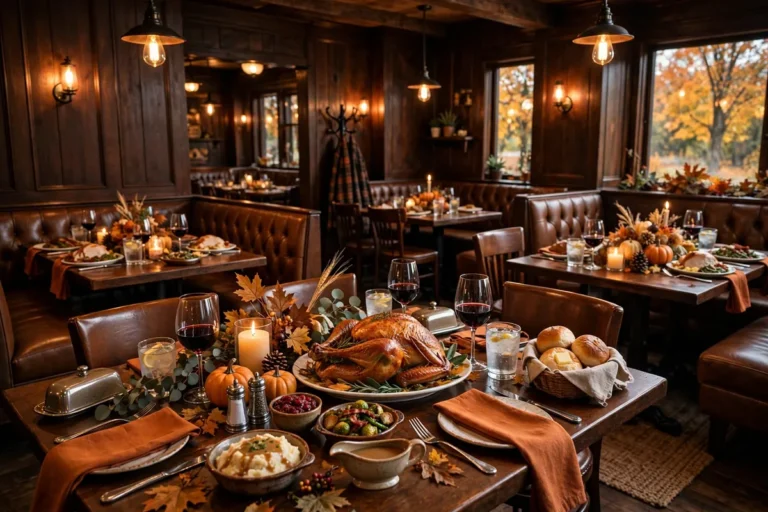
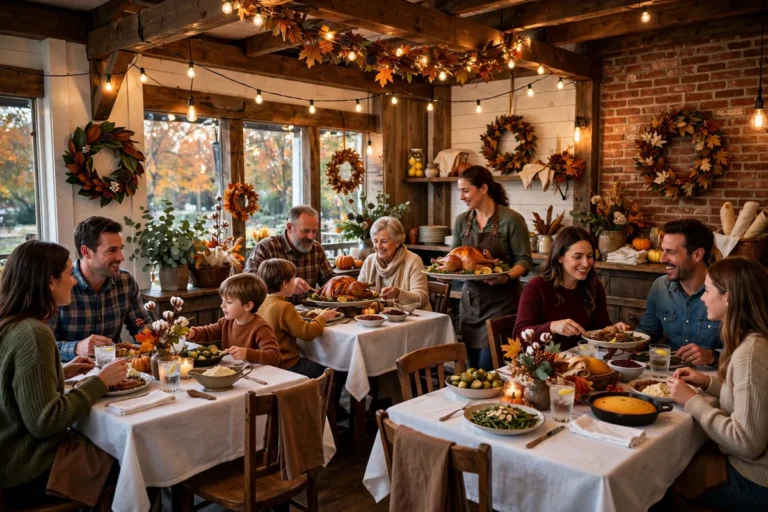
Step back, and the most powerful Thanksgiving symbol isn’t any single object — it’s the table itself. The laden harvest table, groaning under dishes, surrounded by family, is the composite emblem of everything the holiday means: abundance shared, gratitude expressed, community gathered. Every other symbol — the turkey, the cornucopia, the pumpkin, the wheat — is really just a component of this larger image.
This is why Thanksgiving imagery so often shows the table from above or from the doorway: the abundance is the point. A bare table is just furniture; a full one is a statement about what matters. In an age of food insecurity and frantic schedules, the deliberate act of filling a table and filling seats around it is itself a meaningful ritual — a yearly recommitment to the idea that enough, shared, is plenty.
The Empty Chair
Some families set an empty chair or an extra place setting at Thanksgiving — a symbol of remembrance and welcome. It may honor a loved one who has died, a service member far from home, or simply the stranger who might need a meal. The empty chair is Thanksgiving symbolism at its most humane: gratitude that makes room for grief, and abundance that leaves space for others.
Using Thanksgiving Symbols in Your Decor
Understanding the meanings makes decorating more intentional. A cornucopia centerpiece speaks of overflowing plenty; pair it with wheat for the grain harvest and cranberries for native continuity. Pumpkins mark the New World harvest; cluster them in odd numbers at varying heights. Autumn leaves bring the season indoors — press them, string them, or scatter them down the table runner. A bowl of unshelled nuts (walnuts, hazelnuts, chestnuts) symbolizes the stored provisions that got families through winter.
For children, the symbols are teaching tools: the turkey for gratitude, the cornucopia for sharing, the wishbone for hope. Thanksgiving crafts — handprint turkeys, paper cornucopias, leaf rubbings — work because the symbols are simple, visual, and meaningful. A child who understands what the horn of plenty means has learned the holiday’s whole philosophy in a single image.
In Pictures: Thanksgiving Symbols and Their Meanings
Every Thanksgiving table is a coded message — the cornucopia, the turkey, the pumpkin each carry centuries of meaning. Here's the symbolism, beautifully arranged.

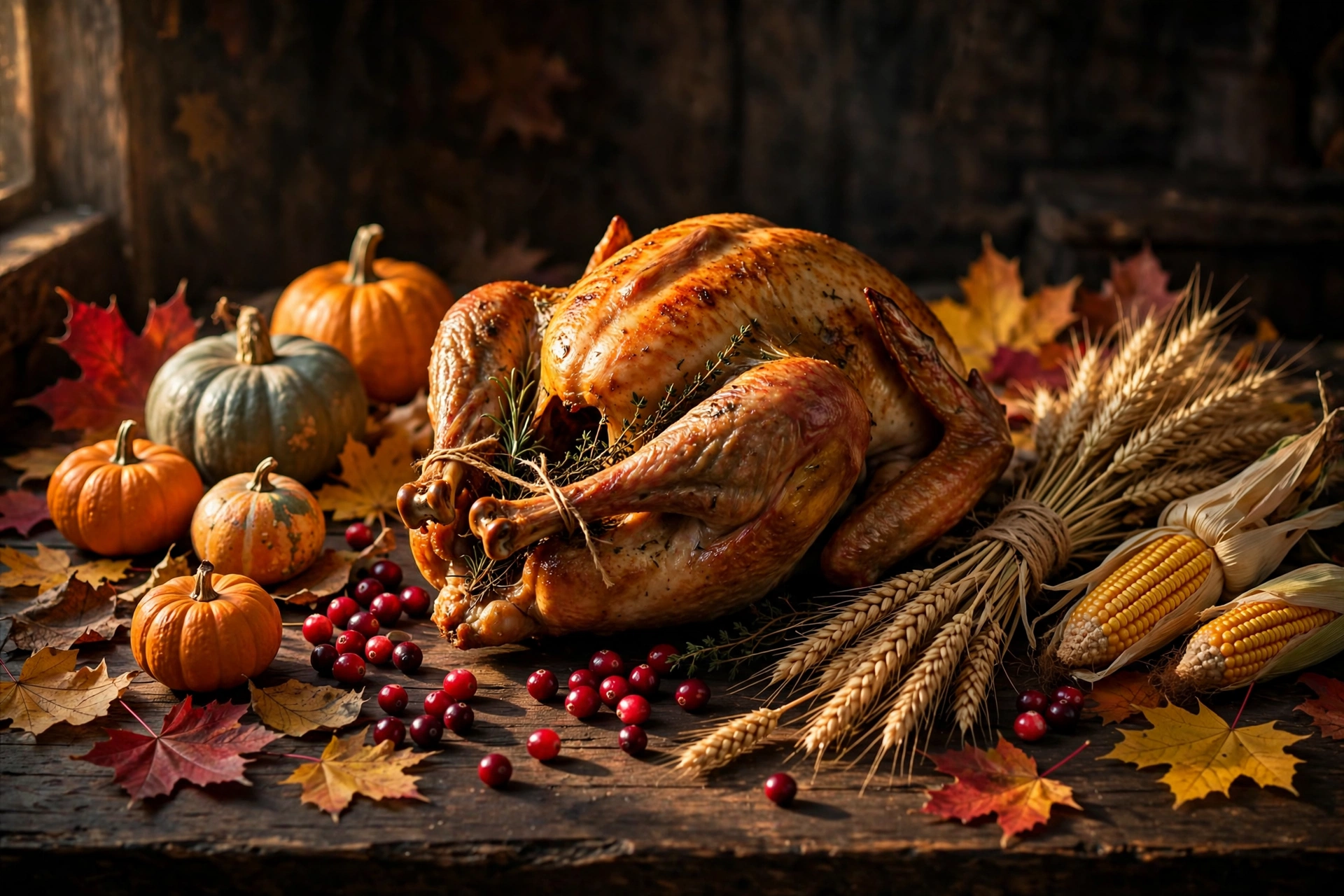
A still-life arrangement of classic Thanksgiving symbols: a cornucopia, pumpkins, wheat sheaves, and autumn leaves.
Watch: Thanksgiving Symbols and Their Meanings
Why is the cornucopia a part of Thanksgiving? The answer reaches back to ancient Greek myth — and it's a great starting point for the holiday's whole symbolic vocabulary.
At a Glance: Thanksgiving Symbols and Their Meanings
What the holiday's most familiar emblems actually stand for.
| Symbol | Meaning |
|---|---|
| Cornucopia | Abundance and nourishment — from the Greek myth of Amalthea's goat horn, which overflowed endlessly with food |
| Turkey | Generosity and plenty — a bird large enough to feed a whole gathering, now the feast's centerpiece |
| Pumpkin | The harvest itself — a native American crop the settlers learned to grow and cook |
| Corn | Survival and gratitude — the crop Tisquantum taught the colonists to plant, which saved Plymouth Colony |
| Wheat sheaf | The fruits of labor — a classic harvest emblem of work rewarded |
| Autumn leaves | Change and the turning year — the season's beauty as a reminder of nature's cycles |
Frequently Asked Questions
What are the main symbols of Thanksgiving?
The turkey (abundance and the feast), the cornucopia (overflowing plenty), the pumpkin (the New World harvest), cranberries (native continuity), wheat and corn (the grain harvest), autumn leaves (the season), and the wishbone (luck and hope).
What does the cornucopia symbolize?
The cornucopia, or “horn of plenty,” symbolizes abundance, generosity, and the earth’s provision. It comes from the Greek myth of the goat Amalthea, whose broken horn was blessed to overflow with nourishment forever.
Why is the turkey the symbol of Thanksgiving?
The turkey symbolizes abundance (one bird feeds many), American identity (it’s a native bird), and the celebratory feast. It became the holiday’s emblem through 19th-century promotion, especially by Sarah Josepha Hale’s menus and recipes.
What does the wishbone symbolize?
The wishbone symbolizes luck, hope, and togetherness. The tradition of two people breaking it while making wishes dates back to Etruscan and Roman customs involving bird bones as oracles.
Why are pumpkins associated with Thanksgiving?
Pumpkins are native to North America and were a vital colonial food. They symbolize the New World harvest — food from this land, celebrated at the season’s end.
What do Thanksgiving colors mean?
The oranges, reds, golds, and browns of Thanksgiving decor represent the northeastern autumn at harvest time — turning leaves, ripe pumpkins, golden grain — symbolizing maturity, fruition, and the gathering-in of the year’s growth.
Conclusion
Thanksgiving’s symbols form a complete visual philosophy: the turkey says “feast,” the cornucopia says “plenty,” the pumpkin says “this land,” the cranberry says “remember,” the wheat says “sustenance,” the wishbone says “hope,” and the table says “together.” You don’t need to know the Greek myth of Amalthea to feel what a cornucopia means — but knowing it deepens the pleasure. This year, when you set the table, you’ll know exactly what story each piece is telling.
More to explore: cornucopia decoration ideas, why the turkey rules the table, 50 Thanksgiving facts, and more Thanksgiving inspiration.
The Mayflower and Pilgrim Imagery
Thanksgiving’s historical symbols — the Mayflower, the Pilgrim hat, the buckled shoe — belong to a different category than the harvest emblems. Where the turkey and cornucopia symbolize abundance, the Pilgrim imagery symbolizes origin and endurance: the story of a small group who crossed an ocean, survived a brutal winter, and built something lasting.
These symbols deserve respectful handling. The popular Pilgrim imagery — black hats, blunderbusses, friendly Indians — is a nineteenth-century simplification that erases the real complexity of the colonial encounter, including the devastating impact of European settlement on Native peoples. Many Native Americans observe Thanksgiving as a National Day of Mourning, and thoughtful use of Pilgrim symbolism means acknowledging that the origin story has more than one side. The ship, the crossing, and the survival are worth remembering; the cartoon version is worth retiring.
Used well, origin symbols remind us that Thanksgiving is, among other things, an immigration story — about people who left everything for an uncertain future and were sustained, in the critical early years, by the knowledge and generosity of the Wampanoag. That’s a symbol with genuine power, and it belongs to everyone who has ever started over in a new land.
The Harvest Moon
The full moon nearest the autumn equinox — the Harvest Moon — is Thanksgiving season’s celestial symbol. Before electric light, its brightness let farmers work late into the evening to bring in the crops, extending the harvest day. It symbolizes nature’s cooperation: the sense that the season itself conspires to help the harvest succeed.
The Harvest Moon also links Thanksgiving to the world’s lunar harvest festivals — China’s Mid-Autumn Festival, Korea’s Chuseok, and Vietnam’s Tết Trung Thu are all celebrated under the same autumn full moon. When Americans admire the November moon, they’re sharing a sky with billions of people marking the season in their own ways. It’s a quiet reminder that gratitude for the harvest is humanity’s common language.
Moon Symbolism in Decor
Crescent moons and full-moon motifs appear in Thanksgiving and autumn decor — on wreaths, in candle holders, in children’s crafts — usually without much thought. But the moon’s harvest meaning gives it weight: it represents the light that made the harvest possible, the cycle that brings the season around again, and the shared sky under which all the world’s harvest festivals unfold.
Frequently Asked Questions (Continued)
What is the oldest Thanksgiving symbol?
The cornucopia, whose origins trace to ancient Greek myth — the horn of the goat Amalthea, blessed to overflow with nourishment. It has symbolized abundance for over two thousand years, far predating the American holiday.
Why do we use Pilgrim imagery at Thanksgiving?
Pilgrim imagery (the Mayflower, black hats, buckles) symbolizes the holiday’s origin story — the 1621 harvest celebration. It became popular in the 19th century when writers and artists retrofitted the national holiday with a founding narrative. Modern use should acknowledge the fuller, more complex history of the colonial encounter.
What does the harvest moon have to do with Thanksgiving?
The Harvest Moon — the full moon nearest the autumn equinox — traditionally gave farmers extra light to bring in crops. It symbolizes nature’s cooperation with the harvest and links Thanksgiving to the world’s lunar harvest festivals, like China’s Mid-Autumn Festival and Korea’s Chuseok.
Nuts, Gourds, and Scarecrows: The Minor Symbols
Beyond the headliners, Thanksgiving’s visual vocabulary includes a supporting cast. Nuts — walnuts, hazelnuts, chestnuts in their shells — symbolize stored provisions, the foresight that gets a household through winter. A bowl of unshelled nuts is one of the oldest and simplest Thanksgiving decorations, and cracking them together is its own small ritual.
Gourds — the warty, colorful, inedible cousins of pumpkins — are pure decoration, and that’s the point: they symbolize abundance for its own sake, beauty without utility. A pile of gourds says the harvest was so generous we can afford to display what we don’t even eat.
Scarecrows represent the human labor behind the harvest — the farmer in the field, the work that made the feast possible. In children’s imagery they’re friendly guardians; in the deeper symbolism, they’re a reminder that abundance is grown, not given.
Apples bridge Thanksgiving and the broader harvest season: orchard fruit at its peak, pressed into cider, baked into pies. They symbolize the orchard harvest the way wheat symbolizes the field harvest — the gathered sweetness of the year.
Together, these minor symbols fill out the holiday’s visual world. You don’t need to know what a gourd “means” to enjoy it on the mantel — but the whole vocabulary, major and minor, tells one coherent story: the year has given, we have gathered, and we are grateful.