
Walking into a busy bar for the first time can feel like stepping onto a stage where everyone knows the script except you. Where do you stand? How do you get the bartender’s attention without being rude? How much do you tip — and on what? Is it okay to send a drink to a stranger? These are the questions that turn a fun night out into a low-grade anxiety spiral, and this bar etiquette guide for beginners answers every one of them.
The good news: bar etiquette is not a secret code. It is a handful of simple courtesies that keep a crowded, fast-moving environment pleasant for everyone — guests and staff alike. Learn them once and you will feel at home in everything from a neighborhood dive to a polished cocktail den. This guide walks you through the full arc of a night out: before you arrive, how to order like you have done it a hundred times, the tipping math, how to behave at the bar and at tables, and the scenarios nobody warns you about (splitting tabs, buying rounds, handling last call).
Before You Go: ID, Dress Codes, and Cover Charges
Bring valid ID — always. In the United States, bars are legally required to verify age, and most will card everyone who looks under 30 or 40 regardless of how old you clearly are. A government-issued photo ID (driver’s license, state ID, or passport) is the standard; photos of your ID on your phone do not count. If your ID is expired, expect to be turned away. Bars in tourist-heavy areas sometimes see fake IDs daily, so do not be offended when the bouncer inspects yours closely — it is their job and their license on the line.
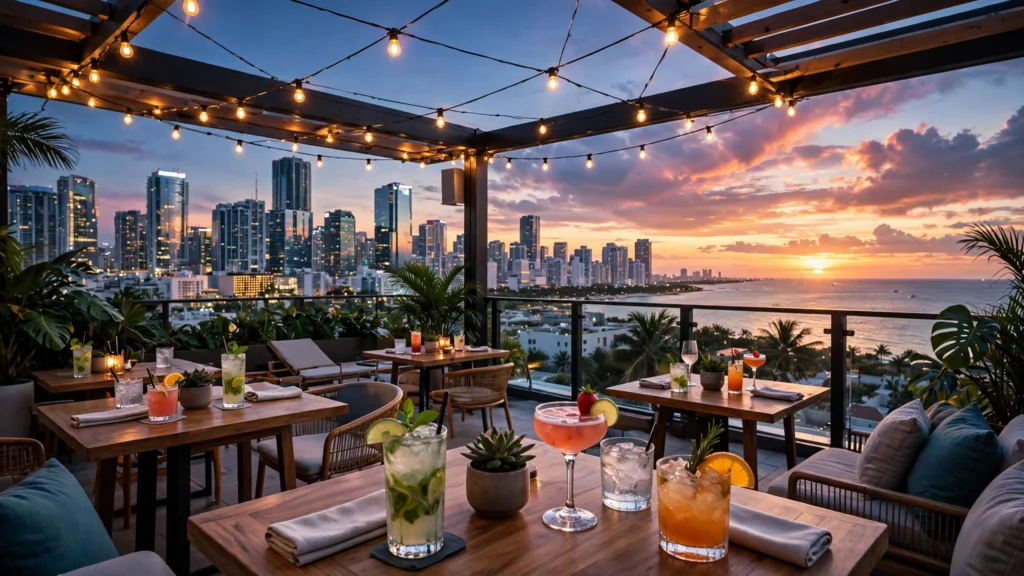
Check the dress code. Most bars have no dress code beyond “wear clothes,” but upscale cocktail bars, hotel bars, and clubs often do: no athletic wear, no flip-flops, no sleeveless shirts for men, sometimes no hats. Rooftop bars in cities like Miami are famously strict about this. A quick check of the venue’s website or a review page before you leave saves you the walk of shame back home to change. When in doubt, smart casual is the safest default in America.
Know about cover charges. Some bars charge a cover — a flat entry fee — especially on weekend nights, during live music, or at clubs. The cover is collected at the door, is separate from your drinks, and is rarely negotiable. If a venue lists a cover online, bring cash or confirm they take cards at the door. Cover charges typically range from a few dollars at neighborhood spots to much more at marquee clubs; if the price surprises you, you can always walk away — no obligation.
Bring a payment method that works. Most US bars accept cards, but cash still has real advantages: it is faster at a crowded bar, some dives are cash-only, and tipping in cash goes directly to your bartender. A sensible move is one card plus some cash. If you plan to run a tab, bring the card you intend to use — and remember to close it before you leave (more on that below).
Eat first. This is etiquette-adjacent but genuinely important: drinking on an empty stomach makes you drunk faster, louder, and sloppier — and nobody enjoys being around that version of you. Eat a real meal before a night of drinking. Your future self, your friends, and the bartender will all be grateful.
How to Order at the Bar: The Step-by-Step
Ordering at a crowded bar is a small performance with a clear choreography. Here is how it works.
Step 1: Get to the bar and be visible. Move up to the bar itself — do not shout your order from three rows back. Find a gap, stand at the bar rail, and make yourself visible. Have your money or card ready in your hand, not buried in a bag. Bartenders scan the bar for who is ready; looking ready is half the battle.
Step 2: Get attention the right way. Make eye contact, offer a small nod or a calm “hey” when the bartender looks your way. That is it. Never snap your fingers, clap, whistle, wave cash in the air, or shout “bartender!” across the room. These are the fastest ways to be served last. If the bar is slammed, patience is not just polite — it is strategic. Bartenders remember who was rude and who was not.
Step 3: Know what you want before it is your turn. The single biggest beginner mistake is reaching the front of the bar and then starting to think. Decide before you step up. If you are overwhelmed by the menu, it is completely fine to ask for a recommendation — “What is good here?” or “I like citrusy cocktails, what do you suggest?” are welcome questions. But ask for one recommendation, not a seminar, when the bar is busy.
Step 4: Order clearly and completely. State your full order at once: “Can I get a whiskey sour and a lager, please?” rather than ordering one drink, paying, then ordering the next. If ordering for a group, order everything together — bartenders vastly prefer making six drinks in one go over six separate transactions. Use “please” and “thank you.” It costs nothing and it matters.
Step 5: Close out or open a tab. For one drink, pay as you go. For a longer night, ask “Can I open a tab?” and hand over your card — the bar holds it (or, increasingly, just records it) until you are done. Tip on the total when you close out.
What If You Do Not Know What to Order?
Every beginner has stood at a bar paralyzed by choice. Some lifelines:
- The house cocktail list is the menu of things the bar does best. Start there.
- Ask the bartender for something “like” a drink you know: “I like margaritas — what would you recommend?” Bartenders love this question; it is their craft.
- Beer is always safe. If cocktails intimidate you, a lager or a local IPA is a perfectly respectable order anywhere.
- There is no shame in simple. A vodka soda, a rum and coke, a glass of house red — nobody is judging your order. Confidence in a simple drink beats anxiety over a fancy one every time.
Tipping: The Rules Everyone Expects You to Know
Tipping is the part of American bar culture that confuses visitors and beginners most, so let us be precise.
The standard: $1–$2 per drink, or 15–20% of the tab. For simple drinks (beer, wine, a basic mixed drink), a dollar or two per drink is the norm. For cocktails — which take real labor — tip 20% or at least $2 per drink. On a full tab at the end of the night, 18–20% is standard for good service.
Tip on every round, not just at the end. If you are paying per drink, tip each time. If you open a tab, the tip goes on the final total. Either way, do not skip it — in most US states, bartenders earn a tipped minimum wage well below the standard minimum, and tips are genuinely their income.
Cash tips are king. If you can, tip in cash even when paying by card. It is immediate, untraceable-to-the-house, and bartenders genuinely prefer it.
When service is bad, tip less — but rarely zero. A zero tip sends a message, but it should be reserved for truly egregious service, not a slow bar on a packed Saturday. If something went wrong, a calm word with the bartender or manager accomplishes more than a stiffed tip.
Tipping on free drinks. If a bartender comps you a drink or sends a free shot, tip on what it would have cost. This is one of the clearest markers of someone who knows bar culture.
Tip jars vs. tip lines. A tip jar on the bar means cash tips are welcome per drink. A tip line on your card receipt means add it there. Either is fine — just do not do neither.
Bar Behavior: The Do’s and Don’ts
DO:
- Say please and thank you. Every time. It is the cheapest upgrade to your night.
- Be patient during rushes. A three-deep bar on a Friday night means a wait. Accept it gracefully.
- Keep your space tidy. Push your empty glass toward the bar when you are done so staff can clear it. Do not leave a graveyard of empties and napkins spread across the bar top.
- Respect the bartender’s workflow. If they are mid-conversation with another guest or making drinks, wait your turn. Interrupting is never the move.
- Move away from the bar once served. Get your drinks and step back so others can order. The bar rail is for ordering, not camping — unless the bar is empty.
- Ask before joining a table. Bar seating is often communal or first-come; a quick “Is this seat taken?” prevents all awkwardness.
DON’T:
- Don’t snap, whistle, or shout for service. Ever.
- Don’t hit on the bartender. Flirting with staff who are paid to be nice to you is a classic beginner error. Be friendly, not forward.
- Don’t complain about prices loudly. Drink prices are what they are. If it is too expensive, drink elsewhere — do not lecture the staff.
- Don’t get aggressively drunk. Pace yourself: one drink per hour is a reasonable rule of thumb, alternating with water. The fastest way to ruin everyone’s night — including yours — is to become the person staff have to manage.
- Don’t bring outside food or drinks in. Obvious, but it happens.
- Don’t argue with the bouncer. The bouncer’s decision is final. Arguing gets you remembered, and not fondly.
- Don’t take photos of strangers. A quick photo with your friends is fine; photographing other patrons or staff without asking is not.
Seating, Tabs, and Rounds: The Social Mechanics
Bar seats vs. tables. Seats at the bar itself are prime real estate and generally first-come, first-served — but they come with an expectation: you are there to drink and possibly chat, not to camp for three hours on one soda while a crowd waits. If you want to settle in for the long haul, grab a table instead.
Opening and closing a tab. When you open a tab, the bar holds your card. Do not forget to close it before you leave — unclosed tabs get charged with an automatic gratuity (often 20%), and you lose the chance to adjust the tip. Set a phone reminder if you are the forgetful type. And never, ever walk out on a tab intentionally; it is theft, and bars take it personally.
Buying rounds. In group settings, rounds are the social currency of bar culture: each person buys a round for the group in turn. If you join a round, you are committing to buy one too — do not accept three rounds and then disappear to the bathroom when it is your turn. If you do not want to participate, say so upfront: “I’m just getting my own tonight” is perfectly acceptable.
Splitting the bill. At the end of the night, splitting evenly only works if everyone drank roughly the same amount. If one person had three cocktails and another had one beer, even splits breed resentment. The graceful move: the big spender offers to cover more, or everyone throws in for their own plus tip. Apps make this easy — settle it the same night, not “later.”
Sending a drink to someone. Buying a drink for a stranger is a classic gesture, but do it right: ask the bartender to deliver it, and accept graciously if the person declines or does not engage further. A sent drink is a friendly hello, not a purchase order for conversation. Never send a drink you would not want to receive yourself, and never pressure anyone to accept.
Last call. When the bartender announces last call (usually 30 minutes before closing, though closing times vary by state and city — many close at 2 a.m.), order your final drink promptly, finish it within a reasonable time, and leave when asked. Lingering 45 minutes past close while staff clean around you is one of the rudest things you can do in a bar. The staff wants to go home.
Solo at the Bar: A Beginner’s Superpower
Going to a bar alone intimidates beginners, but it is actually one of the best ways to learn bar culture — and experienced bar-goers do it all the time.
Sit at the bar, not a table. The bar rail is the social zone; a solo table is an island. At the bar you are part of the scene, you can chat with the bartender during lulls, and you will absorb the rhythm of the place.
Bring something to do, but stay open. A book or your phone is fine as a security blanket, but the real move is to be approachable: make eye contact, smile, respond when spoken to. Some of the best bar conversations start with a solo regular.
Tell the bartender it is your first time. Seriously. “This is my first time here — what should I try?” is a magic sentence. Good bartenders light up at the chance to guide a newcomer, and you will often end up with something excellent you would never have ordered.
Watch your drink. This applies to everyone, but especially solo visitors: never leave your drink unattended, and do not accept drinks from strangers unless you watch the bartender make and hand it to you. Basic safety, non-negotiable.
Have an exit plan. Know how you are getting home before you start drinking — a rideshare app, a designated driver, transit schedules. Solo plus drunk plus no plan is how bad nights happen.
Reading the Room: Different Bars, Different Rules
Not all bars operate the same way, and part of etiquette is matching the venue.
The dive bar: Cash-friendly, unpretentious, regulars-heavy. Do not order a complicated craft cocktail at a dive — it is like ordering sushi at a steakhouse. Beer, shots, and simple highballs are the native language. Respect the regulars’ spots (the same stools, every night) and the jukebox hierarchy.
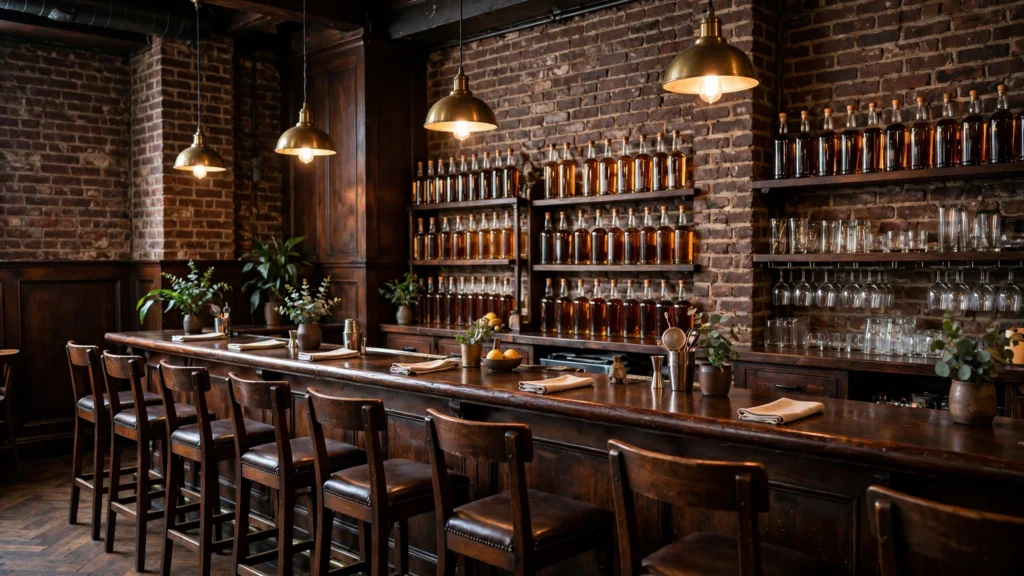
The cocktail bar: Slower, more deliberate, often with a menu of house creations. This is where you can ask questions and take your time — within reason. Do not rush the bartender; craft cocktails take minutes to build. Tipping 20%+ is the norm here given the labor involved.
The sports bar: The TVs are the point. Do not change the channel without asking, do not stand in front of the big screen during a crucial play, and match the energy — loud cheering is welcome, starting arguments with rival fans is not.
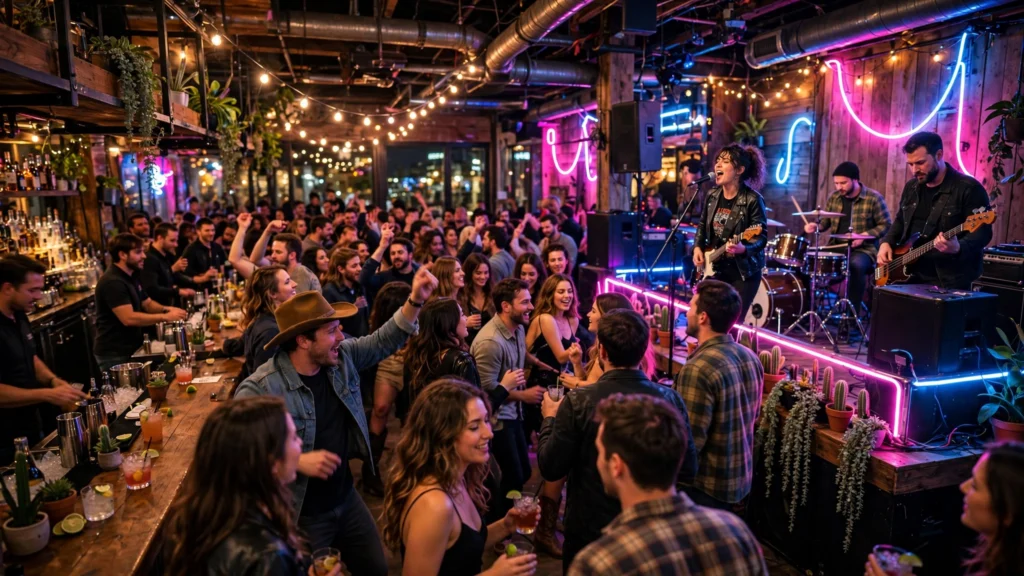
The club: Cover charges, dress codes, bottle service, DJs. Clubs run on a different economy — expect higher prices, longer waits, and a more transactional vibe. Tip the bartender well; club bars are chaos and good service there is genuinely hard.
The brewery taproom: Often family- and dog-friendly, with flights (small samples of several beers) as the signature move. It is normal to ask questions about the beers — taproom staff expect it. Food trucks outside are common; bringing that food inside is usually welcome.
Drink Responsibly: The Non-Negotiables
No etiquette guide is complete without the safety basics, because the best-mannered drinker is a safe one.
- Pace yourself. Alternate every alcoholic drink with water. Eat. Take breaks. There is no prize for keeping up with the heaviest drinker at the table.
- Never drive after drinking. Plan your ride home before your first drink — rideshare, taxi, designated driver, or transit. In 2026, there is no excuse with a rideshare app in every pocket.
- Know your limit and honor it. “One more” is the most expensive sentence in bar culture. Decide your number before you go out and stick to it.
- Look out for your friends. The buddy system is not just for kids. Keep an eye on each other, share locations, and make sure everyone gets home.
- If someone is in trouble, act. Signs of alcohol poisoning — confusion, vomiting, seizures, slow or irregular breathing, pale or bluish skin, unresponsiveness — are a medical emergency. Call 911. Do not leave the person alone, do not try to “sleep it off” for them.
The One-Paragraph Version
Be polite to staff, tip 15–20%, know your order before it is your turn, never snap or shout for service, pace yourself with water and food, close your tab, respect last call, and plan your ride home before you start. That is 90% of bar etiquette. The other 10% is reading the room — and that comes with practice. Everyone was a beginner once, including the regular holding court at the corner stool. Go enjoy your night out.



Pingback: Best Cocktail Bars in San Francisco: 9 Spots Worth the Trip
Pingback: Denver Craft Brewery Tour: A Self Guided Itinerary for Beer Lovers